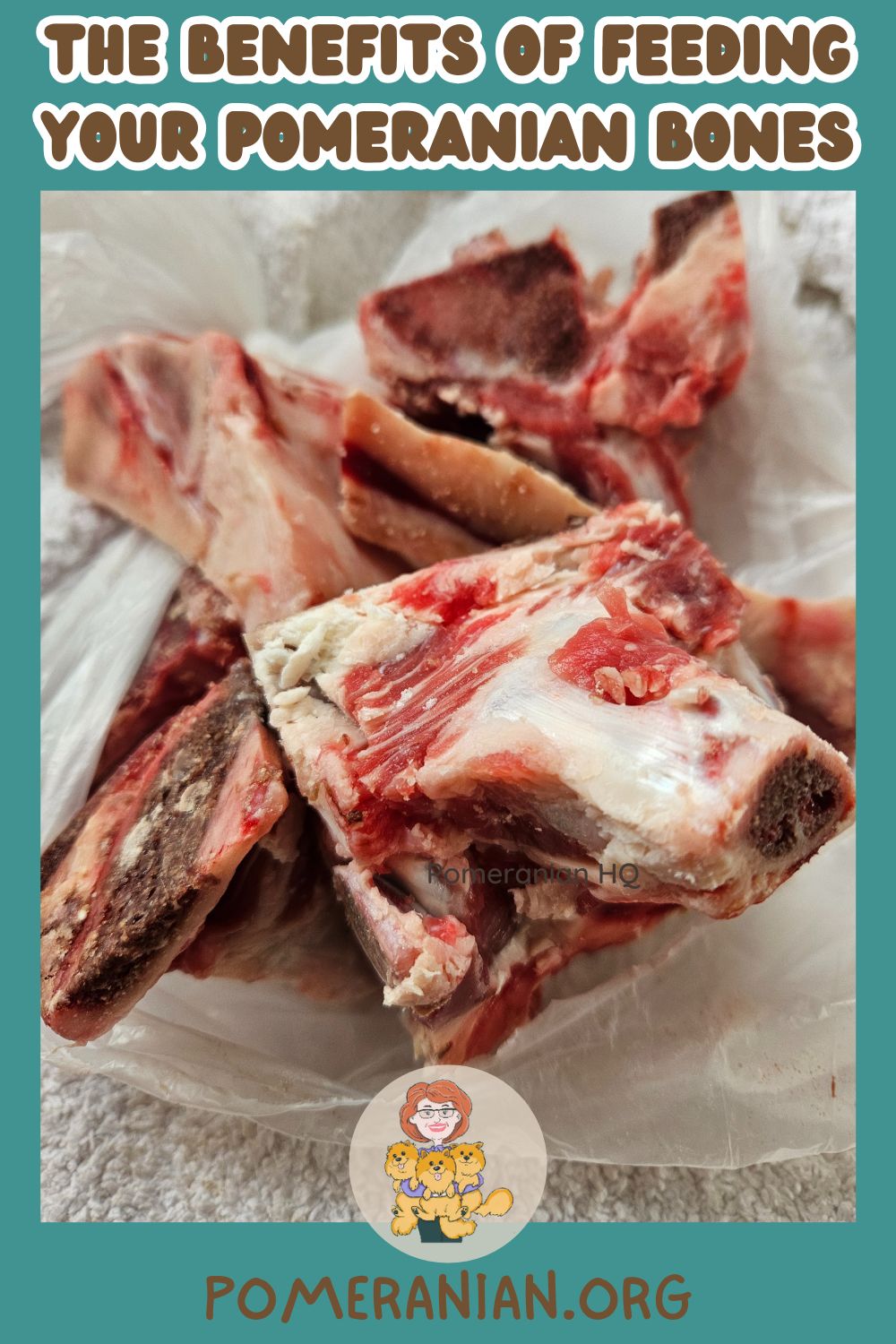

Can Pomeranians eat bones? Many owners offer bones as a treat or to help clean their dog’s teeth, but understanding the risks matters before giving one to your Pom. Cooked bones should never be fed, and raw bones can also cause broken teeth, choking, constipation or digestive blockages. Raw meat and bones may also carry bacteria that can affect dogs and people.
In my decades of breeding and caring for Pomeranians, feeding advice has changed considerably. Something being traditional or natural does not automatically make it the best choice for every dog.
This guide explains the differences between raw and cooked bones, addresses common questions about feeding Pomeranians bones, and explores alternatives for chewing and dental care—so you can make an informed decision with your veterinarian.
Can Pomeranians Eat Bones? Quick Answer
Never give your Pomeranian cooked bones. Raw bones also carry risks and are not necessary when your dog eats a complete, balanced diet.
Both raw and cooked bones can cause choking, broken teeth or digestive blockages. Raw bones may also carry harmful bacteria. Supervision cannot eliminate these risks.
For dental care: brush regularly with dog toothpaste, arrange veterinary dental checks and ask your vet about appropriately sized dental chews. Bones do not replace brushing or professional dental care.
Can Pomeranians Eat Cooked Bones?
No. Never give your Pomeranian cooked bones, including bones from roast chicken, chops, ribs or leftover meals. Cooking makes bones more brittle and prone to splintering, potentially causing serious injuries.
Cooked bones can become lodged in the mouth or throat, cause choking, or damage and block the digestive tract. Even a small piece should not be considered safe simply because your Pomeranian can fit it into their mouth.
Remove bones from any cooked meat you offer, and keep plates, food scraps and rubbish bins out of reach.
What If My Pomeranian Eats a Cooked Bone?
Contact your veterinarian promptly for advice, even if your Pom initially seems comfortable. Tell them what type of bone was eaten, approximately how much, and when it happened.
Do not induce vomiting unless your veterinarian specifically instructs you to. Seek emergency veterinary care immediately if your Pomeranian has difficulty breathing, repeatedly retches or vomits, develops a painful abdomen, or collapses.

Are Raw Bones Safe for Pomeranians?
Raw bones are not risk-free. Although they are generally less brittle than cooked bones, they can still break teeth, become lodged in the throat or cause digestive blockages. Swallowed fragments may also injure the digestive tract, and eating bone can cause constipation.
Choosing a larger bone or supervising your Pomeranian does not eliminate these risks. Hard bones, particularly weight-bearing bones from large animals, can damage teeth. Smaller bones and pieces may be swallowed whole.
Raw Bones Can Carry Harmful Bacteria
Raw meat and bones can carry bacteria such as Salmonella. These bacteria may affect your Pomeranian and spread to people through handling, contaminated surfaces or your dog’s stools. Freezing does not reliably remove all harmful bacteria.
This is especially relevant in homes with young children, older adults or anyone with a weakened immune system.
Does My Pomeranian Need Raw Bones?
No. A complete, balanced diet supplies the calcium, phosphorus and other nutrients your Pomeranian needs. Adding bones is not necessary and can upset the nutritional balance, particularly for growing puppies.
If you prefer a homemade diet, ask your veterinarian for a referral to a qualified veterinary nutritionist. A carefully formulated recipe is more reliable than estimating proportions of meat, bones and organs.
Can Pomeranians Eat Chicken Bones, Wings or Necks?
Never feed your Pomeranian cooked chicken bones, including cooked wings, necks and carcasses. They can splinter and cause choking, blockages or internal injuries.
Raw chicken bones also carry risks. A Pomeranian may swallow a wing, neck or loose piece before chewing it thoroughly, allowing it to become lodged in the throat or digestive tract. Being small or relatively soft does not make a bone safe.
Are Raw Chicken Necks Good for Cleaning Teeth?
Chicken necks are sometimes promoted as natural dental cleaners, but they should not be relied on to prevent gum disease. Raw poultry also carries a risk of bacterial contamination.
For dental care, choose regular brushing with dog toothpaste and ask your veterinarian about dental products suitable for your Pomeranian’s size, age and teeth.
Can Pomeranians Eat Boneless Chicken Instead?
Plain, thoroughly cooked, boneless chicken can be offered in small amounts if your Pomeranian tolerates it. Remove all bones and avoid seasoning, sauces, onions and garlic.
Use it as an occasional treat or part of a professionally formulated diet. Chicken alone does not provide complete, balanced nutrition.
Do Bones Really Clean a Pomeranian’s Teeth?
Chewing bones may scrape away some visible deposits, but cleaner-looking teeth do not necessarily mean healthy gums. Bones do not reliably prevent periodontal disease and can fracture teeth, creating painful problems that require veterinary treatment.
Pomeranians need consistent dental care throughout their lives. Do not rely on chewing alone to keep their teeth and gums healthy.
What Works Better for Dental Care?
- Daily toothbrushing: Use dog toothpaste and a small, soft toothbrush. Introduce brushing gradually so your Pomeranian becomes comfortable with it.
- Suitable dental products: Ask your veterinarian about appropriately sized chews or dental diets. Look for Veterinary Oral Health Council (VOHC) acceptance for plaque or tartar control.
- Veterinary dental checks: Your vet can identify gum disease, damaged teeth and problems that are difficult to see at home.
- Professional treatment when needed: Brushing and chews cannot remove established disease beneath the gumline.
Always supervise dental chews and follow the product’s size and age recommendations. If your Pomeranian has bad breath, bleeding gums, difficulty chewing or suddenly avoids food, arrange a veterinary examination.
Do Pomeranians Need Bones for Calcium?
Pomeranians do not need to eat bones to obtain enough calcium. A complete, balanced food appropriate for your dog’s life stage supplies calcium and phosphorus in suitable amounts and proportions.
Adding bones or calcium supplements to an already balanced diet can upset that balance. More calcium does not automatically mean stronger bones or healthier teeth.
Growing Puppies Need Carefully Balanced Nutrition
Correct mineral intake is particularly important during growth. Feeding extra bone or adding calcium supplements without veterinary guidance can interfere with healthy skeletal development.
Choose a complete food formulated for puppy growth, and discuss any supplements with your veterinarian before using them.
What About Homemade Pomeranian Food?
A mixture of meat, vegetables and bones is not automatically nutritionally complete. The amount of calcium supplied by bones can vary, making it difficult to balance a diet by guesswork.
If you prepare your Pomeranian’s meals at home, use a recipe formulated specifically for your dog by a qualified veterinary nutritionist. Follow the recipe, including its specified supplements, rather than substituting bones as a calcium source.
Alternatives to Bones: Chews Also Carry Risks
Replacing bones with a manufactured chew does not automatically make chewing safe. Edible dental chews, rawhide and plastic toys can also pose hazards if a Pomeranian swallows a large piece.
In my practical experience, small dogs, including Pomeranians, have suffered bowel obstructions after swallowing manufactured chews. For this reason, I do not give a blanket recommendation for these products simply because they are marketed for dogs.
Consider How Your Pomeranian Chews
Some Pomeranians nibble carefully, while others bite off chunks or gulp items down. A product labelled “small dog” or “dental” is not necessarily suitable for your particular Pom.
Plastic and nylon chews can break or develop damaged edges, and swallowed pieces may cause injury or an obstruction. Edible chews can also become choking or blockage hazards when substantial pieces are swallowed.
Supervise any chewing activity, inspect items frequently and remove anything that is breaking apart or becoming small enough to swallow. Supervision reduces some risks but cannot guarantee safety.
Focus on Dental Care Without Relying on Chews
Your Pomeranian does not need bones or manufactured chews to maintain healthy teeth. Regular brushing with dog toothpaste, veterinary dental examinations and professional treatment when needed provide a more dependable dental-care routine.
For enrichment, consider short training sessions, supervised play or scent games using part of your Pom’s normal food allowance.
What to Do If Your Pomeranian Swallows a Bone
Contact your veterinarian promptly if your Pomeranian swallows a bone or a substantial bone fragment. The advice will depend on your dog’s size, the type and amount of bone, whether it was cooked, and when it was swallowed.
Some problems are not immediately obvious, so do not wait for symptoms before seeking advice.
Signs That Need Urgent Veterinary Attention
Seek urgent veterinary care if your Pomeranian develops:
- Difficulty breathing, choking or collapse.
- Repeated gagging, retching or vomiting.
- Excessive drooling or difficulty swallowing.
- A painful or swollen abdomen.
- Marked lethargy or refusal to eat.
- Straining to pass stools or blood in vomit or stools.
Difficulty breathing or collapse is an immediate emergency.
Do Not Try Home Remedies
Do not induce vomiting unless your veterinarian specifically instructs you to. Bringing a bone back up may cause further injury.
Do not give bread, oil, laxatives or extra food to try to cushion or push the bone through. Ask your veterinarian whether to offer food or water while arranging assessment.
If possible, photograph the remaining bone or packaging so your vet can identify what was swallowed. Keep your Pomeranian calm and follow the clinic’s instructions.
Frequently Asked Questions About Pomeranians and Bones
Can Pomeranian puppies eat bones?
Bones are not necessary for a puppy eating a complete, balanced puppy food. They can cause choking, broken teeth or digestive injuries. Adding bone as a calcium source can also upset the balance of a growing puppy’s diet.
Are any bones completely safe for Pomeranians?
No bone can be guaranteed safe. The risks depend on its hardness, size and shape, as well as your Pomeranian’s teeth and chewing habits. Supervision does not eliminate the possibility of injury.
Are large bones safer than small bones?
A bone too large to swallow whole can still break teeth or shed pieces that your Pomeranian swallows. Large, hard bones should not be assumed safe simply because they cannot fit into your dog’s mouth.
Can Pomeranians eat rib bones?
Cooked rib bones should never be offered. Raw rib bones can also break into pieces, become lodged or cause digestive injuries. They should not be described as a universally safe choice for small dogs.
Does freezing make raw bones safe?
No. Freezing does not reliably kill all harmful bacteria, and it does not remove the risks of choking, tooth fractures or digestive blockages.
Are manufactured dental chews safer than bones?
Manufactured chews also carry risks. A swallowed piece may cause choking or a bowel obstruction, while damaged plastic or nylon products may cause injury. Consider your Pomeranian’s individual chewing habits rather than relying solely on product labels.
My Pomeranian swallowed a bone but seems fine. Should I call the vet?
Yes. Contact your veterinarian promptly, because problems may develop before obvious symptoms appear. Explain what was swallowed, how much and when. Do not induce vomiting or give home remedies unless your vet instructs you to.

Final Thoughts on Feeding Your Pomeranian Bones
Never feed cooked bones, and remember that raw bones and manufactured chews also carry risks. In my decades of caring for Pomeranians, I have learned to assess each dog individually rather than assume any chew is safe.
Prioritise balanced nutrition, regular toothbrushing and veterinary dental care—and contact your vet promptly if your Pom swallows a bone or chew fragment.
⚠ Veterinary Disclaimer
The information provided in this article is intended for educational and general informational purposes only and is not a substitute for professional veterinary advice, diagnosis, or treatment.
Always seek the advice of your veterinarian or another qualified animal health professional with any questions you may have regarding your dog’s health or medical condition.
Never ignore professional veterinary advice or delay seeking treatment because of something you have read on this or any other website.
If your Pomeranian is showing signs of illness, discomfort, skin irritation, or an adverse reaction to medication or treatment, contact your veterinarian promptly.
Copyright Pomeranian.org. All Rights Reserved.
📚 References & Further Reading
- [1] AKC Pomeranian Breed Standard (2011)
- [2] English Kennel Club Breed Standard
- [3] The Pomeranian Handbook – Denise Leo
- [4] Denlinger, The Complete Pomeranian
- [5] Kimbering, 1891–1991
- [6] Taplin, The Sportsman’s Cabinet
- [7] Parker, The Popular Pomeranian
- [8] Ives, Show Pomeranians