
Many people believe there are three types of Pomeranian heads: Teddy Bear, Baby Doll, and Fox Face. While these are popular nicknames, they are not official Pomeranian varieties. As a Pomeranian Judge and breeder who has owned and bred Champion Pomeranians for over 50 years, I explain the differences between these head shapes and how they relate to the Pomeranian breed standard.
Are There 3 Types of Pomeranian Faces?
No. Despite popular claims about the 3 types of Pomeranian faces—often called the fox face Pomeranian, teddy bear Pomeranian, and baby doll face Pomeranian—these are not official classifications. They are simply descriptive terms used by pet owners, advertisers, and social media users to describe different facial appearances. In reality, Pomeranian faces vary naturally, and a puppy’s appearance can change significantly as it matures.
My Experience With Pomeranian Face Types
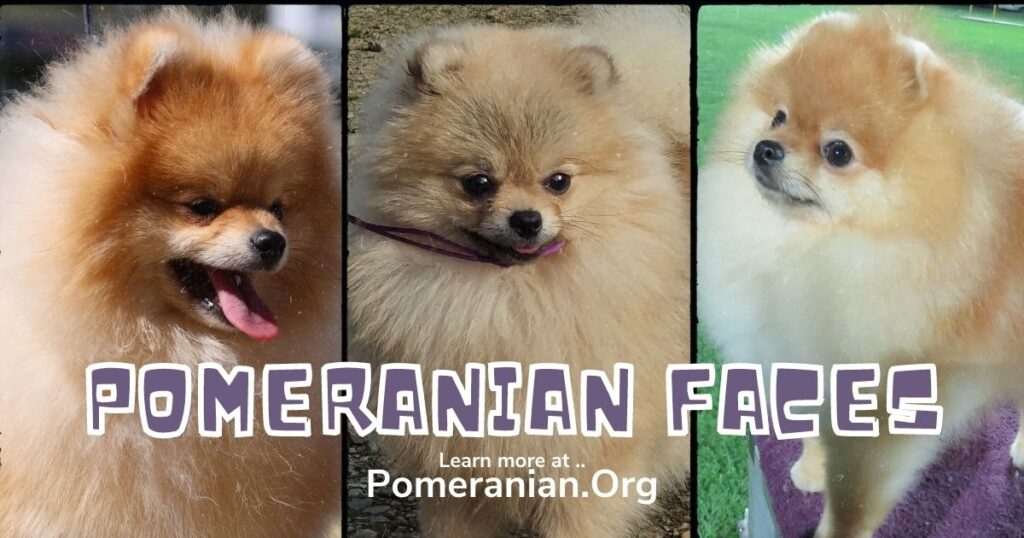
Having bred and exhibited Pomeranians since 1975, I have watched hundreds of puppies develop from newborns into adults. One thing I have learned is that Pomeranian faces can change considerably as puppies mature.
Many young puppies that owners describe as a teddy bear face Pomeranian or baby doll face Pomeranian at eight weeks of age can look quite different by the time they reach adulthood. As the skull develops, the muzzle lengthens, the coat matures, and the facial expression changes, the head’s appearance often evolves significantly.
This is one reason why experienced breeders are cautious about predicting whether a very young puppy will retain a particular “look” as an adult. Terms such as fox-face Pomeranian, teddy-bear Pomeranian, and baby-doll-face Pomeranian are descriptive labels used by the public rather than official classifications. In reality, there is a wide range of facial characteristics within the breed.
Over the past 50 years, I have found that evaluating a Pomeranian as a complete dog is far more important than focusing on a single facial feature. Structure, balance, movement, temperament, coat quality, and overall breed type all contribute to a quality Pomeranian.
Why Head Shape Matters
While terms such as teddy bear, baby doll, and fox face Pomeranian are often used to describe appearance, head shape is more than just a cosmetic feature. Responsible breeders pay close attention to head structure because extreme features can sometimes affect a dog’s health and overall quality of life.
Breathing Concerns
Pomeranians should never have excessively short muzzles. Dogs bred for an extremely shortened face may be more prone to breathing difficulties, particularly during hot weather or exercise. A well-balanced muzzle helps maintain normal airflow and contributes to overall health.
Eye Prominence
Dogs with very short muzzles often have more prominent eyes. While large, expressive eyes are desirable in the breed, excessively protruding eyes may be more vulnerable to injury, irritation, and certain eye conditions.
Dental Crowding
The Pomeranian is a small breed, and overcrowded teeth can already be a challenge. Extremely short muzzles may leave less room for proper tooth placement, increasing the risk of retained baby teeth, bite faults, and dental disease.
Preserving Breed Type
As a breeder, I believe it is important to preserve the correct breed type rather than chasing trends. Breeding solely for an exaggerated teddy bear appearance or an extremely short muzzle can result in dogs that move away from the characteristics that make the Pomeranian unique.
A quality Pomeranian should be evaluated as a complete dog. Sound structure, balance, movement, temperament, coat quality, and overall breed type are far more important than fitting into a particular head-shape label. Responsible breeders strive to produce healthy, functional dogs that remain true to the breed’s heritage.
Understanding the Pomeranian Head Shape
One of the biggest misconceptions surrounding the so-called 3 types of Pomeranian faces comes from a misunderstanding of the breed standard itself.
Pomeranian Breed Standards contains the phrases “foxy in outline” or “fox-like expression.” Unfortunately, many people interpret these words to mean that a Pomeranian should have a long, pointed muzzle and literally resemble a fox. This is not what the standard is describing.
When the standard refers to a fox-like expression, it refers to the overall impression created by the dog’s eyes, ears, alertness, and intelligence. A Pomeranian should have a bright, inquisitive, and lively expression rather than a dull or heavy appearance.
Similarly, “foxy in outline” refers to the overall silhouette and balance of the wedge-shaped head rather than the length of the muzzle. The standard does not call for breeding for an excessively long, narrow muzzle.
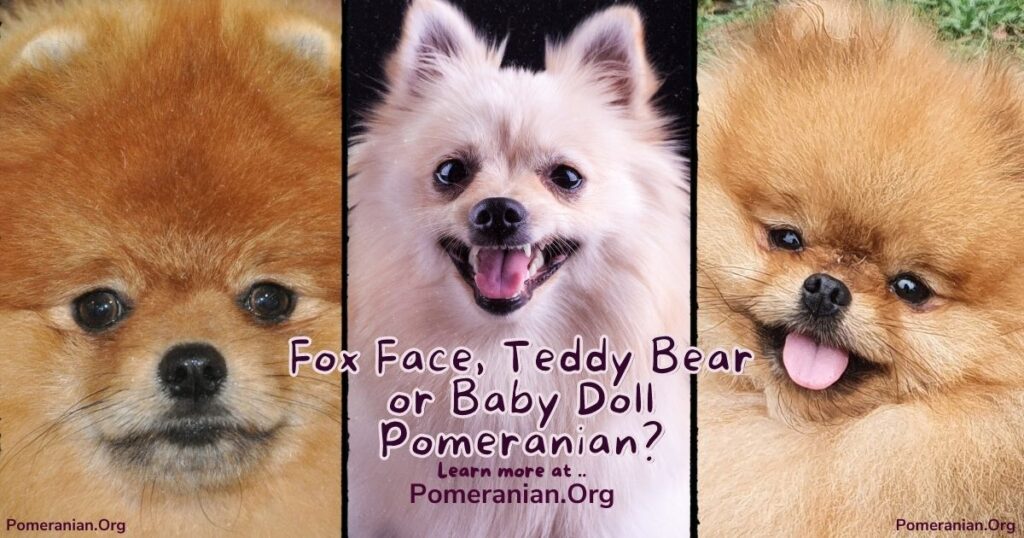
Over the years, this misunderstanding has contributed to the popular labels “fox face Pomeranian,” “teddy bear face Pomeranian,” and “baby doll face Pomeranian.” In reality, the breed standard does not recognize any of these as separate head types. Instead, it describes a balanced head with a muzzle that is neither excessively long nor excessively short.
A well-bred Pomeranian should possess:
- A balanced wedge-shaped head.
- Small, erect ears carried high on the head.
- Dark, bright, intelligent eyes.
- A well-defined stop.
- A muzzle in proportion to the skull.
- An alert and lively expression.
The goal is balance, not extremes. An excessively short muzzle may contribute to breathing, eye, and dental issues, while an overly long muzzle can detract from the correct breed type. The ideal Pomeranian head lies between these extremes and contributes to the breed’s distinctive expression and character.
Having bred and exhibited Pomeranians for more than 50 years, I have found that many puppies change considerably as they mature. A young puppy that appears to have a teddy bear face today may develop a very different expression as an adult. This is one reason why experienced breeders evaluate the complete dog rather than relying on marketing terms or head-shape labels.
Teddy Bear vs Fox Face Pomeranian
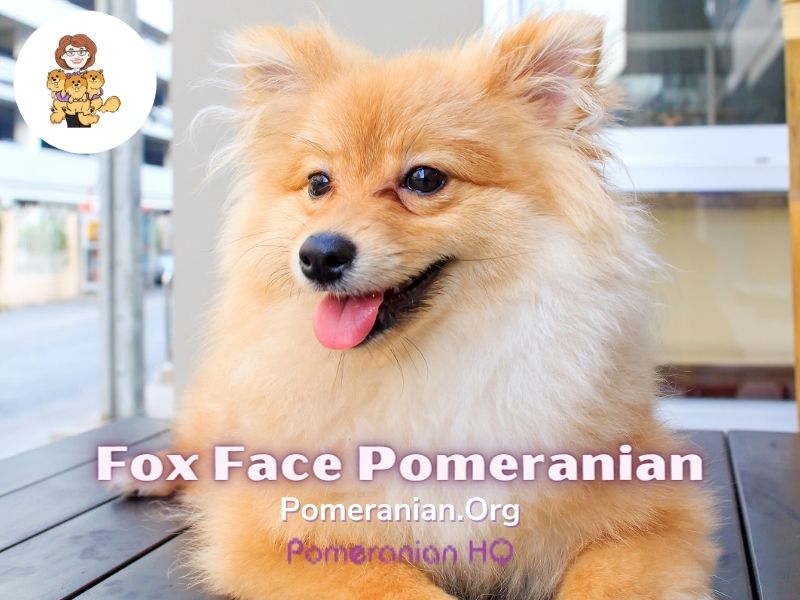
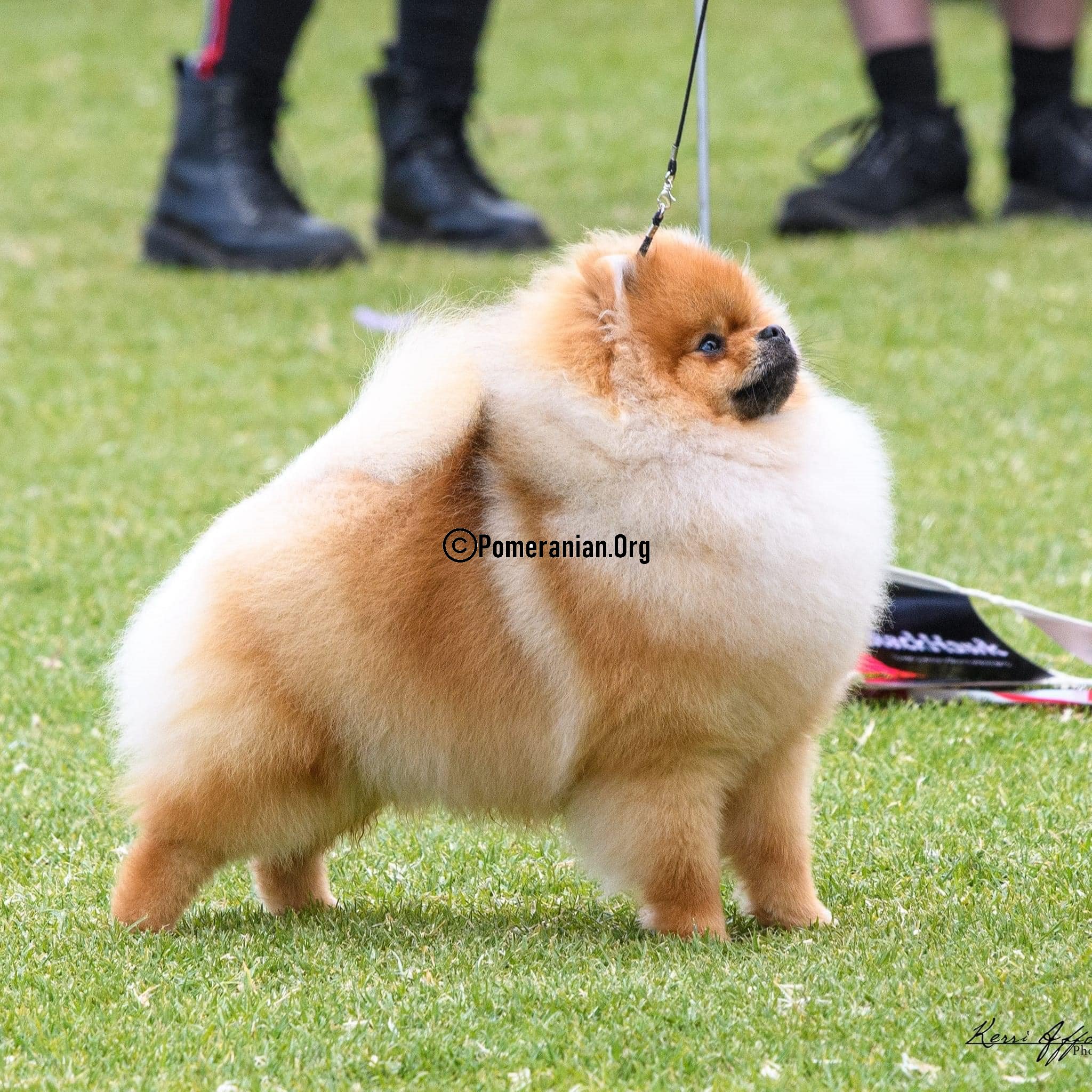
Fox Face Pomeranian
I’d soften it slightly so it sounds educational rather than overly critical, while still making your point. It also gives you opportunities to naturally include fox face Pomeranian, fox-faced Pomeranian, fox Pomeranian, long nose Pomeranian, and Pomeranian faces keywords.
The dog pictured above could be described by some people as a fox-faced Pomeranian, a fox Pomeranian, or simply a Pomeranian. These are informal terms commonly used to describe one of the so-called 3 types of Pomeranian faces.
In my opinion, this type of long-nosed Pomeranian is not representative of the correct Pomeranian type and is more reminiscent of the larger German Spitz. While individual dogs naturally vary, an excessively long muzzle can alter the breed’s distinctive expression and overall balance.
This dog also appears to lack the abundant head furnishings typically associated with the breed. The ears appear relatively large in proportion to the head, and the stop—the point where the muzzle meets the skull—is insufficiently defined. Together, these features contribute to a more elongated appearance than is generally desired in the Pomeranian.
It is important to remember that when discussing Pomeranian faces, breeders evaluate the entire head rather than focusing solely on muzzle length. The skull, stop, eyes, ears, muzzle, expression, and coat all contribute to the dog’s overall appearance.
As a standard guideline, the distance from the tip of the nose to the stop, and from the stop to the back of the head, will measure 1:2 in most Pomeranians. The middle dog’s head does not have the correct proportions for a Pom dog. Instead of the required Pomeranian measurements of 1:2, this dog would measure closer to 1:1.
It is very unfortunate that any reference to a fox is included in the Pomeranian breed standards.
The U.S.A Pom Breed standard includes the following reference: “Expression – may be referred to as fox-like, denoting his alert and intelligent nature. “ The U.K. and Canadian Breed Standard refers to the head as ‘Head and nose foxy in outline “
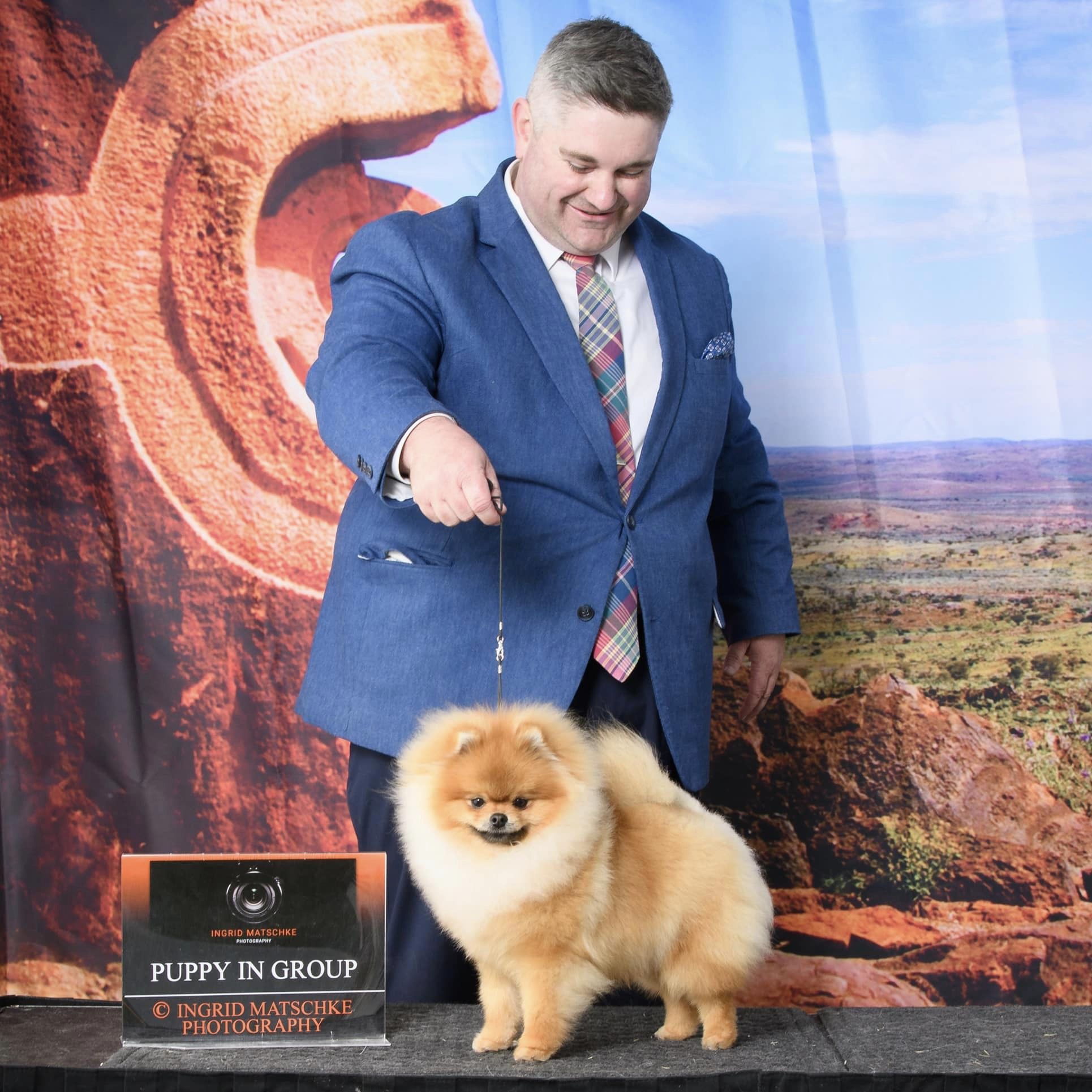
Teddy Bear Pomeranian
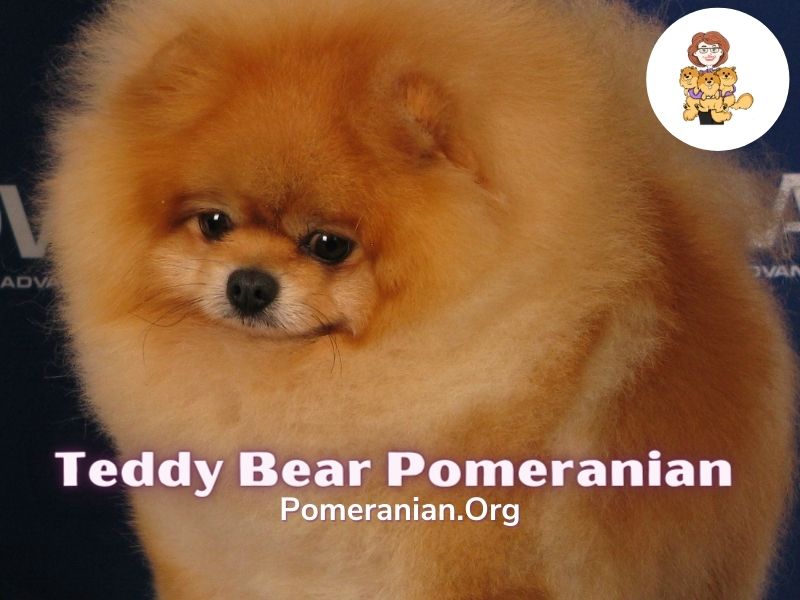
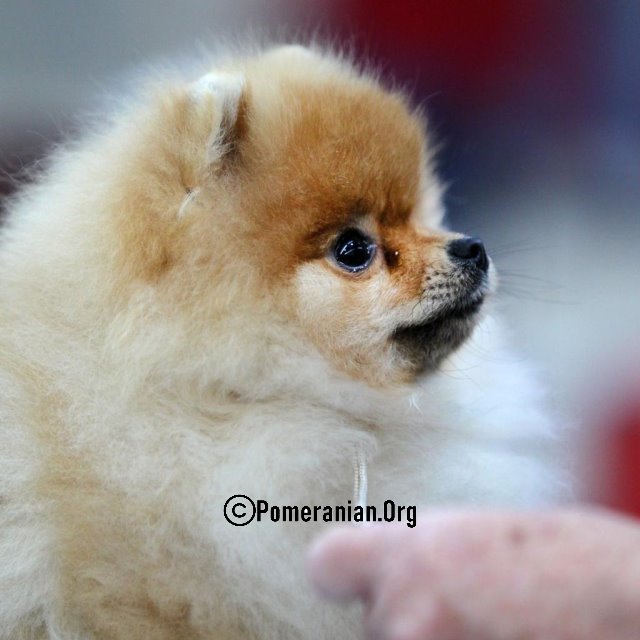
The beautiful Pomeranian pictured above could be described as a teddy bear Pomeranian, a term often used by people searching for Pomeranian puppies that look like teddy bears.
Compared with a so-called fox face Pomeranian, this dog has a noticeably shorter muzzle, a well-defined stop, fuller cheeks, and a softer facial expression. These features create the rounded appearance many people associate with a bear-faced Pomeranian, or bear-type Pomeranian.
The abundant head furnishings and full coat further enhance the teddy bear appearance. When the coat is in full bloom, the face can appear almost circular, which is why some owners describe this look as a Pomeranian bear dog or a Pomeranian puppy teddy bear face.
Multi Best in Show Supreme Champion Dochlaggie Dragon Heart is an excellent example of a dog many people would describe as a teddy-bear-faced Pomeranian. His combination of coat, expression, head proportions, and overall balance creates the look that has become so popular with pet owners around the world.
For those searching for teddy bear Pomeranians, bear face Pomeranian puppies, or a teddy bear Pomeranian breeder, I recommend seeking out a reputable preservation breeder who actively exhibits their dogs. Show and preservation breeders focus on producing healthy, sound Pomeranians with correct breed type rather than breeding solely for a fashionable head shape or marketing label.
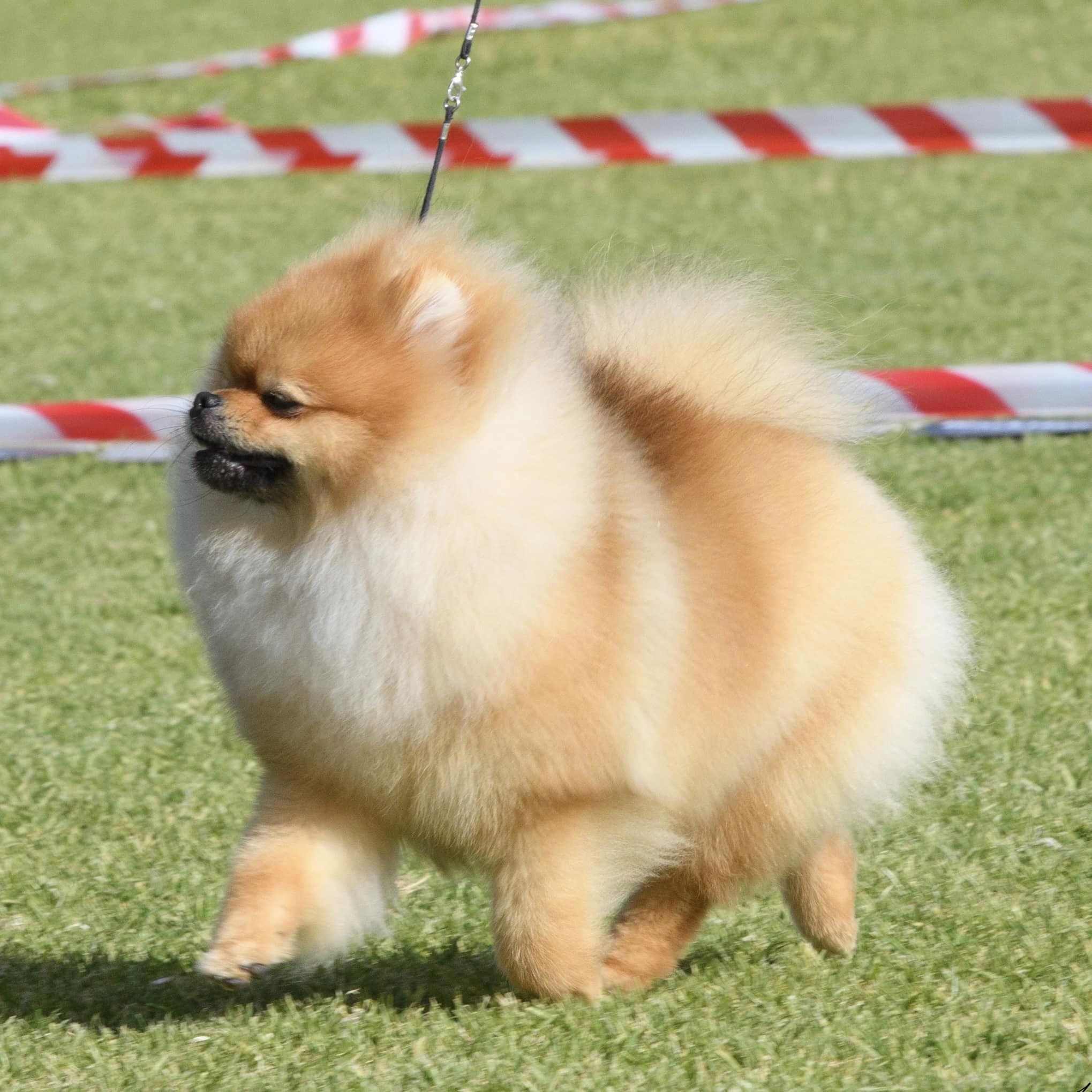
Baby Doll Face Pomeranian
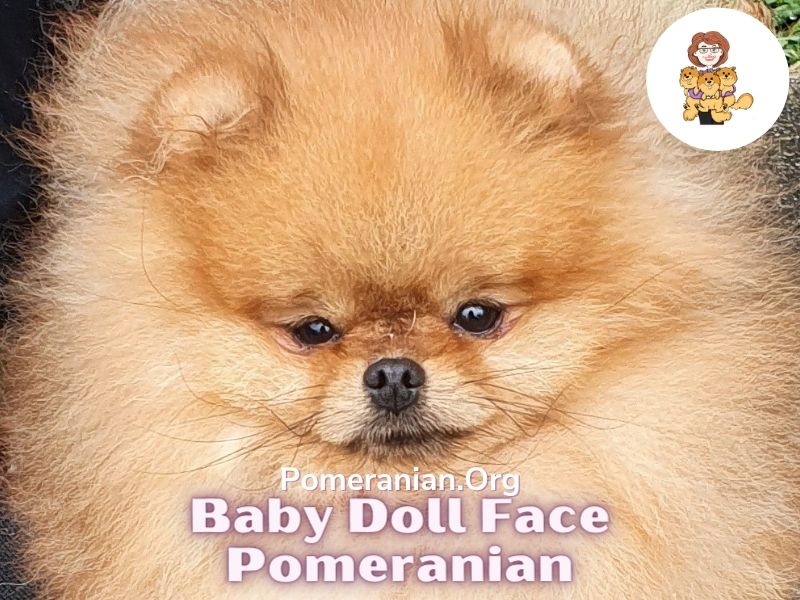
The Pomeranian pictured above was bred by Dochlaggie Pomeranians and could be described by some as baby-doll-faced or baby-faced.
Of the so-called 3 types of Pomeranian faces, the baby doll face is often considered to fall somewhere between the teddy bear and fox faces. Like many teddy bear Pomeranians, this dog has a relatively short muzzle and a well-defined stop. However, the overall appearance is generally more refined and delicate than that of a typical bear-faced Pomeranian.
The baby-doll-faced Pomeranian is often characterized by large, expressive eyes, a sweet expression, and a shorter snout, without the broader, fuller appearance commonly associated with a bear-type Pomeranian. Many owners are attracted to this look because it gives the dog a youthful, puppy-like appearance even in adulthood.
As with all discussions about Pomeranian faces, it is important to remember that these are informal descriptive terms rather than official classifications. Head shape exists on a spectrum, and many Pomeranians do not fit neatly into a single category. In addition, a young Pomeranian puppy’s teddy-bear face can change considerably as the dog matures, making it difficult to predict exactly how an adult dog will look.
Whether someone prefers a baby-doll-faced Pomeranian, a teddy-bear Pomeranian, or a fox-face Pomeranian, responsible breeders focus on producing healthy, sound dogs with good temperament and overall quality rather than breeding specifically for a marketing label.
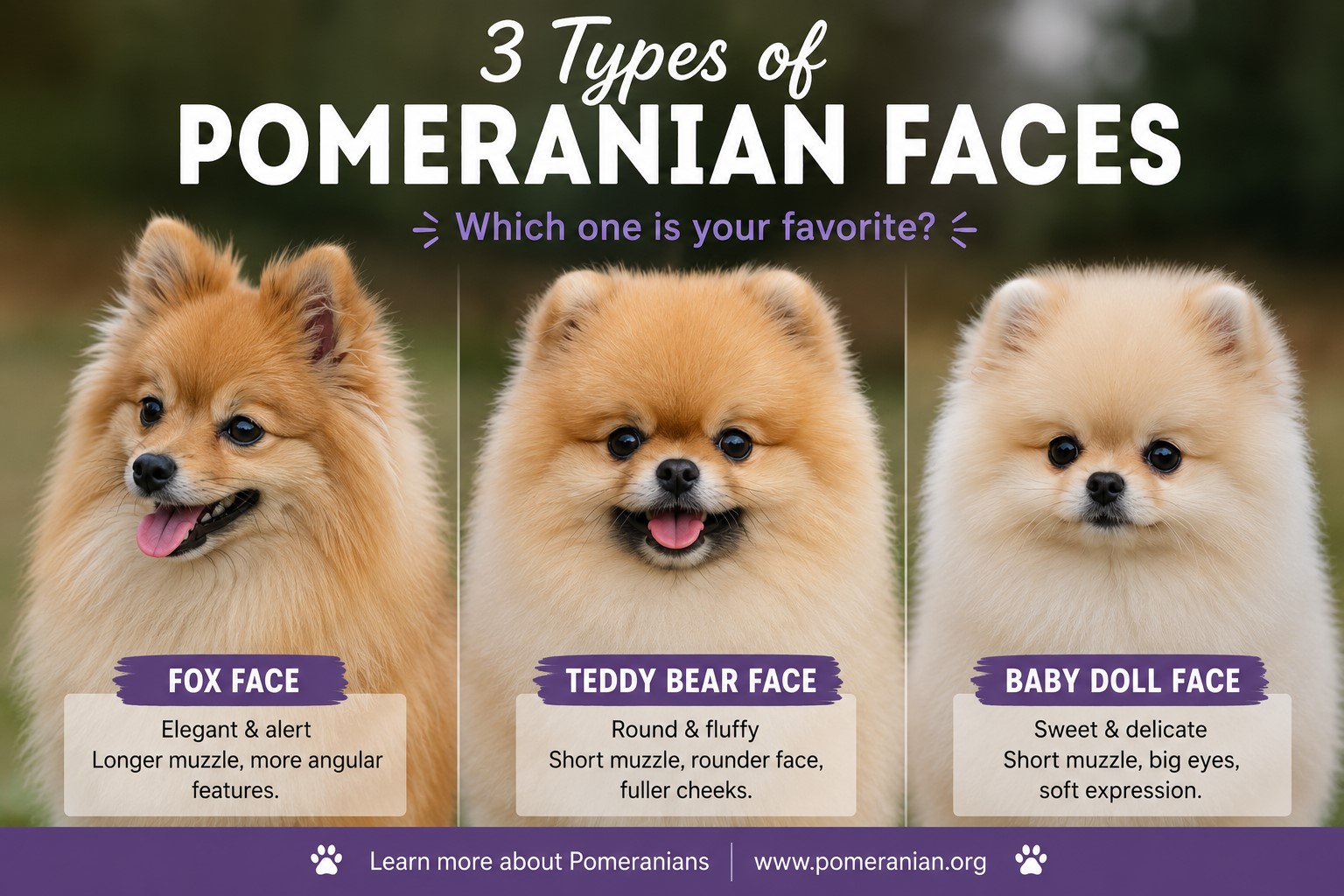
Important: Fox Face, Teddy Bear, and Baby Doll are informal descriptive terms commonly used in advertisements and on social media. These are not official Pomeranian classifications and are not recognised by major kennel clubs.
Teddy Bear Pomeranian: The Term Doesn’t Always Refer to Face Shape
When people use the term teddy bear Pomeranian, they are not always referring to a particular face shape. In many cases, the phrase describes a grooming style rather than the dog’s natural head structure.
One of the most famous examples is the haircut popularised by Boo the Pomeranian. This style is often called the teddy bear trim, Pomeranian teddy bear cut, or teddy bear haircut because it gives the dog a soft, rounded appearance that resembles a stuffed toy.
However, it is important to understand that this look is created primarily through grooming rather than genetics. A Pomeranian with a longer muzzle can still appear to be a teddy bear Pomeranian if the coat is trimmed appropriately, while a naturally short-faced dog may lose its teddy bear appearance if clipped incorrectly.
As I explain in the section on clipping the Pomeranian, great care should be taken when trimming this breed. Pomeranians possess a thick double coat that has been developed through generations of selective breeding.
The breed standard calls for a dense double coat consisting of:
If the outer coat is clipped too short or shaved down to the undercoat, it may not regrow properly. In some cases, recovery can take years, and occasionally the coat never returns to its original condition.
This does not mean Pomeranians should never be trimmed. Sensible trimming can improve balance, enhance the dog’s outline, and create a neater appearance. In fact, careful grooming can make a Pomeranian resemble a bear face Pomeranian or a Pomeranian puppy that looks like a teddy bear without compromising the integrity of the coat.
A good rule to remember is simple: you can always trim a little more later. If too much coat is removed in an attempt to achieve the perfect teddy bear Pomeranian look, the damage may take years to repair—if it can be repaired at all.
I like this heading because people searching “teddy bear pomeranian”, “teddy bear face pomeranian”, and “pomeranian puppies that look like teddy bears” will immediately see that you’re answering an important misconception.
Frequently Asked Questions About Pomeranian Face Types
Are there really 3 types of Pomeranian faces?
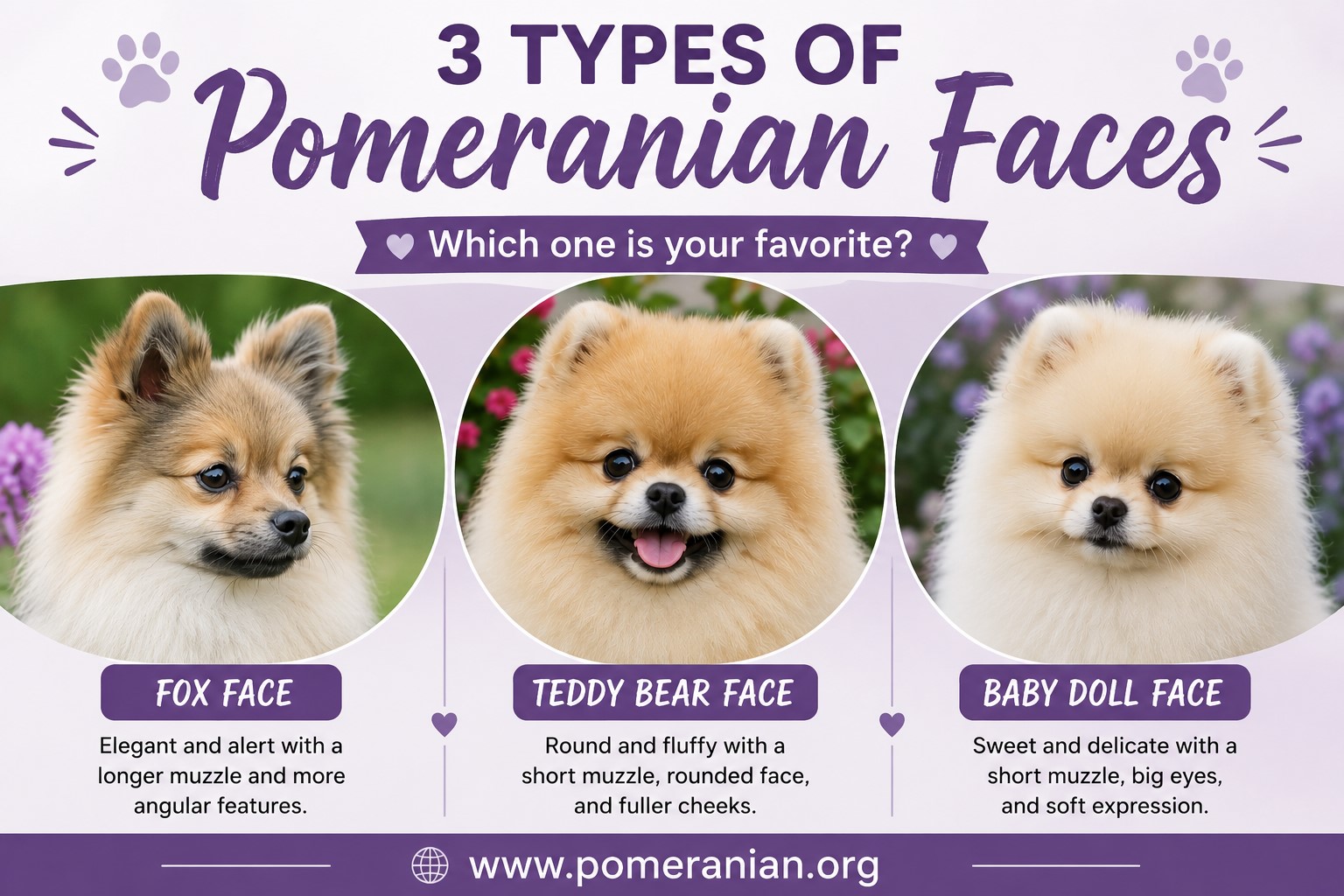
No. The so-called 3 types of Pomeranian faces—fox face, teddy bear face, and baby doll face—are informal descriptive terms. They are not official classifications recognised by major kennel clubs or the Pomeranian Breed Standard.
What is a teddy bear Pomeranian?
A teddy bear Pomeranian is a nickname used to describe a dog with a shorter muzzle, fuller cheeks, and a rounded facial appearance. The term may also refer to a grooming style designed to make the dog resemble a teddy bear.
What is a bear face Pomeranian?
The term bear face Pomeranian or bear type Pomeranian is commonly used to describe a Pomeranian with a rounded face, shorter snout, and abundant coat. It is another informal description rather than a recognised variety of the breed.
What is a baby doll face Pomeranian?
A baby doll face Pomeranian typically has a sweet expression, large eyes, and a relatively short muzzle. Many people consider this appearance to be somewhere between a teddy bear face and a fox face Pomeranian.
What is a fox face Pomeranian?
A fox face Pomeranian generally refers to a dog with a longer muzzle and a narrower facial appearance. The term is based on appearance only and is not an official Pomeranian classification.
Can a Pomeranian puppy’s face change as it grows?
Yes. Many Pomeranian puppies that look like teddy bears at eight weeks of age develop a different appearance as they mature. Skull shape, coat growth, and overall development can significantly alter a puppy’s facial appearance.
Should I choose a Pomeranian based on face type?
While many buyers are attracted to a particular look, experienced breeders evaluate the complete dog. Health, temperament, structure, movement, coat quality, and overall breed type are more important than whether a dog is described as a teddy bear, baby doll, or fox face Pomeranian.
Conclusion
While fox face, teddy bear, and baby doll are popular descriptions, the Pomeranian Breed Standard remains the best guide to correct breed type.
As a breeder of Pomeranians for over 50 years, I have found that a well-balanced head, sound structure, and excellent temperament are far more important than trendy labels. Understanding the differences helps buyers make informed decisions and appreciate the unique beauty of this remarkable breed.
Copyright Pomeranian.org. All Rights Reserved.
References and Further Reading:
Official Standard of the Pomeranian (AKC). American Kennel Club, 2011.
Denise Leo, The Pomeranian Handbook.
The #1 Pomeranian Book