
DVM, University of Animal and Veterinary Sciences, 2019
MSc. (Hons.) Animal Breeding & Genetics, University of Agriculture Faisalabad, 2021
How old is your Pomeranian in human years? Whether you have a cheeky puppy or a much-loved older companion, comparing their age with ours is an interesting way to understand their stage of life. But simply multiplying your Pom’s age by seven doesn’t tell the whole story.
I’m Denise Leo, a Pomeranian breeder since 1975, ANKC Specialist Judge and author of The Pomeranian Handbook. Over five decades with this wonderful breed, I’ve watched generations grow from tiny newborns into lively adults and treasured seniors. Each develops at their own pace.
Below, you’ll find a Pomeranian age chart, approximate human-age comparisons and a guide to the puppy, adult and senior years. Remember, these comparisons are estimates—your Pom’s health and individual needs matter far more than their age in “human years.”
Quick Answer: How Old Is Your Pomeranian in Human Years?
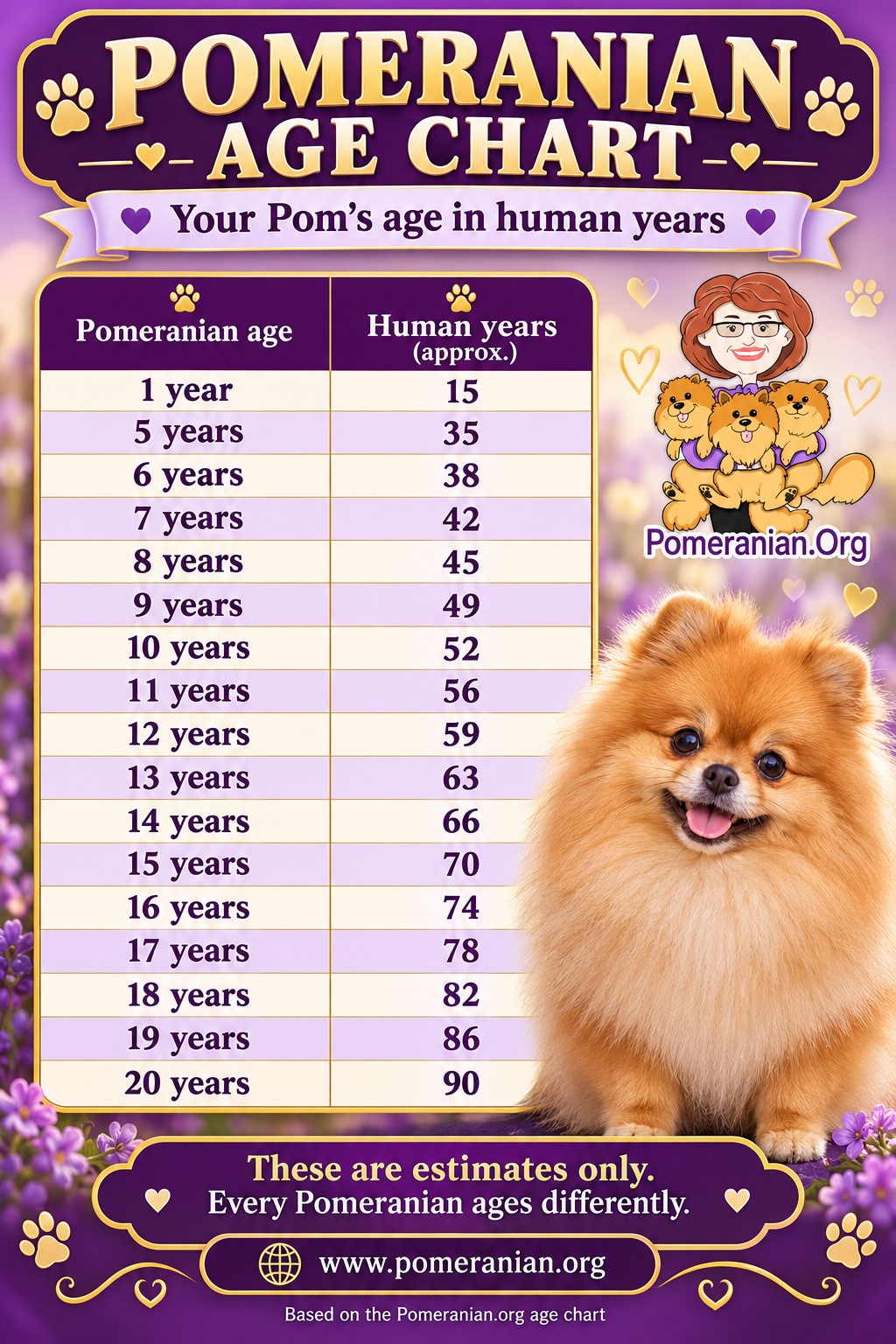
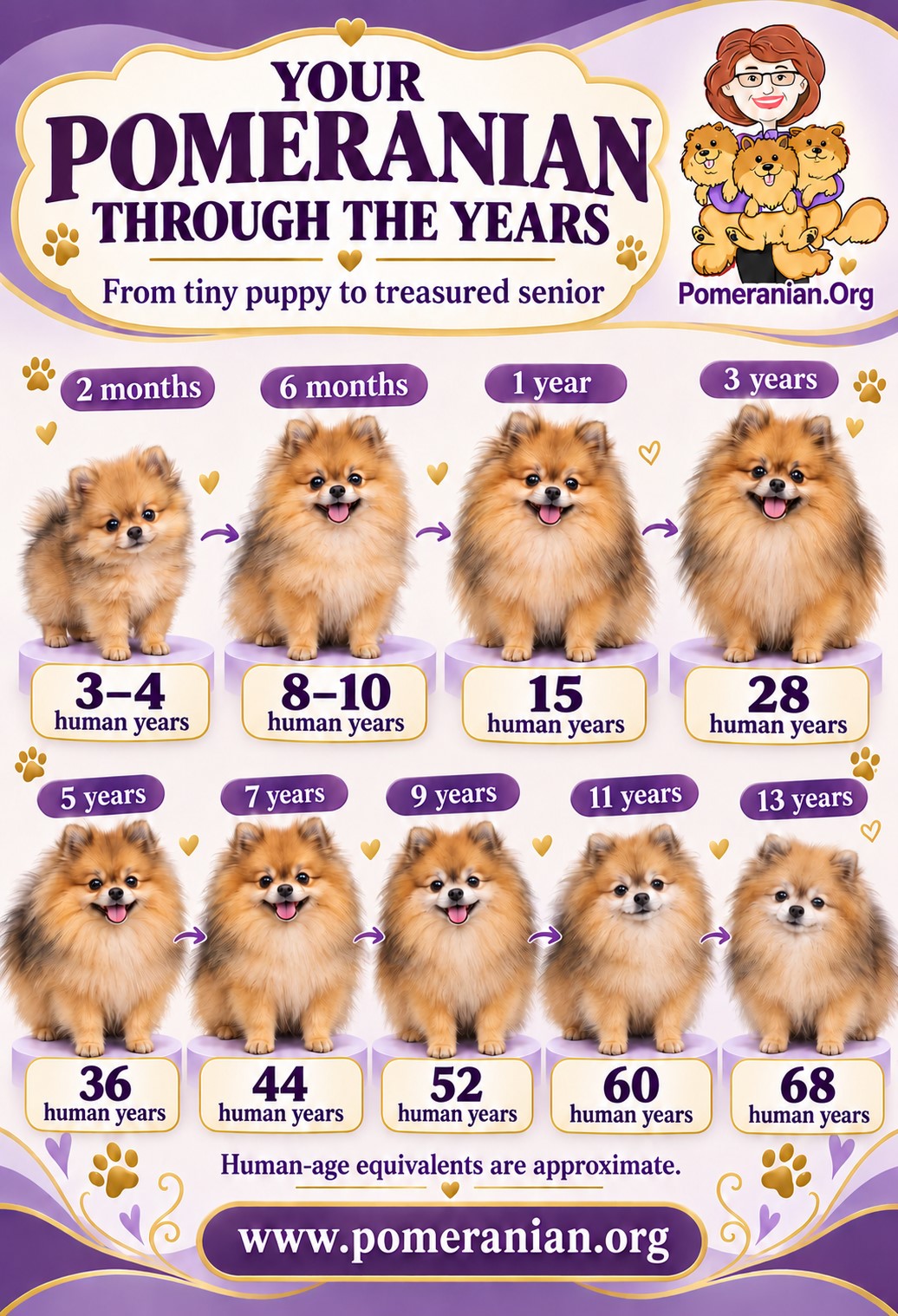
A one-year-old Pomeranian is approximately equivalent to a 15-year-old human, while a two-year-old Pom is roughly equivalent to a 24-year-old person. After that, a commonly used age chart adds approximately four human years for each additional dog year.
Using this guide, a five-year-old Pom is about 36, a nine-year-old is about 52, and a 13-year-old is about 68 in human years.
Remember: These figures are estimates, not an exact biological conversion or a prediction of lifespan. Your Pomeranian’s health, genetics and individual development matter more than the number on an age chart.
Why Isn’t One Dog Year Equal to Seven Human Years?
Dogs develop rapidly during their first two years, so multiplying every birthday by seven overlooks the speed of early development. A one-year-old Pomeranian is already approaching physical adulthood, although their coat and behaviour may still be maturing.
The chart uses approximately 15 human years for the first year, nine more for the second, and four for each year thereafter. It offers a simple comparison rather than an exact biological formula.
Use your Pom’s age as a guide to their changing needs—not as a limit on what they can enjoy. An older Pomeranian may still love walks, play and learning, with activities adjusted to their comfort and ability.

Pomeranian Life Stages: From Puppy to Senior
Your Pomeranian’s age in human years is an interesting comparison, but their life stage provides a more practical guide to everyday care. Growth, coat development and emotional maturity do not always happen at the same time.
Puppyhood: Birth to Around 12 Months
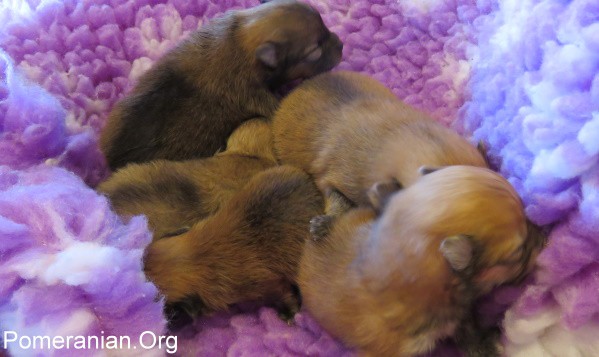
The first year brings rapid changes. Your puppy grows, develops coordination, loses baby teeth and learns how to live confidently alongside people and other animals.
This is the time to establish gentle grooming, toilet training, comfortable lead walking and positive social experiences. Keep training sessions short and allow plenty of uninterrupted sleep.
Many Pomeranians also pass through the “puppy uglies”, when their puppy coat sheds and the developing adult coat looks uneven or sparse. This temporary stage can make a puppy look quite different from the fluffy youngster you first brought home.
Young Adulthood: Around One to Two Years
By their first birthday, many Pomeranians are close to their adult height and weight. However, this does not mean every part of their development is complete.
Their coat may continue to fill out, and their behaviour can still be lively and adolescent. Continue rewarding good manners and providing predictable routines, suitable exercise and activities that engage their mind.
In my experience breeding Pomeranians, a youngster’s appearance can change considerably as they mature. An unfinished coat should not be confused with an unfinished frame—or poor health automatically dismissed as normal development.
The Adult Years
Adult Pomeranians benefit from consistent care: balanced nutrition, a healthy body condition, regular grooming, dental care and appropriate exercise.
Pay attention to what is normal for your individual dog. Knowing their usual appetite, energy, movement and behaviour makes it easier to notice changes.

The Senior Years
There is no single birthday that makes every Pomeranian a senior. Small dogs often remain active well into later life, and individual health varies.
As your Pom grows older, adapt their routine to their comfort. They may appreciate shorter walks, more rest breaks, secure footing and easier access to favourite resting places. Gentle play and familiar training games can still be enjoyable.
Do not assume that slowing down, becoming withdrawn or changing toilet habits is simply old age. Discuss changes with your veterinarian so that potentially treatable problems are investigated and your Pom’s care can be adjusted.
When Is a Pomeranian Considered Old?
An eight-year-old Pomeranian is entering their later adult years, but that birthday does not automatically make them elderly. Some Poms remain energetic and playful for many years, while others need adjustments to their care sooner.
Rather than relying only on an age chart, consider your dog’s comfort, mobility, behaviour and ability to enjoy their usual activities. Your veterinarian can help assess their life stage and recommend an appropriate check-up schedule.
Does a Grey Muzzle Mean My Pomeranian Is Old?
Grey hairs alone cannot tell you a Pomeranian’s age. Some dogs develop greying earlier than others, and it may be difficult to notice on a cream or white Pom. Coat colour and appearance are clues, rather than reliable measures of age.
The same applies to activity levels. A quiet Pomeranian is not necessarily elderly, and a playful one can still be a senior.
Watch for Changes in Your Individual Dog
Knowing what is normal for your Pom is more useful than comparing them with another dog of the same age. Changes worth discussing with your veterinarian include:
- Less enthusiasm for walks or play.
- Stiffness or hesitation when getting up.
- Changes in appetite, thirst or weight.
- New toilet accidents.
- Changes in sleep, confidence or social behaviour.
- Difficulty responding to familiar sounds or finding their way around.
These changes do not tell you your dog’s “human age”. They tell you that their needs may have changed.
Over my decades with Pomeranians, I have learned to appreciate each stage of their lives. An older Pom is still the same much-loved companion—sometimes they simply need us to notice more and adjust a little.
For more practical guidance, read my Senior Pomeranian Care Guide.

How Can You Tell a Pomeranian’s Age Without a Birth Date?
If you have adopted a Pomeranian without a confirmed date of birth, you may wonder how old they really are. An estimated age is useful, but appearance alone cannot reveal an exact birthday.
Start With Their Records
Ask the rescue organisation or previous owner for any available puppy, registration or veterinary records. Microchip paperwork may also include a recorded birth date, although it is worth checking whether that date was documented or estimated.
If you have pedigree papers, check that the identifying details match your dog. Their original breeder may also be able to confirm the date of birth.
Ask Your Veterinarian for an Estimate
Your veterinarian can assess your Pomeranian and discuss a likely age range. Tell them about any history you have, including previous care and changes you have noticed.
Avoid relying on a single feature, such as stained teeth, a grey muzzle or a quiet temperament. Appearance and behaviour vary between individuals, and previous care can affect how a dog looks.
Use the Estimate as a Starting Point
When an exact birth date is unavailable, focus on establishing a suitable care routine rather than finding a precise human-age equivalent.
Record the estimated age in your Pom’s paperwork and make clear that it is approximate. You can still celebrate a birthday—or the anniversary of the day they joined your family!
Knowing their exact age is less important than understanding the dog in front of you and meeting their needs today.
Frequently Asked Questions About Pomeranian Age
Wondering how your Pom’s age compares with yours? Select a question below.
How old is a one-year-old Pomeranian in human years?
A one-year-old Pomeranian is approximately equivalent to a 15-year-old human using the comparison chart above. This is a general estimate, rather than an exact measure of physical or emotional maturity.
How old is a two-year-old Pomeranian in human years?
A two-year-old Pomeranian is approximately 24 in human years. Dogs develop rapidly during their early years, which is why multiplying their age by seven gives a misleading comparison.
How old is a nine-year-old Pomeranian in human years?
Using this chart, a nine-year-old Pomeranian is approximately equivalent to a 52-year-old person. Their individual health and care needs cannot be determined from this number alone.
How old is an 11-year-old Pomeranian in human years?
An 11-year-old Pomeranian is approximately 60 in human years using this guide. The comparison does not predict their activity level or remaining lifespan.
How old is a 13-year-old Pomeranian in human years?
A 13-year-old Pomeranian is approximately equivalent to a 68-year-old human. Their comfort, health and enjoyment of daily activities are more useful guides to their needs than the equivalent age.
Is there an exact formula for Pomeranian age?
No. There is no exact human-age conversion specifically validated for Pomeranians. Age charts provide a simplified comparison, and different sources may use different estimates.
Can this chart predict how long my Pomeranian will live?
No. A human-age equivalent is not a lifespan prediction. Use the chart to understand the general progression of life stages, while making care decisions based on your individual dog and veterinary guidance.
A gentle reminder: All human-age equivalents are approximate. Your Pomeranian’s individual needs matter more than a number on a chart.
Pomeranian Dog Age in Human Years

Every Pomeranian Age Is Special
Knowing your Pomeranian’s age in human years is interesting, but these comparisons are only estimates. From playful puppyhood to the treasured senior years, what matters most is recognising your Pom’s changing needs and providing thoughtful care, comfort and love.
⚠ Veterinary Disclaimer
The information provided in this article is intended for educational and general informational purposes only and is not a substitute for professional veterinary advice, diagnosis, or treatment.
Always seek the advice of your veterinarian or another qualified animal health professional with any questions you may have regarding your dog’s health or medical condition.
Never ignore professional veterinary advice or delay seeking treatment because of something you have read on this or any other website.
If your Pomeranian is showing signs of illness, discomfort, skin irritation, or an adverse reaction to medication or treatment, contact your veterinarian promptly.
Copyright Pomeranian.Org. All Rights Reserved.
References and Further Reading:
[1] Denise Leo, The Pomeranian Handbook.
[2] E.Parker, The Popular Pomeranian.
[3] L.Ives, Show Pomeranians.