
DVM, University of Animal and Veterinary Sciences, 2019
MSc. (Hons.) Animal Breeding & Genetics, University of Agriculture Faisalabad, 2021
Pomeranian Reverse Sneezing: What Owners Need to Know
Reverse sneezing is often harmless, but similar sounds can be caused by more serious breathing problems.
A Pomeranian reverse sneezing episode can be frightening to witness. Your dog may suddenly stand still, extend the neck, close the mouth, and make repeated snorting or gasping sounds while rapidly drawing air inward through the nose. A typical episode is usually brief, with the dog returning completely to normal afterward.
However, not every honking, snorting, gagging, or unusual breathing sound is reverse sneezing. Pomeranians can also experience tracheal collapse, respiratory infections, nasal irritation, foreign objects, and other airway problems.
Helping Your Pomeranian During an Episode
Remain calm and reassure your dog in a gentle voice. You may briefly place your fingers across the nostrils for only a second or two. This encourages your Pomeranian to breathe through the mouth and swallow, which may interrupt the reverse-sneezing reflex and restore normal breathing. Release the nostrils immediately and stop if your dog becomes more distressed. Never obstruct the nose for a prolonged period.
Have Your Pomeranian Checked by a Veterinarian
If your Pomeranian has experienced suspected reverse sneezing, particularly for the first time, arrange a veterinary examination. A veterinarian can confirm whether the episodes are consistent with reverse sneezing and rule out other causes of abnormal breathing. Repeated, worsening, prolonged, or changing episodes should always be investigated.
Blue, gray, or very pale gums, open-mouth or labored breathing, marked abdominal effort, weakness, collapse, suspected choking, or failure to return to normal are not signs to monitor at home.
What Is a Pomeranian Reverse Sneeze?
Reverse sneezing, medically known as paroxysmal respiration, is a reflex caused by irritation at the back of the nose and upper throat.
During a normal sneeze, air is forced outward. During a reverse sneeze, a Pomeranian rapidly draws air inward through the nose, producing repeated snorting or gasping sounds.
The dog will usually stand still, extend the neck, keep the mouth closed, and flare the nostrils. Most episodes last from a few seconds to about a minute, after which the dog returns to normal.
What Causes Reverse Sneezing in Pomeranians?
A reverse sneeze occurs when something irritates the back of the nose or upper throat. Sometimes no specific cause can be identified.
Possible triggers include:
- Excitement or sudden activity
- Eating or drinking too quickly
- Pulling against a collar
- Dust, pollen, smoke, perfume, or cleaning products
- Nasal discharge or postnasal irritation
- Foreign material, such as a grass seed
- Nasal mites or respiratory infection
- An elongated soft palate or another airway problem
Frequent, worsening, or unusual episodes should be investigated by your veterinarian to identify or rule out an underlying cause.
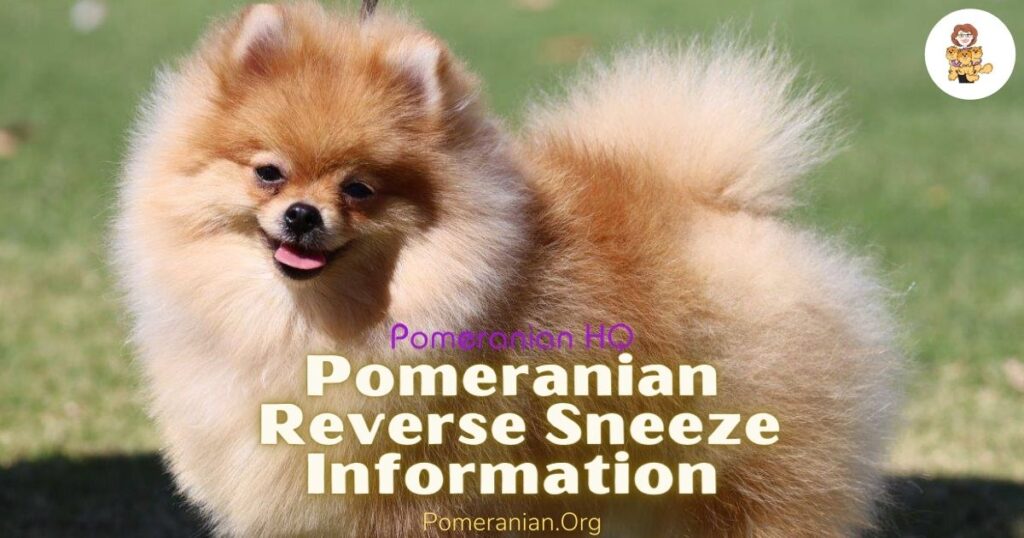
Reverse Sneezing or Tracheal Collapse?
These conditions can sound similar, but they are not the same.
Reverse Sneezing
- Repeated inward snorting
- The mouth usually remains closed
- The neck may be extended
- The episode is generally brief
- The dog returns to normal afterward
Tracheal Collapse
- Persistent, dry “goose-honk” cough
- May worsen with excitement or exercise
- Heat and smoke can trigger coughing
- Pressure from a collar may worsen it
- Requires veterinary assessment
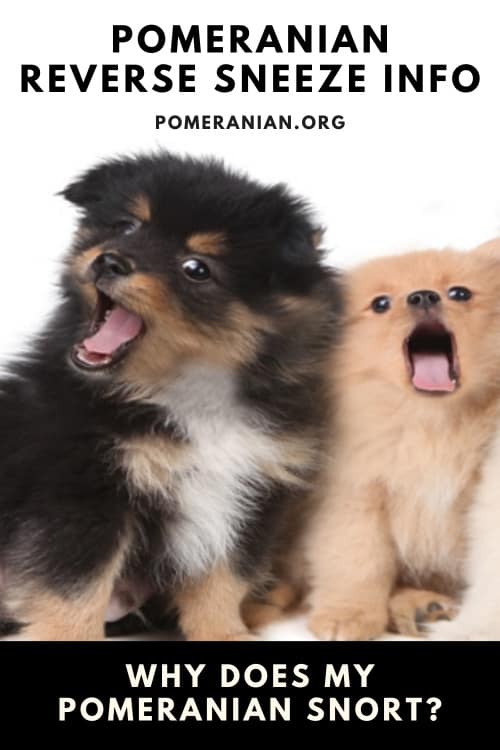
When Does Reverse Sneezing Need Veterinary Attention?
Arrange a veterinary examination if episodes are new, frequent, worsening, prolonged, or accompanied by coughing, nasal discharge, bleeding, reduced appetite, or unusual tiredness.
Seek emergency veterinary care if your Pomeranian develops:
- Blue, gray, or very pale gums
- Open-mouth or labored breathing
- Weakness, fainting, or collapse
- Suspected choking
- Breathing that does not return to normal
A video of the episode may help your veterinarian identify the type of breathing problem.
How Is Reverse Sneezing Diagnosed?
Your veterinarian will consider the appearance and frequency of the episodes, examine your Pomeranian, and rule out other causes of abnormal breathing.
Possible causes include tracheal collapse, respiratory infection, nasal mites, allergies, a foreign object, or a growth within the nasal passages.
Frequent or persistent episodes may require blood tests, X-rays, examination of the mouth and throat, or rhinoscopy. Bringing a video of an episode can make diagnosis easier.
Treatment for Pomeranian Reverse Sneezing
Occasional reverse sneezing usually stops without medical treatment. When an underlying problem is identified, treatment will depend on the veterinarian’s diagnosis.
- Parasite control
- Allergy management
- Treatment for infection
- Removal of a nasal foreign object
Conclusion
An occasional reverse sneeze is often harmless, but unusual breathing sounds can be difficult to identify at home. If you are worried about your Pomeranian, your veterinarian should always be your first port of call.
Do not waste precious time searching the internet for a diagnosis or trying unproven remedies. Record the episode if it is safe, reassure your little dog, and show the video to your veterinarian. Online information can help you understand reverse sneezing, but only a veterinary examination can rule out more serious breathing problems and provide the care your Pomeranian needs.
Please note: while I do discuss health, care, and behavioral issues, you should never use this information as a replacement for advice from qualified veterinarians, diagnoses, or recommended treatment regimes. If you have any worries about the health of your Pomeranian, your first contact should be your regular vet or, if you don’t yet have one, a vet that works locally. Never ignore or avoid treatment and advice from your vet because of a piece of information you have read on any website.
N.B. This article regarding Pomeranian health issues was written in consultation with our resident veterinarian.
Dr. Muqeet Mushtaq
DVM, University of Animal and Veterinary Sciences, 2019
MSc. (Hons.) (Animal Breeding & Genetics), University of Agriculture Faisalabad, 2021
Copyright Pomeranian.org. All Rights Reserved.
📚 References & Further Reading
- [1] AKC Pomeranian Breed Standard (2011)
- [2] English Kennel Club Breed Standard
- [3] The Pomeranian Handbook – Denise Leo
- [4] Denlinger, The Complete Pomeranian
- [5] Kimbering, 1891–1991
- [6] Taplin, The Sportsman’s Cabinet
- [7] Parker, The Popular Pomeranian
- [8] Ives, Show Pomeranians