
Learning how to train a Pomeranian starts with understanding the bright, lively little dog in front of you. Poms can be enthusiastic learners, especially when lessons are short, rewards are appealing and everyone in the household follows the same rules.
Whether you are beginning Pomeranian puppy training or teaching an adult dog new skills, focus on everyday foundations: responding to their name, coming when called, toilet training, walking comfortably on a lead and settling quietly.
Having bred and exhibited Pomeranians since 1975, I know how much patience, gentle guidance and consistency matter. In this guide, I share practical Pomeranian training tips, basic lessons and enjoyable games to help you build good habits and a closer relationship with your Pom.
Quick Answer: How to Train a Pomeranian
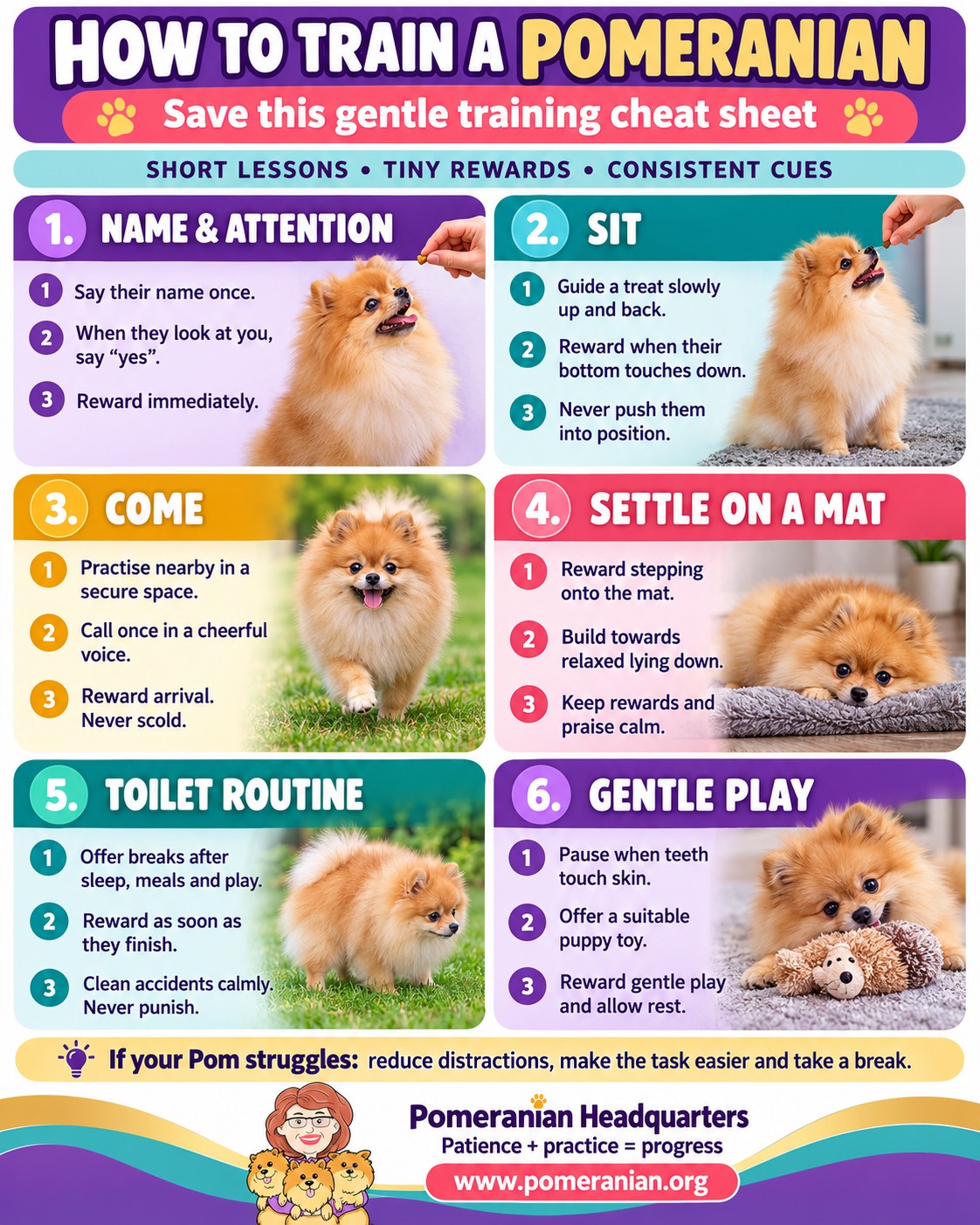
Train your Pomeranian with short, enjoyable lessons, clear cues and rewards for the behaviour you want. Start with everyday skills, practise consistently and gradually introduce distractions as your Pom gains confidence.
Your Pomeranian Training Checklist
- Start gently: Begin simple lessons when your puppy comes home, allowing time to settle and rest.
- Keep sessions brief: Practise for a few minutes at a time and finish before your Pom loses interest.
- Reward promptly: Use tiny treats, praise or play immediately after the behaviour you want.
- Teach the essentials: Focus on their name, coming when called, sit, comfortable lead walking and settling.
- Build a toilet routine: Offer frequent toilet opportunities, supervise closely and reward success.
- Use consistent cues: Everyone should use the same words and household rules.
- Make learning enjoyable: Include gentle games, sniffing activities and plenty of breaks.
Remember: Pomeranian puppy training takes repetition and patience. Avoid shouting, physical punishment or expecting too much too soon. Make each lesson easy enough for your Pom to succeed.

When to Start Pomeranian Puppy Training
Pomeranian puppy training can begin when your puppy comes home. Start with gentle everyday lessons while giving your new arrival time to settle, sleep and explore at their own pace.
Early training does not need to involve a formal obedience session. Rewarding your puppy for responding to their name, toileting in the right place or standing calmly for a gentle brush all helps establish useful habits.
Start With Simple Foundations
During the first days, focus on:
- Name recognition: Say your puppy’s name once in a cheerful voice and reward them when they look towards you.
- A toilet routine: Offer frequent opportunities to use the designated toilet area, particularly after waking, eating and playing.
- Coming when called: Begin over a short distance in a quiet, secure space.
- Gentle handling: Introduce brief, comfortable touches to paws, ears and coat, rewarding relaxed cooperation.
- Settling: Provide a comfortable resting place and allow your puppy to relax without constant attention.
Keep Lessons Short and Enjoyable
Practise for a few minutes at a time, using tiny rewards and a cheerful approach. Finish while your puppy is still interested rather than repeating a lesson until they become tired or frustrated.
If your Pom struggles, make the task easier. Move closer, reduce distractions or take a break.
Can You Train an Adult Pomeranian?
Yes—adult Pomeranians can learn new skills too. Begin with what your dog already understands and introduce changes gradually. Established habits may take time to change, so reward small improvements and keep your expectations realistic.
Whatever your Pomeranian’s age, clear teaching and consistent practice matter more than rushing through commands.

How to Train a Pomeranian Puppy: First Lessons
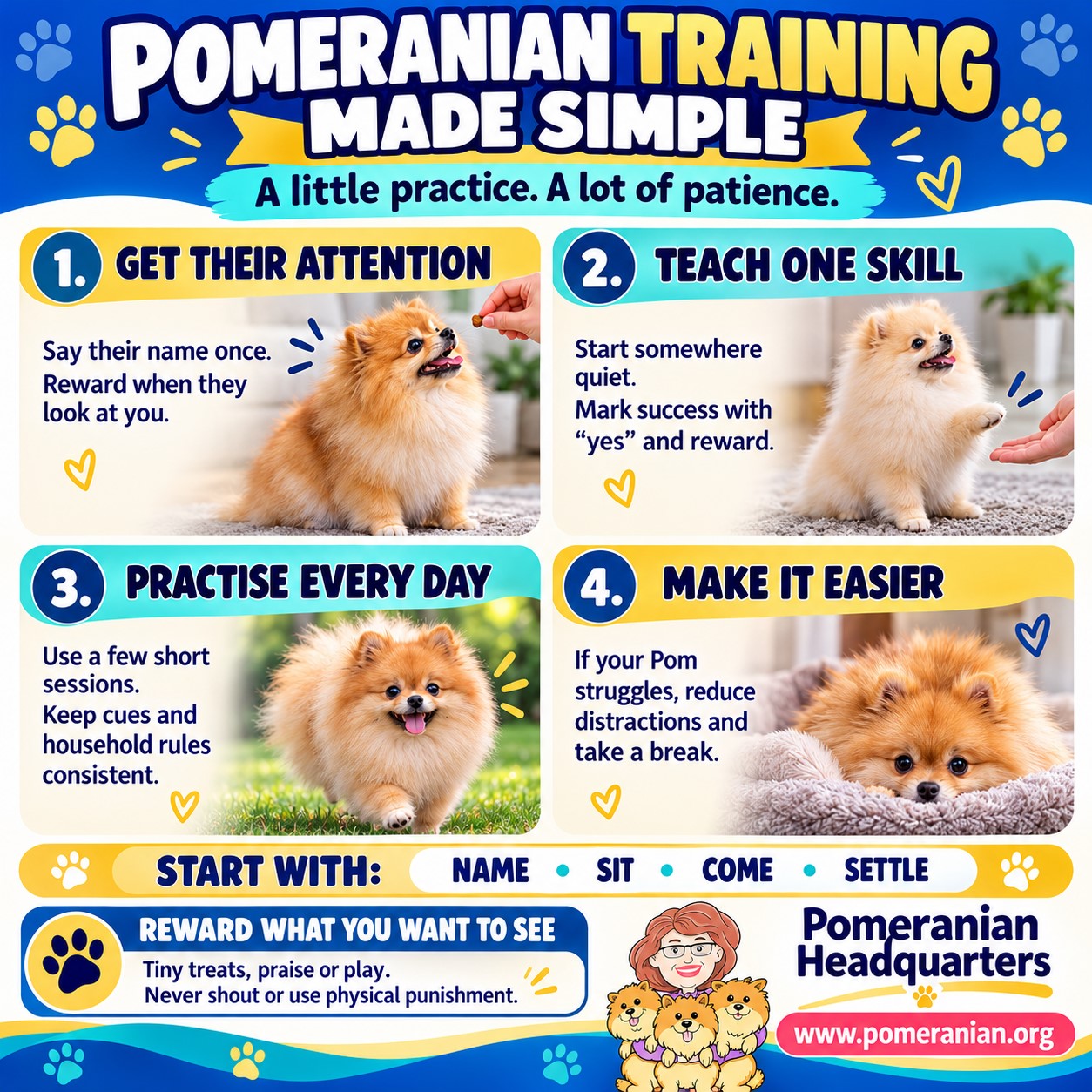
When learning how to train a Pomeranian puppy, begin in a quiet, familiar space. Have a few tiny treats ready and choose a time when your puppy is awake, comfortable and interested in interacting.
Teach one small skill at a time. Reward the moment your puppy gets it right, so they can connect their action with the reward.
Teach Your Pomeranian Their Name
Say your puppy’s name once in a cheerful voice. When they turn towards you, say “yes” and offer a reward.
Practise a few times, then take a break. Avoid repeating their name constantly or using it to scold them. You want your Pom to associate their name with paying attention to you.
Introduce a Marker Word
A marker word, such as “yes,” tells your puppy exactly which action earned a reward.
Start by saying “yes” and immediately giving a tiny treat. After several short practice sessions, use the word as your puppy performs a behaviour you want, then follow it with the reward.
Teach a Simple Sit
Hold a treat close to your puppy’s nose and slowly move it slightly upwards and back towards their forehead. As their head follows, their bottom may naturally lower.
Mark and reward as soon as they sit. Keep the movement small to discourage jumping, and never push their bottom down. Once they reliably follow the movement, introduce the word “sit” just before your hand signal.
Begin Coming When Called
From a short distance, crouch or stand sideways and cheerfully say your puppy’s name followed by “come.” Reward them when they reach you.
Practise in a secure area with few distractions. Avoid calling your puppy for something they dislike, and never punish them after they come to you.
Practise Gentle Handling
Briefly touch a shoulder or paw, reward your puppy, then stop. Gradually build towards the handling needed for grooming and routine care.
If your puppy pulls away, becomes tense or tries to bite, pause and make the next attempt easier. Comfortable cooperation develops through small, positive experiences.

Teaching Your Pomeranian Basic Commands
Once your Pom understands their name and enjoys short lessons, you can build on those foundations. Teach one new skill at a time, beginning somewhere quiet before practising around distractions.
Stay
Ask your Pomeranian to sit, then wait just a moment before marking and rewarding them while they remain in position. Use a release word, such as “free,” to let them know they can move.
Gradually increase the time before adding distance. If your Pom gets up, make the next attempt easier. Avoid increasing duration, distance and distractions all at once.
Lie Down
From a sitting position, slowly lower a treat from your puppy’s nose towards the floor. Reward small movements towards lying down, building up to the full position.
Use a comfortable, non-slip surface and never press your dog into position. Add the cue “down” once they reliably follow your hand movement.
Leave It
Begin with a treat inside your closed hand. Let your Pom investigate without opening your hand. The moment they stop nosing or pawing and move away, mark the behaviour and reward from your other hand.
As they understand the exercise, introduce “leave it” before presenting your closed hand. Practise with safe items rather than anything dangerous.
Drop
Offer a suitable toy, then present a tiny treat near your dog’s nose. When they release the toy, say “yes” and reward them. Return the toy when appropriate so giving something up does not always mean losing it.
Introduce the cue “drop” as your Pom learns the exchange. Avoid chasing your dog or forcibly taking items. If they stiffen, growl or guard possessions, stop the exercise and seek qualified, reward-based support.
Settle on a Mat
Place a comfortable mat nearby and reward your Pomeranian for looking at it, stepping onto it and eventually resting there.
Deliver rewards calmly on the mat. Build up gradually, allowing your Pom to leave rather than repeatedly putting them back.
These everyday skills become useful through practice. Keep rewarding progress and make lessons easier whenever your Pomeranian struggles.
Pomeranian Toilet Training
Toilet training starts with a consistent routine, close supervision and rewards for success. Take your puppy to their designated toilet area after waking, eating and playing, and frequently throughout the day.
Praise and reward them immediately after they finish in the right place. Accidents are part of learning—clean them calmly and never punish your puppy.
For schedules, indoor and outdoor options, and help with common problems, read my complete guide: How to Potty Train a Pomeranian.
Managing Barking and Puppy Biting
Pomeranian Barking
Understanding why your Pom barks helps you teach calmer responses. Reward quiet behaviour, reduce overwhelming distractions and avoid shouting. Read my full guide to Pomeranian barking and how to manage it.
Pomeranian Puppy Biting
Encourage gentle play by redirecting little teeth to suitable toys, briefly pausing play when biting happens and allowing plenty of rest. Find detailed steps in my guide to how to stop Pomeranian puppy biting.
Common Pomeranian Training Mistakes
Small changes can make training clearer and more enjoyable. Use this checklist when your Pomeranian seems confused or progress slows.
1. Repeating Commands
Saying “sit, sit, sit” can teach your Pom to wait for several repetitions. Give the cue once, allow a moment to respond and make the task easier if they struggle.
2. Practising for Too Long
Several brief lessons are often more useful than one lengthy session. Finish while your Pom is still interested, and allow breaks for rest and play.
3. Rewarding Too Late
Mark and reward the behaviour promptly. If your Pom has moved on to something else, they may not understand which action earned the reward.
4. Using Inconsistent Rules
Rewarding jumping sometimes and discouraging it at other times sends mixed messages. Agree on household rules and ask everyone to use the same cues.
5. Adding Distractions Too Quickly
A Pom who responds indoors may struggle in a busy garden. Start somewhere quiet and increase the challenge gradually. Practise recall in a secure area or with a suitable lead.
6. Expecting Too Much Too Soon
Puppies need repetition, and adult dogs need time to learn new habits. Reward small improvements rather than comparing your Pom with another dog.
7. Relying on Punishment
Shouting or physical corrections can frighten your Pomeranian and make learning harder. Show your Pom what to do, reward success and simplify the lesson when needed.
Training reminder: If your Pomeranian struggles, pause and consider the timing, surroundings and difficulty of the task. Make the next attempt easier so they have a chance to succeed.
Pomeranian Dog Games That Support Training
Games give your Pomeranian opportunities to practise useful skills while enjoying time with you. Keep activities short, use a non-slip surface and choose toys suited to your dog’s size.
Find the Treat
Let your Pom watch you place a tiny treat in an easy-to-find spot, then say “find it.” Gradually introduce simple hiding places as they understand the game.
Use part of their daily food allowance where suitable, and avoid hiding food somewhere you do not want them searching later.
Recall Between Two People
In a secure space, two people can take turns calling your Pomeranian from a short distance. Reward your Pom when they reach the person who called.
Call one at a time and keep the distance manageable. This makes coming when called an enjoyable activity.
Toy Search
Encourage your Pom to find a favourite toy placed nearby. Begin with the toy clearly visible, then gradually make the search slightly harder.
Praise their interest and allow them to enjoy the toy when they find it.
Gentle Fetch
Roll a suitable toy a short distance along the floor. Encourage your Pomeranian to return towards you, then offer a reward or another toy as an exchange.
Avoid repeatedly throwing toys into the air or encouraging sharp turns and slippery landings.
Hand Targeting
Present an open hand close to your Pom’s nose. When they voluntarily touch it with their nose, mark the moment with “yes” and reward from your other hand.
Once they understand, introduce a cue such as “touch.” This simple game can help you guide your Pomeranian into position without pushing or pulling them.
Finish while your Pom is still enjoying the game. The aim is shared fun and useful practice, rather than speed or perfection.
Pomeranian Agility and Other Fun Activities
Pomeranian agility can be an enjoyable way to combine training, movement and teamwork. Activities should suit your dog’s age, health, fitness and confidence.
Start With Ground-Level Skills
Begin with walking between widely spaced cones, touching a target or following you through changes of direction. These exercises build communication without requiring jumps or raised equipment.
Use a secure area with good footing, reward small successes and let your Pom explore at their own pace.
Keep Puppy Activities Gentle
For Pomeranian puppies, focus on confidence, coordination and responding to simple cues. Avoid repetitive jumping, sharp turns and strenuous obstacle work while they are developing.
Ask your veterinarian about readiness for more demanding activities, and choose an instructor experienced with Toy breeds.
Introduce Equipment Gradually
If your adult Pomeranian enjoys agility, join a reward-based class with appropriately sized equipment. Introduce each obstacle slowly rather than encouraging your dog to tackle a complete course immediately.
Never pull or push your Pom through an obstacle. If they hesitate, make the exercise easier and reward their willingness to investigate.
What About Pomeranian Stretching?
Your Pom may naturally stretch after resting, but do not pull their legs or force their body into a stretch. If you want to introduce conditioning exercises, seek guidance from your veterinarian or a qualified canine rehabilitation professional.
Your Pomeranian does not need to compete to enjoy learning. Simple games, gentle activity and shared successes can be rewarding parts of everyday training.
Final Thoughts on Pomeranian Training
Learning how to train a Pomeranian takes patience, consistency and an understanding of your individual dog. Start with everyday skills, keep lessons short and reward the behaviour you want to encourage.
Whether you are raising a puppy or teaching an adult Pom, small, positive lessons build useful habits and a closer relationship. Make time for play, celebrate progress and enjoy learning together.
Copyright Pomeranian.Org. All Rights Reserved.
References and Further Reading:
[1] Denise Leo “The Pomeranian Handbook”.
The Pomeranian Handbook