Pomeranian Alopecia X: Signs, Diagnosis and Treatment
Learn about Pomeranian Alopecia X, also called black skin disease, including symptoms, diagnosis, treatment, coat regrowth and skin care.
Learn about Pomeranian Alopecia X, also called black skin disease, including symptoms, diagnosis, treatment, coat regrowth and skin care.
Learn what a teddy bear Pomeranian really is, what creates its rounded appearance, grooming safety, health facts, puppy buying advice, and FAQs.
Learn when Pomeranian puppy uglies start, how long the coat transition lasts, what normal shedding looks like and when hair loss needs veterinary care.
Pomeranian breeder Denise Leo explains the so-called 3 types of Pomeranian faces, including teddy bear, baby doll, and fox face Pomeranians, and separates fact from fiction.
Discover white Pomeranians, how to identify a true pure white coat, why they are rare, colour changes in puppies, and what to expect before buying one.
Complete Pomeranian colors guide by breeder Denise Leo. Learn common and rare colors, coat changes, and color genetics.
Learn how to prepare homemade dog food for Pomeranians with healthy recipe ideas, feeding tips, and expert guidance from Denise Leo.
Learn the truth about teacup Pomeranians. Expert Denise Leo explains size, health risks, and why preservation breeders don’t use the term.
Learn expert tips on grooming a Pomeranian from breeder Denise Leo. Discover how often Pomeranians need grooming, the best brushes and tools to use, how to remove tangles safely, and common grooming mistakes to avoid. Keep your Pom’s coat healthy, full, and show-ready with this comprehensive care guide.
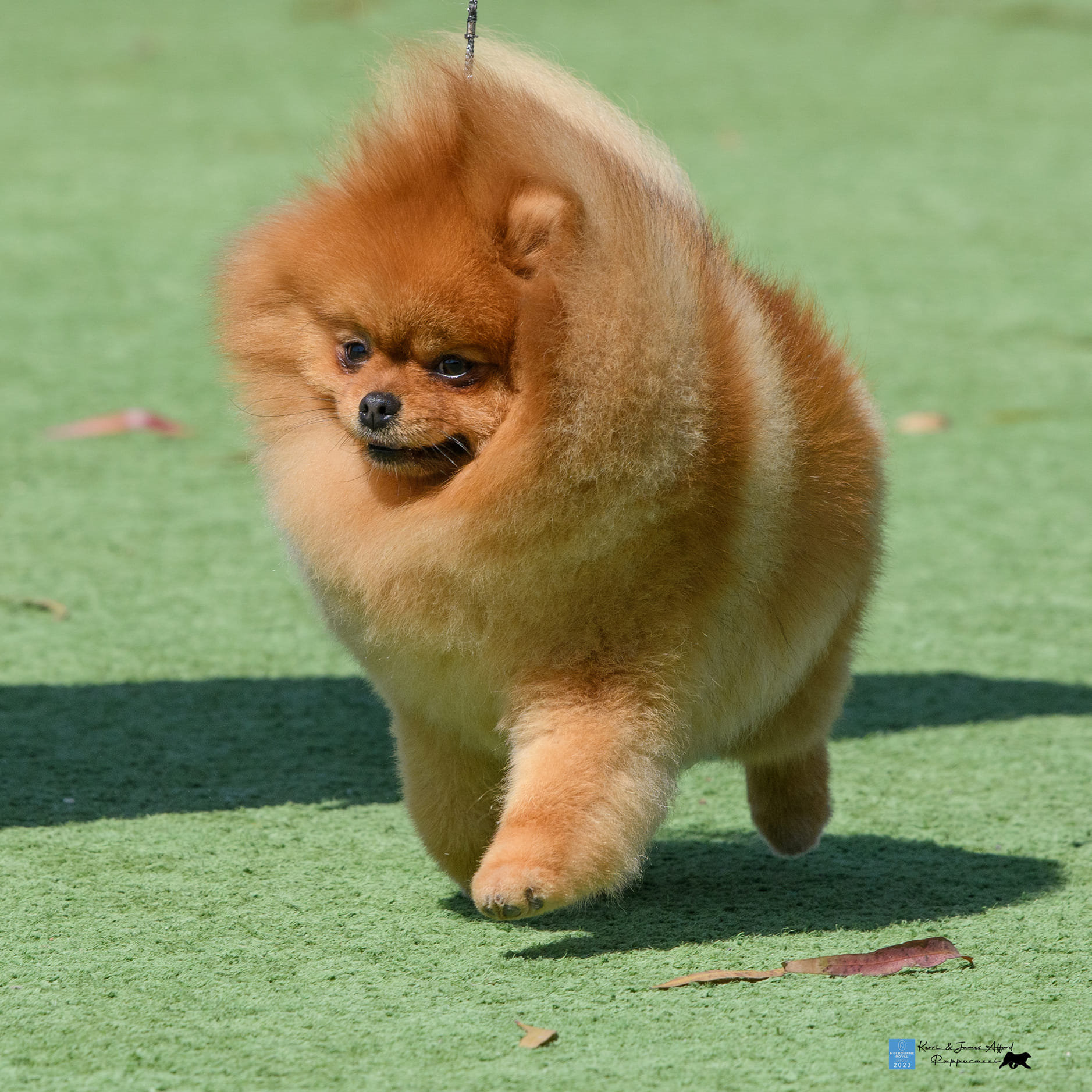
The Pomeranian is a toy dog that weighs between 3 and 7 lbs. It has a fox-like face, erect ears. It has a thick, fluffy coat that comes in various colors, including white, brown, orange, and black.
Pomeranian Puppies under 6 months should be fed at least 3 times per day. Poms over 6 months can be fed twice daily. Leave water available 24/7.
Authoritatively no different types of Pomeranian or different breeds of Pomeranian exist. There is just one Pom. Types of Pomeranian pictures.
Discover 28 brain games for Pomeranians, including food puzzles, scent work and training ideas to keep your Pom mentally stimulated and happy.
Discover why some Pomeranians have blue eyes, including merle genetics, puppy eye changes, breed standards, health concerns and buying advice.
Learn why Pomeranians fear loud noises, recognize anxiety signs, and calm your Pom safely during fireworks, thunderstorms and other frightening sounds.
Discover the truth about Mini Pomeranians, including adult size, weight, health, price and why the Mini Pomeranian is not a separate modern breed.
Learn about Pomeranian ears, including correct size and shape, floppy puppy ears, infections, ear mites, safe cleaning, grooming and trimming.
Complete senior Pomeranian care guide covering aging signs, health problems, food, exercise, grooming, arthritis and quality of life.
Understand Pomeranian language, body signals, barking and growling. Learn why Pomeranians howl and what your dog’s sounds and behavior may mean.
Discover black and tan Pomeranian puppies, markings, genetics and full-grown appearance, plus facts about black and brown Pomeranians and mixes.
Compare Pomeranian vs Maltese size, temperament, grooming, shedding, health and lifespan to discover which small dog is right for you.
Learn about the correct Pomeranian tail shape, why Pomeranian tails curl, what a tail held down means and how to groom the beautiful plume.
Do Pomeranians shed a lot? Learn about Pomeranian shedding levels, puppy coat changes, shedding season and how to manage loose hair.