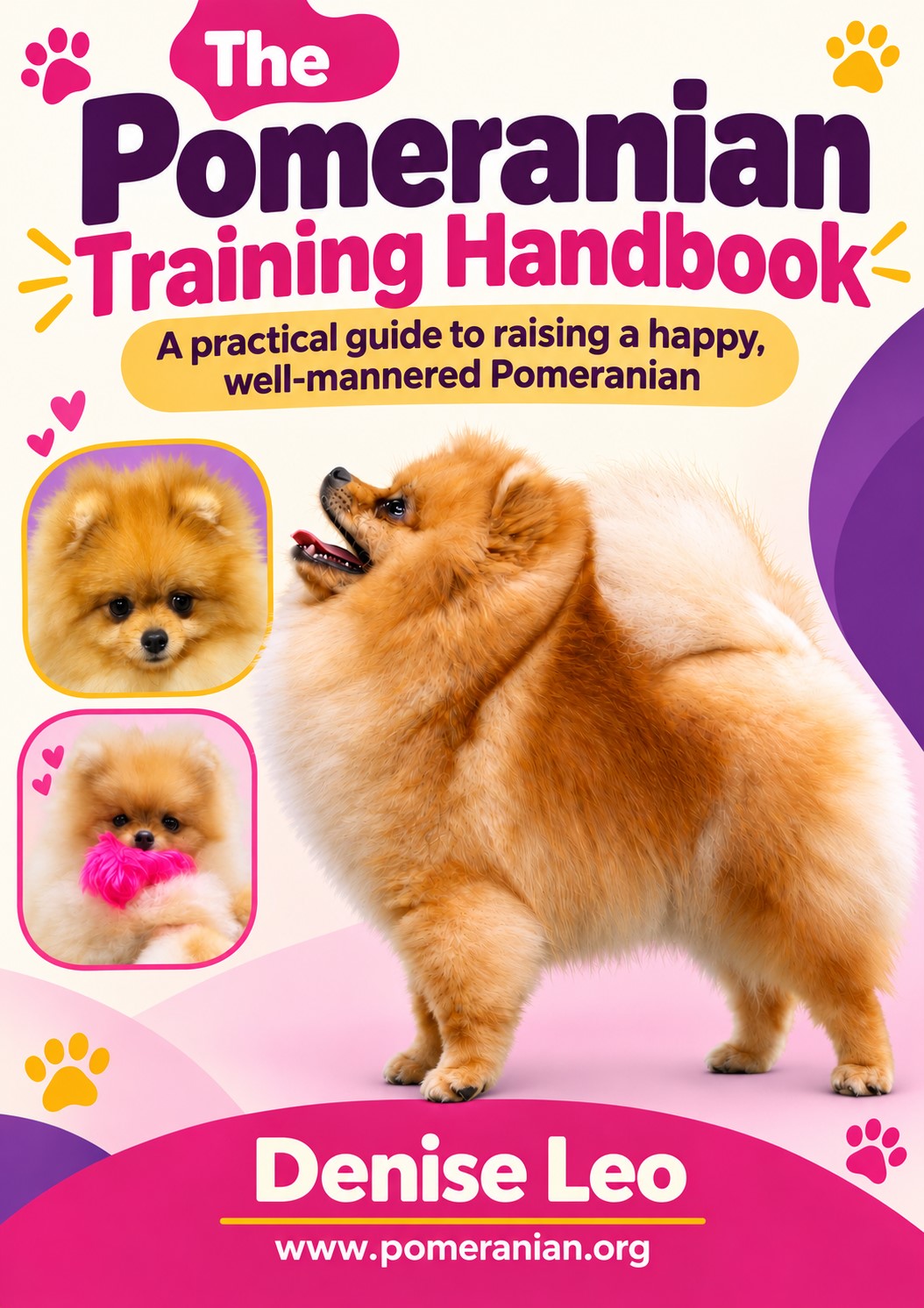

Pomeranians bring affection, energy and plenty of personality into our lives. They can also leave owners wondering how to manage barking, toilet accidents, puppy biting or a dog who listens beautifully at home but seems to forget everything outside. Understanding your Pomeranian and communicating clearly can make a real difference to everyday life together.
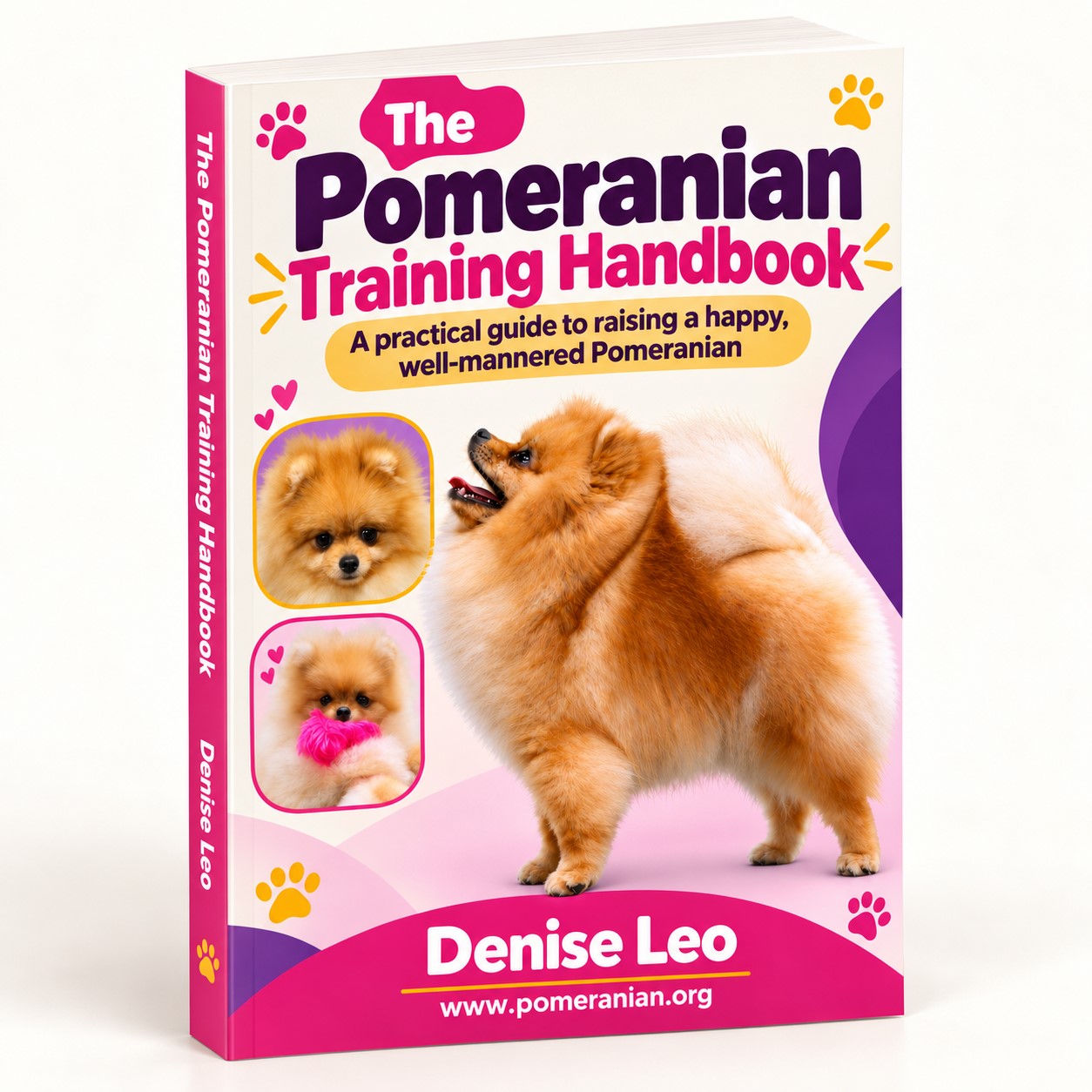
The Pomeranian Training Handbook by Denise Leo brings together 300 plus pages and 38 chapters covering puppy foundations, everyday skills, behaviour challenges and lifelong learning. Written specifically for Pomeranian owners, it offers a comprehensive resource to explore as your dog grows and your training needs change.
Whether you are preparing to welcome your first puppy, helping an adult Pomeranian settle into your home or looking for more enjoyable ways to work with your current dog, this book gives you a place to begin.

A Pomeranian Training Book That Starts With Understanding
Training becomes easier to approach when you understand the dog you are teaching. Before moving into individual exercises, The Pomeranian Training Handbook explores the Pomeranian mind and temperament, helping readers think about the personality behind the behaviour.
The opening chapters cover body language, sounds and communication, followed by how Pomeranians learn. These subjects provide a foundation for recognising what your dog may be communicating and considering why a training exercise is succeeding or proving difficult.
Rewards, timing and training sessions also receive their own chapter. Together, these early topics help owners look beyond the words they say and consider the whole learning experience they create for their Pomeranian.
Prepare for Your Puppy’s First Days at Home
Bringing home a puppy is exciting, but it comes with many decisions. Where should your puppy sleep? How will you organise toilet breaks? What should the first few days look like, and how can you begin building a trusting relationship?
The puppy foundations section starts with preparing your home and continues through the first day, first nights and first month. It brings these early experiences together so readers can consider the practical arrangements alongside their puppy’s adjustment to a new environment.
Chapters on bonding, trust, socialisation and confidence extend this foundation. They give new owners important subjects to explore before expecting their puppy to manage every situation with confidence.
Explore Toilet Training, Crates and Daily Routines
Toilet training is one of the first challenges many Pomeranian owners face. Different households need different arrangements, and owners may have questions about both outdoor toileting and indoor options.
The handbook includes separate chapters on outdoor toilet training, indoor toilets, and moving from pads to outdoors. This makes it easier to find the topic that matches your current circumstances rather than treating every household as though it has the same setup.
Crate training is covered in its own chapter, followed by playpens, rest and a daily routine. These subjects sit alongside toilet training because caring for a puppy involves organising the whole day, including opportunities to rest, play, learn and toilet.
Understand Puppy Biting, Teething and Chewing
Sharp puppy teeth can take new owners by surprise. A puppy who chews hands, clothing or household items may leave you unsure about how to respond or what to provide instead.
A dedicated chapter explores puppy biting, teething and chewing. Having these topics together gives owners a clear place to turn when this stage begins to affect everyday interactions.
It also keeps puppy foundations firmly connected to real life. Preparing your home and building trust are important, but owners need to consider what happens during play, when a puppy becomes excited, and when tempting objects are within reach.
Teach Everyday Skills Beyond Sit and Stay
A useful training book should cover the skills that help you live comfortably with your dog. The everyday skills section begins with name response, attention and hand targeting before progressing to recall, from the first steps through to distractions.
Further chapters cover sit, down, stand and release, along with wait, stay and door safety. Leave it, drop it and trading also receive dedicated attention.
These topics give the handbook a broad practical scope. They address communicating with your Pomeranian, helping your dog respond in different situations, and teaching behaviours that can become part of your daily interactions rather than isolated tricks practised occasionally.
Make Walks, Visitors and Handling Part of Training
Everyday manners matter when the doorbell rings, visitors arrive or it is time to go for a walk. The handbook includes chapters on harness and loose lead walking, visitors, jumping and polite greetings, plus begging and household manners.
Bed, mat and settle training is another part of this section, giving readers a topic to explore when they want to work on quieter behaviour at home.
Grooming and veterinary handling also have a dedicated chapter. For Pomeranian owners, training and routine care often meet during brushing, examinations and other handling experiences. Including this subject makes the book relevant to more than formal training sessions.
Look More Closely at Barking and Overexcitement
Barking can be frustrating, especially when owners are unsure what starts it or why it continues. The handbook’s barking chapter is organised around an important idea: different causes need different plans.
That focus encourages readers to think about the circumstances surrounding the behaviour rather than searching for one answer to every barking situation.
A separate chapter explores overexcitement, boredom and calm behaviour. Together, these topics broaden the discussion beyond individual commands and towards the experiences that shape daily life with a Pomeranian. They are particularly relevant for owners who feel their dog finds it difficult to switch off or becomes highly excited during ordinary household activities.

Explore Time Alone, Fear and Other Behaviour Challenges
Some owners need help planning for working hours. Others are concerned about a dog who becomes distressed when left alone. The book includes separate chapters on comfortable time alone and workday planning, and on separation distress.
Fear, anxiety, storms and fireworks are also covered. Further chapters explore other dogs, introductions and reactivity, followed by growling, guarding and aggression.
These subjects deserve careful attention, and their inclusion gives readers a fuller picture of the issues that can arise. Where a dog’s behaviour involves significant distress or a risk of injury, individual professional guidance remains important alongside reading and learning.
Find Guidance Beyond the Puppy Stage
Training needs change as dogs grow. A young puppy’s routine may look very different from the support an adolescent, newly adopted adult or senior Pomeranian needs.
The handbook includes a chapter on training an adult or rescue Pomeranian, followed by adolescence and senior adaptations. It also covers marking, toilet regression and older dogs, giving readers somewhere to look when previously established habits change.
Poop eating and other unwanted habits receive their own chapter too. By including these less glamorous topics, the book acknowledges the practical questions owners encounter throughout a dog’s life, including those they may feel uncomfortable asking.
Enjoy Brain Games, Tricks and New Activities
Training can be an enjoyable way to spend time together. The final section explores brain games, scent work and enrichment, followed by tricks, classes and suitable activities.
These chapters offer subjects to explore once you want to expand your Pomeranian’s learning opportunities and discover more shared activities.
The book also includes training a show Pomeranian, bringing another aspect of the breed’s life into the discussion. A final chapter introduces specialist pathways involving therapy and service work. These areas have their own requirements, but including them gives interested readers a starting point for understanding the possibilities and considering further learning.
About the Author: Denise Leo
Denise Leo is an author, ANKC Pomeranian Specialist Dog Judge and the breeder behind Dochlaggie Pomeranians. She began breeding and exhibiting under the Dochlaggie prefix in 1975 and has produced over 100 champions.
Her decades with Pomeranians have included raising puppies, preparing dogs for exhibition and sharing information with owners through Pomeranian Headquarters and her books.
This long involvement with the breed provides the background to The Pomeranian Training Handbook. For readers seeking a book devoted to Pomeranians, Denise’s experience offers a connection to someone who has spent more than 50 years living and working with these dogs.
Discover The Pomeranian Training Handbook
With 310 pages and 38 chapters, The Pomeranian Training Handbook brings a wide range of subjects into one resource. You can begin with puppy preparation, explore everyday skills or return to a particular topic as new questions arise.
For first-time owners, it offers a broad introduction to life and learning with a Pomeranian. For experienced owners, its contents provide opportunities to revisit foundations and explore different stages of their dog’s life.
Discover The Pomeranian Training Handbook by Denise Leo and build your understanding of the Pomeranian beside you.
Conclusion
A happier life with your Pomeranian starts with understanding, patience and clear communication. The Pomeranian Training Handbook by Denise Leo brings together 310 pages and 38 chapters covering puppy foundations, everyday manners and lifelong learning. Get your copy today and start building a stronger bond with your Pom.
📚 References & Further Reading
- [1] AKC Pomeranian Breed Standard (2011)
- [2] English Kennel Club Breed Standard
- [3] The Pomeranian Handbook – Denise Leo
- [4] Denlinger, The Complete Pomeranian
- [5] Kimbering, 1891–1991
- [6] Taplin, The Sportsman’s Cabinet
- [7] Parker, The Popular Pomeranian
- [8] Ives, Show Pomeranians