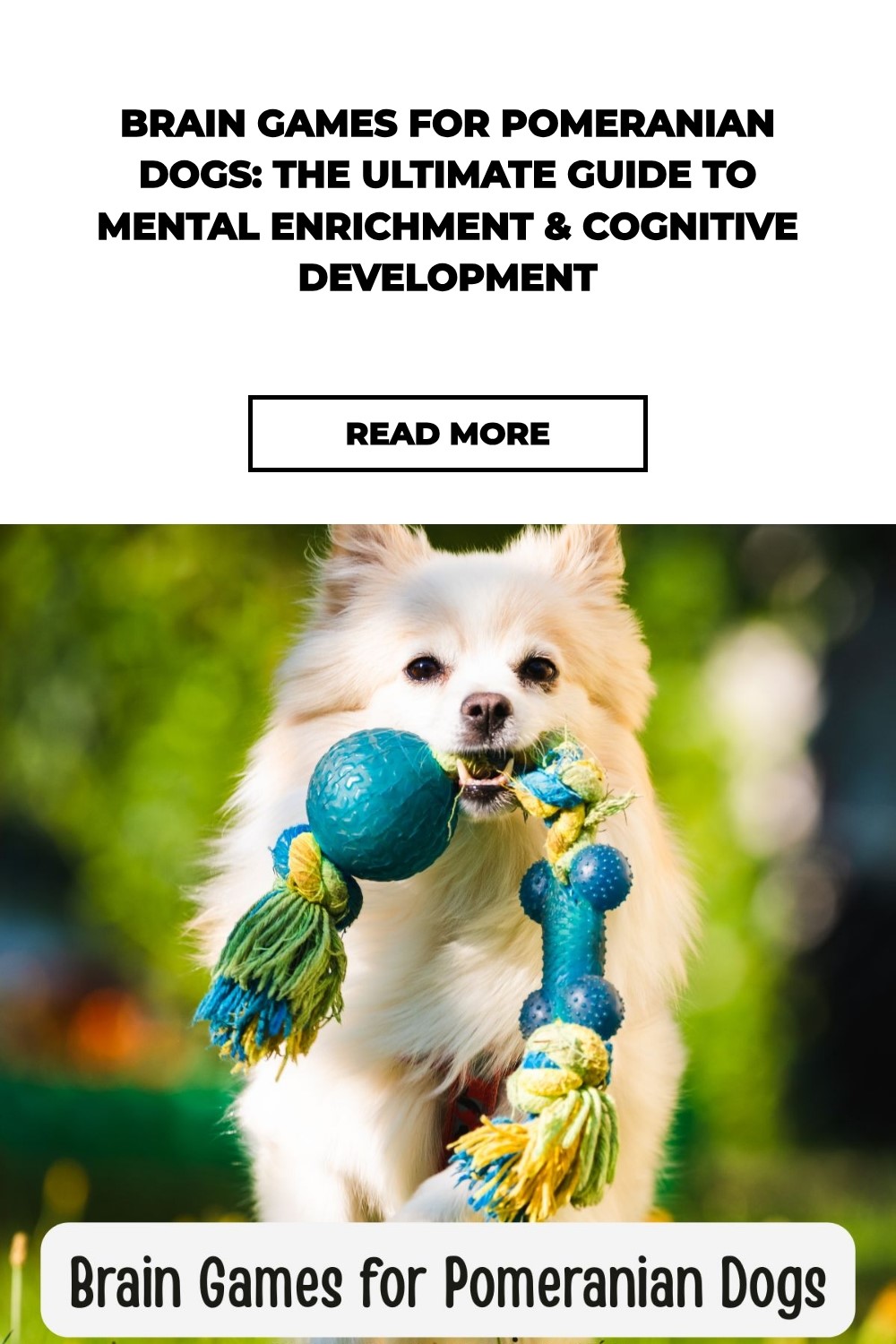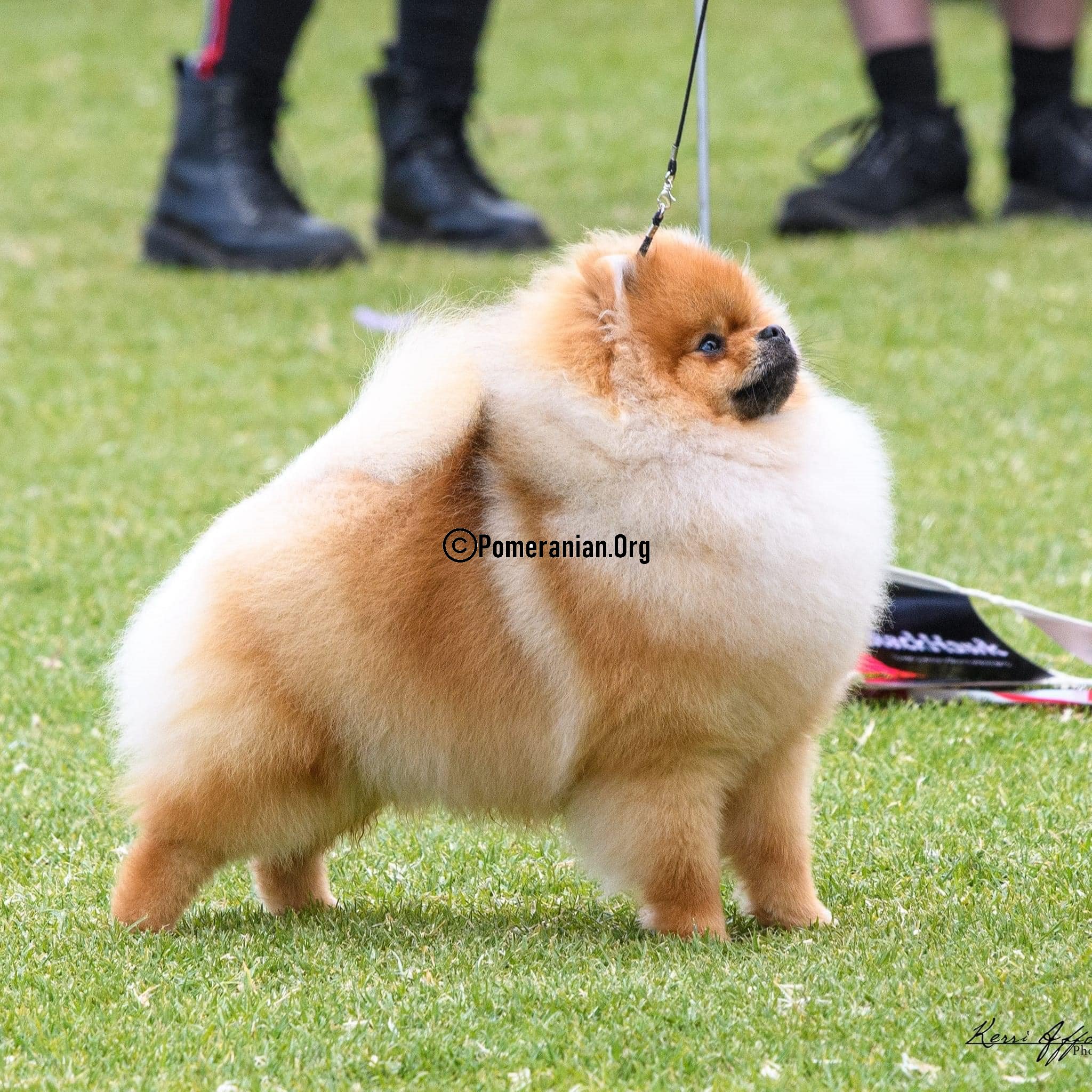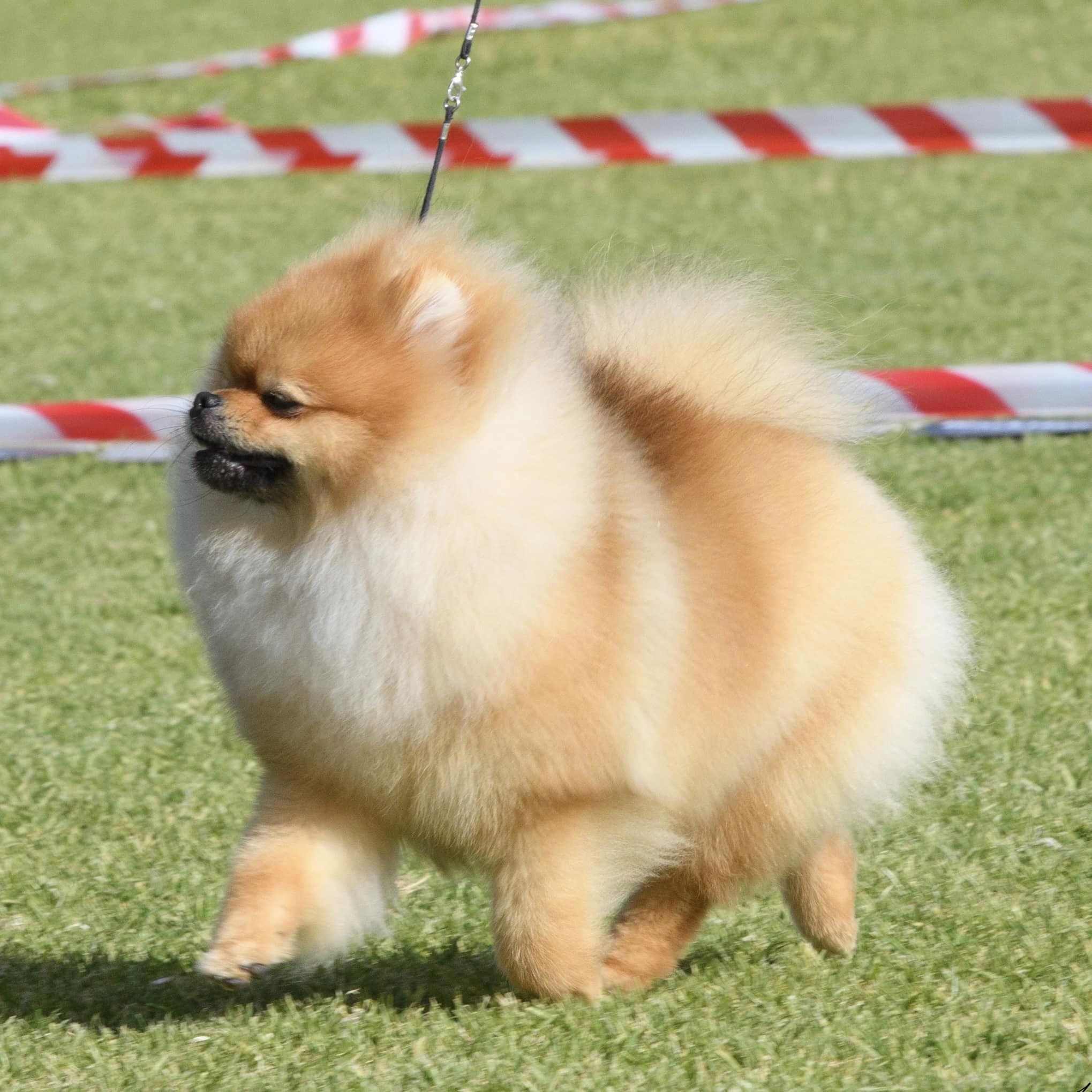

Pomeranians may be tiny, but they are intelligent, curious dogs that enjoy using their minds. Without enough activity and interaction, a clever Pom may invent their own entertainment—often by barking, demanding attention, chewing inappropriate objects or following their owner everywhere.
After more than 50 years of breeding, raising and training Pomeranians, I have learned that the best brain games for Pomeranians do not need to be complicated or expensive. A short treasure hunt, a simple training exercise or a food puzzle can provide valuable mental stimulation while strengthening the bond between you and your dog.
The most suitable Pomeranian enrichment activities are safe, enjoyable and matched to the dog’s age, confidence and ability. Because Pomeranians are small, games and toys must also be carefully chosen to avoid heavy equipment, high jumps, small detachable pieces and other potential hazards.
In this guide, I share 28 enjoyable games to play with a Pomeranian, including scent games, food puzzles, trick training, indoor activities and confidence-building exercises. You will also learn how long each session should last and how to prevent your Pom from becoming frustrated or overstimulated.
Quick Answer: What Are the Best Brain Games for Pomeranians?
The best brain games for Pomeranians include treat treasure hunts, snuffle mats, food puzzles, scent games, hide-and-seek, learning toy names and short trick-training sessions. These activities provide valuable mental stimulation for Pomeranians while helping to prevent boredom and build confidence.
Begin with an easy game lasting three to five minutes. Use tiny treats, plenty of praise and equipment suitable for a small dog. Gradually make the activity more challenging as your Pom learns how to solve it.
Important: Always supervise your Pomeranian with puzzle toys, boxes, towels and food-dispensing toys. Remove anything that becomes damaged or could present a choking hazard.
Why Brain Games Matter for Pomeranians
Pomeranians are alert, inquisitive dogs that notice almost everything happening around them. They quickly learn household routines, recognise familiar words and often work out exactly how to get their owner’s attention.
This intelligence means that physical exercise alone may not completely satisfy a Pomeranian. A walk exercises the body, while scent games, puzzles and short training sessions encourage the dog to think, make choices and solve problems.
Regular mental stimulation for Pomeranians may provide several benefits:
- Helps prevent boredom and restlessness.
- Provides a suitable outlet for natural curiosity.
- Encourages better concentration during training.
- Builds confidence in puppies and timid dogs.
- Strengthens communication between a Pom and their owner.
- Adds interest and variety to an older Pomeranian’s routine.
- May help redirect attention away from unwanted behaviours.
A mentally stimulated Pomeranian is often more settled and content after an activity. However, brain games should complement daily exercise, companionship, rest and training—not replace them.
Can Brain Games Help With Pomeranian Barking?
Brain games may help when a Pomeranian is barking because they are bored or seeking attention. A short scent game, training exercise or food puzzle gives the dog something constructive to do.
However, barking may also be triggered by fear, excitement, outside noises, separation distress or a physical problem. Enrichment can help, but it will not correct every cause of excessive barking. Owners should first consider why their Pomeranian is barking and respond appropriately.
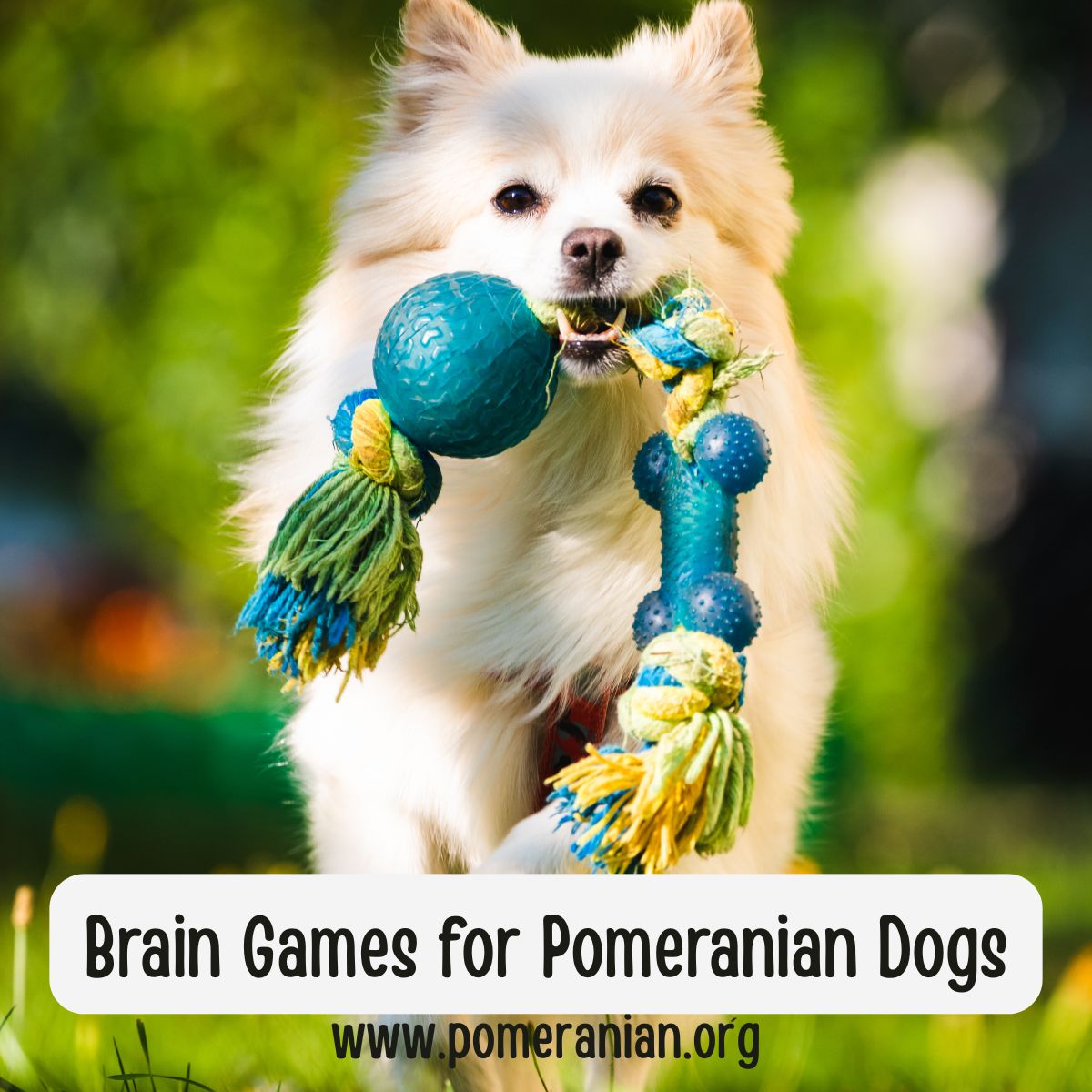
Understanding How a Pomeranian Thinks
Pomeranian intelligence is displayed in many practical ways. These little dogs quickly recognise routines, remember where favourite toys are kept and learn which behaviours earn attention or rewards.
Every Pomeranian is an individual. Some are highly motivated by food, while others respond better to toys, praise or interaction with their owner. Identifying what motivates your Pom makes training and brain games much more successful.
Pomeranians commonly use several mental skills during enrichment activities:
Memory and Recall
Pomeranians can remember familiar words, people, places and daily routines. Games involving named toys, hidden treats and repeated commands help exercise these skills.
Problem-Solving
A Pom may use their nose, paws or mouth to reach a reward. Begin with an easy puzzle so your dog can succeed before gradually increasing the difficulty.
Communication
Pomeranians closely watch their owners’ voices, movements and body language. Interactive games help a Pom learn to pay attention and respond to simple cues.
Scent and Exploration
A dog experiences much of the world through their nose. Sniffing games allow a Pomeranian to investigate, make choices and search for hidden rewards.
Concentration and Self-Control
Waiting briefly, following a cue or completing several simple actions in sequence encourages focus and impulse control.
The aim is not to test how “smart” your Pomeranian is. Good Pomeranian brain games allow the dog to think independently, enjoy small successes and become more confident with each attempt.
Best Types of Brain Games for Pomeranians
The best Pomeranian enrichment routine includes several different types of activities. Changing the games regularly keeps them interesting and exercises different mental and physical skills.
| Type of Brain Game | Examples | Main Benefits |
|---|---|---|
| Food puzzles | Snuffle mats, treat balls and puzzle feeders | Encourages problem-solving and slower eating |
| Scent games | Hidden treats, scent trails and treasure hunts | Satisfies natural sniffing and searching instincts |
| Trick training | Spin, touch, fetch and putting toys away | Improves focus, memory and communication |
| Interactive games | Hide-and-seek and finding named toys | Strengthens the bond between dog and owner |
| Confidence games | New surfaces, boxes and low platforms | Encourages safe exploration |
| Controlled movement | Mini obstacle courses and structured fetch | Develops coordination and self-control |
You do not need to offer every type of activity each day. One or two short games are usually enough, particularly for a puppy or a Pomeranian that is new to enrichment.
Denise’s Tip: Start with the easiest version and allow your Pom to work out the answer. If your dog walks away, barks repeatedly or begins biting the equipment in frustration, make the game easier and try again later.
Never force a Pomeranian to continue. Brain games should feel like an enjoyable opportunity—not a test the dog can fail.
Food Puzzle Games for Pomeranians
Food puzzles are among the easiest ways to provide mental stimulation for Pomeranians. Instead of receiving food immediately from a bowl, your Pom must sniff, investigate or move something to find the reward.
Use part of your dog’s measured daily food allowance wherever possible. Treats should be tiny, especially for a small dog, so an enrichment session does not accidentally provide too many calories.
1. Snuffle Mat Treasure Hunt
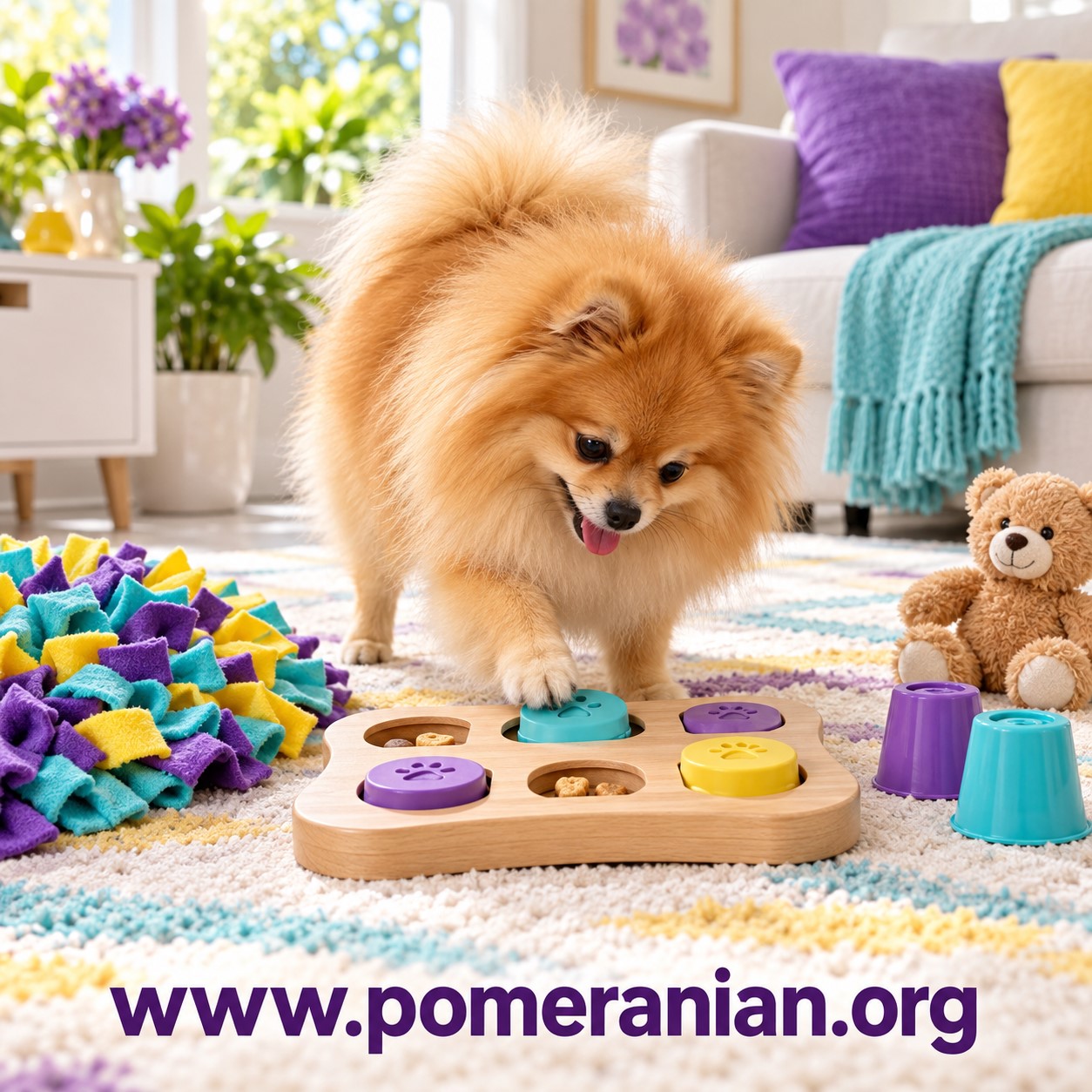
Scatter a small quantity of dry food or tiny treats throughout a snuffle mat. Begin by leaving several pieces clearly visible so your Pomeranian understands the game.
Once your Pom becomes confident, hide the food more deeply among the fabric strips.
This game encourages:
- Natural sniffing and foraging.
- Concentration.
- Slower eating.
- Calm, independent exploration.
Always inspect the mat for loose or damaged fabric and supervise your Pom while it is being used.
2. Muffin Tin Brain Game
Place a few treats in the cups of a muffin tin. Cover selected cups with balls or appropriately sized toys that your Pomeranian cannot swallow.
Adjust the difficulty gradually:
- Easy: Leave every treat uncovered.
- Intermediate: Cover one or two treats.
- More challenging: Cover most or all of the treats.
Let your Pom decide whether to move the covers with their nose or paw. Avoid immediately showing your dog the answer; working it out is part of the mental exercise.
3. Rolled Towel Treat Game
Lay a towel flat and scatter a small amount of kibble or several tiny treats along its length. Loosely roll the towel and encourage your Pom to investigate.
For beginners, keep the roll loose and leave a treat visible near the opening. As your dog becomes more experienced, roll the towel a little more firmly or fold it into sections.
Always supervise this activity. Do not allow your Pomeranian to chew or swallow pieces of fabric.
4. Food-Dispensing Toys for Pomeranians
Food-dispensing balls, wobblers and interactive cubes encourage a Pomeranian to push, roll or manipulate the toy to release food.
Choose a product that:
- Is designed for puppies or small dogs.
- Cannot fit completely inside your Pom’s mouth.
- Does not have easily detached pieces.
- Releases food without causing excessive frustration.
- Can be cleaned thoroughly after use.
Begin with the easiest setting so food is released regularly. Once your Pom understands how the toy works, you can gradually make it more challenging.
Keep your existing Amazon product section immediately after this game.
5. Find the Hidden Treat Cup Game
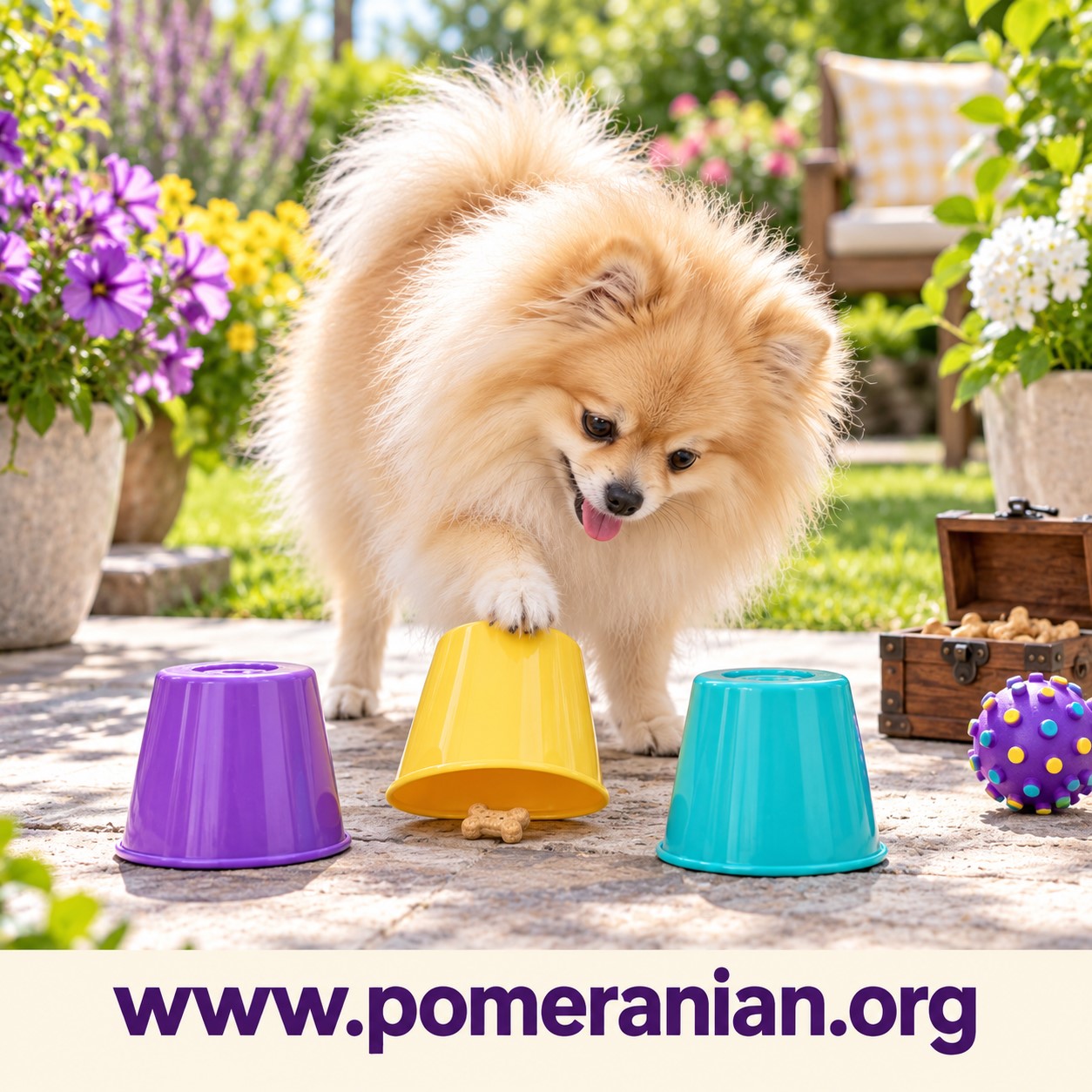
Place three lightweight, unbreakable cups upside down. Allow your Pomeranian to watch you hide a treat beneath one cup, then encourage them to find it.
Begin without moving the cups. When your Pom understands the game, slowly change the position of the treat cup before asking them to choose.
This simple Pomeranian brain game exercises concentration, memory and problem-solving. Make certain the cups have no sharp edges and are too large for your dog to place in their mouth.

- [Treat Distribution] Our food dispenser has differently sized spheres at both ends. As dogs push the toy, it moves within a fixed area, allowing dogs to continuously chase and play with it. During movement, food is dispensed from the food holes on both sides of the toy.
- [Adjustable Switch] Each of the two spheres with a food dispensing switch, making it suitable for various sizes and types of pet dry food or snack. The switch can be adjusted according to the different sizes of dog food. It also allows control over the amount of food dispensed, extending or shortening the time it takes for pets to obtain food. It is more conducive to a healthy dog diet.
- [Increase Pet Intelligence] This dog treat puzzle toy combines intellectual training with food rewards. When pets push this toy, it will not only be to get delicious food, but it will also stimulate their intelligence and hunting instinct. This design not only meets the needs of pets but also encourages them to learn and grow in the game.
- [Prolonged Play] The dog enrichment toy is designed to limit the amount of treats your dog gets while encouraging more extended playtime. This is intended for effective playtime for dogs and is NOT a chewed toy. It is also dog boredom buster toys and best dog gift to keep them busy when dogs are left home alone, relief anxiety.
- [Attract Dogs’ Attention] With barbell shaped design and bright color, the dog puzzle toy ball can attract your dog’s attention, stimulate their curiosity and drive them crazy to roll it. Size: 6.1*3.44*3.44in/15.5*8.7*8.7cm.

- RUBBER MATERIAL: HIPPIH treat dispensing dog ball is made of extra-tough rubber with good elasticity, good for your sweet dog grinding and fresh their teeth. ( Blue color-2.75 in, Green color-3.14 in, suitable for medium and large dogs. Not suitable for miniature small dogs, such as Yorkshire Maltese, etc) NOTE: The dog puzzle ball must be wider than your dog’s mouth
- STRONG TOOTH: HIPPIH blue dog ball can effectively help strong their teeth and won’t hurt pets gums. The green one can put the food in to improve the interest of your cute dogs.
- IMPROVE INTELLIGENCE & IQ TRAINING: HIPPIH dog toy ball can easily attract your pet’s attention, help pets intelligence improving and is convenient to train dogs. HIPPIH dog ball toys are perfect for interaction with your dog, promoting the bond between you and your dog.
- FOR AMUSEMENT: Perfect for fetch and interaction with your dog. You can add food or treats into the grooves and this keeps your dog entertained and active. HIPPIH IQ treat ball allow you have more interactive fun with your pets.
- BEST GIFT FOR PETS: HIPPIH dog toys ball can reduce the dog’s destructive behavior, protect the home shoes, socks, sheets, sofa are not afraid of dog bite. Your naughty active dogs will be love it to kill the boring time. This dog rubber ball is best gift for your sweet dog.

- Dog Puzzle Toy – Level 1 Beginner: Perfect for puppies and dogs new to puzzles, this Nina Ottosson dog puzzle introduces treat-dispensing fun and enrichment
- Boredom Buster: 15 minutes of brain-engaging play equals 30 minutes of physical activity, giving dogs of all ages the exercise they crave
- Multiple Ways to Play: Nudge and roll the ball to release hidden treats; Tips and Tricks included to adjust difficulty; smaller treats come out faster for an easier challenge, while larger treats make the game more challenging
- Mealtime Fun & Slow Feeding: Holds 1 cup of kibble or treats; doubles as a puzzle slow feeder to help slow fast eaters and make mealtime more engaging; opening is .6 inches
- Thoughtfully Designed: Food-safe and made without BPAs, PVCs, lead, or phthalates; no removable parts for worry-free play


- MEALTIME FUN – Large bottom chamber holds up to 1.5 cups of food to turn mealtime into playtime when used in place of a food bowl.
- WOBBLING FEEDING FUN – Rounded and weighted base keeps the toy moving, spinning, and wobbling, enticing your dog to keep playing.
- ADJUSTABLE DIFFICULTY – Top and bottom gates adjust to control food flow and fit different kibble sizes.
- SLOW-FEEDING ENRICHMENT – Dispenses food gradually to slow fast eaters and provide mental and physical stimulation.
- TOUGH BUILD FOR INTERACTIVE FUN – Not recommended as a chew toy; supervise play and wash after use.

- Treat Dispensing Puzzle Toy for Dogs – This treat dispensing dog toy turns snack time into an interactive reward game. Fill the dog treat ball with kibble or small treats, then let your dog roll, chase, sniff, and work for the reward. Great for dog puzzle toy, puppy puzzle toys, interactive dog puzzles, and dog toys with treats inside for daily enrichment play.
- Interactive Dog Toys to Keep Dogs Busy – Designed for rolling, bouncing, treat-finding, and owner interaction, this interactive dog toy helps keep dogs engaged during solo play or training time. A smart choice for pet parents looking for dog toys to keep them busy, boredom relief toys, mental stimulation dog toys, and daily dog enrichment toys.
- Adjustable Treat Flow for Slow Feeding – The inner flaps can be trimmed to customize the treat release speed based on your dog’s skill level. Use it as a slow feeder dog toy, slow feeder treat ball, puzzle feeder dog toy, or dog puzzle feeder ball to make mealtime slower, more engaging, and more rewarding for puppies and small dogs.
- For Puppies & Small Dogs, Great for Training – Sized for puppies and small dogs, this cognitive dog treat toy supports puppy training, treat-based engagement, fetch games, and interactive play. The textured rubber surface makes it easy for dogs to grip, roll, and chase, making it useful as an interactive puppy toy, puppy treat toy, and interactive training toy for dogs.
- Durable Rubber Treat Ball for Indoor & Outdoor Play – Made from durable natural rubber for everyday rolling, fetch, and treat-dispensing play. This treat ball works as a durable rubber dog ball, dog fetch play dog ball, and dog enrichment toy for home, yard, park, or supervised playtime. Not intended for aggressive chewers or constant gnawing; rinse after play for easy cleaning.

- RUBBER MATERIAL: HIPPIH dog toys for small dogs are made of extra-tough natural rubber with good elasticity, bite-resistant and non-abrasive, safe for your sweet dog cleaning their teeth, removing tartar and freshening breath, and keeping healthy slow eating behaviour. (Yellow ball-2.75 in, Blue ball-3.14 in, provide endless fun for all breed dogs.)
- STRONG TOOTH & SLOW FEEDING: HIPPIH yellow small dog toys use saw-tooth anti skid surface design with light mint scent, soft and unique surface relief, fit the tooth shape of dog, can effectively help clean their teeth and won’t hurt pet’s gums. The blue dog toys for medium dogs encourage slower active eating, which is the treat dispensing dog toys that are a great alternative to slow feeder bowls, lick mats and snuffle mats.
- IMPROVE INTELLIGENCE & IQ TRAINING: Adding the food in the HIPPIH dog puzzle toys for large dogs can easily attract your pet’s attention. Your furry friend gets smarter as they play with the dog puzzles, learning how to chew and roll the ball to get dog treats to fall out, which is convenient to train your dogs. HIPPIH dog toys interactive are perfect for interaction with your dog, promoting the bond between you and your cute dog.
- MORE AMUSEMENT & EASY TO USE AND CLEAN: Perfect dog puzzles for smart dogs to fetch and interact with your dog. You can add food or treats into the grooves and this keeps your dog entertained and active. HIPPIH dog treat puzzle allows you to have more interactive fun with your lovely pets, which is also easy to clean. Just rinse in warm water and dry after use.
- BEST GIFT FOR YOUR PETS: HIPPIH interactive dog toys for large dogs can reduce the dog’s destructive behavior, protect the home shoes, socks, sheets, sofa are not afraid of dog bites. Your naughty active dogs will love it to kill the boring time. HIIPIH dog interactive toys are the best gift for your sweet dog.

- Safe Material-Interactive dog toys made of natural rubber materials are safe for medium and large dog to chew and play. Unique strawberry flavor design makes dogs fall in love with cleaning his teeth.
- Food Dispensing Toy-Tough dog toys combines feeding with exercise greatly extends the difficulty and time of hunting for pets. Increasing exercise through fun sports feeding effectively reduces bloating and helps digestion.
- Dog Training-Unique strawberry dog chew toy with air side outlets allow your pets smell the food easily and attract to chew it. Let your pet to find more solutions to take food when playing with it.
- Interactive Dog Toys-Interactive play, training games and feeding activity are good for strengthening the affection between you and your pet. These toys feature lightweight, tough, flexible and safe, perfect for Interactive activities.
- Dental Health Care-Safe and tough rubber dog toy suitable for chewing and playing. Helping pets to clean teeth and massages gums and reduce destructive behavior. Although the dog toys are sturdy, there are no toys that are indestructible, proper supervision is also advised.

- [Treat Distribution] Our food slow dispenser has differently sized spheres at both ends. As dogs push the toy, it moves within a fixed area, allowing dogs to continuously chase and play with it. During movement, food is dispensed from the food holes on both sides of the toy.
- [Adjustable Switch] Each of the two spheres with a food dispensing switch, making it suitable for various sizes and types of pet dry food or snack. The switch can be adjusted according to the different sizes of dog food. It also allows control over the amount of food dispensed, extending or shortening the time it takes for pets to obtain food. It is more conducive to a healthy dog diet.
- [Increase Pet Intelligence] This dog treat puzzle toy combines intellectual training with food rewards. When pets push this toy, it will not only be to get delicious food, but it will also stimulate their intelligence and hunting instinct. This design not only meets the needs of pets but also encourages them to learn and grow in the game.
- [Prolonged Play] The dog enrichment toy is designed to limit the amount of treats your dog gets while encouraging more extended playtime. This is intended for effective playtime for dogs and NOT a chewed toy! It is also dog boredom buster toys and perfect dog gift to keep them busy when dogs are left home alone, relief anxiety.
- [Attract Dogs’ Attention] With barbell shaped design and bright color, the dog puzzle toy ball can attract your dog’s attention, stimulate their curiosity and drive them crazy to roll it. Size: 6.1*3.44*3.44in/15.5*8.7*8.7cm.

- Rolling for Healthy & Fun: YECERCAN dog treat dispenser toy will distribute food to catch your fur babies’ attention while they push and chase it. And by pushing and chasing and figuring out how to get more treats from the moving dog balls will help to improve our pets’ intelligence, bone healthy and digestion, providing them a fun time as well as physical and mental health.
- Fit Most Kinds of Kibbles: The size of the holes to fall out food is adjustable based on your needs, you can fill in your fur friends favorite meals or snacks to make them interested, and the food will fall out smoothly without stuck while they playing it.
- Safe and Durable: Our enrichment toys for dogs is made of food grade ABS, BPA free, safe and Sturdy. And the whole design is round and smooth without sharp edge to hurt your pets, you can rest assure the safety while your puppies playing it.
- Easy to Use and Clean: Pretty easy to use: a, rotate open the small food box lid; b, add food into the box; c, close the lid and adjust the right hole size for the food; d, lit it roll. And every package will come with a product manual for instruction. It’s easy to clean as well, hand and dishwasher safe.
- A Gift for Both You and Your Pets: The dog treat ball will entertain your furry friend with treats while providing hours of playtime, keep them busy and healthy. No matter they are boring or naughty or needy or depressed, they will love it, and you can also have your relax time while they are playing it.

- Interactive Toy for Dogs: This Gyro dog toy from KONG engages pets with irresistible roll and flip action that will entertain them
- Dog Toy with Treat Dispensing Feature: KONG Gyro is a dog toy designed to release dog treats and snacks; enrichment dog toy stimulates and rewards play
- Keep your Dog Moving: Entertaining wobble sparks a dog’s curiosity, allowing your pup to work for their food and engaging their natural instincts
- Promotes Healthy Eating with Dogs: The Gyro dog toy can be used as an alternative to a dog bowl to extend mealtime and help dogs lose unwanted pounds
- KONG: Innovating since 1976 to enrich the lives of pets with the highest quality pet toys and treats; all toys are designed and tested in Golden, CO, and are covered by KONG’s Satisfaction Guarantee
Problem-Solving Games for Pomeranians
Problem-solving games encourage your Pomeranian to experiment and work out how to reach a toy or treat. The aim is to provide a manageable challenge—not to make the reward impossible to obtain.
Watch how your Pom approaches each activity. Some dogs use their paws, while others prefer their nose or mouth. Allowing your dog to discover their own solution is an important part of the game.
6. Toy Rescue Box
Place one or two favourite toys inside a shallow cardboard box. Loosely cover them with safe items such as small towels, pieces of fleece or larger soft toys.
Encourage your Pomeranian to search through the box and rescue the hidden toys. Leave part of a toy visible the first time, then hide it more completely as your dog gains confidence.
Supervise this activity and remove the box if your Pom begins tearing or eating the cardboard or fabric.
7. Interactive Puzzle Boards
Dog puzzle boards contain sliding covers, rotating pieces or compartments concealing small treats. Choose a beginner-level puzzle designed for small dogs.
At first, allow your Pomeranian to watch you place the treats inside. You may need to leave some compartments partly open until your dog understands how the puzzle works.
Only progress to a more difficult puzzle when your Pom can confidently complete the easier version. A puzzle that is too complicated may cause frustration instead of providing enjoyable mental stimulation.
8. Open-the-Box Challenge
Place a treat inside a small cardboard box with an easy-to-lift flap. Leave the flap partly open and encourage your Pom to use their nose or paw to reach the reward.
Once your dog understands the activity, close the flap a little more. Avoid sealing the box or making it so difficult that your Pom must rip it apart.
Use clean boxes without staples, tape, string or sharp edges, and supervise the entire game.
9. Nested Box Treasure Hunt
Place a treat inside a small open box and then position that box inside a slightly larger one. Your Pomeranian must investigate each layer to reach the reward.
Begin with only two loosely nested boxes. More experienced dogs can try an additional layer, provided the boxes remain easy to open and do not trap your dog’s head or paws.
This brain game encourages:
- Persistence.
- Independent thinking.
- Scent work.
- Concentration.
- Confidence when exploring unfamiliar objects.
End the game if your Pomeranian starts chewing the cardboard, becomes frustrated or loses interest. A successful short session is more valuable than a long, difficult one.

- 【Size】: L9.44″ * W9.44″* H1.14″ suitable for cats, puppies and small dogs.
- 【Interactive Dog Toys】This is a interactive puppy puzzle , which can easily become the closest companion and toy for your puppies and cats, and will release pressure for dogs. Find food by sliding parts to improve eating pleasure and IQ.
- 【Slow Feed Bowl】This encourages pets to eat at a slower speed, helps to slow down the feeding time to help the dog digest, and can provide your dog with a variety of healthy snacks.
- 【Slow Feede toys】 Use this educational game toy to exercise the dog’s brain, which will help meet the dog’s instinct needs, train the pet’s sense of smell, and let the dog enjoy feeding when using the nose or paw to move the slider, while providing spirit stimulate.
- 【Dog toys】No toy is indestructible. Do not leave toys with unsupervised pets. Remove and replace toy if damaged.

- 【Upgrade Dog Puzzle】Our dog puzzle toy is moderate level with more challenging ,difficult than level 2, not only easy slide steps, but require your dog’s ability to learn sequential steps and combinations to seek hidden treats while keeping mental active .There are easy slide step and harder step in the puzzle box , dogs have to find a right way to move the red round sliders and the center parts for food, higher skills and mind required , great for the smart dogs.
- 【Dog Puzzle Toys for Smart Dogs】 The dog brain game toy is designed bigger size than other dog puzzle toys, multiple steps game designed, specail for smart dogs of puppy cats & other small animals, but also good for small MD dogs that need mental excecise & treat training.
- 【 Mental Excecise & Boredom Buster】 Kinds of dogs and cats love the puzzle game of Spin & Slide and the Seek & Hide with their smell sense and paw skills to find food . Our advanced dog puzzle toy for dogs can keep smart dogs busy to fit it out with more thinking and activities , reducing pet’s boredom , encourage dog & cat natural hunting instincts to be more active & healthy , less destructive behaviors at house.
- 【NO REMOVABLE PARTS Dog Puzzles】Our blue round dog puzzle are made with toxic-free materials, very durable for pets long time playing, also easily washed with water or dishwasher. NO REMOVABLE PARTS in this dog toy due to designed with built-in play pieces that fold tightly don’t come out easily . Make sure safe playing of without chewing & chocking when your pups are solo playing puzzle toy.
- 【Interactive Treat Puzzle Dog Toys】Dog Puzzle game is interactive and easily for training your dogs in days. You would enjoy the time of dog interactive puzzle game with your pets, greatly improve relations with your pets and get fun during interactive dog games. In daily feeding , good to use it as a food treat-dispenser for pets fun feeding and treat training , and as well use it to be a food puzzle slow feeder to aid your dog’s digestion and prevent bloat by slow down feeding speed.

- Keep Your Dog Busy & Happy: Tired of your pup chewing on shoes? This interactive dog snuffle toy is designed to relieve boredom and separation anxiety. Hide their favorite kibble inside the plush folds, and watch them use their natural foraging instincts to sniff out the treats, keeping them mentally stimulated and entertained for hours
- 2-in-1 Treat Puzzle & Squeaker: More than just a standard plush toy. It features built-in squeakers that instantly grab your dog’s attention, combined with hidden treat pockets that turn playtime into a rewarding brain game. Perfect for satisfying both their hunting and chewing instincts in one fun activity
- Promotes Healthy Digestion: Turn everyday snack time into a fun challenge! Acting as a smart slow feeder alternative, hiding treats inside the toy forces your dog to eat slower. This prevents choking, aids in better digestion, and rewards their hard work with a tasty payoff
- Safe, Soft & Durable Playtime: Crafted from premium, non-toxic plush fabric, this foraging toy is completely safe for your furry friend to cuddle, fetch, and gently chew. The soft texture naturally helps clean their teeth as they play. (Note: Designed for puppies and small to medium dogs; not recommended for aggressive chewers)
- Easy to Clean & Machine Washable: Dog toys can get slobbery quickly, but cleaning this one is completely hassle-free. Simply toss the snuffle toy into the washing machine on a gentle cycle, and it comes out looking and smelling fresh, ready for your dog’s next treat-hunting adventure

- 3-in-1 Snuffle Puzzle Toy: More than a plush! This 26″ squeaky dog toys for large dogs features a unique roll-up design with strong fasteners and 4 hidden treat-dispensing pockets. Your dog will learn to unroll the body and sniff treats, promoting problem-solving skills and slowing down fast eaters to improve digestion and overall health
- Mental Stimulation & Enrichement: Say goodbye to destructive chewing! Our interactive large dog toy features 4 deep treat pockets that challenge your dog’s brain. 10 minutes of sniffing equals 1 hour of running. This dog puzzle toy helps burn off excess energy and reduce anxiety through natural foraging behavior
- Reinforced Pineapple Grid Fabric: Our dog toy is made from upgraded pineapple texture grid fabric, tougher than ordinary plush, yet still soft enough for gentle mouthing and cuddling. The textured surface naturally massages gums and helps remove plaque during play. Strengthened stitching at all stress points means this toy holds up to real play
- Squeaky Puppy Toys: Every cognitive dog toys features a built-in squeaker that triggers your dog’s natural hunting instincts and keeps them coming back for more. Great dog toys to keep them busy, happy and reduce anxiety or boredom
- Improve Relationship: Make happy memories with your furry friend! The unique 26 inches long-shaped design and treat pockets make it a versatile interactive dog toy for games like tug-of-war, tossing, and fetching. You can use this to train or reward your pup. Enjoy more fun and bonding time with your pup

- All-in-One Fun & Feeding: Includes 1 dog puzzle toy with squeak, 1 slow feeder bowl, 2 dog lick mats, and 3 feeding accessories. This value-packed set keeps your dog mentally stimulated while encouraging slower, healthier eating
- Encourages Slower Eating: The raised maze pattern on our slow feeder bowl encourages your dog to eat more slowly. By making them take more time with each bite, mealtime becomes more engaging and helps keep them busy
- Keeps Dogs Busy: If your dog paces when anxious, turns into a little troublemaker when bored, or tends to gulp down food too fast, the dog lick mat with its four-quadrant textured design helps slow feeding and reduce anxiety, keeping them calmly busy
- Challenges Brainy Puzzles:The included dog puzzle toy combines treat-seeking fun with a built-in squeaker to add excitement. Its interactive design promotes focus, problem-solving, and mental stimulation, turning mealtime into a rewarding mental workout
- Tidy, Durable & Thoughtfully Designed:Includes a spatula, dog bag, and brush for easier feeding and cleanup. Made from pet-safe materials for small to medium dogs. Warm tip: Please supervise your dog during use. Not suitable for aggressive chewers

- USA Made Natural Dog Treats with No Artificial Additives: These natural dog treats are free from artificial flavors, colors, and preservatives; Made without corn, wheat, or soy ingredients, offering a healthy and wholesome snack option for your dog
- Fun for Treat Toys & Dog Puzzles: Ideal for Outward Hound treat toys, dog puzzles, and slow feeders, providing a rewarding experience that enhances your dog’s playtime, mental stimulation, and problem-solving skills while keeping your dog busy
- Irresistible Peanut Butter Flavor: Featuring a delicious peanut butter flavor that dogs love, these tasty treats come without the strong, stinky dog treat scent, offering a more pleasant snack experience for both you and your dog
- Less Than 4 Calorie, Guilt-Free Reward: With less than 4 calories per treat, you can feel good about rewarding your dog frequently without worrying about their calorie intake; Approximately 213 pieces per bag, a great value for long-lasting enjoyment
- Soft & Bite-Sized for Easy Consumption: These soft, small dog treats are designed to prevent excessive chewing, allowing your dog to enjoy them quickly during training sessions or playtime, keeping your dog or interactive puppy active and motivated

- Dog Enrichment Toys: 3-layer turtle shells as treat dispensing pockets, 4″ diameter, larger than other snuffle toys. Holds more food, keeps dogs busy longer, relieves separation anxiety, and encourages natural foraging and sniffing skills
- Dog Puzzles for Smart Dogs: Dogs explore 3 layers of Velcro to find rewards in 3 hidden food pockets. Puzzle toys stimulate mentally and emotionally, promote physical activity, focus, reduce disruptive behavior, and slow down eating
- Dog Squeaky Crinkle Toy: The build-in squeaker in the head of turtle and crinkle paper in the shell will make toys make loud noisy sounds,crinkle dog toy will keep them entertained and busy for hours,keep pets away from boredom and relieve anxiety
- Dental Health & Sturdy Material: Corduroy bumps surface help clean teeth and mouth. Soft cotton head, no stuffing body. Reinforced stitching makes the toy sturdier
- Adjustable Long Dog Toy: Untie the velcro,cute squeaky turtle toy will become 25″ long snake toy,perfect interactive toy for dogs to play tug of war, twirl or thrown. Long design allows you to grip one side while your pup bites down on the other, keeping your hands safe from that powerful bite!

- Tasty and Adorable: Our Dog Ramen Puzzle Toy is the perfect blend of cuteness and functionality. Made of soft, high-quality materials, your furry friend will love playing with it during treat time.
- 2-in-1 Design: This toy is more than just a cute companion for your pet. The noodles and ramen cup bag are separable, making it a great enrichment toy for the snuffle game. Plus, the noodles are made of 100% cotton rope, which helps clean your dog’s teeth while they play. Please note: not for chewers.
- Sniffing Fun: Our interactive dog toys are designed for various levels of sniffing training. You can hide treats in the ramen cup or roll them up with the noodles. For an added challenge, hide snacks in the topping pockets or close the lid with velcro. With multiple ways to play, your furry friend will always be entertained.
- Perfect Size for Small and Medium Breeds: Measuring 4.3 x 4 x 3.1 inches, this toy is suitable for small and medium dogs of any breed. It’s the perfect gift to help your dog relieve stress and develop their sniffing sense.
- Engaging and Fun: Designed to stimulate your dog’s natural instincts, this ramen puzzle toy provides hours of entertainment. It helps reduce boredom and anxiety, keeping your furry friend happy and engaged.

- 【Innovative Dog Enrichment Toy – Caterpillar Plush Toy for Puppies | Interactive Snuffle & Bite Ball Toy】 Introducing our innovative caterpillar dog toy, a unique enrichment toy designed for puppies. This versatile toy combines play, bite, smell, and treat activities—features rarely seen in the market. The caterpillar’s body splits into six interactive dog ball toys, each with Velcro to securely attach them together. It serves as both a caterpillar snuffle toy and an interactive ball toy, providing endless fun and mental stimulation for your dog.
- 【Keep Your Dog Busy for Hours – Caterpillar Snuffle Toy & Interactive Dog Ball Puzzle Toy】 This dog puzzle toy offers two exciting ways to play. It can be used as a caterpillar snuffle toy to engage your dog’s foraging and sniffing skills, meeting their natural instincts. Alternatively, it can be transformed into an interactive dog ball toy, perfect for keeping your dog entertained and preventing boredom. Designed to keep your dog busy for hours, this toy provides both mental stimulation and endless fun!
- 【Interactive Squeak Design – Caterpillar Dog Toy with Squeakers for Engaging Play & Mental Stimulation】 The caterpillar dog toy features built-in squeakers in its body, which produce exciting sounds during playtime. These squeakers not only enhance interactive play, but also help reduce your dog’s boredom and loneliness. Ideal for IQ training and stimulating your dog’s mind, this toy provides hours of fun while encouraging engagement and mental activity.
- 【Safety & High Quality – Soft, Durable Squeaky Dog Toy with Organic Cotton & Elastic Sponge】 Made with soft, high-quality fabric, this dog squeaky toy is filled with high-elastic sponge and organic cotton, ensuring it is safe for your puppy’s rough playtime. Designed for easy cleaning, this dog treat puzzle toy is machine washable for added convenience. While perfect for boredom relief and mental stimulation, we recommend supervising your dog during play to avoid aggressive chewing. If you’re not satisfied with your purchase, we offer a refund guarantee.
- 【Explore the World – Snuffle Toy for Dogs to Discover the Beauty of the World Through Their Nose】 Sniffing is one of the most important ways dogs explore and understand the world around them—just like we see the world with our eyes. Give your dog a snuffle toy to stimulate their sense of smell and allow them to begin their exploration journey. This toy helps engage their natural instincts, letting them discover new scents and feel the beauty of the world, one sniff at a time.
Trick Training as a Pomeranian Brain Game
Teaching tricks is an excellent way to combine mental stimulation, communication and one-to-one attention. Pomeranians are generally eager learners, but training sessions should remain short, positive and suitable for their small bodies.
Practise one skill at a time for approximately three to five minutes. Use tiny rewards and finish while your Pom is still interested.
10. Easy Tricks for Pomeranians
Good beginner tricks include:
- Sit.
- Come.
- Touch your hand with the nose.
- Give a paw.
- Turn in a circle.
- Look at you on cue.
- Step onto a mat.
The hand-targeting game, often called “touch,” is particularly useful. Hold your open palm near your Pom’s nose and reward them when they investigate or touch it. This skill can later help with recall, positioning and confidence-building exercises.
11. Intermediate Pomeranian Tricks
Once your Pom understands basic reward-based training, try:
- Spin clockwise or anticlockwise.
- Walk backwards for one or two steps.
- Bow.
- Weave around widely spaced objects.
- Fetch a lightweight toy.
- Place front paws on a low platform.
- Go to a bed or mat on cue.
Teach each behaviour in small stages. Reward an attempt in the correct direction rather than waiting for the complete trick immediately.
Avoid excessive spinning, repeated jumping or prolonged standing on the hind legs. Pomeranians can be vulnerable to knee and joint problems, so tricks should never place unnecessary strain on their bodies.
12. Advanced Brain Games and Trick Sequences
More experienced Pomeranians may enjoy learning to:
- Retrieve a named toy.
- Place toys in a basket.
- Ring a bell to request access outside.
- Choose between two familiar toys.
- Follow a short sequence of commands.
- Find a family member by name.
A simple trick sequence might be:
Fetch the toy → bring it back → drop it in the basket → sit for a reward.
Teach every part separately before joining the behaviours together. If your Pom becomes confused, return to the last step they could complete successfully.
Trick training is not about creating a perfect performance. It gives your Pomeranian an enjoyable way to think, communicate and spend meaningful time with you.
Scent Work and Nose Games for Pomeranians
Scent games allow a Pomeranian to use one of their most important natural abilities—their sense of smell. Sniffing requires concentration and can provide gentle mental enrichment for puppies, adults and senior Pomeranians.
Begin in a quiet room with easy hiding places. Give your Pom time to search without repeatedly pointing out the answer.
13. Follow the Treat Trail
Create a short trail using tiny pieces of food placed several centimetres apart. Put a slightly better reward or favourite toy at the end.
Show your Pom the first treat and use a cue such as “find it.” As your dog becomes more confident, place the treats farther apart or create a trail around a piece of furniture.
Include all the food used in your Pomeranian’s daily allowance to avoid overfeeding.
14. Search the Room
Ask your Pom to wait outside a room while you hide several treats in easy-to-reach places. For the first attempt, leave them clearly visible.
Gradually use more challenging hiding places, such as:
- Beside a chair leg.
- Near the edge of a mat.
- Behind a toy.
- Beneath an upturned lightweight cup.
- Inside an open cardboard box.
Never hide food where your Pomeranian must climb, jump from furniture or squeeze into a dangerous space.
15. Find the Scented Toy
Choose a lightweight toy your Pom already enjoys. Let your dog sniff it, then place it nearby and say “find your toy.”
Begin with the toy in full view. Progress to partially hiding it behind a cushion or inside an open box before eventually placing it out of sight.
Reward your Pomeranian for finding or touching the correct toy. Avoid applying essential oils, perfumes or artificial scents, as some may irritate or harm dogs.
16. Which Box Holds the Treat?
Place three open boxes several feet apart and hide a treat in one. Allow your Pomeranian to sniff each box and indicate where the food is hidden.
At first, let your Pom watch you place the treat. Later, hide it while your dog is outside the room.
Reward the search rather than demanding a particular indication. Your Pom may stare at the box, touch it with their nose or place a paw near it. Any clear choice can be accepted.
Use clean boxes without staples or tape, and remove them if your dog begins chewing the cardboard.
Indoor Brain Games for Pomeranians
Indoor games are ideal for rainy days, hot weather or times when outdoor exercise must be limited. They are also useful for Pomeranians living in apartments or smaller homes.
Clear a safe play area before beginning. Remove electrical cords, small objects and anything your Pom could knock over, chew or swallow.
17. Find the Toy in the Laundry
Place a familiar toy among several clean towels or larger items of clothing. Leave part of the toy visible and encourage your Pomeranian to find it.
Once your Pom understands the game, hide the toy more completely or ask them to find one particular toy by name.
Do not use socks, underwear or other small garments that could be swallowed. Always supervise the search and stop your Pom from chewing or pulling threads from the fabric.
18. Structured Indoor Fetch
Fetching becomes a more challenging brain game when your Pomeranian must listen and follow a sequence of instructions.
Begin with these simple steps:
- Ask your Pom to wait briefly.
- Toss a lightweight toy a short distance.
- Give your chosen fetch cue.
- Encourage your dog to bring it back.
- Ask them to release the toy.
- Reward the completed sequence.
Use a carpeted hallway or another non-slip surface. Keep throws low and short, and never encourage your Pomeranian to jump from furniture or skid across polished floors.
If your Pom does not naturally return the toy, reward them for bringing it progressively closer rather than chasing them.
19. Go to the Mat Game
Place two small non-slip mats on the floor. Teach your Pomeranian to step onto the first mat by rewarding any interest in it.
When your Pom confidently goes to that mat, introduce a second one. Use separate cues, such as:
- “Go to your mat.”
- “Change.”
- “Come back.”
Gradually increase the distance between the mats. This game develops concentration, direction-following and self-control without requiring strenuous exercise.
The mat game can also become a useful everyday skill when visitors arrive, food is being prepared or you need your Pomeranian to settle safely in one place.
Outdoor Brain Games for Pomeranians
Outdoor enrichment allows a Pomeranian to experience new smells, surfaces and surroundings. Even a familiar garden can become mentally stimulating when your Pom is encouraged to explore and make choices.
Always supervise outdoor games. Check the area for poisonous plants, garden chemicals, sharp objects and escape points. In warm weather, play during the cooler part of the day and provide fresh water and shade.
20. Mini Pomeranian Obstacle Course
Create a simple obstacle course using safe household or garden items. Your Pom might:
- Walk through a short tunnel.
- Step over a pole placed flat on the ground.
- Walk around cones.
- Stand on a low, stable platform.
- Follow a curved pathway.
- Pause on a non-slip mat.
Guide your Pomeranian slowly with a treat or hand target. Let your dog investigate every object before asking them to complete the course.
Avoid high jumps, narrow raised planks and unstable equipment. Pomeranians have delicate knees and joints, so the course should focus on careful movement, balance and confidence rather than speed or jumping.
21. Take Your Pomeranian on a Sniffing Walk
A sniffing walk gives your Pom time to investigate interesting scents instead of walking continuously at your pace. Use a comfortable harness and allow your dog to stop and sniff in safe places.
Your Pomeranian does not need to choose the entire route. You remain responsible for avoiding traffic, unfamiliar dogs, poisonous substances and other hazards.
Even a short walk around the garden or along a familiar street can offer valuable mental stimulation when your Pom has time to explore through scent.
22. Outdoor Treasure Hunt
Hide several tiny treats or favourite toys around a secure garden. Begin with easy locations where the rewards are partly visible.
As your Pomeranian learns the game, try hiding them:
- Beside a pot.
- Near a garden chair.
- Under the edge of a mat.
- Inside an open box.
- Among several safe toys.
Keep every hiding place at ground level. Do not encourage your Pom to climb, jump or push through dense plants.
Remain close throughout the game, particularly in areas where birds of prey, snakes, insects or other animals could present a danger to a small dog. Collect any uneaten food when the treasure hunt is finished.
Confidence-Building Games for Pomeranians
Confidence-building activities can help puppies, timid dogs and Pomeranians that are uncertain in unfamiliar situations. These games gently introduce new objects, textures and movements while allowing the dog to explore at their own pace.
I begin introducing my Pomeranian puppies to different safe surfaces, sounds and everyday experiences while they are still young. This careful early enrichment helps puppies become more adaptable and better prepared for life beyond their familiar home environment.
Never pull, push or place a frightened Pom onto something they are trying to avoid. Reward curiosity and allow your dog to retreat whenever they need to.
23. Confidence Box
Place a shallow, stable box on a non-slip floor and fill it loosely with safe objects such as:
- Small towels.
- Pieces of fleece.
- Lightweight toys.
- Crumpled paper too large to swallow.
- Empty cardboard tubes that cannot trap the muzzle.
Scatter a few tiny treats among the objects and allow your Pomeranian to investigate.
A cautious Pom may initially place only their nose or front paws inside. Reward these small attempts and let confidence develop gradually.
24. Platform Training
Use a low, stable platform with a non-slip surface. Reward your Pomeranian for looking at it, approaching it and eventually placing their front paws on it.
When your dog is comfortable, you may teach them to:
- Stand with all four feet on the platform.
- Sit calmly.
- Turn slowly.
- Remain in position briefly.
- Step off on cue.
Platform training can improve body awareness and confidence. It is also helpful when teaching a show Pomeranian to stand calmly for examination and presentation.
The platform should be only slightly raised and wide enough for your Pom to stand comfortably. Never leave your dog unattended on it.
25. Exploring Different Surfaces
Arrange several safe surfaces on the floor and encourage your Pom to walk across them. Suitable choices include:
- Carpet.
- Rubber-backed mats.
- Towels.
- Artificial grass.
- Smooth cardboard.
- A shallow tray containing a small amount of crumpled paper.
Keep the surfaces flat, secure and close together. Reward your Pomeranian for calmly investigating each one.
This activity can help puppies feel more comfortable when encountering unfamiliar flooring at veterinary clinics, grooming salons, dog shows or other people’s homes.
Stop if your Pom appears worried. Confidence grows through voluntary exploration and successful experiences—not by forcing the dog to confront something frightening.
Learning Games to Challenge Your Pomeranian’s Intelligence
Learning games encourage a Pomeranian to listen, remember words and make simple choices. Introduce one new idea at a time and practise it in several short sessions.
26. Teach Your Pomeranian the Names of Toys
Choose two toys that look and feel noticeably different, such as a ball and a soft teddy. Begin with only one toy.
Show the toy, say its name and reward your Pom for touching or picking it up. Repeat this until your dog begins associating the word with the object.
You can then place the toy a short distance away and ask:
“Where is Teddy?”
Once your Pomeranian reliably identifies the first toy, introduce the second one. Eventually, place both toys together and ask your Pom to find the correct one.
Avoid starting with colour names. Dogs do not see colour in the same way humans do, so shape, texture and toy type are easier distinctions to teach.
27. Which Hand Holds the Treat?
Show your Pomeranian a tiny treat and place your hands behind your back. Hide the treat in one closed hand, then present both hands at the same height.
Use a cue such as “choose.” Allow your Pom to sniff and indicate one hand by touching, staring or nudging it.
If your dog chooses correctly, open your hand and give the reward. If not, calmly show the empty hand and repeat the game without scolding.
Beginning with only two choices keeps this Pomeranian brain game simple and enjoyable.
28. Teach Left and Right Directions
Pomeranians can learn different verbal cues for turning or moving in separate directions.
Begin by using a treat to guide your Pom slowly towards one side. Say “left” or “right” as the dog follows your hand, then reward the movement.
Teach only one direction at first. Once your Pom responds consistently, introduce the second cue.
Directional commands can later be used during:
- Trick training.
- Mini obstacle courses.
- Walking around objects.
- Moving between platforms or mats.
- Turning for grooming or examination.
Keep movements slow and controlled. Avoid asking your Pomeranian to spin repeatedly, as excessive twisting may place unnecessary strain on their knees and joints.
Why Rest Is an Important Part of Pomeranian Enrichment
Mental stimulation is valuable, but Pomeranians also need quiet time to rest and process what they have learned. Offering too many games, visitors, outings or training sessions in one day may leave a Pom tired, frustrated or overstimulated.
A balanced routine should include:
- Short training and enrichment sessions.
- Regular toilet and exercise breaks.
- Uninterrupted sleep.
- Calm time with their owner.
- A quiet, comfortable place to retreat.
Signs that your Pomeranian may need a break include:
- Walking away from the activity.
- Losing interest in treats.
- Barking or becoming increasingly demanding.
- Biting or shaking the puzzle instead of solving it.
- Repeated yawning or lip licking.
- Appearing unusually restless or irritable.
- Struggling to concentrate on a familiar cue.
Puppies and senior Pomeranians may tire particularly quickly. Stop the activity while your Pom is still enjoying it rather than waiting until they become exhausted or frustrated.
Mental enrichment should help your Pomeranian feel satisfied and settled. More stimulation is not always better—the right balance of thinking, physical activity, companionship and rest is what matters.
Sample Daily Enrichment Routine for a Pomeranian
A Pomeranian does not need constant entertainment throughout the day. A few short, enjoyable activities mixed with exercise, companionship and plenty of rest are usually sufficient.
🌅 Morning
- Use part of breakfast in a snuffle mat or simple food puzzle.
- Practise one familiar command for three to five minutes.
- Allow time for a relaxed sniff around the garden.
☀️ Middle of the Day
- Enjoy a short walk with opportunities to stop and sniff.
- Play one easy scent game or indoor treasure hunt.
- Provide quiet rest afterwards.
🌙 Late Afternoon or Evening
- Practise a new trick for several minutes.
- Play hide-and-seek or fetch with a favourite toy.
- Finish with a calm activity, gentle grooming or quiet time with you.
For Pomeranian Puppies
Puppies have short attention spans and need considerable sleep. Keep brain games very easy and limit each session to only a few minutes.
Useful puppy activities include:
- Responding to their name.
- Following a hand target.
- Finding a visible treat.
- Walking across a new safe surface.
- Settling on a mat.
For Senior Pomeranians
Older Poms still benefit from mental stimulation, but activities may need to be adapted to their mobility, eyesight, hearing and energy level.
Suitable senior games include:
- Easy scent searches.
- Familiar trick practice.
- Simple food puzzles.
- Finding treats beneath lightweight cups.
- Choosing between two favourite toys.
Remember: This routine is only a guide. Adjust the number and difficulty of activities to suit your individual Pomeranian. A dog that finishes a game relaxed and satisfied has received enough enrichment for that session.
Final Thoughts on Brain Games for Pomeranians
Brain games for Pomeranians provide valuable mental stimulation while helping to prevent boredom, build confidence and strengthen the bond between you and your dog.
Keep each activity short, safe and suited to your Pom’s age and ability. Whether you use a simple treasure hunt, teach a new trick or offer a puzzle toy, the best enrichment is something your Pomeranian enjoys doing with you.
Copyright Pomeranian.org. All Rights Reserved.
📚 References & Further Reading
- [1] AKC Pomeranian Breed Standard (2011)
- [2] English Kennel Club Breed Standard
- [3] The Pomeranian Handbook – Denise Leo
- [4] Denlinger, The Complete Pomeranian
- [5] Kimbering, 1891–1991
- [6] Taplin, The Sportsman’s Cabinet
- [7] Parker, The Popular Pomeranian
- [8] Ives, Show Pomeranians