
Learn which dog shampoo ingredients are safe and which ones to avoid. Expert guidance helps you choose the best shampoos for sensitive skin, allergies, and coat health.
This guide is supported by the expertise of Denise Leo, a globally recognized Pomeranian breeder with over 50 years of hands-on experience, and Dr. Muqeet Mushtaq, a veterinarian specializing in animal breeding and genetics. Together, they provide trusted insights into the ingredients in dog shampoo, helping owners select products that support their pets’ long-term health and coat care.
To help you take better care of your fluffball companion, we’ve researched the shampoos currently available on the market and identified the key ingredients that should be in any quality product. Learn more about which brand names contain these great ingredients and how they benefit you and your furry friend!
Choosing the right shampoo for your dog can be overwhelming, especially with the numerous products available on the market. Understanding the ingredients in dog shampoo is essential to keeping your pet’s skin healthy, coat shiny, and avoiding irritation from harsh chemicals.
From natural cleansers and soothing botanicals to potentially harmful additives, knowing what goes into your dog’s shampoo helps you make safer, smarter choices.
Many shampoos have been designed to address various skin problems cats and dogs face. It may not be easy to understand how the ingredients actually work.
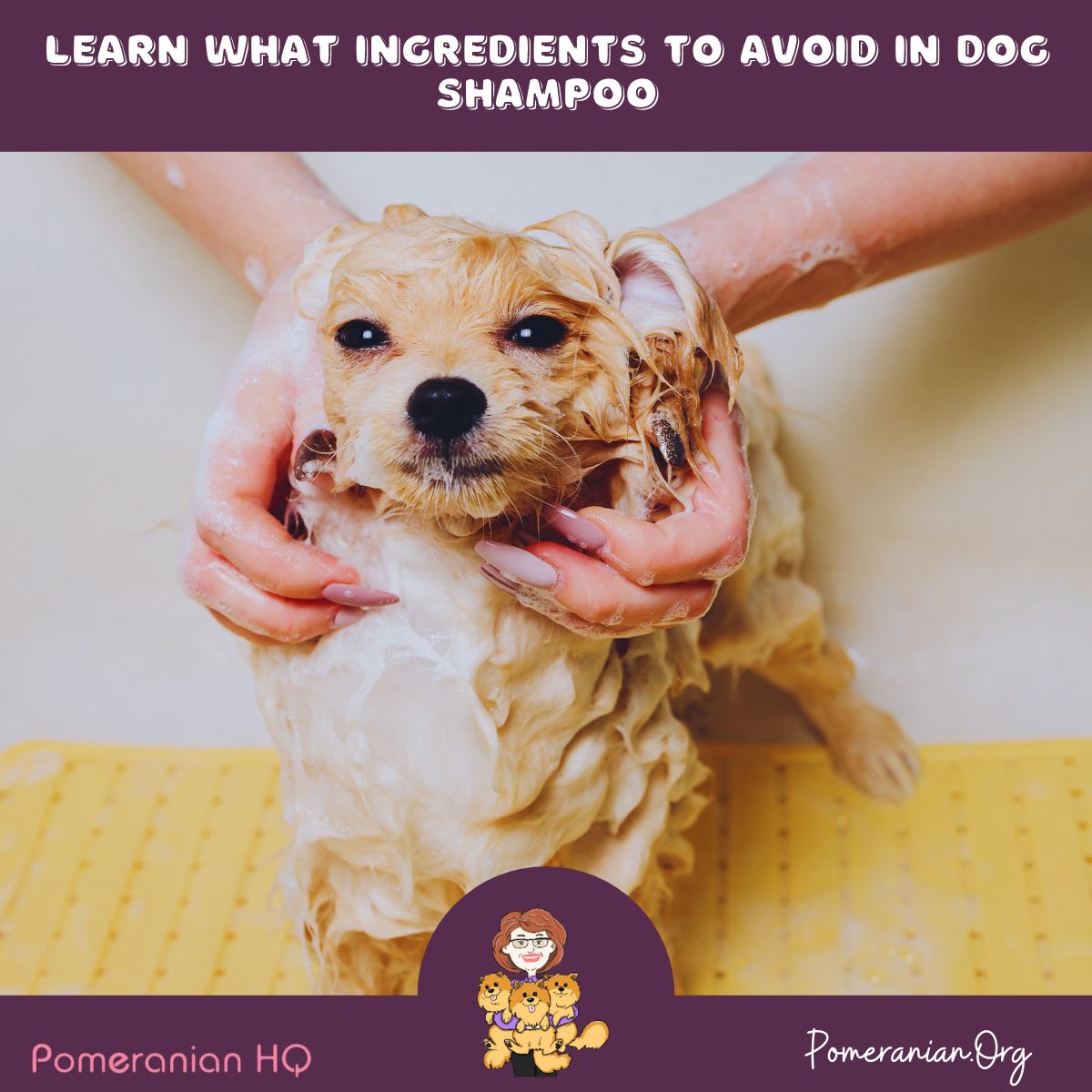
From active ingredients like oatmeal and aloe vera to natural oils like lavender, a variety of compounds can be used in dog shampoos for their specific needs.
Regarding safety and effectiveness, consider purchasing a dog shampoo containing all-natural ingredients from the list above. Of course, always read a product’s label before buying and look out for certain artificial ingredients, scents, or other chemicals you’d rather avoid.
Doing so will ensure that you find alternatives that match your pup’s chemistry and grooming routine. The best tip is to research different shampoos and determine which is best suited to your pet’s coat health.
Ingredients to Avoid in Dog Shampoo
Understanding why certain ingredients are used in dog shampoos can help you make informed decisions about your Pomeranian’s skin and coat care. With this knowledge—and guidance from your veterinarian—you’ll be better equipped to select products that genuinely support your dog’s specific skin needs.
| INSECTICIDAL — Treat & Prevent Fleas, Ticks & Mange | |
|---|---|
| Pyrethrin | Common insecticide used to kill fleas and ticks. |
| Pyrethroids (e.g., Permethrin) | Do NOT use on cats. |
| ANTISEBORRHEIC — Removes Scales & Controls Oil Production | |
|---|---|
| For Seborrhoea Oleosa | Characterised by excess oil and scaling. |
| Sulfur | Removes crusts and scales. Antifungal & antibacterial. Reduces itching. Best combined with salicylic acid. |
| Salicylic Acid | Reduces scaling and crusts. Antifungal & antibacterial. Works best when paired with sulfur. |
| Refined Tar | Strongest scale-reducing ingredient. Can irritate skin. Do not use on cats. |
| Selenium Sulfide | Reduces scaling, itching and oiliness. May cause irritation. Not safe for cats. |
| Benzoyl Peroxide | Removes crusts and scales, clears follicles, degreases. May dry out skin. |
| For Seborrhoea Sicca | Characterised by dry, flaky skin. |
| Sulfur | Helpful for dry scaling and itching when used at the right concentration. |
| ANTIPRURITIC — Reduces Itching from Allergies & Irritation | |
|---|---|
| Colloidal Oatmeal | Soothes inflammation and skin irritation. |
| Hydrocortisone | Low risk of side effects. Reduces inflammation & itching. |
| Aloe Vera | Natural skin soother. |
| Pramoxine Hydrochloride | Topical anaesthetic that relieves itching quickly. |
| Diphenhydramine | Antihistamine that reduces inflammation. |
| Menthol | Cools and lightly numbs irritation. |
| Sulfur | Can reduce itching. High concentrations may irritate skin. |
| Salicylic Acid | Reduces crusts and scaling; mild antibacterial. |
| Cool Water Rinses | Soothes hot, inflamed skin. |
| ANTIBACTERIALS — Treat Pyoderma, Folliculitis & Infection | |
|---|---|
| Benzoyl Peroxide | Antibacterial, degreasing, opens follicles. May dry skin. |
| Chlorhexidine | Antifungal & antibacterial. Excellent for Staph infections. Often paired with salicylic acid. |
| Povidone Iodine | Broad-spectrum disinfectant; may irritate sensitive skin. |
| Triclosan | Mild antibacterial properties. |
| Ethyl Lactate | Cleans follicles and gently degreases. |
| Sulfur | Antifungal & antibacterial. Degreasing. May irritate mucous membranes. Leave on for 10 min for full effect. Not for cats. |
| ANTIFUNGALS — Treat Yeast & Ringworm | |
|---|---|
| Miconazole 2% | Effective and affordable. |
| Chlorhexidine 2–4% | Antifungal & antibacterial. Must sit on skin 10 minutes. Not for cats. |
| Povidone Iodine | May irritate skin; less effective for yeast. |
| Ketoconazole 2% | Very effective antifungal. |
| Selenium Sulfide 1% | Strong antifungal and scale reducer. |
| EMOLLIENTS — Add Oils to Rehydrate Skin | |
|---|---|
| Almond Oil | |
| Corn Oil | |
| Cottonseed Oil | |
| Coconut Oil | |
| Olive Oil | |
| Peanut Oil | |
| Safflower Oil | |
| Sesame Oil | |
| Lanolin | |
| Mineral Oil | |
| Paraffin | |
| EMULSIFIERS — Help Distribute Oils Evenly | |
|---|---|
| Cetyl Alcohol | |
| Laureth-5 | |
| Lecithin | |
| PEG-4 Dilaurate | |
| Stearic Acid | |
| Stearyl Alcohol | |
| HUMECTANTS — Rehydrate & Draw Moisture to Skin | |
|---|---|
| Carboxylic Acid | |
| Lactic Acid | |
| Urea | |
| Sodium Lactate | |
| Propylene Glycol | |
| Glycerine | |
| Polyvinylpyrrolidone | |
| SPECIAL FORMULATIONS — Slow-Release Skin Treatments | |
|---|---|
| Novosomes® | Slow release over 7–10 days. |
| Spherulites® | Release ingredients over 8 days. |
Dog Shampoo Ingredients To Avoid
Not all pet products are created equal – some use harsh, toxic ingredients that could harm your pup. You can always check the label for these dangerous ingredients and harmful chemicals. To ensure you use a natural, safe product to keep your dog happy and healthy!
- Synthetic fragrances are no innocent in disguise; they contain an array of mysterious ingredients that don’t need to be disclosed on their labels, some of which have been linked to serious health concerns such as cancer and reproductive toxicity.
- When shopping for dog shampoo, look for brands that list a “proprietary blend of coat and skin conditioners and moisturizers” as the sole ingredients. This term is often used to mask undisclosed or potentially harmful elements in their products; it’s best to avoid these shampoos entirely.
- Artificially colored products may look bright and vivid, but these colors come with a dark side. Synthesized from petroleum, many potential health risks associated with artificial colors include organ damage, cancerous tumors, congenital disabilities, and allergies – all consequences that can be devastating for victims.
- Phthalates are often used in fragrances without being listed on the label, making it hard for consumers to avoid them. These compounds can significantly impact hormone production, leading to endocrine issues. Be sure to pay attention next time you’re reading the ingredients of dog shampoo.
- Isothiazolinone preservatives, such as Methylisothiazolinone and Methylchloroisothiazolinone, can cause adverse effects on the skin, ranging from mild irritations to severe allergic reactions. Studies suggest that one of these compounds could also be a neurotoxin capable of damaging the nervous system.
- Many shampoos and other beauty products contain preservatives with names such as Bromopol, Diazolidinyl urea, DMDM Hydantoin, Imidazolidinyl Urea, or Quaternium-7. Although it’s not listed as formaldehyde on the label, these chemicals all have a hidden connection to this highly toxic compound, triggering an immune response marked by burning skin irritation. However, more testing is needed to provide conclusive evidence of any links to cancer associated with these ingredients; it is best to steer clear of them altogether.
- Parabens, commonly found in beauty products and kitchen pantries alike, pose serious health risks such as increased cancer or interference with reproductive systems due to their accumulation within the body. To spot them on labels, look out for butylparaben, methylparaben, and Propylparaben.
- Cocamide-MEA, a surfactant, can be incredibly dangerous when not monitored correctly. Triethanolamine, also known as Cocamide-TEA, is a common surfactant and pH adjuster in many products. Unfortunately, it’s considered high risk for being contaminated with nitrosamines – just like its close chemical cousin bearing the same dangers: Cocamide-MEA.
- Mineral oil is often used in pet shampoos to provide a protective barrier on the skin, helping prevent moisture loss. While this may sound beneficial, there is more to consider—mainly the potential presence of toxins and allergens in crude oil-based mineral oils.
- SD Alcohol 40, known as isopropyl or SD-40, dries skin and hair oils. Furthermore, it can increase the absorption of other potentially toxic ingredients through the skin in products containing this alcohol. Due to its properties, many ear-cleaning solutions use it as a main component.
- Polyethylene glycol, or PEG, has long been a staple in skincare products, helping the skin retain moisture. However, what you may not know about this humectant is that it also acts as a “penetration enhancer,” allowing other chemicals and potentially toxic contaminants, such as dioxane and ethylene oxide, to enter the bloodstream more easily upon contact with the skin.
- Propylene glycol is a multifaceted ingredient commonly used in skincare and beauty products. Although it acts as a skin conditioner, solvent, and humectant, studies suggest that long-term exposure to propylene glycol may be toxic to the immune, nervous, and reproductive systems, and even to the skin itself.
- PEG-40 Lanolin is a relative of lanolin, typically derived from sheep’s wool. Unfortunately, studies show that there could be potential organ toxicity associated with its use– and even worse – possible contamination by dioxane or ethylene oxide.
More Dog Shampoo Ingredients To Avoid
Unregulated manufacturing of pet products means that six skin-irritating and potentially allergic ingredients could be contaminated with toxic byproducts without you knowing. Sadly, no governing agency sets standards to prevent this from happening or tests these formulations for contaminants, leaving our furry friends at risk.
To ensure your dog’s safety and health, steer clear of these ingredients when selecting a dog shampoo:
- Dog owners often wonder about the safety of sodium benzoate for their furry friends. Unfortunately, when combined with citric or ascorbic acid (vitamin C), it may form benzene, an element linked to cancer and other severe blood disorders. However, if kept separate from these acids, this preservative is generally considered safe for pets.
- Sodium Lauryl Sulfate (SLS) is a powerful chemical in many everyday products. Despite its wide usage, the powder form can be highly hazardous to the skin.
- Sodium Laureth Sulfate is a popular cleaning agent derived from coconut oil, often marketed as “natural” and vegan-friendly. However, research has revealed that it’s at risk of contamination by carcinogens 1,4-dioxane and ethylene oxide — known to cause health complications such as cancer or allergies.
- Ammonium Laureth Sulfate’s status as a surfactant may be misleading; this chemical is known to cause skin irritation and could even contain traces of potentially toxic dioxane or ethylene oxide.
- Cocamidopropyl betaine is a foaming agent and synthetic surfactant derived from coconut oil that can potentially cause skin irritation or allergic reactions. The manufacturing process can leave specific contaminants behind, such as amidoamine and 3-dimethylaminopropylamine, which may form nitrosamines under high temperatures or acidic conditions.
- Polysorbates are commonly used to impart a pleasant scent to cosmetics and other products, stabilize product ingredients, or act as emulsifiers. Starting as sorbitol—a sugar alcohol derived from corn syrup—this ingredient is treated with ethylene oxide, which determines its number: 20 parts of ethanol make it Polysorbate 20. However, it may contain carcinogenic compounds if not entirely removed during processing.
Dog Shampoo Ingredients Conclusion
To summarize, knowing which dog shampoo ingredients to look for and which to avoid is the key to healthy grooming for your pet. It’s essential to research shampoo ingredients before purchasing to ensure they are safe and effective.
If something isn’t on the label, you can ask the manufacturer for clarification or consider finding another product with more transparent ingredients. With frequent baths and proper coat care, you can be sure to have a healthy, happy pup in no time!
You’ll help keep their skin and fur clean, nourished, and free from irritation by identifying good dog shampoo ingredients.
Furthermore, suppose you believe your pet may have an allergic reaction or irritation to certain shampoos. In that case, seeking veterinary advice before using those products is best. Pomeranian Headquarters hopes this blog post was informative enough for you to confidently select the next one for your dog.
Please note: while I do discuss health, care, and behavioral issues, you should never use this information as a replacement for advice from qualified veterinarians, diagnoses, or recommended treatment regimes. If you have any worries about the health of your Pomeranian, your first contact should be your regular vet or, if you don’t yet have one, a vet that works locally. Never ignore or avoid treatment and advice from your vet because of a piece of information you have read on any website.
Copyright Pomeranian.org. All Rights Reserved.
📚 References & Further Reading
- [1] AKC Pomeranian Breed Standard (2011)
- [2] English Kennel Club Breed Standard
- [3] The Pomeranian Handbook – Denise Leo
- [4] Denlinger, The Complete Pomeranian
- [5] Kimbering, 1891–1991
- [6] Taplin, The Sportsman’s Cabinet
- [7] Parker, The Popular Pomeranian
- [8] Ives, Show Pomeranians