
By Denise Leo – Pomeranian expert, author, and championship show Pomeranian breed judge
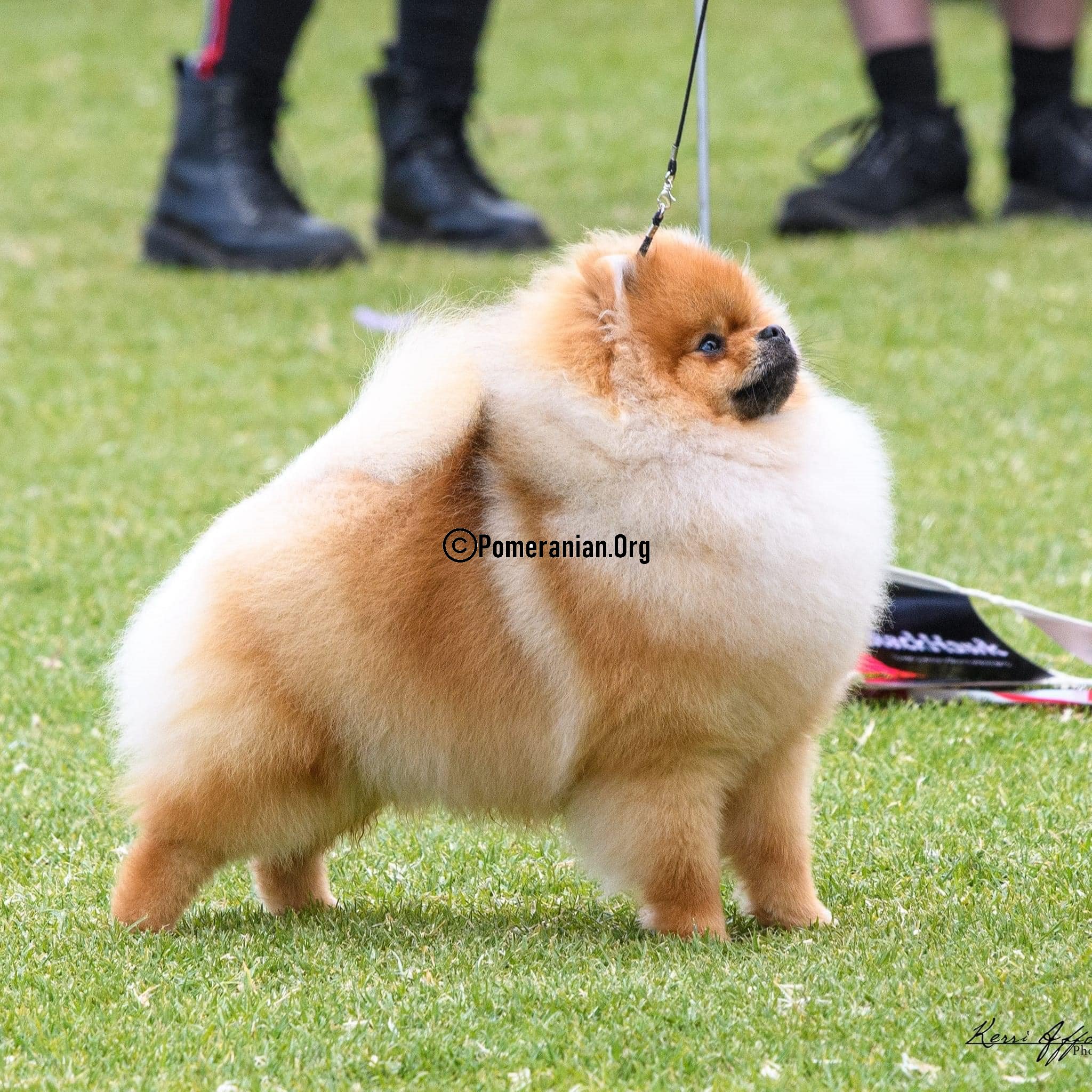
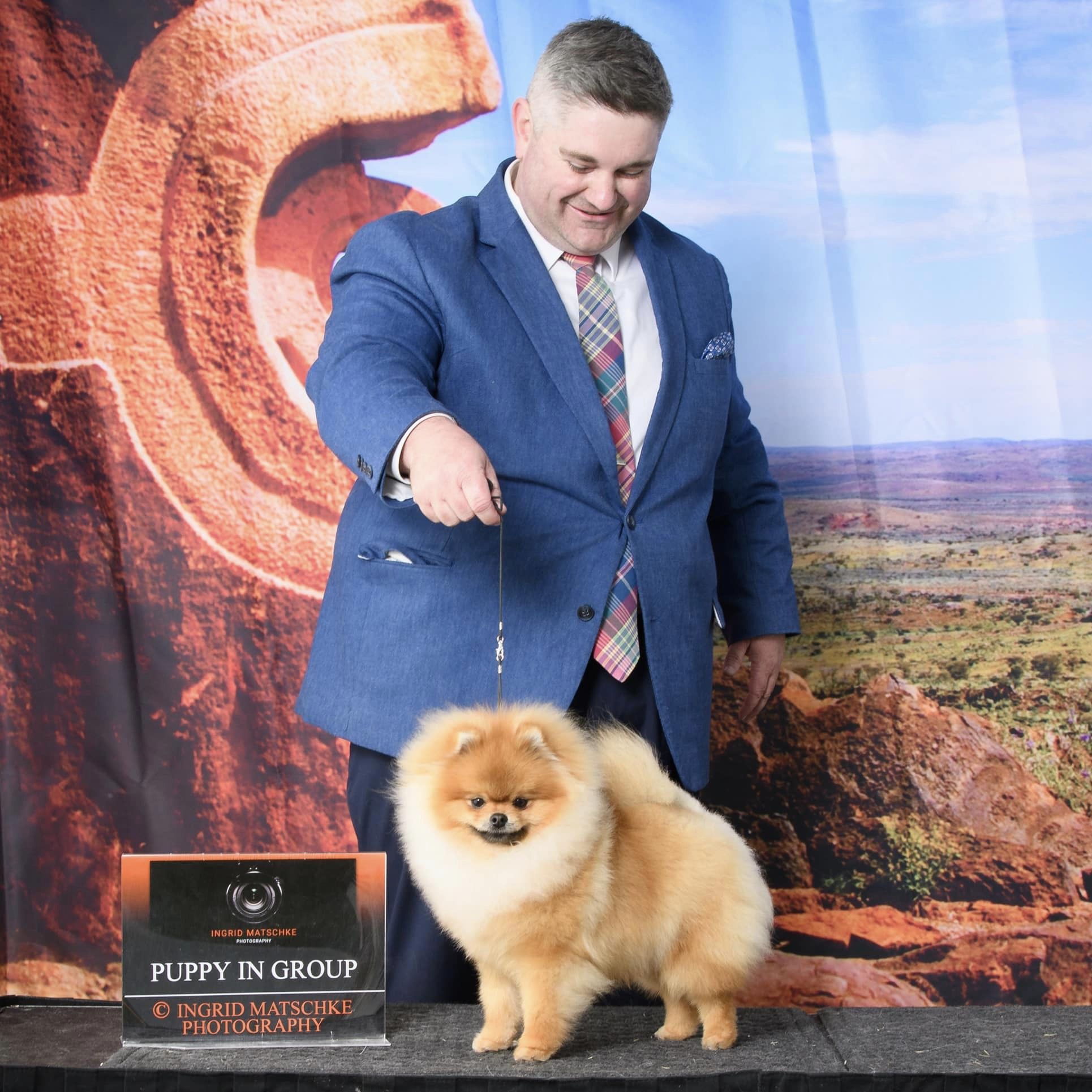
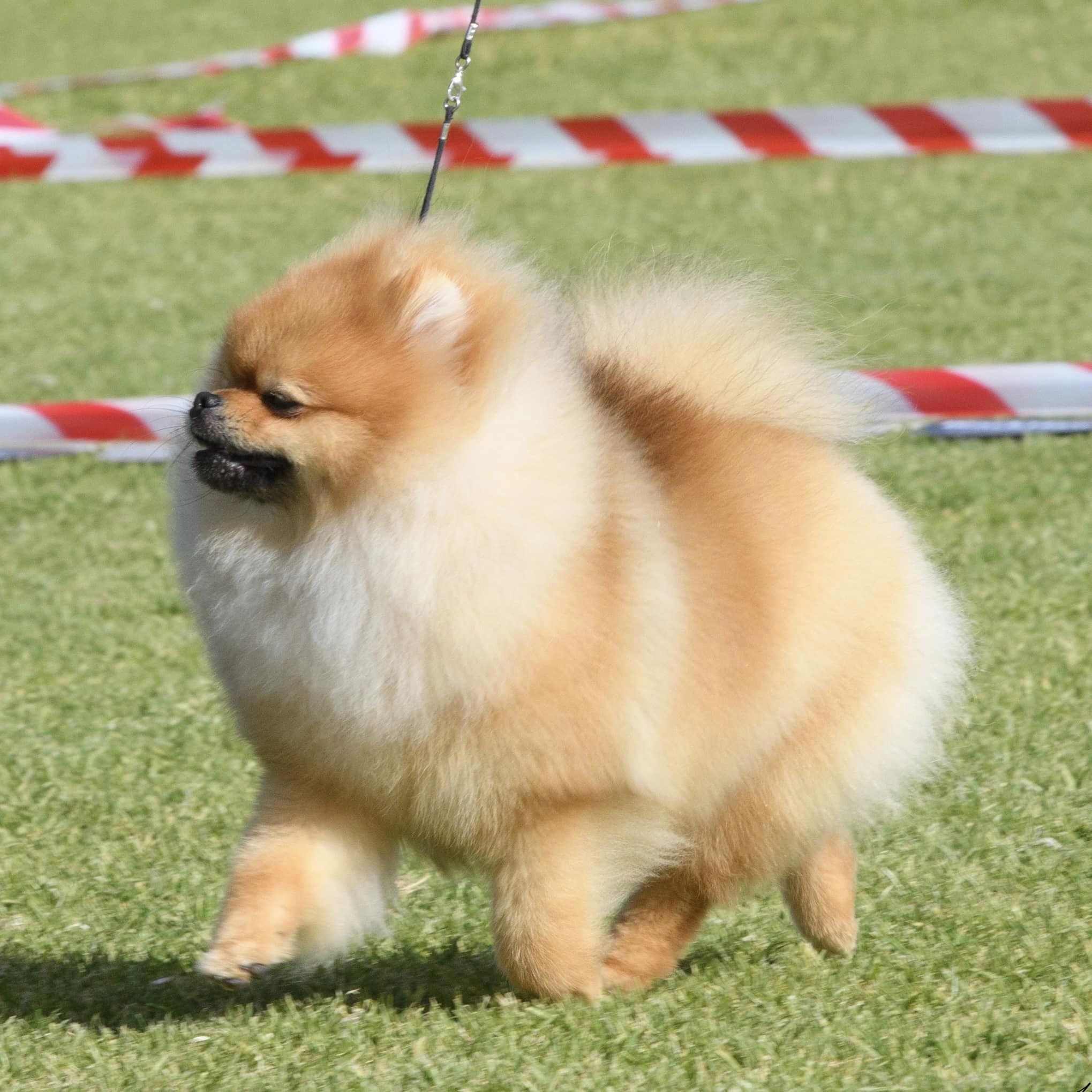
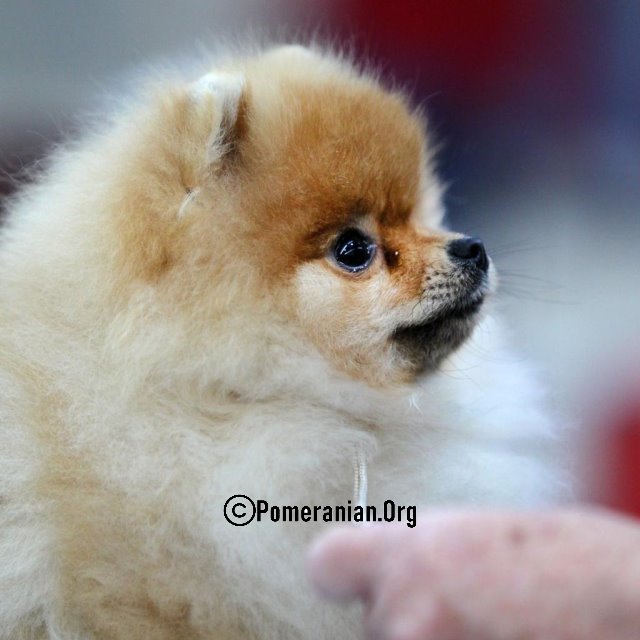
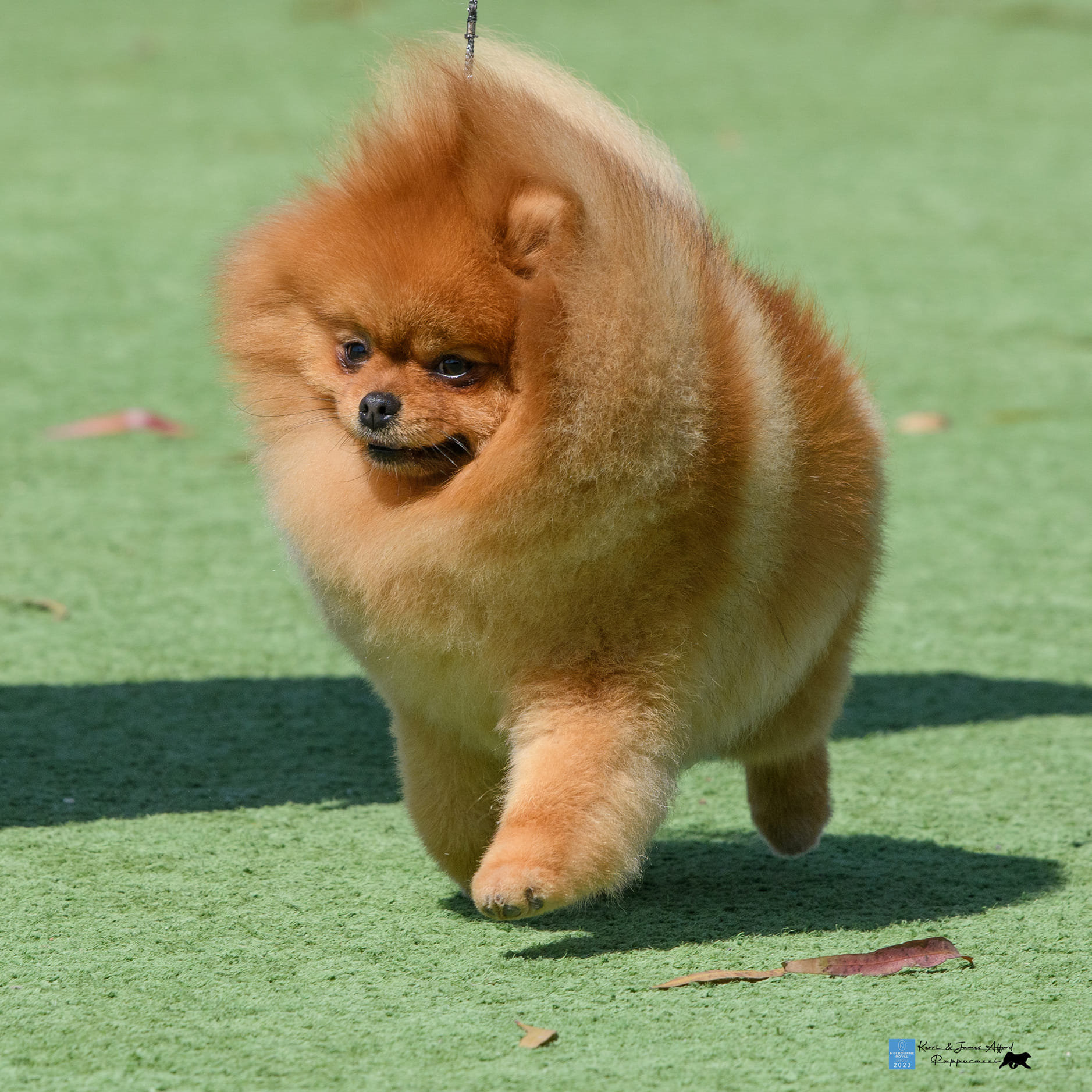
A beautiful Pomeranian coat is one of the breed’s most admired features. The correct Pomeranian coat is a profuse double coat consisting of a dense undercoat and a longer outer coat that stands off from the body. When properly maintained, it gives the Pomeranian its famous fluffy appearance.
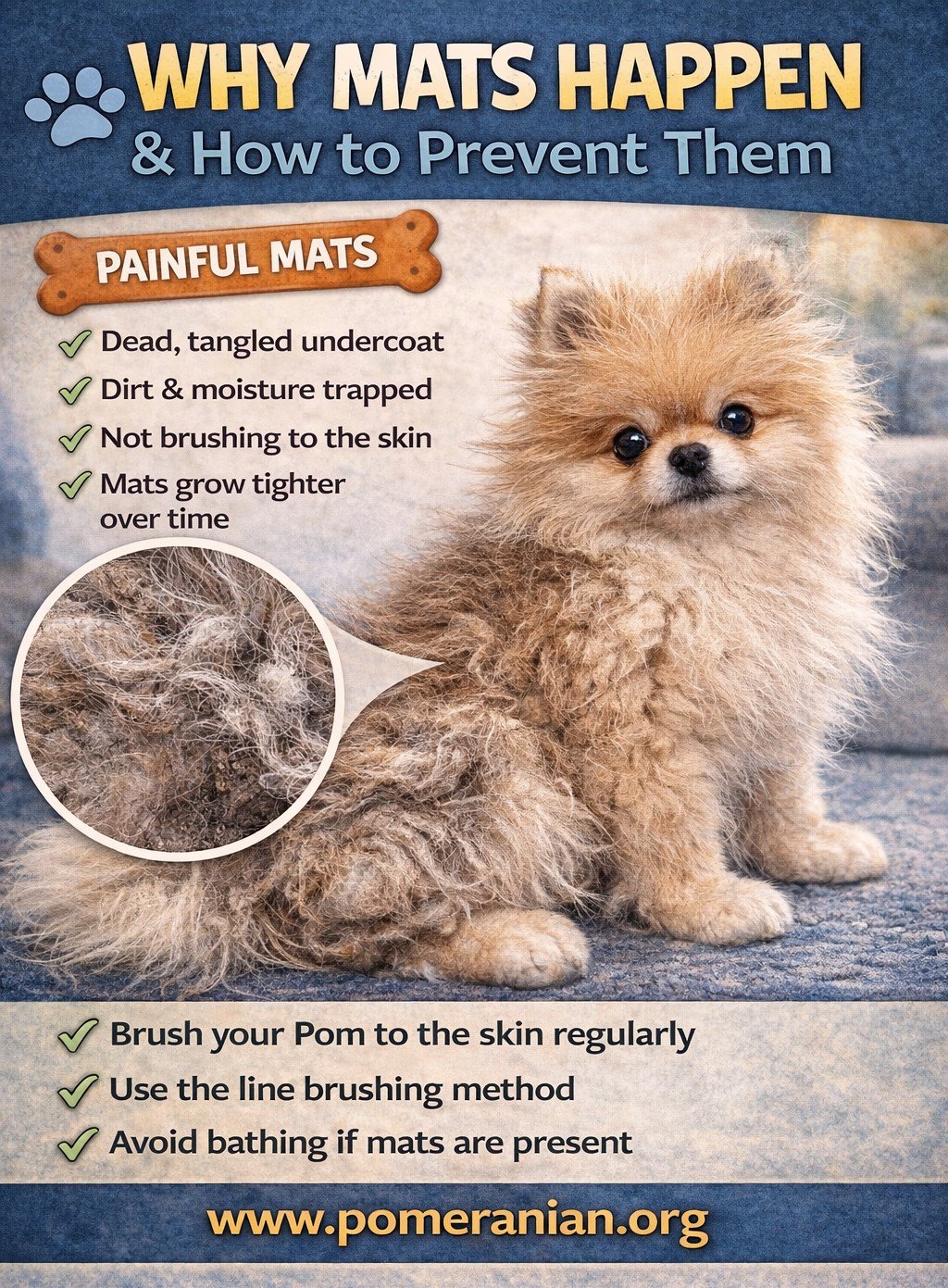
However, without regular grooming, Pomeranian fur can quickly become matted. Matted fur in a Pomeranian is more than just a cosmetic problem. Severe matting can cause discomfort, skin irritation, restricted movement, and even infection.
Understanding how to safely deal with a matted Pomeranian coat is an essential skill for every owner. In this guide, I will explain what causes mats, how to remove them safely, and when shaving may be necessary.
Why Pomeranian Matted Fur Happens
The Pomeranian’s double coat is prone to tangling because the soft undercoat can easily twist around the longer guard hairs. Once a small tangle forms, it can quickly tighten into a mat.
Common causes of Pomeranian matted fur include:
• Infrequent brushing
• Moisture trapped in the coat after bathing
• Friction areas where the coat rubs together
• Harnesses or collars rubbing the coat
• Loose undercoat during coat change
• Puppy coats transitioning to adult coats
Some areas of the body are particularly prone to matting.
Where Mats Commonly Form on Pomeranians
Owners should regularly check these areas where Pomeranian mats often develop:
• Behind the ears
• Under the front legs
• The rear and tail base
Behind the ears is one of the most common areas for matting. The hair in this area is soft and fine, making it easy for small tangles to tighten into dense mats.
Why Matted Fur Is a Problem
A matted Pomeranian coat is not just untidy. It can cause real problems for the dog.
Mats pull tightly on the skin and can be painful. They can also trap moisture and dirt against the skin, leading to irritation and infection.
Severe matting can cause:
• Skin inflammation
• Restricted air circulation
• Hot spots
• Parasites hiding within the coat
• Pain when the dog moves
For this reason, it is important to deal with Pomeranian matted fur promptly and carefully.
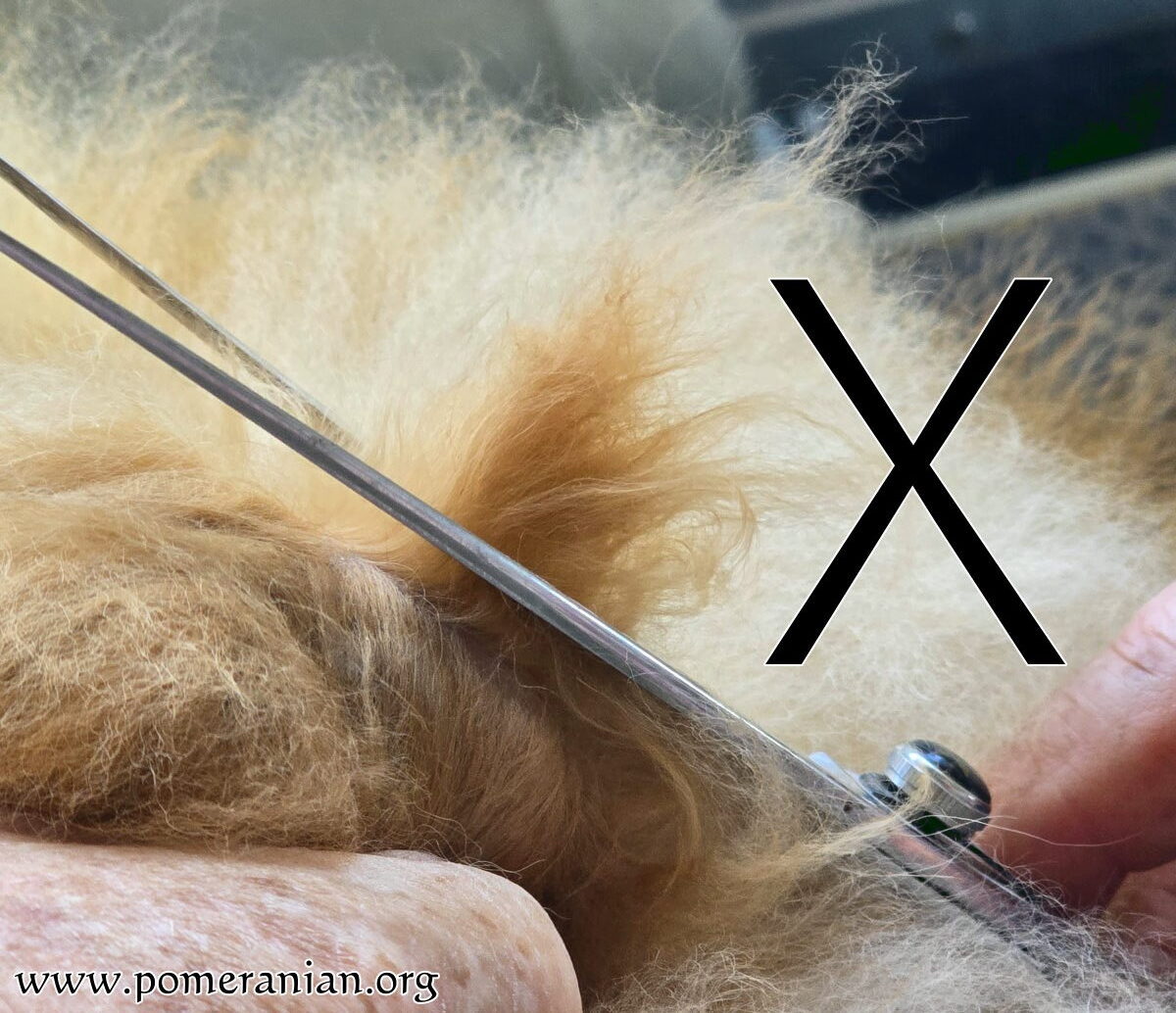
The Golden Rule: Never Cut Across Mats
One of the biggest mistakes owners make when dealing with a matted Pomeranian coat is cutting straight across the mat.
This is extremely dangerous.
The skin of a Pomeranian is thin and can easily be caught in scissors. When a mat is tight against the skin, it is almost impossible to see where the mat ends and the skin begins.
Never cut across a mat.
Instead, mats should be carefully broken down and removed using a safer method.
The Three-Part Method for Removing Pomeranian Mats
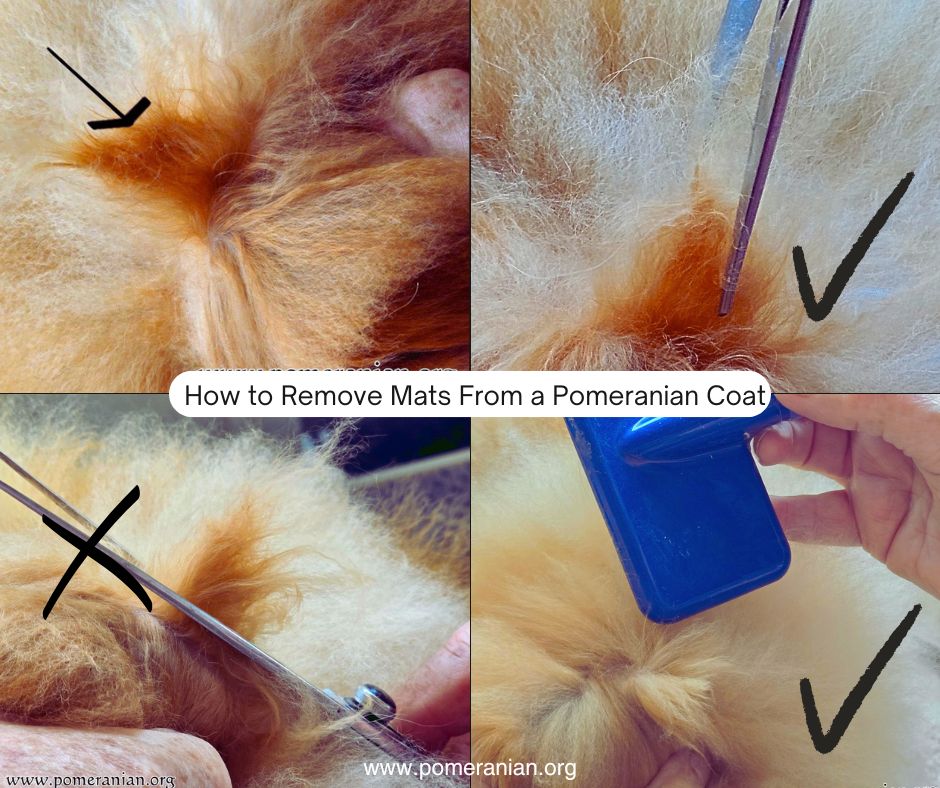
When dealing with Pomeranian matted fur, I recommend a simple three-step technique that safely breaks down the mat without damaging the coat or risking injury.
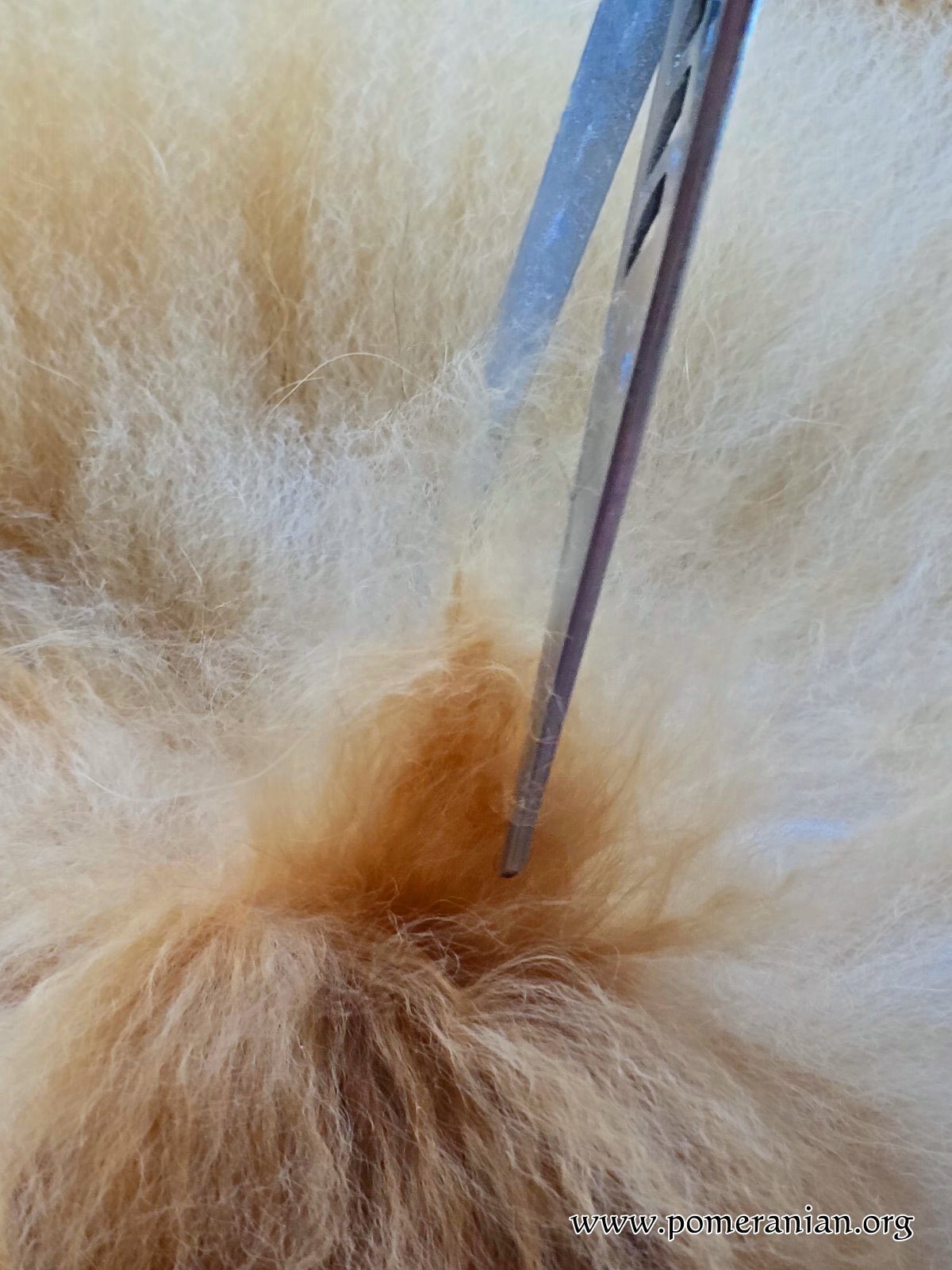
Step 1: Cut Down Into the Mat (Not Across)
Using grooming scissors, carefully cut vertically into the mat.
You are not cutting the mat off. You are simply splitting it into smaller sections. This loosens the mat’s structure, making it easier to pull apart.
Always keep the scissors pointing down towards the skin and work slowly.
Step 2: Pull the Mat Apart With Your Fingers
Once the mat has been split, gently pull the sections apart using your fingers.
This step is very important. Your fingers can feel where the hair naturally separates, reducing the risk of pulling on the skin and causing pain.
Once the mat is divided, you can slowly tease the hair apart without cutting any further.
Take your time and be patient. Many mats can be loosened significantly using this method alone.
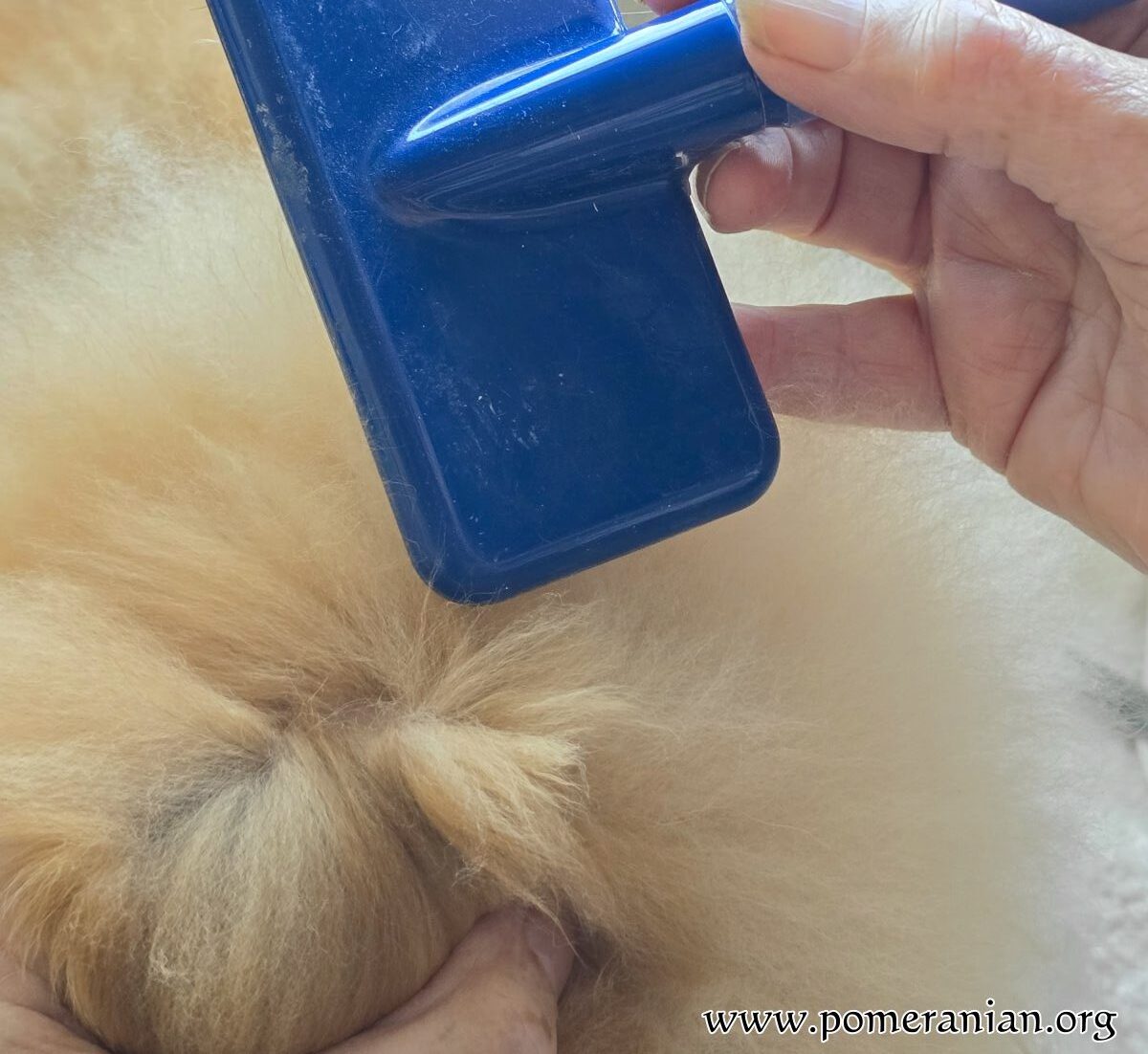
Step 3: Brush Out the Remaining Tangles
After the mat has been broken apart, you can use a slicker brush to remove the remaining loose hair and small tangles.
Brush gently in short strokes while holding the hair near the base to avoid pulling the skin.
This final step removes the remaining knots and restores the coat to its normal fluffy condition.
Tools That Help Remove Pomeranian Mats
Having the correct grooming tools makes dealing with Pomeranian matted fur much easier.
Recommended tools include:
- Pin Brush with polished pins
- A high-quality slicker brush
- Grooming scissors
- Steel comb
- Talcum powder for hair behind the ears
A small amount of talcum powder can be rubbed into the mat before working on it. This helps dry the hair and makes it easier to separate.
Preventing Pomeranian Mats
Prevention is always easier than removing mats. Regular grooming will keep a Pomeranian coat healthy and free of tangles.
Good grooming habits include:
• Brushing the coat several times per week
• Thorough line brushing
• Brushing before bathing
• Fully drying the coat after baths
• Regular checks behind the ears and under the legs
Line brushing is particularly effective for preventing matting. This technique ensures that both the outer coat and the dense undercoat are properly brushed.
What to Do if a Pomeranian Is Severely Matted
Sometimes a Pomeranian’s coat becomes so heavily matted that brushing is no longer possible.
In cases of severely matted Pomeranians, shaving may be the only humane option.
While owners often worry about shaving a Pomeranian, it is sometimes necessary to remove painful mats and allow the skin to recover.
Once the coat grows back, it is essential to begin a consistent grooming routine to prevent future matting
A Note on Puppy Coats
Pomeranian puppies often experience what breeders call the “ugly stage.” During this time, the puppy coat sheds while the adult coat grows in.
This stage can lead to additional tangling and matted fur in Pomeranians if grooming is neglected.
Regular brushing during this phase is particularly important.
Frequently Asked Questions About Pomeranian Matted Fur:
What causes Pomeranian matted fur?
Pomeranian matted fur usually occurs when the dense undercoat becomes tangled with the longer outer coat. This often happens when brushing is skipped, the coat is left damp after bathing, or friction occurs behind the ears, under the legs, or around collars and harnesses. Regular grooming and proper line brushing help prevent mats from forming.
How do you remove mats from a matted Pomeranian?
The safest way to remove mats from a matted Pomeranian is to follow a careful three-step process. First, cut down into the mat vertically to split it into smaller sections. Next, gently pull the mat apart using your fingers. Finally, brush out the remaining tangles with a slicker brush. Never cut straight across a mat, as this can injure the dog.
Can you brush out a Pomeranian’s matted fur?
Yes, mild Pomeranian matted fur can often be brushed out once the mat has been loosened. It is important to first break the mat apart with your fingers or split it carefully with scissors before brushing. Attempting to brush a tight mat without loosening it first can cause pain and coat damage.
When should a matted Pomeranian be shaved?
If a Pomeranian is severely matted and the mats are tight against the skin, shaving may be the safest and most humane option. Heavily matted Pomeranians cannot always be brushed out safely. Once the coat regrows, regular grooming should be maintained to prevent future matting.
How can you prevent Pomeranian mats from forming?
The best way to prevent Pomeranian mats is through regular grooming. Owners should brush their Pomeranian several times per week using proper line brushing techniques. Extra attention should be given to areas prone to matting such as behind the ears, under the legs, and behind the ears.
Final Thoughts
A Pomeranian’s coat is beautiful, but it requires proper care. When owners understand how to safely handle matted fur in Pomeranians, they can keep their dogs comfortable and looking their best.
Remember the three key steps when removing mats:
- Cut down into the mat — never across it.
- Pull the mat apart gently with your fingers.
- Brush out the remaining tangles.
If the coat becomes severely matted, shaving may be the kindest solution.
With regular grooming and careful attention, your Pomeranian’s coat can remain healthy, fluffy, and mat-free.
Copyright Pomeranian.org. All Rights Reserved.
📚 References & Further Reading
- [1] AKC Pomeranian Breed Standard (2011)
- [2] English Kennel Club Breed Standard
- [3] The Pomeranian Handbook – Denise Leo
- [4] Denlinger, The Complete Pomeranian
- [5] Kimbering, 1891–1991
- [6] Taplin, The Sportsman’s Cabinet
- [7] Parker, The Popular Pomeranian
- [8] Ives, Show Pomeranians