
Written by Denise Leo, Pomeranian expert, author of The Pomeranian Handbook, and ANKC Championship Show Pomeranian breed judge. With more than 50 years of experience breeding, exhibiting, and evaluating Pomeranians, Denise shares the professional grooming techniques used by experienced breeders and show exhibitors.
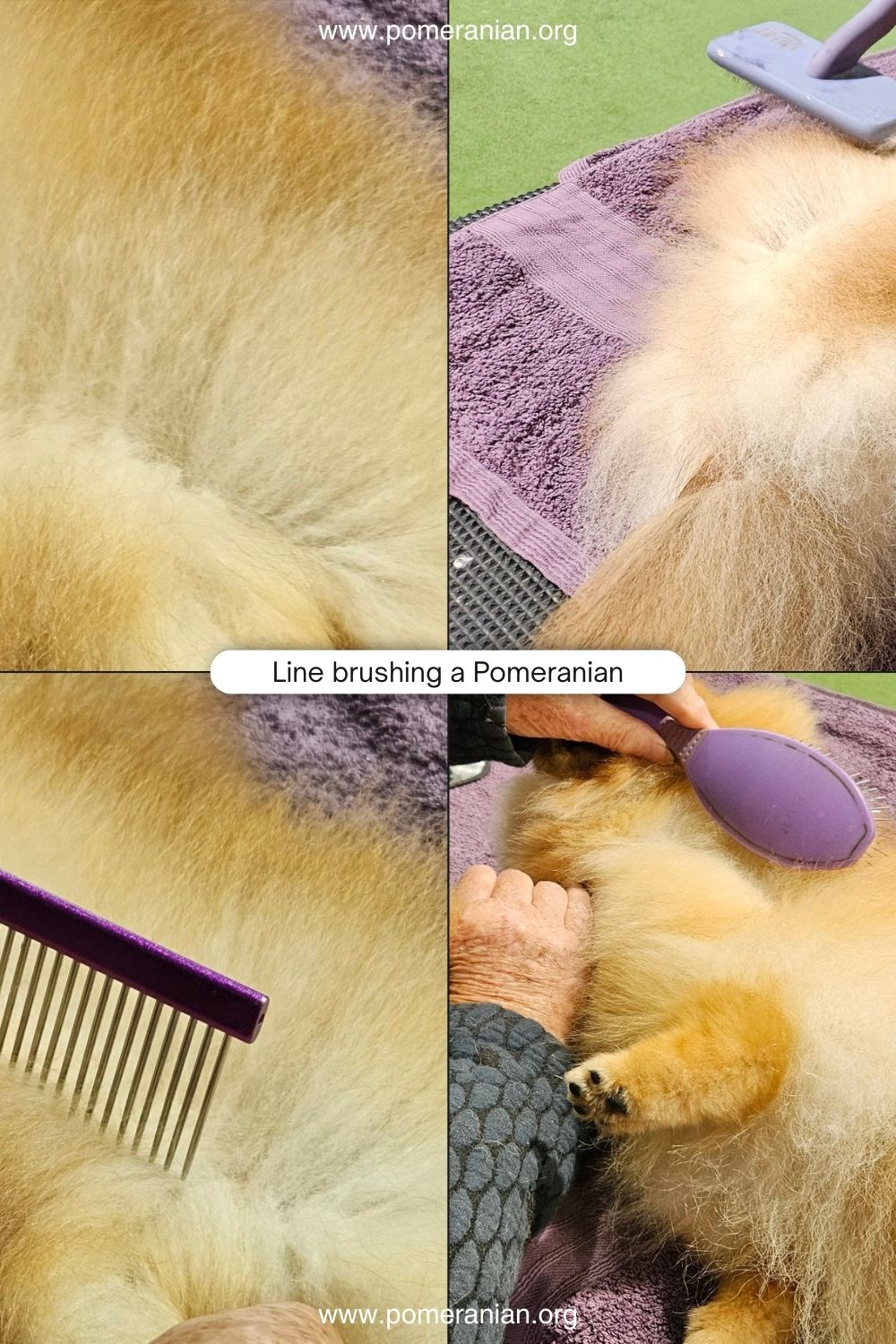
Line brushing is the professional grooming technique used by experienced breeders and exhibitors to maintain the Pomeranian’s beautiful double coat. When done correctly, it prevents painful mats, removes loose undercoat, and keeps the coat standing off the body as the breed is meant to look.
How to Line Brush a Pomeranian (The Correct Way) by Denise Leo
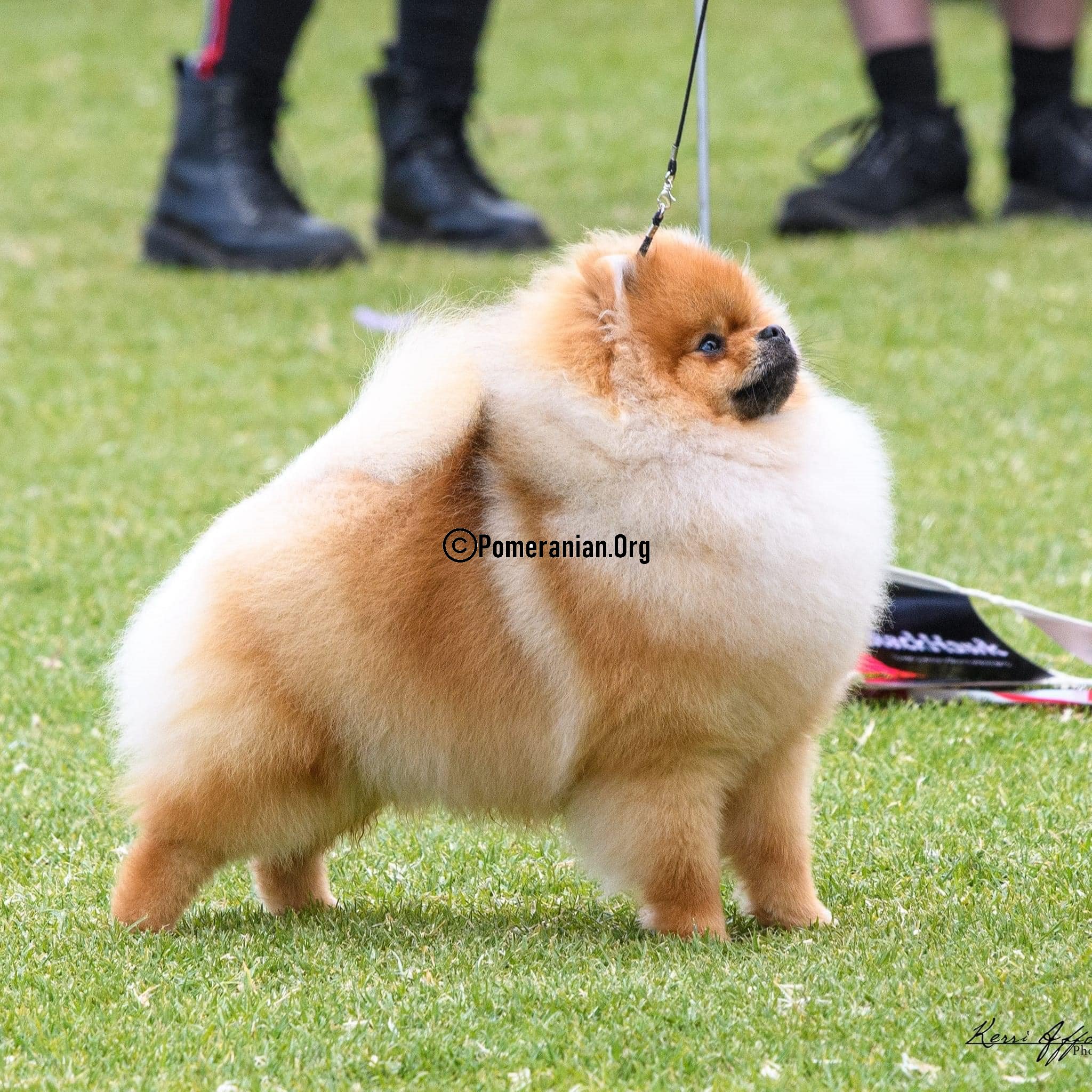
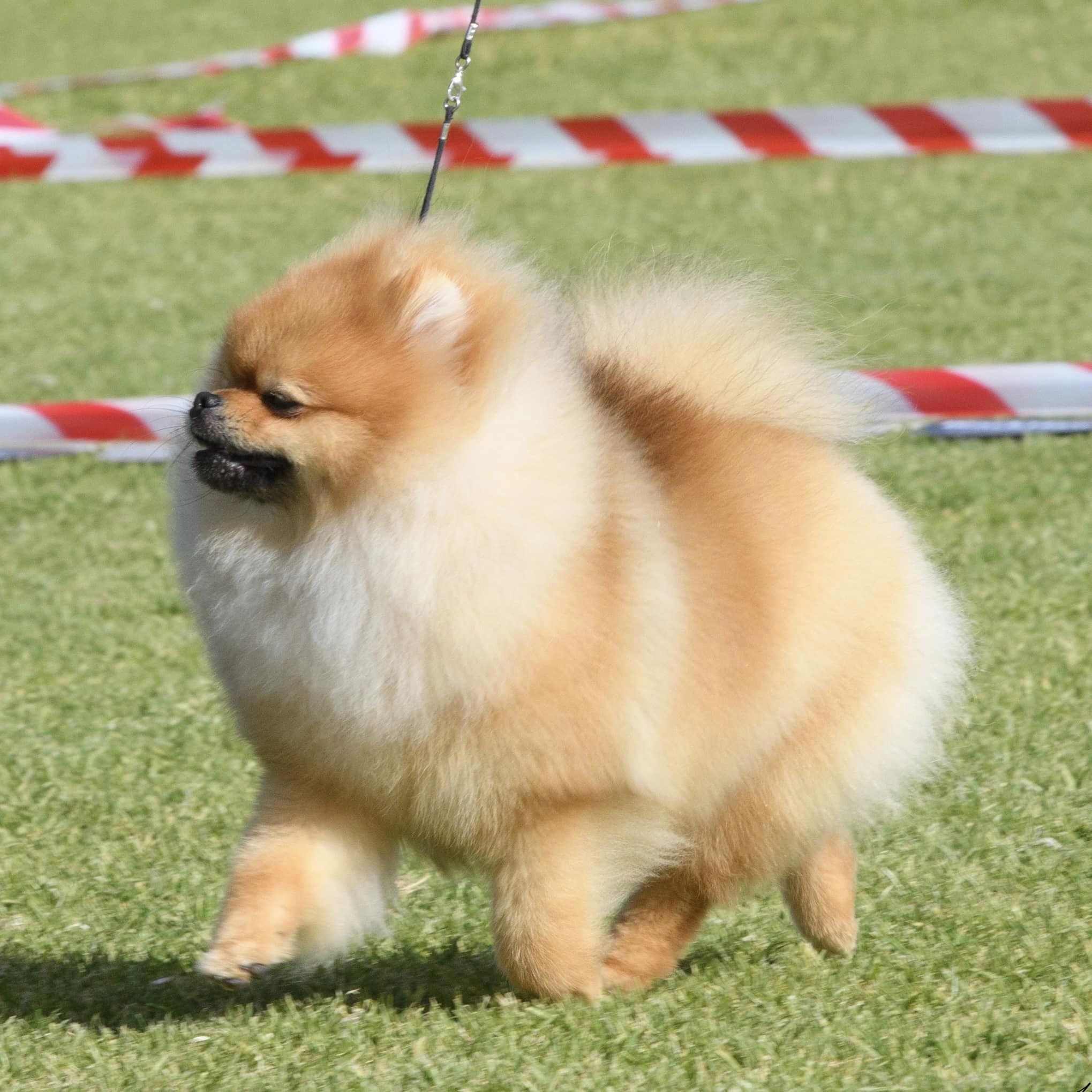
The Pomeranian’s magnificent double coat is one of the breed’s most beautiful features. That fluffy halo of hair surrounding the head and body is what makes the breed so distinctive.
However, maintaining that coat requires proper grooming techniques. Simply brushing over the top of the coat is not enough. If brushing is done incorrectly, mats will develop close to the skin where they cannot easily be seen.
The correct method used by experienced breeders and show exhibitors is called line brushing.
Learning how to line brush your Pomeranian properly will keep the coat healthy, prevent painful mats, and help your Pom maintain that beautiful, fluffy appearance.
What Is Line Brushing?
Line brushing is a grooming technique used for double-coated dogs such as the Pomeranian.
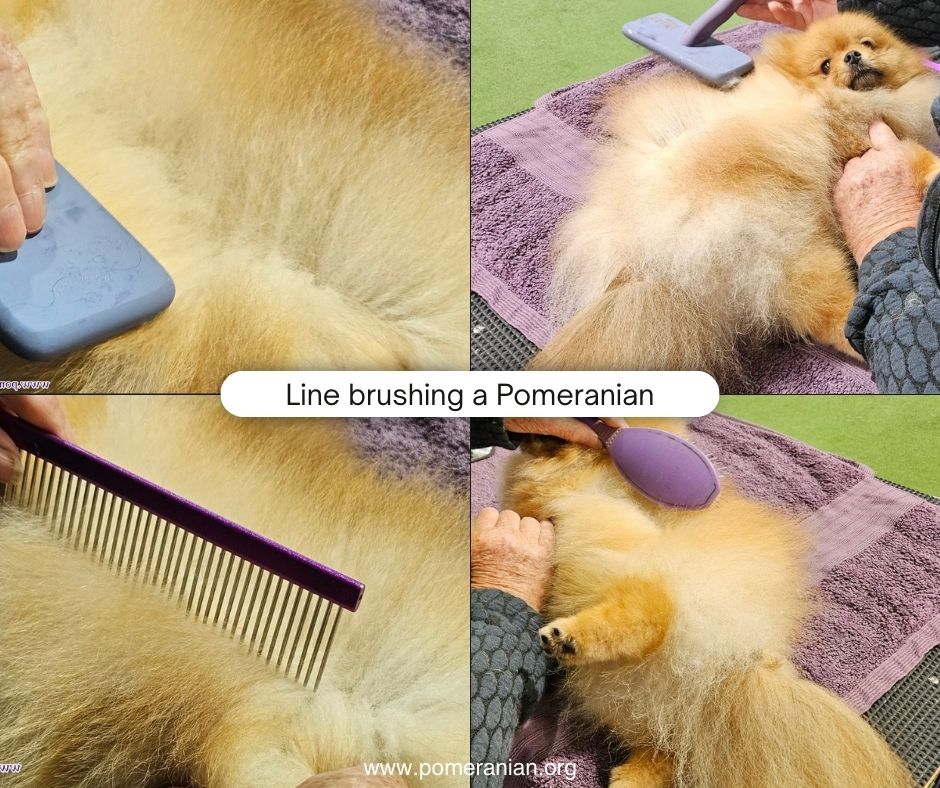
Instead of brushing randomly over the coat, the hair is brushed layer by layer, starting from the skin and working outward.
The coat is parted into small horizontal sections (lines), and each section is brushed thoroughly before moving to the next.
This technique ensures that:
• The brush reaches the skin level
• Loose undercoat is removed
• Tangles are prevented
• The coat remains fluffy and healthy
Without line brushing, the topcoat may look brushed while mats form underneath, particularly behind the ears, under the legs, and around the trousers.
Why Line Brushing Is Important for Pomeranians
Pomeranians have a thick double coat consisting of two layers:
Guard hairs
These are the longer outer hairs that give the Pomeranian its shape and structure.
Undercoat
The soft, dense undercoat provides insulation and creates the fluffy appearance.
When the undercoat sheds or becomes tangled, it can easily form tight mats near the skin. These mats can cause discomfort, skin irritation, and even infections if left untreated.
Line brushing prevents these problems by ensuring every layer of the coat is maintained properly.
Benefits of line brushing include:
• Prevents matting and tangles
• Removes dead undercoat
• Stimulates healthy skin
• Improves coat texture and volume
• Keeps the coat standing off the body
Regular line brushing is one of the secrets behind the spectacular coats seen on well-groomed Pomeranians.
Tools Needed for Line Brushing a Pomeranian
Using quality grooming tools is essential.
Cheap brushes with rough pins can damage the coat and scratch the skin.
Your grooming kit should include:
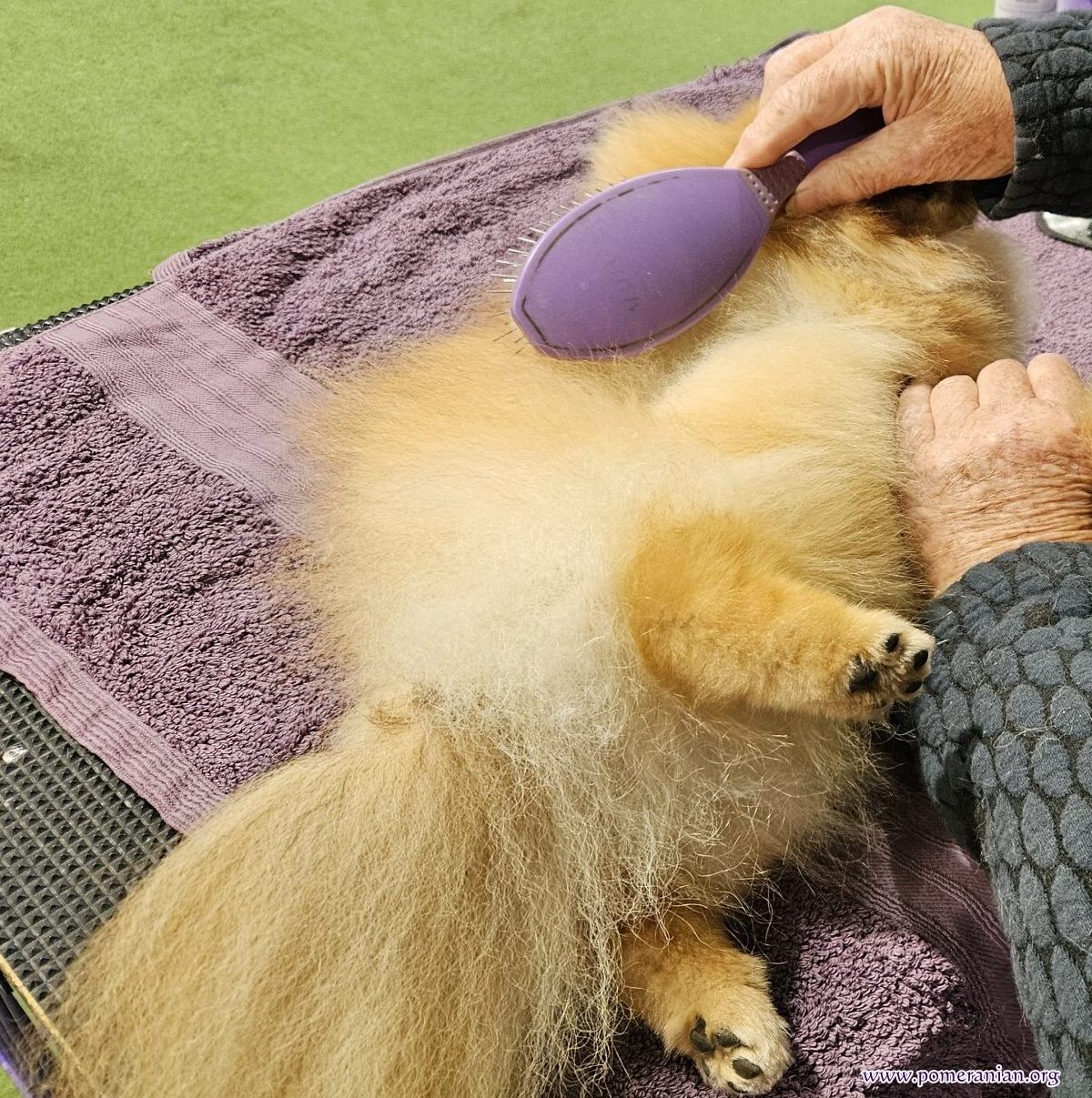
Pin brush
A high-quality brush with polished metal pins (no rubber tips).
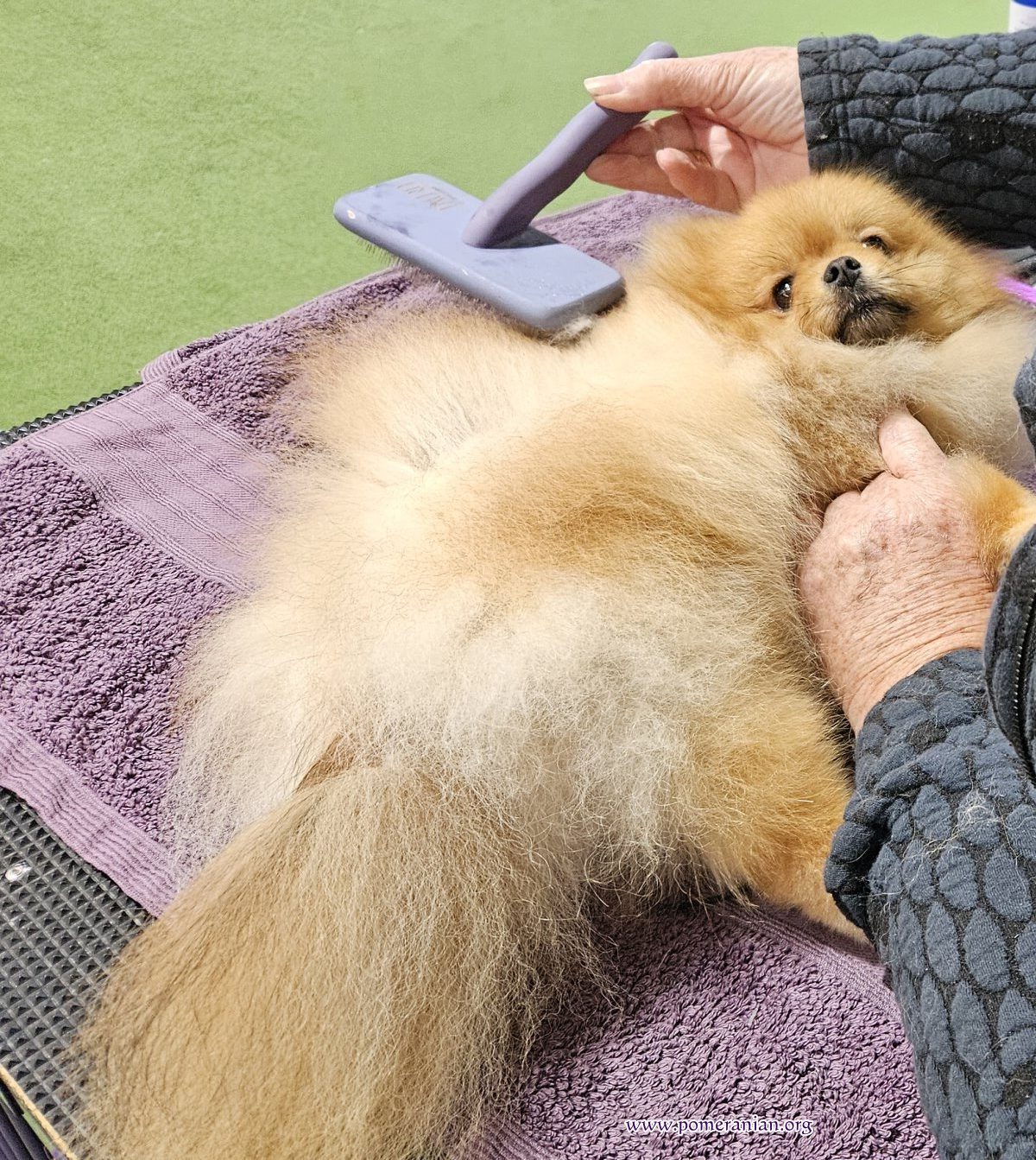
Slicker brush
A soft slicker helps remove loose undercoat and small tangles.
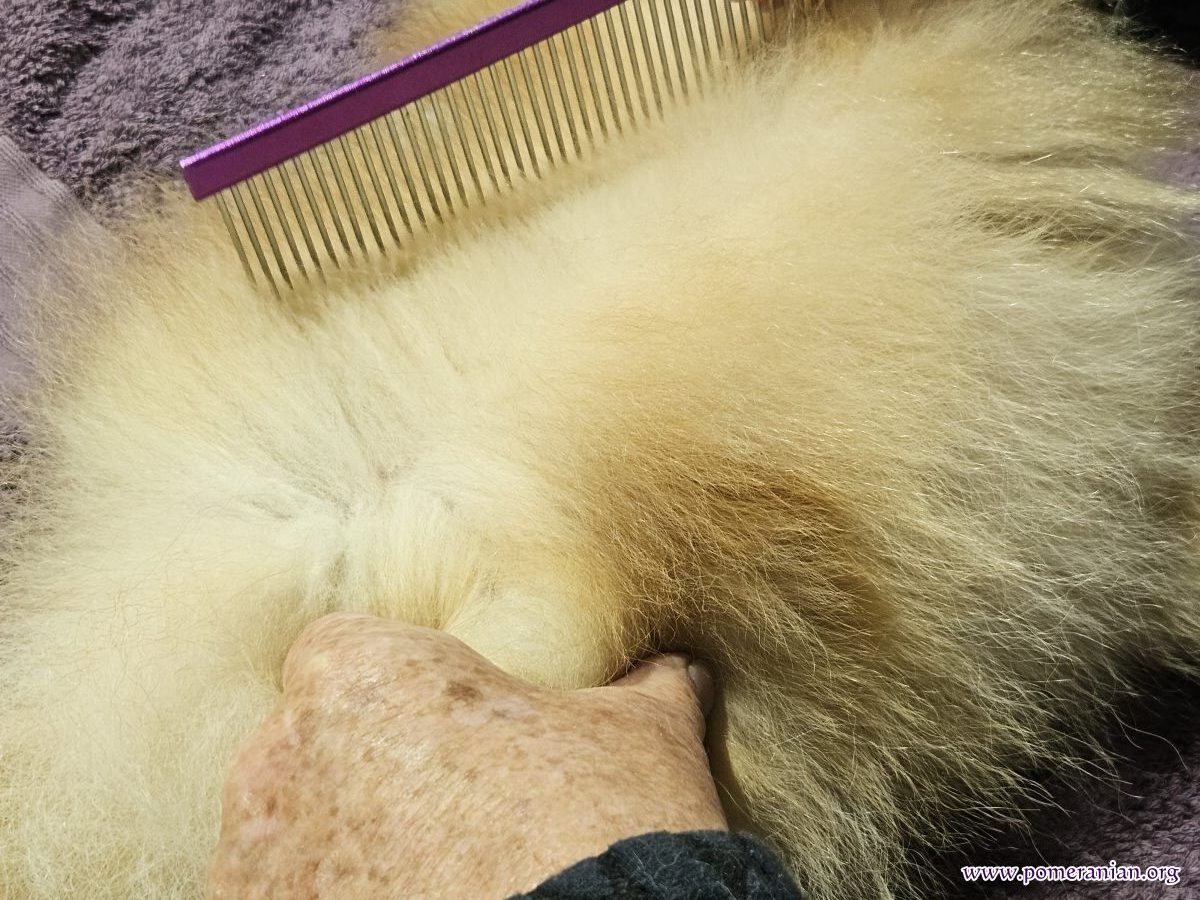
Metal comb
Used after brushing to ensure the coat is completely knot-free.
Coat spray or conditioner
A light mist prevents coat breakage during brushing.
Never brush a completely dry coat. A small amount of conditioning spray protects the hair.
Step-by-Step Guide to Line Brushing a Pomeranian
Step 1 – Position Your Dog
Many breeders prefer to place the Pomeranian lying comfortably on its side.
Others groom on a grooming table.
The key is that the dog should be relaxed and secure.
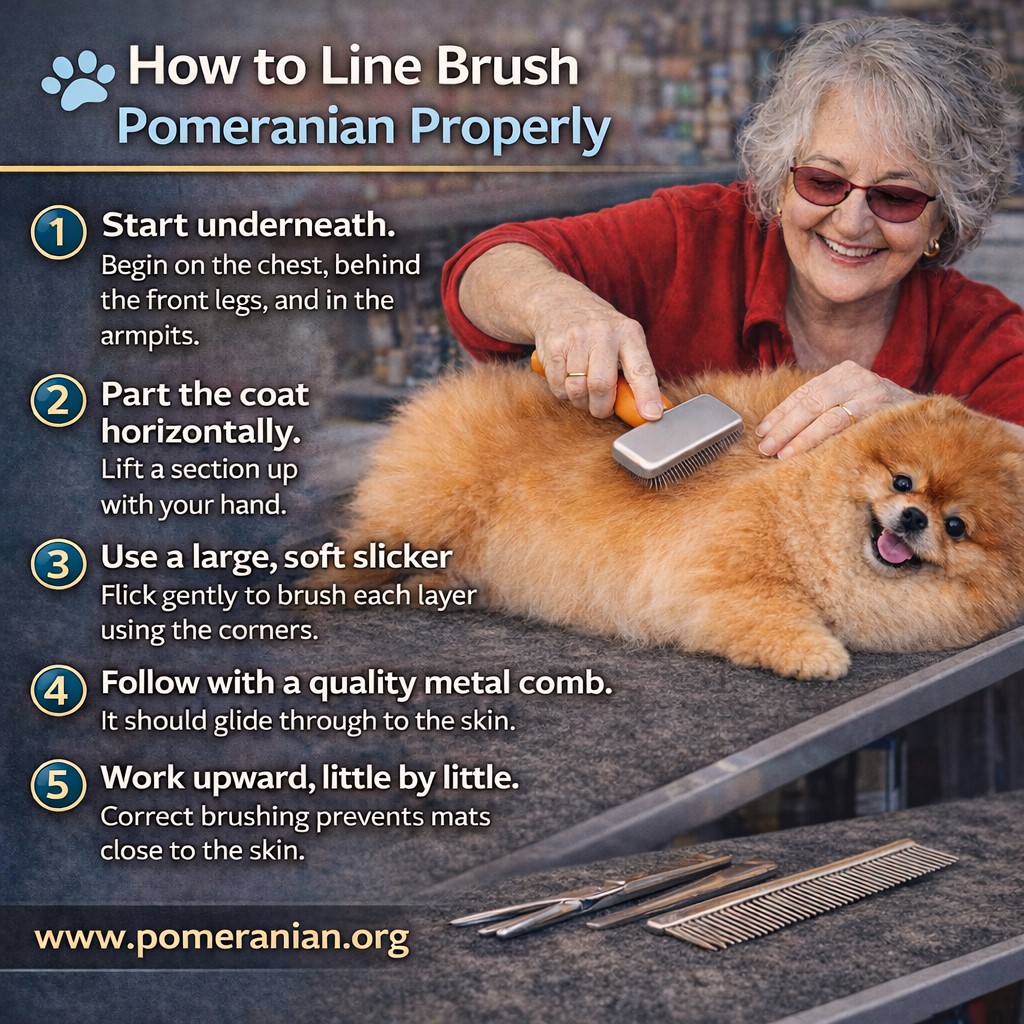
Step 2 – Start at the Lowest Point
Begin at the lowest part of the body, usually near the rear leg or side.
Using one hand, gently lift the coat upward to expose a narrow line of hair close to the skin.
Only a thin line of skin should be visible.
Step 3 – Brush the Section Below the Part
Using a pin brush or slicker brush, gently brush the hair below the line.
Brush outward and slightly upward.
Work slowly and carefully so that the brush reaches the coat near the skin.
Do not rush this step.
Step 4 – Move Up to the Next Line
After one section is fully brushed, lift the next small section of coat.
Repeat the same process:
Lift hair → expose line → brush thoroughly.
Continue working line by line up the body.
Step 5 – Check With a Comb
After brushing a section, run a metal comb through the coat.
If the comb glides through easily, the coat is properly brushed.
If the comb catches, continue brushing until the knot is removed.
Areas That Require Extra Attention
Certain areas on a Pomeranian are more prone to matting.
Always check these carefully.
Behind the ears
The most common location for mats.
Under the front legs
Movement causes tangles in this area.
The trousers
Dense coat on the rear legs can trap loose undercoat.
Base of the tail
Hair friction can create hidden tangles.
These areas should be brushed gently and thoroughly during every grooming session.
How Often Should You Line-Brush a Pomeranian?
The frequency depends on the coat type and whether the dog is shedding.
General guidelines:
Pet Pomeranians:
2–3 times per week
Show Pomeranians:
Daily or every second day
During shedding periods, more frequent brushing may be required to remove loose undercoat.
Regular grooming prevents tangles from forming and keeps grooming sessions shorter and more pleasant.
Common Line Brushing Mistakes
Many owners unknowingly brush their dogs incorrectly.
Here are the most common mistakes.
Brushing only the surface
This leaves hidden mats underneath the coat.
Using poor quality brushes
Rough pins damage the coat and irritate the skin.
Brushing dry coat
Dry hair breaks easily.
Pulling through knots
This can hurt the dog and damage the coat.
If a knot is large, it should be gently separated with fingers before brushing.
What to Do If Your Pomeranian Is Heavily Matted
If the coat has become severely matted, brushing may not be possible.
In these cases:
• Large mats can be carefully broken apart with fingers
• A little talcum powder can help loosen tangles
• Severe matting may require professional grooming
If the coat is extremely matted, shaving may sometimes be the only humane option.
However, once the coat has regrown, regular line brushing will prevent the problem from recurring.
Teaching Puppies to Enjoy Grooming
The best time to start line brushing is when your Pomeranian is a puppy.
Short grooming sessions combined with praise and treats help puppies learn that grooming is a pleasant experience.
Early grooming training creates a dog that:
• Stands calmly for brushing
• Enjoys grooming time
• Maintains a healthy coat for life
Frequently Asked Questions About Line Brushing a Pomeranian
Expert Pomeranian Grooming Advice by Denise Leo
What is line brushing for a Pomeranian?
Line brushing is a grooming technique where the coat is parted into small sections and brushed from the skin outward. This method allows the brush to reach the dense undercoat and prevents hidden mats from forming beneath the outer coat.
Why is line brushing important for Pomeranians?
Pomeranians have a thick double coat that can easily tangle close to the skin. Line brushing removes loose undercoat, prevents matting, improves coat health, and keeps the coat fluffy and standing away from the body.
How often should you line brush a Pomeranian?
Most Pomeranians benefit from line brushing two to three times per week. Dogs with very thick coats or during shedding periods may need more frequent grooming.
What brush should I use for line brushing a Pomeranian?
A high-quality pin brush with polished metal pins is ideal. Many groomers also use a slicker brush and finish by checking the coat with a metal comb to ensure there are no tangles.
Can I brush my Pomeranian when the coat is dry?
It is best to lightly mist the coat with a conditioning spray before brushing. Brushing a completely dry coat can cause hair breakage and damage the coat.
Where do Pomeranians usually get mats?
Mats most often form behind the ears, under the front legs, around the trousers on the back legs, and at the base of the tail. These areas should always be checked carefully during grooming.
What should I do if my Pomeranian is badly matted?
Small tangles can often be gently separated with your fingers before brushing. Severe matting may require professional grooming. In extreme cases shaving may be necessary so the coat can regrow healthy.
Is line brushing suitable for Pomeranian puppies?
Yes. Puppies should be introduced to gentle grooming early so they become comfortable with brushing. Short sessions with praise and treats help build positive grooming habits.

- GROOM LIKE A PROFESSIONAL – These top of the line combs are handcrafted and come in a variety of styles to best fit your specific grooming needs.
- GROOM LIKE A PROFESSIONAL – These top of the line combs are handcrafted and come in a variety of styles to best fit your specific grooming needs.
- QUALITY MATERIALS – Made of a solid brass core with a flat spine and steel teeth with highly finished nickel chrome tips, Made in Japan.
- FEATURES – Rounded corners prevent friction and reduce breakage, grounded and rounded teeth travel through coat with ease.
- DESIGN – Unique design is seamless & smooth so that it won’t snag hair, glide through the coat like butter.

- CHRIS CHRISTENSEN CAT COMB – another Chris Christensen customer favorite, the Cat/Carding Comb features closely spaced tines alternating between a 0.5” pin and two longer 0.75” pins. This comb is ideal for managing long-haired and short-haired coats, even in those delicate places that cats do not typically like being groomed. Gently seek out knots to stop matting fur, remove shedding undercoats, and prevent the occurrence of furballs. The 013 Buttercomb measures 6” in length and features alternating 0.5” – 0.75” teeth. Use also for behind the ears of dogs, and finer drop coats of small dogs.
- DESHEDS AND COMBS – the unique configuration of pins allows you to tackle two jobs at once. The longer teeth help get into the coat for a thorough combing, while the shorter pins capture the excess undercoat, keeping it trapped between the tines. The rounded tips stimulate the hair follicles for a healthy coat and ensure comfort against the skin, an essential feature for combing cats that are typically sensitive to any grooming tool. Use this comb to check for tangles, remove excess fur, and finish the coat.
- BUILT TO LAST – Chris Christensen Buttercombs are handcrafted to the finest detail. Each pin is ground with a rounded tip to reduce friction, prevent coat breakage, and provide a seamless movement through the coat. All Buttercombs have a solid brass core with a flat spine, stainless steel teeth, and are coated with a high-quality nickel chrome finish. It’s lightweight but solid, durable for daily salon use, even on those longer double and triple coats, and will outlast any other comb. The Cat/Carding Comb is item #013 in the Chris Christensen catalog.
- TOP CAT COAT CARE – give your feline family exceptional care by pairing your Chris Christensen tools with Chris Christensen Top Cat – a line of grooming products designed to address specific cat needs, such as improving coat texture, enhancing natural colors, and managing issues such as stud tail.
- BEST IN SHOW RESULTS – steeped in show tradition, Chris Christensen has been crafting excellence and cultivating winners since 1996. Regarded highly in and out of the show ring, Chris Christensen pet grooming products have a reputation for performance and perfection. Groom like a professional and get best in show results.

- CAT BUTTERCOMB – Chris Christensen #013 Cat Buttercombs are the best that money can buy! Handcrafted to the smallest detail, this comb glides through the coat like butter without snagging or breaking fine hairs. The stainless steel teeth are solidly embedded in a solid brass core creating a strong, long lasting tool that is more comfortable to use.
- QUALITY MATERIALS – Made of a solid brass core with a flat spine and steel teeth with highly finished nickel chrome tips, Made in Japan.
- MARK SERIES – Mark Slicker brush by Chris Christensen, maker of quality products for dog shows, show dog grooming. Beautifully handcrafted Beech wood slicker brush with high grade steel pins for less coat damage. Ultra-soft, extra flexible cushion with base of one fourth inch foam. Shape and contours of the handle do all the work for you instead of wrist being at a constant angle. Less stress for groomer and animal.
- SIZE – Mark II Small Slicker – 3 3/4″ head 6 1/2″ body length.
- WHY CHRIS CHRISTENSEN – It all started in 1996 when Chris Christensen developed the first true color correcting shampoo for canines and felines. White on White was a catalyst in the evolution of canine coat care. The momentum that followed has allowed Chris Christensen Systems to bring you the finest grooming products ever available in the dog show and pet care worlds.

- FLAWLESS GROOMING: Each Buttercomb has a flat spine and rounded tip which allows it to glide through the coat avoiding breakage of the coat. This dog grooming comb is one of the best pet combs on the market.
- STAINLESS STEEL BODY: Chris Christensen’s NTS Staggered dog comb comes with a stainless-steel body which ensures durability.
- IDEAL FOR ALL PETS: This is suitable for all pets with thick double-coat types. The 6 inch design and style is a universal standard for all people and groomers alike. Types of breeds include Yorkie’s, Maltese’s, shih-tzus, Goldendoodles, etc.
- DOES THE WORK FOR YOU: This is one of the many highlights of the Chris Christensen #011 Staggered Tooth Buttercomb, it is slightly heavy in weight which prevents you from working harder to get through thick coat, knots, and tangles. This is why professional dog groomers, breeders and handlers love using the #011 Buttercomb every day.
- CHRIS CHRISTENSEN QUALITY AND WARRANTY: This Staggered Tooth comb comes with a six-month guaranteed factory warranty which covers any and all manufacturing defects and quality. Chris Christensen is a dog show and professional grooming brand trusted in the industry for performance and best in show results.
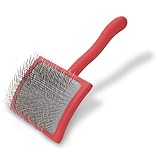
- ‘THE’ DOG BRUSH – you’ve found it! It’s THAT dog brush for shedding breeds. It’s THAT dog brush for detangling. It’s THAT brush groomers love and recommend. Chris Christensen Big G Slicker Brush is the original doodle brush for deshedding, detangling, and creating a finished look. Fluff, detangle, and style with one professional tool. Available in a coral color and three sizes to fit the requirements of a professional groomer and show exhibitor.
- DESHEDDING BRUSH – removes trapped undercoat with less strokes. The extra-long angled pins effectively reach down into the coat removing dead and loose undercoat. The hair remains trapped inside the brush until removed. Perfect for double-coated breeds, especially during the shedding season. Get maximum results, with less work when using the Big G Slicker. It is your workhorse.
- DETANGLING BRUSH – this slicker brush is ideal for removing fine knots from long-coated breeds and the tiny mats hidden in tight curly-coated breeds. With 30% more pins than other slickers, the Big G slicker works 30% harder for you. Brushing with this slicker brush is easier, faster and will make your job grooming painless.
- POODLE BRUSH – the long, dense pins are perfect for fluffing curly, cottony coats and fluffing and shaping heads, toplines, and legs. Ideal for Poodles, Bichons, Labradoodles, Goldendoodles, and other Doodle breeds.
- THOUGHT-OUT DESIGN – every pin is angled for gentle brushing and sits within a flexible cushioned pad allowing the pins to flex softly and glide through the coat. The unique handle design with a non-slip grip reduces hand and arm fatigue and the extreme curved back allows additional control, movement, and direction when brushing. Brushing multiple dogs has never been easier.

- CHRIS CHRISTENSEN SLICKER BRUSH – meet the Mark Series Slicker Brushes, featuring shorter pins, for shorter hair, and ergonomically designed to cut your grooming time in half. Made of lightweight natural Beechwood, the contoured handle allows for brushing in any direction. High-grade steel 12mm pins are fixed in an ultra-soft, highly flexible pad, cushioned with a 1/4″ foam base for a soft feel when grooming. Available in a variety of shapes, there is a Chris Christensen Mark Slicker Brush that is a perfect size for your dog or cat’s short-haired coat.
- MARK II SLICKER – the Mark II Slicker has a 6.25” body and a smaller 3.5” x 2″ head. It’s ideal for cats and smaller dogs. It’s great for puppy coats and all smaller cross-Poodle breeds, including Maltipoos, Cavapoos, Cockapoos, etc. It detangles and smooths cottony curly coats, leaving them soft and fluffy. The Mark II can also be used on larger dogs for grooming those smaller areas such as legs, feet, head and ears.
- ALL COAT TYPES – the Mark Series Brushes can be used on all coat types. For double coats, use pre-trim and, on the legs, head, and detail work on the ears. For drop-coated breeds, use on the undercarriage, legs, feet, under the beard, and sanitary areas. For Setters and Spaniels, use it on the hocks and feet. For wire coats, it is great to use while stripping the jacket, and the perfect length for separating hair when doing leg work. On smooth coats, it acts like a carding brush, removing shedding hair, and setting the chalk foundation and chalk between the hairs for show dogs.
- HANDMADE IN GERMANY – Chris Christensen Mark Series Brushes are handmade in Germany with unsurpassed quality and workmanship. Each brush is meticulously inspected from the stainless-steel pins to the ergonomic Beechwood handle. It will withstand years of use, even with daily brushing, and is backed with a 6-month warranty against manufacturer defects. The Mark II Slicker Brush is item # A5II in the Chris Christensen catalog.
- BEST IN SHOW RESULTS – steeped in dog show tradition, Chris Christensen has been crafting excellence and cultivating winners since 1996. Regarded highly in and out of the show ring, Chris Christensen dog grooming products have a reputation for performance and perfection. Groom like a professional and get best in show results.

- ‘THE’ DOG BRUSH – based on the Original Big G Slicker Brush used by professional groomers. Pet owners can benefit from the Chris Christensen difference without the professional price tag. Use the Chris Home Care Big G for deshedding, detangling, finishing, and fluffing your dog between groomer visits. Available in a limited-edition teal color and two sizes to fit your breed and size of dog. For at-home use.
- DESHEDDING BRUSH – removes trapped undercoat with less strokes. The extra-long angled pins effectively reach down into the coat removing dead and loose undercoat. The hair remains trapped inside the brush, until removed. Perfect for double-coated breeds, especially during the shedding season. Frequent brushing with the Big G keeps shedding hair around the home at a minimum. Spend less time cleaning and more time bonding with your pet.
- DETANGLING BRUSH – this slicker brush is ideal for removing fine knots from long-coated breeds and the tiny mats hidden in tight curly-coated breeds. With 30% more pins than other slickers, the Big G slicker works 30% harder for you. Brushing with this slicker brush is easier, faster and will make your trip to the groomers painless.
- DOODLE BRUSH – the long, dense pins are perfect for fluffing curly, cottony coats and fluffing and shaping heads, toplines, and legs. Ideal for Poodles, Bichons, Labradoodles, Goldendoodles, and other Doodle breeds.
- TRUSTED DESIGN – with the innovative design of the Original Big G, the teal version also has the unique ergonomic handle design but without the non-slip grip that professional groomers need. Every pin is angled for gentle brushing and sits within a flexible cushioned pad allowing the pins to flex softly and glide through the coat. The extra curved back allows additional control, movement, and direction when brushing. Brushing with the Big G is easy on the dog and you.

- OBLONG PIN BRUSH- The Chris Christensen Original Series Pin Brushes feature quality and durability, all in an affordable, premium pin brush! A brush like no other, the Chris Christensen pin brushes feature ground and polished tips on the pins for comfort. They glide through the coat easily.
- OVAL PIN BRUSH- Ground and polished stainless steel pins glide through the coat with ease, 30% more pins than traditional pin brushes makes for a finer brush stroke, ergonomic handle feels wonderful in the hand
- BUTTER COMB- Rounded corners prevent friction and reduce breakage, grounded and rounded teeth travel through coat with ease
- BREEDS- Suitable for all breeds and coat types
- WHY CHRIS CHRISTENSEN – It all started in 1996 when Chris Christensen developed the first true color correcting shampoo for canines and felines. White on White was a catalyst in the evolution of canine coat care. The momentum that followed has allowed Chris Christensen Systems to bring you the finest grooming products ever available in the dog show and pet care worlds

- DOG PIN BRUSH – meet the brush that started it all. Chris Christensen Original Series Pin Brushes offer quality and durability, all in an affordable, universal premium pin brush. Rounded pins glide through the coat easily and comfortably. Available in a variety of shapes and pin lengths, there is a Chris Christensen Original Pin Brush that is a perfect match for your dog’s coat.
- DURABLE OVAL BODY – the Original Oval Pin Brush is 8.5” in length, comfortable to hold, and made from a lightweight, durable Beechwood. The oval shaped head is effective at covering large areas of the body, making daily brushing a breeze. The firm, flexible cushion provides movement through the coat, even those with a dense or mixed coat type. This brush is suitable for all breeds and mixes that require regular brushing.
- ROUNDED POLISHED PINS – each pin in an Original Series brush is round ground and polished. The pins will not scratch or irritate skin, and they will not pull and tug at the coat making it the ideal brush for every dog, but especially for dogs with sensitivity issues or who hate being brushed. Choose the pin length based on your dog’s coat. For hair 1.5” or shorter, select 20mm pins, for hair 2” – 5” in length, select the 27mm; and for coats with longer hair select the 35mm pins.
- LITTLE WONDER SIZE – for ringside touch-ups or face and feet, select the mini version of the Original Series Oval Pin Brush. Its smaller size – 5.75” in length with 20mm pins – has the exact features of the regular sized brush – round polished pins and a Beechwood body and handle. Ideal for travelling, on-the-go, and use at shows. Fits inside pockets and purses.
- HANDMADE IN GERMANY – Chris Christensen Original Series Brushes are handmade in Germany with unsurpassed quality and workmanship. Each brush is meticulously inspected from the stainless-steel pins to the ergonomic Beechwood handle. Each pin brush includes one air vent hole in the cushion for flexibility. It will withstand years of use, even with daily brushing, and is backed with a 6-month warranty against manufacturer defects.

- DOG PIN BRUSH – meet the brush that started it all. Chris Christensen Original Series Pin Brushes offer quality and durability, all in an affordable, universal premium pin brush. Rounded pins glide through the coat easily and comfortably. Available in a variety of shapes and pin lengths, there is a Chris Christensen Original Pin Brush that is a perfect match for your dog’s coat.
- DURABLE OVAL BODY – the Original Oval Pin Brush is 8.5” in length, comfortable to hold, and made from a lightweight, durable Beechwood. The oval shaped head is effective at covering large areas of the body, making daily brushing a breeze. The firm, flexible cushion provides movement through the coat, even those with a dense or mixed coat type. This brush is suitable for all breeds and mixes that require regular brushing.
- ROUNDED POLISHED PINS – each pin in an Original Series brush is round ground and polished. The pins will not scratch or irritate skin, and they will not pull and tug at the coat making it the ideal brush for every dog, but especially for dogs with sensitivity issues or who hate being brushed. Choose the pin length based on your dog’s coat. For hair 1.5” or shorter, select 20mm pins, for hair 2” – 5” in length, select the 27mm; and for coats with longer hair select the 35mm pins.
- LITTLE WONDER SIZE – for ringside touch-ups or face and feet, select the mini version of the Original Series Oval Pin Brush. Its smaller size – 5.75” in length with 20mm pins – has the exact features of the regular sized brush – round polished pins and a Beechwood body and handle. Ideal for travelling, on-the-go, and use at shows. Fits inside pockets and purses.
- HANDMADE IN GERMANY – Chris Christensen Original Series Brushes are handmade in Germany with unsurpassed quality and workmanship. Each brush is meticulously inspected from the stainless-steel pins to the ergonomic Beechwood handle. Each pin brush includes one air vent hole in the cushion for flexibility. It will withstand years of use, even with daily brushing, and is backed with a 6-month warranty against manufacturer defects.
Final Thoughts
Line brushing is the most effective method for maintaining a Pomeranian’s beautiful double coat.
When done correctly, it prevents matting, removes loose undercoat, and keeps the coat standing out from the body as the breed is known for.
Regular grooming not only keeps your Pomeranian looking its best but also strengthens the bond between you and your dog.
With patience, the right tools, and the proper technique, line brushing will become an enjoyable routine that keeps your Pomeranian healthy, comfortable, and magnificently fluffy.
Copyright Pomeranian.org. All Rights Reserved.
📚 References & Further Reading
- [1] AKC Pomeranian Breed Standard (2011)
- [2] English Kennel Club Breed Standard
- [3] The Pomeranian Handbook – Denise Leo
- [4] Denlinger, The Complete Pomeranian
- [5] Kimbering, 1891–1991
- [6] Taplin, The Sportsman’s Cabinet
- [7] Parker, The Popular Pomeranian
- [8] Ives, Show Pomeranians