
DVM, University of Animal and Veterinary Sciences, 2019
MSc. (Hons.) Animal Breeding & Genetics, University of Agriculture Faisalabad, 2021
Pomeranian pregnancy is an exciting time, but it also requires careful planning, close observation, and the support of an experienced veterinarian. Because Pomeranians are a small toy breed, complications can develop quickly during pregnancy or whelping. Every owner should arrange veterinary care early and have an emergency plan in place well before the puppies are due.
I am Denise Leo of Dochlaggie Pomeranians. I have 51 years of experience breeding, exhibiting, and caring for champion Pomeranians. During that time, I have managed many pregnancies, whelped numerous litters, and raised generations of healthy puppies. This article combines the practical knowledge I have gained through decades of hands-on experience with veterinary guidance from Dr. Muqeet Mushtaq, DVM, MSc (Hons.) in Animal Breeding and Genetics.
In this guide, we explain the signs of pregnancy, how long a Pomeranian is pregnant, veterinary pregnancy testing, feeding and everyday care, week-by-week changes, preparation for whelping, and the warning signs that require urgent veterinary attention.
No article can replace professional veterinary care, so your veterinarian should always be your first point of contact if you have concerns about a pregnant Pomeranian.
Veterinary Care Must Come First
Every pregnant Pomeranian should receive veterinary care. Arrange an examination early in the pregnancy and discuss when pregnancy should be confirmed by ultrasound or another appropriate test.
Pomeranians are a small toy breed, and difficulties during labor can quickly become life-threatening for both the mother and her puppies. Before the expected due date, know which veterinary clinic provides emergency care after hours, how you will get there, and whether an emergency Cesarean section can be performed if necessary.
Contact your veterinarian promptly if the pregnancy was accidental, the sire was considerably larger than your Pomeranian, or the expectant mother appears unwell. If you are ever uncertain about her condition, telephone your veterinarian rather than waiting or relying on advice found online.
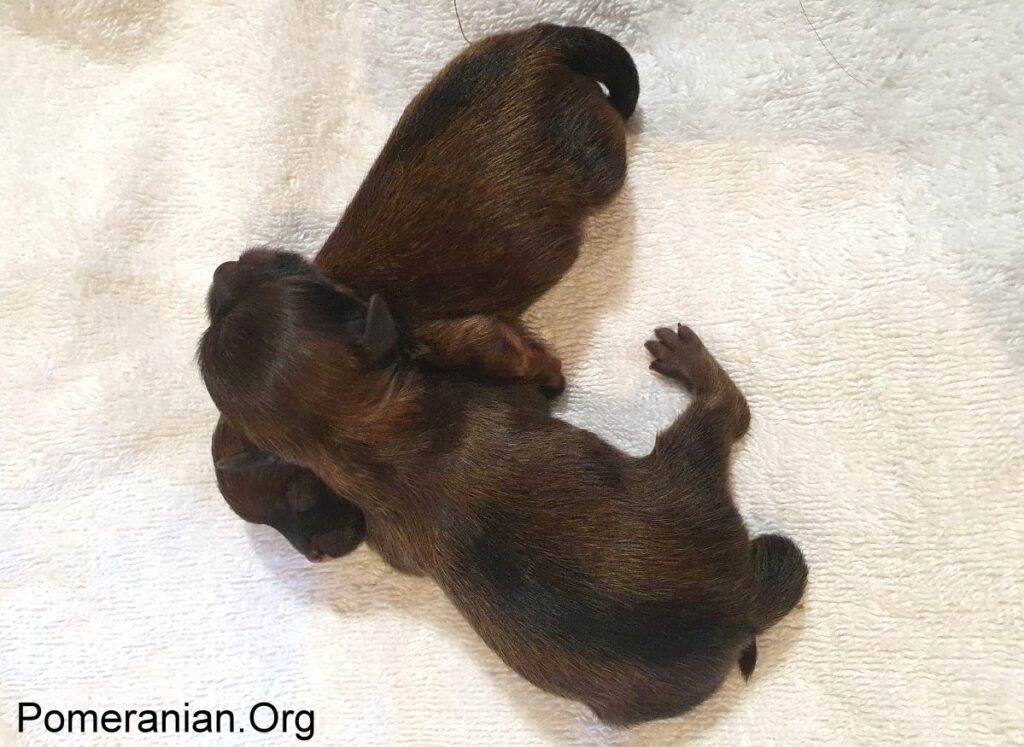
Pomeranian Pregnancy: Quick Facts
- A Pomeranian pregnancy lasts approximately 63 days from ovulation. When counted from the mating date, it may appear to last between 57 and 65 days because mating and conception do not necessarily occur on the same day.
- Pomeranians usually have small litters. One to four puppies is common, although larger litters can occasionally occur. During my 51 years of breeding Pomeranians, I have found that three puppies is a typical litter.
- An ultrasound can usually confirm pregnancy from approximately 25 to 30 days after mating and can also assess whether the developing puppies are viable.
- Ultrasound is not always accurate for counting puppies. An X-ray taken later in pregnancy—usually after day 45 and preferably closer to the expected due date—is generally more reliable for estimating litter size.
- Early pregnancy signs can be subtle and may resemble a false pregnancy. Veterinary testing is the only reliable way to confirm that a Pomeranian is pregnant.
- Pomeranians can experience difficult labor. Every breeder should have the telephone number and location of an emergency veterinary clinic that can perform a Cesarean section if required.
- Do not give a pregnant Pomeranian calcium, vitamins, medications, flea treatments, or worming products unless your veterinarian confirms that they are safe and necessary.
Before Breeding a Pomeranian
Breeding a Pomeranian should never be undertaken simply because the female is capable of becoming pregnant. A female may experience her first season from approximately six months of age, but this does not mean she is physically or mentally mature enough to raise a litter.
A Pomeranian female should not be bred during her first season. I prefer to wait until she is at least 18 months old and fully mature before considering her for breeding. Her overall health, temperament, size, structure, pedigree, breed type, and suitability as a potential mother should all be carefully assessed.
Both prospective parents should receive appropriate health testing before mating. The female should be in healthy condition—not underweight or overweight—and her vaccinations and parasite-control program should be discussed with a veterinarian before she is mated. Any necessary treatment is best completed before pregnancy whenever possible.
Before proceeding, the breeder must also be prepared for the financial and practical responsibilities involved. These may include reproductive testing, pregnancy scans, a late-pregnancy X-ray, around-the-clock supervision, an emergency Cesarean section, hand-raising puppies, and caring permanently for any puppy that cannot be placed in a suitable home.
Responsible breeding is about improving and preserving the Pomeranian breed—not simply producing puppies.
Pomeranian Pregnancy Testing Timeline
Veterinary testing is the only reliable way to confirm that your Pomeranian is pregnant.
| Pregnancy Check | Approximate Timing | What It Can Show |
|---|---|---|
| Relaxin Blood Test | From approximately day 25 | Can confirm pregnancy, although testing too early may produce a false-negative result. |
| Ultrasound | Approximately days 25–30 | Confirms pregnancy and allows the veterinarian to assess fetal viability and heartbeats. |
| Abdominal Palpation | Approximately days 21–30 | An experienced veterinarian may detect pregnancy, although accuracy can vary. |
| X-ray | After day 45 and preferably later | Shows the puppies’ skeletons and is generally the most reliable way to estimate litter size. |
Important: Ultrasound is excellent for confirming pregnancy and checking fetal viability, but it may not accurately count every puppy. A late-pregnancy X-ray usually provides a more dependable estimate of litter size.
Pomeranian Gestation Calendar
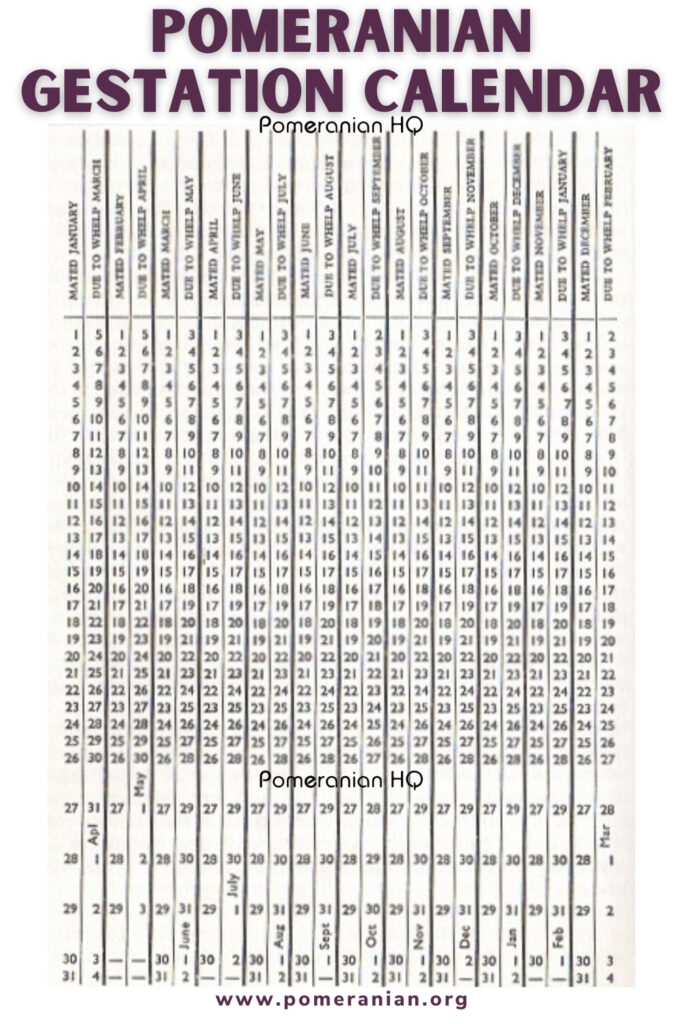

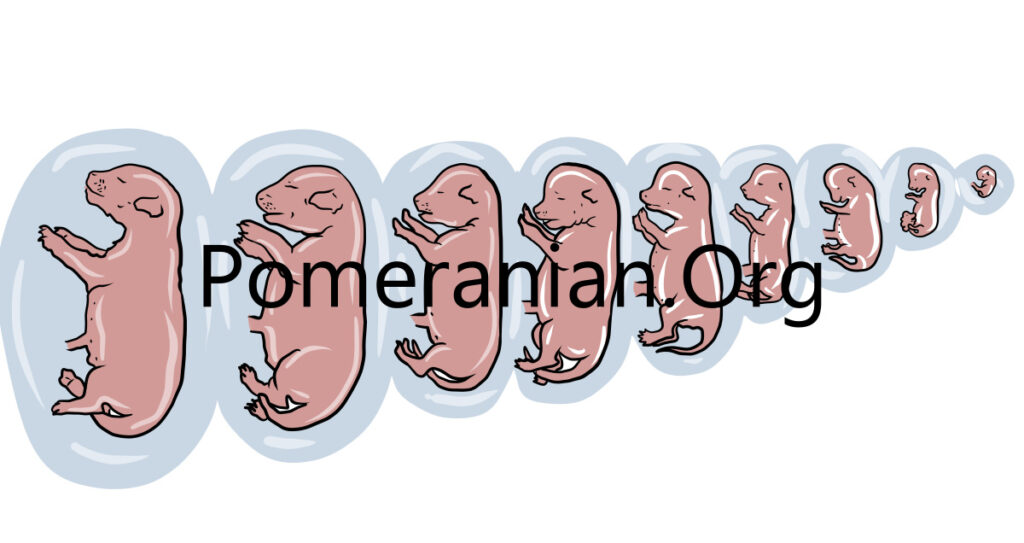
Pomeranian Pregnancy Week by Week
Every pregnancy develops differently, and the mating date does not always correspond with the date of conception. The following timeline is therefore a general guide rather than an exact schedule.
Weeks 1–3: Early Pregnancy
During the first three weeks, most Pomeranians show few obvious signs of pregnancy. The fertilized eggs travel to the uterus and the embryos begin to implant, but the female’s appearance will usually remain unchanged.
She may seem slightly quieter, sleep more, or experience a temporary change in appetite. These signs are subtle and can also occur in a female who is not pregnant.
Continue her normal balanced diet and usual gentle exercise. Do not increase her food simply because she has been mated. Never give medications, supplements, flea treatments, or worming products without first checking with your veterinarian.
Weeks 4–6: Pregnancy Becomes More Noticeable
Pregnancy can usually be confirmed by a veterinarian during this stage. An ultrasound performed at approximately days 25–30 can confirm pregnancy and assess the viability of the developing puppies.
The nipples may become larger and darker, her waist may begin to thicken, and her appetite may increase. Some females become more affectionate, while others prefer additional quiet time.
Continue regular, gentle exercise without exhausting her. Avoid rough play, strenuous activity, and jumping from furniture. From approximately day 40, the puppies begin a period of rapid growth and the mother’s nutritional requirements gradually increase.
Weeks 7–9: Preparing for Whelping
During the final three weeks, the puppies grow rapidly and the mother’s abdomen becomes noticeably larger. She may tire more easily and may be unable to eat a large meal comfortably. Offer several smaller meals of a complete, energy-dense food suitable for pregnancy and lactation.
A late-pregnancy X-ray can help estimate the number of puppies and may provide useful information about their size. Your veterinarian will advise on the most appropriate time for this examination.
Prepare the whelping area well before labor begins and allow the expectant mother time to become comfortable there. Supervise her outdoors because some females may look for a secluded place to make a nest.
During the final week, she may become restless, begin nesting, pant more, seek constant attention, or prefer to be alone. Her appetite may decrease shortly before labor, although not every female stops eating.
Have your veterinarian’s telephone number, the details of an after-hours emergency clinic, reliable transport, and a Cesarean plan ready. A pregnant Pomeranian should not be left unattended when labor appears close.
Feeding a Pregnant Pomeranian
Good nutrition helps support the health of the mother and her developing puppies. However, a pregnant Pomeranian should not simply be given unlimited food. Both underfeeding and excessive weight gain can contribute to pregnancy and whelping problems.
Feeding During the First Six Weeks
A healthy, well-nourished Pomeranian generally does not require additional food during the first two-thirds of pregnancy. Continue feeding a complete, balanced diet and monitor her weight and body condition.
Overfeeding during early pregnancy can lead to obesity, which may increase the risk of difficult or prolonged labor. If she temporarily loses her appetite or regularly refuses food, contact your veterinarian for advice.
Feeding During the Final Three Weeks
Most fetal growth occurs during the final third of pregnancy. From approximately day 40, the mother’s energy requirements will gradually increase.
Your veterinarian may recommend changing to a highly digestible, energy-dense food formulated for puppy growth, pregnancy and lactation, or all life stages. Avoid large-breed puppy formulas because their mineral balance is not designed for the needs of a pregnant toy dog.
As the puppies grow, there is less room in the mother’s abdomen for her stomach to expand. Offer three or four small meals throughout the day instead of one or two large meals. Depending on her body condition and litter size, she may eventually require approximately 30–60% more energy than she needed before pregnancy.
Fresh, clean water must be available at all times.
Do Not Routinely Give Calcium Supplements
Do not give a pregnant Pomeranian calcium tablets, liquid calcium, vitamins, minerals, or other nutritional supplements unless they have been specifically prescribed by your veterinarian.
A complete commercial diet formulated for pregnancy and lactation should already contain an appropriate balance of calcium and phosphorus. Providing additional calcium during pregnancy may interfere with the mother’s natural calcium regulation and increase her risk of developing eclampsia after the puppies are born.
Calcium administered during difficult labor is a veterinary treatment. It should only be used when a veterinarian has determined that it is necessary and has provided precise instructions. Never attempt to treat weak contractions at home with calcium or oxytocin without veterinary direction.
Monitor Her Condition
Weigh your Pomeranian regularly if possible and watch her overall body condition rather than concentrating only on the size of her abdomen. A healthy pregnant dog may gain approximately 15–20% of her pre-pregnancy weight, although litter size and individual circumstances will affect this.
Contact your veterinarian if she gains excessive weight, loses weight, repeatedly refuses food, vomits, develops diarrhea, drinks unusually large amounts of water, or appears weak or unwell.
Exercise and Everyday Care During Pregnancy
A healthy pregnant Pomeranian should continue to enjoy gentle daily exercise unless her veterinarian advises otherwise. Regular movement helps maintain muscle tone, supports general fitness, and may help prepare her body for labor.
Allow her to exercise at her own pace. Short, relaxed walks are preferable to long or strenuous outings, particularly as her abdomen becomes larger. Avoid rough play, excessive running, overheating, and any activity that leaves her tired or breathless.
Do not allow a pregnant Pomeranian to jump from beds, sofas, or other raised surfaces. Take particular care around larger or excitable dogs that could accidentally knock or injure her. During the final weeks, supervise her whenever she is outdoors because some females will search for a secluded place to build a nest.
Grooming a Pregnant Pomeranian
Continue gentle brushing throughout pregnancy to keep her comfortable and prevent mats from developing. Support her body carefully and avoid placing pressure on her abdomen.
Keep the coat around her rear clean. If necessary, carefully shorten excessive hair around the vulva and mammary area before whelping. This can help keep the birth area clean and make it easier for newborn puppies to locate the nipples. Do not shave the abdomen unnecessarily or cut close enough to irritate the skin.
If she requires a bath, use lukewarm water, handle her gently, and dry her coat completely with a dog dryer set to a comfortable temperature. Avoid bathing her when labor appears imminent unless it is genuinely necessary.
Medications and Parasite Treatments
Never give a pregnant Pomeranian medication, vaccinations, supplements, flea treatments, or worming products without consulting your veterinarian. Some products may be considered safe during pregnancy, while others could harm the mother or her developing puppies.
Do not stop essential prescribed medication without veterinary advice. Your veterinarian must weigh the benefits and risks and recommend the safest treatment for your individual dog.
Provide Rest Without Isolation
As pregnancy progresses, your Pomeranian may sleep more and seek a quiet place to rest. Provide a comfortable bed away from noise, drafts, household activity, and other pets that may disturb her.
She should have privacy when she wants it, but she should not be completely isolated from the family. Most Pomeranians are happiest when their secure resting and future whelping area is located somewhere quiet but still close to the people they trust.
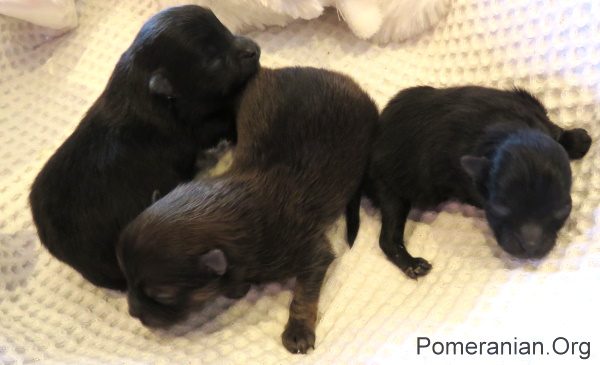
Preparing for Your Pomeranian to Give Birth
Prepare the whelping area well before the puppies are due—ideally by the beginning of week seven. This gives the expectant mother time to investigate the space, sleep there, and accept it as a safe place for her puppies.
Choose a warm, quiet, draft-free area where she can have privacy without being isolated from you. The space should be easy to clean and protected from other dogs, young children, noise, and frequent household activity.
Choosing a Whelping Box
The whelping box should be large enough for the mother to lie fully stretched out, turn around comfortably, and nurse her puppies. However, it should not be so large that newborn puppies can become separated from her.
The sides must safely contain the puppies while allowing the mother to enter and leave comfortably. Internal safety rails, sometimes called pig rails, can help reduce the risk of a puppy becoming trapped between the mother and the side of the box.
Use flat, washable bedding that provides good grip. Avoid deep, loose blankets in which a newborn puppy could become hidden, trapped, or smothered. Have several clean sets ready so wet or soiled bedding can be replaced promptly.
Pomeranian Whelping Supplies
Prepare the following items in advance:
- Your regular veterinarian’s telephone number
- Details of the nearest after-hours emergency clinic
- A reliable transport plan and suitable dog crate
- Clean towels and washable bedding
- Disposable gloves
- A digital thermometer
- Accurate digital scales that weigh in grams
- A notebook or printed record sheet
- A safe, controlled heat source
- A thermometer for monitoring the whelping-area temperature
- Puppy identification collars or another safe identification system
- A suitable canine milk replacer and feeding equipment recommended by your veterinarian
Ask your veterinarian which additional supplies they recommend and what you should—and should not—attempt at home.
Arrange a Late-Pregnancy Veterinary Check
A late-pregnancy examination allows your veterinarian to assess the mother and discuss the expected whelping period. An X-ray taken later in pregnancy can provide a useful estimate of litter size, helping you know whether all the puppies have been delivered.
Discuss the possibility of difficult labor and whether your Pomeranian has any individual risk factors. Confirm which clinic can perform an emergency Cesarean section, including at night, on weekends, and on public holidays.
Use Heat With Great Care
Newborn puppies cannot regulate their body temperature, but they can also overheat very quickly. Any heat source must be safely secured and should warm only part of the whelping box so the mother and puppies can move away from it.
Never place newborn puppies directly onto a heating pad, hot-water bottle, or other hot surface. Monitor both the temperature and the puppies closely, and ask your veterinarian for guidance appropriate to your room conditions and whelping setup.
Careful preparation cannot prevent every complication, but it can save valuable time if the mother or her puppies require urgent assistance.
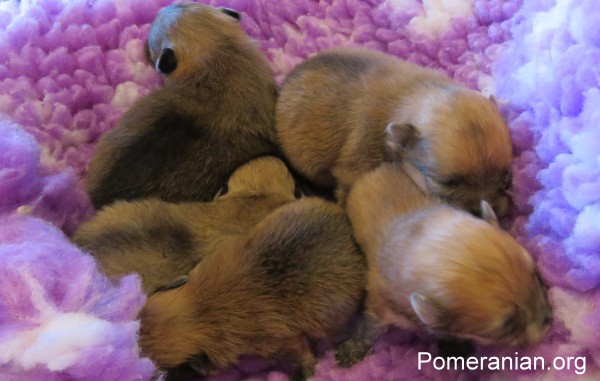
Signs That Pomeranian Labor Is Approaching
During the final days of pregnancy, your Pomeranian’s behavior may begin to change. Some females become restless and want constant reassurance, while others seek privacy and spend more time in their whelping area.
Common signs that labor may be approaching include:
- Nesting, digging, or rearranging bedding
- Restlessness or difficulty becoming comfortable
- Panting, trembling, or pacing
- Following you closely or seeking additional attention
- Withdrawing to a quiet place
- Frequent licking around the vulva
- Refusing food or eating less than usual
- Passing a small amount of clear vaginal discharge
- A drop in rectal temperature
Not every Pomeranian will display all these signs, and some signs may begin several days before the puppies arrive.
Monitoring Her Temperature
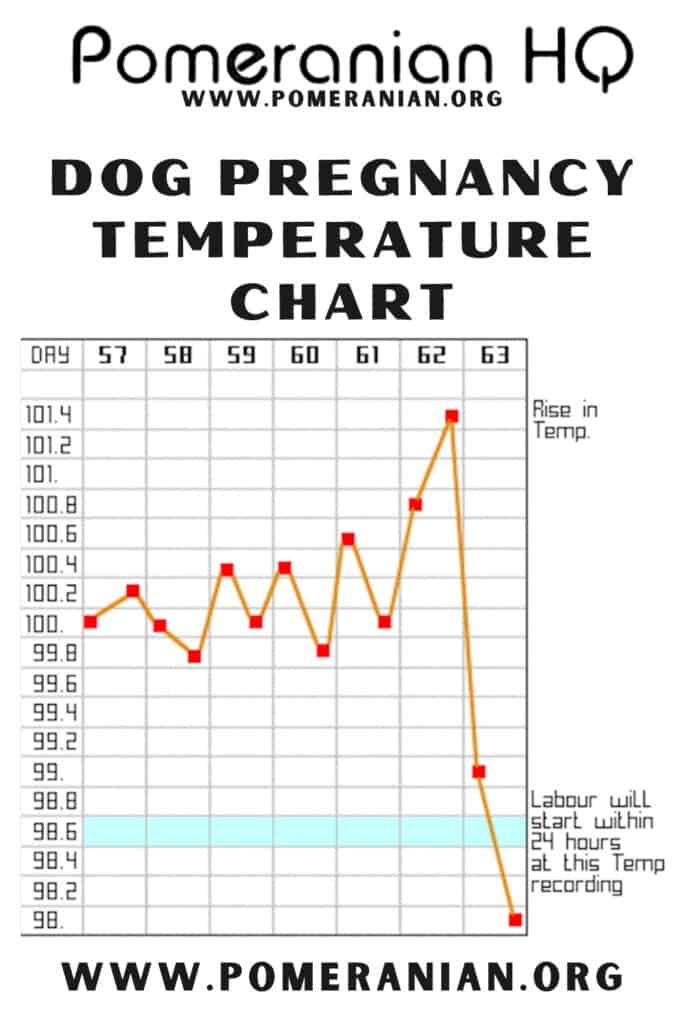
A dog’s normal rectal temperature is generally around 100–102.5°F (37.8–39.2°C). During the final week, your veterinarian may recommend taking and recording your Pomeranian’s temperature once or twice daily at the same quiet times.
A drop below approximately 99°F (37.2°C) may indicate that labor will begin within about 24 hours. However, not every female has an obvious temperature drop, and temperature alone cannot reliably confirm when labor will start.
Ask your veterinarian to show you how to take her temperature safely. Stop if she becomes distressed or resists, and never repeatedly insert a thermometer simply to look for a lower reading.
The First Stage of Labor
During the first stage of labor, the cervix begins to dilate and uterine contractions start, although they may not yet be visible. Your Pomeranian may pant, pace, shiver, refuse food, vomit, scratch at her bedding, or repeatedly ask to go outside.
This stage commonly lasts several hours. Keep the environment calm, remain nearby, and supervise her whenever she goes outdoors. Do not give calcium, oxytocin, medication, or home remedies in an attempt to start or accelerate labor.
If you are unsure whether labor is progressing normally, contact your veterinarian or emergency veterinary clinic immediately.
Urgent Warning Signs During Pomeranian Labor
Difficult labor can quickly become life-threatening for a Pomeranian and her puppies. Contact your veterinarian or emergency veterinary clinic immediately if you notice any of the following:
- Strong, persistent contractions continue for 30 minutes without a puppy being delivered.
- A puppy or fluid-filled sac is visible but remains stuck in the birth canal.
- Green or dark discharge appears before the first puppy and a puppy does not promptly follow.
- Fresh bleeding is heavy or continues for more than a few minutes.
- Two hours have passed since the last puppy and you know or suspect that more puppies remain.
- More than 24 hours have passed since a clear temperature drop and labor has not begun.
- The mother appears extremely distressed, exhausted, weak, confused, feverish, or collapses.
- She is trembling severely, walking stiffly, having muscle spasms, or experiencing a seizure.
- There is a foul-smelling discharge or any discharge accompanied by illness, pain, or fever.
- The pregnancy continues beyond the due period calculated by your veterinarian.
Do not give calcium, oxytocin, medication, or home remedies unless specifically directed by a veterinarian. Never delay veterinary treatment while waiting to see whether the problem resolves by itself.

False Pregnancy in Pomeranians
A false pregnancy, also called pseudopregnancy, can occur after a Pomeranian’s season even when she has not been mated. It is caused by normal hormonal changes and can produce physical and behavioral signs that closely resemble a genuine pregnancy.
Signs of a false pregnancy may include:
- Enlarged mammary glands
- Milk production
- A slightly enlarged abdomen
- Nesting or digging at bedding
- Mothering toys or other objects
- Restlessness or clingy behavior
- Reduced appetite
- Irritability or guarding her chosen “puppies”
These signs cannot reliably distinguish a false pregnancy from a genuine pregnancy. If there is any possibility that your Pomeranian has been mated, arrange veterinary pregnancy testing.
Many mild false pregnancies resolve naturally within a few weeks. Avoid squeezing, massaging, or repeatedly checking the mammary glands because this stimulation may encourage further milk production. Do not apply hot or cold packs or give hormones, medications, supplements, or home remedies unless instructed by your veterinarian.
Contact your veterinarian if the mammary glands become hot, red, hard, swollen, or painful; the discharge from a nipple is abnormal; milk production is excessive; your Pomeranian appears unwell; or the symptoms are severe or persistent. These signs may indicate mastitis or another condition requiring treatment.
Repeated false pregnancies should also be discussed with your veterinarian. If your Pomeranian is not intended for responsible breeding, your veterinarian may recommend desexing at an appropriate time after the false-pregnancy signs have completely resolved.
Frequently Asked Questions About Pomeranian Pregnancy
Answers to the questions Pomeranian owners most frequently ask about pregnancy, feeding, veterinary testing, and labor.
How long is a Pomeranian pregnant?
How many puppies do Pomeranians usually have?
What are the first signs of pregnancy in a Pomeranian?
When can a veterinarian confirm pregnancy?
When can an X-ray show how many puppies are present?
What should I feed a pregnant Pomeranian?
Should I give a pregnant Pomeranian calcium?
Do not give calcium supplements during pregnancy unless they have been specifically prescribed by your veterinarian. Unnecessary calcium supplementation may interfere with the mother’s natural calcium regulation and increase the risk of eclampsia after whelping.
Calcium used during difficult labor is a veterinary treatment and should never be administered without veterinary direction.
Does every pregnant Pomeranian need a Cesarean section?
No. Many Pomeranians deliver naturally, but difficult labor can occur in any pregnancy. The need for a Cesarean section depends on factors including litter size, puppy size and position, the strength of contractions, and the mother’s health.
Every breeder should have an emergency plan and know which veterinary clinic can perform a Cesarean section outside normal business hours.
How do I know when my Pomeranian is going into labor?
When should I call the veterinarian during labor?
Seek veterinary assistance immediately if your Pomeranian has strong contractions for 20–30 minutes without delivering a puppy, a puppy appears stuck, green discharge appears before the first puppy without prompt delivery, heavy bleeding occurs, or the mother becomes weak, distressed, feverish, or collapses.
If you are uncertain whether labor is progressing normally, contact your veterinarian rather than waiting.
Final Thoughts
Pomeranian pregnancy can be a wonderful experience, but complications can develop quickly in this small toy breed. During my 51 years of breeding champion Pomeranians, I have learned that careful preparation and close observation are essential—but they never replace professional veterinary care.
Work closely with your veterinarian throughout the pregnancy, prepare for emergencies before the puppies are due, and seek help immediately whenever something does not appear right.
⚠ Veterinary Disclaimer
The information provided in this article is intended for educational and general informational purposes only and is not a substitute for professional veterinary advice, diagnosis, or treatment.
Always seek the advice of your veterinarian or another qualified animal health professional with any questions you may have regarding your dog’s health or medical condition.
Never ignore professional veterinary advice or delay seeking treatment because of something you have read on this or any other website.
If your Pomeranian is showing signs of illness, discomfort, skin irritation, or an adverse reaction to medication or treatment, contact your veterinarian promptly.
Copyright Pomeranian.org. All Rights Reserved.
References and Further Reading:
[1] Denise Leo “The Pomeranian Handbook”.