
As a Pomeranian breeder, exhibitor, judge and author with more than 50 years of experience, I am frequently asked about Mini Pomeranians. Many people believe a Mini Pomeranian is a special variety that remains smaller than an ordinary Pom, but this is not correct.
Today, there is only one recognized Pomeranian breed. Terms such as Mini Pomeranian, Miniature Pomeranian, Teacup Pomeranian, Micro Pomeranian and Pocket Pomeranian are not official breed names or recognized Pomeranian sizes. The Pomeranian is already a naturally small dog belonging to the Toy Group.
Some advertisers use these appealing names to describe a normally sized Pomeranian, while others use them to promote an exceptionally small puppy at a higher price. A puppy advertised as “mini” is not necessarily rare, better bred or guaranteed to remain unusually tiny when fully grown.
In this guide, I explain what a Mini Pomeranian really is, how big a full-grown Pomeranian should be, the difference between Mini and Teacup Pomeranians, possible health concerns in exceptionally small dogs and how to find a healthy, responsibly bred Pomeranian puppy.
A Mini Pomeranian is not a separate breed or officially recognized Pomeranian size. The words “mini,” “miniature,” “micro,” “pocket” and “teacup” are unofficial terms used to describe either a normally sized Pomeranian or one expected to be exceptionally small.
The Pomeranian is already a Toy breed. A puppy advertised as a Mini Pomeranian is not necessarily rare, healthier or more valuable, and no responsible breeder can guarantee the exact adult size of a very young puppy.
Place this section after the quick-answer box and before the modern breed-standard quotations. It explains the history before showing today’s size requirements.
Why Were Pomeranians Once Called Miniature Pomeranians?
The term Miniature Pomeranian has genuine historical roots. Before the breed standard was consolidated into one size, Pomeranians were divided according to weight. Miniature Pomeranians were dogs weighing under 7 pounds, while dogs weighing 7 pounds or more were shown as Pomeranians.
As breeders increasingly favored the smaller dogs, the Pomeranian Club changed the breed standard so that only the smaller size was recognized. The separate Miniature Pomeranian division disappeared, and the dogs formerly described as Miniature Pomeranians became the modern Pomeranian breed.
Historical show records also reflect this transition. By the late nineteenth century, show societies were providing classes for Toy or Miniature Pomeranians weighing under 7 pounds. Eventually, the larger division was removed from the breed standard altogether.
What Is the Correct Pomeranian Size and Weight?
The official Pomeranian breed standards describe one naturally small Toy breed. They do not include separate size categories for Mini, Miniature, Teacup, Micro or Pocket Pomeranians.
What Do Pomeranian Breed Standards Say About Size?
Dogs Australia and The Royal Kennel Club Pomeranian Breed Standard
“Ideal weight: dogs: 1.8–2 kg (4–4½ lbs); bitches: 2–2.5 kg (4½–5½ lbs).”
American Kennel Club Pomeranian Breed Standard
“Weight – is from 3 to 7 pounds with the ideal weight for show specimens being 4 to 6 pounds.”
The precise preferred weight differs between standards, but neither organization recognizes a smaller Mini Pomeranian variety. A dog advertised as a Mini Pomeranian is simply a Pomeranian described with an unofficial marketing term.
Weight alone does not determine quality. A correctly bred Pomeranian should be compact, balanced, sound and healthy. Deliberately pursuing the lowest possible weight should never be more important than good structure, temperament and long-term health.
Is a Mini Pomeranian a Recognized Breed?
A Mini Pomeranian is not a separate or officially recognized dog breed. Major kennel organizations recognize the Pomeranian, but they do not recognize Mini, Miniature, Teacup, Micro or Pocket Pomeranians as additional varieties.
The Pomeranian is already one of the smallest recognized dog breeds and belongs to the Toy Group. The word “mini” is generally an advertising term rather than a description supported by an official Pomeranian breed standard.
Some confusion occurs because the Pomeranian developed from larger Spitz-type dogs and is known under the FCI standard as the German Toy Spitz/Pomeranian. However, this does not mean that a Mini Pomeranian is a separate variety. “Toy” forms part of the official FCI breed classification, while “mini Pomeranian” remains an unofficial sales term.
A small Pomeranian can still be a genuine purebred Pomeranian, but being exceptionally tiny does not make the dog a distinct breed. Pedigree registration identifies whether a dog is a registered Pomeranian; names such as mini or teacup do not.
Is There a Difference Between a Mini Pomeranian and a Pomeranian?
There is no official breed difference between a Mini Pomeranian and a Pomeranian. Both names refer to the same dog breed, but “Mini Pomeranian” is an unofficial term commonly used in advertisements and online searches.
A breeder or seller may use the word “mini” to describe a Pomeranian expected to be at the smaller end of the normal size range. In other cases, it may simply be used to make an ordinary Pomeranian puppy sound rare or more valuable.
Naturally small Pomeranians do occur, even when they come from healthy, correctly sized parents. However, no breeder can guarantee the exact adult weight of a very young puppy. Genetics, birth weight, development, nutrition and health can all influence the eventual size.
An exceptionally small Pomeranian is not a superior or separate variety. When choosing a puppy, sound structure, good health, correct breed type and stable temperament are far more important than finding the tiniest possible dog.
Mini Pomeranian vs Teacup Pomeranian: Is There a Difference?
There is no official difference between a Mini Pomeranian and a Teacup Pomeranian. Neither name describes a separate breed or a size variety recognized by major kennel organizations.
The terms “mini,” “miniature,” “teacup,” “micro” and “pocket” are often used interchangeably to advertise very small Pomeranian puppies. One seller may call a puppy a Mini Pomeranian, while another may describe a puppy of the same expected size as a Teacup Pomeranian.
These labels do not guarantee a particular adult weight, appearance, health or quality. They may simply describe a normally sized Pomeranian puppy or be used as marketing terms to justify a higher price.
The correct breed name is Pomeranian. Anyone considering a very small puppy should focus on health, structure, temperament, pedigree and responsible breeding rather than the promotional name attached to the puppy.
For a more detailed explanation, read my guide to Teacup Pomeranians and why the term is misleading.
How Big Does a Mini Pomeranian Get?
There is no separate adult size for a Mini Pomeranian because “mini” is not an officially recognized Pomeranian category. A dog advertised under this name may mature within the normal Pomeranian size range or may become smaller or larger than the seller predicted.
Under the American Kennel Club breed standard, adult Pomeranians weigh between 3 and 7 pounds, with 4 to 6 pounds preferred for show dogs. The Dogs Australia and Royal Kennel Club standard gives ideal weights of 1.8 to 2 kilograms for males and 2 to 2.5 kilograms for females.
Most Pomeranians are close to their adult height by approximately nine months, although they may continue developing body, muscle and coat until 12 months or older.
Looking at the parents and other close relatives can provide a useful indication of eventual size, but it is not a guarantee. Very young puppies can be difficult to predict accurately, particularly when they are unusually small at birth.
Be cautious when a seller guarantees that a Mini Pomeranian puppy will remain below a particular adult weight. The puppy’s mature health, soundness and overall quality are more important than achieving an exceptionally tiny size.
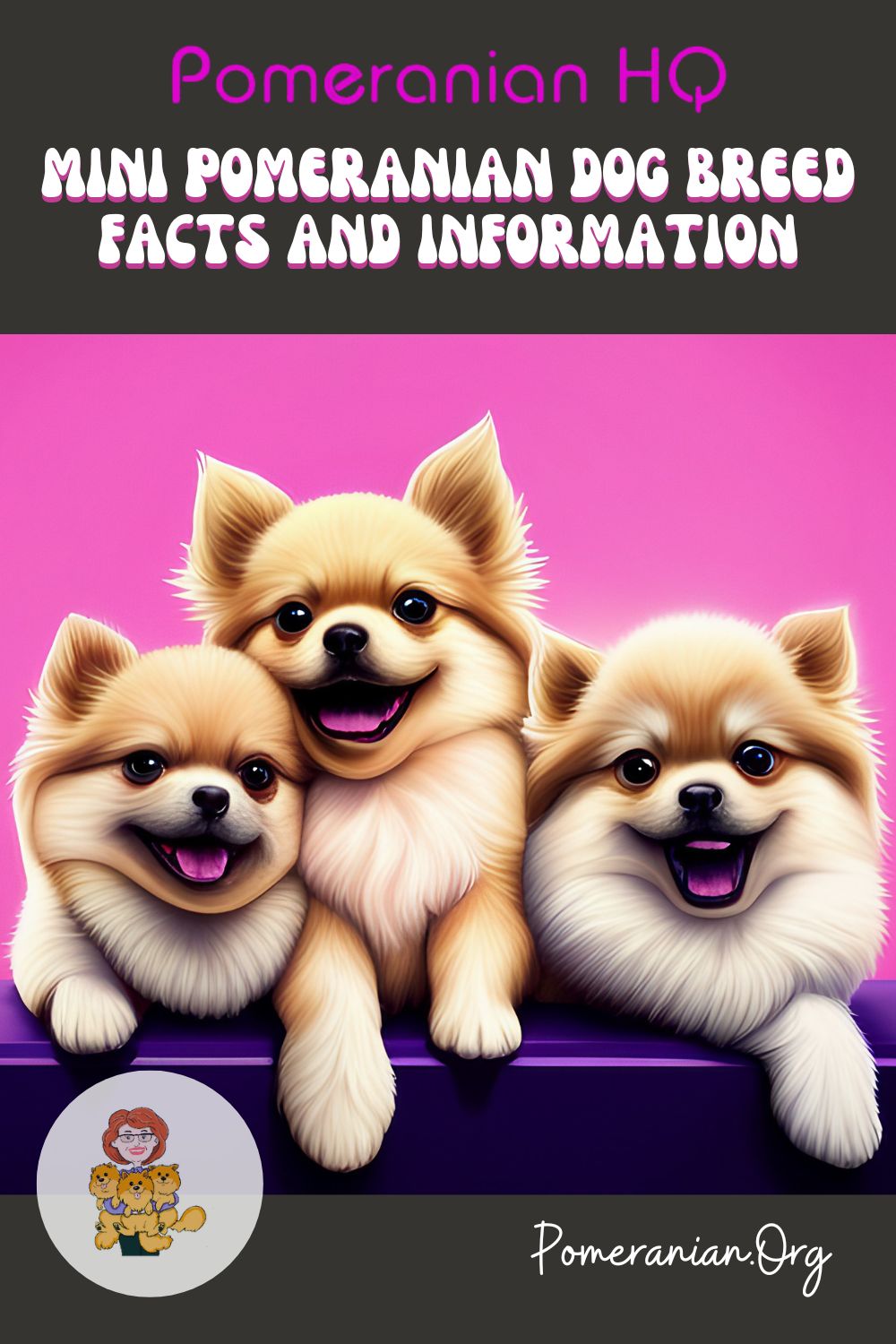

What Does a Full-Grown Mini Pomeranian Look Like?
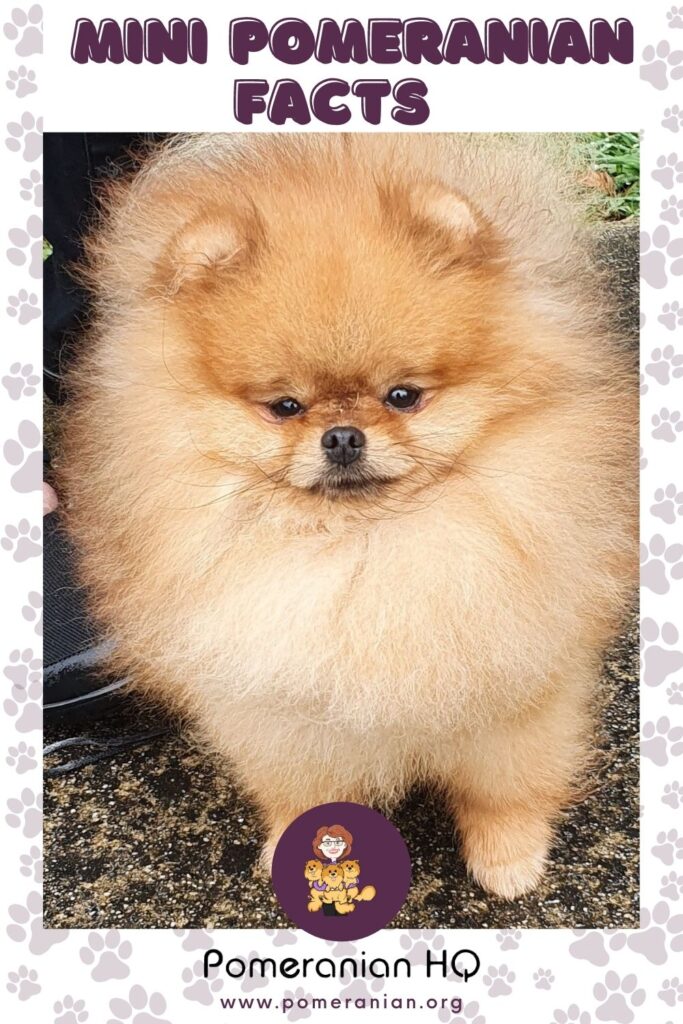
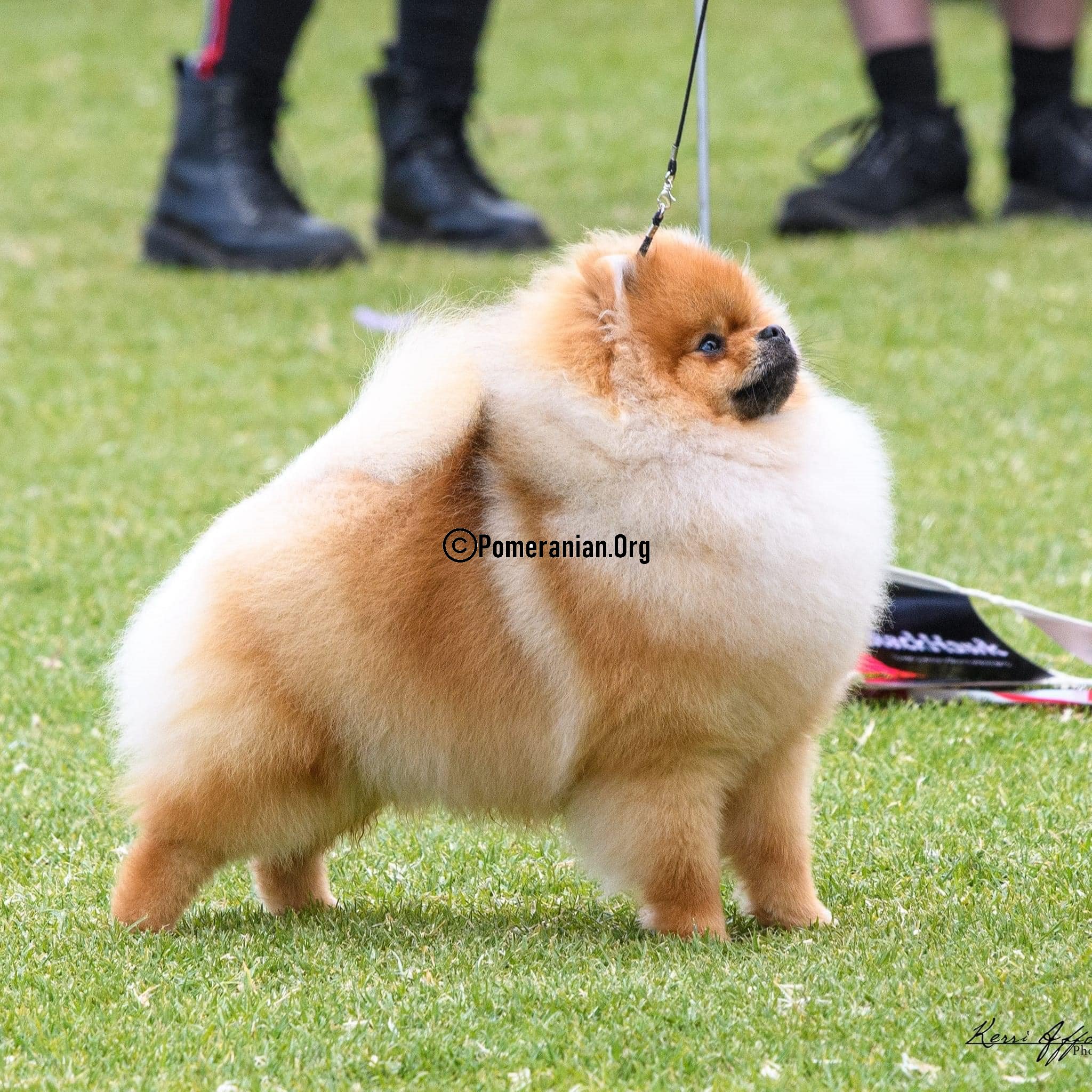
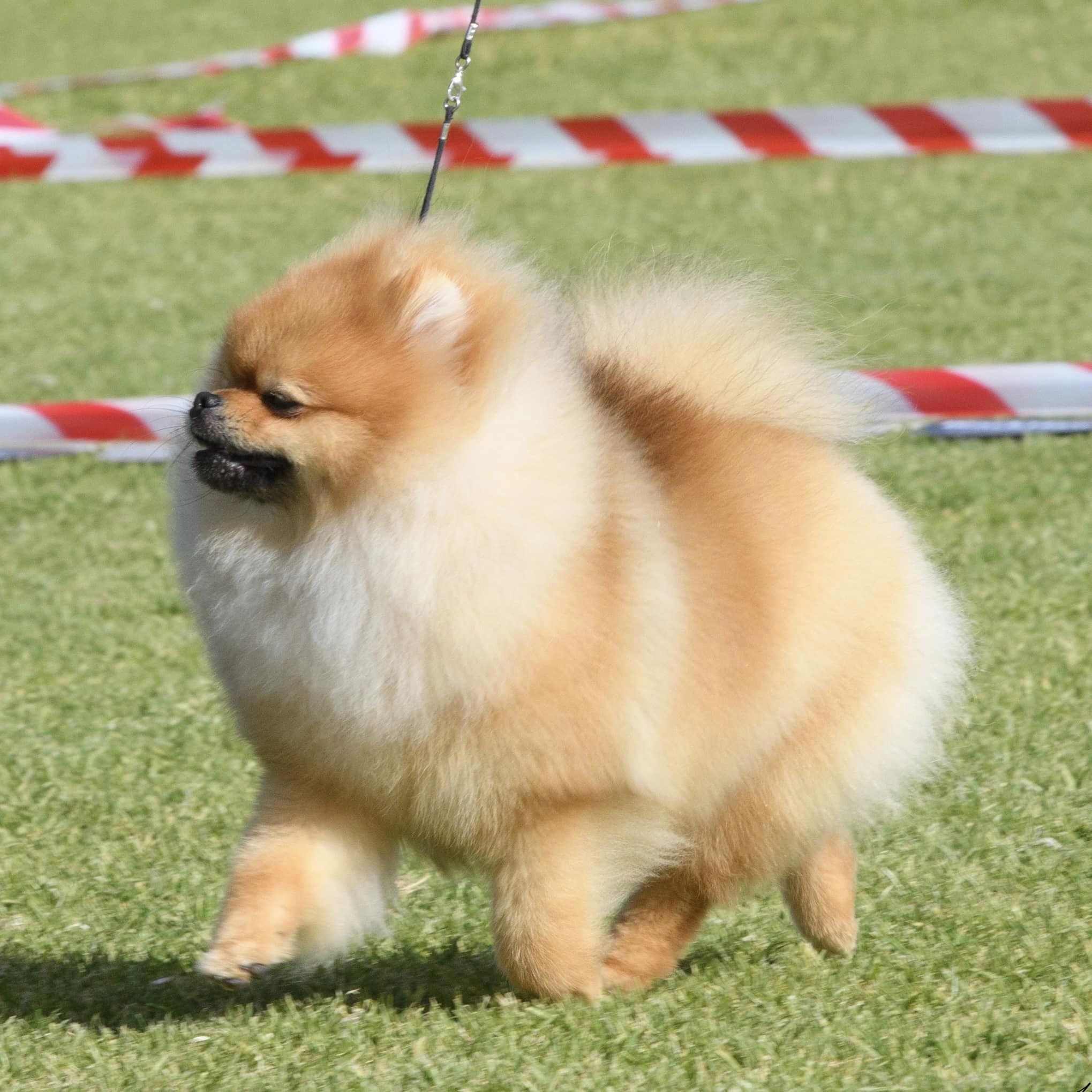
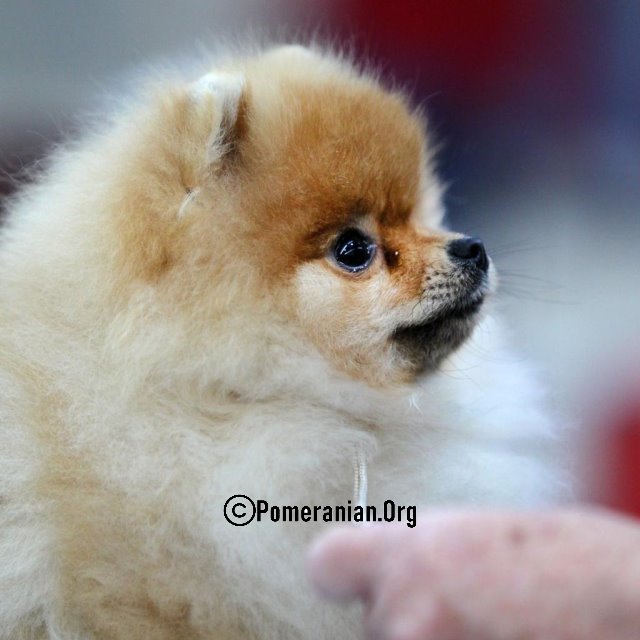
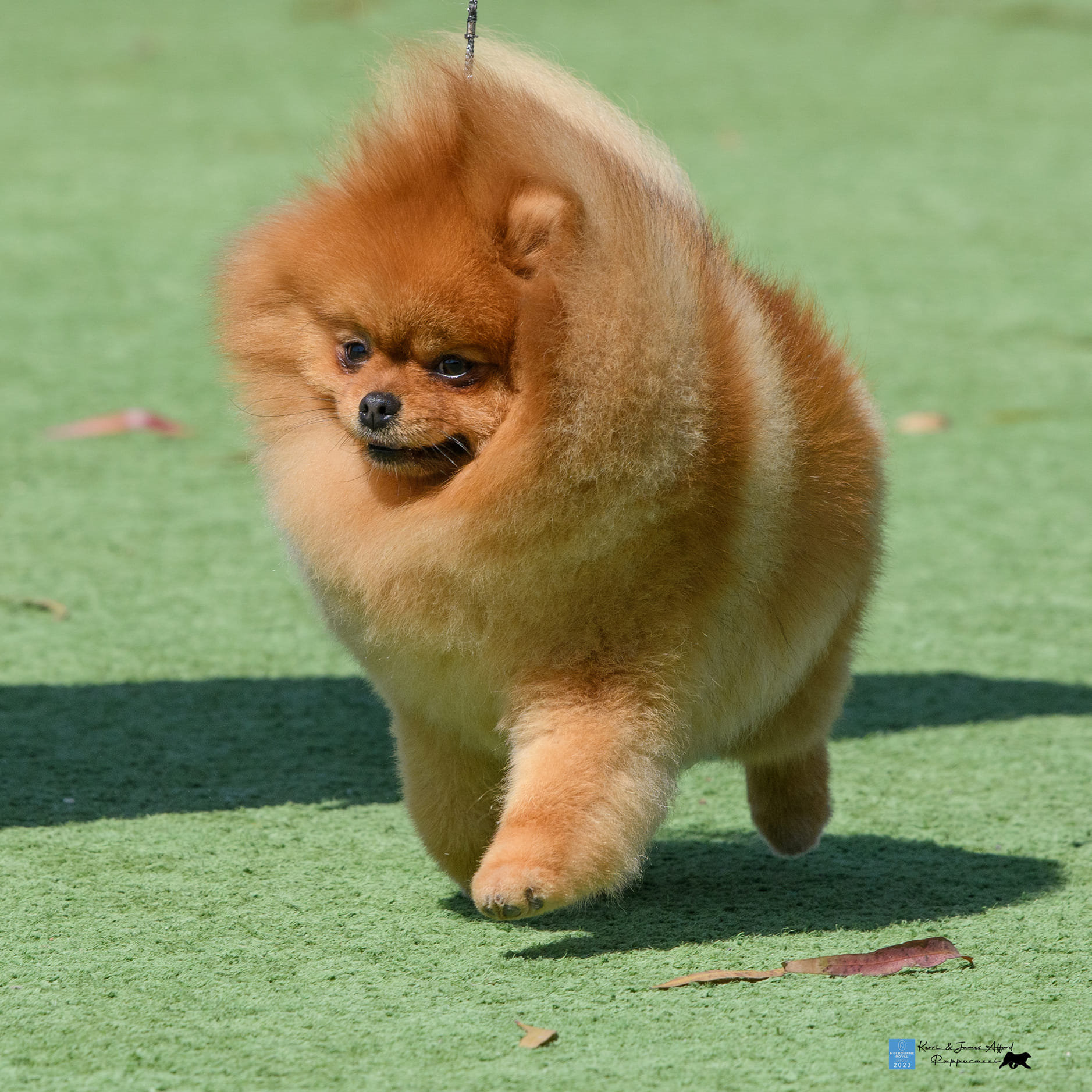
A full-grown Mini Pomeranian should look like any correctly bred adult Pomeranian because “mini” does not describe a separate variety. The dog should be compact, balanced and unmistakably Pomeranian, regardless of whether it is at the smaller or larger end of the accepted size range.
An adult Pomeranian should have a short, compact body, a fox-like head, small erect ears and an alert, intelligent expression. The breed has a thick double coat, a profuse neck ruff and a heavily plumed tail set high and carried flat over the back.
A Mini Pomeranian puppy will not retain exactly the same appearance when fully grown. The face, body proportions and coat change considerably during development, particularly through the puppy uglies. Most Pomeranians reach close to their adult height by around nine months, but the body and adult coat can continue developing beyond the first birthday.
Being exceptionally tiny does not define correct Pomeranian type. A well-bred Pomeranian should remain sound, balanced and healthy rather than appearing fragile, weak or underdeveloped.
Are Mini Pomeranians Healthy?
A naturally small Pomeranian can be healthy, active and long-lived. Being at the smaller end of the recognized breed range does not automatically mean that a dog will have health problems.
The greater concern arises when breeders deliberately select for an extremely tiny size without giving equal importance to soundness, structure, health and temperament. An exceptionally small puppy may be more fragile and require additional care, particularly during the first months of life.
The name “Mini Pomeranian” is not proof of either good or poor health. These unofficial labels tell a buyer nothing about the puppy’s breeding, veterinary care, parentage or likely adult health.
When choosing a Pomeranian puppy, look beyond size and ask about the health and longevity of the parents and other dogs in the pedigree. A responsible breeder should prioritize a sturdy, well-developed puppy with correct breed type and a stable temperament—not simply the smallest puppy available.
Regular veterinary care, appropriate nutrition, dental care, safe handling and protection from falls and rough play are important for every Pomeranian, especially an unusually tiny one.
What Health Problems Affect Very Small Pomeranians?
Exceptionally small Pomeranians may be more vulnerable to certain health and safety problems, particularly when tiny size has been prioritized over sound development. However, this does not mean that every small Pomeranian will be unhealthy.
Health concerns that may affect very small Pomeranians include:
- Hypoglycemia, particularly in young puppies that do not eat regularly.
- Fragile bones and an increased risk of injury from falls or rough handling.
- Luxating patellas and other joint problems.
- Dental overcrowding and retained puppy teeth.
- Difficulty maintaining a safe body temperature.
- Collapsing trachea and other breathing concerns.
- Delayed development or low body condition.
- Increased risks associated with anesthesia and surgery.
Young, tiny puppies require regular meals, careful supervision and protection from jumping off furniture or being accidentally stepped on. They are generally unsuitable for homes with very young children who may not understand how gently such a small dog must be handled.
Warning signs such as weakness, trembling, unusual sleepiness, poor coordination, collapse or refusal to eat require urgent veterinary attention in a very small Pomeranian puppy.
Responsible breeding should aim to produce healthy, sound and correctly constructed Pomeranians rather than pursuing the lowest possible adult weight.
What Is the Mini Pomeranian Temperament Like?
A Mini Pomeranian has the same temperament as any other Pomeranian because it is not a separate breed variety. Pomeranians are generally lively, intelligent, affectionate and confident little dogs that enjoy being involved in family life.
Despite their small size, Pomeranians often have bold personalities. They can be alert watchdogs and may bark when they hear unfamiliar sounds or see visitors. Early socialization and consistent, reward-based training help a puppy develop into a well-mannered and confident companion.
Pomeranians usually form strong bonds with their owners and enjoy attention, play and mental stimulation. However, they should also be taught gradually to spend short periods alone so they do not become overly dependent on constant companionship.
An exceptionally small Pomeranian may require gentler handling, but tiny size does not create a different personality. Temperament is influenced by genetics, early experiences, socialization, training and the way the dog is managed.
Pomeranians can live happily with considerate older children who understand how to handle a small dog safely. Very young or boisterous children may unintentionally injure a tiny puppy, so all interaction should be closely supervised.
How Long Do Mini Pomeranians Live?
A Mini Pomeranian has the same expected lifespan as the Pomeranian breed generally, which is approximately 12 to 16 years. Many well-bred Pomeranians remain active and affectionate companions well into their senior years.
Lifespan is influenced by genetics, responsible breeding, nutrition, weight, dental health, exercise, veterinary care and protection from preventable injuries. The unofficial word “mini” does not mean that a puppy will live longer or have better health.
A naturally small but sturdy and well-developed Pomeranian may enjoy a normal lifespan. However, an extremely tiny dog with poor development or inherited health problems may require additional care and could face greater health risks.
Choosing a puppy from a knowledgeable breeder who understands the health, strengths and weaknesses of the dogs throughout both parents’ pedigrees provides a valuable advantage. Ongoing preventive care and early attention to any health changes can also help a Pomeranian enjoy a long and comfortable life.
How Much Does a Mini Pomeranian Cost?
There is no standard Mini Pomeranian price because a Mini Pomeranian is not a separate breed variety. The price of a Pomeranian puppy varies according to the breeder’s location, experience, veterinary care, pedigree, registration, quality and the expenses involved in responsibly raising the litter.
Some sellers charge a higher price for puppies advertised as “mini,” “micro,” “pocket” or “teacup.” These labels do not prove that the puppy is rare, responsibly bred or guaranteed to remain exceptionally small when fully grown.
The purchase price should never be the only consideration. Prospective owners must also budget for quality food, grooming equipment, veterinary care, vaccinations, parasite prevention, dental treatment, training and unexpected medical expenses throughout the dog’s life.
Be cautious if a seller uses an unusually tiny predicted weight as the main reason for charging a premium. Health, soundness, temperament, parentage and responsible breeding are far more important than finding the smallest or cheapest Pomeranian puppy.
Where Can You Buy a Healthy Mini Pomeranian Puppy?
Anyone searching for a Mini Pomeranian puppy should look for a responsible registered Pomeranian breeder rather than a seller advertising the smallest possible dog. Remember that “mini” is an unofficial term and does not guarantee the puppy’s adult size, health or quality.
A responsible Pomeranian breeder should be willing to provide information about the puppy’s parents, pedigree, temperament, veterinary care and living conditions. Depending on local registration requirements, the puppy should be supplied with appropriate registration documents, microchip details, vaccination records and written care information.
Home visits are not always permitted. Many experienced breeders protect young puppies from infectious disease and maintain strict privacy and biosecurity policies. A refusal to allow visitors into the breeder’s home does not automatically indicate a problem. Photographs, videos, veterinary documentation, video calls and references from previous puppy owners can provide appropriate reassurance.
Be cautious of sellers who:
- Guarantee an exact adult weight for a very young puppy.
- Charge a premium simply because the puppy is called mini, micro or teacup.
- Refuse to provide information about the parents.
- Cannot supply appropriate registration or veterinary records.
- Always have numerous puppies immediately available.
- Pressure you to pay quickly.
- Use stolen photographs or avoid showing the actual puppy.
- Offer shipping without asking whether your home is suitable.
A knowledgeable breeder will also ask questions about your household, lifestyle, experience and plans for the puppy. Their priority should be finding a safe, permanent home rather than completing a quick sale.
How Can You Identify a Responsible Pomeranian Breeder?
A responsible Pomeranian breeder aims to produce healthy, sound dogs with correct breed type and stable temperaments. The breeder should have a thorough knowledge of the strengths, weaknesses, health and longevity found throughout both parents’ pedigrees.
Look for a breeder who:
- Registers dogs and puppies with the appropriate recognized canine authority.
- Carefully plans each mating rather than simply producing puppies for sale.
- Understands the Pomeranian breed standard.
- Provides appropriate veterinary care, vaccination and microchip records.
- Raises puppies in a clean, safe and well-managed environment.
- Socializes puppies and prepares them for life in their new homes.
- Gives honest information about possible health and breed concerns.
- Supplies a written agreement and detailed puppy-care instructions.
- Remains available to support owners after the puppy leaves.
- Asks questions to ensure the home is suitable.
Responsible breeders do not deliberately breed weak dogs together to produce the tiniest possible puppies. They understand that sound structure, health and temperament must always be more important than an exceptionally low adult weight.
Champion ancestry can be valuable because it demonstrates generations of dogs assessed against the breed standard. However, titles alone are not enough. Knowledge of the dogs throughout the pedigree and honest evaluation of both parents are essential parts of responsible Pomeranian breeding.
Mini Pomeranian FAQs
Is a Mini Pomeranian a Real Breed?
A Mini Pomeranian is not a separate modern breed or recognized size variety. Today, the official breed name is simply Pomeranian.
Did Miniature Pomeranians Ever Exist?
Yes. Historically, Miniature Pomeranians were classified as weighing under 7 pounds, while Pomeranians weighing 7 pounds or more formed the larger division. The standard was later changed to recognize only the smaller Pomeranian.
Is a Mini Pomeranian Smaller Than a Teacup Pomeranian?
No official size difference exists. Mini, miniature, teacup, micro and pocket are now unofficial terms that sellers may use for very small Pomeranians.
How Big Is a Full-Grown Mini Pomeranian?
There is no separate Mini Pomeranian size. A dog sold under this name may mature within the normal Pomeranian range or become smaller or larger than predicted.
Can a Breeder Guarantee a Mini Pomeranian’s Adult Weight?
No breeder can guarantee the exact adult weight of a young puppy. The parents and pedigree may help estimate mature size, but development can vary.
Are Mini Pomeranians More Expensive?
Some sellers charge more for puppies advertised as mini or teacup. These marketing terms do not prove that a puppy is rare, healthier or more valuable.
Are Mini Pomeranians Suitable for Families With Children?
Pomeranians can live happily with considerate older children. Exceptionally small puppies are fragile and may be unsuitable for homes with very young or boisterous children.
How Long Does a Mini Pomeranian Live?
A healthy Pomeranian generally has a lifespan of approximately 12 to 16 years. Breeding, genetics, nutrition, dental care and veterinary attention all influence longevity.
Final Thoughts on Mini Pomeranians
The Mini Pomeranian is not a separate modern breed but another name commonly used for the Pomeranian. Choose a puppy for health, soundness, temperament and responsible breeding—not an unofficial promise of exceptionally tiny adult size.
Copyright Pomeranian.org. All Rights Reserved.
📚 References & Further Reading
- [1] AKC Pomeranian Breed Standard (2011)
- [2] English Kennel Club Breed Standard
- [3] The Pomeranian Handbook – Denise Leo
- [4] Denlinger, The Complete Pomeranian
- [5] Kimbering, 1891–1991
- [6] Taplin, The Sportsman’s Cabinet
- [7] Parker, The Popular Pomeranian
- [8] Ives, Show Pomeranians