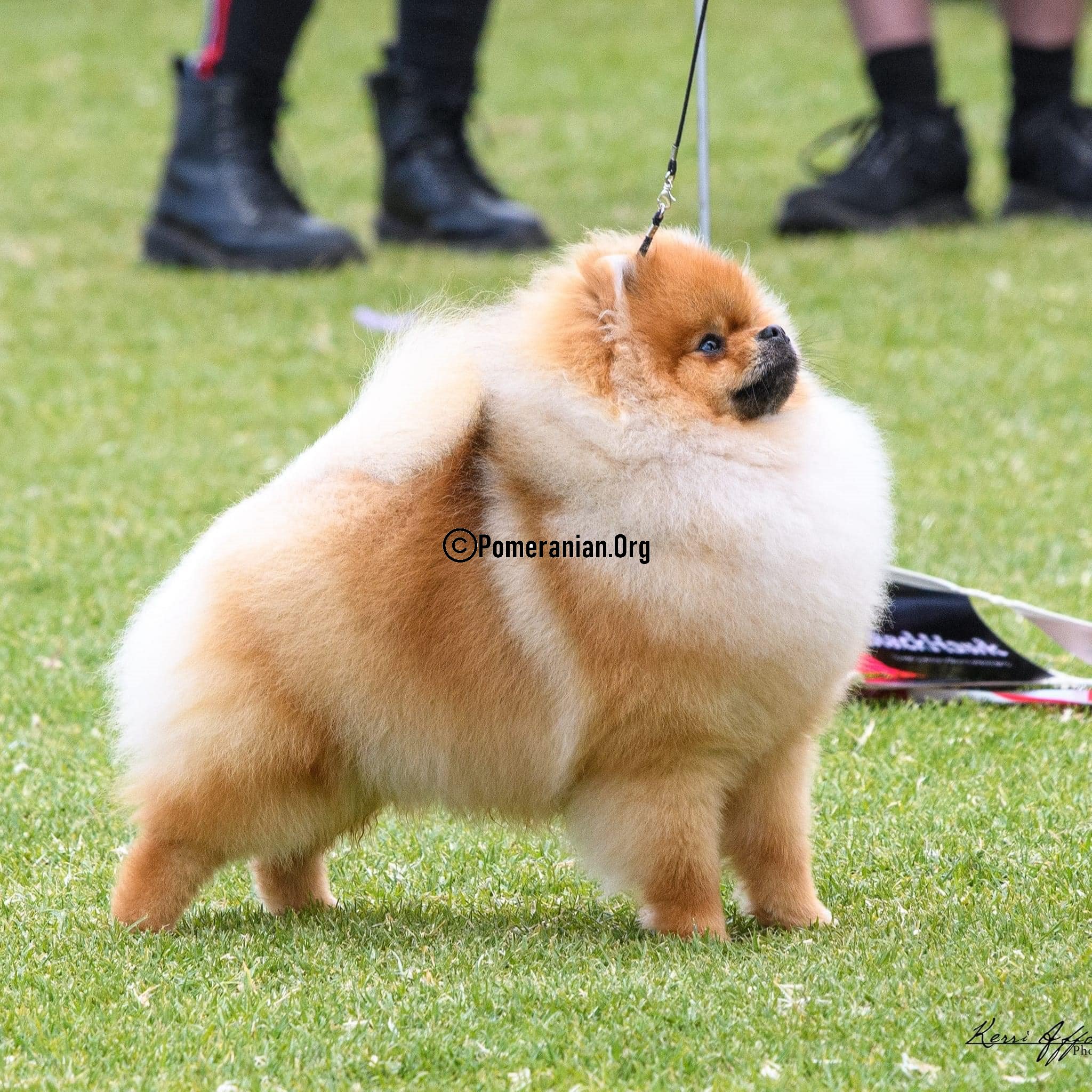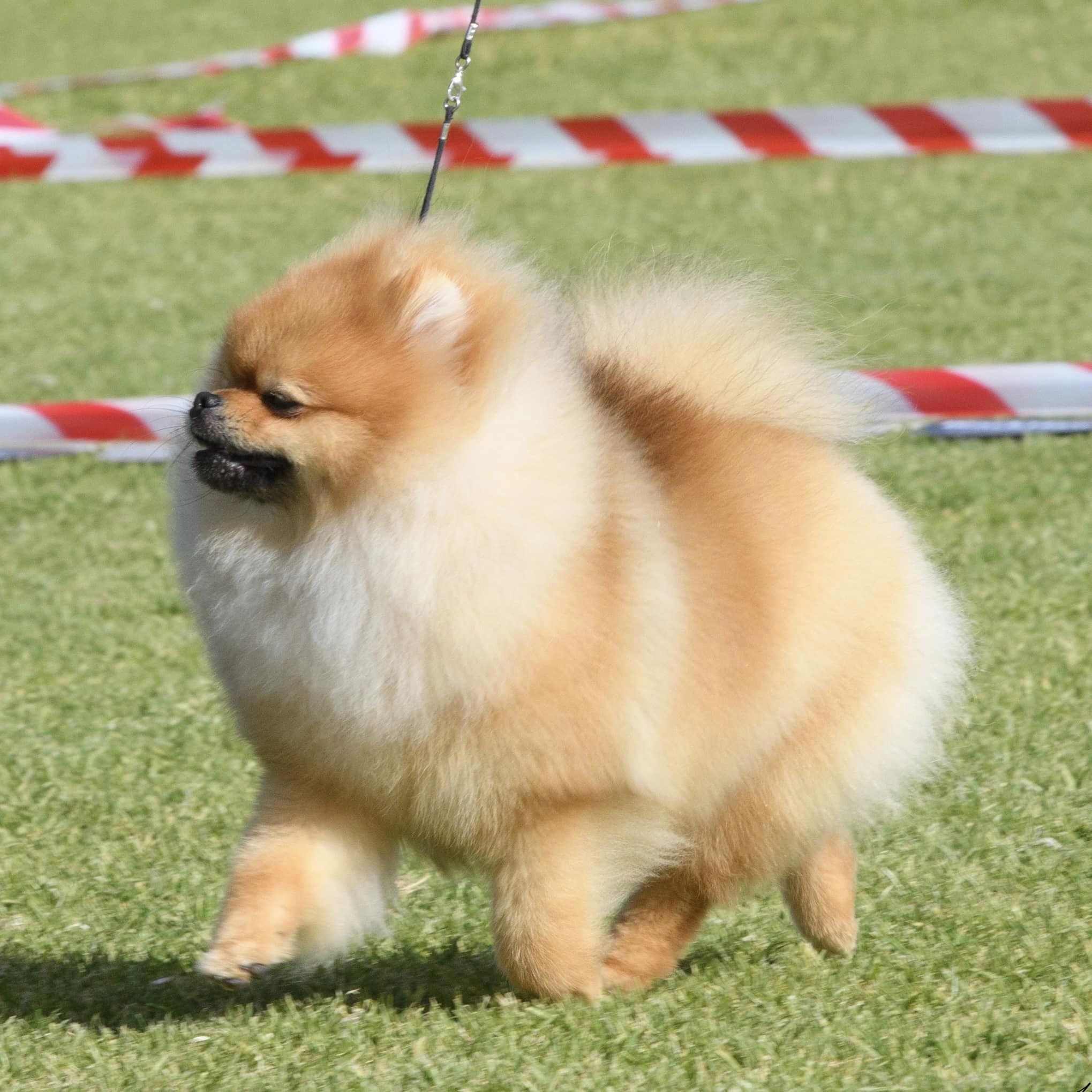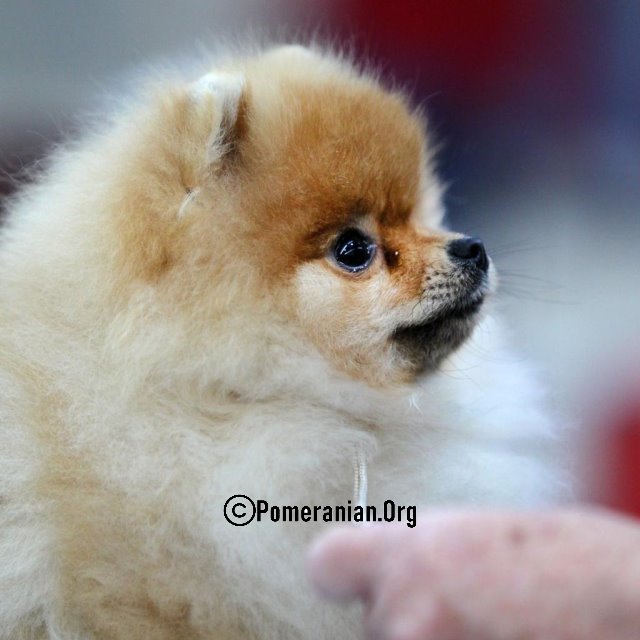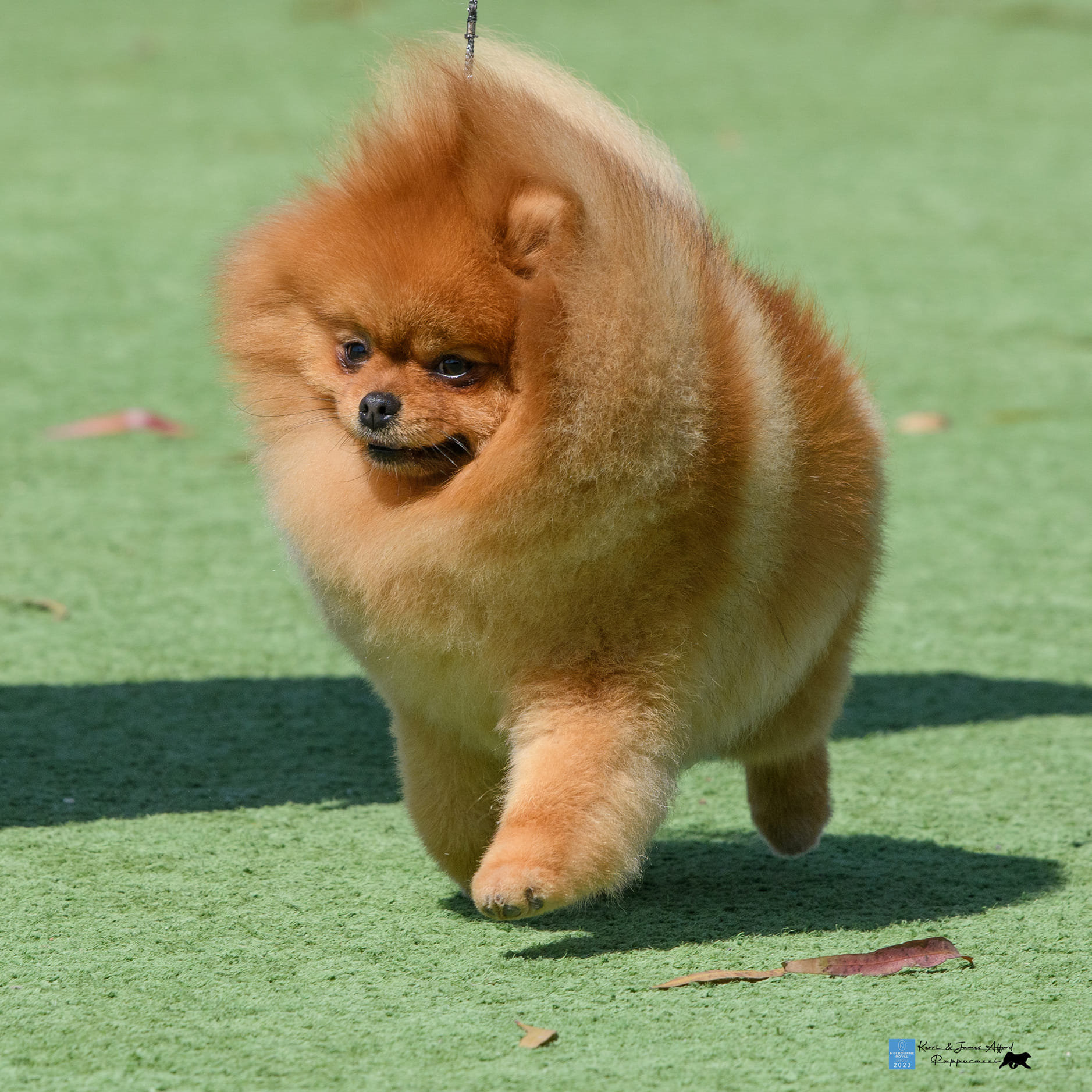

As a Pomeranian breeder, exhibitor, judge and author with more than 50 years of experience, I am often asked whether Pomeranians can have blue eyes. Most Pomeranians have beautiful dark brown eyes, but a blue-eyed Pomeranian can occasionally occur.
Pomeranians with blue eyes are most often associated with merle-pattern genetics, although not every merle Pomeranian has blue eyes. It is also important to understand that a blue Pomeranian puppy refers to coat color and does not necessarily mean the puppy will have blue eyes.
Questions also arise about a white Pomeranian with blue eyes, a Pomeranian with one blue eye and advertisements offering a “teacup Pomeranian with blue eyes.” These descriptions can be confusing because natural eye color, coat color, merle genetics, albinism and an eye becoming cloudy from disease are entirely different matters.
In this guide, I explain Pomeranian eye color, why some Pomeranian dogs have blue eyes, what the official breed standards require and whether blue eyes are connected with health concerns. I also explain what buyers should know before responding to an advertisement for a Pomeranian with blue eyes for sale.
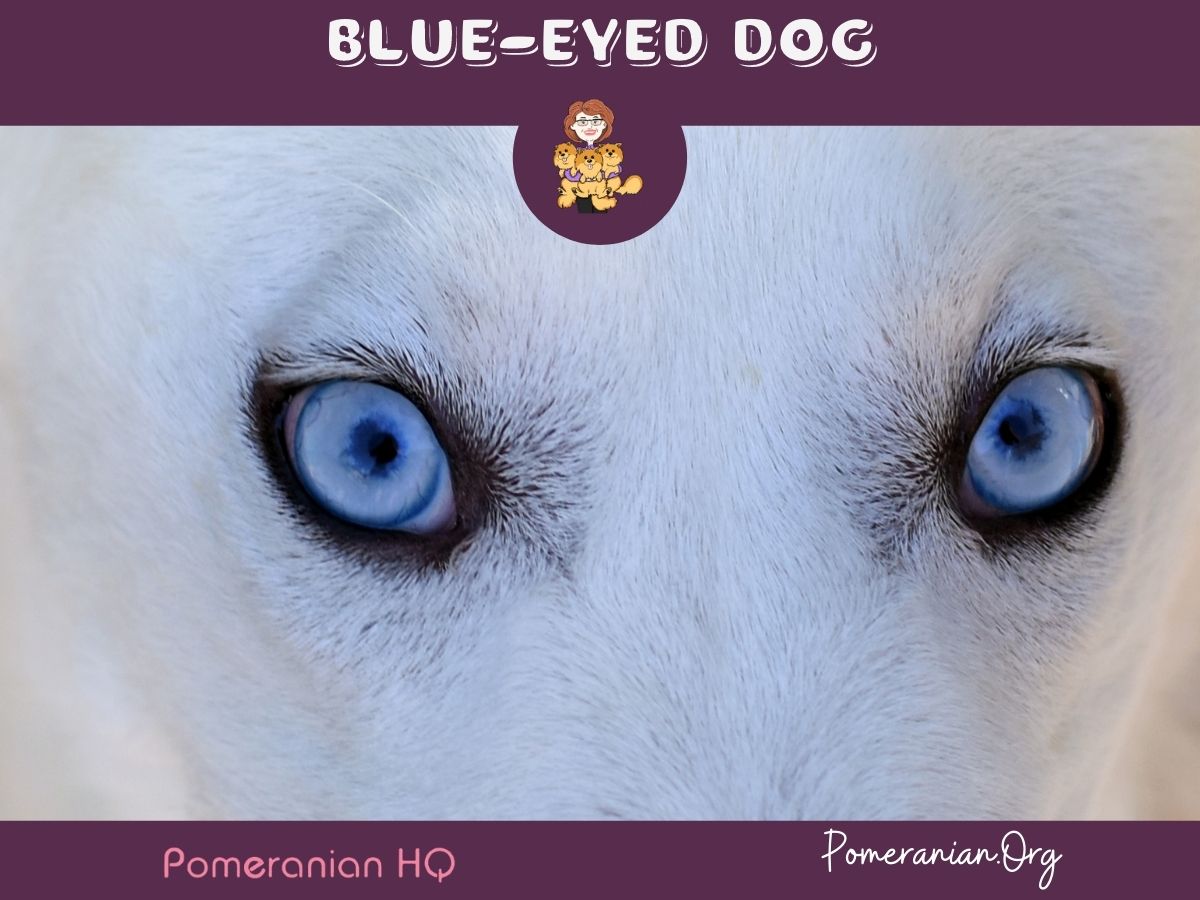
Yes, Pomeranians can have blue eyes, but this is uncommon and is most often associated with merle genetics. A blue-eyed Pomeranian may have two blue eyes, one blue eye or an iris containing both blue and brown.
Most Pomeranians should have dark eyes. Under the Dogs Australia and Royal Kennel Club standard, merle is an unacceptable Pomeranian color. The American Kennel Club permits many coat colors and patterns but disqualifies light-blue, blue-marbled and blue-flecked eyes from the show ring.
A naturally blue iris should not be confused with an eye that becomes cloudy or blue later in life. Any new change in your Pomeranian’s eye color or clarity requires veterinary attention.
What Is the Correct Pomeranian Eye Color?
The correct Pomeranian eye color is dark brown. The eyes should be bright, expressive and sufficiently dark to contribute to the breed’s alert and intelligent expression.
Eye color may vary slightly with coat pigment. Pomeranians with chocolate, beaver or blue coats can have self-colored eye rims and somewhat lighter brown eyes than orange, cream, black or white Pomeranians. However, a blue coat does not mean that the dog should have blue eyes.
White Pomeranians should have dark eyes, black eye rims and a black nose. A white Pomeranian with blue eyes does not meet the ideal eye color described in the Pomeranian breed standard.
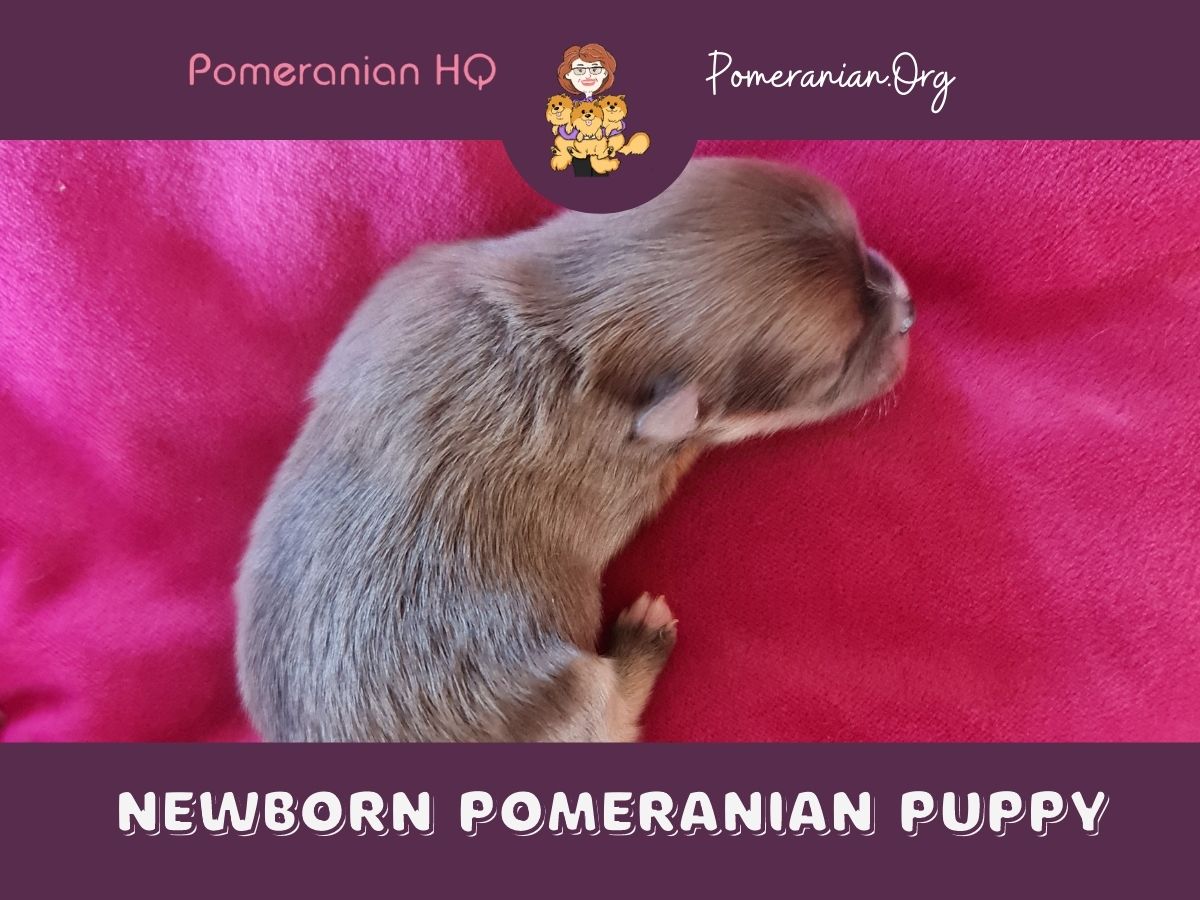
Very young Pomeranian puppies may initially have blue-grey-looking eyes when they first open. The eyes generally darken as pigment develops, so this temporary puppy eye color should not be confused with the permanent blue eyes seen in some adult dogs.
What Do Pomeranian Breed Standards Say About Blue Eyes?
The major Pomeranian breed standards require dark eyes. Although their wording differs slightly, none describes blue eyes as the ideal Pomeranian eye color.
Official Pomeranian Eye Color Requirements
Dogs Australia and The Royal Kennel Club Pomeranian Breed Standard
“Medium size, slightly oval, not full, or set too wide apart; bright, dark and showing great intelligence.”
The same standard states that merle is an unacceptable Pomeranian color.
American Kennel Club Pomeranian Breed Standard
“Eyes – dark, bright, medium sized, and almond shaped; set well into the skull.”
The AKC standard specifically lists the following disqualification:
“Eye(s) light blue, blue marbled, blue flecked.”
FCI German Toy Spitz/Pomeranian Breed Standard
“The eyes are of medium size, almond-shaped, slightly slanting and dark.”
For breeders and exhibitors, this distinction is important. A Pomeranian with blue eyes may still be loved as a companion, but blue, blue-marbled or blue-flecked eyes are not the correct dark eye color required in the show ring.

Why Do Some Pomeranians Have Blue Eyes?
Blue eyes occur when an iris contains less pigment than a normal dark brown Pomeranian eye. The eye appears blue because of the way light scatters through the lightly pigmented iris—not because the eye contains blue pigment.
In Pomeranians, permanent blue or partially blue eyes are most commonly associated with the merle gene. Merle randomly alters dark pigment and can affect the coat, skin, nose, eye rims and eyes. A merle Pomeranian may have two dark eyes, two blue eyes, one blue eye or blue areas within an otherwise brown eye.
Other genes can produce blue eyes in certain dog breeds, but they have not been established as a usual cause in purebred Pomeranians. White markings or an apparently white coat do not, by themselves, explain why a Pomeranian has blue eyes.
Very young Pomeranian puppies may initially have blue-grey eyes when they first open. This temporary puppy eye color usually darkens as pigment develops and should not be confused with permanent blue eyes in an older puppy or adult.
A Pomeranian whose previously clear, dark eye becomes blue, grey or cloudy is experiencing a change in the eye rather than a new inherited eye color. Such changes require veterinary examination.
How Rare Is a Pomeranian With Blue Eyes?
A Pomeranian with blue eyes is rare when compared with the dark brown eyes normally seen in the breed. Permanent blue eyes are particularly unusual in non-merle Pomeranians.
Blue or partially blue eyes occur more frequently in merle Pomeranians because the merle gene can alter pigment within the iris. However, not every merle Pomeranian has blue eyes, and eye color cannot be predicted solely from the visible coat pattern.
Pomeranians with blue eyes are exceptionally uncommon among traditional colors such as orange, orange sable, cream, black and correctly pigmented white. No reliable percentage is available showing how many purebred Pomeranians have permanent blue eyes.
Rarity does not make blue eyes correct under the Pomeranian breed standard or justify deliberately breeding for this feature. Health, soundness, temperament and correct breed type should always be more important than producing an unusual eye color.

Do Pomeranian Puppies’ Blue Eyes Change Color?
Pomeranian puppies are born with their eyes closed. When the eyes first open at approximately two weeks of age, they may appear blue-grey because the iris has not yet developed its final amount of pigment.
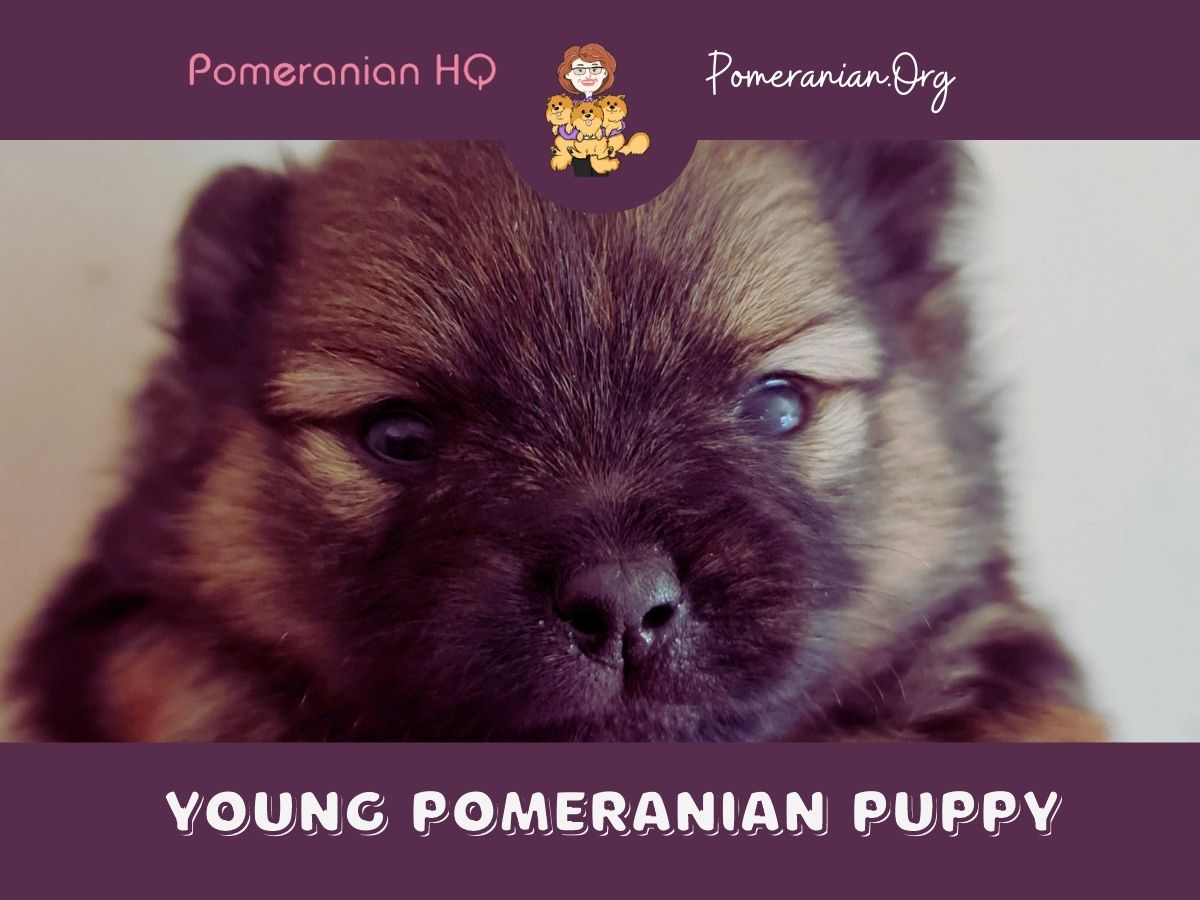
As the puppy matures, increasing pigment usually causes the eyes to become progressively darker. Many Pomeranian puppies develop their permanent eye color by approximately six to eight weeks, although subtle changes may continue for longer.
A blue-eyed Pomeranian puppy will not necessarily retain blue eyes as an adult. Puppies with ordinary dark-eye genetics usually develop brown eyes, while a puppy with merle-related pigment changes may retain one or two blue or partially blue eyes.
A breeder should not guarantee permanent blue eyes based only on the appearance of a very young puppy. Eye color should be assessed again as the puppy matures.
If a puppy’s eye looks cloudy rather than simply blue-grey, or there is redness, discharge, squinting or apparent pain, veterinary attention is required.
Do Blue Pomeranians Have Blue Eyes?
A blue Pomeranian is named for its coat color, not its eye color. Blue Pomeranians are genetically diluted black dogs and have blue-grey coats, noses, eye rims and paw pads instead of black pigment.
Blue Pomeranian puppies do not automatically have blue eyes. Their eyes should generally be brown, although the shade may appear lighter than the very dark eyes seen in strongly pigmented black, orange or cream Pomeranians.
The words “blue Pomeranian” and “blue-eyed Pomeranian” describe two different traits. One refers to diluted coat pigment, while the other refers to reduced pigment within the iris.
Be cautious when an advertisement uses photographs of very young blue Pomeranian puppies to promise permanent blue eyes. Newly opened puppy eyes can initially appear blue-grey before darkening as the puppy matures.
Can a White Pomeranian Have Blue Eyes?
A white Pomeranian can have blue eyes, but this is not the correct eye color for the breed and is exceptionally uncommon. A correctly pigmented white Pomeranian should have dark eyes, black eye rims, a black nose and dark paw pads.
A white coat does not automatically cause blue eyes. A white Pomeranian with blue eyes may have reduced pigment associated with merle genetics, another genetic influence, albinism or mixed ancestry. The dog’s appearance alone cannot confirm the cause.
Merle can sometimes be difficult to identify on a predominantly white or very pale dog because the coat pattern may be hidden. DNA testing and accurate knowledge of the pedigree are important before breeding any Pomeranian suspected of carrying merle.
A blue-eyed white Pomeranian is not automatically deaf, blind or unhealthy. However, dogs inheriting two copies of the merle gene have a substantially increased risk of congenital hearing and vision abnormalities.
The phrase “white Pomeranian blue eyes” is often used in advertisements because the combination appears unusual. Rarity should never be valued ahead of health, correct pigmentation and responsible breeding.

What Is a Blue and White Pomeranian?
A blue and white Pomeranian has areas of genetically diluted black coat combined with white markings. In this description, “blue” refers to the coat color and does not mean that the dog has blue eyes.
The colored areas should appear blue-grey rather than black, while the nose, eye rims and paw pads may also show diluted blue-grey pigment. The amount and placement of white can vary.
A blue and white Pomeranian may have brown eyes and should not be confused with a blue-eyed merle Pomeranian. Blue dilution, white spotting and merle are separate genetic traits, although more than one can occur in the same dog.
Correct identification can be difficult from photographs because lighting, coat products and image editing can make black fur appear blue-grey. Pedigree knowledge and appropriate DNA color testing can help confirm whether a Pomeranian is genuinely blue.
Do Merle Pomeranians Have Blue Eyes?
Some merle Pomeranians have blue eyes, but the merle gene does not always change eye color. A merle Pomeranian may have two brown eyes, two blue eyes, one eye of each color or blue sections within a brown iris.
Merle randomly lightens areas of dark pigment. This produces mottled patches in the coat and may also affect the skin, nose, eye rims and eyes. Because its effects are random, the amount of visible merling does not reliably predict Pomeranian eye color.
A blue merle Pomeranian with blue eyes should not be confused with a blue Pomeranian. “Blue merle” describes a mottled pattern affecting black pigment, while a solid blue Pomeranian is a diluted black dog without a merle pattern.
Merle is not an accepted Pomeranian color under the Dogs Australia and Royal Kennel Club breed standard. Although the American Kennel Club permits merle coat registration, its Pomeranian standard disqualifies light-blue, blue-marbled and blue-flecked eyes from conformation competition.
The greatest health concern occurs when two merle dogs are bred together. Puppies inheriting two merle copies have a significantly increased risk of congenital hearing and vision abnormalities. Merle-to-merle breeding should never be undertaken.
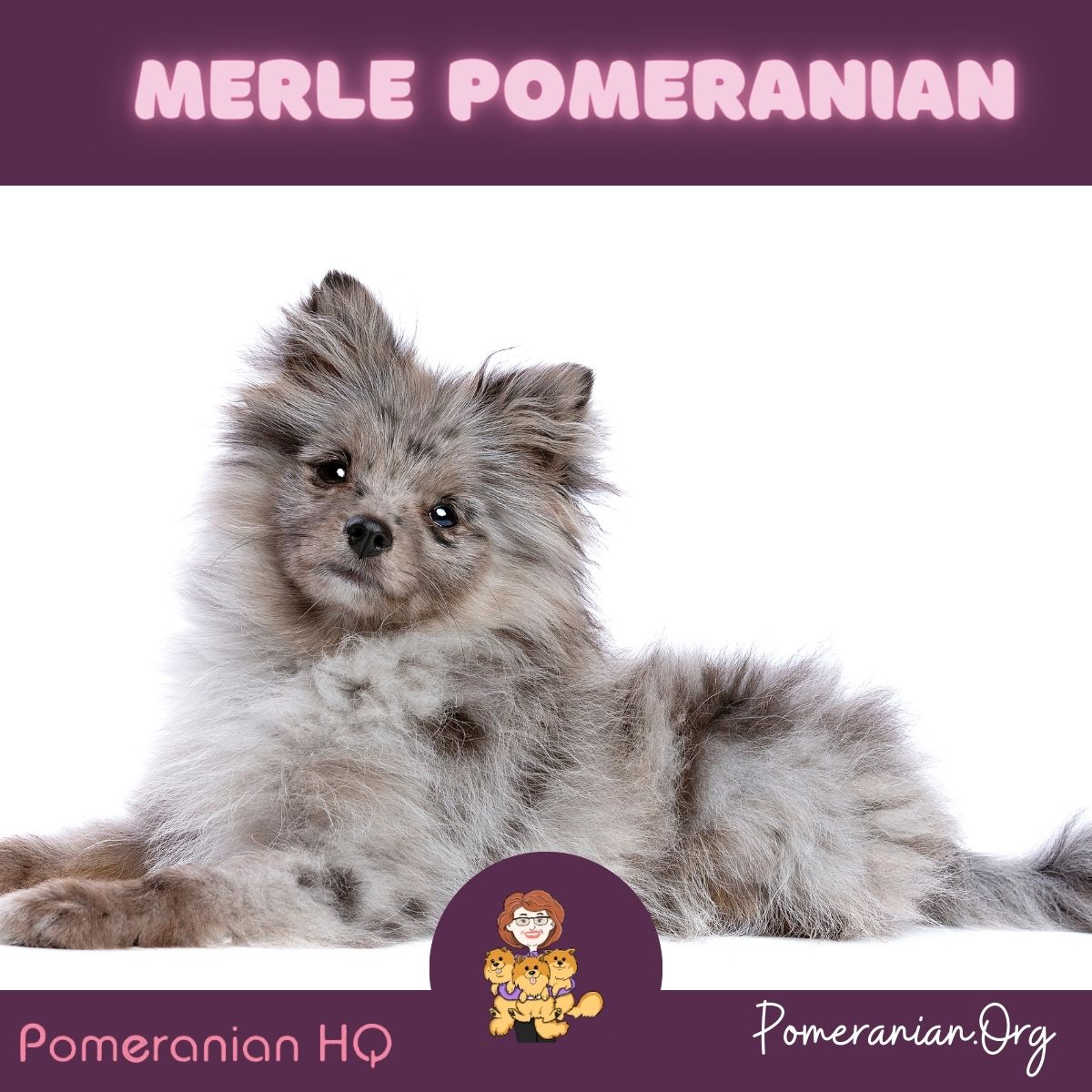
What Is a Blue-Eyed Merle Pomeranian?
A blue-eyed merle Pomeranian is a Pom with a mottled merle coat pattern and one or two blue or partially blue eyes. The merle gene can reduce pigment in the iris as well as alter pigment in the coat and skin.
A blue-eyed merle Pomeranian is not a separate Pomeranian variety. Eye color and coat pattern do not make the dog rare breed, nor do they represent correct Pomeranian type under the Australian breed standard.
A single-merle dog is different from a double merle, which inherits a merle copy from both parents. The serious risk of congenital hearing and vision abnormalities is associated particularly with double-merle breeding—not simply with the presence of a blue eye.
Can a Pomeranian Have One Blue Eye?
Yes, a Pomeranian can have one blue eye and one brown eye. This difference in eye color is called heterochromia, and the dog may also be described as an odd-eyed Pomeranian.
Merle genetics can produce one blue eye, although heterochromia may have other genetic or developmental causes. A veterinarian should examine any eye that changes color suddenly or appears cloudy, painful or inflamed.
A Pomeranian with one blue eye is not correctly described as a “one-eyed Pomeranian.” That term generally means a dog has only one functioning or remaining eye. The correct search term for different-colored eyes is a Pomeranian with one blue eye or an odd-eyed Pomeranian.
Are Blue-Eyed Pomeranians Purebred?
A blue-eyed Pomeranian can be purebred, particularly when blue eyes are associated with merle genetics. However, eye color alone cannot confirm whether a dog is a purebred Pomeranian.
Some Pomeranian crossbreeds may inherit blue eyes from another breed, such as a Siberian Husky. A dog’s appearance, coat color or eye color is not reliable proof of parentage.
Official registration papers and a documented pedigree provide much stronger evidence that a Pomeranian is purebred. DNA parentage testing can confirm a puppy’s recorded parents, while breed identification tests may provide additional information for dogs of unknown ancestry.
Purebred does not necessarily mean correctly bred to the Pomeranian breed standard. A purebred Pomeranian may have blue eyes while still departing from the standard’s requirement for dark eyes.
Is a Blue-Eyed Pomeranian an Albino Pomeranian?
A blue-eyed Pomeranian is not automatically an albino Pomeranian. Blue eyes can occur when pigment within the iris is reduced, but albinism causes a much broader lack of melanin throughout the body.
An albino Pomeranian may have a very pale coat, pink or extremely pale skin, a pink nose, pale eye rims and light-sensitive eyes. This differs from a normally pigmented white Pomeranian, which should have dark eyes, black eye rims, a black nose and dark paw pads.
Coat color alone cannot confirm albinism. A white Pomeranian with blue eyes may have merle-related pigment loss, another genetic cause or mixed ancestry rather than albinism.
A veterinarian and appropriate genetic testing may be needed to determine why a Pomeranian lacks normal pigment. Dogs with suspected albinism require protection from excessive sunlight and professional advice regarding their eyes and skin.
Do Blue-Eyed Pomeranians Have Health Problems?
Blue eye color alone does not mean that a Pomeranian is blind, deaf or unhealthy. A naturally blue iris can function normally, and the visible color does not itself cause disease.
Health risks depend on the reason for the reduced pigmentation. The greatest concern involves double-merle dogs—those inheriting a merle copy from both parents. Double merles have a substantially increased risk of congenital eye abnormalities, impaired vision and deafness.
A single blue eye is not proof that a Pomeranian is a double merle. Likewise, two brown eyes do not reliably prove that a dog does not carry merle. Pedigree knowledge and appropriate DNA testing are important when merle ancestry is possible.
There is not enough evidence to claim that every blue-eyed Pomeranian has poor night vision, hearing sensitivity, skin allergies or an increased risk of cancer. These statements should not be applied to all Pomeranians with blue eyes.
Any Pomeranian showing difficulty seeing, unusual eye movement, excessive sensitivity to light or an abnormal response to sound should be examined by a veterinarian. Breeding decisions should be based on genetic information and professional health assessment rather than eye color alone.
Why Are My Pomeranian’s Eyes Turning Blue or Cloudy?
A Pomeranian born with a naturally blue iris is very different from a dog whose previously clear, dark eye becomes blue, grey or cloudy. A change in the appearance of the eye can indicate an age-related change, injury or eye disease.
Possible causes of a cloudy or blue appearance include nuclear sclerosis, cataracts, corneal disease, inflammation, glaucoma and injury. These conditions cannot be accurately distinguished from a photograph or home examination.
When Is a Blue or Cloudy Eye an Emergency?
Seek prompt veterinary care if your Pomeranian has:
- A sudden change in eye color or clarity.
- Redness, swelling or excessive tearing.
- Squinting or keeping an eye closed.
- Discharge from the eye.
- A visibly enlarged or bulging eye.
- Signs of pain or sensitivity to light.
- Sudden difficulty seeing or bumping into objects.
- An eye injury or suspected foreign object.
Do not place human eye drops or leftover medication into your Pomeranian’s eye. Some eye conditions can deteriorate quickly, and the wrong product may delay treatment or cause further damage.
Even when cloudiness develops gradually in an older Pomeranian, arrange a veterinary eye examination. Early diagnosis offers the best opportunity to protect your dog’s comfort and vision.
Can a Teacup Pomeranian Have Blue Eyes?
A so-called teacup Pomeranian can have blue eyes, but “teacup Pomeranian” is not an official breed or recognized size. It is an advertising term commonly used for a Pomeranian expected to remain exceptionally small.
The phrase “teacup Pomeranian with blue eyes” combines two unusual features to make a puppy appear rare and highly valuable. Neither label guarantees the puppy’s adult size, health, quality or purebred ancestry.
A very young puppy’s blue-grey eyes may darken as pigment develops. Buyers should therefore be cautious when permanent blue eyes and an exact tiny adult weight are guaranteed.
Learn more in my guide to Teacup Pomeranians and why the term is misleading.
Should You Buy a Pomeranian With Blue Eyes for Sale?
Be cautious when a Pomeranian with blue eyes for sale is advertised as rare, exclusive or more valuable. Unusual eye color does not guarantee good health, responsible breeding, correct Pomeranian type or purebred ancestry.
Ask the breeder why the puppy has blue eyes and whether merle occurs in the pedigree. Request registration details, documented parentage, relevant DNA results and information about the eyesight and hearing of the puppy and its relatives.
Never purchase a puppy solely because of eye color. Health, sound structure, temperament, responsible breeding and lifelong breeder support are far more important.
A breeder should not mate two merle Pomeranians or use blue eyes as the main reason for producing or charging more for a litter. If the seller guarantees permanent blue eyes in a very young puppy, remember that early blue-grey puppy eyes may darken as the puppy matures.
Blue-Eyed Pomeranian FAQs
Can Pomeranians Have Naturally Blue Eyes?
Yes, but permanent blue eyes are uncommon in Pomeranians and are most frequently associated with merle genetics. Most correctly pigmented Pomeranians have dark brown eyes.
Do All Merle Pomeranians Have Blue Eyes?
No. A merle Pomeranian may have two brown eyes, two blue eyes, one blue eye or areas of blue and brown within the same iris.
Will My Pomeranian Puppy’s Blue Eyes Stay Blue?
Not necessarily. Newly opened puppy eyes may appear blue-grey before darkening. Permanent eye color becomes easier to assess as the puppy matures.
Does a Blue Pomeranian Puppy Have Blue Eyes?
Not automatically. “Blue Pomeranian” describes a diluted black coat color rather than the color of the eyes. Blue Pomeranian puppies generally develop brown eyes.
Is a White Pomeranian With Blue Eyes an Albino?
Not necessarily. A white Pomeranian with blue eyes could have merle-related pigment loss, another genetic influence, albinism or mixed ancestry. White coat color alone does not mean albinism.
What Is a Pomeranian With One Blue Eye Called?
A Pomeranian with one blue eye and one brown eye is described as having heterochromia or being odd-eyed. “One-eyed Pomeranian” usually means a dog with only one remaining or functioning eye.
Are Pomeranians With Blue Eyes Blind or Deaf?
Blue eye color alone does not mean a Pomeranian is blind or deaf. The greater risk of congenital hearing and vision abnormalities occurs in double-merle dogs.
Are Blue Eyes Allowed in the Pomeranian Show Ring?
Dark eyes are required under the Pomeranian breed standards. The AKC specifically disqualifies light-blue, blue-marbled and blue-flecked eyes, while merle is unacceptable under the Dogs Australia and Royal Kennel Club standard.
Final Thoughts on Pomeranians With Blue Eyes
Pomeranians with blue eyes are unusual, but blue is not the correct eye color under the breed standards. Whether choosing or breeding a Pomeranian, health, soundness, temperament and responsible breeding should always matter more than rare eye color.
Copyright Pomeranian.org. All Rights Reserved.
📚 References & Further Reading
- [1] AKC Pomeranian Breed Standard (2011)
- [2] English Kennel Club Breed Standard
- [3] The Pomeranian Handbook – Denise Leo
- [4] Denlinger, The Complete Pomeranian
- [5] Kimbering, 1891–1991
- [6] Taplin, The Sportsman’s Cabinet
- [7] Parker, The Popular Pomeranian
- [8] Ives, Show Pomeranians