
Do Pomeranians bite? Yes—like any dog, a Pomeranian can bite. However, Pomeranian puppy biting is often playful mouthing, which is different from an adult dog biting because they feel frightened, threatened or uncomfortable.
Those tiny puppy teeth can certainly hurt when your Pom grabs your fingers, toes or clothing. Teaching gentle play from the beginning helps your puppy learn what is appropriate to chew and how to interact comfortably with people.
As a preservation breeder who has raised Pomeranians since 1975, I know how important patience, consistent handling and suitable outlets for play are during puppyhood. In this guide, I explain why Pomeranians bite, how to manage puppy nipping, and when biting needs closer attention.
Quick Answer: Do Pomeranians Bite?
Yes, Pomeranians can bite, just like any dog. Puppy biting is commonly linked to play, exploration and teething. Biting in an adult Pomeranian may involve fear, discomfort, guarding or feeling threatened.
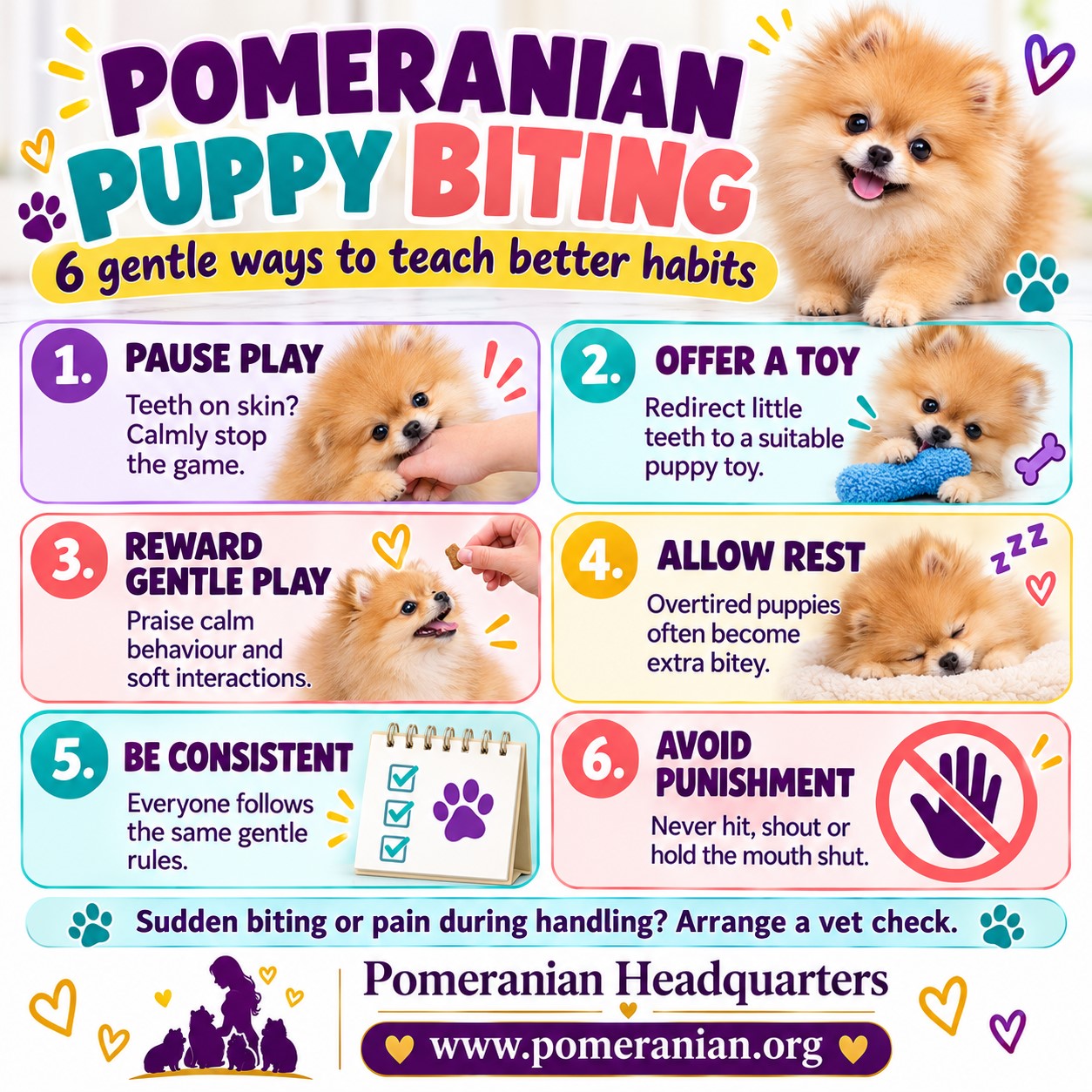
To reduce Pomeranian puppy biting: calmly pause play when teeth touch skin, redirect your puppy to a suitable toy, and reward gentle behaviour. Keep play sessions short and allow plenty of rest. Avoid hitting, shouting or holding your puppy’s mouth shut.
Seek help if biting starts suddenly, causes injury, or happens when your Pom is touched or handled. Arrange a veterinary check to investigate possible pain, and seek qualified, reward-based behaviour support when needed.
Do Pomeranians Bite?
Yes, Pomeranians can bite, but this does not mean every Pomeranian is aggressive. Like any dog, a Pom may use their teeth during puppy play or bite when frightened, uncomfortable or trying to escape an unwanted interaction.
The circumstances surrounding a Pomeranian bite matter. A puppy mouthing your fingers during play needs a different response from an adult dog snapping when someone touches a painful area.
Pomeranians are small, so everyday interactions can sometimes overwhelm them. Being grabbed, picked up unexpectedly, cornered or handled roughly can make a dog feel vulnerable. Give your Pom space to move away, and encourage gentle interactions with adults and children.
Watch for signs that your Pomeranian wants an interaction to stop, such as turning away, becoming stiff, trying to escape or growling. Never punish a growl—it is a warning that your dog is uncomfortable. Stop what you are doing and consider what prompted the response.
Although their mouths are small, Pomeranian bites can cause injury. Teaching gentle play, respecting their boundaries and investigating sudden changes in behaviour are important at every age.
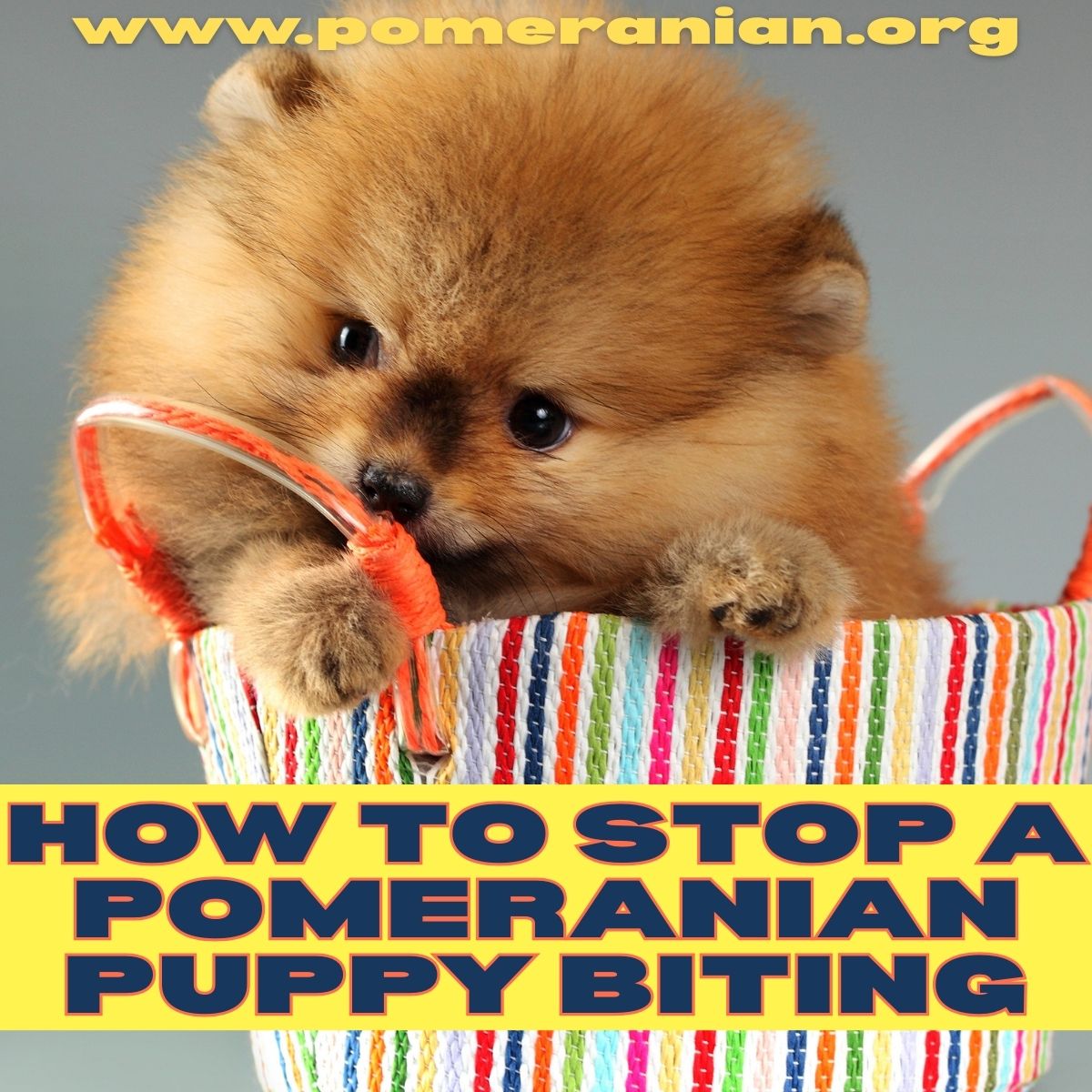
Why Is My Pomeranian Puppy Biting?
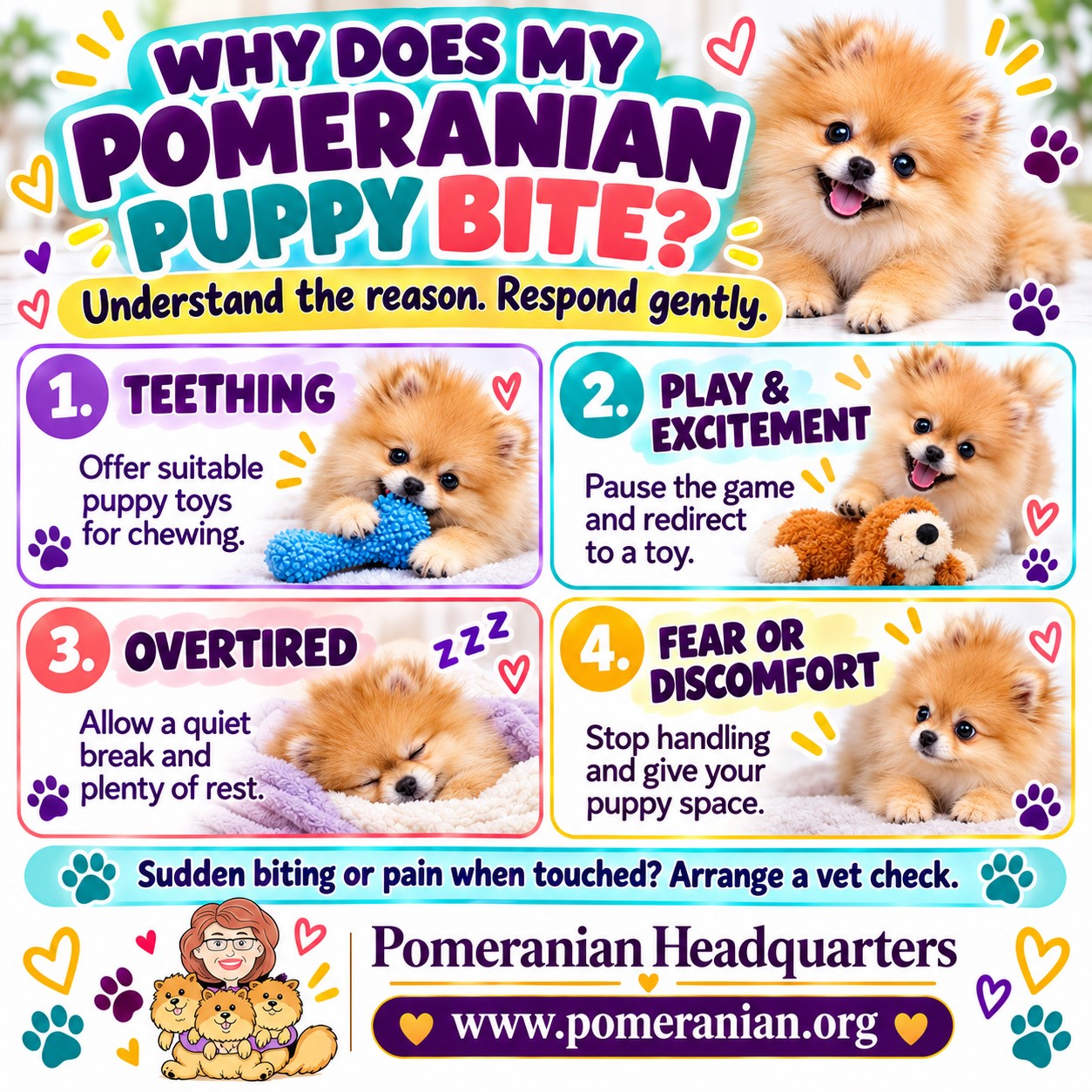
Pomeranian puppy biting often happens during normal play and exploration. Puppies investigate with their mouths, and they need gentle, consistent guidance to learn that hands, feet and clothing are not toys.
Understanding when your puppy bites helps you respond appropriately.
Teething and Chewing
As puppy teeth loosen and adult teeth emerge, your Pom may want to chew more. Offer suitable puppy teething toys, supervise their use, and replace damaged toys before pieces can break off and be swallowed.
Excitement During Play
Fast-moving hands, flapping clothing and moving feet can encourage chasing and nipping. Avoid wrestling with your hands or wiggling your fingers near your puppy’s mouth. Use a suitable toy to give those little teeth something appropriate to grab.
Being Overtired or Overstimulated
A puppy who becomes increasingly frantic and bitey may need a break. More play is not always the answer. Allow your Pom to settle in a comfortable, quiet puppy-safe area and get some rest.
Learning What Gets Your Attention
Your puppy may discover that nipping makes you move, speak or start a game. Calmly pausing the interaction and rewarding gentle play helps teach a better way to engage with you.
Uncomfortable Handling
Not all puppy biting is playful. A puppy may nip when frightened, restrained or handled in a way that causes discomfort. Avoid forcing an interaction, and build confidence through short, gentle handling sessions.
If biting begins suddenly, repeatedly happens when a particular area is touched, or comes with signs of pain, arrange a veterinary check.
How to Stop Pomeranian Puppy Biting
Teaching your Pomeranian puppy to stop biting takes patience and consistency. The aim is to show your puppy that gentle behaviour keeps play going, while biting brings a brief pause.
1. Keep Hands and Feet Out of the Game
Use suitable toys for play rather than encouraging your puppy to wrestle with your fingers. Ask everyone in the household to follow the same rule.
2. Pause When Teeth Touch Skin
If your puppy bites, stop moving your hands and calmly pause the interaction. Avoid jerking away, shouting or making exciting noises, which may encourage more chasing and nipping.
If needed, briefly step behind a puppy gate so your puppy cannot keep grabbing your feet or clothing. Return calmly once they have settled.
3. Redirect to a Suitable Toy
Offer a puppy-safe toy before your Pom grabs your fingers or clothing. Move the toy gently away from your body to encourage your puppy to engage with it.
Praise your puppy when they choose the toy. Check toys regularly and remove anything damaged or small enough to swallow.
4. Reward Gentle Behaviour
Notice the moments when your puppy plays without biting, sits calmly or keeps all four paws on the floor. Reward those choices with quiet praise, a small training treat or continued play.
Do not wait for biting to happen before giving your puppy attention.
5. Keep Play Short and Allow Rest
End play before your puppy becomes frantic. If biting increases despite calm redirection, consider whether your Pom needs sleep, a toilet break or a quieter activity.
6. Avoid Physical Punishment
Never hit, muzzle-grab, pin down or hold your puppy’s mouth shut. These responses can frighten your puppy and make handling more difficult.
When to seek help: With a consistent routine, your Pomeranian should gradually learn gentler ways to play. If biting becomes more intense, causes injury or appears linked to fear or discomfort, seek veterinary advice and qualified, reward-based training support.
What to Do When Your Pomeranian Bites Your Hands or Feet
Moving fingers, toes and trouser legs can be irresistible to a playful puppy. If your Pomeranian bites your hands or chases your ankles, respond calmly and consistently.
If Your Puppy Bites Your Hands
Stop the game and keep your hands still rather than waving them around or pulling them away sharply. Once your puppy releases, calmly withdraw your hands and pause the interaction.
For the next play session, have a suitable toy ready so your puppy can engage with it instead. Praise gentle play, and avoid using your fingers to tease or wrestle with your Pom.
If biting happens during grooming, cuddling or lifting, stop and consider whether your puppy is uncomfortable or frightened. Repeated biting during handling needs closer attention rather than being treated as a game.
If Your Puppy Bites Your Feet or Ankles
Stop walking as soon as it is safe to do so. Running away, shaking your feet or pushing your puppy with your shoes can make the activity more exciting.
Encourage your puppy away from your feet with a suitable toy. If they keep returning to your ankles, calmly step behind a puppy gate for a brief break.
Practise rewarding your puppy for watching you walk past without chasing. Begin with a few slow steps and gradually build up as your puppy learns.
Help Children Respond Calmly
Supervise children closely around your Pomeranian. If a puppy starts nipping, an adult should calmly interrupt and give both the child and puppy some space. Do not expect a child to manage biting alone.
Preventing repeated chasing games is easier than changing an established habit. Keep toys handy, use puppy gates when needed, and reward the gentle behaviour you want to see.
How Strong Is a Pomeranian Bite? Pomeranian Bite Force Explained
If you are searching for Pomeranian bite force, be cautious about exact figures quoted online. I could not find a scientifically established PSI figure that reliably represents the breed.
Research into canine bite force uses different measurement and estimation methods. A dog’s size, skull structure, the position of the bite and the testing method can all affect the result. A single number cannot tell you how likely an individual Pomeranian is to bite.
Can a Pomeranian Bite Cause Injury?
Yes. Although Pomeranians are small dogs, their teeth can break skin and cause painful injuries. Puppy teeth can also hurt during playful nipping, even when the puppy is not behaving aggressively.
A Pomeranian’s small size is no reason to ignore biting. Focus on teaching gentle play, recognising discomfort and preventing situations in which your dog feels frightened or trapped.
Never try to test your Pomeranian’s bite strength. Understanding why your Pom is biting is far more useful than knowing a bite-force number.
Pomeranian Puppy Biting or Aggression?
Pomeranian puppy biting can look dramatic, especially when a puppy growls while playing. Growling or nipping alone does not tell you whether a puppy is being aggressive. Consider their whole body, the situation and what happened immediately beforehand.
Playful Puppy Mouthing
During play, your puppy may bounce around, grab a toy, mouth your fingers or nip at moving clothing. Their body is often loose and wiggly, and they may readily switch their attention to a toy.
This behaviour still needs gentle guidance. Pause when teeth touch skin, encourage appropriate toy play and allow rest before your puppy becomes overexcited.
Biting Linked to Fear or Discomfort
Take closer notice if your Pomeranian becomes stiff, freezes, tries to hide or escape, or snaps when approached or touched. Biting during lifting, grooming or handling may indicate discomfort or fear.
Stop the interaction and give your Pom space. Do not repeatedly touch the area or repeat the situation to “test” their reaction.
Guarding Food, Toys or Resting Places
A Pomeranian who stiffens, growls or snaps when someone approaches a bowl, chew, toy or bed may be guarding something they value. Avoid grabbing the item, putting your hand into their food or forcing them out of their resting place.
Keep children away from these situations and seek qualified, reward-based behaviour support.
When Biting Needs Professional Help
Arrange a veterinary check if biting starts suddenly, occurs during handling or comes with other changes in behaviour. Pain can affect how a dog responds to touch and interaction.
Seek additional behaviour support if biting escalates, causes injury or makes anyone in the household feel unsafe. You do not need to wait for a serious bite before asking for help.
When Do Pomeranian Puppies Stop Biting?
There is no exact age when every Pomeranian puppy stops biting. Mouthing usually becomes less frequent as puppies mature, finish teething and learn gentler ways to play. However, teething ending does not automatically end a biting habit.
Some puppies improve quickly with consistent guidance, while others need longer. Excitement, tiredness and games involving hands or moving feet can keep nipping going.
Look for Gradual Progress
Signs that your training is helping include:
- Choosing a toy instead of grabbing your fingers.
- Using less pressure when mouthing.
- Releasing clothing more readily.
- Settling sooner after a break.
- Playing for longer without nipping.
Keep rewarding these improvements. Everyone in the household should respond consistently so your puppy receives a clear message.
What if My Pomeranian Keeps Biting?
If biting is not improving, consider when it happens. Your puppy may need more rest, calmer play, suitable chewing opportunities or a gentler approach to handling.
Do not assume persistent or worsening biting is simply teething. If your Pom bites during handling, appears frightened, causes injury or suddenly changes behaviour, arrange a veterinary check and seek qualified, reward-based training support.
When to Seek Help for Pomeranian Biting
You do not have to manage persistent Pomeranian biting alone. Getting help early can make everyday handling safer and more comfortable for both you and your dog.
Arrange a veterinary check if your Pomeranian:
- Starts biting suddenly or behaves differently from usual.
- Snaps when picked up, groomed or touched in a particular area.
- Appears sore, unwell or reluctant to move.
- Shows increasingly frequent or intense biting.
A veterinary examination can help identify whether pain or illness is contributing to the behaviour.
Getting Behaviour Support
Seek a qualified professional who uses reward-based methods if your Pom repeatedly bites, guards food or belongings, or reacts fearfully to people. Your veterinarian can help you find suitable support, including a veterinary behaviourist when needed.
Avoid anyone who recommends frightening, physically overpowering or punishing your Pomeranian for growling. The aim is to understand what triggers the behaviour and teach safer responses.
Prevent Further Incidents
While arranging help, avoid known triggers and use gates or separate comfortable spaces when necessary. Supervise interactions with children closely, and give your Pom somewhere quiet to rest undisturbed.
Do not deliberately provoke another bite to demonstrate the problem. Instead, keep notes about what happened beforehand, who was present and how your dog responded. These details can help your veterinarian or behaviour professional assess the situation.
Frequently Asked Questions About Pomeranian Biting
Do Pomeranians bite?
Yes, Pomeranians can bite, just like any dog. Puppies commonly mouth and nip during play, while biting at any age may be linked to fear, discomfort or feeling threatened. The circumstances and your dog’s body language help explain the behaviour.
Why does my Pomeranian puppy keep biting me?
Pomeranian puppy biting often happens during play, exploration and teething. Excitement and tiredness can also increase nipping. Notice when it happens so you can provide suitable toys, calmer activities or a rest break.
How do I stop Pomeranian puppy biting?
Calmly pause play when teeth touch skin, redirect your puppy to a suitable toy and reward gentle behaviour. Avoid using hands as toys, keep play sessions short and allow plenty of rest. Everyone in the household should respond consistently.
When do Pomeranian puppies stop biting?
There is no fixed age when every puppy stops biting. Mouthing usually reduces as puppies mature, finish teething and learn appropriate play. Consistent guidance is still needed because the end of teething does not automatically end a biting habit.
What is a Pomeranian’s bite force?
There is no scientifically established PSI figure that reliably represents every Pomeranian. Treat precise breed bite-force claims cautiously. A Pomeranian’s small size does not prevent their teeth from causing injury.
Does puppy biting mean my Pomeranian is aggressive?
No. Playful puppy mouthing does not automatically indicate aggression. However, stiffness, freezing, attempts to escape or snapping during handling need closer attention. Stop the interaction and investigate what is making your puppy uncomfortable.
Should I punish my Pomeranian for biting or growling?
No. Avoid hitting, shouting, pinning your dog down or holding their mouth shut. A growl signals discomfort: stop the interaction, give your Pom space and address the cause. Use gentle, reward-based teaching for puppy mouthing.
Why does my Pomeranian bite when I pick them up?
Your Pom may be frightened, uncomfortable or in pain. Avoid repeatedly lifting them to test their reaction. Arrange a veterinary check, particularly if the behaviour is new, and seek guidance on gentle handling.
When should I seek help? Arrange a veterinary check if biting starts suddenly, happens during handling or becomes more intense. Seek qualified, reward-based behaviour support for repeated biting, guarding or behaviour that makes anyone feel unsafe.
Final Thoughts
Pomeranian puppy biting takes patience, gentle guidance and consistent training. Redirect little teeth to suitable toys, reward calm behaviour and allow plenty of rest. If biting starts suddenly, worsens or happens during handling, seek veterinary advice. Understanding why your Pom bites is the first step towards helping them.
Copyright Pomeranian.Org. All Rights Reserved.
📚 References & Further Reading
- [1] AKC Pomeranian Breed Standard (2011)
- [2] English Kennel Club Breed Standard
- [3] The Pomeranian Handbook – Denise Leo
- [4] Denlinger, The Complete Pomeranian
- [5] Kimbering, 1891–1991
- [6] Taplin, The Sportsman’s Cabinet
- [7] Parker, The Popular Pomeranian
- [8] Ives, Show Pomeranians
The Pomeranian Handbook