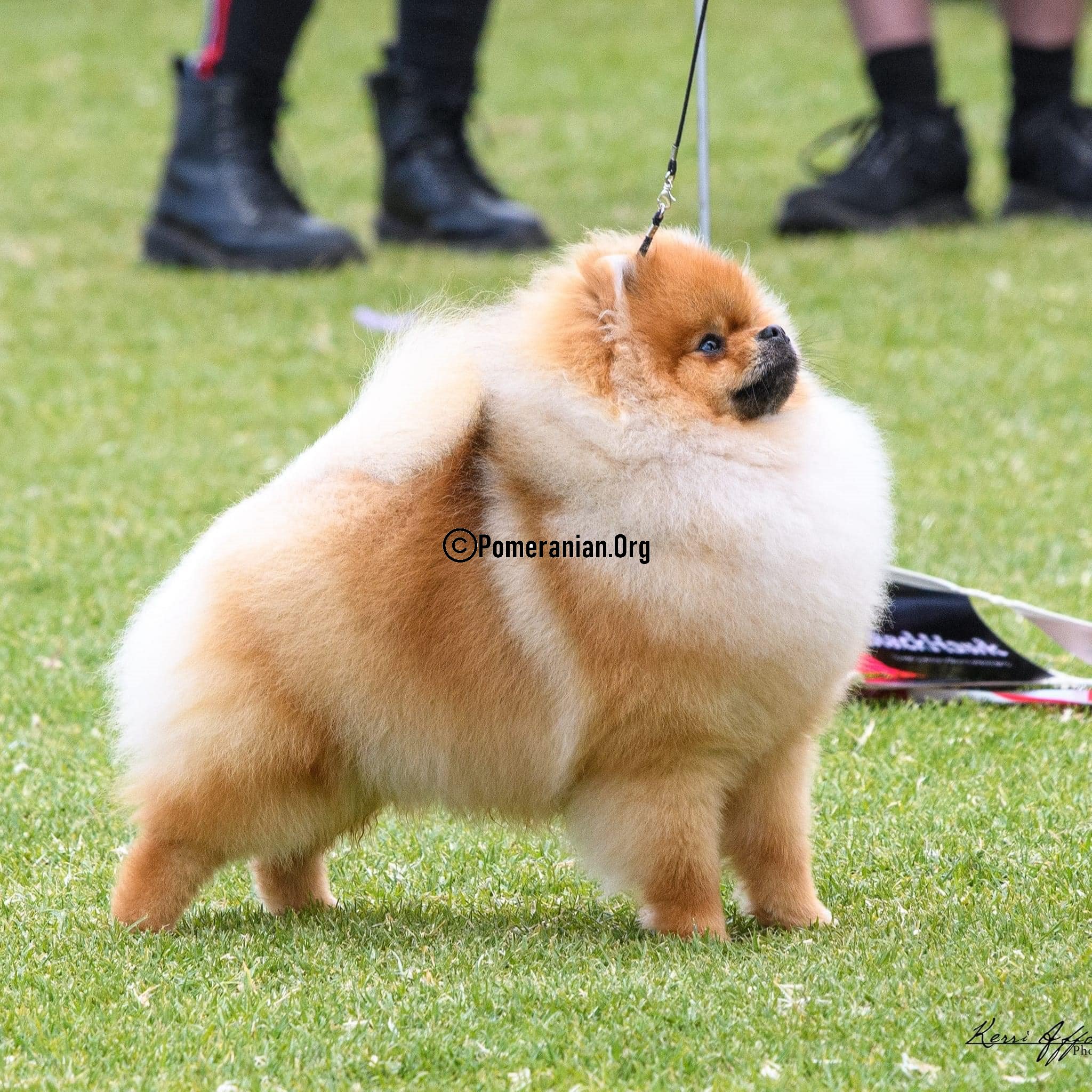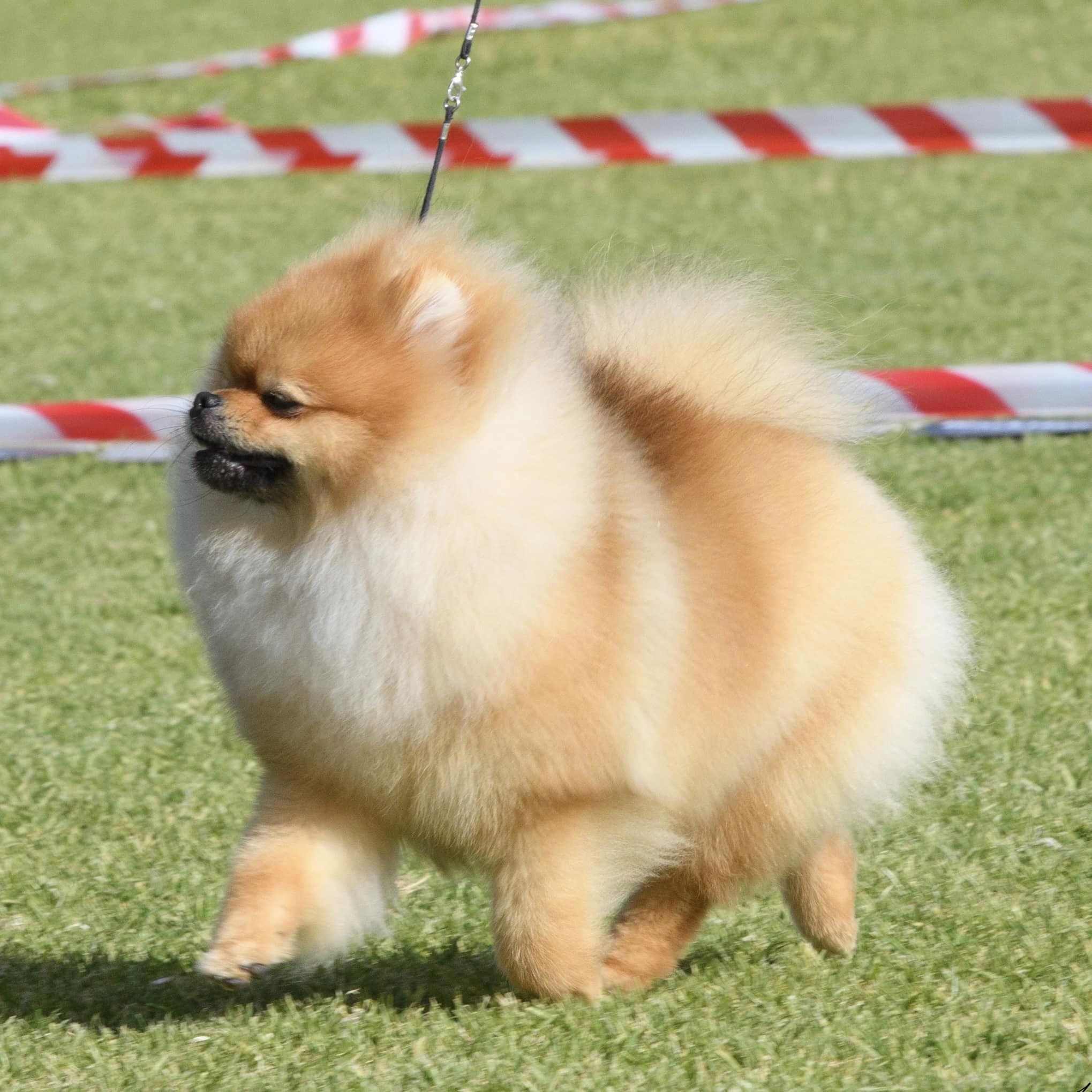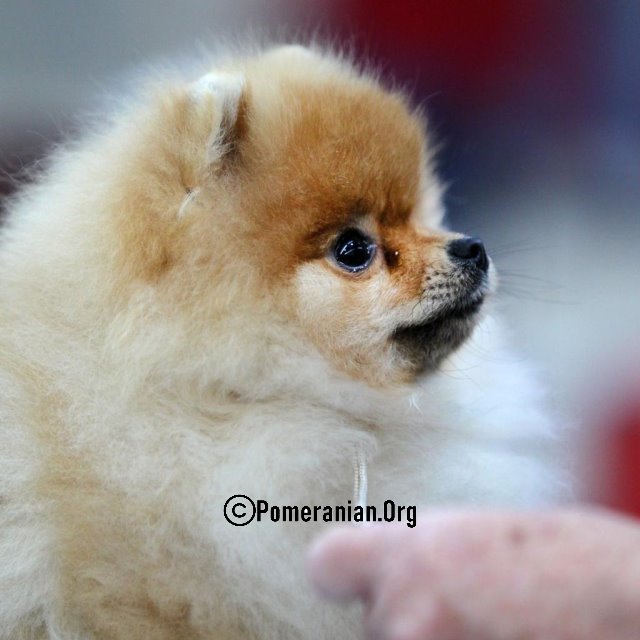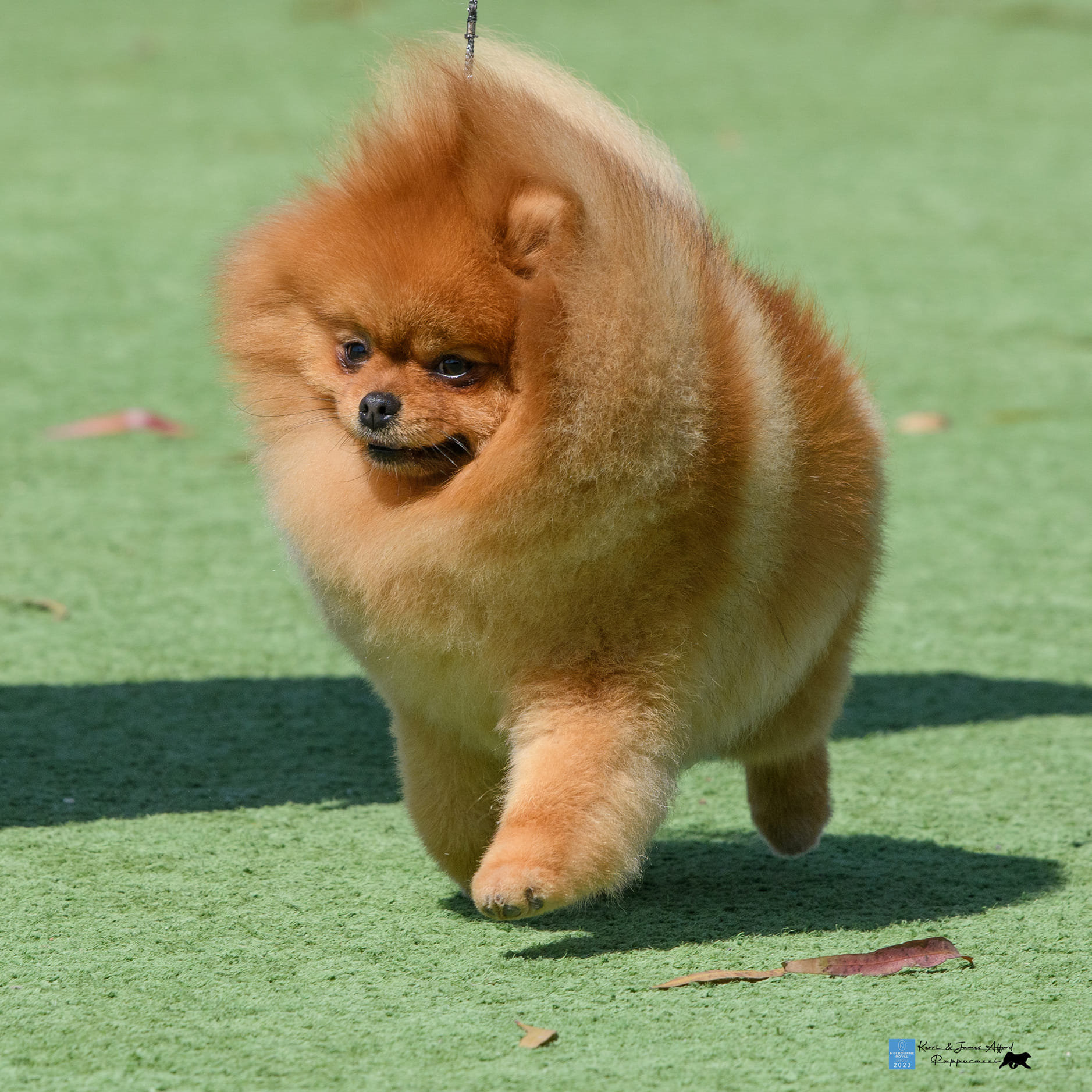

The Japanese Spitz and Pomeranian may look similar at first glance. Both have erect ears, an abundant double coat, a plumed tail carried over the back and the bright, alert expression associated with Spitz breeds. However, they are two separate breeds with considerable differences in size, structure, coat color and exercise needs.
The Japanese Spitz is much larger, sturdier and generally more athletic. Its coat is always pure white. The Pomeranian is a tiny Toy breed with a compact body, a profuse double coat and a wide variety of recognized colors and patterns.
I had the opportunity to observe these differences firsthand when two Japanese Spitz belonging to friends who exhibit Pomeranians stayed in my home. They were delightful dogs—intelligent, lively and remarkably agile. They happily raced across the top of my sofa, reaching places my much smaller Pomeranians would never have attempted to go.
That experience demonstrated that appearance alone does not tell the whole story. This Japanese Spitz vs. Pomeranian comparison explains the important differences in size, temperament, grooming, exercise, health and suitability for family life, helping prospective owners decide which breed may better suit their lifestyle.
Japanese Spitz vs Pomeranian: Quick Answer
The Japanese Spitz and Pomeranian are both members of the Spitz family, but they are two separate breeds. The Japanese Spitz is considerably larger, always white and generally more athletic. The Pomeranian is a Toy breed with a much smaller, more compact body, a profuse double coat and many recognised colours.
Japanese Spitz vs. Pomeranian at a Glance
Although the Japanese Spitz and Pomeranian share the distinctive Spitz appearance, they differ considerably in size, structure, coat color and exercise needs.
| Feature | Pomeranian | Japanese Spitz |
|---|---|---|
| AKC status | Fully recognized in the AKC Toy Group | Enrolled in the AKC Foundation Stock Service; not currently a fully AKC-recognized breed |
| Breed size | A very small Toy breed | A considerably larger companion breed |
| Height | 6–7 inches at the shoulder | 12–15 inches at the shoulder |
| Weight | 3–7 pounds; 4–6 pounds is ideal for show specimens | 10–25 pounds |
| Coat colors | Numerous recognized colors and patterns | Pure white only |
| Body and structure | Compact, short-backed, square and sturdy | Larger, sturdier and generally more athletic |
| Head and expression | A rather short muzzle with an alert, intelligent and fox-like expression | A longer, pointed muzzle with erect triangular ears |
| Coat | A profuse double coat with a substantial neck ruff and heavily plumed tail | An abundant, straight and stand-off white double coat |
| Exercise | Moderate daily exercise, play and mental stimulation | Generally needs more physical exercise and active play |
| Living with children | Best with gentle, respectful children because of its tiny size | Sturdier, although interactions with children should still be supervised |
| Living space | Particularly well suited to apartments and smaller homes | Adaptable to smaller homes when given sufficient daily exercise |
Please note: The measurements above are those listed by the American Kennel Club. Individual dogs may vary in size, temperament and activity level.

Are Japanese Spitz and Pomeranians Related?
The Japanese Spitz and Pomeranian belong to the wider Spitz family of dogs. This explains their shared characteristics, including erect ears, wedge-shaped heads, thick double coats and tails carried over the back. However, the Japanese Spitz is not a large white Pomeranian, and the Pomeranian is not a miniature Japanese Spitz.
The Pomeranian developed from larger European Spitz dogs and takes its name from Pomerania, a historical region that now forms part of Germany and Poland. Earlier Pomeranians were considerably larger than the dogs seen today. Selective breeding gradually produced the compact Toy breed now recognized by the American Kennel Club.
The Japanese Spitz is a much newer breed. It was developed in Japan during the early twentieth century using imported white Spitz-type dogs. Japanese breeders worked to establish a distinct companion breed with a pure white coat, balanced structure and lively, affectionate temperament.
Although the two breeds share distant Spitz ancestry and several visible characteristics, each has its own history, breed standard and distinctive appearance. They should be compared as separate breeds rather than different sizes or color varieties of the same dog.
Japanese Spitz vs. Pomeranian Size and Structure
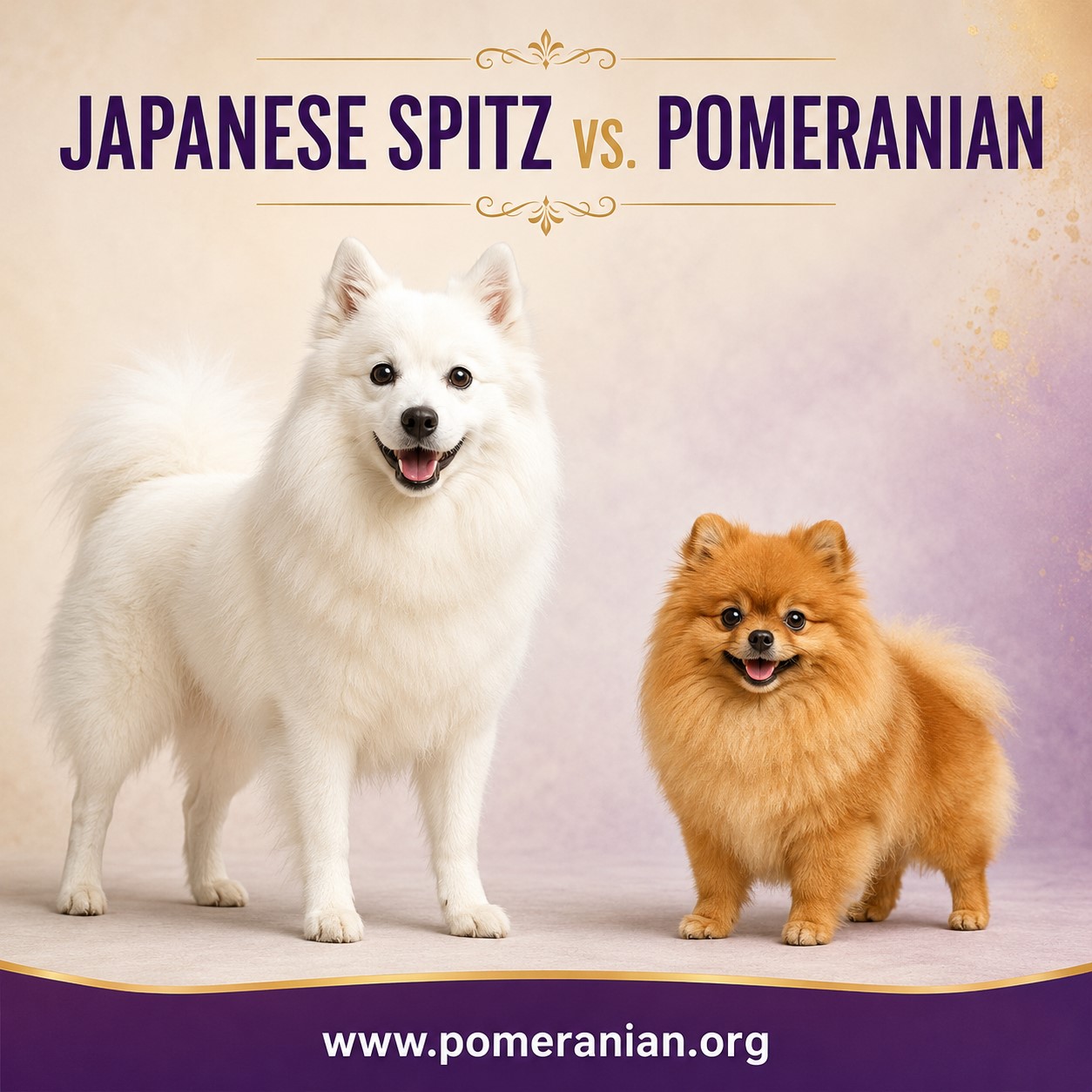
Size is the most obvious difference between these two breeds. According to the American Kennel Club, the Pomeranian stands approximately 6–7 inches at the shoulder and weighs 3–7 pounds. The ideal weight for an AKC show Pomeranian is 4–6 pounds.
The Japanese Spitz is considerably larger, standing approximately 12–15 inches at the shoulder and weighing 10–25 pounds. Even a smaller Japanese Spitz will normally be much taller, heavier and physically stronger than a Pomeranian.
The breeds also differ in their proportions. The Pomeranian is a compact, short-backed and square Toy dog. Despite its tiny size, a correctly constructed Pomeranian should appear sturdy and balanced rather than weak or excessively fine.
The Japanese Spitz has a larger frame and a more athletic outline. Its body is firm and strong, with sufficient substance for active movement. Its longer legs and greater physical reach make it noticeably faster and more agile around the home.
These structural differences should be considered when choosing between the breeds. A Pomeranian is easier to carry and requires very little physical space, but its small size makes it more vulnerable to falls, rough play and accidental injury. The sturdier Japanese Spitz may be better suited to a more active household, although it also requires more room and daily exercise.
Japanese Spitz vs. Pomeranian Coat, Colors and Grooming
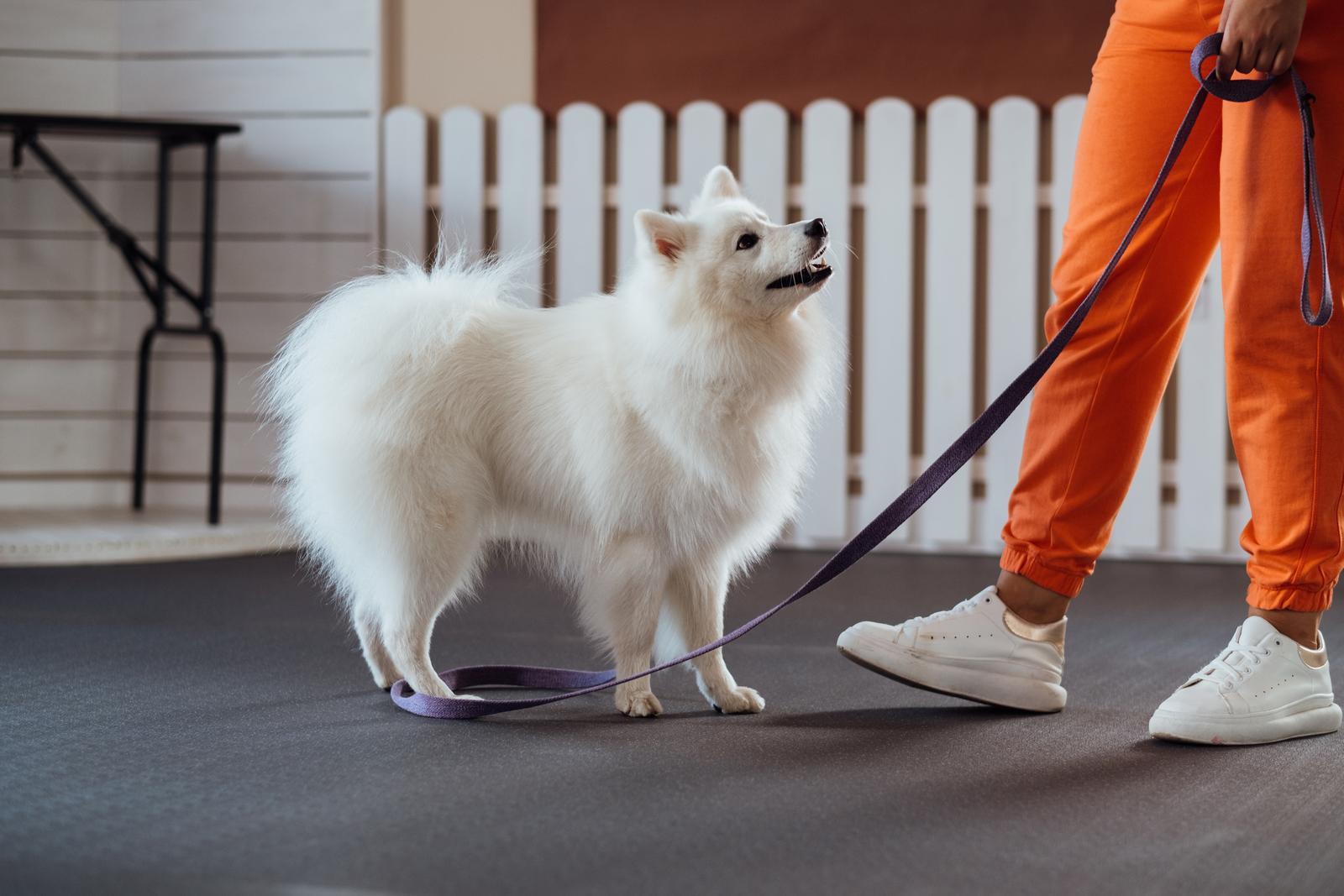
Both the Japanese Spitz and Pomeranian have a double coat consisting of a soft, dense undercoat and a longer outer coat. Their coats create the characteristic fluffy Spitz appearance, but there are noticeable differences in color, texture and presentation.
Japanese Spitz Coat and Colors
The Japanese Spitz has an abundant, pure white coat. The outer coat is straight and stands away from the body, while the dense undercoat provides volume. The breed also has a pronounced neck ruff and a heavily plumed tail carried over the back.
White is the only accepted Japanese Spitz color. Regular brushing helps remove loose undercoat, prevent tangles and keep the coat looking clean.
Pomeranian Coat and Colors
The Pomeranian has a profuse double coat with a short, dense undercoat and a longer, harsh-textured outer coat. A substantial ruff frames the head, while the heavily plumed tail lies flat over the back and contributes to the breed’s compact outline.
Unlike the Japanese Spitz, Pomeranians are found in numerous recognized colors and patterns. These include orange, cream, black, chocolate, blue, sable, black and tan, brindle and parti-color.
Japanese Spitz vs. Pomeranian Grooming Needs
Both breeds require regular, thorough brushing. Particular attention should be given to areas that tangle easily, including behind the ears, beneath the front legs and around the hindquarters.
The dense coat must be brushed in sections down to the skin rather than only smoothed across the surface. After bathing, the coat should be dried thoroughly with a dog dryer while being brushed. Allowing a dense double coat to remain damp can encourage tangles and skin problems.
Both breeds shed throughout the year and lose considerably more undercoat during seasonal coat changes. Neither the Japanese Spitz nor the Pomeranian should be routinely clipped short, as cutting into the double coat can damage its texture and natural protective qualities.

Japanese Spitz vs. Pomeranian Temperament and Personality
The Japanese Spitz and Pomeranian are intelligent, affectionate companion dogs that form close relationships with their families. Both breeds are alert, curious and eager to participate in household activities. However, their size, energy and general approach to life can create a different experience for their owners.
Japanese Spitz Temperament
The typical Japanese Spitz temperament is lively, loyal and companionable. These dogs generally enjoy being involved in family life and are often enthusiastic participants in walks, games and outings.
Japanese Spitz dogs are intelligent and usually respond well to positive, consistent training. Their alert nature means they may bark when someone approaches the home, although excessive barking should never be accepted as an unavoidable breed characteristic.
Because the Japanese Spitz is larger and more athletic, it may be better suited to owners who want an active companion capable of joining them on longer walks and outdoor adventures.
Pomeranian Temperament
The typical Pomeranian temperament is alert, intelligent, confident and inquisitive. Although tiny, a Pomeranian often possesses the self-assurance and personality of a much larger dog.
Pomeranians are affectionate and enjoy being close to their owners, but they are not merely lap dogs. They need training, socialization, play and mental stimulation. Their intelligence allows them to learn quickly, although a confident Pomeranian may also attempt to make its own decisions when rules are inconsistent.
Pomeranians are naturally watchful and may readily announce visitors or unfamiliar sounds. Early training can help prevent alert barking from becoming excessive.
Are Japanese Spitz or Pomeranians Easier to Train?
Both Japanese Spitz and Pomeranians are intelligent and capable of learning quickly. The Japanese Spitz may be more physically suited to longer training sessions and active dog sports, while the Pomeranian can excel in obedience, tricks, rally and other activities appropriate for its size.
Positive reinforcement, short lessons and consistent household rules work well for both breeds. Individual temperament, early socialization and the owner’s approach to training are more important than assuming one breed will always be easier to train than the other.

Japanese Spitz vs. Pomeranian Exercise Needs
Both the Japanese Spitz and Pomeranian need daily exercise, play and mental stimulation. However, the Japanese Spitz is larger and generally more athletic, while the Pomeranian’s exercise needs can be met within a smaller area.
How Much Exercise Does a Japanese Spitz Need?
A Japanese Spitz benefits from daily walks combined with active play and training. Most healthy adults enjoy exploring outdoors and participating in family activities. Their larger size, agility and stamina make them suitable companions for owners who enjoy a more active lifestyle.
Exercise should include opportunities to sniff, explore and use their intelligence. Training games, puzzle toys and controlled play can be just as important as physical exercise.
Japanese Spitz puppies should not be forced to undertake excessive running, jumping or long walks while their bones and joints are still developing.
How Much Exercise Does a Pomeranian Need?
A Pomeranian requires daily activity despite its tiny size. Short walks, supervised play and regular training sessions can provide suitable exercise without placing unnecessary strain on the dog.
Pomeranians should not be encouraged to jump repeatedly from furniture or negotiate large flights of stairs. These activities can increase the risk of injury to their small bones and joints.
Care is also required around unfamiliar or much larger dogs. A Pomeranian may behave confidently, but its small size leaves it vulnerable during rough play. A secure yard or controlled walking environment is generally safer than an uncontrolled dog park.
Which Breed Needs More Exercise?
The Japanese Spitz generally needs more physical exercise than the Pomeranian and is better equipped for longer walks and active outings. The Pomeranian may be more suitable for less active owners, although it still requires daily exercise and should not be expected to spend its entire life being carried.
The age, health and fitness of the individual dog should always determine the amount and intensity of exercise provided.
Are Japanese Spitz and Pomeranians Good With Children?
Japanese Spitz and Pomeranians can live happily with children, but their different sizes must be considered. No breed is automatically suitable for every child, and all interactions between dogs and young children should be supervised by an adult.
Are Japanese Spitz Good With Children?
Japanese Spitz dogs are generally affectionate, playful and eager to participate in family activities. Their sturdier build may make them better suited to an active household with children than the much smaller Pomeranian.
However, children must still be taught to treat the dog respectfully. They should never climb on a dog, disturb it while eating or sleeping, pull its coat or attempt to carry it without assistance.
Are Pomeranians Good With Children?
Pomeranians can be loving family companions, particularly when children are calm, gentle and old enough to understand how to behave around a very small dog.
Their tiny size makes them vulnerable to accidental injury. A Pomeranian can be seriously hurt if dropped, stepped on, squeezed or handled roughly. For this reason, a Pomeranian may not be the best choice for a household with very young or boisterous children.
Are Japanese Spitz and Pomeranians Good With Other Pets?
Both Japanese Spitz and Pomeranians can live successfully with other dogs and household pets when they are properly introduced and socialized.
The Japanese Spitz is usually sturdy enough to participate in more energetic play. However, introductions should still be gradual, and interactions should be supervised until the dogs are comfortable together.
Pomeranians often live happily with other dogs and cats, but their small size requires additional care. Play with a much larger dog can become dangerous even when the larger dog has friendly intentions.
The temperament, age and previous experiences of each animal are more important than breed alone. Owners should never assume that two pets will be compatible without careful introductions and ongoing supervision.
Are Japanese Spitz and Pomeranians Good Apartment Dogs?
Both the Japanese Spitz and Pomeranian can adapt to apartment living when their exercise, training and companionship needs are met. A dog’s suitability for an apartment depends on more than size. Activity level, barking, training and the amount of time the dog spends alone are equally important.
Are Pomeranians Good for Apartments?
Pomeranians are particularly well suited to apartments and smaller homes because of their tiny size. They do not require a large yard, and much of their daily play can take place safely indoors.
However, Pomeranians are alert dogs and may bark at visitors, unfamiliar noises or movement outside the home. Early training is important, especially when living close to neighbors.
A secure balcony is essential. Open railings, gaps and climbable furniture can present serious dangers to a small Pomeranian. Access to stairs and high furniture should also be managed to reduce the risk of falls and injury.
Are Japanese Spitz Good for Apartments?
Japanese Spitz dogs can live successfully in apartments, but they generally require more outdoor exercise than Pomeranians. Daily walks, active play and regular opportunities to explore are necessary to prevent boredom and restlessness.
The Japanese Spitz is also an alert breed and may bark when someone approaches the home. Consistent training from puppyhood can help the dog understand when barking is appropriate and when it should stop.
Do Japanese Spitz or Pomeranians Bark More?
Both Japanese Spitz and Pomeranians may use their voices to alert their owners. It is inaccurate to assume that every Japanese Spitz is quiet or that every Pomeranian will bark excessively.
Genetics, socialization, training, boredom and the home environment all influence barking behavior. Owners should acknowledge an alert and then calmly teach the dog to settle. Shouting often increases excitement rather than stopping the noise.
Neither breed is well suited to spending long periods isolated from its family. Providing adequate companionship, exercise and mental stimulation can help reduce barking caused by loneliness or boredom.
Japanese Spitz vs. Pomeranian Health and Lifespan
The Japanese Spitz and Pomeranian are generally long-lived breeds, but neither breed is free from potential health problems. Genetics, responsible breeding, nutrition, veterinary care and maintaining a healthy weight can all influence a dog’s long-term health.
Japanese Spitz Lifespan and Health Problems
According to the American Kennel Club, the average Japanese Spitz lifespan is approximately 10–14 years.
Health concerns reported in Japanese Spitz dogs include luxating patellas, certain eye conditions and dental problems. However, this does not mean every Japanese Spitz will develop these conditions.
Prospective owners should ask the breeder about the health and longevity found throughout both parents’ pedigrees, not merely whether the mother and father appear healthy.
Pomeranian Lifespan and Health Problems
The American Kennel Club lists the average Pomeranian lifespan as approximately 12–16 years. Many well-bred and properly cared-for Pomeranians remain active into their senior years.
Health concerns that may affect Pomeranians include luxating patellas, collapsing trachea, dental disease, certain heart and eye conditions, and coat-loss disorders. The breed’s tiny size can also make it more vulnerable to accidental injury.
A harness is generally preferable to placing pressure on a Pomeranian’s neck when walking. Regular dental care is also particularly important because a small mouth can lead to crowded teeth and an increased accumulation of plaque.
Choosing a Healthy Japanese Spitz or Pomeranian Puppy
Health testing is valuable, but it is only part of responsible breeding. A knowledgeable breeder should understand the strengths, weaknesses, health and longevity present throughout the dogs on both sides of a pedigree.
Prospective puppy owners should ask:
- Which health examinations have been completed on both parents?
- Can the breeder provide the results?
- Have close relatives experienced recurring health problems?
- How long have dogs in the pedigree generally lived?
- Does the breeder offer continued advice after the puppy leaves?
No breeder can guarantee that a puppy will never develop a health problem. However, careful selection, appropriate health screening and a sound knowledge of the pedigree can help reduce avoidable risks. The puppy’s veterinarian should always be the first source of advice about individual health concerns.
The lifespan figures are from the current AKC Pomeranian and AKC Japanese Spitz profiles.
Are Japanese Spitz and Pomeranians Recognized by the AKC?
The Pomeranian and Japanese Spitz have different recognition status with the American Kennel Club. This affects registration and eligibility to compete in AKC conformation dog shows.
Are Pomeranians Recognized by the AKC?
The Pomeranian is fully recognized by the American Kennel Club and competes in the Toy Group. AKC-registered Pomeranians may participate in conformation shows and a wide variety of companion and performance events.
The official AKC Pomeranian breed standard describes a compact, short-backed and active Toy dog weighing between 3 and 7 pounds. The ideal weight for a show specimen is 4–6 pounds.
Are Japanese Spitz Recognized by the AKC?
The Japanese Spitz was accepted into the AKC Foundation Stock Service in 2019. Enrollment in the Foundation Stock Service allows records for a developing breed to be maintained while it works toward possible full AKC recognition.
Foundation Stock Service enrollment is not the same as full AKC recognition. Japanese Spitz dogs are not currently eligible to compete in regular AKC breed conformation classes or earn an AKC championship.
Eligible Foundation Stock Service dogs may participate in certain AKC companion and performance events, subject to the rules governing each event.
Japanese Spitz Recognition Outside the United States
Although the Japanese Spitz does not yet have full AKC recognition, it is recognized by several major kennel organizations outside the United States, including those in the United Kingdom, Australia and other countries.
Recognition and competition rules vary between organizations. Owners who wish to register, breed or exhibit a Japanese Spitz should check the current requirements of the kennel club in their own country.
The Japanese Spitz and Pomeranian are established, separate purebred dogs. The difference in their current AKC status does not mean that the Japanese Spitz is a mixed breed or a variety of Pomeranian.
Japanese Spitz vs. Pomeranian: Which Dog Is Right for You?
Choosing between a Japanese Spitz and Pomeranian should not be based on appearance alone. Both are attractive, intelligent companion dogs, but their size, exercise requirements and physical strength suit different households.
Is a Pomeranian Right for Me?
A Pomeranian may be the better choice if you:
- Prefer a very small companion dog.
- Live in an apartment or smaller home.
- Want a dog whose exercise needs can be met with shorter walks and indoor play.
- Enjoy grooming and maintaining a profuse double coat.
- Can protect a tiny dog from falls, rough handling and larger animals.
- Want an alert, intelligent and confident companion with a large personality.
Pomeranians may suit older or less active owners, but they still require daily exercise, training and mental stimulation. Their small size should never be mistaken for an absence of normal canine needs.
Is a Japanese Spitz Right for Me?
A Japanese Spitz may be the better choice if you:
- Prefer a larger and sturdier Spitz breed.
- Want a more athletic companion for walks and family outings.
- Can provide regular exercise, play and training.
- Are prepared to maintain an abundant white double coat.
- Have sufficient space for a more active dog.
- Want a lively, intelligent dog that enjoys participating in family life.
The Japanese Spitz may be better suited to active families, although individual temperament and the behavior of children must always be considered.
Should I Choose a Japanese Spitz or Pomeranian?
Choose the breed whose needs best match your home, activity level and ability to provide lifelong care. A prospective owner should also consider the individual puppy’s temperament and the qualities found throughout its pedigree.
Meeting mature dogs of both breeds can be extremely helpful. It allows you to appreciate the considerable difference in their size, strength, movement and energy—differences that photographs do not always show.
Whichever breed you choose, look for a knowledgeable and responsible breeder who prioritizes health, sound temperament and correct breed type. A carefully bred puppy from well-understood bloodlines offers a much stronger foundation than choosing a puppy by color, price or appearance alone.
Japanese Spitz vs. Pomeranian Frequently Asked Questions
Find quick answers to the most frequently asked questions about Japanese Spitz and Pomeranian size, shedding, barking and family suitability.
Japanese Spitz vs. Pomeranian: Final Thoughts
The Japanese Spitz and Pomeranian share the attractive Spitz appearance, but they differ considerably in size, strength and exercise needs. The Japanese Spitz generally suits a more active household, while the tiny Pomeranian may be better suited to smaller homes and less active owners.
Whichever breed you choose, look for a responsible breeder who prioritizes health, temperament and correct breed type. The best choice will always be the dog whose needs genuinely match your lifestyle.
Copyright Pomeranian.org. All Rights Reserved.
📚 References & Further Reading
- [1] AKC Pomeranian Breed Standard (2011)
- [2] English Kennel Club Breed Standard
- [3] The Pomeranian Handbook – Denise Leo
- [4] Denlinger, The Complete Pomeranian
- [5] Kimbering, 1891–1991
- [6] Taplin, The Sportsman’s Cabinet
- [7] Parker, The Popular Pomeranian
- [8] Ives, Show Pomeranians