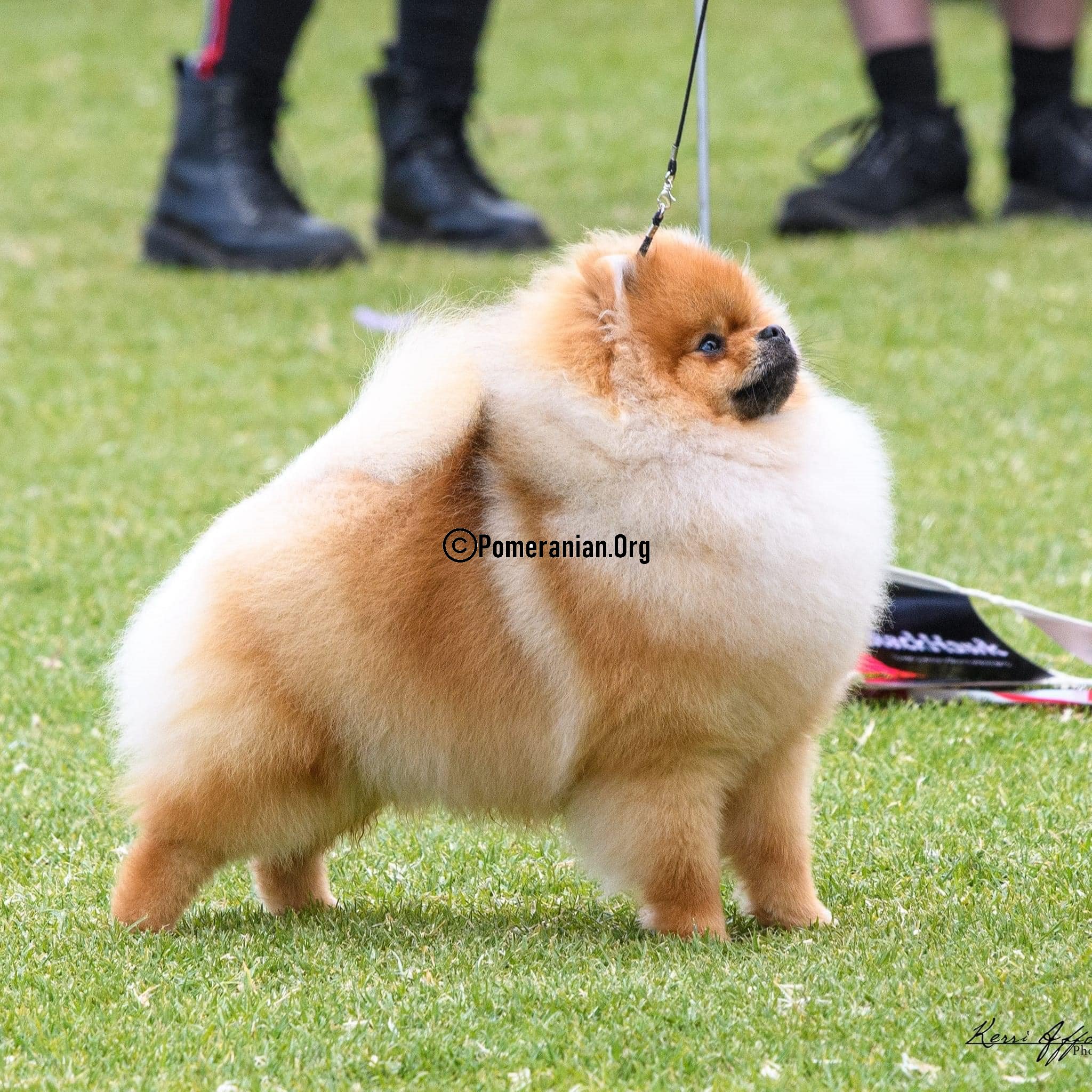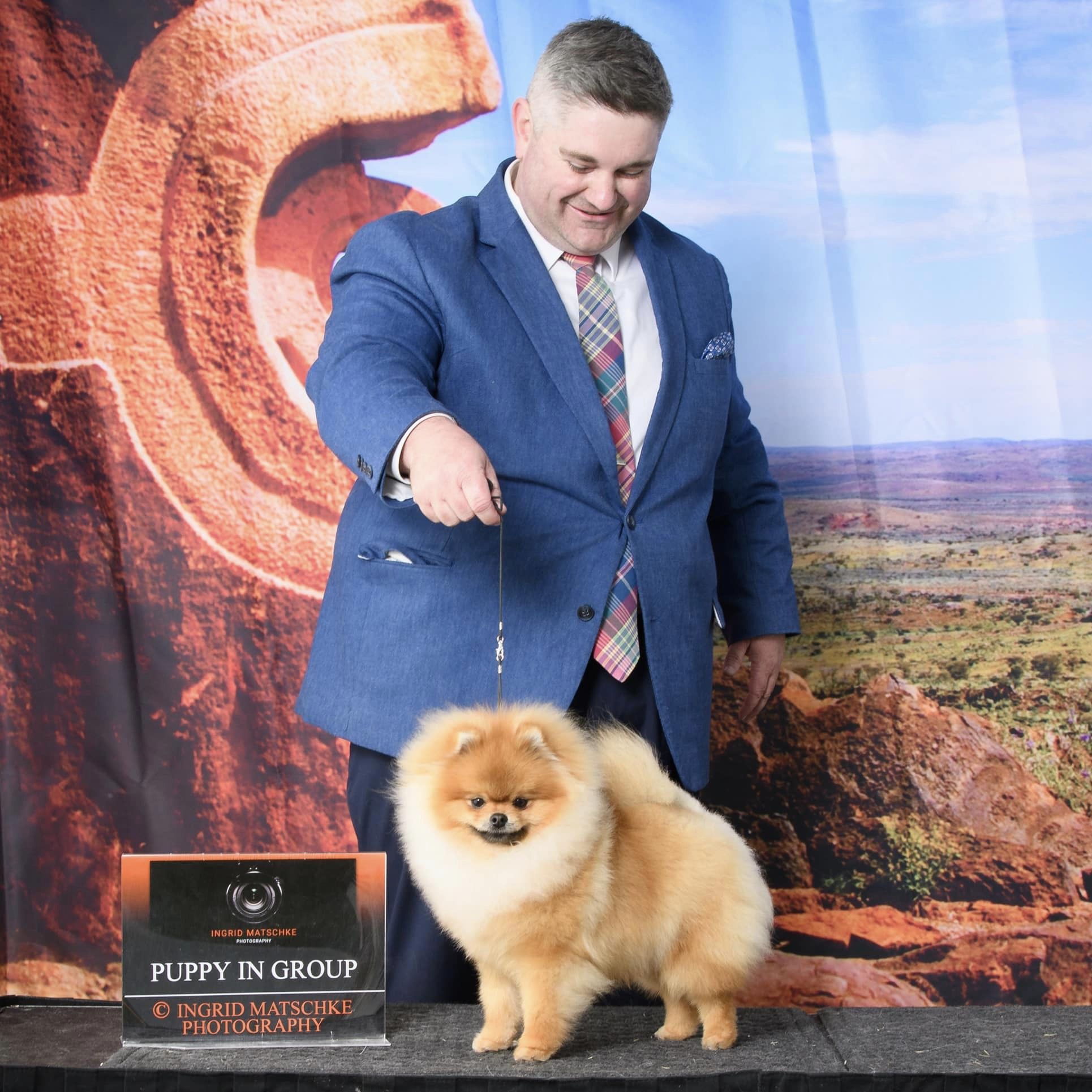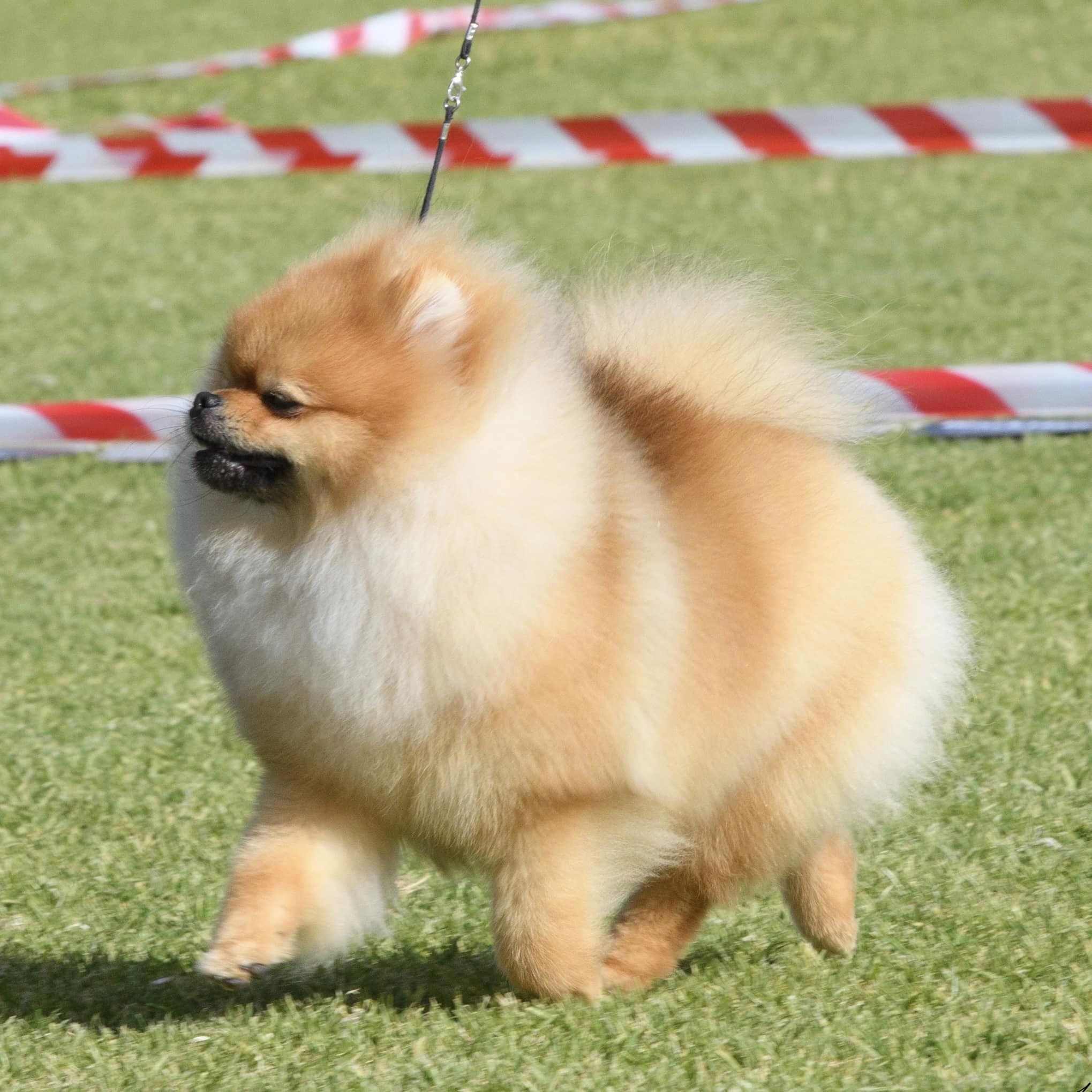

Knowing how to pick up and hold a Pomeranian correctly helps protect this small dog from falls and handling injuries. A Pomeranian should never be lifted by the front legs, scruff, collar or tail.
Always support the chest and hindquarters together. Lift your Pomeranian smoothly and keep the dog close to your body so it feels secure and its weight remains properly supported.
This method is suitable for most healthy adult Pomeranians and puppies. Extra care is required when lifting a senior, pregnant, injured or frightened dog.
How Do You Pick Up a Pomeranian Safely?
Support your Pomeranian beneath the chest with one hand or forearm and support the hindquarters with the other. Lift slowly, bringing the dog close to your body.
- Give a warning: Use a familiar cue such as “up” before touching the dog.
- Move close: Bend your knees and position yourself beside your Pomeranian.
- Support the chest: Place one hand or forearm beneath the chest, behind the front legs.
- Support the rear: Place your other hand beneath the hindquarters.
- Lift securely: Stand smoothly and bring your Pomeranian close against your body.
Never lift a Pomeranian by the collar, scruff, legs, tail or coat. Do not leave the hindquarters dangling or hold the dog away from your body.
Why Correct Handling Matters
A Pomeranian’s small size makes it easy for an owner to underestimate the harm that can result from incorrect handling. A fall from an adult’s arms, a chair or a grooming table can cause serious injury.
Supporting only the front of the body leaves the hindquarters and back unsecured. The dog may feel uncomfortable, struggle to escape or place additional strain on its shoulders and spine.
Correct handling helps:
- Distribute the Pomeranian’s weight between the chest and hindquarters.
- Keep the spine and joints supported.
- Reduce the likelihood of struggling or being dropped.
- Prevent pressure on the neck and trachea.
- Help the dog feel secure and confident when being handled.
Give your Pomeranian a warning before lifting. A consistent word such as “up” allows the dog to anticipate what is about to happen instead of being suddenly startled.
Move slowly and confidently. If your Pomeranian becomes tense, frightened or begins to struggle, return the dog safely to the floor and try again when it is calm.
How to Lift a Pomeranian Step by Step
- Use a verbal cue. Say a familiar word such as “up” so your Pomeranian knows it is about to be lifted.
- Approach calmly. Move beside the dog rather than reaching suddenly from above. Avoid chasing or cornering a nervous Pomeranian.
- Bend your knees. Lower yourself toward the dog while keeping your back as straight as possible. This provides better control and protects your lower back.
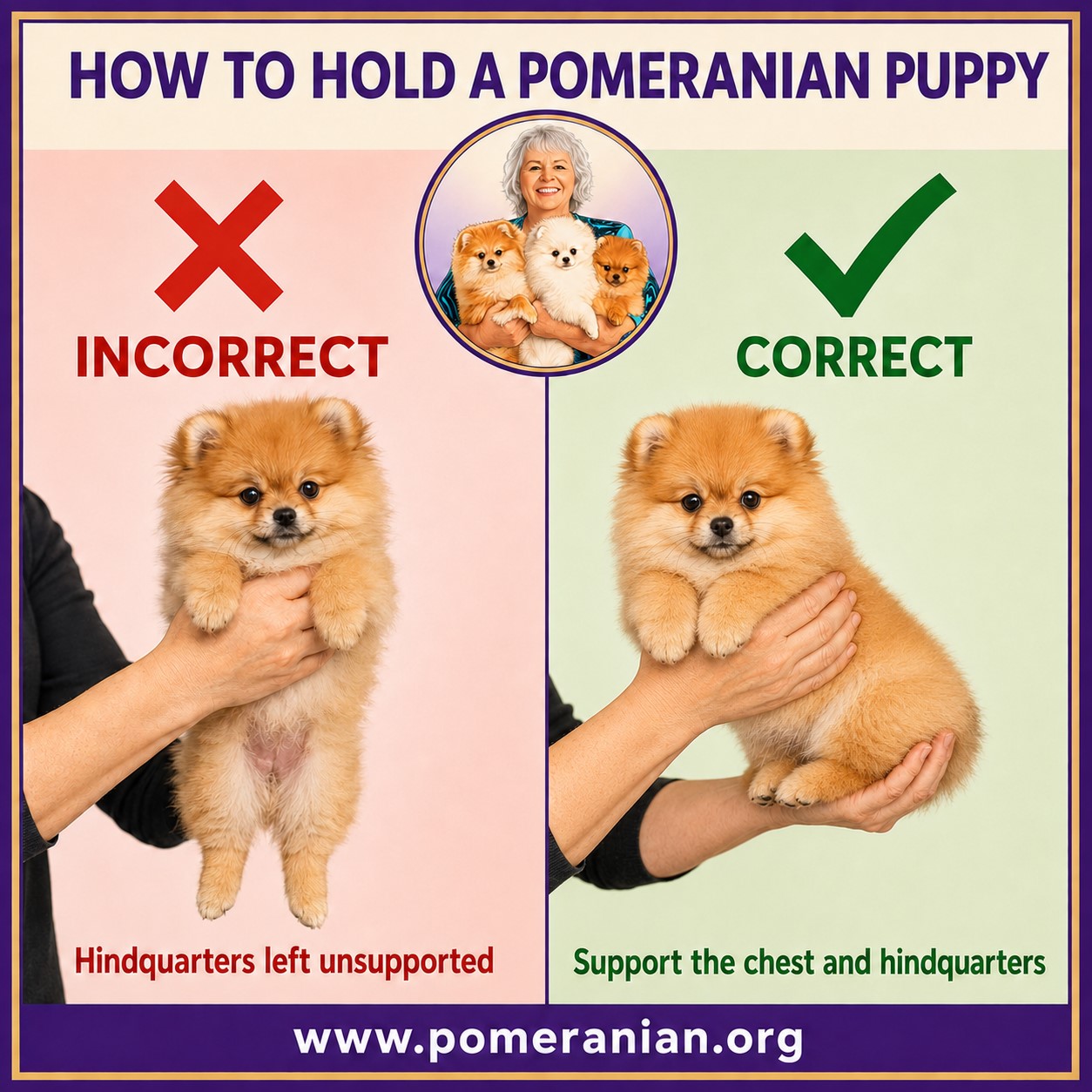
- Support the chest. Place one hand or forearm beneath the chest, just behind the front legs. Do not pull the front legs apart or place pressure on the throat.
- Support the hindquarters. Slide your other hand beneath the dog’s rear so the pelvis and back legs are fully supported.
- Lift smoothly. Stand slowly using your legs. Lift the chest and hindquarters together so the dog’s body remains level and secure.
- Bring the dog close. Hold your Pomeranian gently against your chest or side. Keeping the dog close reduces the risk of slipping or jumping from your arms.
Avoid lifting when your hands are full or while standing on an unstable surface. If your Pomeranian is wet, frightened or likely to wriggle, use extra care and ask another adult to assist if necessary.
How to Put a Pomeranian Down Safely
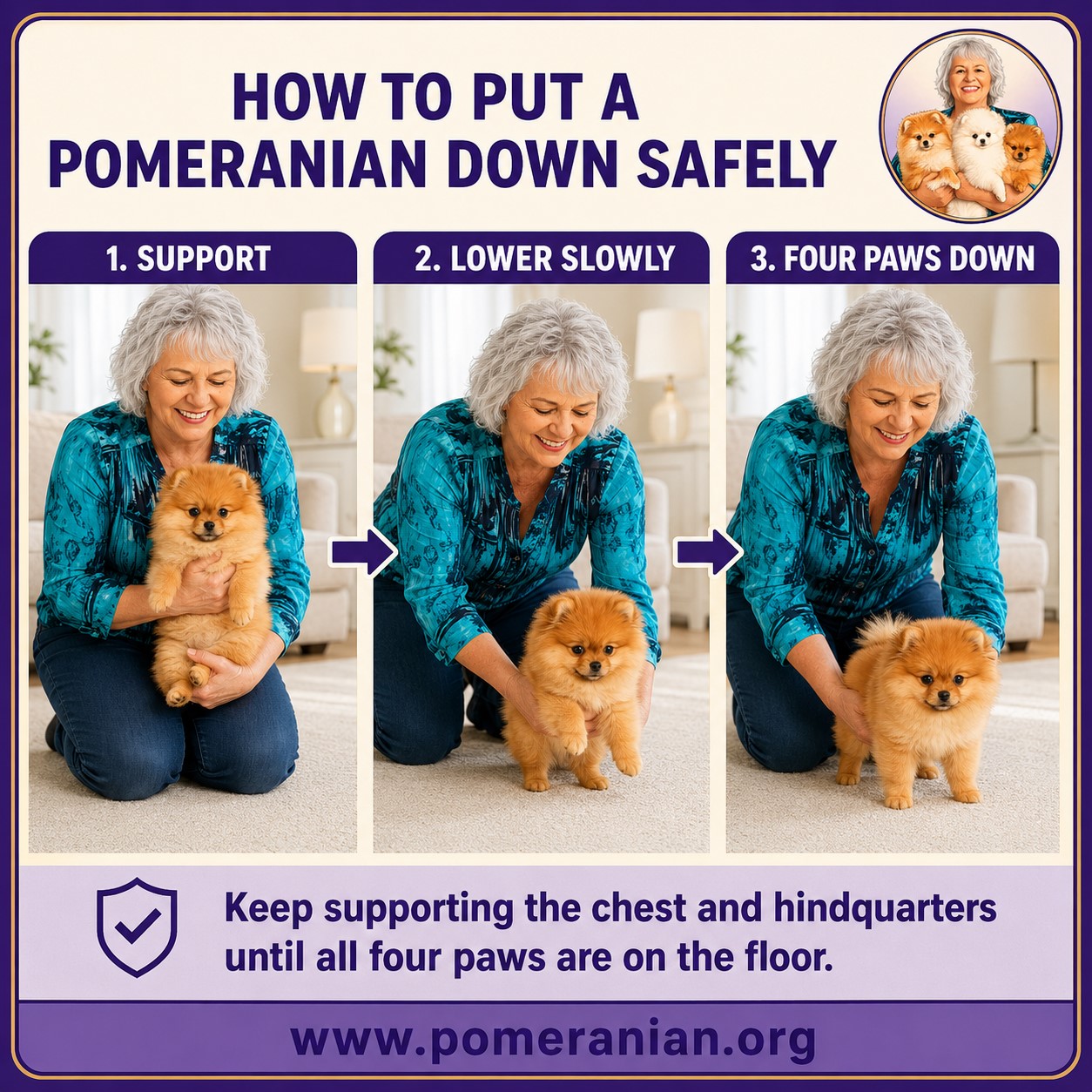
Lowering a Pomeranian safely is just as important as lifting one. Do not release your dog from your arms or allow it to jump down, even when you are close to the floor.
Continue supporting the chest and hindquarters as you bend your knees and lower the dog slowly. Keep your Pomeranian close to your body until all four paws are firmly on the floor.
Once the dog is balanced and standing securely, gently remove the hand supporting the hindquarters, followed by the hand around the chest.
Never place a Pomeranian on the edge of a chair, bed, grooming table or other raised surface where it may slip or jump. If using a grooming table, keep one hand on the dog and attach a correctly fitted grooming restraint before removing your support.
A consistent cue such as “down” can help your Pomeranian understand what is happening and remain calm while being returned to the floor.
Ways You Should Never Pick Up a Dog
Never lift a Pomeranian by any part of its body that cannot safely support its full weight. Incorrect handling can cause pain, frighten the dog and increase the risk of struggling or falling.
Never Pick Up a Dog by the Front Legs
Do not place your fingers beneath the front legs or lift a Pomeranian through the armpit area. This can force the elbows away from the chest and place unnecessary pressure on the shoulders and front legs.
When lifting correctly, keep the front elbows naturally close to the dog’s chest. Support the chest and ribcage with one hand or forearm while the other supports the hindquarters.
Never Pick Up a Dog by the Scruff
An owner should never imitate a mother dog by lifting a puppy by the loose skin at the back of the neck. A Pomeranian’s body weight should always be supported by your hands and arms.
Never Pick Up a Dog by the Collar
A collar cannot support a dog’s weight. Lifting a Pomeranian by its collar places dangerous pressure on the neck and trachea and may interfere with breathing.
Never Pick Up a Dog by the Tail
A Pomeranian’s tail is not a handle. Pulling or lifting by the tail may injure the bones, muscles and nerves.
Never Pick Up a Dog by the Coat
Do not grasp and lift a Pomeranian by its thick coat. This can pull painfully on the skin while leaving the body completely unsupported.
Never Allow the Hindquarters to Dangle
Supporting only the chest or front of the body leaves the spine, pelvis and back legs unsecured. The Pomeranian may become uncomfortable, struggle or fall.
Always support the chest and hindquarters together and hold the dog close to your body.
Final Thoughts on How to Pick Up and Hold a Pomeranian
Always support a Pomeranian’s chest and hindquarters when lifting, carrying or lowering the dog. Keep the front elbows naturally close to the chest, hold the body near your own and never allow the rear legs to dangle.
Use a familiar cue such as “up,” lift smoothly and return your Pomeranian to the floor with all four paws supported before releasing your hold.
Never lift a Pomeranian by the front legs, collar, scruff, tail or coat. Correct handling helps your dog feel safe and reduces the risk of pain, struggling, falls and injury.
Take particular care with puppies, senior Pomeranians and dogs that are pregnant, frightened, unwell or recovering from an injury. If lifting appears painful or your Pomeranian suddenly resists being handled, seek advice from your veterinarian.
Copyright Pomeranian.Org. All Rights Reserved.

References and Further Reading:
[1] Denise Leo “The Pomeranian Handbook”.
[2] Milo G. Denlinger “The Complete Pomeranian”.
[3] Kimbering Pomeranians “1891-1991”.
[4] E. Parker “The Popular Pomeranian”.
[5] Official Standard of the Pomeranian (AKC). American Kennel Club, 2011.
[6] Official English Kennel Club Pomeranian Breed Standard, 2017.