
DVM, University of Animal and Veterinary Sciences, 2019
MSc. (Hons.) Animal Breeding & Genetics, University of Agriculture Faisalabad, 2021
Teething is an important stage in every Pomeranian puppy’s development. During the first few months of life, 28 sharp baby teeth erupt and are gradually replaced by 42 permanent adult teeth. This process usually begins at around three weeks of age and continues until the puppy is approximately six or seven months old.
During teething, a Pomeranian puppy may chew more frequently, have tender gums or occasionally leave a small spot of blood on a toy. These signs are usually normal. However, Toy breeds are particularly prone to retained puppy teeth, especially the canine teeth.
Through many years of breeding Pomeranians, I have learned how important it is to check a puppy’s mouth regularly while the permanent teeth are erupting. Early detection of retained teeth or an abnormal bite allows the puppy to receive veterinary attention before crowding, pain or damage to the permanent teeth develops.
This Pomeranian teething guide explains the normal timeline, signs to watch for, safe ways to ease discomfort and when your puppy should be examined by a veterinarian.
Pomeranian Teething: Quick Answer
Pomeranian puppies begin developing their baby teeth at approximately three weeks of age. Their permanent teeth usually start replacing the puppy teeth at around four months, and most Pomeranians finish teething by six or seven months. Very small puppies may take a little longer.
Because retained puppy teeth are common in Toy breeds, check your Pomeranian’s mouth weekly during teething. If an adult tooth appears beside a baby tooth, arrange a veterinary examination promptly rather than waiting to see whether the puppy tooth eventually falls out.
Pomeranian Puppy Teething Timeline
The following Pomeranian puppy teething timeline is a general guide. Individual puppies may develop slightly earlier or later, particularly very small Pomeranians.
| Pomeranian Puppy Age | What Happens During Teething |
|---|---|
| Birth | Pomeranian puppies are born without any visible teeth. |
| Around 3 weeks | The first deciduous, or baby, teeth begin erupting through the gums. |
| Around 6 weeks | Most puppies have their complete set of 28 baby teeth: incisors, canines and premolars. Puppies do not have baby molars. |
| 3½–4 months | The baby incisors begin falling out as the permanent incisors start to erupt. |
| 4–6 months | Permanent canines and premolars replace the baby teeth, while the adult molars erupt for the first time. Chewing often increases during this stage. |
| 6–7 months | Most Pomeranians should have their 42 permanent teeth. Check carefully for baby teeth remaining beside adult teeth. |
| Up to 8 months | Very small Pomeranian puppies may finish developing slightly later. Any retained teeth, missing adult teeth or concerns about the bite should be examined by a veterinarian. |
Important: A Pomeranian puppy with a permanent tooth erupting beside a baby tooth should be examined promptly by a veterinarian. Do not wait until the end of the teething period to seek veterinary advice.
How Many Teeth Does a Pomeranian Have?
A Pomeranian develops two sets of teeth during its lifetime: a temporary set of deciduous teeth followed by a permanent set of adult teeth.
How Many Baby Teeth Does a Pomeranian Puppy Have?
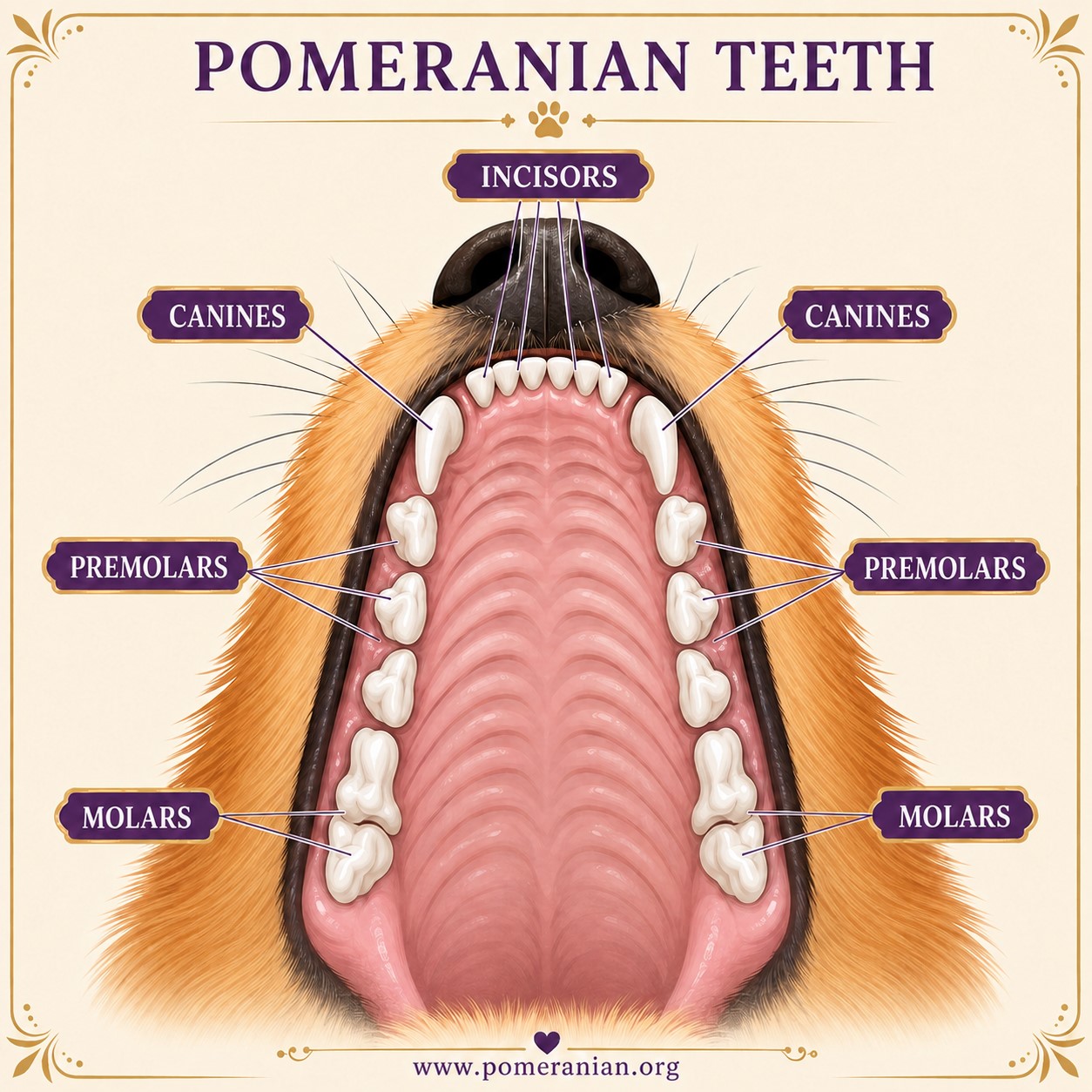
A Pomeranian puppy normally has 28 deciduous teeth, commonly called baby, milk or puppy teeth. These consist of:
- 12 incisors
- 4 canine teeth
- 12 premolars
Puppies do not have molars. The baby teeth are extremely sharp and help puppies begin eating solid food as they are gradually weaned.
How Many Adult Teeth Does a Pomeranian Have?
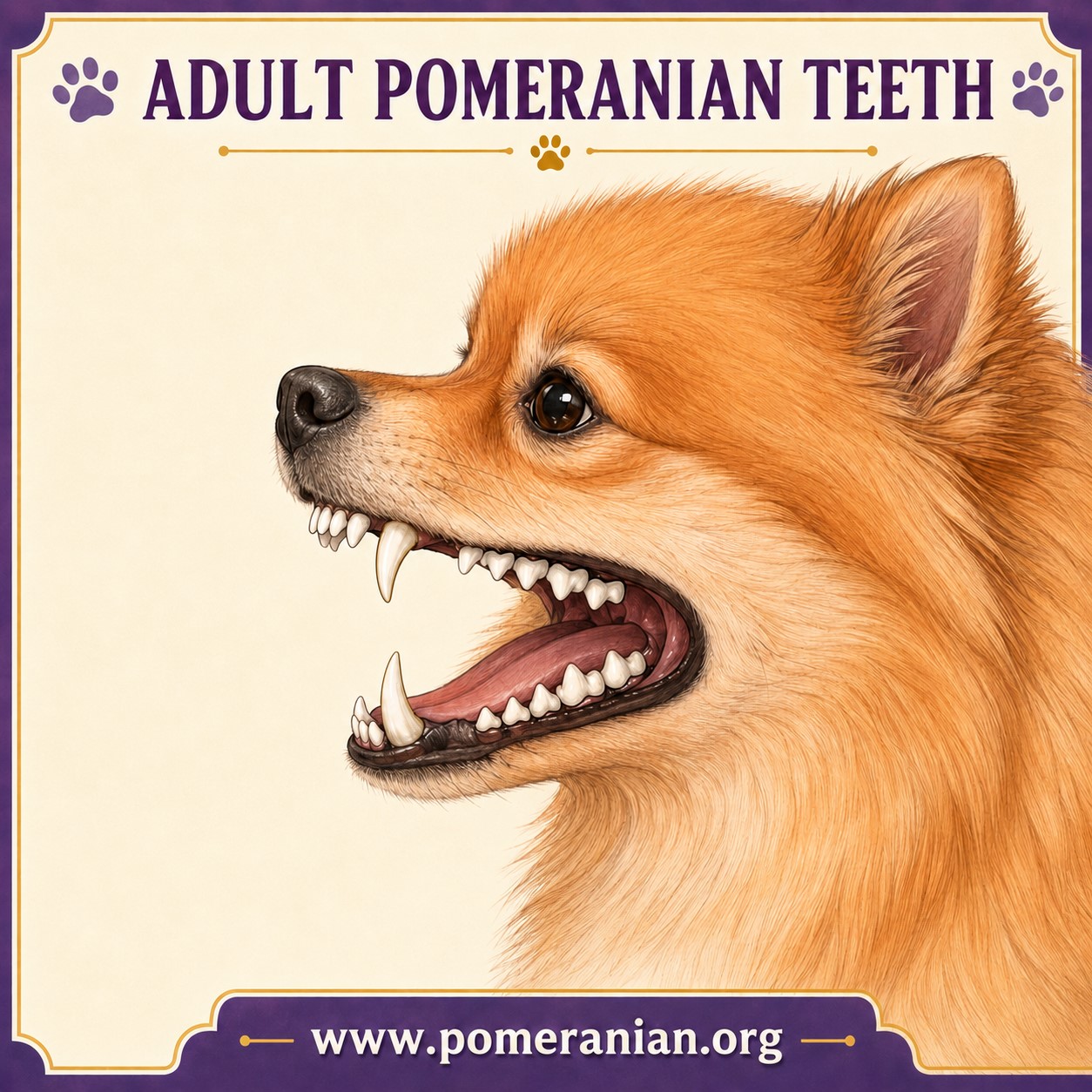
An adult Pomeranian should have 42 permanent teeth. These consist of:
- 12 incisors
- 4 canine teeth
- 16 premolars
- 10 molars
The permanent incisors, canines and premolars replace the corresponding baby teeth. The molars erupt as new teeth because there are no deciduous molars to replace.
Pomeranians have the same normal number of adult teeth as much larger dog breeds, but those teeth must fit into a very small mouth. This limited space can contribute to crowding, retained puppy teeth and an increased accumulation of plaque between closely positioned teeth.
Check your Pomeranian puppy’s mouth regularly while the permanent teeth are erupting. If a tooth appears to be missing, growing in an abnormal position or erupting beside a baby tooth, arrange an examination with your veterinarian.
Pomeranian Teething Symptoms
Pomeranian teething symptoms usually become most noticeable when the permanent teeth begin erupting at around three and a half to four months of age. Some puppies experience very little discomfort, while others become restless and chew almost everything they can reach.
Common Pomeranian puppy teething symptoms include:
- Increased chewing and mouthing
- Tender or mildly swollen gums
- Mild drooling
- Temporary irritability
- Eating more slowly than usual
- Small spots of blood on a chew toy
- A temporary change in breath odor
- Baby teeth falling out
- Occasionally pawing at the mouth
You may find a tiny puppy tooth on the floor, in your Pomeranian’s bedding or attached to a toy. More often, the puppy swallows the shed tooth while eating. This is common and generally causes no harm.
Teething may make the mouth tender, but it should not cause severe pain, heavy bleeding or prolonged difficulty eating. Facial swelling, a broken tooth, a very unpleasant odor, significant bleeding or an inability to eat requires veterinary attention.
Continue checking your Pomeranian puppy’s mouth weekly. If a permanent tooth is erupting beside a baby tooth, do not assume the puppy tooth will eventually fall out. Arrange an examination with your veterinarian.
When Do Pomeranians Start Losing Their Baby Teeth?
Pomeranians generally start losing their baby teeth at around three and a half to four months of age. The permanent teeth developing beneath the gums place pressure on the roots of the deciduous teeth. These roots gradually dissolve, allowing the baby teeth to loosen and fall out.
The incisors at the front of the mouth are usually lost first. The canine teeth and premolars are replaced during the following months, while the permanent molars erupt for the first time because puppies do not have baby molars.
Owners rarely find every lost puppy tooth. Many are swallowed harmlessly while the puppy is eating, chewing or playing. A small spot of blood on a toy can also be normal when a loose tooth falls out.
During this mixed-dentition stage, check your Pomeranian’s mouth weekly. Each baby tooth should fall out as its permanent replacement erupts. If the adult tooth appears while the corresponding puppy tooth remains firmly in place, the puppy may have a retained deciduous tooth and should be examined by a veterinarian.
When Do Pomeranians Stop Teething?
Most Pomeranians finish teething by approximately six or seven months of age. By this stage, the 28 baby teeth should have fallen out and the 42 permanent adult teeth should have erupted.
Very small Pomeranian puppies may develop a little more slowly, with the final adult teeth appearing closer to eight months. However, owners should not simply wait until eight months if a permanent tooth has already erupted beside a baby tooth. The puppy should be examined promptly by a veterinarian.
A Pomeranian may continue chewing after teething has finished. Chewing is a normal canine behavior and helps puppies explore their surroundings, relieve boredom and use their developing jaws. Continued chewing does not necessarily mean the puppy is still teething.
By the end of the teething period, ask your veterinarian to check that:
- All expected adult teeth have erupted
- No baby teeth remain
- The permanent teeth are correctly positioned
- The bite is developing normally
- No teeth are contacting or injuring the gums or roof of the mouth
Early identification of a retained tooth or abnormal bite can help prevent pain, crowding and future dental disease.
Pomeranian Retained Puppy Teeth
Retained puppy teeth are common in Pomeranians and other Toy breeds. The correct veterinary term is a persistent deciduous tooth, although retained puppy tooth is the phrase most owners recognize.
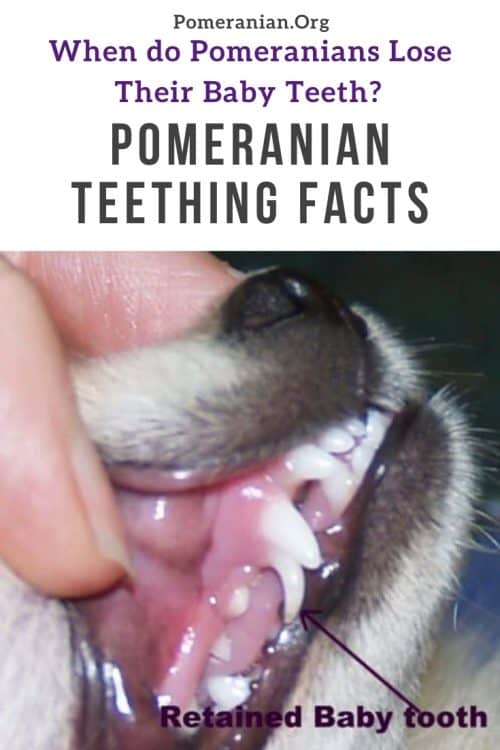
A puppy tooth is considered retained when the corresponding permanent tooth erupts but the baby tooth remains in place. Two teeth are then occupying an area intended for one tooth.
The upper canine teeth are most frequently retained, followed by the lower canines and incisors. However, any deciduous tooth can remain after its permanent replacement begins to appear.
How to Recognize Retained Pomeranian Puppy Teeth
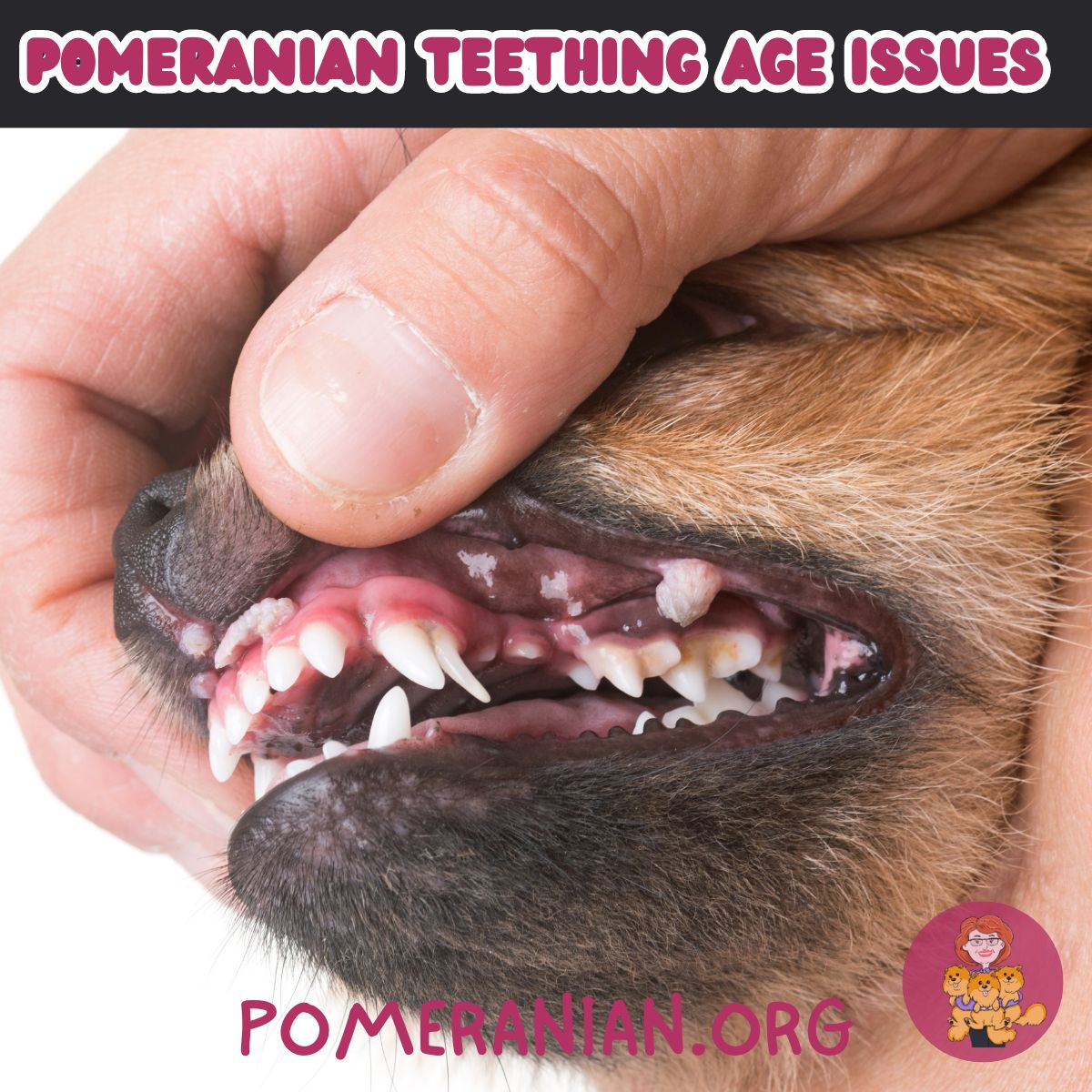
The most obvious sign is an adult tooth growing immediately beside, behind or in front of a smaller baby tooth. This can create the appearance of two rows of teeth and is often described by owners as “Pomeranian double teeth.”
Other signs may include:
- Crowded or overlapping teeth
- A permanent tooth growing at an unusual angle
- Food becoming trapped between two teeth
- Red or inflamed gums
- Unpleasant breath
- Difficulty chewing
- A tooth pressing into the gum or roof of the mouth
- An abnormal bite
Retained canine teeth are generally easy to see, but teeth farther back in the mouth can be more difficult to examine. Regular veterinary checks are important throughout the teething period.
Why Retained Pomeranian Teeth Are a Problem
A retained puppy tooth can force the permanent tooth to erupt in an abnormal position. Food, hair and debris may become trapped within the narrow space between the two teeth, encouraging plaque, tartar, gum inflammation and periodontal disease.
Incorrectly positioned teeth may also rub against other teeth or injure the gums, tongue or roof of the mouth. In some puppies, the abnormal position can interfere with the developing bite and normal jaw growth.
When Should Retained Pomeranian Puppy Teeth Be Removed?
If a permanent tooth has erupted while its baby tooth remains in place, arrange a veterinary examination promptly. Do not pull or attempt to loosen the tooth at home.
The roots of Pomeranian puppy canine teeth can be surprisingly long and delicate. Improper removal may break the root, damage the developing permanent tooth or cause considerable pain.
Your veterinarian will determine whether extraction is required and the safest time to perform it. Do not automatically wait until your puppy is spayed or neutered, as delaying treatment may allow the permanent tooth to become incorrectly positioned.
What Are Pomeranian Double Teeth?
“Pomeranian double teeth” is an informal term owners use when a puppy appears to have two teeth growing in the same position. In most cases, the puppy tooth has remained in place while the permanent tooth has erupted beside it.
The correct veterinary term is a persistent deciduous tooth, also commonly called a retained puppy tooth. This differs from a supernumerary tooth, which is a genuinely additional tooth.
A Pomeranian may appear to have:
- A smaller puppy canine beside a larger permanent canine
- Two rows of incisors
- Crowded or overlapping teeth
- A permanent tooth erupting inside or outside the normal dental arch
Double teeth should not be dismissed as a harmless cosmetic issue. The narrow space between the teeth can trap food and plaque, while the retained tooth may force the permanent tooth into an abnormal position.
If you notice two teeth occupying the same position, ask your veterinarian to examine your puppy’s mouth. Veterinary dental X-rays may sometimes be needed to identify the roots and determine the safest treatment.
Never attempt to pull a retained puppy tooth at home, even if it appears loose. Pomeranian baby teeth can have long, fragile roots that may break below the gumline.
When to Call a Veterinarian About Pomeranian Teething
Routine teething can cause mild gum tenderness, increased chewing and an occasional small spot of blood on a toy. However, significant pain or difficulty eating should never be dismissed as normal teething.
Arrange a veterinary examination if your Pomeranian puppy has:
- A permanent tooth growing beside a baby tooth
- A tooth erupting at an unusual angle
- A tooth pressing into the gum or roof of the mouth
- Crowded, overlapping or double teeth
- A noticeably abnormal bite
- A broken, cracked or discolored tooth
- Red, swollen or bleeding gums
- Facial swelling
- A strong, unpleasant mouth odor
- Difficulty picking up, chewing or swallowing food
- Persistent pawing at the mouth
- Refusal to eat
- A missing adult tooth after the expected eruption period
A permanent tooth erupting beside a retained puppy tooth requires prompt attention. Early treatment may allow the permanent tooth to move into a more normal position and can help prevent pain, crowding and future dental disease.
Severe bleeding, sudden facial swelling, difficulty breathing or an inability to close the mouth requires urgent veterinary care.
Your veterinarian should also examine your Pomeranian’s teeth and bite during routine puppy vaccinations and health checks. By approximately six or seven months, confirm that all expected adult teeth have erupted and no puppy teeth remain.
How to Help a Teething Pomeranian Puppy
A teething Pomeranian needs safe opportunities to chew. Chewing helps relieve pressure on tender gums and redirects the puppy away from furniture, shoes, electrical cords and hands.
Provide several appropriately sized puppy toys and rotate them regularly to maintain interest. Toys should be large enough that they cannot be swallowed but small enough for a Pomeranian puppy to hold comfortably.
Suitable options may include:
- Flexible rubber puppy toys
- Soft, textured teething toys
- Puppy-safe toys that can be chilled in the refrigerator
- Supervised food-dispensing toys suitable for a Toy breed
- A clean, damp washcloth that has been chilled but not frozen solid
All chewing must be supervised. Examine toys regularly and discard anything that has become damaged, cracked or small enough to swallow.
How to Stop a Teething Pomeranian Biting
Mouthing and chewing are normal during puppyhood, but a puppy should not learn that hands, feet or clothing are toys.
When your Pomeranian bites, calmly stop the interaction and redirect the puppy to an appropriate chew toy. Praise the puppy for chewing the correct object. Keep shoes, children’s toys, electrical cords and other tempting items out of reach.
Avoid shouting, hitting or roughly pulling your hands away, as this can increase excitement or frighten the puppy. Consistent redirection and reward-based training are more effective.
What Not to Give a Teething Pomeranian
Avoid anything so hard that it could crack a puppy or permanent tooth, including:
- Ice cubes
- Raw or cooked bones
- Antlers
- Animal hooves
- Very hard nylon chews
- Stones or hard plastic objects
- Toys that break into small pieces
- Chews that are too large or hard for a Toy breed puppy
Never give a Pomeranian puppy human pain medication or apply human teething gel. Some human medications and oral products are toxic to dogs. If your puppy appears to be in significant pain, contact your veterinarian for safe, individualized advice.
Safe Pomeranian Puppy Teething Toys
The best Pomeranian puppy teething toys are flexible, appropriately sized and easy for a tiny puppy to hold. A toy should provide gentle resistance without being hard enough to fracture a tooth.
As a simple guide, avoid a chew that is so hard that you cannot make a slight impression in it with your thumbnail. If the object does not bend or give under pressure, it may be too hard for a puppy’s teeth.
Choose teething toys that are:
- Designed specifically for puppies
- Suitable for a Toy breed
- Made from flexible, non-toxic material
- Too large to swallow
- Free from loose parts
- Easy to clean
- Strong enough to withstand supervised chewing
Chilling a puppy-safe rubber or textured toy in the refrigerator may provide additional relief for tender gums. Do not freeze toys until they become solid and hard.
Inspect every toy before giving it to your puppy. Remove it immediately if it develops cracks, sharp edges, missing pieces or damage that could create a choking or intestinal blockage risk.
No puppy toy is completely indestructible or guaranteed to be safe. Supervise your Pomeranian while chewing and ask your veterinarian to recommend suitable products if you are uncertain. Always follow the manufacturer’s age, size and supervision instructions.
When to Start Brushing a Pomeranian Puppy’s Teeth
Begin teaching your Pomeranian puppy to accept mouth handling as soon as the puppy settles into your home. Early training makes it much easier to provide effective dental care throughout the dog’s life.
Start by gently lifting the lips and briefly touching the gums and teeth with a clean finger. Keep each session short, calm and positive. Reward the puppy immediately afterward.
Once your puppy is comfortable having its mouth handled, introduce a small, soft toothbrush designed for puppies or Toy breeds. Add a small amount of dog-specific toothpaste and allow the puppy to investigate its taste before gradually beginning to brush.
Never use human toothpaste. Many human dental products contain ingredients that are unsuitable or potentially dangerous for dogs, and toothpaste is swallowed rather than rinsed from a dog’s mouth.
During active teething, your Pomeranian’s gums may be tender. Brush gently and avoid forcing the puppy if the mouth appears particularly sore. The immediate goal is to establish a positive routine rather than complete a perfect brushing session.
As the permanent teeth erupt and the gums become more comfortable, work toward brushing every day. Pay particular attention to the outside surfaces of the teeth and along the gumline, where plaque commonly accumulates.
Daily tooth brushing, regular veterinary dental examinations and monitoring retained puppy teeth provide the best foundation for your Pomeranian’s long-term dental health. Any bleeding, swelling, significant discomfort or abnormal tooth position should be discussed with your veterinarian.
Pomeranian Teething Frequently Asked Questions
Find quick answers to common questions about Pomeranian puppy teeth, teething symptoms and retained baby teeth.
⚠ Veterinary Disclaimer
The information provided in this article is intended for educational and general informational purposes only and is not a substitute for professional veterinary advice, diagnosis, or treatment.
Always seek the advice of your veterinarian or another qualified animal health professional with any questions you may have regarding your dog’s health or medical condition.
Never ignore professional veterinary advice or delay seeking treatment because of something you have read on this or any other website.
If your Pomeranian is showing signs of illness, discomfort, skin irritation, or an adverse reaction to medication or treatment, contact your veterinarian promptly.
Copyright Pomeranian.org. All Rights Reserved.
📚 References & Further Reading
- [1] AKC Pomeranian Breed Standard (2011)
- [2] English Kennel Club Breed Standard
- [3] The Pomeranian Handbook – Denise Leo
- [4] Denlinger, The Complete Pomeranian
- [5] Kimbering, 1891–1991
- [6] Taplin, The Sportsman’s Cabinet
- [7] Parker, The Popular Pomeranian
- [8] Ives, Show Pomeranians
Safe Puppy Teething Bones and Toys

- Delicious Chicken Flavor – Teething puppy toys made with enticing flavor throughout
- Trusted Chew Toys with Heart & Purpose – Every one of these small dog chew toys features a unique shape, individual texture, and gotta-have-it flavor created with purpose and love to give your dog what they need, when they need it
- Designed in Materials for Every Stage – These puppy chew toys for teething start with the soft material for teething puppies, then graduate to the tougher material for puppies with adult teeth
- Teaches Healthy Chewing Habits – This puppy teething toy set includes two puppy chew toys and an edible chew treat perfect for every developmental phase
- Highly Digestible Chew Treat – Long-lasting bacon-flavored dog chew treat contains no artificial colors, flavors, or preservatives


- Dog Dental Chew Toy With Massaging Textures – Ridges and nubs on this puppy teething toy soothe sore gums while helping clean teeth to support oral care and dental hygiene
- Teaches Healthy Chewing Habits- This Nylabone puppy chew is specially made in soft material for teething puppies with gentle chewing styles (not intended for powerful puppies or puppies with adult teeth)
- Freezer-Friendly Teething Chew – Chill this freezable teething puppy toy for extra-soothing teething relief
- Puppy Enrichment Toys Made in the USA – Our puppy chew toys for teething pain relief are proudly made in New Jersey
- Trusted Durable Chew Toys With Heart & Purpose – Our dog chew toys feature unique shapes, engaging textures, and gotta-have-it flavors. Created with purpose and love to give your dog what they need, when they need it!

- Gentle Teething Relief – Specially textured surface soothes sore gums and emerging teeth in puppies during crucial development phases
- Essential Puppy Supplies – Core addition to puppy needs and necessities, addressing teething discomfort that standard dog supplies often overlook
- Cognitive Development Support – Functions as one of the most effective cognitive toys for puppies, promoting mental stimulation during chewing sessions
- Safe Alternative Design – Unlike harder chew sticks for puppies or dog toys chewers designed for adult teeth, this gentle chew toy protects developing mouths
- Perfect Gift Solution – Ideal centerpiece for any puppy gift basket during cold seasons

- Soothing Teething Relief & Entertainment: Specially designed for puppies 3 months and older, these delicious chicken-flavored rings provide gentle relief for teething discomfort. They keep your pup entertained and engaged, effectively reducing destructive chewing and curbing ankle biting.
- Fortified with Calcium & DHA Omega-3: Formulated to give your puppy the best start in life. Our teething rings are enriched with essential calcium and DHA Omega-3 to support strong teeth and bones, healthy brain development, and overall growth.
- Hygienic, Mess-Free & Toy Alternative: A natural, safe alternative to traditional plastic chew toys and deterrent sprays. Unlike plastic toys that need constant washing, these rings leave no messy or sticky residue on carpets, furniture, or paws.
- Made in the USA & Fully Digestible: Crafted in the USA since 1998 to ensure the highest quality and safety. Made with natural ingredients, these teething treats are fully digestible, wholesome, and a nourishing experience you can trust.
- Promotes Dental Health & Coordination: The unique textured surface helps reduce plaque and tartar buildup while satisfying your puppy’s natural instinct to chew. Plus, the ring shape encourages paw control, helping puppies develop better coordination training.

- Puppy Treats Made in the USA – We proudly craft all Healthy Edibles dog chew treats in the United States
- Supports Growing Puppies – All natural dog treats are highly digestible, and Turkey & Apple is specially formulated with DHA to help support puppies’ brain & eye development
- Edible Dog Chews Made With All-Natural Ingredients – These healthy dog treats are made with no artificial preservatives, colors, or flavors
- Great for Puppy Training – These long-lasting dog chews can be rewarding training treats to encourage positive chewing habits
- For X-Small Puppies – These petite sized puppy chew treats are intended for young dogs up to 15 pounds

- MASSAGING NUBS – Textures soothe sore gums while helping clean teeth
- TEACHES HEALTHY CHEWING HABITS – Puppy teething toy is specially made in soft material for teething pups with gentle chewing styles (not intended for powerful puppies or puppies with adult teeth)
- FREEZER-FRIENDLY – Chill this freezable teething toy for extra-soothing teething relief!
- MADE IN THE USA – This chew toy for puppies is proudly made in New Jersey
- TRUSTED CHEW TOYS WITH HEART & PURPOSE – Every chew toy’s unique shape, individual texture, and gotta-have-it flavor is created with purpose and love to give your dog what they need, when they need it!

- Enriched with calcium and DHA Omega-3: Supports strong teeth and bones, healthy brain development, and overall growth—giving your puppy the foundation for a happy, thriving life.
- Dog treats with teething relief: The chewing helps soothe sore gums, keeping puppies calm and entertained, and promote dental health with their textured design—offering a safe, satisfying alternative to destructive chewing.
- Made in the USA with natural, digestible ingredients since 1998: N-Bone treats support your pet’s health with high-quality nutrition—more than just a treat, they’re a wholesome, nourishing experience you can trust.
- A natural alternative to sprays and plastic puppy toys: Easy to chew rings contain no plastic or rawhide, leave no messy residue on carpets or furniture, and a ring shape for better paw control coordination training when compared to dog bones.
- For new puppy owners and dog parents of all breeds: Puppy essentials in different sizes and flavors, the puppy rings are designed for puppies 3 months and older, whereas the adult rings are more durable for seniors.

- PROMOTES DOG DENTAL HEALTH – Ridges and nubs help prevent plaque and tartar buildup as puppies chew
- PROMOTES POSITIVE CHEWING HABITS – Satisfies puppies natural instinct to chew and discourages destructive chewing
- MADE IN THE USA – Dog chew toy is proudly made in the United States
- FOR EXTRA-SMALL DOGS – Size Petite chew toy is intended for dogs up to 15 pounds
- SAVORY FLAVOR – Dog chew toy features an irresistible taste throughout that dogs love

- Comfort Your Teething Puppy: This Dental Chew is designed to soothe and aid in teething
- Proudly Made in the USA: Enjoy a delicious bacon flavor that’s sure to entice your pup
- Gentle on Little Teeth: The soft design ensures this chew toy is kind to your puppy’s emerging teeth
- Satisfy Your Puppy’s Chewing Needs: This toy helps keep your little one engaged and happy

- EXTRA SOOTHING TEETHING RELIEF – Soak and chill this freezable teething toy to soothe sore gums
- TEACHES HEALTHY CHEWING HABITS – Chew toy for puppies is thoughtfully designed to encourage positive behavior that’ll last a lifetime
- SUPPORTS DOG DENTAL HEALTH – Massaging bristles help clean teeth
- TRUSTED CHEW TOYS WITH HEART & PURPOSE – Every chew toy’s unique shape, individual texture, and gotta-have-it flavor is created with purpose and love to give your dog what they need, when they need it!
- ALLERGEN-FREE PEANUT BUTTER FLAVOR – Made with enticing flavor infused throughout