
Watching a Pomeranian puppy develop from a tiny newborn into a beautiful adult dog is one of the most rewarding experiences for any owner. Understanding the different stages of puppy development can help you provide the best possible care while ensuring your puppy grows into a happy, healthy, and well-adjusted companion.
My name is Denise Leo, and I have been breeding, exhibiting, and studying Pomeranians for more than 50 years. During that time, I have bred or owned over 100 Champion Pomeranians and have had the privilege of watching hundreds of puppies progress through the various stages of growth and development. I am also an ANKC Pomeranian Specialist Breed Judge, giving me a unique perspective on how Pomeranian puppies mature both physically and mentally.
While every puppy develops at its own pace, Pomeranian puppy growth follows a surprisingly predictable pattern. From the helpless newborn stage through weaning, socialization, teething, adolescence, and finally adulthood, each phase plays an important role in shaping your puppy’s future health, temperament, and appearance.
In this guide, you’ll learn what to expect during each stage of development, important milestones to watch for, and how you can support your Pomeranian puppy every step of the way.
Although Pomeranian growth stages are generally predictable, every puppy is an individual and may reach milestones slightly earlier or later than others. Genetics, nutrition, environment, and overall health all play a role in development.
Like human babies, Pomeranian puppies progress through a series of developmental stages. However, there is no universally agreed age at which every milestone occurs, and puppies within the same litter may develop at slightly different rates.
As a toy breed, the Pomeranian matures much faster than many larger breeds. While giant breeds may continue growing for up to two years, most Pomeranians reach their adult height and much of their physical maturity within their first year of life.
It is also important to remember that the old belief that one dog year equals seven human years is inaccurate. Small breeds mature much earlier than large breeds, and female Pomeranians often experience their first season at just six to seven months of age.
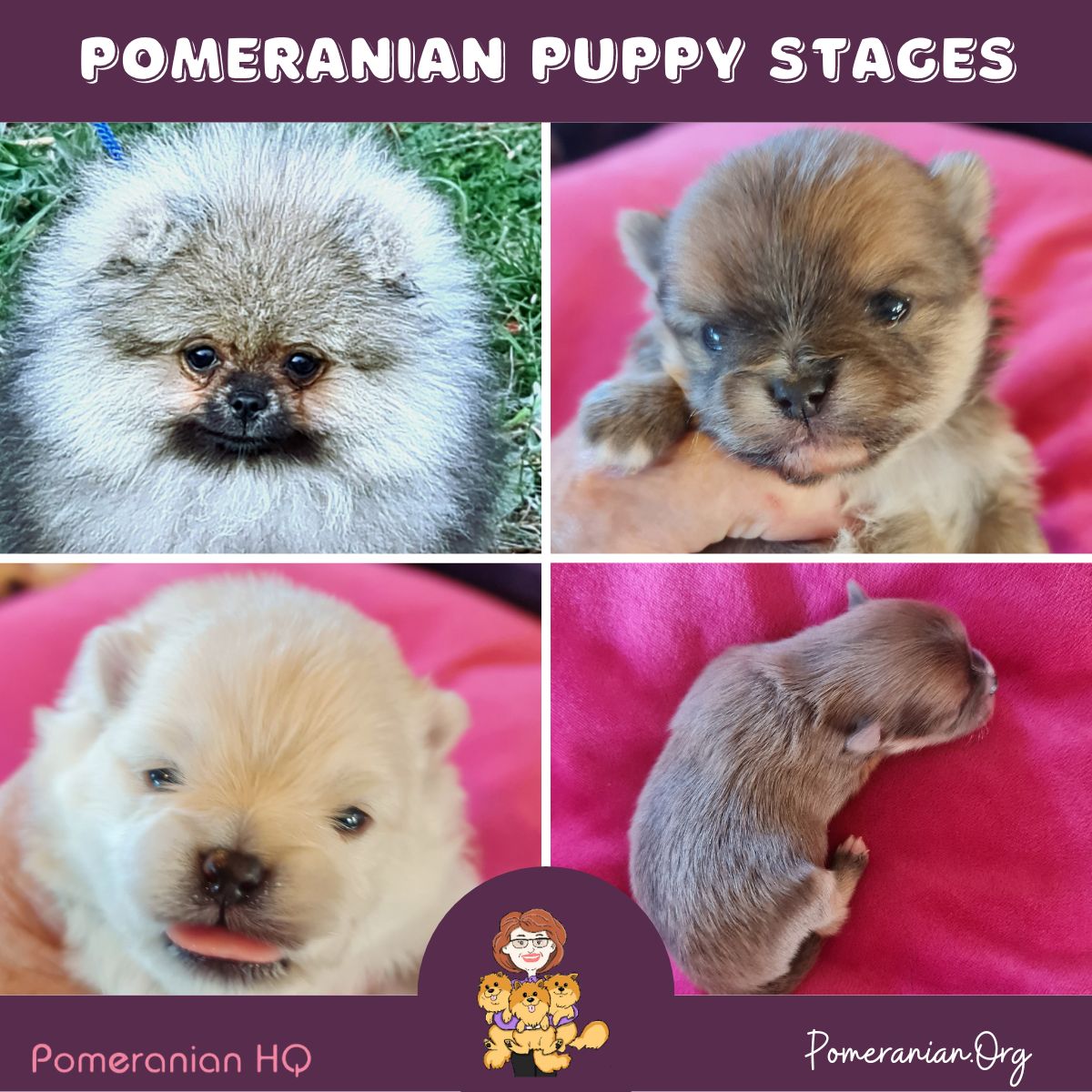
Puppy Development Stages Month by Month
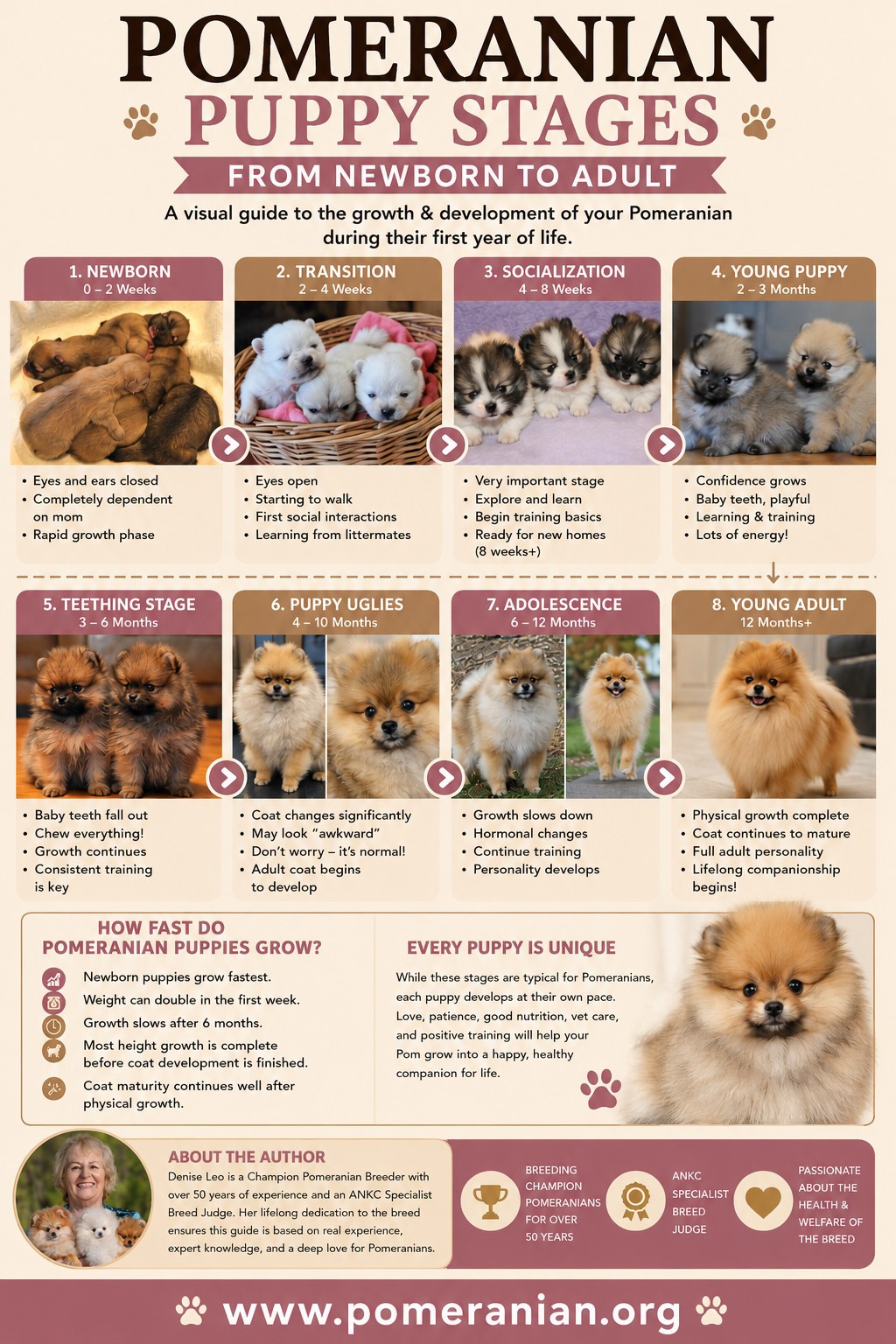
There are Seven Acknowledged Pomeranian Growth Stages:
- Stage One = 0 – 3 Weeks.
- Stage Two = 3 – 7 Weeks.
- Stage Three = 7 – 12 Weeks.
- Stage Four = 12 – 17 weeks.
- Stage Five = 17 – 40 Weeks.
- Stage Six = 40 – 52 Weeks.
- Stage Seven = 1 year and older.
Pomeranian Puppy Development: Week by Week
Puppy Development – 1 – 2 weeks
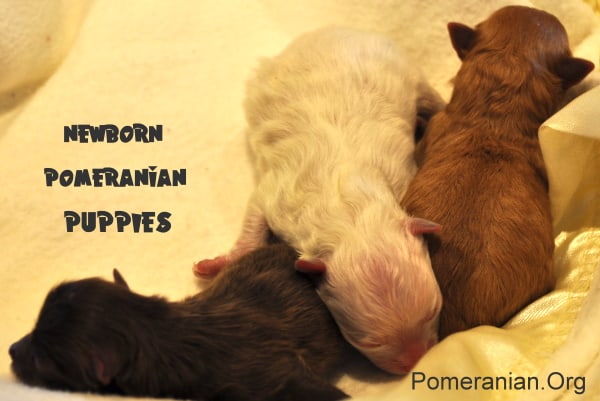
The Neonatal Period
Puppy Milestones:
- Touch, taste, and smell are all working. No hearing or sight.
- Recognizes pain.
- Sleeps and eats most of the time.
- Can’t regulate their own body temperature.
- Can’t eliminate on their own. Needs the mother to initiate defecation and urination.
Puppy Needs:
- Dependent on mother for food and elimination.
- If the canine mother is unavailable, human interaction is necessary to provide warmth, food, and assistance with elimination.
- Dependent on the breeder for a warm environment.
- First worming at the end of this stage.
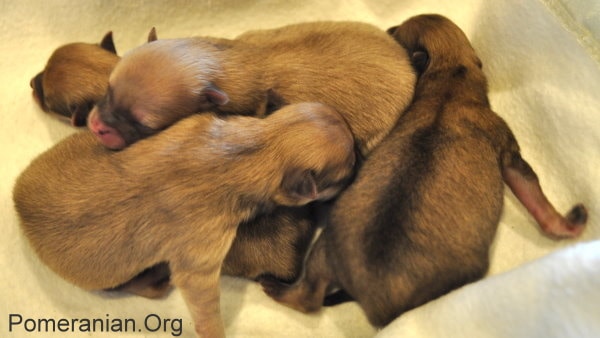
Stages of Puppy Growth – 2 – 3 Weeks
The Transitional Stage
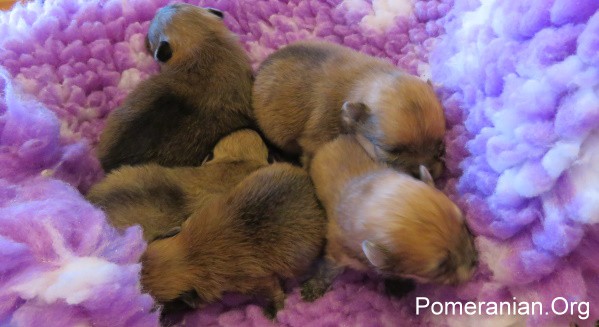
Milestones:
- Eyes and ears open so the puppy can hear and see what’s happening.
- May be able to eat solid food by the end of this stage.
- The first significant learning time happens.
- First few steps.
Puppy Needs:
- Still needs to be warm.
- The start of interactions with the mother, other littermates, and people.
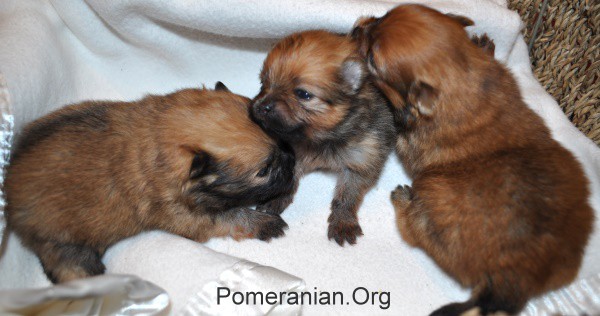
Puppy’s Development 3 – 4 Weeks
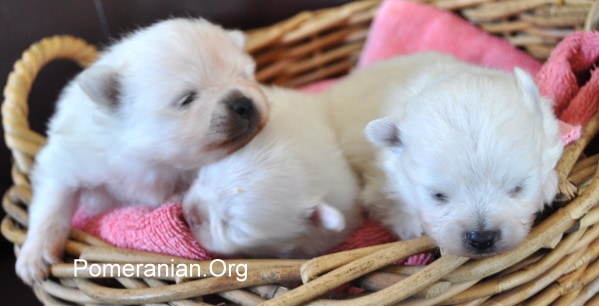
Puppy Milestones:
- Puppies start knowing that dogs and humans aren’t the same.
- Mother dog teaches puppy canine manners.
- Play fighting may happen with others in the litter.
- Puppies begin eating solid foods but continue to nurse.
- Starts to eliminate without assistance.
- Puppy is more stable when standing.
Puppy Needs:
- Introduced to loud noises and other sounds within the environment.
- Introduced to different textures and allowed to walk on various floor surfaces.
- Second worming treatment after this step.
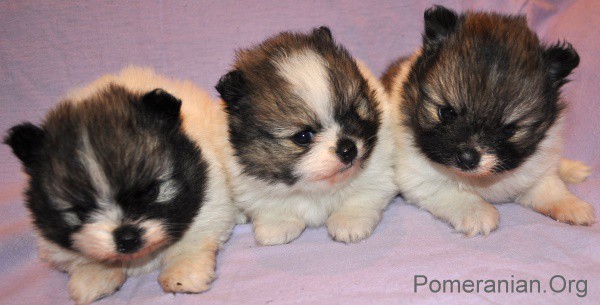
Pomeranian Puppy Stages 4 – 5 Weeks
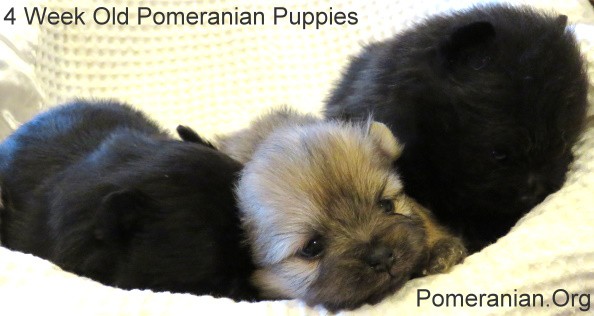
Puppy Milestones:
- Teeth may start appearing.
- Curiosity about everything is a big thing at this stage.
- Plays with other puppies in the litter.
- Puppies each take turns being the dominant ones.
- Weaning is in progress.
Puppy Needs:
- Needs to have plenty of new experiences.
- Puppies need time alone to overcome separation anxiety.
- Needs to be around people more than ever.
- They need excellent-quality puppy food because they nurse less frequently.
Pomeranian Growth Stages 5 – 7 Weeks
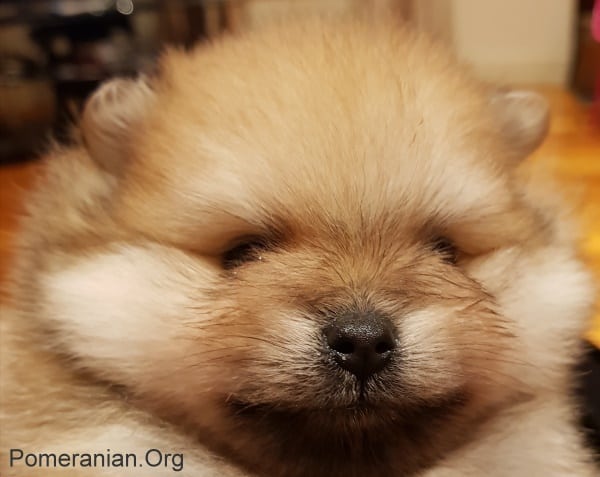
Puppy Milestones:
- Weaning begins.
- May get the first set of shots.
- Very curious and may venture away from litter mates and mother at times.
- Begins to understand boundaries and impulse control.
- Mother will spend more time away from the puppies.
Puppy Needs:
- Good time for their first car ride and first bath.
- Not ready to leave litter mates and mother just yet.
- An important socialization period, human interactions, and a variety of experiences.
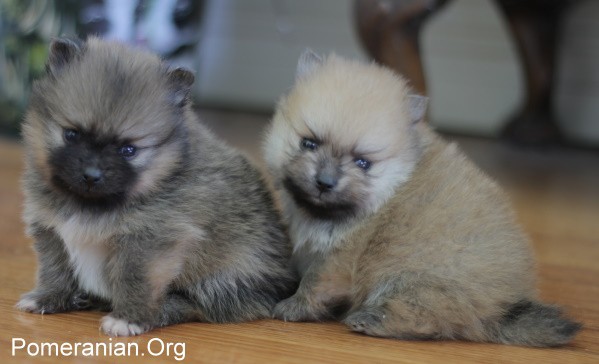
Pomeranian Puppy’s Development 8 – 11 Weeks
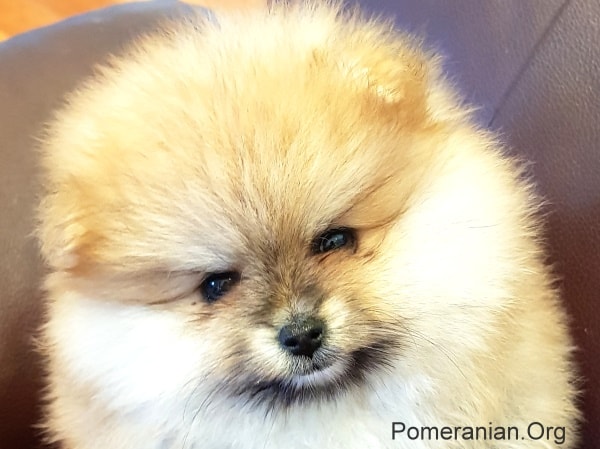
Puppy Milestones:
- Good motor skills and coordination.
- Most curious phase. A puppy will move further away if his interest is piqued.
- Traumatic events can have a lasting impact.
Puppy Needs:
- The puppy must be protected from all forms of trauma.
- He must be prevented from wandering too far away.
- This is the time for the puppy’s second round of injections.
- As the owner is not fully vaccinated, they must strike a fine balance between health risks and socialization.
- If a puppy goes to a new home, he should start being trained immediately.
- The puppy needs to hear his name called as often as possible.
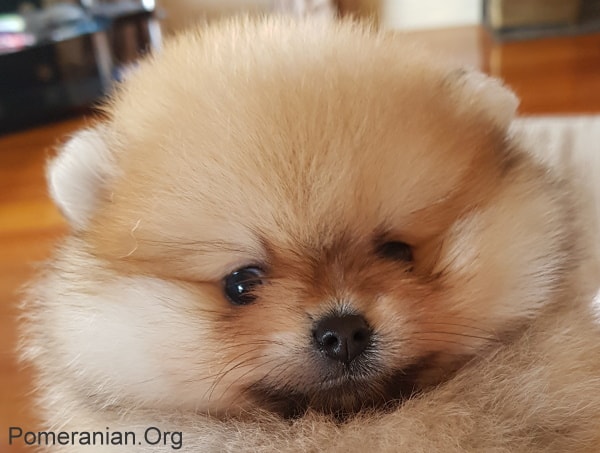
Pomeranian Puppy’s Development 10 – 16 Weeks
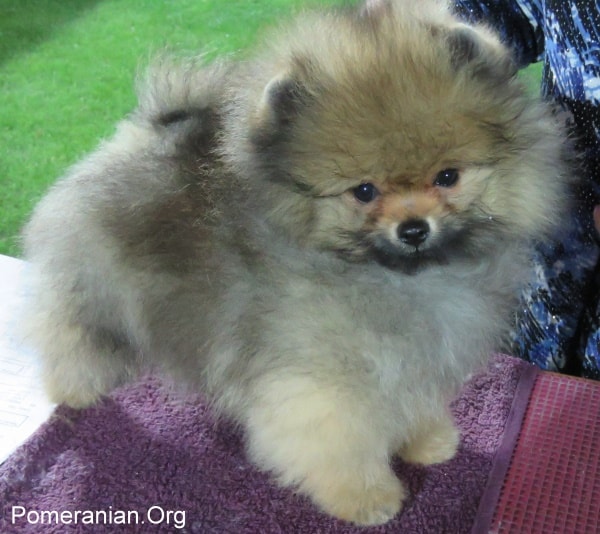
Puppy Milestones:
- Puppies are taken to their new homes.
- They have moved past the initial fear stage.
- Puppy doesn’t mess its bed anymore.
- Crate training should be progressing well.
- He chews everything in sight as he continues to cut his teeth.

Puppy Needs:
- Important socialization period: Expose the puppy to a variety of experiences, including other dogs and animals, without overexposing it. Stress can be felt at this age.
- A good time to begin potty training.
- Provide a variety of chew toys and bones for your dog to enjoy.
- By the end of this period, the puppy will be ready for puppy classes.
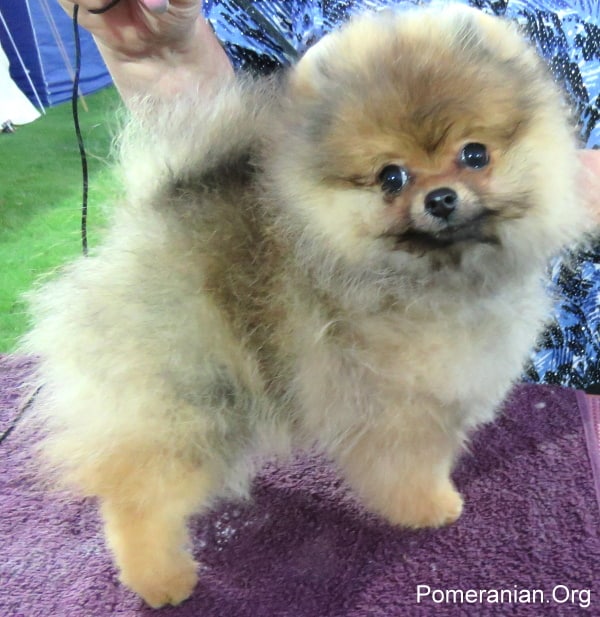
Pomeranian Puppy Development. 16 Weeks to 6 Months.
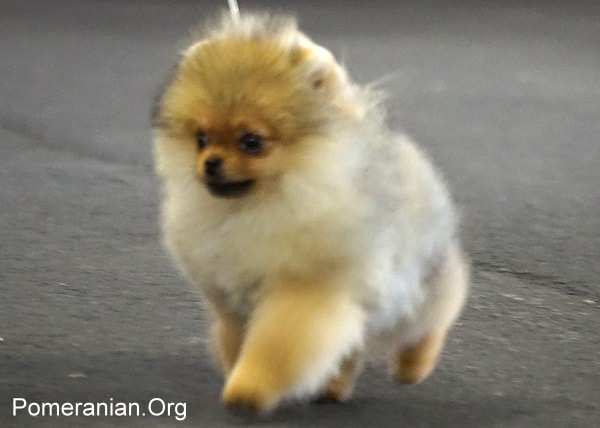
Puppy Milestones:
- Puppy is now more independent than ever.
- This is the “preteen” period.
- Demonstrates signs of a “big dog” attitude within a small dog.
Puppy Needs:
- More socializing.
- More training is needed.
- Owners must have a great deal of patience.
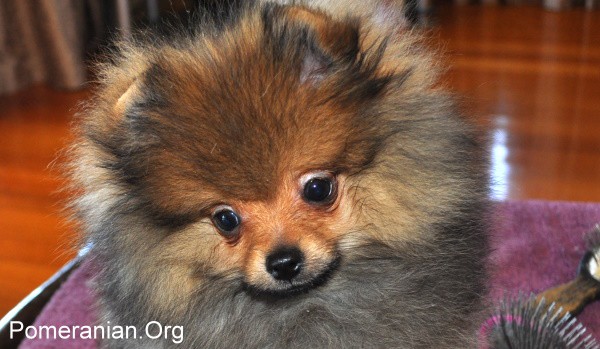
Pomeranian Stages of Growth 6 – 12 Months
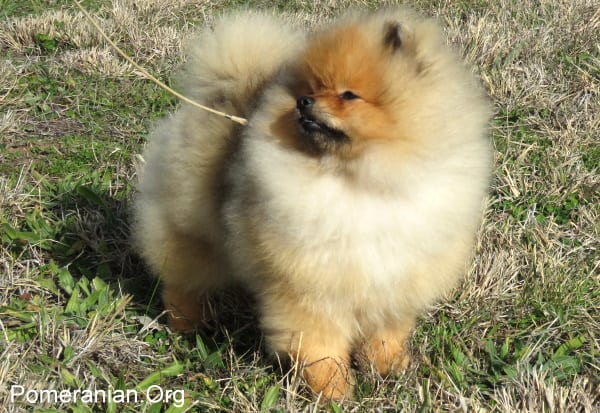
Puppy Milestones:
- The dog begins as an adolescent and reaches sexual maturity by the end of this period.
- Very independent. He is likely to possess a mind of his own and be stubborn.
- The second fear stage typically begins around six months and can last from a few days to a few weeks. Female dogs face their first heat period. Males get extra testosterone, which can make them hard to control. Although their development is responsible for this problem, many think the dog is badly behaved or doesn’t obey instructions.
Puppy Needs:
- Reinforcement of rules must be followed up, as should ongoing training.
- Dogs should be spayed or neutered.
- You can switch your dog to adult food once this period is over.
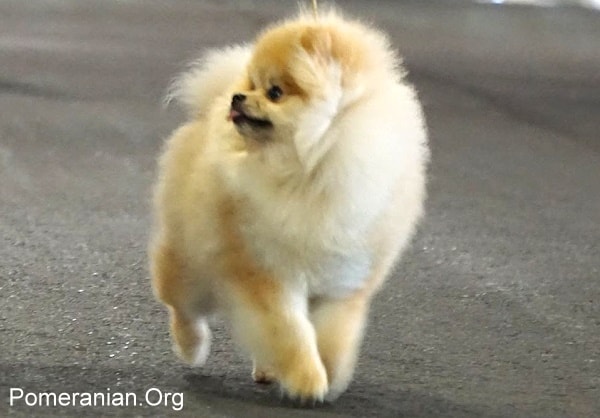
An Overview of Pomeranian Life Stages
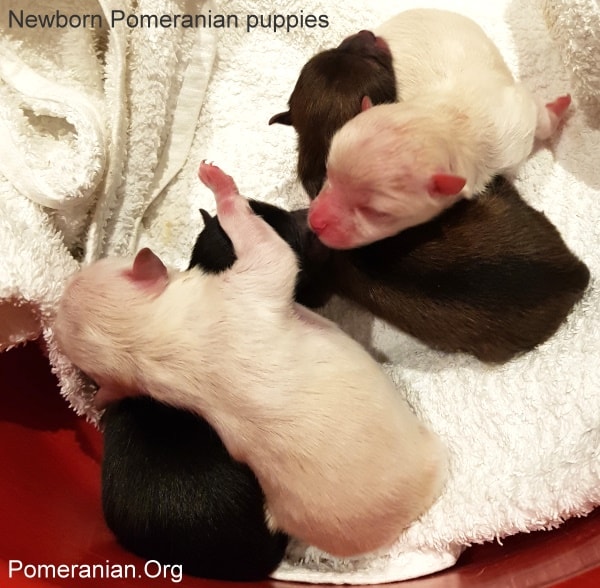
Newborn Pomeranian Puppy Stage
When the puppy is firstborn, its ears and eyes are shut. Only his senses of taste, touch, and smell work, but they’re not fully functional. He can respond to discomfort, pain, and minor disturbances by crying or whining to let you know.
His body temperature is significantly lower than that of a mature dog, and he cannot tolerate cool weather. To facilitate ideal development, the room should be kept quite warm (around 80 degrees), and breeders achieve this by using heating pads and/or heat lamps.
Newborn pups need their mother to stimulate defecation and urination, as they can’t do so on their own.
A puppy’s first goal in life is to find food and warmth. Although they don’t yet have teeth, their nails are fully grown and might need to be trimmed within the first week of birth.
Their main activities are seeking nourishment from their mother and sleeping as much as possible.
Newborn pups typically sleep, sometimes twitching or moving slightly to adjust their position. The twitching occurs because their primary sleep is REM sleep, a stage characterized by higher brain activity.
Apart from that, they don’t interact with others in the litter or their surroundings except to huddle as close as possible to their mother and littermates to keep warm.
Pomeranian pups rely on their mother for nourishment and to learn to go potty. The mother also has to clean up the potty messes, which she happily does.
Puppies’ eyes start opening when they’re about two weeks old. A couple of days after that, their ears also open. Their sight is blurry at first, but soon settles, and they can take in their surroundings. Vision doesn’t get very sharp even as they start to grow into adulthood.
After their ears open, they may get startled by different sounds around them. Even when their ears start working, they can hear the ultrasonic range, and their range is almost twice that of humans.
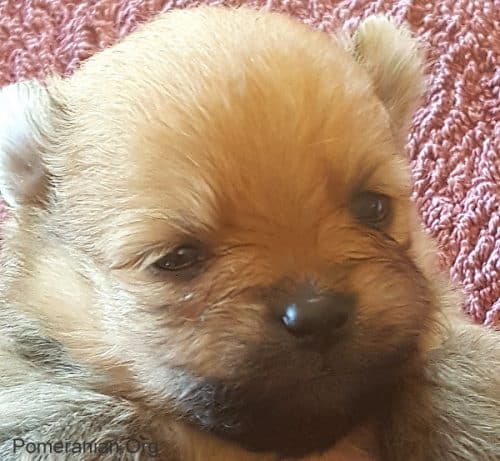
3 to 6 Weeks Puppy Growth
At three weeks, puppies will become a bit more adventurous and start moving around, albeit clumsily. This can be likened to a human infant’s crawling period. At this time, progress happens quickly. By 3 ½ weeks, most puppies are stable and can move around independently.
Hearing and sight improve each day. They can start drinking liquids and eating soft, solid foods. They will have some interaction with others in their litter, but most of this will be deciding who will act as a blanket as they sleep in a pile and cuddle up underneath.
However, they don’t mind either role. This is also the time when they first start socializing. With open ears and eyes, they crawl much more and even begin trying to stand and walk properly.
By the time they’re four weeks old, they know what “real” puppy food is, eat more of such foods, and reduce their nursing.
They’re not weaned at this stage. Pomeranian pups sleep less and spend more time moving around. At this point, they begin to socialize with the world around them.
They should listen to sounds like the vacuum cleaner, dishwasher, can opener, and hairdryer. They should also listen to the TV or music.
This is the perfect time for the puppy to walk on different textured surfaces such as grass, tile, wood, dirt, carpet, and concrete.
Additional textures can be added to his bedding, and the breeder can wear different textures in clothing so the puppy can snuggle up and feel them.
The puppy is starting to regulate his body temperature, develop a puppy coat, and eliminate waste without stimulation from his mother.
However, she’ll keep cleaning up after him for a bit longer. At the five-week point, he’s now considered a toddler and will spend much time mixing with humans, his mother, and littermates.
If he has toys, he’ll explore them, but they won’t be an object of vigorous play until he’s a bit older. The mother will encourage her little one to wean by being unavailable for drinks whenever they desire.
Puppies begin to “play fight” with their mates, but are still too young to work out their pecking order and temperament. Some mothers regurgitate food for the puppies, but this doesn’t often happen in domesticated dogs.
Several wormings will occur at six weeks old, and it’s time for the puppy’s first shots. Tiny dog breeds, such as Pomeranians, may not receive their first set of shots until they’re eight weeks old.
Playtime changes dramatically at this stage, and toys become objects of pure fascination and delight. Puppies will explore every possible corner of their surroundings in various ways.
Breeders should provide a variety of stimuli, including smells, sounds, and textures, and change the environments where puppies can safely explore. The mother will continue to teach manners, particularly regarding “bite suppression.”
Puppies will gradually learn what is and isn’t appropriate canine behavior. These behaviors will continue for two weeks until they’re completely weaned and can be taken to permanent homes. Smaller dog breeds, such as Pomeranians, may require extra time with the litter and their mother.
At six weeks, a puppy is outgoing, friendly, curious, and eager to learn. If socializing is handled properly, the puppy will be keen to please his new owners when that time arrives.
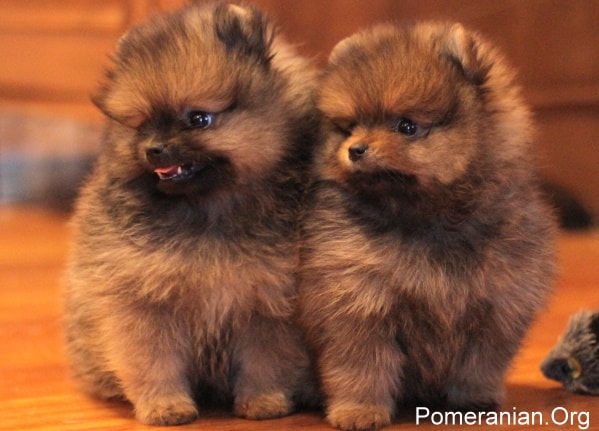
8 Week Old Pomeranian Puppy
At the eight-week-old mark, many smaller breeds are prepared to be taken to their permanent homes. Other types may need as many as four more weeks in the breeder’s and mother’s care, especially if the puppies are the tiniest Pomeranian pups.
When the puppy is eight weeks old, it starts to exhibit caution in its behavior. Before this, he would be reckless and exuberant, running headlong into any adventure fearlessly.
Over the next two weeks, he becomes increasingly cautious as he investigates everything around him. New owners must let him go through this stage because he’ll move past it quickly.
During this time, pet parents shouldn’t baby and cuddle” the puppy. Instead, they can assure his safety without moving in to rescue him when it’s not needed.
Anxiety and fear issues may arise in puppies who get rescued too early, which can be difficult to correct down the track. When a puppy is taken to his new home, his first few nights can be hard because he hasn’t spent much time alone.
3 Month Old Pomeranian Stage
Socialization is critical during this period and should be maintained. Even before he’s brought home, the home must be ready for his grand arrival.
This includes puppy-proofing all rooms of the house and ensuring he has everything he needs to feel comfortable.
The puppy should be exposed to as many new smells, sounds, sights, and sensations as possible. The more stimuli and experiences he faces, the easier he handles changes as he ages. This is also an ideal starting point for training.
Potty training is the first essential focus, followed by basic commands. Teaching basic obedience skills is best started at home, and down the track, he can be enrolled in an obedience school once he has been immunized and is ready for the next phase.
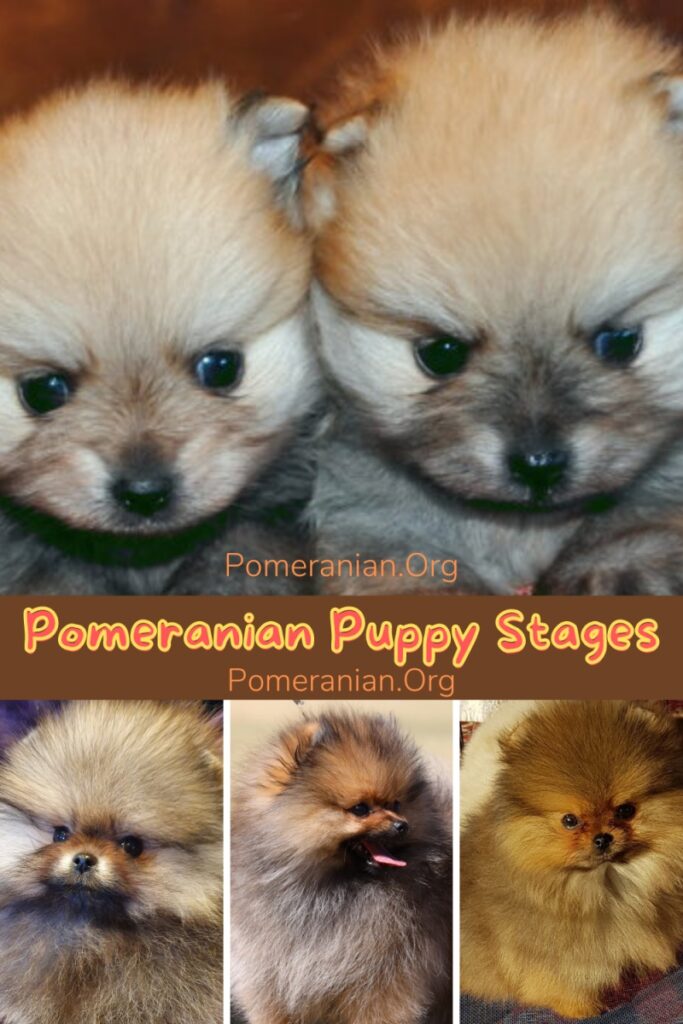
6-Month-Old Pomeranian Puppy Stage
Congratulations, your fur child has finally reached his teenage years. His attitude is everything now. He’ll try to break the rules and test boundaries when he sees opportunities.
He won’t become a juvenile delinquent if you have been training and socializing with him. He can attend puppy classes and learn additional commands.
His baby teeth will fall out, to be replaced by a full set of adult teeth. Dental care is critical from this point on. The puppy will reach sexual maturity sometime during this period. It’s wise to have her spayed or neutered.
Most vets recommend doing this by age 6 months. A puppy needs plenty of chew toys, regular exercise, and proper discipline. Patience will be your new best friend.
1-Year-Old Pomeranian
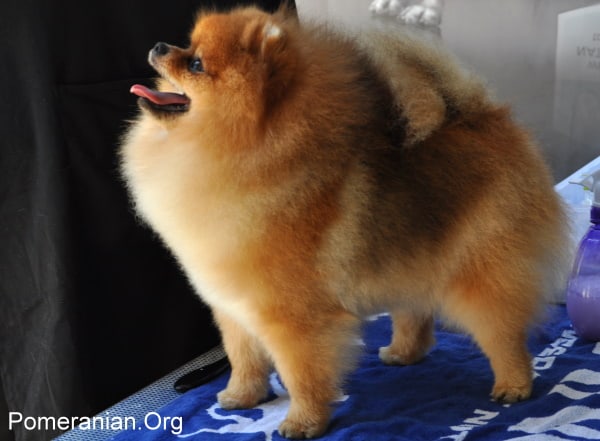
After this stage, the puppy has grown into an adult dog and is now sexually mature. Smaller breeds will be their full adult weight, Pomeranian size, and height. If spaying or neutering hasn’t occurred, there will be visible signs of sexual maturity.
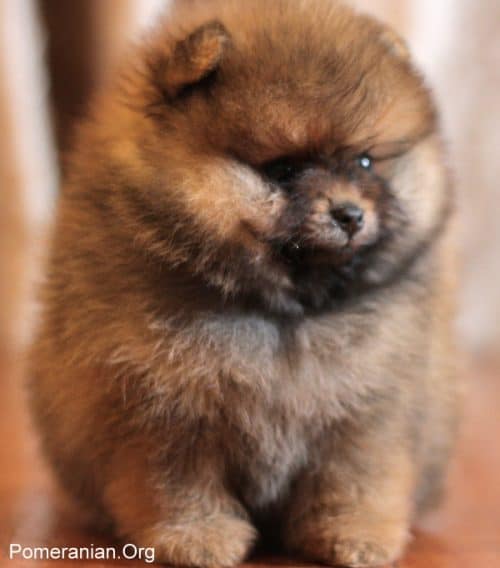
How Fast Do Pomeranian Puppies Grow?
Pomeranian puppies grow remarkably quickly during their first few months of life. In fact, the rate of growth is fastest immediately after birth, when healthy newborn puppies can gain weight daily and may even double their birth weight within the first week.
During the neonatal period, a puppy’s primary activities are sleeping and nursing. This rapid early growth provides the foundation for healthy development throughout puppyhood.
As Pomeranian puppies approach weaning age, growth remains steady but gradually becomes less dramatic. Between 8 weeks and 6 months of age, puppies typically experience their most noticeable physical changes. During this period, they gain height, develop muscle, improve coordination, and begin to lose their rounded baby appearance.
By approximately 6 months of age, most Pomeranians have completed the majority of their skeletal growth, and their rate of growth slows considerably. While some puppies continue to fill out and mature physically, the dramatic growth seen during the first few months is largely over.
One important point many owners do not realize is that a Pomeranian’s height often reaches near-adult proportions long before the coat has fully matured. A young Pom may appear awkward, leggy, or lacking coat during adolescence, particularly during the puppy uglies stage.
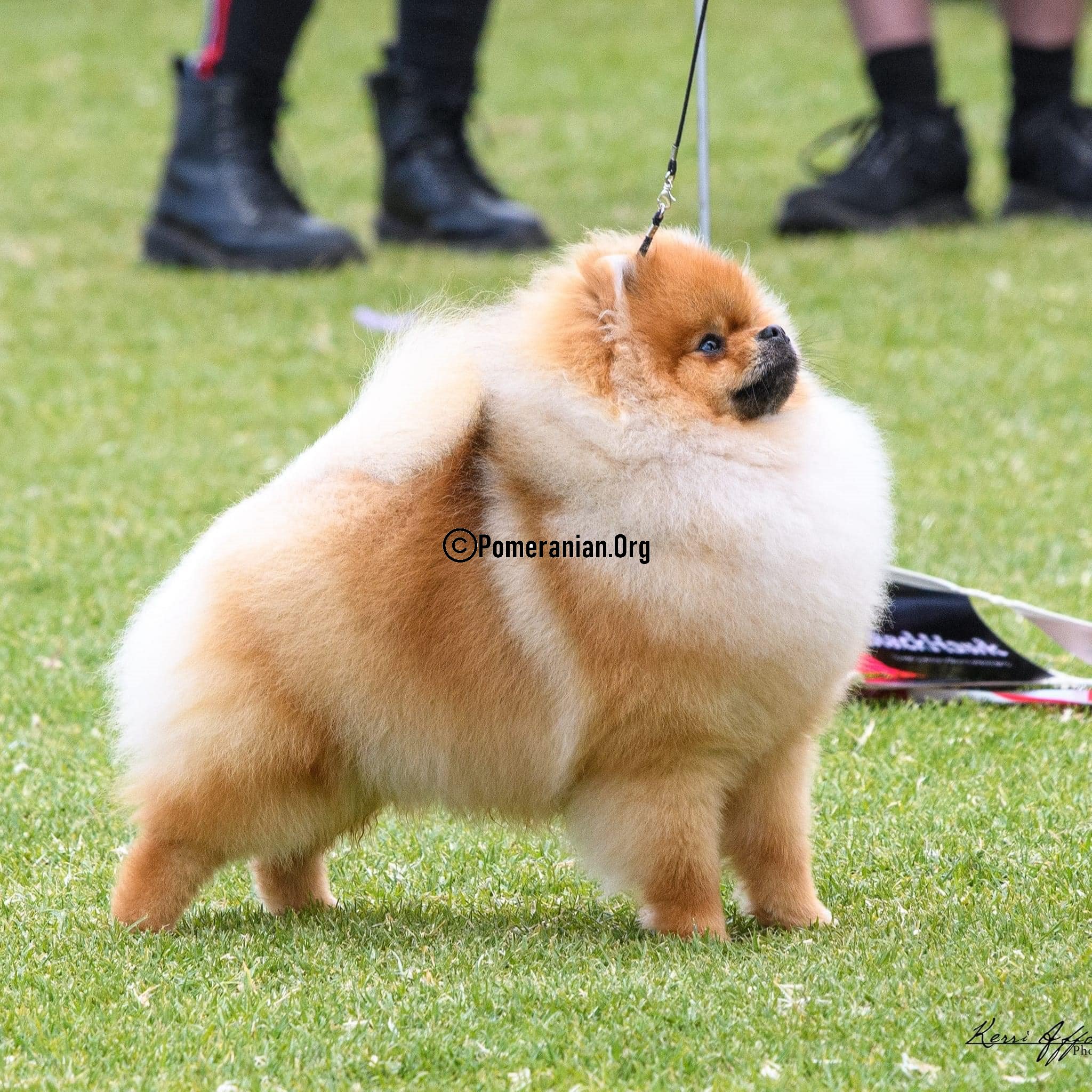
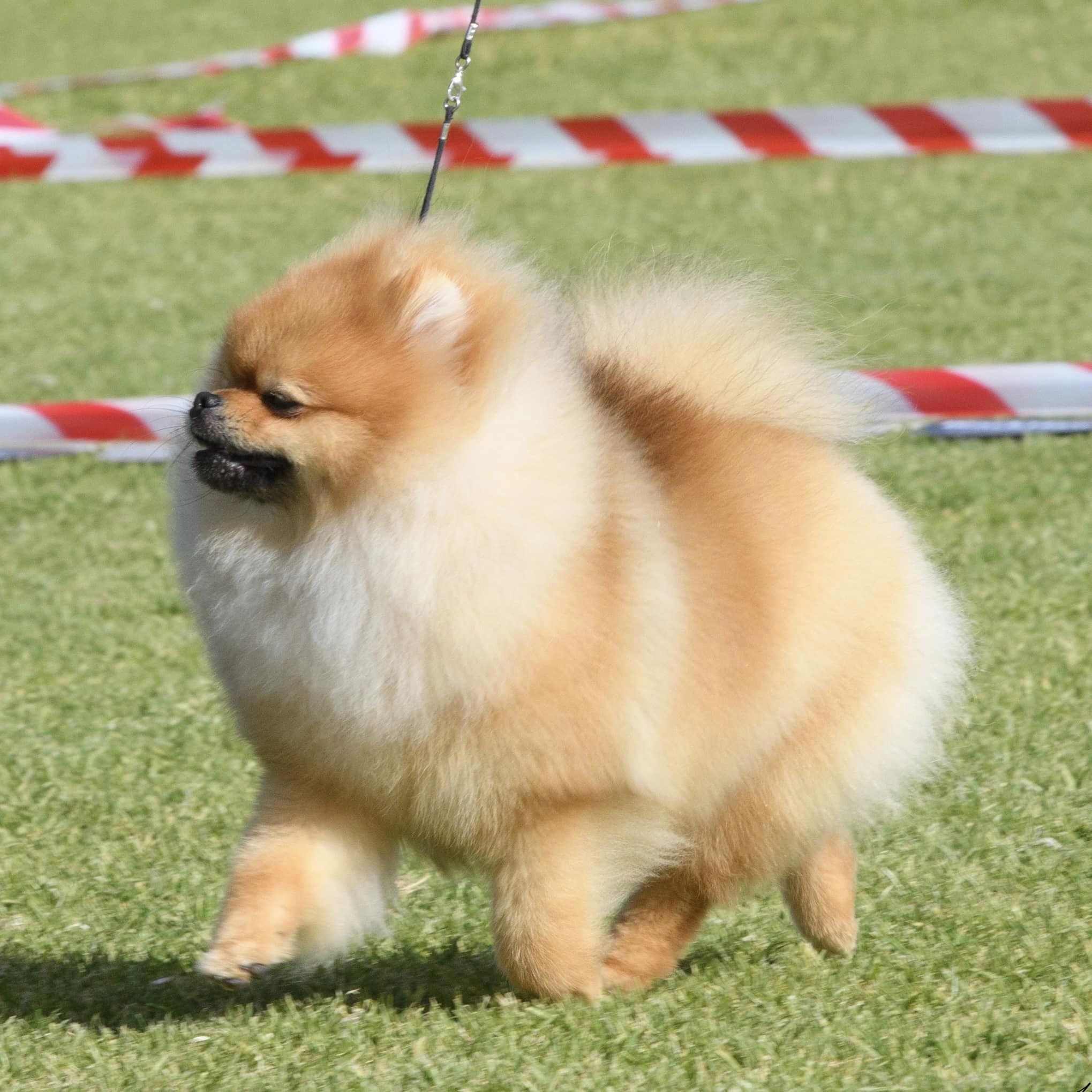
The coat continues to develop long after physical growth has slowed. Many Pomeranians do not achieve their full adult coat until 18 months to 3 years of age, with some dogs continuing to gain coat density and maturity even later.
For this reason, it is important not to judge a young Pomeranian solely on its appearance during adolescence. The transformation from fluffy puppy to mature adult can take several years, and the final result is often very different from what owners see during the puppy uglies stage.
Key Growth Facts
✔ Newborn Pomeranian puppies grow faster than at any other time in their lives.
✔ Healthy puppies may double their birth weight during the first week.
✔ Most rapid physical growth occurs between birth and 6 months of age.
✔ Growth slows significantly after 6 months.
✔ Most height growth is completed before coat development is finished.
✔ Full coat maturity may not be reached until 18 months to 3 years of age.
Pomeranian Sexual Maturity?
Is my Pomeranian in heat? Females will have had their first heat between 6 and 9 months old. If the males haven’t been neutered, they will commence displaying sexual behavior and mark their territory. Males may be fathers when they’re as young as seven months of age.

Final Thoughts on Pomeranian Puppy Stages
Watching a Pomeranian puppy grow from a tiny newborn weighing only a few ounces into a beautiful, confident adult dog is one of life’s greatest pleasures. Each stage of development brings its own challenges, milestones, and rewards, from the first time a puppy opens its eyes to the dramatic coat changes of the puppy uglies and the eventual emergence of the magnificent adult coat.
Understanding these developmental stages helps owners provide the right care, nutrition, training, and socialization at every age. While every puppy develops at its own pace, knowing what to expect can help you recognize normal growth patterns and enjoy each phase of your puppy’s journey.
Having bred, raised, and exhibited Champion Pomeranians for more than 50 years, I have had the privilege of watching hundreds of puppies mature into wonderful companions and successful show dogs. One thing they all have in common is that they grow up far too quickly.
Take plenty of photographs, enjoy every stage, and remember that today’s tiny fluff ball will soon become the loyal, intelligent, and loving companion that makes the Pomeranian one of the world’s most cherished dog breeds.
The puppy months may be short, but the memories last a lifetime.
Copyright Pomeranian.Org. All Rights Reserved.