
DVM, University of Animal and Veterinary Sciences, 2019
MSc. (Hons.) Animal Breeding & Genetics, University of Agriculture Faisalabad, 2021
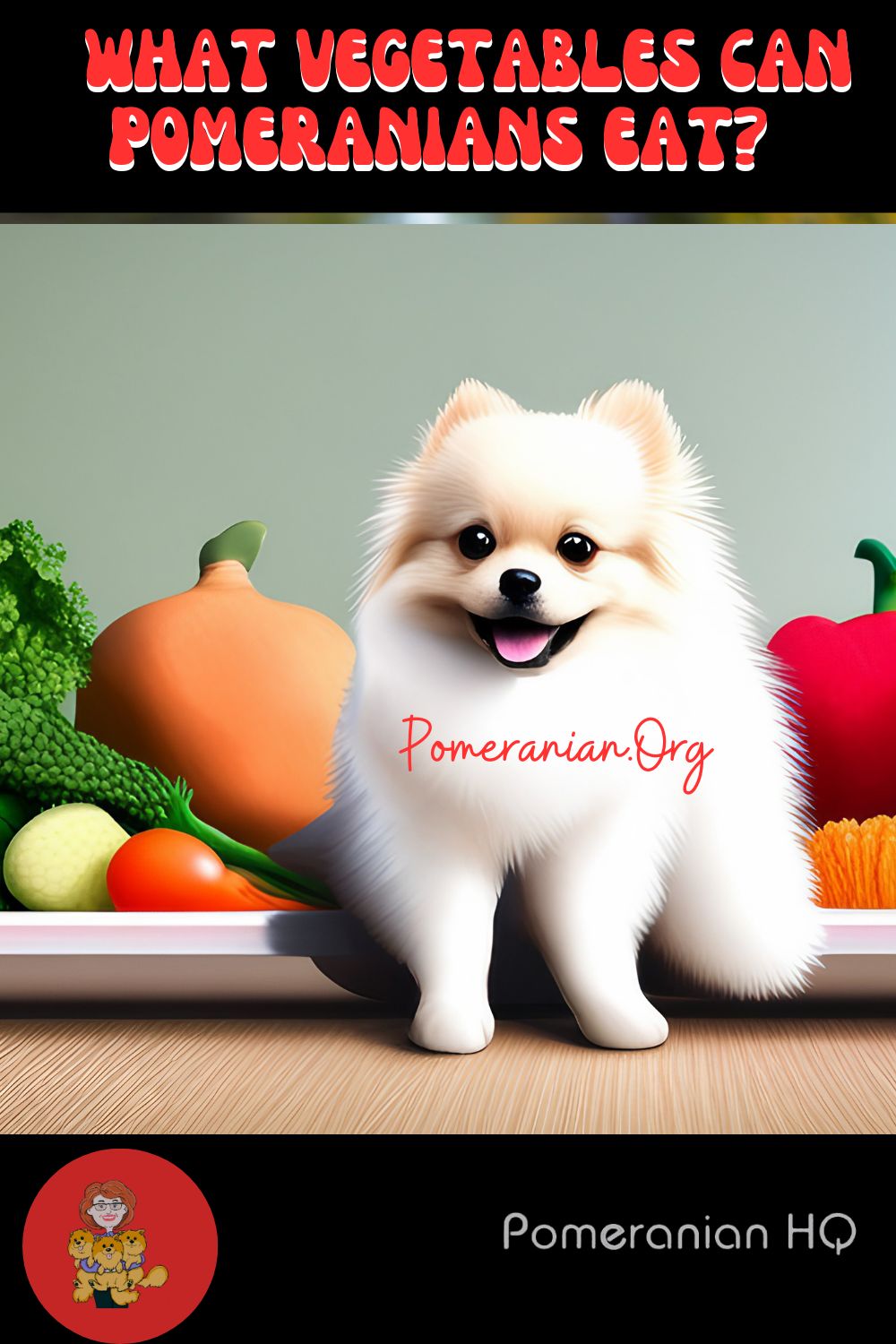
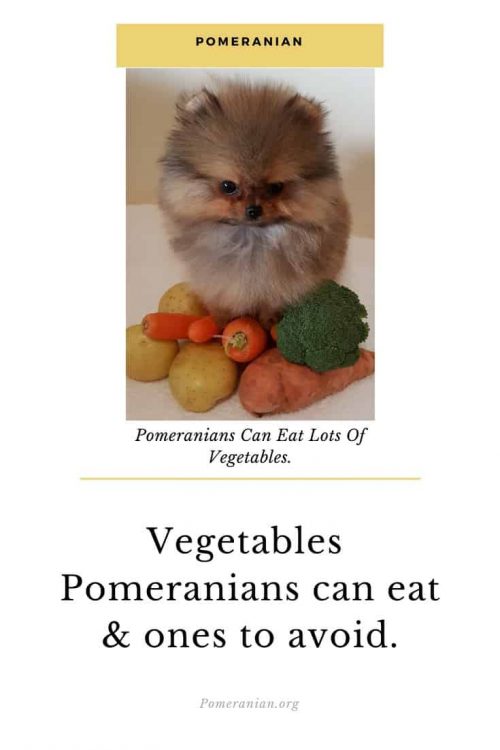
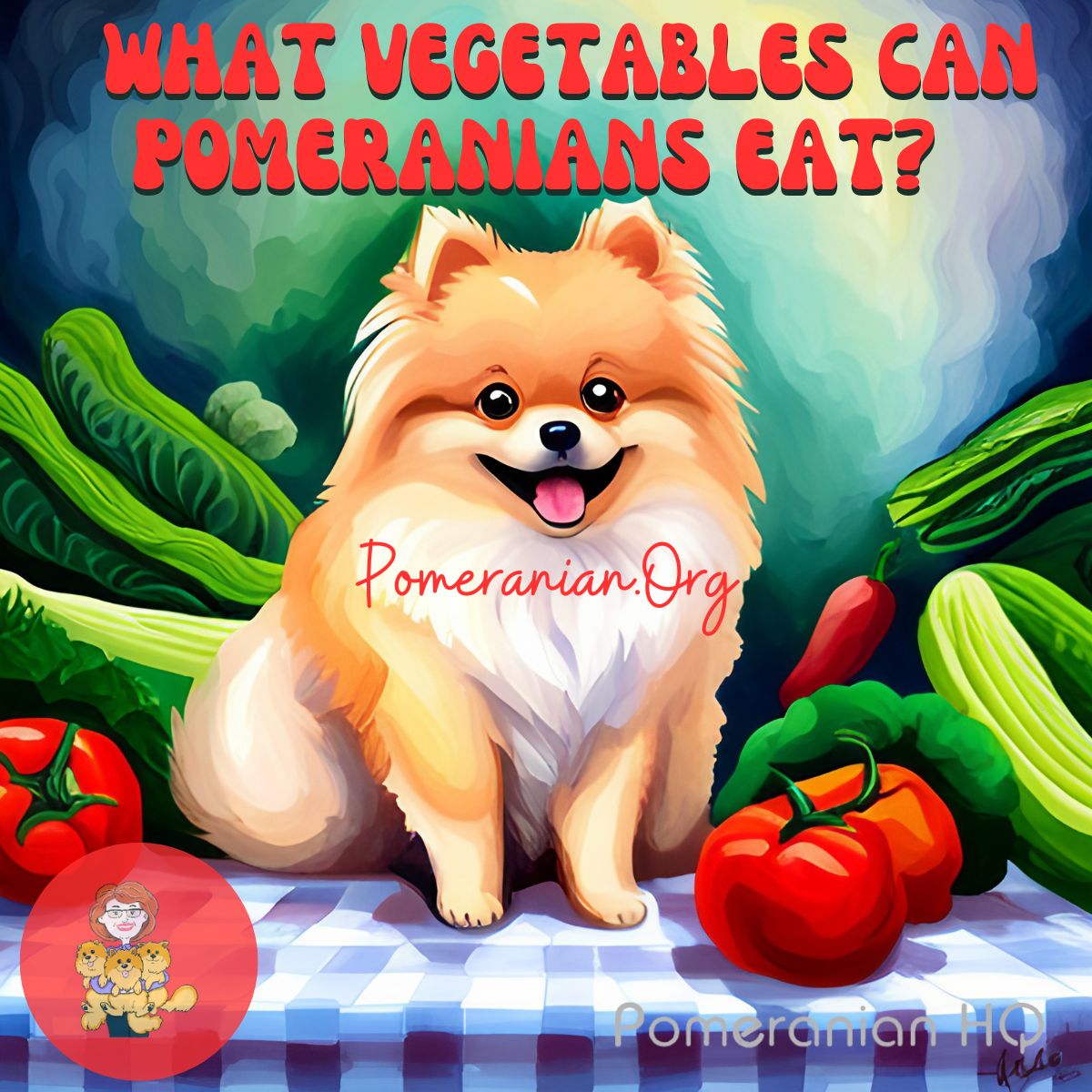
Can Pomeranians eat vegetables? Yes, many vegetables are safe for Pomeranians and can be offered as occasional treats or small additions to their regular meals. Carrots, pumpkin, green beans, sweet potato, broccoli and celery are among the vegetables a Pomeranian can enjoy when they are prepared correctly and served in sensible portions.
However, not every vegetable is safe for dogs. Onions, garlic, green or sprouted potatoes and corn cobs can be dangerous. Because Pomeranians are very small dogs, vegetables must also be cut into tiny, manageable pieces to help prevent choking.
I’m Denise Leo, a Pomeranian breeder, exhibitor and author with more than 50 years of experience caring for this wonderful breed. In this guide, I explain which vegetables Pomeranians can eat, how to prepare them safely and how much to offer.
Quick Answer: What Vegetables Can Pomeranians Eat?
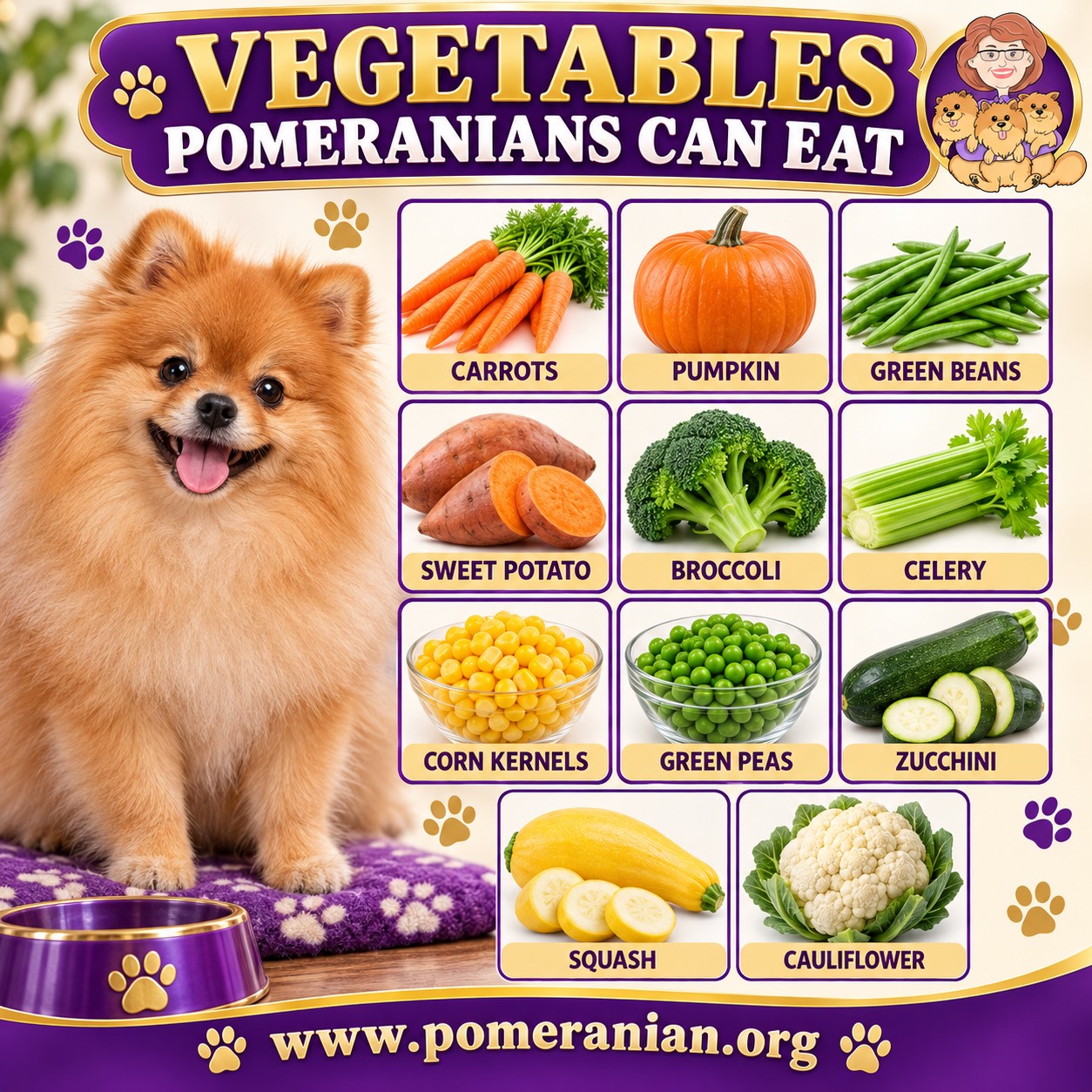
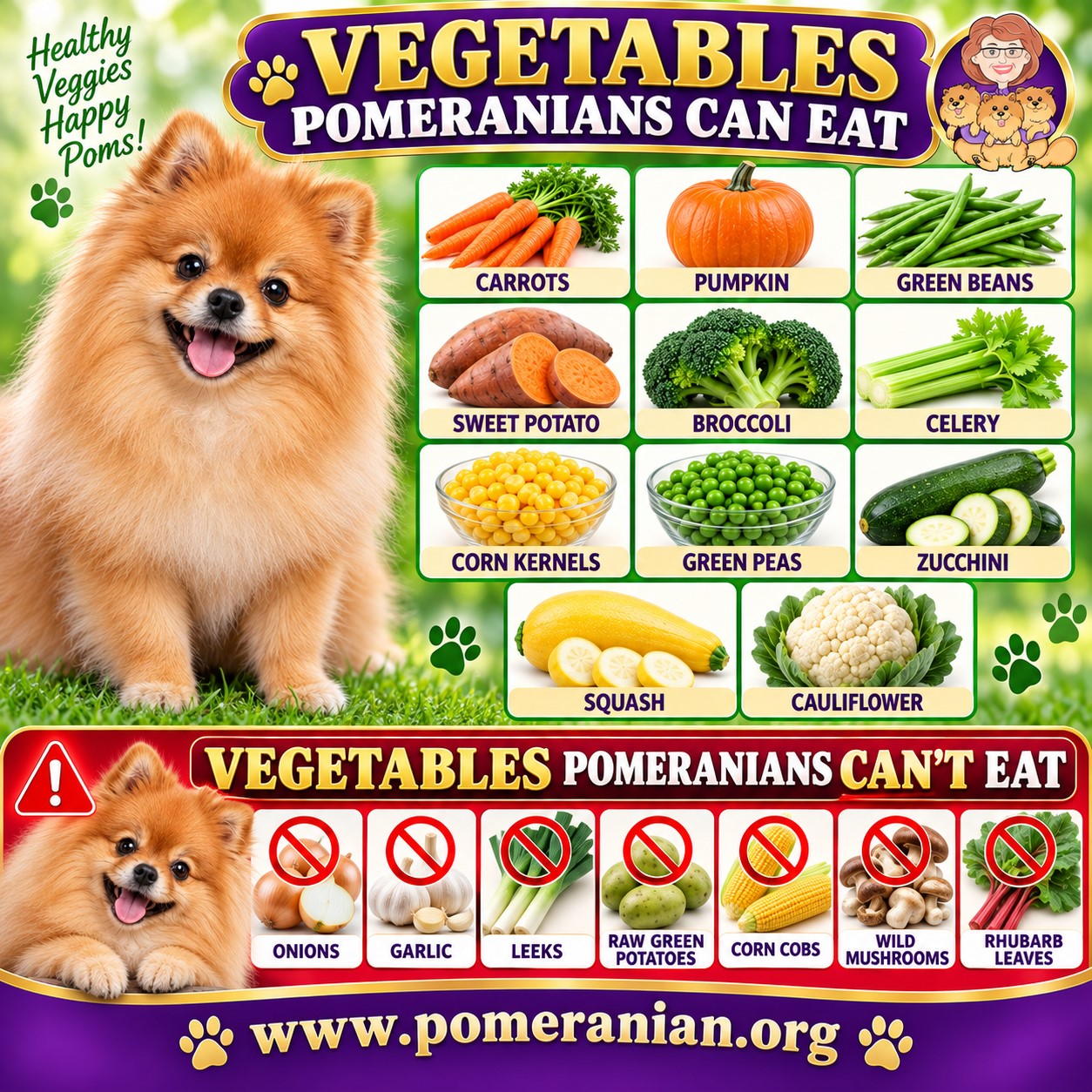
Pomeranians can eat small amounts of plain, properly prepared vegetables, including:
- Carrots
- Pumpkin
- Green beans
- Sweet potato
- Broccoli
- Celery
- Corn kernels removed from the cob
- Green peas
- Zucchini
- Squash
- Cauliflower
Always serve vegetables plain, without butter, salt, sauces, onion, garlic or seasoning. Cook vegetables that are difficult to digest, remove all pits, seeds and tough parts where necessary, and cut everything into very small pieces suitable for a Pomeranian.
Important: Vegetables should be an occasional treat or small addition to a complete and balanced diet. Introduce one new vegetable at a time and stop feeding it if your Pom develops vomiting, diarrhoea, excessive gas or another unusual reaction.
Safe and Unsafe Vegetables for Pomeranians
The following table provides a quick guide to vegetables Pomeranians can eat and those that should be kept away from them. Even safe vegetables should be introduced gradually and offered in small portions.
| Vegetable | Is It Safe? | How to Serve It |
|---|---|---|
| Carrots | Yes | Serve grated, finely chopped or softly cooked. Avoid large, hard pieces that could cause choking. |
| Pumpkin | Yes | Offer plain cooked pumpkin or pure pumpkin purée. Never use sweetened or spiced pumpkin pie filling. |
| Green beans | Yes | Serve plain, chopped and raw or lightly cooked. Avoid salted or seasoned beans. |
| Sweet potato | Yes | Cook thoroughly, remove the skin and serve a small mashed or finely chopped portion. |
| Broccoli | Yes, in very small amounts | Offer tiny, plain, cooked pieces occasionally. Too much may cause gas or digestive discomfort. |
| Celery | Yes | Remove tough strings and chop it into very small pieces. |
| Corn | Kernels only | Serve a few plain, cooked kernels. Never allow a Pomeranian to chew a corn cob. |
| Green peas | Yes | Offer fresh or frozen peas without salt or seasoning. Mash them for very young puppies. |
| Zucchini and squash | Yes | Serve plain, cooked and finely chopped. |
| Cauliflower | Yes, occasionally | Offer a tiny cooked piece. Large amounts may cause gas. |
| Onions, garlic, leeks and chives | No | These are toxic to dogs and should be avoided in raw, cooked, dried and powdered forms. |
| Raw, green or sprouted potatoes | No | Do not feed them. Only plain, fully cooked potato should be offered, and only in small amounts. |
| Corn cobs | No | Corn cobs can cause choking or a serious intestinal blockage. |
| Wild mushrooms | No | Some varieties are highly poisonous, so keep Pomeranians away from all unidentified mushrooms. |
| Rhubarb leaves | No | Rhubarb leaves contain compounds that can be harmful to dogs. |
Pomeranian feeding tip: Safe does not mean unlimited. Begin with one small piece of a new vegetable and watch your Pom for vomiting, diarrhoea, gas, itching or other unusual symptoms.
Benefits of Feeding Vegetables to a Pomeranian
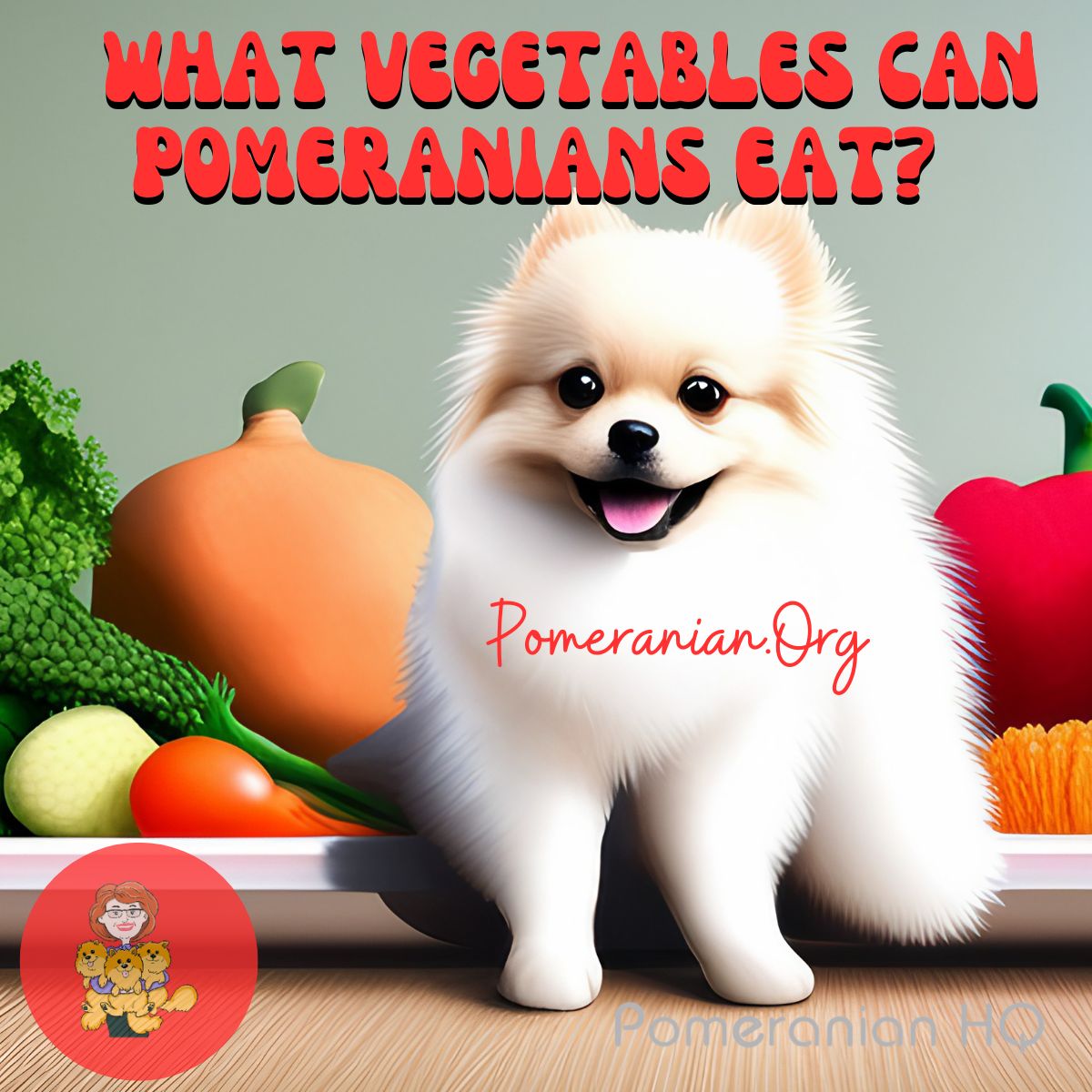
Vegetables can be a healthy addition to a Pomeranian’s diet when offered in small amounts. They provide useful vitamins, minerals, antioxidants and dietary fibre. Fibre supports normal digestion, while the water content in vegetables such as cucumber, celery and zucchini can provide a little extra hydration. Low-calorie choices, including green beans and carrots, may also be used as occasional treats for Pomeranians that need help maintaining a healthy weight.
Vegetables should complement rather than replace a complete and balanced dog food. Because Pomeranians are small, even healthy extras can add unnecessary calories or cause digestive upset if too much is given. Introduce one new vegetable at a time, begin with a very small portion and always serve it plain without salt, butter, sauces or seasoning.
Can Pomeranians Eat Carrots?
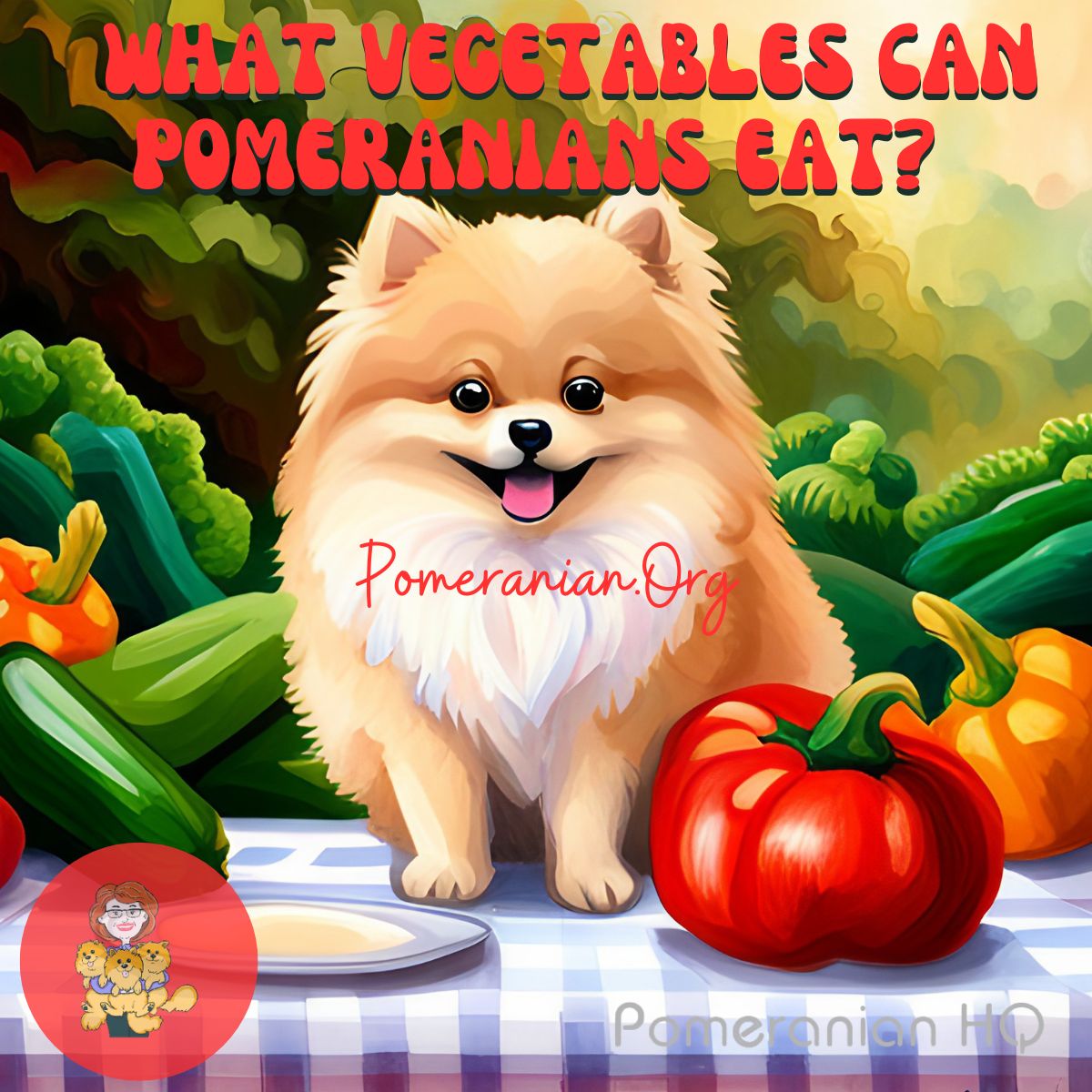
Yes, Pomeranians can eat carrots. Carrots are a nutritious, low-calorie vegetable containing fibre, potassium and beta-carotene, which the body converts into vitamin A. I often add a small amount of finely grated carrot to home-cooked meals for my Pomeranians.
If you are wondering, “Can a Pomeranian eat carrots raw?” the answer is yes, but they must be prepared carefully. Grate the carrot or cut it into tiny, manageable pieces because large, hard pieces may present a choking risk for such a small dog. Lightly steamed or boiled carrot is softer, easier to chew and can be mashed into your Pom’s regular food.
Serve carrots plain without salt, butter, oil, sauces or seasoning. Begin with a small amount, as too much carrot may cause gas, loose stools or unnecessary extra calories.
Can Pomeranians Eat Potatoes?
Yes, Pomeranians can eat potatoes, provided they are fully cooked and served plain. If you are asking, “Can a Pomeranian eat potato?” a small amount of boiled or baked potato is generally safe once the skin has been removed and the potato has been allowed to cool.
Never feed a Pomeranian raw, green or sprouted potato. These may contain higher levels of solanine, a substance that can be harmful to dogs. Potato plants and their leaves should also be kept well away from pets.
Potatoes are starchy and relatively high in carbohydrates, so they should only be offered occasionally in a very small portion. Avoid chips, crisps, roasted potatoes and mashed potato containing butter, milk, cream, salt, onion or garlic. Pomeranians that are overweight, diabetic or following a veterinary diet should only be given potato after consulting their veterinarian.
Can Pomeranians Eat Corn?
Yes, Pomeranians can eat corn in moderation. If you are wondering, “Can a Pomeranian eat corn?” a few plain, cooked corn kernels removed from the cob may be offered occasionally. Corn provides carbohydrates, fibre and several useful nutrients, but it should not become a large part of your Pom’s diet.
Never allow a Pomeranian to chew or swallow any part of a corn cob. The cob is not digestible and may cause choking or a potentially life-threatening intestinal blockage. This is particularly dangerous for a small breed such as the Pomeranian.
Serve corn without butter, salt, sauces or seasoning. Avoid canned corn containing added salt and do not offer corn dishes prepared with onion or garlic. Plain frozen corn should be cooked, cooled and given in a very small portion. Popped corn should also be avoided if it contains butter, salt, sugar or flavourings.

Can Pomeranians Eat Sweet Potato?
Yes, Pomeranians can eat sweet potato when it is thoroughly cooked and served plain. Sweet potato provides dietary fibre, beta-carotene, potassium and vitamins that can contribute to a balanced diet. Its fibre content may support normal digestion, but too much can cause loose stools or stomach discomfort.
If you are wondering, “Can a Pomeranian eat sweet potato?” begin with a very small amount that has been boiled, steamed or baked until soft. Remove the skin, allow it to cool and mash it or cut it into tiny pieces before serving.
Never feed raw or undercooked sweet potato because it can be difficult for a Pomeranian to chew and digest. Avoid sweet potato prepared with butter, salt, sugar, syrup, spices or other seasonings. Due to its carbohydrate content, it should be an occasional addition rather than a daily treat, particularly for overweight or diabetic Pomeranians.
Can Pomeranians Eat Broccoli?
Yes, Pomeranians can eat broccoli, but only in very small amounts. Broccoli contains fibre, vitamin C and other useful nutrients; however, it can also cause gas and digestive irritation when too much is eaten.
If you are asking, “Can a Pomeranian eat broccoli?” offer one or two tiny, softly cooked pieces occasionally. Cut the florets and stems into very small pieces because large or tough sections may be difficult for a Pomeranian to chew and could present a choking risk.
Serve broccoli plain without butter, oil, salt, cheese, sauces or seasoning. Introduce it gradually and stop feeding it if your Pom develops excessive gas, abdominal discomfort, vomiting or diarrhoea. Pomeranians with sensitive stomachs may be better suited to gentler vegetables such as pumpkin or green beans.
Can Pomeranians Eat Celery?
Yes, Pomeranians can eat celery in small amounts. Celery is low in calories and contains fibre, vitamins and a high percentage of water. A little finely chopped celery can be added to home-cooked Pomeranian food or offered occasionally as a treat.
Raw celery can be stringy and difficult for a small dog to chew. Remove the tough strings and cut it into tiny pieces, or lightly cook it until soft. Never give your Pomeranian a whole celery stick because it may present a choking risk.
Serve celery plain without salt, butter, dips, sauces or seasoning. Begin with only a small piece because too much fibre may cause gas, loose stools or stomach discomfort. Canned or pickled celery should not be fed because it may contain excessive salt or other unsuitable ingredients.
Other Vegetables Pomeranians Can Eat
Can Pomeranians Eat Pumpkin?
Yes, Pomeranians can eat plain, cooked pumpkin. Pumpkin contains fibre and moisture, making it a useful occasional addition to a Pom’s regular food. A small amount may help support normal digestion, but feeding too much can cause stomach upset or loose stools.
Serve freshly cooked pumpkin or plain canned pumpkin containing no added sugar, salt, spices or preservatives. Do not use pumpkin pie filling, as it may contain sugar, fats and spices unsuitable for dogs. Remove the skin, stalk and seeds, then mash the cooked flesh before offering it to your Pomeranian.
Begin with approximately half a teaspoon mixed into your Pom’s meal. Pumpkin should not be used repeatedly to treat diarrhoea or constipation without veterinary advice, as continuing symptoms may indicate an underlying health problem.
Can Pomeranians Eat Green Beans?
Yes, Pomeranians can eat green beans. They are low in calories and provide fibre and several useful vitamins and minerals. Plain green beans can be an occasional treat for a Pomeranian, particularly when a lower-calorie alternative to commercial treats is required.
Fresh or frozen green beans may be lightly steamed or boiled and then cut into tiny pieces. Raw green beans can also be offered if they are tender and chopped finely enough for your Pom to chew safely. Avoid canned green beans unless they contain no added salt.
Never serve green beans cooked with butter, oil, salt, sauces, onion or garlic. Begin with one or two small pieces and monitor your Pomeranian for gas, loose stools or other digestive changes. Green beans should complement a balanced diet rather than replace part of your Pom’s regular meal.
Can Pomeranians Eat Green Peas?
Yes, Pomeranians can eat green peas in small amounts. Fresh or frozen garden peas, snow peas and sugar snap peas provide fibre, protein and several vitamins and minerals. They can be offered occasionally as a treat or mixed into a home-cooked meal.
Cook frozen peas, allow them to cool and lightly mash them before serving, particularly for a Pomeranian puppy. Remove garden peas from their pods because the pods can be tough and difficult for a small dog to chew. Tender snow pea and sugar snap pea pods may be offered only when finely chopped.
Avoid canned peas because they commonly contain added salt. Peas served with butter, sauces, onion, garlic or seasoning are also unsuitable. Offer only a few peas at a time, as excessive amounts may cause gas or digestive discomfort. Pomeranians with kidney problems should only be given peas after consulting their veterinarian.
Can Pomeranians Eat Zucchini and Squash?
Yes, Pomeranians can eat zucchini and most common varieties of squash. These vegetables are relatively low in calories and contain fibre, moisture and useful nutrients. A small amount may be offered as an occasional treat or mixed through your Pom’s regular meal.
Wash the vegetable thoroughly, remove any tough skin and seeds, then steam or boil it until soft. Allow it to cool before cutting it into tiny pieces or mashing it. Small pieces of plain raw zucchini may also be offered, provided they are soft enough for your Pomeranian to chew safely.
Never serve zucchini or squash prepared with butter, oil, salt, sauces, onion, garlic or seasoning. Begin with a small portion because too much may cause gas or loose stools. Do not feed unusually bitter zucchini or squash, as the bitter taste can indicate naturally occurring compounds that may cause illness.
Can Pomeranians Eat Cauliflower?
Yes, Pomeranians can eat cauliflower in small amounts. Cauliflower contains fibre and several vitamins, but it can also cause gas or digestive discomfort if too much is consumed.
Lightly steam or boil the cauliflower until soft, allow it to cool and cut it into tiny pieces. Both the florets and stalk are edible, although tougher stalks should be finely chopped or mashed to make them easier for a small Pomeranian to chew.
Serve cauliflower plain without butter, cheese, salt, sauces or seasoning. One or two tiny pieces are enough for an occasional treat. If your Pomeranian has a sensitive stomach or develops excessive gas, choose a gentler option such as cooked pumpkin or green beans instead.
Can Pomeranians Eat Spinach?
Pomeranians can eat a very small amount of spinach occasionally, but it is not one of the best vegetables to feed regularly. Spinach contains fibre, vitamins and minerals, but it is also naturally high in oxalates. For this reason, Pomeranians with kidney or urinary problems should not be given spinach unless their veterinarian approves it.
If offered, wash the spinach thoroughly and lightly steam it without oil, salt or seasoning. Allow it to cool, chop it finely and mix only a tiny amount into your Pom’s regular food.
Pomeranian puppies do not need spinach to obtain iron or other nutrients when they are already eating a complete and balanced puppy food. Safer vegetables for regular occasional treats include carrots, pumpkin, green beans and zucchini.
Can Pomeranians Eat Beetroot?
Yes, Pomeranians can eat a small amount of plain, cooked beetroot occasionally. Beetroot contains fibre, antioxidants and several vitamins and minerals, but it also contains natural sugar and should not be fed in large portions.
Wash and peel the beetroot, cook it until soft and allow it to cool before cutting it into tiny pieces or mashing it. Never serve pickled beetroot because it commonly contains vinegar, salt, sugar and other ingredients unsuitable for dogs. Canned beetroot with added salt should also be avoided.
Be aware that beetroot may temporarily turn your Pomeranian’s urine or stools pink or red. Although this can be harmless after eating beetroot, blood in the urine or stools can indicate a serious health problem. Contact your veterinarian if you are uncertain or if the colour change continues.
What Vegetables Can Pomeranians Not Eat?
Some vegetables and vegetable plants contain substances that can be toxic or otherwise dangerous to Pomeranians. Because a Pom has such a small body, even a relatively small quantity of an unsuitable food may cause serious illness.
Onions, garlic, leeks, shallots and chives must not be fed to Pomeranians. These members of the allium family can damage a dog’s red blood cells and potentially cause anaemia. They are dangerous in raw, cooked, dried and powdered forms, so always check the ingredients in soups, stocks, sauces, baby foods and prepared meals.
Raw, green or sprouted potatoes should also be avoided because they may contain unsafe levels of solanine. Potato leaves and stems are toxic and must be kept away from dogs. Only fully cooked, plain potato should ever be offered, and then only occasionally.
Never allow your Pomeranian to chew a corn cob. Although plain corn kernels are safe in moderation, the cob is not digestible and can cause choking or a life-threatening intestinal blockage.
Wild mushrooms should be treated as potentially poisonous. It can be extremely difficult to distinguish a harmless mushroom from a toxic variety, so remove mushrooms growing in areas your Pomeranian can access. Rhubarb leaves should also be avoided because they contain high concentrations of oxalates.
If you believe your Pomeranian has eaten a toxic vegetable or is showing signs such as vomiting, diarrhoea, weakness, trembling, breathing difficulties or unusual behaviour, contact your veterinarian or an animal poison service immediately. Do not wait for symptoms to become severe.
How to Prepare Vegetables for a Pomeranian
Always wash vegetables thoroughly before preparing them for your Pomeranian. Remove tough skins, stalks, seeds, pods and any damaged or mouldy sections. Vegetables should then be grated, mashed or cut into very small pieces that are easy for a tiny dog to chew and swallow safely.
Some vegetables, including carrots and zucchini, may be offered raw when finely grated or chopped. Harder vegetables such as potato, sweet potato, pumpkin, broccoli and cauliflower should be thoroughly cooked until soft. Steaming or boiling helps soften vegetables without adding unnecessary fat.
Serve vegetables completely plain. Do not add salt, butter, oil, cream, cheese, sauces, gravy or spices. Onion and garlic must never be used for flavouring because they are toxic to dogs. Canned and pickled vegetables are generally unsuitable due to their salt, sugar or preservatives.
Allow cooked vegetables to cool before serving them. Introduce only one new vegetable at a time and begin with a very small amount. This makes it easier to identify which food caused the problem if your Pomeranian develops vomiting, diarrhoea, gas, itching or another unusual reaction.
How Much Vegetable Can a Pomeranian Eat?
Vegetables should make up only a small part of a Pomeranian’s diet. A complete and balanced dog food should provide the main source of nutrition, while vegetables are best treated as occasional extras. All treats and additional foods combined should generally account for no more than 10% of a dog’s daily calories.
For a Pomeranian, begin with approximately half a teaspoon of a new cooked or mashed vegetable, or one or two tiny bite-sized pieces. If your Pom tolerates it well, a slightly larger amount may be offered occasionally. The appropriate serving will depend on your dog’s size, age, activity level, health and regular diet.
Feeding too many vegetables can cause gas, bloating, loose stools or an unbalanced diet. Pomeranian puppies, elderly dogs and Poms with diabetes, kidney disease, digestive problems or food allergies may require individual dietary advice from a veterinarian. Even healthy vegetables can lead to weight gain when they are offered in addition to too many other treats.
Frequently Asked Questions
Can Pomeranians eat vegetables every day?
A small amount of a safe vegetable may be offered regularly, but vegetables should not replace complete and balanced dog food. All treats and additional foods combined should generally provide no more than 10% of a Pomeranian’s daily calories.
Can Pomeranians eat carrots raw?
Yes, Pomeranians can eat raw carrots when they are finely grated or cut into tiny pieces. Large, hard pieces may be difficult for a small dog to chew and could present a choking risk. Softly cooked carrot is another suitable option.
Can a Pomeranian eat potato?
A Pomeranian can eat a small amount of plain, fully cooked potato. Never feed raw, green or sprouted potatoes because they may contain harmful levels of solanine. Avoid fried potatoes, crisps and potato prepared with butter, salt, onion or garlic.
Can Pomeranians eat sweet potato?
Yes, Pomeranians can eat sweet potato after it has been thoroughly cooked, peeled and served plain. Mash it or cut it into tiny pieces and offer only a small portion because sweet potato is relatively high in carbohydrates.
Can Pomeranians eat corn?
Pomeranians can eat a few plain, cooked corn kernels that have been completely removed from the cob. Never give a Pomeranian a corn cob because it can cause choking or a dangerous intestinal blockage.
Can Pomeranians eat broccoli?
Yes, but broccoli should only be given in very small amounts. Offer one or two tiny, softly cooked pieces without butter, salt or seasoning. Too much broccoli may cause gas or digestive irritation.
Can Pomeranians eat celery?
Yes, Pomeranians can eat a little celery. Remove the tough strings and cut it into tiny pieces, or cook it until soft. Do not offer a whole celery stick because it may be difficult for a small dog to chew safely.
Can Pomeranian puppies eat vegetables?
Pomeranian puppies can have tiny amounts of suitable vegetables once they are comfortably eating solid food. Their main diet should be a complete and balanced puppy food. Mash or finely chop vegetables to reduce the risk of choking.
Are frozen vegetables safe for Pomeranians?
Plain frozen vegetables can be suitable, but they should be cooked or thawed and cut into tiny pieces before serving. Check the ingredients and avoid products containing salt, sauces, onion, garlic or seasoning.
What should I do if my Pomeranian eats a toxic vegetable?
Contact your veterinarian or an animal poison service immediately. Tell them what your Pomeranian ate, approximately how much was consumed and when it happened. Do not attempt to make your dog vomit unless a veterinary professional specifically instructs you to do so.
Final Thoughts on Vegetables for Pomeranians
Pomeranians can safely enjoy small amounts of vegetables such as carrots, pumpkin, green beans, sweet potato and zucchini. Always prepare vegetables plainly, cut them into tiny pieces and introduce them gradually. Vegetables should remain an occasional addition to a complete and balanced Pomeranian diet.
⚠ Veterinary Disclaimer
The information provided in this article is intended for educational and general informational purposes only and is not a substitute for professional veterinary advice, diagnosis, or treatment.
Always seek the advice of your veterinarian or another qualified animal health professional with any questions you may have regarding your dog’s health or medical condition.
Never ignore professional veterinary advice or delay seeking treatment because of something you have read on this or any other website.
If your Pomeranian is showing signs of illness, discomfort, skin irritation, or an adverse reaction to medication or treatment, contact your veterinarian promptly.
Copyright Pomeranian.org. All Rights Reserved.
References and Further Reading:
[1] Denise Leo “The Pomeranian Handbook”.