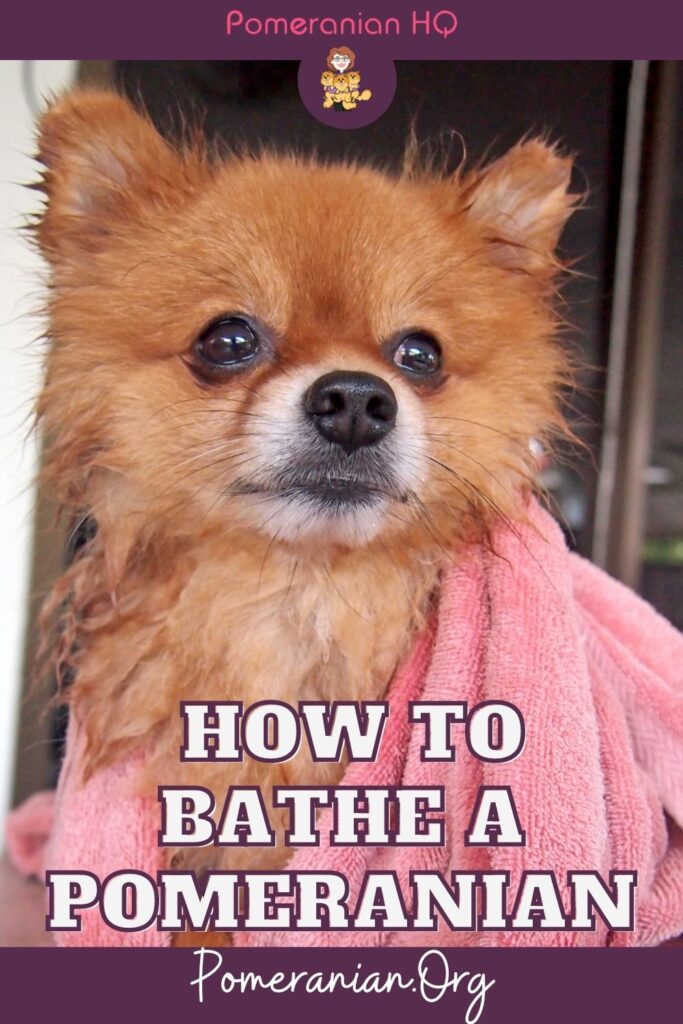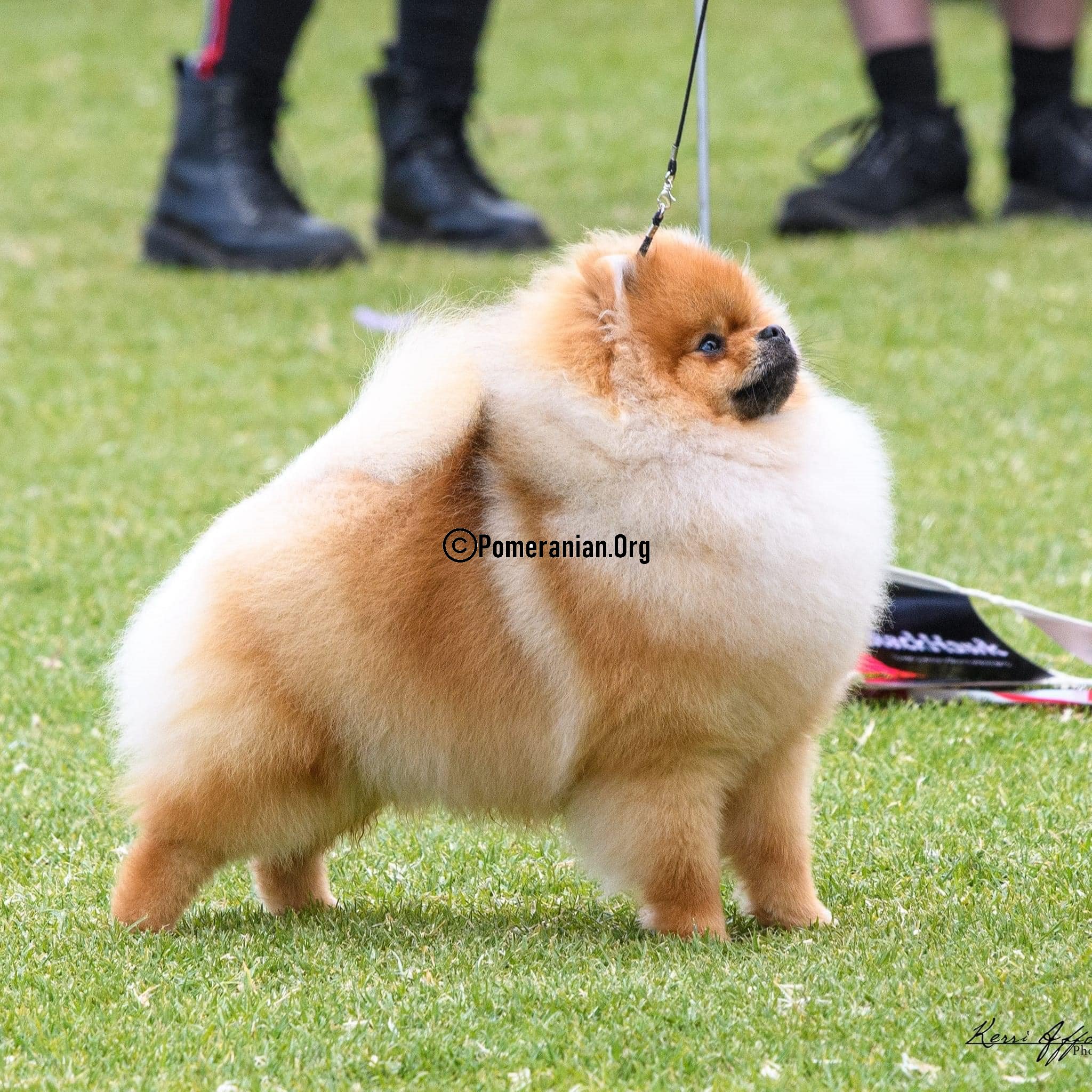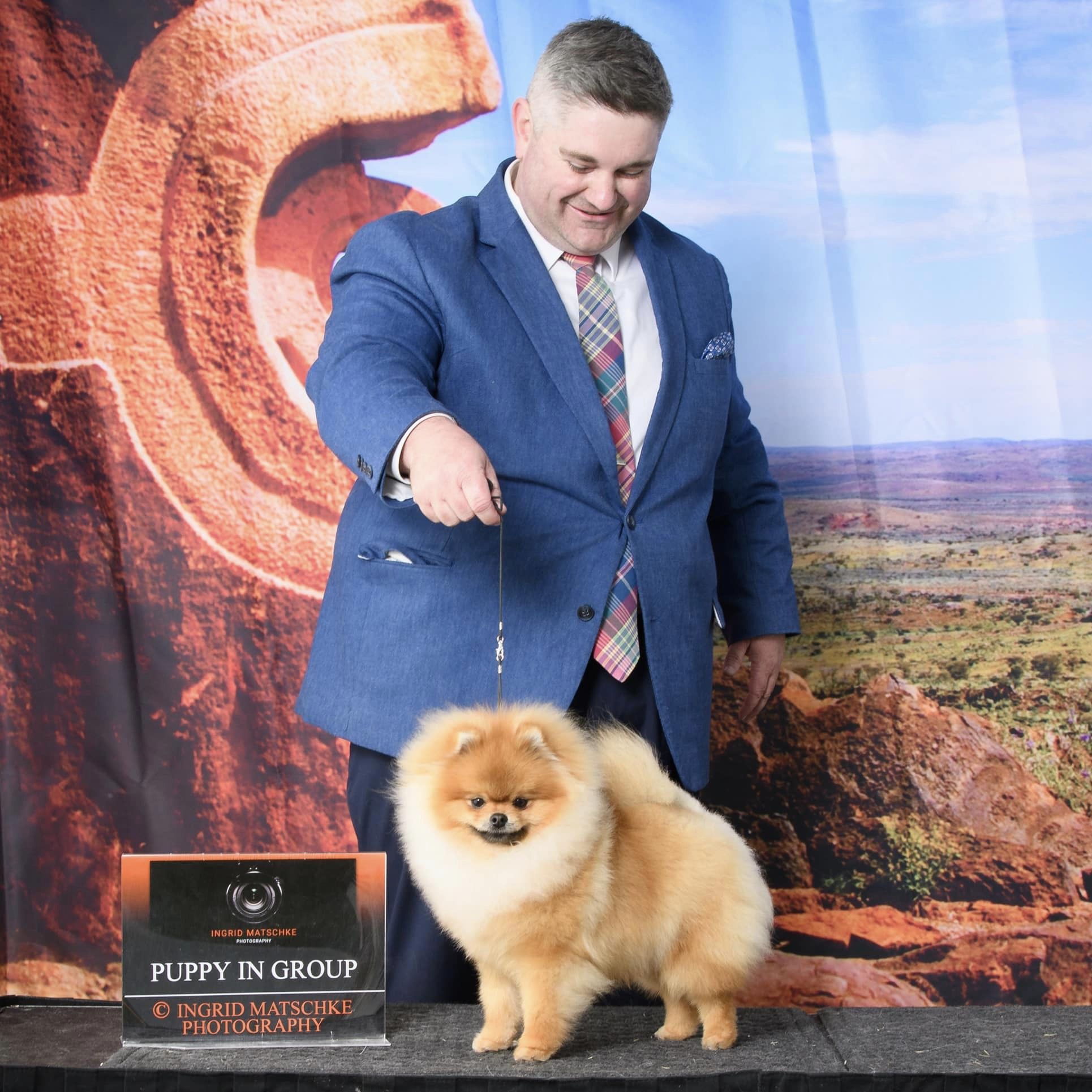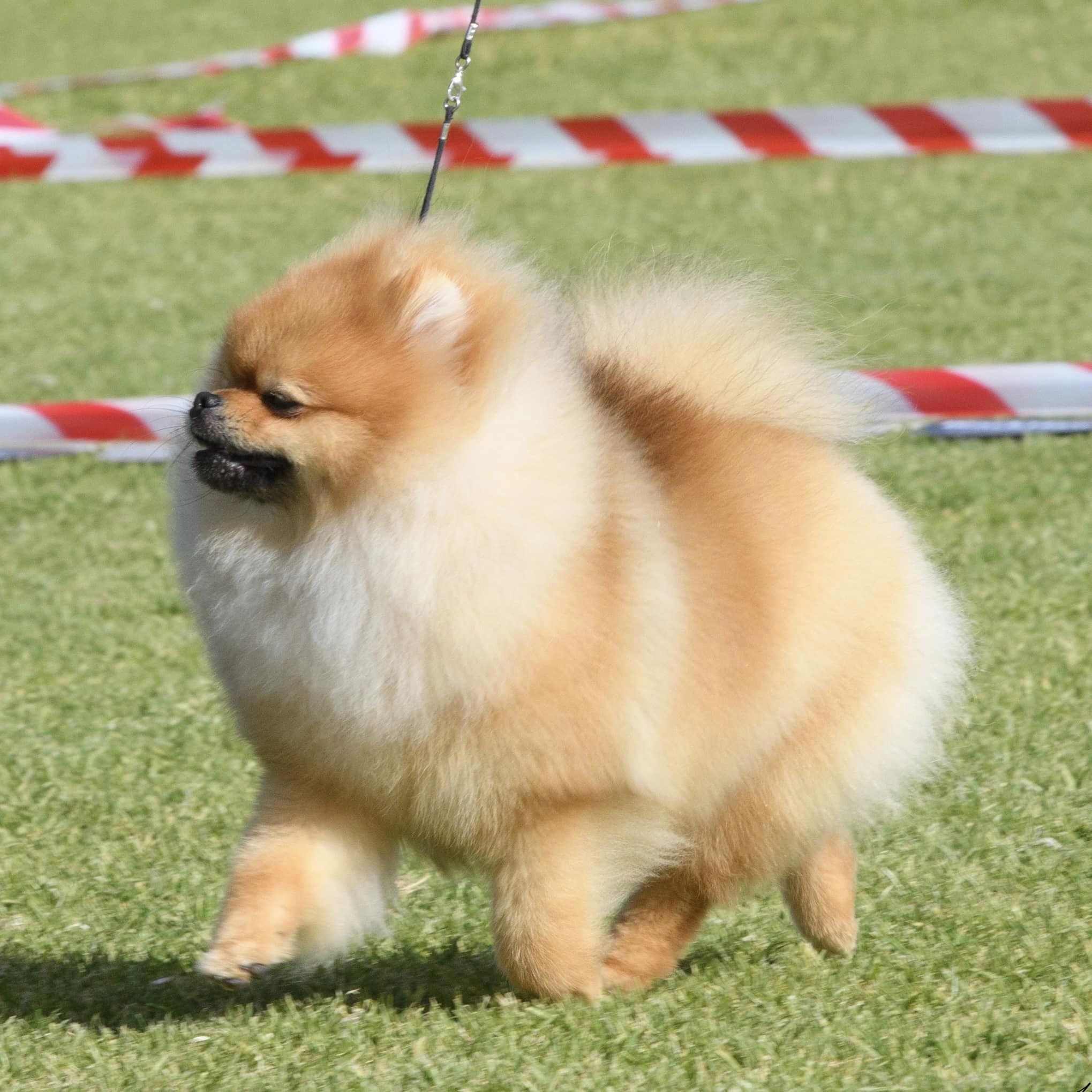

Bathing plays a critical role in maintaining coat condition, skin health, and hygiene in this breed. Understanding how to bathe a Pomeranian correctly is essential, as improper techniques can lead to coat matting, dryness, and long-term damage to the double coat.
Written by Denise Leo, Pomeranian expert, ANKC breed specialist judge, author, and preservation breeder with over 50 years of experience.
The Pomeranian’s dense double coat requires a structured and careful bathing approach. From preparation and product selection to correct drying methods, each step directly impacts coat quality and overall well-being. This is particularly important in puppies, where incorrect handling during early grooming experiences can affect future coat maintenance and behaviour.
This guide provides a clear, step-by-step explanation of how to bathe a Pomeranian safely and effectively, including when to begin bathing puppies, how to identify when a bath is required, and how to avoid common mistakes that can compromise coat integrity.
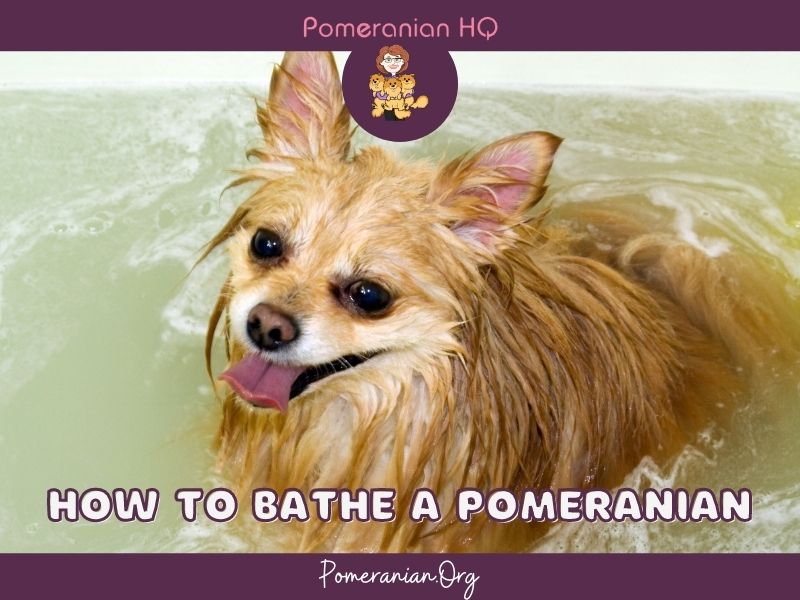
How to Bathe a Pomeranian Puppy
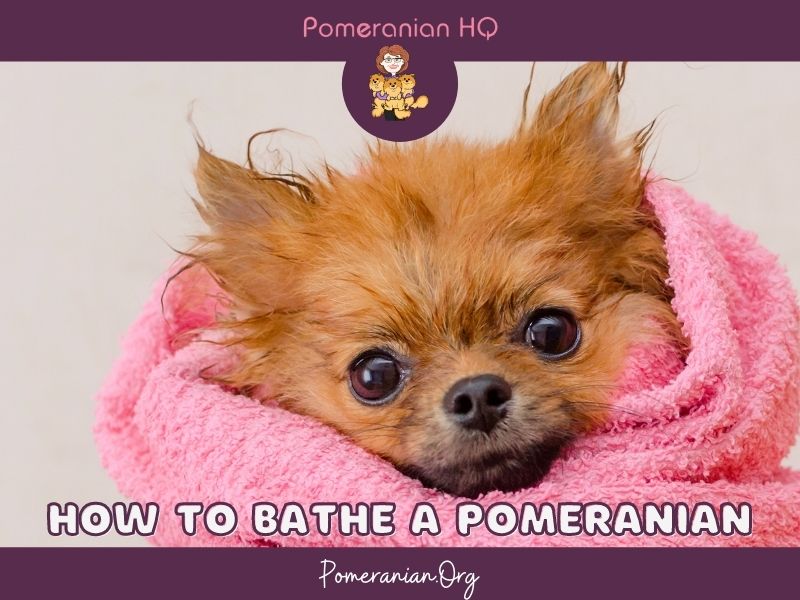
How to bathe a Pomeranian puppy: To bathe a Pomeranian puppy, first brush the coat thoroughly to remove any tangles. Use lukewarm water and a gentle puppy shampoo, washing the body first and the head last. Rinse completely to remove all residue, then towel dry and use a dryer while brushing to ensure the coat is fully dry. Always keep water out of the ears and maintain a calm, controlled environment throughout the process.
Quick Steps: How to Bathe a Pomeranian Puppy
- Brush the coat thoroughly before bathing
- Use lukewarm water
- Apply puppy-safe shampoo
- Wash body first, head last
- Rinse thoroughly
- Towel dry gently
- Blow dry while brushing
- Ensure the coat is completely dry
How Often to Bathe a Pomeranian Puppy?
Pomeranian puppies should not be bathed too frequently, as over-bathing can strip the natural oils from the skin and coat. As a general guideline, once a puppy is over 8 weeks of age, bathing is typically done every 3 to 4 weeks, depending on coat condition and lifestyle.
The priority during puppyhood is not frequency but introducing bathing as a calm, positive grooming experience.
For a detailed explanation of bathing frequency, including factors such as age, coat condition, and lifestyle, read our full guide:
👉 How Often Should I Bathe My Pomeranian
How To Bathe a Pomeranian Puppy
Learning how to bathe a Pomeranian puppy correctly is essential for maintaining coat quality and ensuring a positive grooming experience from an early age. While bathing a small breed puppy is generally manageable, proper preparation and technique are critical to avoid stress, slipping, or ineffective washing.
Written by Denise Leo, Pomeranian expert, ANKC breed specialist judge, author, and preservation breeder with over 50 years of experience.
Step 1 – Choose the Right Location
Selecting an appropriate bathing area is the first step in the Pomeranian bathing process. Due to their small size, a full bathtub is unnecessary and often impractical.
The most suitable locations include:
- a kitchen sink
- a laundry sink
- a bathroom basin
These options allow better control of the puppy, reduce the risk of slipping, and minimise physical strain for the owner.
Bathing a Pomeranian puppy in a large bathtub can make it difficult to safely manage a wet, moving puppy. It also increases the likelihood that the puppy will become anxious or difficult to handle.
For best results, use a confined, elevated space where you can maintain secure handling and keep the bathing process calm and efficient.

Step 2 – Prepare Before Bathing
Preparation is a critical part of learning how to bathe a Pomeranian puppy properly. Skipping this step can lead to matting, an ineffective wash, and a stressful experience for both puppy and owner.
Before introducing your puppy to water, ensure everything is ready and within reach.
Brush the Coat Thoroughly
The coat must be completely brushed out prior to bathing. Any tangles or small mats will tighten when wet, making them significantly more difficult to remove and potentially damaging the coat.
Pay particular attention to:
- behind the ears
- under the front legs
- around the neck and collar area
A gentle line-brushing technique is recommended to ensure the coat is free from knots.
Gather All Supplies
Have all bathing items prepared before you begin to avoid leaving your puppy unattended.
Essential items include:
- puppy-safe shampoo (mild, pH balanced)
- absorbent towels
- a non-slip mat or towel for footing
- a suitable dryer (if available)
Having everything organised ensures the bathing process remains smooth and controlled.
Check Water Temperature
Water should be lukewarm — neither hot nor cold. Puppies are sensitive to temperature, and incorrect water temperature can cause discomfort or distress.
Always test the water on your wrist before placing your puppy in the sink.
Create a Calm Environment
A quiet, calm setting will help your puppy feel secure. Speak gently and handle your puppy with confidence to build trust and create a positive grooming experience.
Early bathing experiences are important. A well-managed introduction to bathing will make future grooming significantly easier.
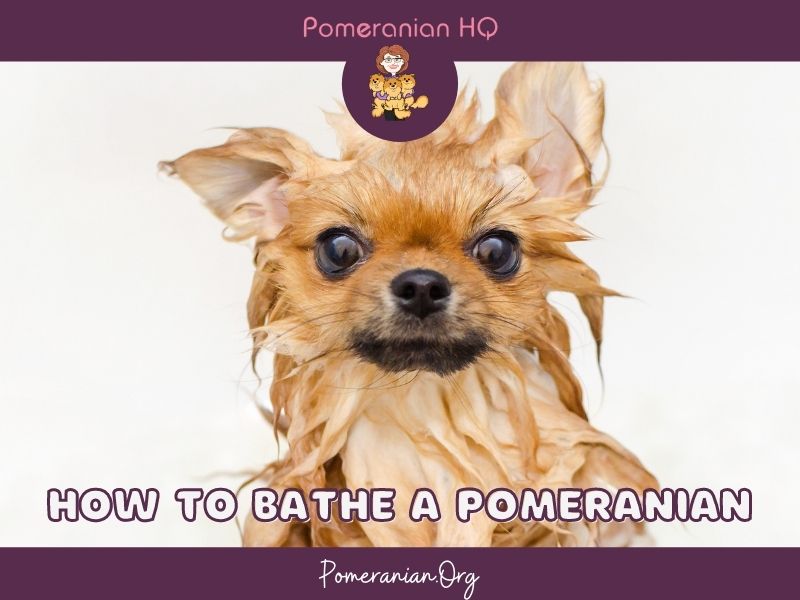
Step 3 – Wetting and Washing the Coat Properly
Correct technique during this stage is essential when learning how to bathe a Pomeranian puppy, as improper wetting and washing can lead to incomplete cleansing, coat damage, or unnecessary stress.
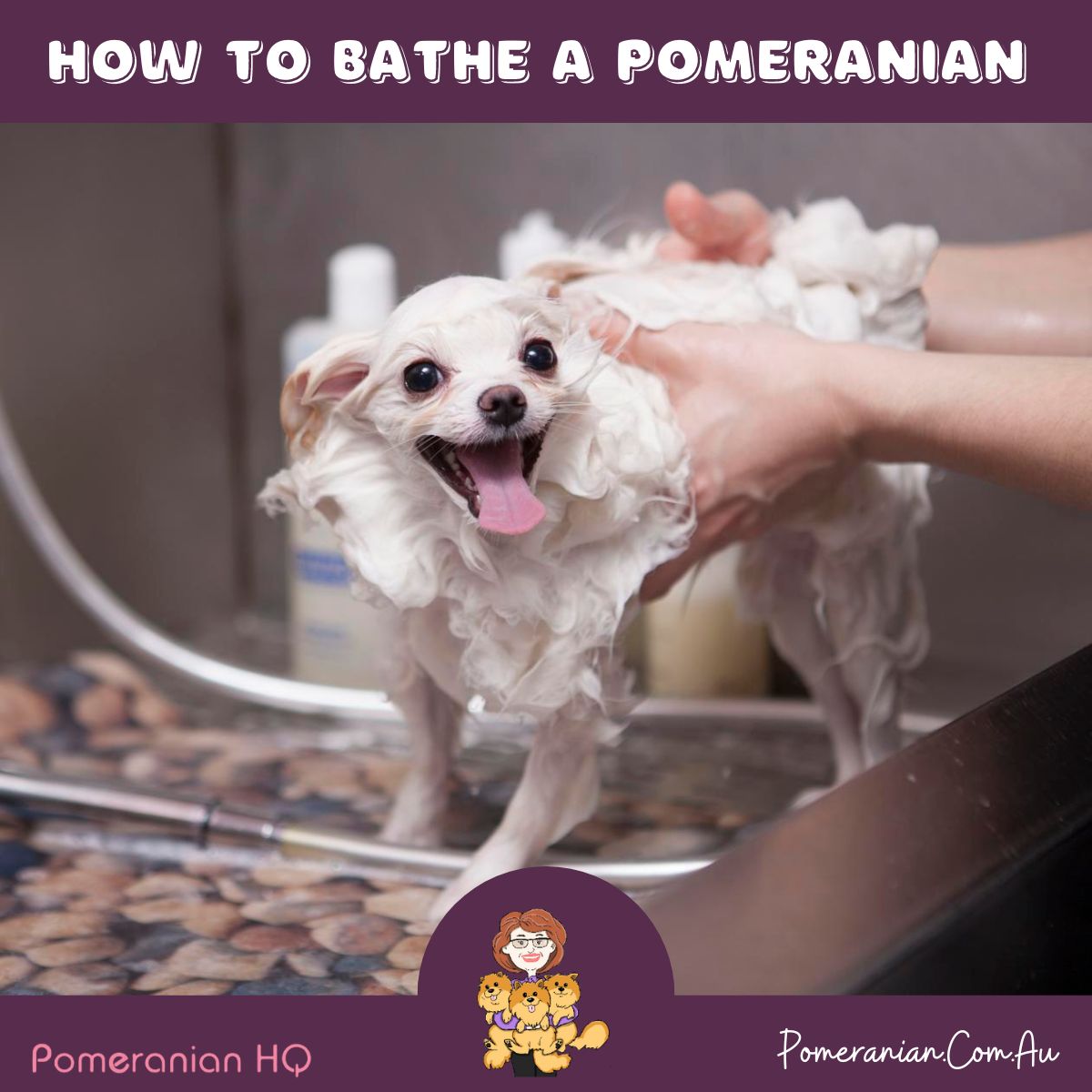
Introduce Water Gradually
Begin by gently wetting the puppy, starting from the lower body. Avoid placing the puppy directly under running water, as this can be overwhelming.
Work in this order:
- feet and legs
- body
- chest and neck
- head (last)
Using a gentle spray or a cup, slowly saturate the coat. Due to the density of the Pomeranian’s double coat, it is important to ensure water penetrates through to the skin rather than just wetting the surface.
Apply Shampoo Correctly
Use a small amount of a mild, puppy-safe shampoo. It is often beneficial to dilute the shampoo slightly with water to ensure even distribution throughout the coat.
Apply shampoo in sections:
- body first
- then chest and legs
- head last (using minimal product)
Gently massage the shampoo through the coat using your fingertips. Avoid vigorous scrubbing, as this can cause tangling in the coat.
Take care to:
- keep shampoo out of the eyes
- avoid water entering the ears
- maintain a calm, steady approach
Focus on Thorough, Gentle Cleansing
Ensure all areas of the coat are cleaned evenly, particularly areas prone to dirt build-up such as the feet and underside. I use a face cloth on the face and ears.
A controlled, methodical approach will result in a cleaner coat while maintaining coat structure and preventing unnecessary matting.
Step 4 – Rinse Thoroughly
Thorough rinsing is one of the most critical steps when learning how to bathe a Pomeranian puppy, yet it is also one of the most commonly overlooked. Any shampoo residue left in the coat can lead to skin irritation, a dull coat, and an increased risk of matting.
Rinse Until the Coat is Completely Clean
Begin rinsing from the top of the body and work downward, allowing the water to flow naturally through the coat.
Rinse in this order:
- neck and back
- sides and chest
- legs and feet
- underside
- head (last, with care)
Due to the thickness of the Pomeranian double coat, rinsing must be slow and thorough to ensure all shampoo is removed from both the outer coat and the undercoat.
Check for Residue
Gently part the coat with your fingers while rinsing to ensure water is reaching the skin. Pay close attention to areas where shampoo can accumulate, including:
- behind the ears
- under the front legs
- around the neck
- base of the tail
Continue rinsing until the water runs completely clear and the coat feels clean, with no slippery or soapy residue remaining.
Protect Sensitive Areas
Take extra care when rinsing the head. Avoid direct water flow into the eyes and ears. Use a gentle stream or your hand to guide water safely over the head area.
Proper rinsing is essential for maintaining healthy skin and preserving coat quality. Incomplete rinsing can undo the benefits of the bath and lead to ongoing coat management issues.
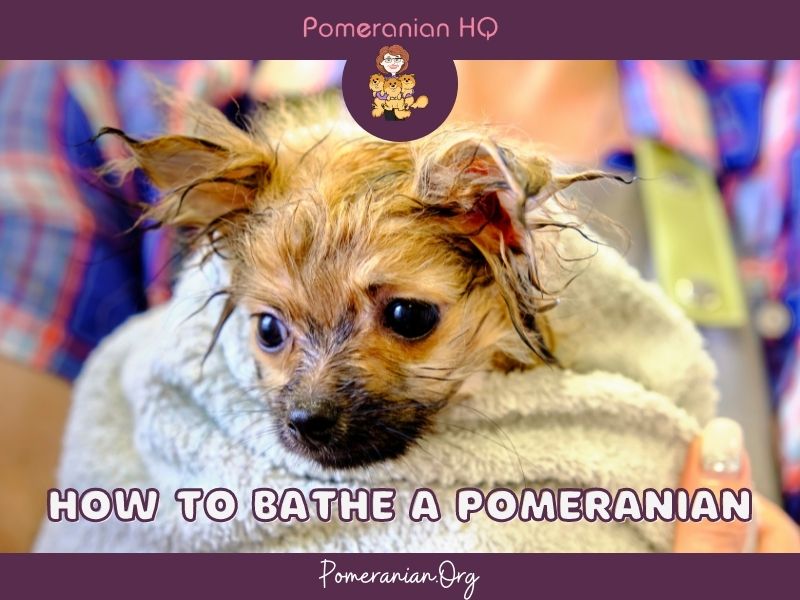
Step 5 – Dry the Coat Completely
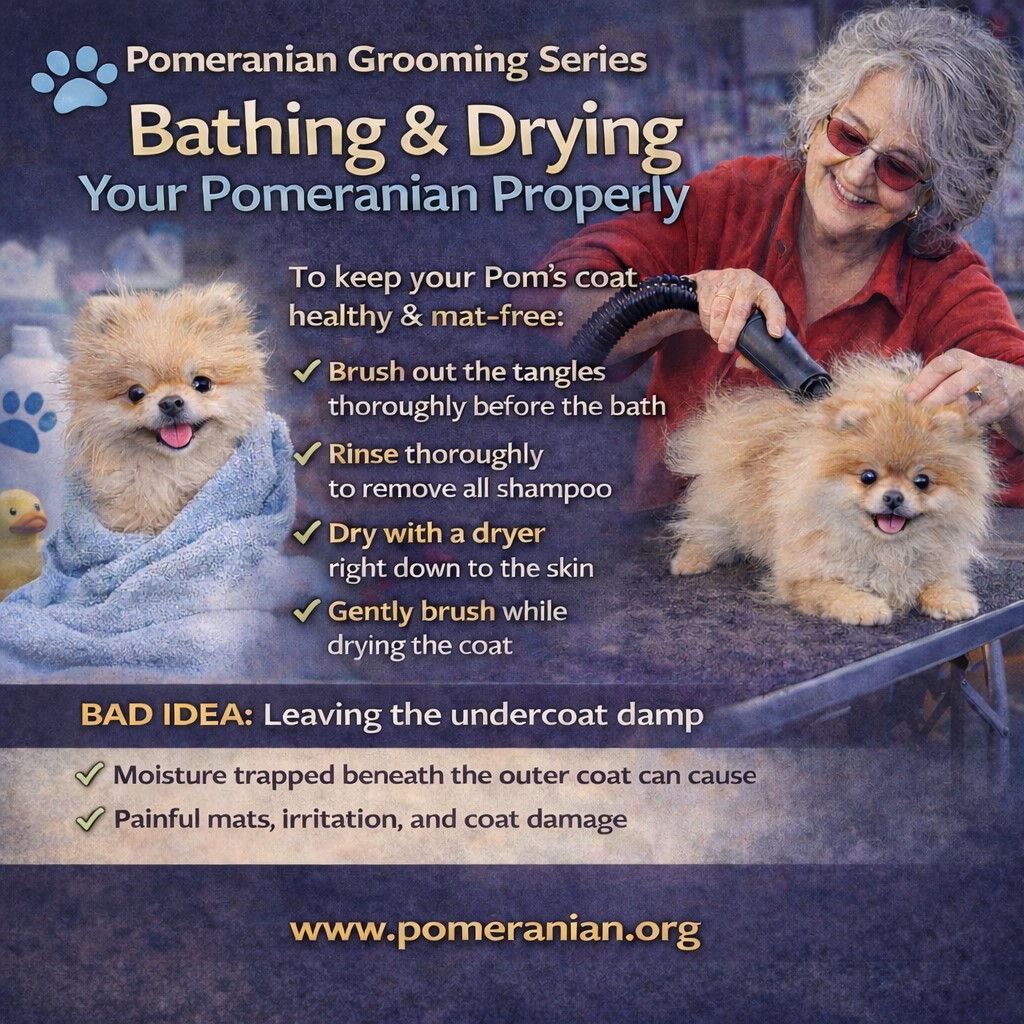
Proper drying is the most important step when learning how to bathe a Pomeranian puppy, as it directly impacts coat quality, skin health, and the prevention of matting. Allowing a Pomeranian to air dry can lead to coat collapse, tangling, and long-term coat damage.
Remove Excess Water First
Begin by gently squeezing excess water from the coat using your hands. Follow with a clean, absorbent towel to blot the coat dry.
Avoid rubbing the coat vigorously, as this can cause tangles and disrupt the coat structure.
Use a Suitable Dryer
A controlled drying method is essential. If available, use a dog dryer or a human hairdryer set to:
- low heat
- moderate airflow
Hold the dryer at a safe distance and move it continuously to prevent overheating in any one area.
Brush While Drying
As the coat dries, gently brush using a line-brushing technique. This helps to:
- separate the coat
- prevent tangles from forming
- maintain volume and correct coat texture
Work in sections, ensuring each area is fully dry before moving on.
Ensure the Coat is Completely Dry
The dense double coat of a Pomeranian can trap moisture close to the skin. Even if the surface appears dry, the undercoat may still be damp.
Pay close attention to:
- behind the ears
- under the legs
- around the neck
- base of the tail
Drying must be completed thoroughly to prevent matting, skin irritation, and coat issues.
Check and Clean the Ears
In addition to drying the coat, proper ear care is essential after bathing. Any moisture left in the ears can lead to infection.
Carefully inspect your puppy’s ears and:
- ensure they are completely dry
- use a suitable ear cleaner to remove debris and dirt
- gently clean the ear area using cotton wool
Some owners place cotton balls in their puppy’s ears before bathing. This is generally unnecessary if care is taken not to wet the ears and they are properly cleaned and dried afterwards.
Watch for Signs of Moisture or Infection
If your Pomeranian puppy is shaking his head or scratching his ears after a bath, it may indicate that moisture remains in the ear canal.
Signs such as:
- unpleasesant odor
- redness
- persistent scratching
may indicate a yeast or bacterial infection. In these cases, veterinary advice should be sought. Do not attempt to treat ear infections yourself.
Proper drying, combined with correct ear care, is essential for maintaining both coat condition and overall health in the Pomeranian.
Step 6 – Final Check and Post-Bath Care
The final stage in learning how to bathe a Pomeranian puppy is to ensure the coat, skin, and overall condition of the puppy are correct after bathing and drying. This step helps maintain coat quality and reinforces a positive grooming routine.
Check the Entire Coat
Once fully dry, carefully inspect the coat by parting it with your fingers. The coat should feel:
- clean and soft
- completely dry through to the skin
- free from tangles or small knots
If any damp areas remain, continue drying and brushing until the coat is fully finished.
Brush and Finish the Coat
Lightly brush through the entire coat to ensure it is properly separated and sitting correctly. This helps maintain the natural volume and structure of the Pomeranian coat.
Pay attention to areas prone to tangling, including:
- behind the ears
- under the front legs
- around the neck and chest
Reward and Reinforce Positive Behaviour
Bathing should always end on a positive note. Offer calm praise or a small reward so your puppy associates grooming with a pleasant experience.
Early positive reinforcement is essential in developing a Pomeranian that is easy to groom throughout its life.
Monitor After the Bath
Observe your puppy over the next few hours to ensure they remain comfortable and relaxed. Watch for any signs of:
- skin irritation
- scratching
- sensitivity
If any unusual reactions occur, review the products used and adjust as needed.
A correct bathing routine not only keeps your Pomeranian clean but also supports coat health, skin condition, and long-term grooming success.
5 Common Mistakes When Bathing a Pomeranian Puppy
Even owners with the best intentions can make mistakes when learning how to bathe a Pomeranian puppy. Because the Pomeranian has a dense double coat and delicate skin, incorrect bathing methods can lead to matting, skin irritation, poor coat texture, and an unhappy puppy. Avoiding the following common mistakes will help protect coat quality and make bathing a calmer, safer experience.
1. Bathing Without Brushing First
One of the biggest mistakes is placing a Pomeranian puppy in the bath before the coat has been thoroughly brushed. Any tangles or small knots present before bathing will tighten once wet, making them much harder to remove afterwards. Always brush the coat carefully before bathing, paying particular attention to areas such as behind the ears, under the front legs, and around the neck.
2. Using the Wrong Shampoo
Harsh products, including human shampoos, should never be used on a Pomeranian puppy. These can strip the natural oils from the skin and coat, causing dryness, irritation, and poor coat condition. A mild, puppy-safe shampoo designed for dogs is the correct choice.
3. Failing to Rinse Thoroughly
Shampoo residue left in the coat can cause itching, skin irritation, and a dull, sticky coat texture. Because the Pomeranian has a thick double coat, rinsing must be slow and thorough. Water should reach right through the coat to the skin, and rinsing should continue until the water runs completely clear.
4. Allowing the Coat to Air Dry
Allowing a Pomeranian puppy to air dry is a major coat-care mistake. Moisture trapped in the undercoat can lead to matting, coat collapse, and skin problems. The coat should always be dried thoroughly using towels followed by careful dryer use and gentle brushing as the coat dries.
5. Neglecting Ear Care After the Bath
After bathing, the ears must be checked and dried properly. Any moisture left in the ears can increase the risk of irritation or infection. If your puppy shakes his head, scratches his ears repeatedly, or develops redness or odour after a bath, this may indicate a problem that requires veterinary attention.
Denise Leo’s Tip: A successful bath is not just about getting the puppy clean. Correct preparation, thorough rinsing, complete drying, and proper ear care all work together to protect the Pomeranian’s coat and skin.
Pomeranian Bathing FAQ
Below are answers to some of the most commonly asked questions about how to bathe a Pomeranian puppy and maintain proper coat care.
How often should I bathe my Pomeranian puppy?
Once your puppy is over eight weeks of age, bathing is generally recommended every 3 to 4 weeks. However, frequency will depend on coat condition, lifestyle, and environment. Over-bathing should be avoided as it can dry the skin and coat.
Can I use human shampoo on my Pomeranian?
No. Human shampoos are not suitable for dogs and can disrupt the natural balance of your puppy’s skin. Always use a mild, puppy-safe shampoo specifically formulated for dogs.
Should I let my Pomeranian air dry?
No. Air drying can lead to matting, coat collapse, and moisture being trapped in the undercoat. The coat should always be dried thoroughly using towels followed by a gentle dryer while brushing.
When can I start bathing my Pomeranian puppy?
Puppies should not be fully bathed before eight weeks of age. Prior to this, spot cleaning with a warm, damp cloth is recommended if needed.
What is the most important part of bathing a Pomeranian?
Thorough drying is the most critical step. A Pomeranian’s dense double coat can trap moisture close to the skin, leading to matting and skin issues if not completely dried.
Denise Leo’s Tip: Consistency is key. A regular, well-managed bathing routine combined with proper drying and brushing will maintain coat quality and make grooming easier throughout your Pomeranian’s life.
Closing Thoughts
Learning how to bathe a Pomeranian puppy properly is one of the most important skills you can develop as a Pomeranian owner. When done correctly, bathing not only keeps your puppy clean but also plays a major role in developing and maintaining the beautiful, full coat the breed is known for.
Over my many years with Pomeranians, I’ve seen firsthand how much difference correct bathing, drying, and coat care make. It’s not just about getting your puppy wet and clean — it’s about protecting the coat, preventing matting, and creating a calm, positive grooming experience from the very beginning.
Take your time, be gentle, and always finish with a thoroughly dry coat. These small details are what separate an average coat from a truly beautiful one.
With the right approach and consistency, your Pomeranian will not only look its best but will also learn to enjoy grooming as part of everyday life.
Copyright Pomeranian.org. All Rights Reserved.