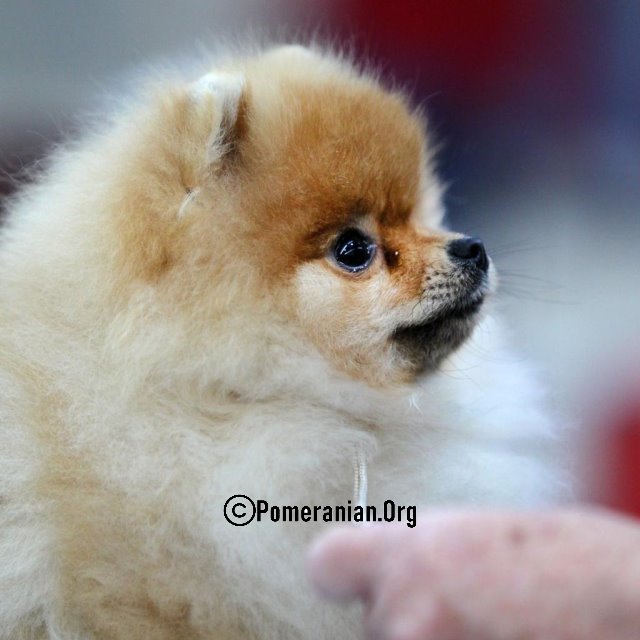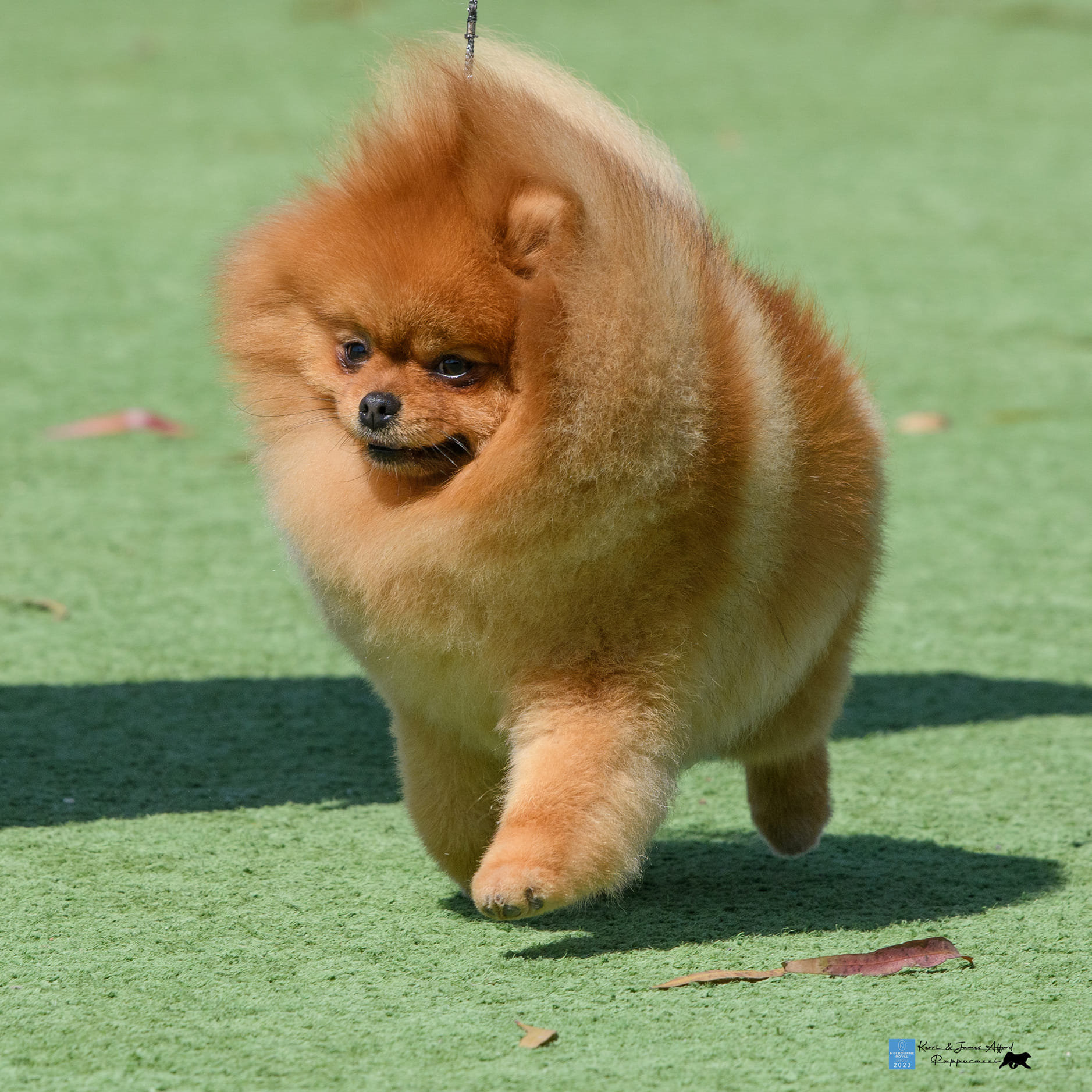

The Pomeranian has a remarkable history extending from its larger Spitz ancestors to the tiny, confident companion recognized around the world today. Named after the historic Pomerania region on the southern coast of the Baltic Sea—now divided between Germany and Poland—the breed was gradually reduced in size and developed into the modern Pomeranian, particularly through the work of dedicated British breeders.
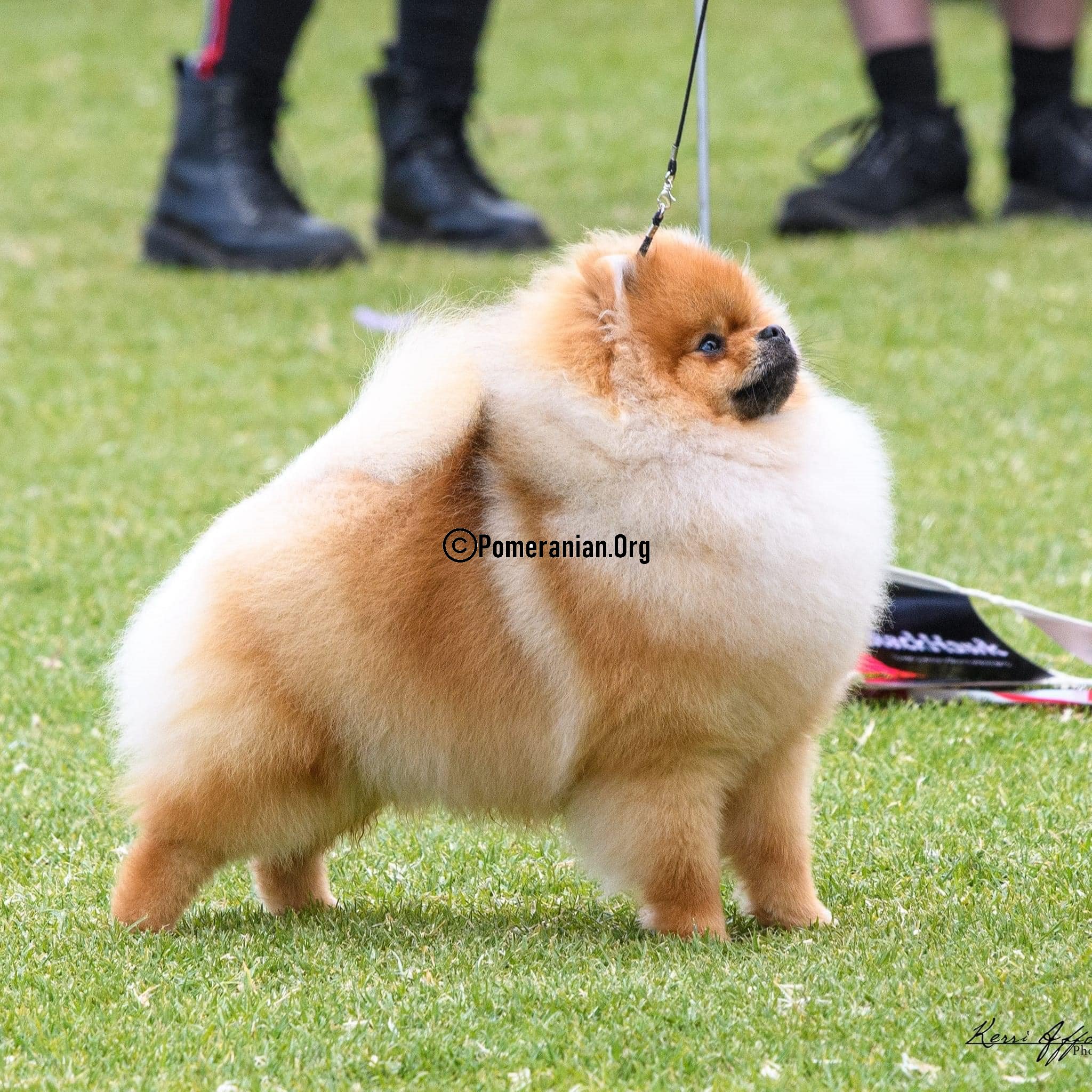
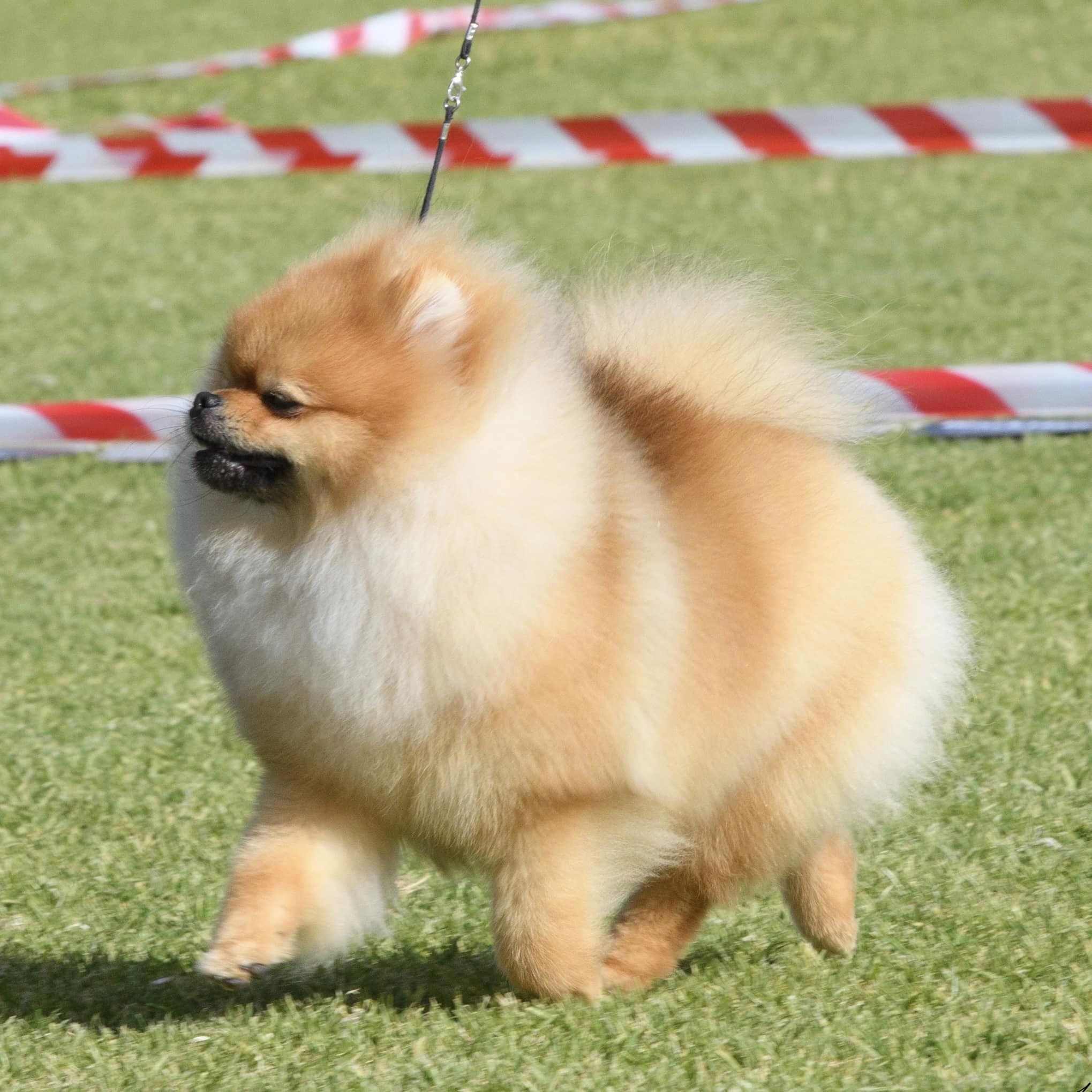
Although considerably smaller than its ancestors, today’s Pomeranian retains many distinctive Spitz characteristics, including small erect ears, a profuse double coat, a heavily plumed tail carried over the back and a bold, alert personality. Royal interest, early dog shows, the establishment of specialist breed clubs and carefully written breed standards all played important roles in shaping the Pomeranian we know today.
This article traces that development through historical accounts, early breed standards, important show results and the Pomeranians whose influence helped establish the breed. Rather than concentrating only on royal ownership or general history, it preserves the names and achievements of significant early dogs, breeders and exhibitors who might otherwise be forgotten.
This Pomeranian history has been compiled by Denise Leo from rare breed books, early standards, historical show records and more than 50 years devoted to breeding, exhibiting and judging Pomeranians. The names and achievements of important early Pomeranians have been retained because these dogs and their breeders helped create the modern Pomeranian.

Pomeranian History at a Glance
The history of the Pomeranian involves several stages of development rather than one simple place of origin. Its ancestors belonged to the wider Spitz family, while its name came from Pomerania, a historic region along the Baltic coast. The smaller Pomeranian recognized today was later developed largely through the work of British breeders.
European Spitz
The historic Pomerania region
Divided between northern Germany and Poland
Germany
Larger, sturdy Spitz-type dogs
Guarding property, herding livestock and working alongside people
Principally shaped by breeders in Britain
Queen Charlotte and Queen Victoria helped make the breed fashionable
Pomeranians appeared during the 1860s
The Pomeranian Club was established in 1891
Published in 1898 and revised in 1909
The breed was recognized in 1900
Important: The Pomeranian did not suddenly change from a large sled dog into today’s tiny companion. Its development occurred gradually as breeders selected smaller Spitz-type dogs and refined their size, coat, expression and overall breed type over many generations.
Where Did Pomeranians Originate?
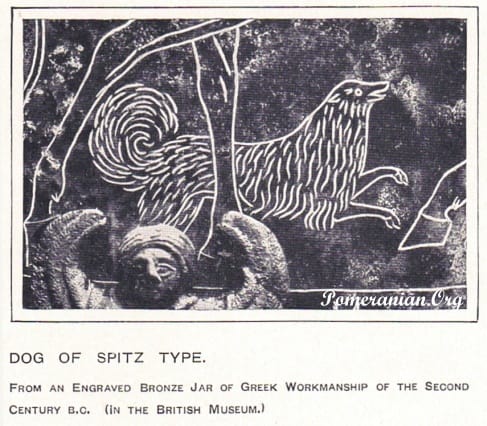
The Pomeranian’s history cannot be attributed to one country or one moment in time. The breed developed gradually from the larger Spitz-type dogs found across northern and central Europe. These dogs shared several characteristics still seen in the modern Pomeranian, including erect ears, a wedge-shaped head, a dense double coat and a plumed tail carried over the back.
The breed takes its name from Pomerania, a historic region situated along the southern coast of the Baltic Sea. Today, this territory forms part of northern Germany and Poland. Pomerania became associated with Spitz-type dogs and is believed to have played an important role in their development and gradual reduction in size.
However, the Pomeranian as we recognize it today was not created entirely within the Pomerania region. Related Spitz dogs were known by different names throughout Germany, France, Holland and Italy, and their appearance varied according to region and purpose.
The Fédération Cynologique Internationale places the Pomeranian within the German Spitz standard and lists Germany as its country of origin. In Britain and the United States, the Pomeranian is recognized as a separate Toy breed.
British breeders were particularly influential in transforming the larger European Spitz into the smaller, profusely coated Pomeranian. Through selective breeding, they gradually refined its size, appearance, coat, colors and breed type. Therefore, the modern Pomeranian represents a combination of ancient Spitz ancestry, European regional development and the dedicated work of British breeders.
Where Does the Name Pomeranian Come From?
The Pomeranian is named after Pomerania, a historic region situated along the southern coast of the Baltic Sea. This territory is now divided between northern Germany and Poland.
The name does not necessarily mean that the breed’s earliest ancestors originated entirely within Pomerania. Spitz-type dogs were already found across several areas of northern and central Europe. However, Pomerania became strongly associated with the dogs and is believed to have been an important region in their development and size reduction.
Swedish naturalist Carl Linnaeus referred to the Canis Pomeranus during the 18th century, providing evidence that dogs associated with the Pomeranian name were already known throughout central and northern Europe.
The breed was also known by several different regional names. In France, similar dogs were called the Chien de Poméranie, Lulu or Lou-Lou. In Holland, related dogs were known as Wolfshonds and later Keeshonds. Italy had its own Spitz varieties, including the Volpino Italiano.
In Germany, dogs within the wider Spitz family were historically identified by names describing their size, appearance or region. These included the Wolfspitz, Gross Spitz, Mittelspitz, Kleinspitz and Zwergspitz. The modern Pomeranian remains closely connected to this German Spitz family and is known as the Zwergspitz, or Dwarf Spitz, under the FCI breed standard.
As the smaller dogs became established and developed in Britain, the name Pomeranian was retained. It eventually became the internationally familiar name for the tiny, profusely coated companion recognized today.
What Were Pomeranians Bred From?
Pomeranians were not created by crossing two modern dog breeds. They descended from the much older Spitz-type dogs found throughout northern and central Europe.
These dogs were distinguished by their dense double coats, erect ears, wedge-shaped heads and heavily plumed tails carried over their backs. These characteristics remain clearly visible in the modern Pomeranian.
The Pomeranian’s larger ancestors were sturdy working dogs used for guarding property, protecting livestock and working alongside people. Spitz-type dogs developed in different sizes and varieties according to their region, purpose and the preferences of their breeders.
Under the Fédération Cynologique Internationale system used throughout much of Europe, the Pomeranian is known as the Zwergspitz, meaning Dwarf Spitz. It is classified as the smallest variety of the German Spitz.
The German Spitz varieties include:
- Wolfspitz or Keeshond
- Grossspitz or Giant Spitz
- Mittelspitz or Medium Spitz
- Kleinspitz or Miniature Spitz
- Zwergspitz or Pomeranian
In Britain, the United States, Australia and several other countries, the Pomeranian is recognized and exhibited as a separate Toy breed rather than as a variety of the German Spitz.
The modern Pomeranian was developed by selecting progressively smaller Spitz dogs while retaining the breed’s characteristic double coat, plumed tail, alert expression and confident temperament. British breeders later played a major role in refining the Pomeranian’s size, colors and overall breed type.
How Big Were Pomeranians Originally?
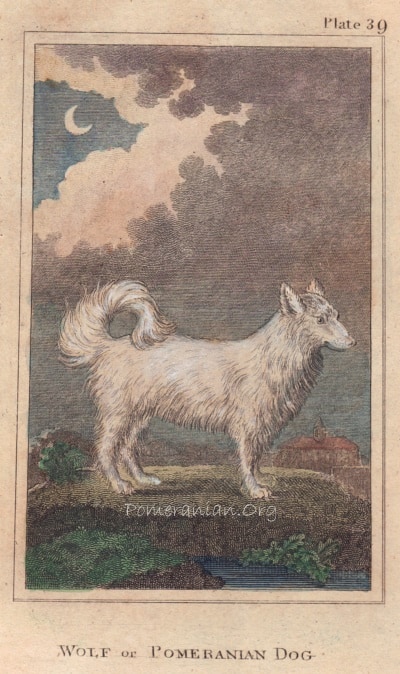
Early Pomeranians were considerably larger than the Toy dogs recognized today. Historical descriptions show that Pomeranian-type dogs varied greatly in size, with some standing approximately 18 to 20 inches high and weighing as much as 20 pounds.
These early dogs retained the recognizable Spitz characteristics of a thick double coat, short erect ears, a fox-like head and a large plumed tail carried over the back. However, they were taller, heavier and more substantial than the modern Pomeranian.
One of the most valuable early descriptions appears in William Taplin’s The Sportsman’s Cabinet, published in London in 1803:
“POMERANIAN; or, WOLF-DOG.
The dog so called in this country is but little more than eighteen or twenty inches in height, and is distinguished by his long, thick, and rather upright coat, forming a most tremendous ruff about the neck, but short and smooth on the head and ears; they are mostly of a pale yellow, or cream-colour, and lightest on the lower parts.
Some are white, some few black, and others but very rarely spotted; the head broad towards the neck, and narrowing to the muzzle; ears short, pointed, and erect; nose and eyes mostly black; the tail large and bushy invariably curled in a ring upon the back.
Instances of smooth, or short-coated ones are very rarely seen; in England he is much more familiarly known by the name of fox-dog, and this may originally have proceeded from his bearing much affinity to that animal about the head; but, by those who in their writings describe him as a native of Pomerania, he passes under the appellation of the Pomeranian-dog.”
—William Taplin, The Sportsman’s Cabinet, 1803
Taplin’s description is important because it records several features that remain essential to Pomeranian breed type more than two centuries later. These include the profuse neck ruff, short erect ears, dark eyes and nose, fox-like expression, dense coat and heavily plumed tail carried over the back.
It also confirms that cream, white, black and occasionally spotted Pomeranians were known at the beginning of the 19th century. This provides valuable historical evidence that early Pomeranians were not confined to one coat color.
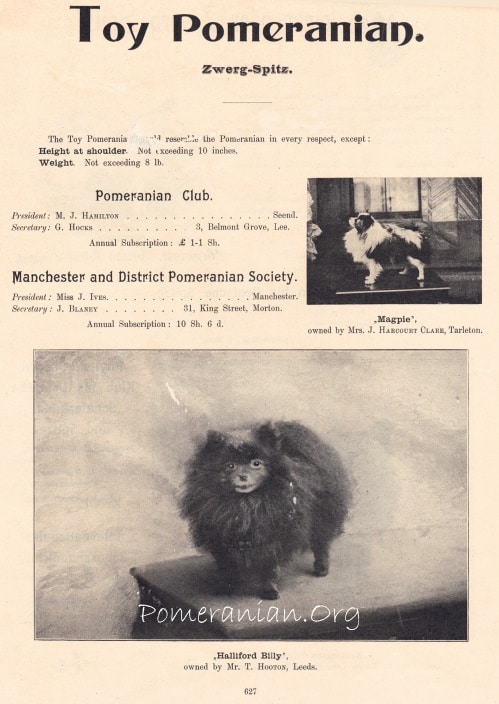
The reduction in size occurred gradually. Breeders increasingly selected the smaller dogs as companions, particularly after the breed became fashionable in Britain. By the beginning of the 20th century, the smaller Toy Pomeranian was becoming dominant in the show ring, although early breed standards continued to recognize both miniature and larger Pomeranians.
How Did Pomeranians Become So Small?
The Pomeranian did not suddenly change from a large working Spitz into the tiny Toy breed recognized today. Its reduction in size occurred gradually over many generations as breeders selected smaller dogs while preserving the breed’s characteristic coat, tail carriage, alert expression and confident temperament.
Smaller Spitz dogs had long been kept as pets and companions in Europe, but British fanciers played the most important role in developing the modern Pomeranian. When Pomeranian-type dogs became established in England, they varied considerably in size, color and appearance. Some were substantial dogs weighing as much as 20 pounds, while others were much smaller.
Royal interest helped bring these dogs to public attention. In 1761, Queen Charlotte married King George III and brought her dogs to England. They were generally described as Pomeranian or Wolf dogs and were larger than the Pomeranians seen in today’s show rings.
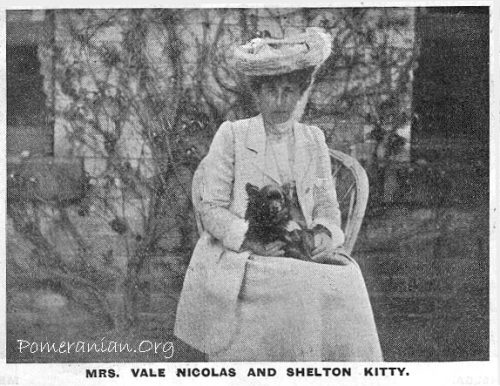
Queen Victoria’s enthusiasm for the breed later increased its popularity dramatically. She owned, bred and exhibited Pomeranians, including comparatively small dogs imported from Italy. Her preference for smaller Pomeranians encouraged public demand for dogs of a similar size.
However, Queen Victoria did not single-handedly reduce the size of the Pomeranian. The modern breed resulted from the sustained work of numerous breeders who selected smaller dogs over several decades. Dog shows, specialist breed clubs and written breed standards gradually encouraged greater consistency.
During the breed’s early development, Pomeranians were shown in different size divisions. Classes were provided for small, medium and large dogs because breeders had not yet agreed on the ideal weight.
The 1909 British Pomeranian breed standard recommended the following classifications:
- Not exceeding 7 pounds — Pomeranian Miniatures
- Exceeding 7 pounds — Pomeranians
- Pomeranians and Pomeranian Miniatures mixed
Dogs weighing less than seven pounds were therefore described as Pomeranian Miniatures, while larger dogs continued to be recognized as Pomeranians. Historical records indicate that dogs weighing up to 20 pounds were still permitted under the larger classification.
The pursuit of increasingly smaller dogs was not always beneficial. Some breeders used very close breeding in an attempt to reduce size quickly. Historical accounts described resulting problems such as apple-shaped heads, prominent eyes, weak construction, lack of substance and increased difficulties during whelping.
By approximately 1916, the larger Pomeranians had largely disappeared from British show rings, leaving the smaller Toy variety as the established show dog. Careful breeders continued refining its size and appearance, eventually producing the compact, sound and profusely coated Pomeranian recognized today.
When Were Pomeranians First Shown at Dog Shows?
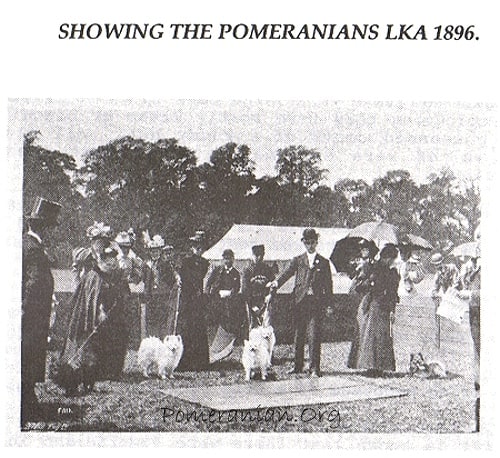
The development of organized dog shows in Britain played an important role in establishing the Pomeranian as a recognized breed. These early exhibitions allowed breeders to compare their dogs, encouraged public interest and eventually led to the formation of specialist breed clubs and written standards.
The first English dog show was held in Newcastle in 1859. Another important early show followed at Belle Vue Zoological Gardens in Manchester in 1861.
At the 1861 show, a Pomeranian Fox Dog owned by Mr. Bennett won a class for non-sporting foreign dogs. During the same year, Mr. J. H. Seed exhibited a Pomeranian named Jack at Birmingham. Following the show, Jack was offered for sale for ten guineas.
Pomeranians Exhibited at Birmingham in 1862
In December 1862, three Pomeranians were exhibited at Birmingham’s Third Annual Show of Sporting and Other Dogs. All three owners lived in Birmingham.
| Pomeranian | Owner | Owner’s Residence |
|---|---|---|
| Alba | Robert Thornley | Birmingham |
| Charlie | Mr. C. Bradley | Birmingham |
| Pop | Mr. J. A. Browning | Birmingham |
The Pomeranians competed in an additional class for small foreign dogs not used for field sports. The 12 dogs entered included a Volpino Romano—then also described as a Pomeranian—a Maltese, a Prussian Terrier, a Russian dog and a French-bred dog named Willie.
These early classifications show that dog-show organizers had not yet established a consistent definition of the Pomeranian. Several small European companion dogs were still grouped according to their size and foreign origin rather than recognized as individual breeds.
Pomeranians at the 1863 Great International Dog Show
The 1863 Great International Dog Show in London was the first to provide dedicated classes for Pomeranians.
| Placing | Pomeranian | Owner |
|---|---|---|
| First | Snap | Mr. Laskie |
| Second | Guess | Mr. St. Quintin |
| Third | Fox | Mr. Eaton |
This was an important milestone because Pomeranians were no longer competing only within a miscellaneous collection of small foreign dogs. Recognition through their own classes helped establish the Pomeranian’s separate identity within the developing British dog-show system.
Throughout 1863, Pomeranians were exhibited at several other shows in different parts of England. Their growing visibility encouraged more breeders and exhibitors to become involved with the breed, creating the foundation for its rapid development during the closing decades of the 19th century.
When Was the First Pomeranian Club Established?
As Pomeranians became more prominent at British dog shows, breeders began working toward greater consistency in size, coat, color and overall appearance.
A specialist breed club was needed to promote the Pomeranian, improve show classifications and establish a written standard for judges and breeders.
Why the Pomeranian Club Was Important
The club gave breeders a formal organization devoted entirely to the Pomeranian.
It also provided a way to discuss the ideal breed type and address the considerable differences in size and appearance among Pomeranians being exhibited.
Breeders were increasingly interested in producing smaller dogs and developing a wider range of coat colors.
White and black had been prominent early colors. Orange, sable, blue and chocolate Pomeranians later became increasingly visible in breeding programs and show rings.
Why this matters: The formation of the club helped transform the Pomeranian from a varied collection of Spitz-type dogs into a recognizable breed supported by dedicated breeders and an agreed standard of excellence.
Other Early Pomeranian Clubs
The original Pomeranian Club was later joined by several regional organizations:
- North of England Pomeranian Club
- East Lancashire Pomeranian Club
- Midland Pomeranian Club
Representatives of these clubs later contributed to the important revision of the Pomeranian breed standard in 1909.
What Did Early Pomeranians Look Like?
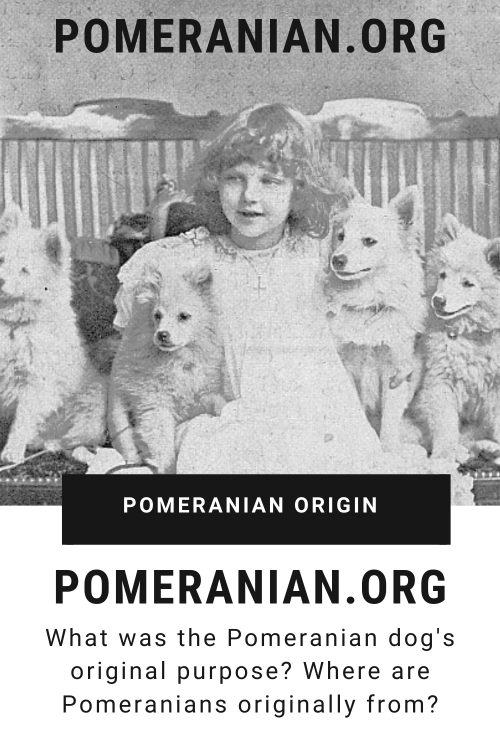
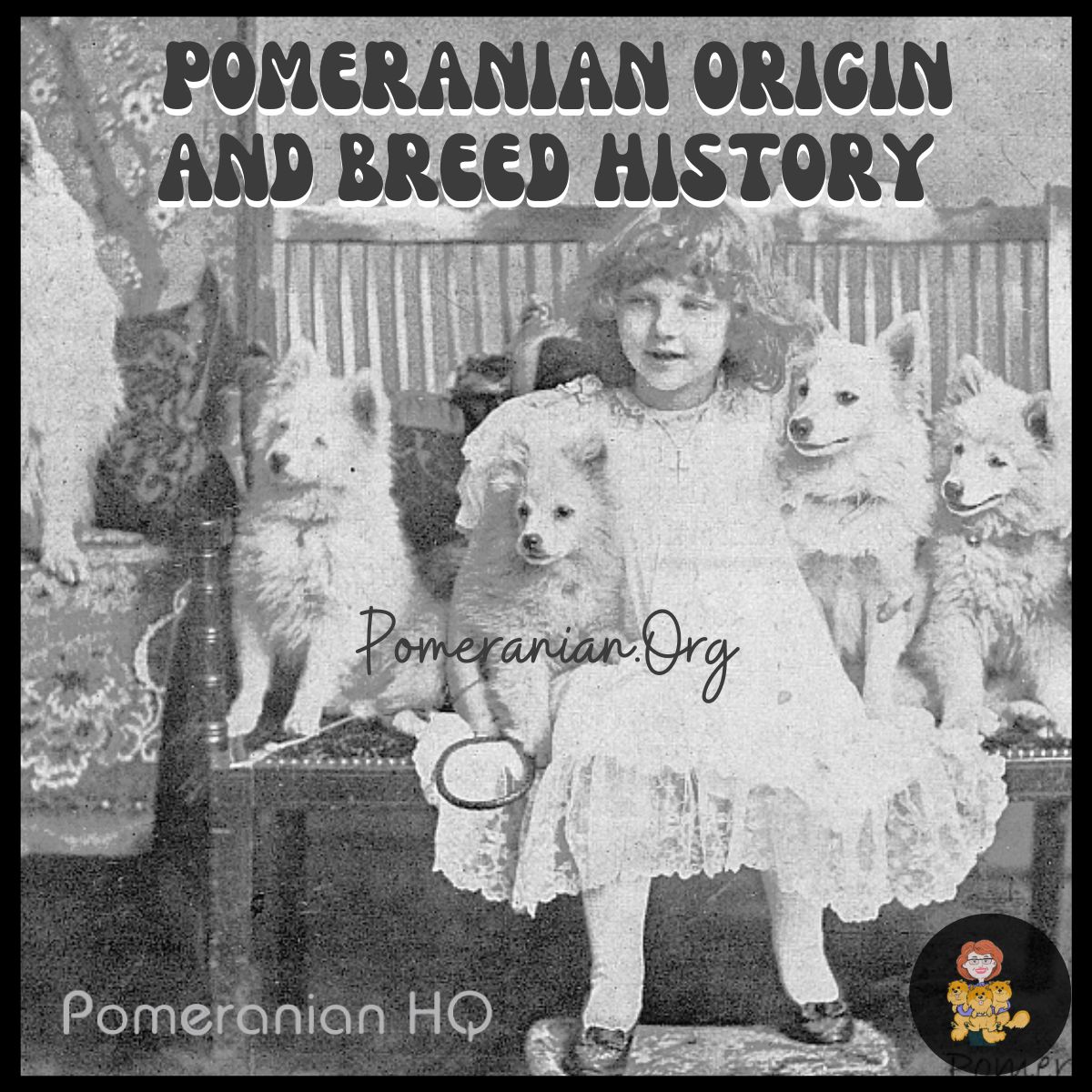
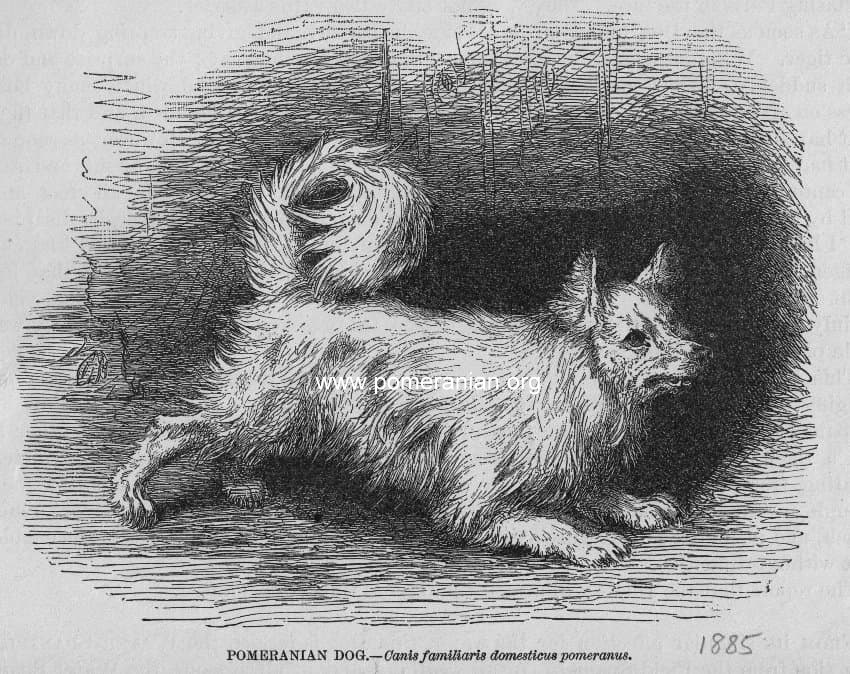
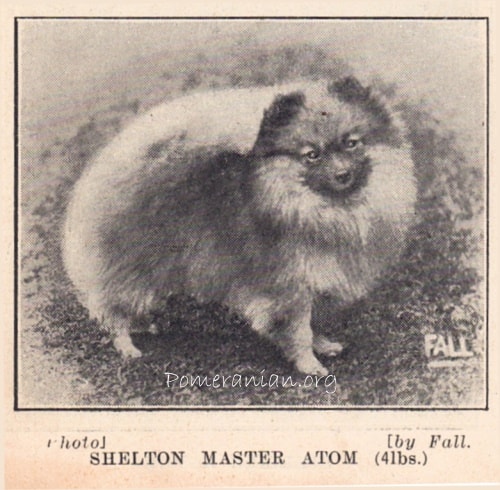
Historical photographs show that many early Pomeranians were clearly recognizable as members of the breed.
Their overall appearance has been refined over time, but many essential Pomeranian characteristics were already present during the late 19th and early 20th centuries.
Early Pomeranians Compared With Modern Pomeranians
The following comparison shows how presentation and appearance have changed while the fundamental Pomeranian breed type has remained recognizable.
Has Pomeranian Breed Type Changed?
The Pomeranian’s appearance has undoubtedly been refined. Modern show dogs generally have more abundant coats, smaller ears and a more compact outline.
However, the fundamental breed characteristics have remained remarkably consistent.
Early photographs still show the erect ears, alert expression, compact shape, double coat and plumed tail that distinguish the Pomeranian today.
Why these records matter: Historical photographs and written descriptions allow modern breeders to study how the Pomeranian has changed while recognizing the essential characteristics that should be preserved.
When Was the First Pomeranian Breed Standard Written?
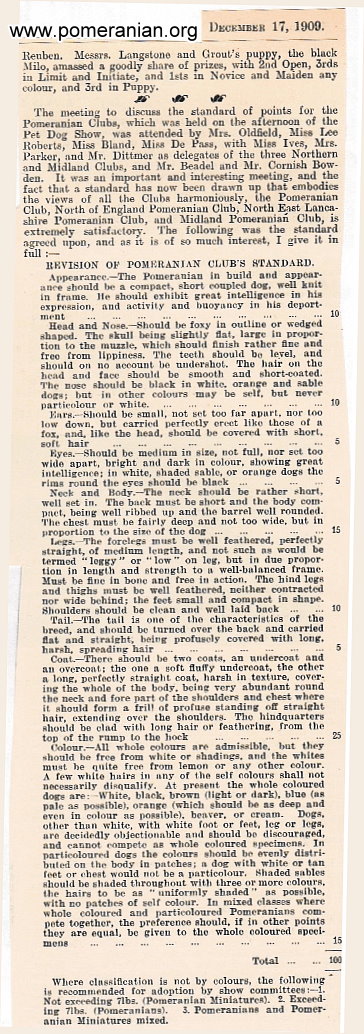
The first Pomeranian breed standard was published in 1898. It was an important step toward establishing a consistent description of the breed for judges, breeders and exhibitors.
At this time, Pomeranians still varied considerably in size, weight, color and overall type. The early standard helped define which characteristics were considered most important.
Why Was the Pomeranian Breed Standard Revised in 1909?
By 1909, several Pomeranian clubs were active in England. Each had members with strong views about the correct size, appearance and classification of the breed.
A meeting was held at the Pet Dog Show so representatives of the leading Pomeranian clubs could work together on a revised and more comprehensive breed standard.
Pomeranian Clubs Contributing to the Revised Standard
- The Pomeranian Club
- North of England Pomeranian Club
- East Lancashire Pomeranian Club
- Midland Pomeranian Club
Contemporary reports stated that the 1909 standard successfully represented the combined views of the participating Pomeranian clubs.
Why Was Coat So Important in the Early Pomeranian Standard?
Coat received 25 points—the largest allocation given to any single feature.
This demonstrates that a profuse, correctly textured coat was already regarded as one of the defining characteristics of the Pomeranian.
Color received an additional 15 points, reflecting the considerable importance placed on coat color and clarity during this period.
Pomeranians weighing less than seven pounds were called Pomeranian Miniatures.
Dogs exceeding seven pounds continued to be classified simply as Pomeranians.
The historical upper weight limit for the larger Pomeranians was 20 pounds. Dogs above the seven-pound miniature division were not automatically considered undesirable during this period.
Why this record matters: The 1909 standard documents the period when both miniature and larger Pomeranians were still recognized. It also shows how strongly early breeders valued the breed’s coat, color and overall appearance.
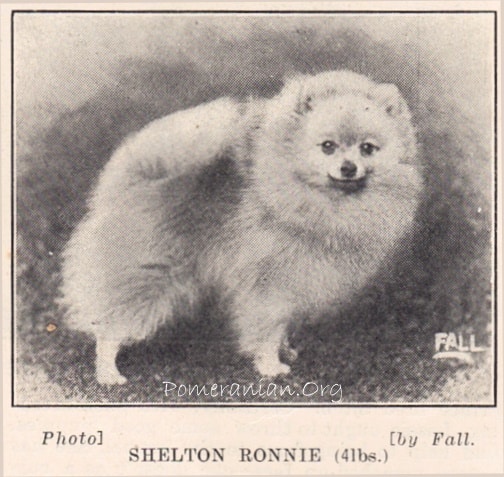
Who Was the First Pomeranian Champion?
The first recorded Champion of the Pomeranian breed was a white dog named Rob of Rozelle.
His achievement is an important part of breed history because it records the beginning of championship recognition for the Pomeranian.
White Pomeranians in Early Breed History
White was one of the important colors during the Pomeranian’s early development. White dogs appeared frequently in historical paintings, breeding records and the earliest dog shows.
The fact that the breed’s first Champion was white demonstrates the prominence of this color before orange and orange sable became increasingly fashionable.
Preserving the name and color of Rob of Rozelle provides an important connection between the early Pomeranian and the dogs exhibited today.
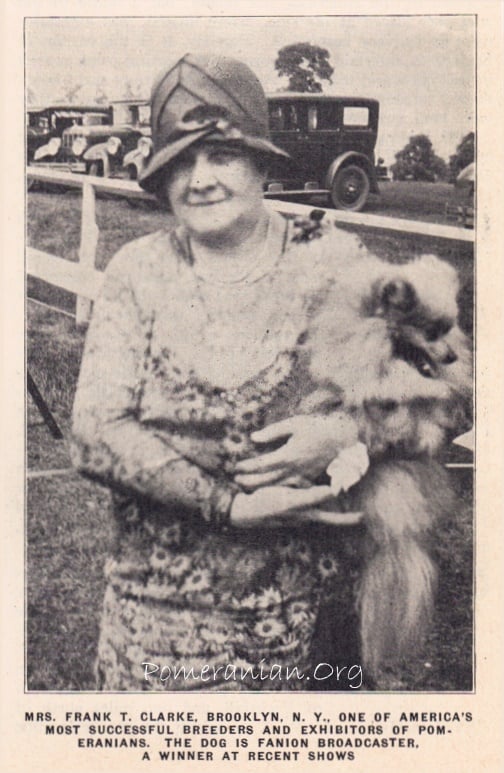
When Did Pomeranians Come to America?
The first American Pomeranians were primarily imported from England. By the late 1880s, Pomeranians were beginning to appear at dog shows in the United States.
Before the breed received official recognition, Pomeranians were exhibited in the Miscellaneous Class. This class did not provide a Winners Class, so Pomeranians could not earn championship titles.
Interest in the breed increased during 1899, when a number of quality Pomeranians arrived in America from England.
White, blue and brown were among the most popular Pomeranian colors during this early period.
When Did the American Kennel Club Recognize the Pomeranian?
The American Kennel Club officially recognized the Pomeranian and admitted the breed to its Stud Book in 1900.
Recognition allowed Pomeranians to compete in Winners Classes and earn points toward American championship titles.
American Kennel Club Recognition—1900
The Pomeranian was officially admitted to the American Kennel Club Stud Book in 1900, giving the breed access to championship competition.
Hatcham Nip and the 1901 New York Show
The Pomeranian classes at the 1901 New York show were judged by Mr. R. F. Mayhew.
Hatcham Nip was placed first and later became the breed’s first International Champion.
Mrs. R. F. Mayhew and Mrs. George Thomas were among the leading American Pomeranian exhibitors during this period.
When Was the American Pomeranian Club Founded?
The American Pomeranian Club was founded in 1900 by Mrs. Hartley Williamson and Mrs. Frank Smyth.
The First American Pomeranian Specialty Show
The first American Pomeranian breed specialty show was held in 1911.
The show attracted an entry of 138 Pomeranians and was judged by English judge Mrs. L. C. Dyer.
The Second American Pomeranian Specialty Show
The American Pomeranian Club held its second specialty show in New York in 1912.
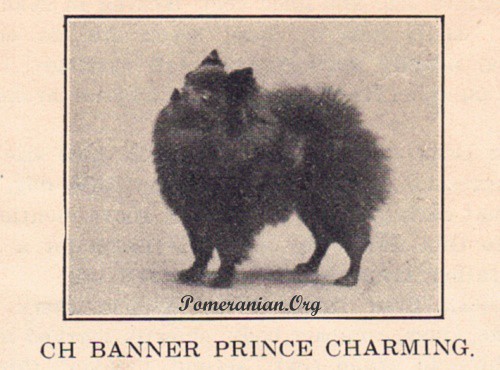
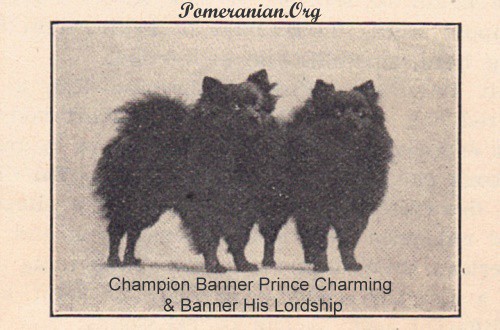
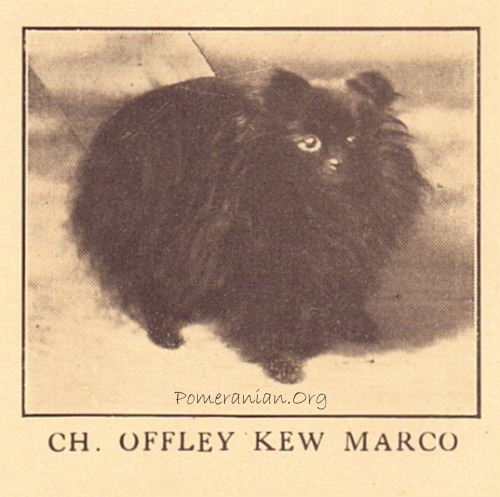
Why these records matter: The names of Sheffield Lad, Prince Bismarck, Wolfgang, Clayton Chieftain, Nubian Rebel, Hatcham Nip, Banner Prince Charming and Offley Kew Marco document the Pomeranian’s transition from the Miscellaneous Class to a fully recognized American show breed.
Has a Pomeranian Ever Won Westminster?
Pomeranians have enjoyed an impressive history at the Westminster Kennel Club Dog Show in New York.
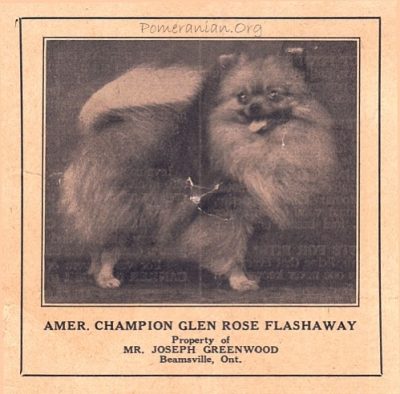
The first Pomeranian to win the Toy Group at Westminster was American Champion Glen Rose Flashaway, owned by Joseph Greenwood, in 1926.
Pomeranian Toy Group Winners at Westminster
The following Pomeranians continued the breed’s successful record by winning the Toy Group at Westminster.
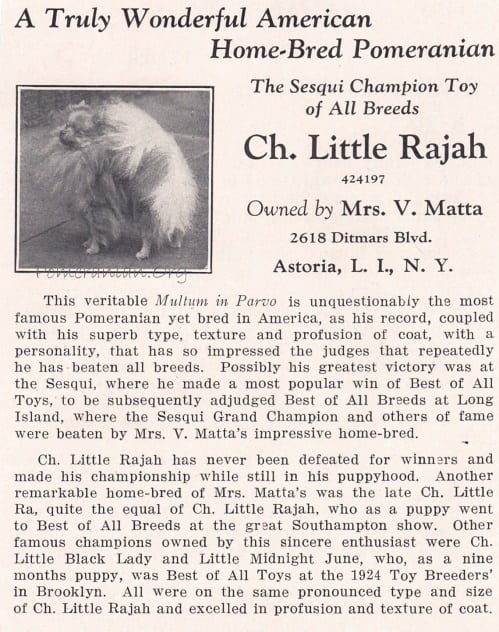
Mrs. V. Matta’s Westminster Pomeranians
Mrs. V. Matta owned three Pomeranians that won the Toy Group at Westminster:
- Champion Little Rajah—1927
- Champion Moneybox Currency—1942
- Champion Little Tim Stepper—1947
Despite owning three Westminster Toy Group winners, Mrs. Matta never achieved the final Best in Show award.
Which Pomeranian Won Best in Show at Westminster?
The first Pomeranian to win Best in Show at Westminster was Champion Great Elms Prince Charming II in 1988.
Why these records matter: The Westminster winners preserve the names of the Pomeranians and owners who helped establish the breed as a serious competitor within the Toy Group. Great Elms Prince Charming II’s 1988 Best in Show victory remains one of the most celebrated achievements in Pomeranian history.
Why Did Pomeranians Become Popular?
Royal interest helped transform the Pomeranian from a comparatively uncommon European Spitz dog into a fashionable companion and established show breed.
Queen Charlotte introduced Pomeranian-type dogs to the British royal household during the 18th century. Her granddaughter, Queen Victoria, later brought the breed far greater public attention.
Queen Victoria’s Pomeranian Marco
Queen Victoria purchased several Pomeranians while visiting Italy in 1888. The most famous was a comparatively small sable dog named Marco.
Marco was exhibited successfully and won the Pomeranian Club’s gold medal. His size and appearance helped increase public interest in smaller Pomeranians.
Marco
Important Early Pomeranian Breeders
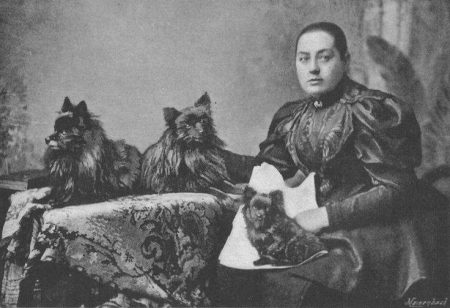
Queen Victoria was listed among the leading Pomeranian breeders of her time, together with several influential women who helped develop the breed.
The Fashion for Smaller Pomeranians
As the Pomeranian became fashionable, outstanding dogs were exchanged for considerable sums of money.
Demand grew for dogs that were smaller than those previously exhibited. Some breeders pursued extreme reduction in size through very close breeding.
Historical accounts recorded undesirable results, including apple-shaped heads, prominent eyes, weak construction, lack of substance and unsoundness.
Whelping mortality was also extremely high. By approximately 1916, larger Pomeranians had largely disappeared from British show rings, leaving the smaller Toy Pomeranian as the established show variety.
Read the full history of Queen Charlotte, Queen Victoria and the Pomeranians owned by members of European royalty.
Read About Royal PomeraniansWhy these names matter: Queen Victoria, Mrs. Thomas, Mrs. Gordon Lynn and Miss Hamilton helped shape the Pomeranian during the period when the breed was becoming smaller, more consistent and increasingly popular throughout Britain.
Pomeranian History Frequently Asked Questions
Quick answers to commonly asked questions about the origin and development of the Pomeranian.
Where did Pomeranians originate?
Pomeranians descended from larger European Spitz-type dogs. The breed takes its name from the historic Pomerania region, now divided between northern Germany and Poland. British breeders later played an important role in developing the smaller modern Pomeranian.
Why are Pomeranians called Pomeranians?
The breed was named after Pomerania, a historic Baltic coastal region associated with the development of Spitz-type dogs.
What were Pomeranians bred from?
Pomeranians were not created by crossing two modern breeds. They descended from larger Spitz-type dogs found throughout northern and central Europe.
Is a Pomeranian a German Spitz?
Under the FCI system used throughout much of Europe, the Pomeranian is known as the Zwergspitz and is the smallest German Spitz variety. In Britain, Australia, the United States and several other countries, the Pomeranian is recognized as a separate Toy breed.
How big were Pomeranians originally?
Early Pomeranians varied considerably in size. William Taplin’s 1803 description recorded dogs standing approximately 18 to 20 inches high. Early standards later allowed larger Pomeranians weighing up to 20 pounds.
How did Pomeranians become so small?
Breeders gradually selected smaller Spitz dogs over many generations. British breeders were particularly influential in refining the size, coat, colors and overall appearance of the modern Pomeranian.
Who was the first Pomeranian Champion?
The first recorded Pomeranian Champion was a white dog named Rob of Rozelle.
When did the American Kennel Club recognize the Pomeranian?
The American Kennel Club officially recognized the Pomeranian and admitted the breed to its Stud Book in 1900.
Has a Pomeranian ever won Best in Show at Westminster?
Yes. Champion Great Elms Prince Charming II, owned by Skip Piazza and Olga Baker, became the first Pomeranian to win Best in Show at Westminster in 1988.
Did Queen Victoria create the modern Pomeranian?
No single person created the modern Pomeranian. Queen Victoria greatly increased the breed’s popularity and encouraged interest in smaller dogs, but many dedicated breeders contributed to the Pomeranian’s development over several generations.
Preserving Pomeranian History
Historical breed development is more than a list of dates. It is also the story of the individual Pomeranians, breeders, exhibitors, judges and clubs that shaped the modern breed.
Retaining their names and achievements ensures that their contribution to Pomeranian history is not forgotten.
This Pomeranian history has been compiled by Denise Leo from rare breed books, early standards, historical show records and more than 50 years devoted to breeding, exhibiting and judging Pomeranians.
The names and achievements of important early Pomeranians have been retained because these dogs and their breeders helped create the modern Pomeranian.
Every modern Pomeranian carries a small part of this extraordinary history.
Copyright Pomeranian.Org. All Rights Reserved.
References and Further Reading:
[1] Denise Leo “The Pomeranian Handbook“.
[2] Milo G. Denlinger “The Complete Pomeranian”.
[3] Kimbering Pomeranians “1891-1991”.
[4] William Taplin “The Sportsman’s Cabinet”.
[5] E. Parker “The Popular Pomeranian”.
[6] Lilla Ives “Show Pomeranians”.
The Pomeranian Handbook