
Is your dog marking in the house and leaving small urine spots on your furniture, walls, or floors? You’re not alone. Many owners struggle with a dog that continues to mark in the house—even when the dog is fully housetrained. Dog marking its territory indoors is a behavioral issue, not a potty training failure, and it can occur with puppies, adult dogs, and even older dogs marking in the house.
Understanding why dogs mark inside is the first step to solving the problem. In this guide, we’ll explain the reasons behind dog marking in house behavior, how to recognize the difference between accidents and marking, and most importantly, how to stop male dog marking in the house so you can restore peace and cleanliness to your home.
Why Is My Dog Marking in the House?
If your Pomeranian (or any dog) keeps marking in the house, you’re not alone. Dog marking behavior can be confusing and frustrating for owners. Unlike simple house-soiling accidents, marking is a deliberate action in which a dog sprays a small amount of urine to claim its territory.
This behavior can occur at any age—even in an old dog marking in the house—and is usually more about communication, dominance, and stress than about needing a bathroom break. Let’s explore why dogs mark indoors and, more importantly, how to stop male dog marking in the house.
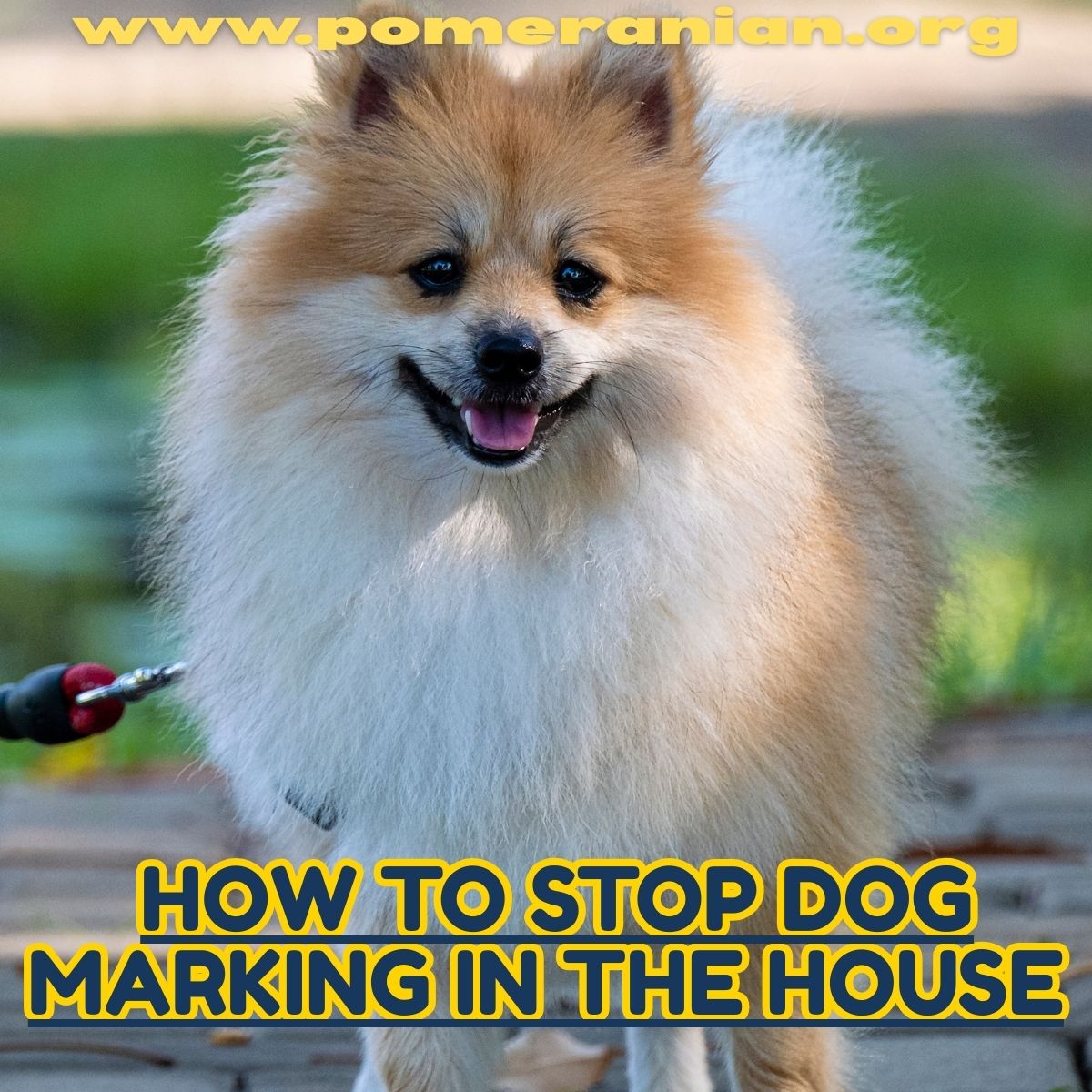
Understanding Dog Marking in the House
Marking one’s territory is an instinct for dogs. In the wild, canines mark to establish dominance, communicate with other dogs, and signal ownership of resources such as food or shelter. When your Pomeranian dog marks in the house and sprays a small amount of urine indoors, it’s essentially sending the same message.
Key signs your dog is marking, not simply having an accident:
- He urinates only a small amount.
- He chooses vertical surfaces or the same spot repeatedly.
- He is otherwise fully housetrained and never defecates indoors.
Do All Dogs Mark Indoors?
It’s a common misconception that only male dogs mark their territory. While intact males are the most frequent offenders, females and neutered dogs may also engage in dog marking in the house under certain circumstances.
Homes with multiple dogs often experience more marking problems, especially when the pack hierarchy isn’t clearly established. A dog may mark to prove he’s the “top dog,” or in response to competition over toys, food, or human attention.
Why an Old Dog Marking in the House May Start
If you notice an old dog marking in the house, don’t assume it’s purely a senior health issue. Older dogs may suddenly begin marking due to:
- New pets or visitors in the home.
- Stress or anxiety from changes in routine.
- Weakened bladder control, which can blur the line between accidents and marking.
- Reasserting dominance if a younger dog challenges their role in the pack.
It’s important to rule out medical conditions such as urinary tract infections, which can mimic marking. A vet visit is always the first step when an older dog develops new marking habits.
Why Does My Dog Keep Marking in the House?
There are several common triggers for a dog marking in-house situations:
- Scent of other dogs – Outdoor dogs passing by can cause your Pom to mark in response.
- New environment – Moving house or introducing new furniture can spark marking.
- Competition – In multi-dog households, marking may settle disputes about hierarchy.
- Unneutered status – Intact males are far more likely to mark.
- Stress and insecurity – Dogs sometimes mark when they’re anxious or unsure of their role in the home.
Dog Marking His Territory vs. Housetraining Issues
Many owners confuse dog marking in the house with housetraining problems. However, a dog that keeps marking in the house may be fully toilet-trained. The difference is intent:
- House soiling = the dog needs to relieve a full bladder.
- Marking = the dog only releases a small spray of urine, often in noticeable places.
Understanding this distinction helps you choose the right correction methods.
How to Stop Male Dog Marking in the House
Preventing your Pomeranian from marking indoors requires patience, consistency, and the right approach. Here are proven strategies:
Neuter or Spay Your Dogs
Unneutered males are the most persistent markers. Neutering dramatically reduces the urge to mark. If you have multiple dogs, neutering all of them lowers competition-based marking.
Clean Thoroughly with Enzyme Cleaners
Standard cleaners may mask odors to you but not to your dog. Use an enzyme-based cleaner that breaks down urine proteins, allowing the smell to disappear completely. This removes the “invitation” to re-mark.
Block Access to Triggers
If your Pom keeps marking when he sees dogs outside, prevent access to the area. Close blinds, use window film, or restrict him to rooms without a view.
Redirect and Reward
The moment you catch your dog about to mark, interrupt firmly (a loud “No!” works) and take him directly to his outdoor toilet spot if he urinates there, praise and reward generously.
Reclaim the Marked Area
Turn marked spots into positive play zones. Spend time there giving tummy rubs, treats, and attention. Dogs are less likely to soil where they associate happy experiences.
Establish Pack Leadership
In multi-dog homes, unclear hierarchy often causes marking wars. Ensure you are the true alpha, and create a clear structure:
- Feed the recognized alpha dog first.
- Put harnesses/leashes on in order.
- Maintain consistent routines.
When dogs understand their place in the household pack, marking reduces significantly.
Pomeranian Dog Marking and Dominance
Pomeranians are bold little dogs with big personalities. Sometimes, male Pomeranian dogs exhibit marking problems because they perceive themselves as the household leaders. By reinforcing calm, consistent leadership, you reduce their need to mark their territory with urine.
Simple steps include:
- Setting clear rules and boundaries.
- Ensuring you control resources (food, toys, access to the outside).
- Avoiding free feeding and instead feeding structured meals.
Dealing with Dog Marking in Multiple Dog Families
Dog marking in-house problems often become more complex in multi-dog households. Without a clear alpha (the human, plus a recognized “beta dog”), dogs may compete for leadership by marking.
You can help by:
- Observing play and interactions to identify which dog naturally takes the lead.
- Supporting that dog’s role by feeding and walking them first.
- Showing equal affection to all dogs while maintaining a consistent hierarchy.
Remember: a lower-ranking dog is no less loved or valued—it simply brings harmony to the household when roles are respected.
Preventing Future Marking
Consistency is the key. Once your dog has stopped marking, don’t let old habits creep back. Prevent access to problem areas, continue using enzyme cleaners, and stick to routines.
If your Pomeranian dog continues to mark in the house despite your efforts, consult a professional trainer or behaviorist who specializes in small dogs.
Frequently Asked Questions About Dog Marking in the House
Do all male dogs mark their territory in the house?
Not all male dogs will mark indoors, but many will if they are unneutered, stressed, or living with other dogs. Marking behavior is not a housetraining issue—it’s a way for dogs to claim space or show dominance.
Why is my old dog marking in the house?
An old dog marking in the house may be responding to changes in routine, stress, or the introduction of new pets. Senior dogs may also mark if their role in the household pack feels challenged. Always rule out medical issues, such as urinary tract infections, before assuming it’s a behavioral issue.
How do I stop my dog from marking in the house?
To prevent male dog marking in the house, neuter your dog, clean urine spots with enzyme-based cleaners, block access to triggers (such as windows that allow passing dogs), and redirect marking behavior by rewarding toileting outdoors. Consistency is the key to success.
Do female dogs mark territory indoors?
Yes, female dogs can mark in the house, especially if they are unspayed or if they feel stressed by changes in their environment. Although it’s more common in males, females may also mark to assert themselves or respond to the presence of other dogs.
Is dog marking in the house the same as a potty accident?
No. When a dog keeps marking in the house, he usually releases only a small amount of urine, often on vertical surfaces or in the same spot. Potty accidents involve emptying a full bladder and are typically due to housetraining or medical issues.

Will neutering stop my dog from marking in the house?
Neutering greatly reduces the likelihood of marking, especially if done early. However, if the behavior has become a long-standing habit, additional training and behavior modification may be needed.
Conclusion: Living Mark-Free with Your Pom
Dog marking in the house can be frustrating, but it is solvable. Whether you’re dealing with a puppy or an old dog marking in the house, the root cause usually lies in communication, dominance, or stress—not housetraining failure.
By understanding why your dog keeps marking in the house and following strategies to prevent male dog marking, such as neutering, cleaning with enzyme solutions, and reinforcing leadership, you’ll restore harmony in your home.
With patience, consistency, and love, your Pomeranian can leave marking behind and focus on what they do best: being your cheerful, fluffy companion.
Copyright Pomeranian.Org. All Rights Reserved.
📚 References & Further Reading
- [1] AKC Pomeranian Breed Standard (2011)
- [2] English Kennel Club Breed Standard
- [3] The Pomeranian Handbook – Denise Leo
- [4] Denlinger, The Complete Pomeranian
- [5] Kimbering, 1891–1991
- [6] Taplin, The Sportsman’s Cabinet
- [7] Parker, The Popular Pomeranian
- [8] Ives, Show Pomeranians