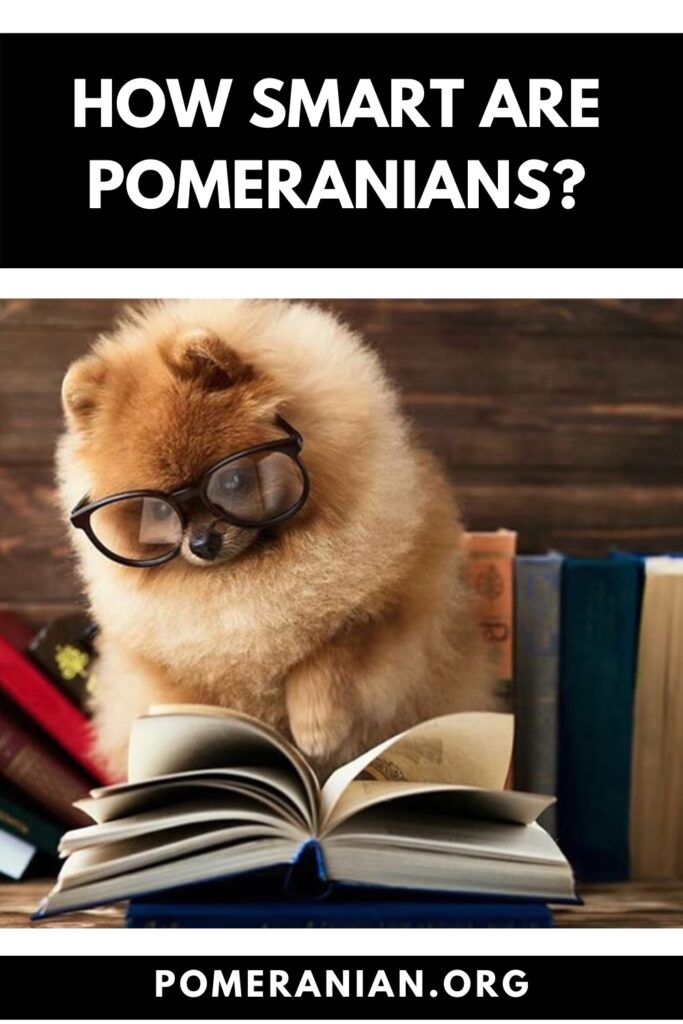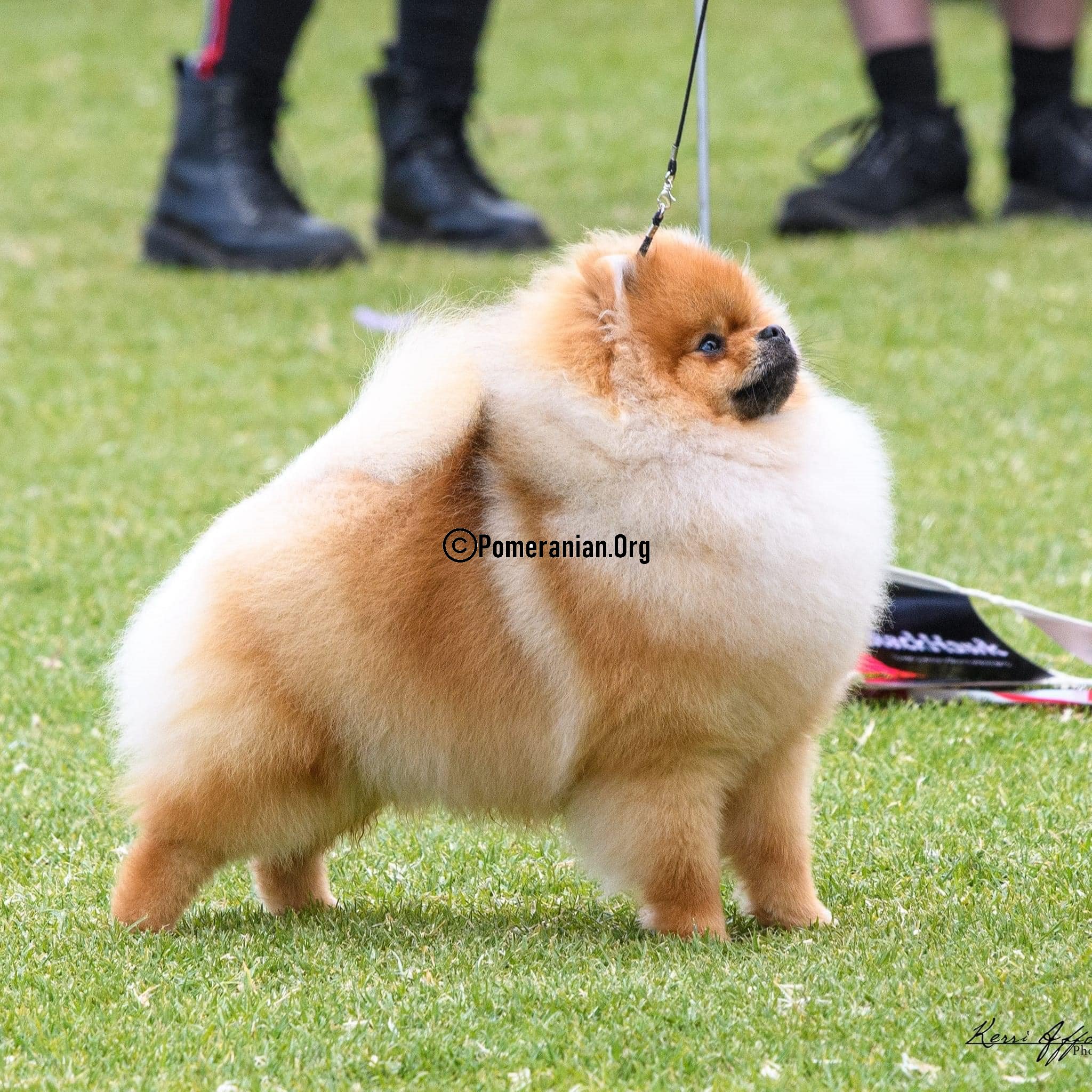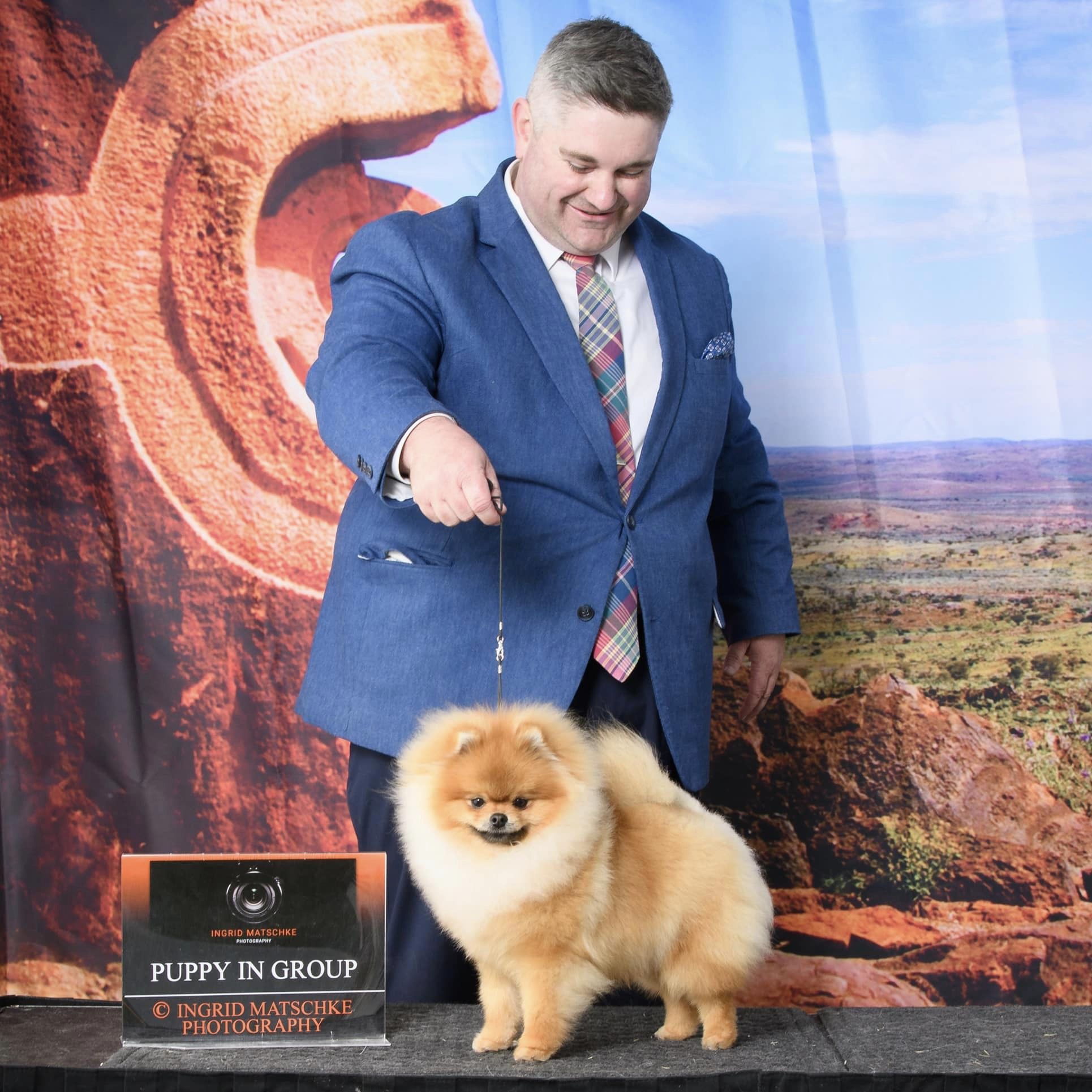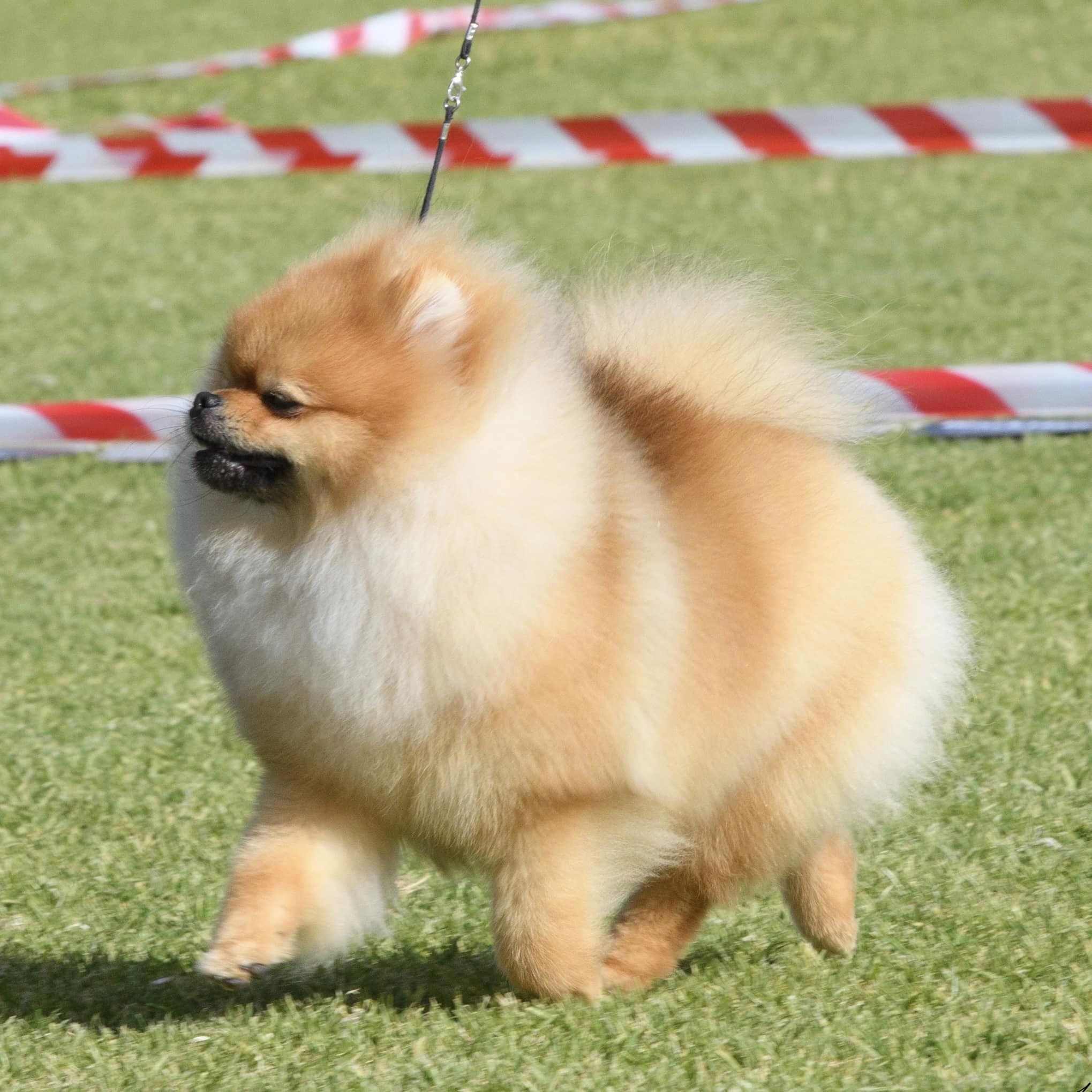

Pomeranians are intelligent, alert, and highly observant little dogs. They learn routines quickly, recognize familiar words and gestures, solve simple problems, and often become remarkably skilled at predicting what their owners will do next. However, canine intelligence involves much more than following obedience commands.
During more than 50 years of breeding, exhibiting, training, and judging Pomeranians, I have seen intelligence expressed in many different ways. Some Poms learn new commands rapidly, while others excel at problem-solving, communicating what they want, remembering routines, or carefully reading the behavior of people around them. Individual personality, motivation, experience, and training all influence how a Pomeranian demonstrates its abilities.
The Pomeranian was placed 23rd in Stanley Coren’s widely cited working and obedience ranking. This is a strong result, but it measures only how quickly breeds learn commands and how consistently they respond. It does not fully assess memory, adaptability, social awareness, independent thinking, or problem-solving ability.
In this guide, I will explain the different forms of Pomeranian intelligence, how these clever dogs learn, and how you can develop your Pom’s abilities through positive training and safe mental enrichment. You can also complete the interactive quiz to identify some of your dog’s individual strengths.
The quiz is designed for education and enjoyment. It can help you observe your Pomeranian’s learning style, but it is not a scientifically validated canine IQ test or veterinary behavioral assessment.
How Smart Are Pomeranians?
Pomeranians are generally considered bright, trainable dogs with strong awareness of their surroundings. They often learn household routines quickly, remember familiar people and places, respond to verbal and visual cues, and discover effective ways to communicate with their owners.
However, intelligence varies between individual dogs. A Pomeranian that performs tricks enthusiastically may demonstrate its abilities differently from one that excels at finding hidden objects, anticipating routines, or solving food puzzles.
Pomeranian Intelligence at a Glance
Pomeranians commonly demonstrate intelligence through:
- Learning commands and tricks
- Remembering routines and familiar places
- Recognizing words, names, and tones of voice
- Following human gestures
- Solving simple problems
- Locating hidden toys or treats
- Adapting behavior to different people
- Predicting regular activities
- Learning which behaviors attract attention
- Observing and copying other dogs
Where Do Pomeranians Rank in Intelligence?
In Stanley Coren’s working and obedience ranking, the Pomeranian was placed 23rd among the breeds assessed. This placed the breed within a strong group for learning commands and responding to human direction.
The ranking is useful, but it should not be treated as a complete measurement of intelligence. It primarily reflects trainability and obedience—not every cognitive ability a dog possesses.
Intelligence Is Not the Same as Obedience
A Pom may understand a command but decide not to respond immediately. This does not necessarily mean the dog is unintelligent or deliberately disobedient.
The dog may be:
- Distracted by the environment
- Uncertain what the cue means
- Insufficiently rewarded
- Tired or overstimulated
- Anxious or uncomfortable
- Responding to inconsistent signals
- More interested in another activity
A truly useful assessment of Pomeranian intelligence considers learning, memory, communication, adaptability, problem-solving, and social awareness—not obedience alone.
Pomeranian Intelligence Quiz
Check every statement that sounds like your Pomeranian, then select the button to discover your Pom’s learning strengths.
A lower score does not mean your Pomeranian lacks intelligence. Age, health, confidence, previous training, motivation, and opportunity all affect the behaviors seen in this quiz.
Types of Pomeranian Intelligence
Pomeranian intelligence is not measured by obedience alone. These clever little dogs learn, remember, communicate, adapt, and solve problems in different ways.
Every Pomeranian has an individual combination of strengths. Age, health, confidence, motivation, previous training, and opportunity can all influence the behaviors you observe.
Learning and Trainability
The ability to connect a cue with a behavior and remember what produces a reward.
What you may notice
- Learns new cues through short sessions
- Remembers familiar tricks
- Responds to verbal and visual signals
Memory and Recall
The ability to retain information about people, places, routines, objects, and previous experiences.
What you may notice
- Anticipates regular meals or walks
- Recognizes familiar people and places
- Remembers where toys were left
Problem-Solving
The ability to explore a challenge, try different approaches, and discover a workable solution.
What you may notice
- Solves suitable food puzzles
- Finds a partly hidden toy
- Tries another strategy when one fails
Language and Communication
The ability to associate familiar words, gestures, sounds, and tones with particular outcomes.
What you may notice
- Recognizes names and routine phrases
- Responds to changes in tone
- Uses different behaviors to communicate wants
Social Awareness
The ability to notice and respond to human movement, attention, posture, gestures, and routines.
What you may notice
- Follows familiar pointing cues
- Adjusts behavior with different people
- Watches faces and body movement closely
Attention and Impulse Control
The ability to remain engaged, wait briefly, and respond despite manageable distractions.
What you may notice
- Maintains focus during short training
- Waits for a release cue
- Returns attention after a distraction
Adaptability and Flexibility
The ability to adjust when a routine, location, task, or familiar situation changes.
What you may notice
- Practices known cues in new locations
- Adjusts when a puzzle becomes harder
- Handles gradual changes confidently
Managing Excitement and Frustration
The developing ability to pause, settle, and continue learning without becoming overwhelmed.
What you may notice
- Pauses before receiving a reward
- Takes a break and returns to a task
- Recovers after mild frustration
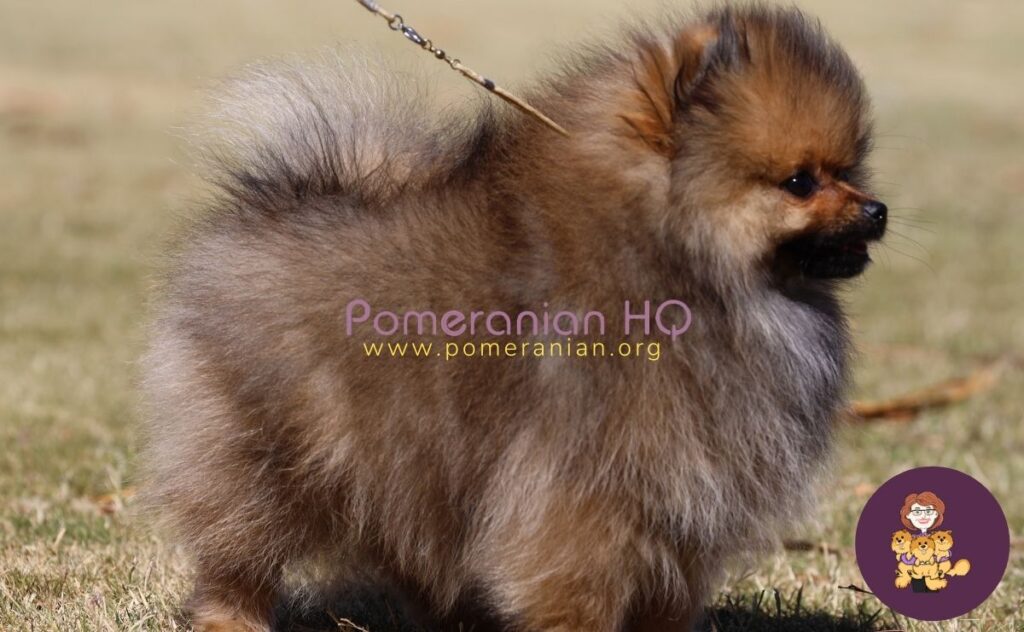

Pomeranian Intelligence Is Not the Same as Obedience
A Pomeranian may understand a command perfectly but choose not to respond immediately. This does not necessarily mean the dog is unintelligent, stubborn, or attempting to dominate its owner.
Obedience measures how reliably a dog responds to human instructions. Intelligence also includes memory, problem-solving, communication, adaptability, observation, and independent decision-making.
Why a Pomeranian May Ignore a Command
Your Pom may be:
- Distracted by something more interesting
- Unsure what the cue means
- Responding to inconsistent signals
- Insufficiently motivated by the reward
- Tired, anxious, uncomfortable, or overstimulated
- Unable to perform the behavior in that particular environment
- Accidentally rewarded for ignoring the cue
Dogs do not automatically understand that a command learned in the living room also applies in the garden, at a show, or near other dogs. Training must be practiced gradually in different safe locations.
Clever Pomeranians Learn What Works
Pomeranians quickly notice which behaviors produce attention or rewards. A Pom may learn that barking brings someone into the room, refusing food results in a tastier option, or sitting near the treat container encourages an owner to provide something.
These behaviors may be inconvenient, but they also demonstrate learning. The solution is to reward the behavior you want and avoid unintentionally reinforcing the behavior you do not want.
A well-trained Pomeranian is not necessarily more intelligent than an independent one. The difference may be motivation, training history, confidence, environment, and the consistency of the owner’s cues.
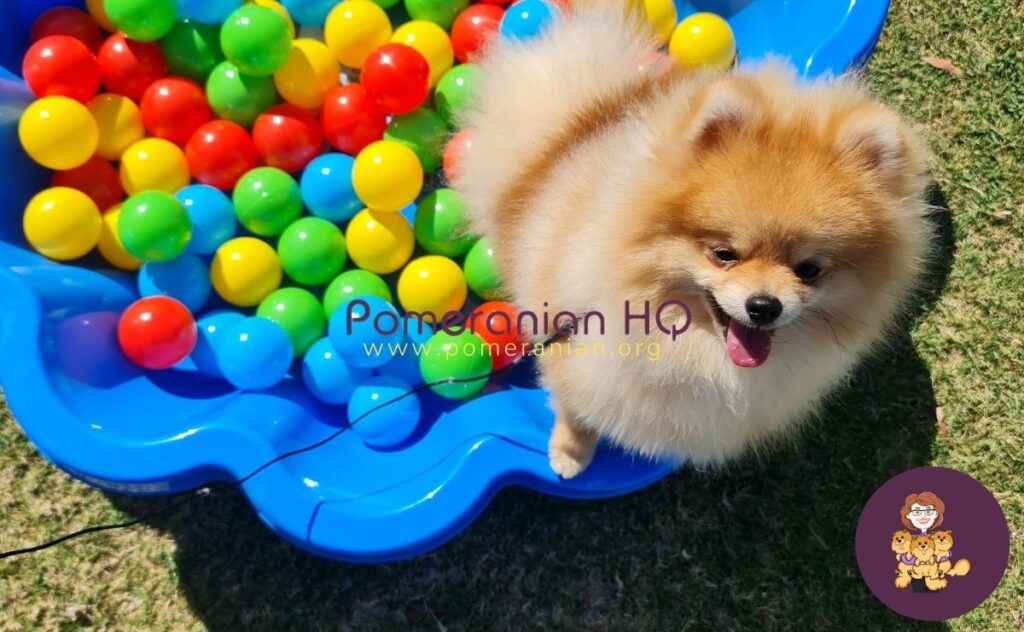
How Do Pomeranians Learn?
Pomeranians learn through association, repetition, observation, and the consequences of their behavior. They repeat actions that produce something rewarding and are less likely to repeat behaviors that bring no useful result.
Successful training does not require an owner to become an “alpha” or dominate the dog. Pomeranians learn best when instructions are clear, rewards are meaningful, and training is consistent.
Positive Reinforcement
Positive reinforcement means rewarding a behavior you want repeated. The reward may be:
- A small treat
- Verbal praise
- A favorite toy
- Gentle affection
- Access to a desired activity
Reward your Pomeranian immediately after the correct behavior so the connection is clear.
Association and Repetition
A Pom learns that a particular word or gesture predicts a particular action or outcome. Consistent repetition strengthens this association.
Use the same cue each time. If family members use different words or rules, the dog may become confused.
Learning in Small Steps
Complex behaviors should be divided into manageable stages. For example, teaching a Pomeranian to go to bed may begin by rewarding the dog for looking at the bed, approaching it, stepping onto it, and finally settling there.
This process is known as shaping and allows the dog to succeed gradually.
Learning Through Observation
Puppies often learn by watching their mother, other dogs, and the people around them. They may copy routines, follow another dog outside to toilet, or become interested in an activity after watching it.
Observation can also teach unwanted behavior, including barking at the door or becoming excited when another dog reacts.
Learning From Everyday Consequences
Pomeranians are constantly learning, even when no formal training session is taking place. If barking produces attention, barking may increase. If sitting quietly opens the door or earns a treat, calm behavior becomes more valuable.
Every interaction can teach your Pom something. Consistent rewards, clear boundaries, and short positive sessions help make those lessons useful.
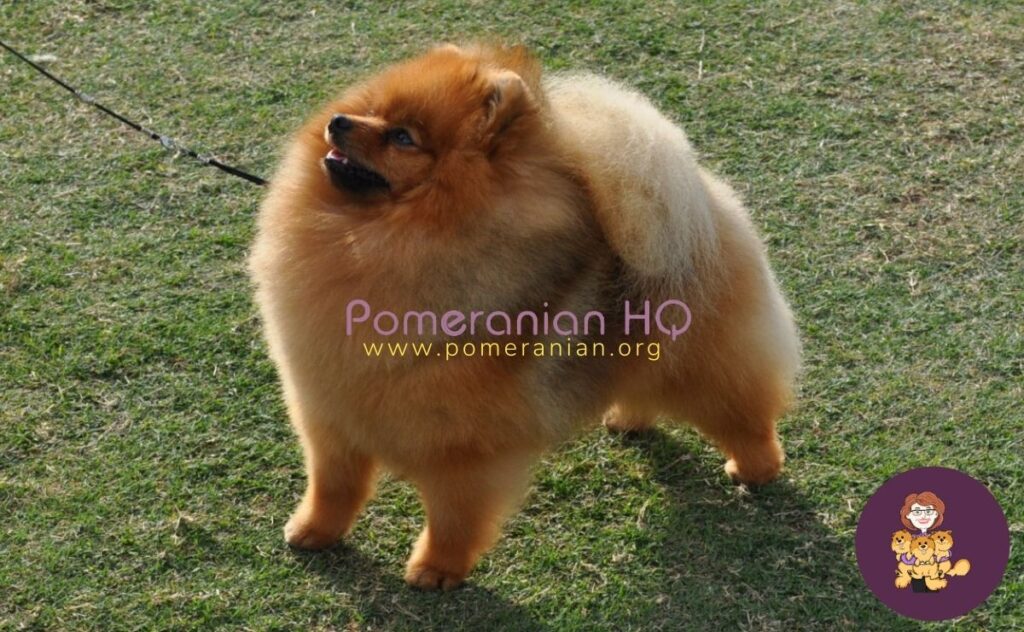
How to Develop Your Pomeranian’s Intelligence
Pomeranians need regular opportunities to think, explore, and learn. Mental enrichment does not need to be complicated or time-consuming. Several short activities throughout the day are often more effective than one long training session.
Keep Training Sessions Short
Most Pomeranians learn best through sessions lasting approximately two to five minutes. Finish while your dog is still interested and successful.
Teach one skill at a time and gradually introduce distractions only after your Pom understands the behavior in a quiet setting.
Teach New Words and Object Names
Begin with one familiar toy. Say its name immediately before presenting or playing with it. Repeat the word consistently during several short sessions.
Once your Pom reliably selects that toy, introduce a second object with a different name. Avoid presenting too many new words at once.
Play Hide-and-Seek
Hide a favorite toy, treat, or yourself somewhere easy to find. Use a familiar cue such as “find it” and praise your Pom for searching.
Gradually make the hiding places more challenging without allowing the dog to become frustrated.
Use Safe Puzzle Toys
Choose food puzzles designed for small dogs. Begin with an easy setting and demonstrate how the puzzle works if necessary.
Supervise play and remove any toy that can be chewed apart or swallowed.
Encourage Sniffing
A Pomeranian’s sense of smell provides valuable mental stimulation. Allow time for safe sniffing during walks or scatter a few pieces of food in a secure area for your dog to locate.
Sniffing games can be particularly useful for older dogs or Poms unable to participate in strenuous physical activity.
Practice in Different Locations
Once your Pom understands a cue at home, practice it in another quiet room, the garden, and gradually in places with mild distractions.
This teaches the dog that the same cue applies in different environments.
Teach Calm Behavior
Intelligence development is not limited to tricks. Waiting briefly, settling on a mat, remaining calm before meals, and responding despite distractions all develop attention and impulse control.
Match Activities to Your Pom
Some Pomeranians are highly food-motivated, while others prefer toys, praise, movement, or social interaction. Use the rewards and activities your individual dog values.
Mental enrichment should be enjoyable. If your Pom becomes anxious, repeatedly gives up, or shows frustration, make the activity easier and allow a break.
When a Clever Pomeranian Learns the Wrong Lesson
Pomeranians are quick to notice which behaviors produce a useful result. Unfortunately, they can learn unwanted habits just as efficiently as commands and tricks.
Your Pom may discover that:
- Barking brings someone into the room
- Scratching the door makes it open
- Refusing dinner produces a more appealing option
- Jumping attracts attention
- Hiding prevents grooming or medication
- Sitting near the treat container earns food
- Waking an owner results in early breakfast
- Different family members enforce different rules
These behaviors are not proof that your Pomeranian is spiteful or attempting to become dominant. They usually continue because they have been rewarded—sometimes unintentionally.
Prevent Accidental Training
Decide which behavior you want your Pom to perform instead. Reward quiet behavior, sitting, waiting, or settling before the unwanted behavior begins.
All family members should use the same cues and rules. If one person rewards barking while another ignores it, the inconsistent result may make the behavior even more persistent.
Never punish growling or other warning signals. If your Pomeranian shows fear, aggression, guarding, or a sudden behavioral change, consult your veterinarian or a qualified reward-based behavior professional.
A clever Pomeranian will continue doing what works. Make the desirable behavior the easiest and most rewarding choice.
Intelligence and Cognitive Changes in Senior Pomeranians
Older Pomeranians can continue learning throughout life. Gentle training, familiar games, sniffing activities, and social interaction can help keep a senior dog mentally engaged.
However, a noticeable change in behavior or memory should not automatically be dismissed as normal aging or stubbornness.
Possible signs of cognitive or medical change include:
- Becoming disoriented in familiar places
- Appearing trapped behind furniture
- Forgetting established routines
- Changes in sleep patterns
- Pacing or restlessness at night
- Reduced interaction with familiar people
- Increased anxiety or irritability
- Loss of previously reliable house training
- Staring at walls or into space
- Difficulty responding to familiar cues
Similar signs may also be caused by pain, hearing or vision loss, medication effects, or other health conditions.
Arrange a veterinary examination if your senior Pom develops new behavioral changes. Early assessment may identify a treatable medical cause or help you develop a plan to support your dog’s comfort and quality of life.
Keep activities safe and appropriate for the individual dog. Short sessions, easy puzzles, predictable routines, non-slip flooring, and additional rest can help an older Pomeranian remain confident and involved.
Pomeranian Intelligence FAQs
Answers to common questions about Pomeranian learning, memory, training, and problem-solving.
Are Pomeranians intelligent dogs?
Yes. Pomeranians are generally alert, observant, trainable, and quick to learn routines. Individual abilities vary, and intelligence may appear through obedience, memory, communication, adaptability, or problem-solving.
Where do Pomeranians rank in intelligence?
Pomeranians were placed 23rd in Stanley Coren’s working and obedience ranking. This reflects command learning and response reliability rather than every form of canine intelligence.
Are Pomeranians easy to train?
Most Pomeranians respond well to short, positive training sessions. Clear cues, consistency, suitable rewards, and gradual practice around distractions improve results.
Why does my Pomeranian ignore commands?
Your Pom may be distracted, confused, insufficiently motivated, anxious, tired, uncomfortable, or unable to perform the behavior in that environment. Ignoring a cue does not automatically indicate low intelligence or deliberate defiance.
How many words can a Pomeranian learn?
There is no fixed number. Many Pomeranians learn numerous commands, names, and routine phrases through consistent use and repetition. Ability varies considerably between individual dogs.
Do Pomeranians understand human emotions?
Pomeranians can respond to tone, posture, facial expression, routine, and previous experience. However, owners should avoid assuming that every human-like expression proves a particular complex emotion.
What are the best brain games for a Pomeranian?
Useful activities include supervised food puzzles, hide-and-seek, scent games, learning toy names, short trick-training sessions, and practicing familiar cues in safe new locations.
Can older Pomeranians still learn?
Yes. Senior Pomeranians can continue learning throughout life. Keep activities short and appropriate for the dog’s mobility, senses, health, confidence, and energy level.
Is the Pomeranian intelligence quiz scientifically validated?
No. The quiz is an educational activity designed to help owners observe their dog’s strengths and learning style. It is not a standardized canine IQ test or veterinary behavioral assessment.
Final Thoughts on Pomeranian Intelligence
During more than 50 years of breeding, exhibiting, and training Pomeranians, I have found them to be intelligent, observant, and highly capable little dogs. Their abilities may appear through obedience, memory, communication, problem-solving, or their remarkable skill at predicting household routines.
Every Pom learns differently. Short positive training sessions, consistent cues, safe brain games, and regular interaction will help your Pomeranian remain confident and mentally engaged throughout life.
Intelligence is not measured by one ranking or quiz score. The most important thing is to recognize your Pom’s individual strengths and give that clever little mind opportunities to learn.
Copyright Pomeranian.org. All Rights Reserved.
References and Further Reading: