
Learn about walking dandruff in Pomeranians caused by Cheyletiella mites. Discover symptoms, treatment options, contagious risks, human skin reactions, prevention tips, and expert advice from Denise Leo.
DVM, University of Animal and Veterinary Sciences, 2019
MSc. (Hons.) Animal Breeding & Genetics, University of Agriculture Faisalabad, 2021
🐾 Quick Answer: What Is Walking Dandruff in Pomeranians?
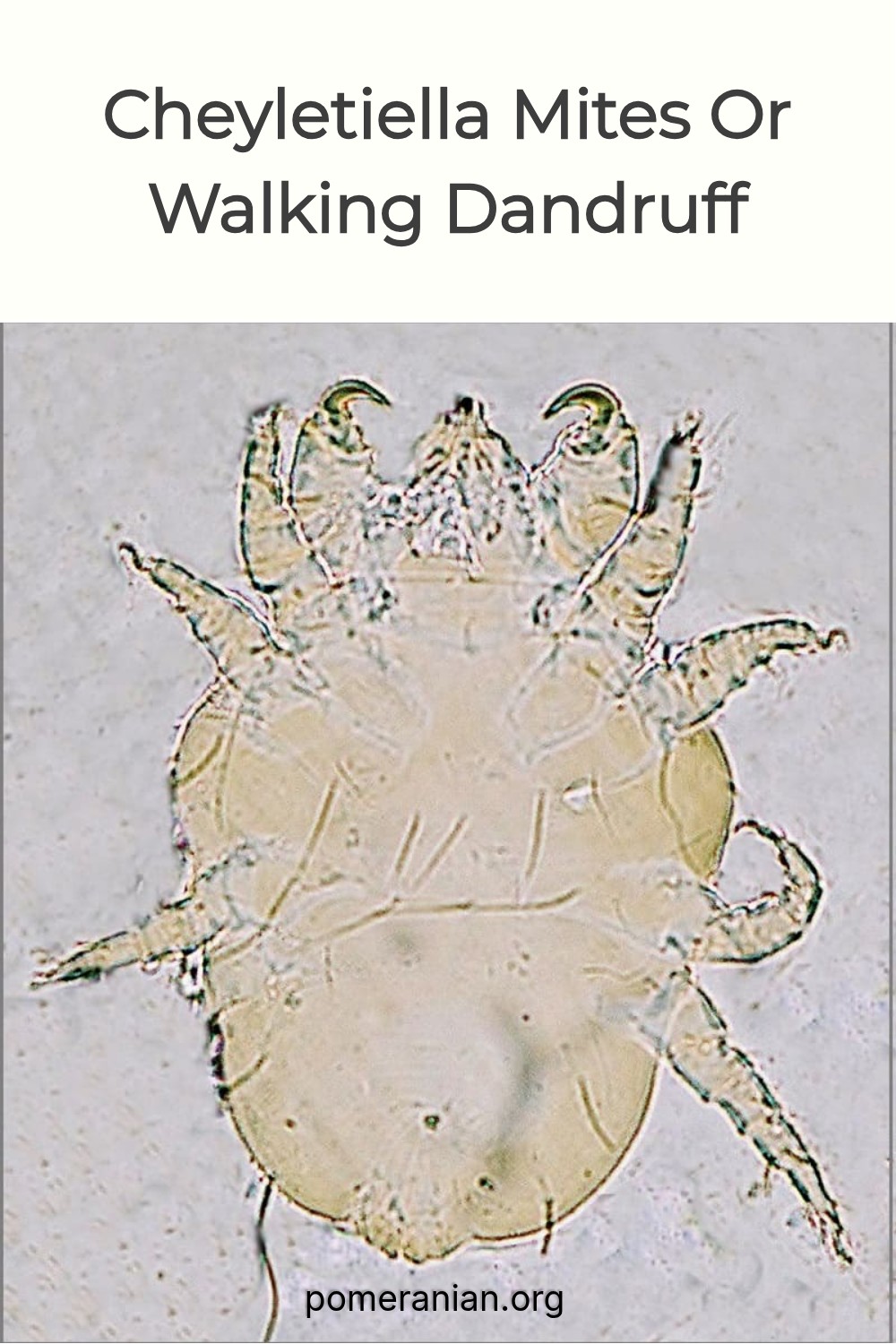
Walking dandruff in Pomeranians is caused by tiny skin mites called Cheyletiella mites. These mites live on the surface of the skin and create excessive flaky dandruff that may appear to “move,” giving the condition its unusual name.
Common symptoms include:
- Flaky white dandruff along the back
- Itchy skin and scratching
- Hair thinning or coat irritation
- Red or inflamed skin
- Restlessness due to irritation
Walking dandruff is highly contagious between pets and may also cause itchy skin irritation in humans. Veterinary diagnosis and treatment are recommended to fully eliminate the mites and prevent reinfestation.
What Are Cheyletiella Mites?
Cheyletiella was first diagnosed in 1878 in a rabbit. The first dog case appeared in Austria. Since that time, there have been diagnoses in badgers, foxes, cats, dogs, and even people. It’s also believed that some wild animals may have it, but they’re harder to test, of course.
There are different types of Cheyletiella: dogs have yasguri; cats have blakei; and rabbits have parasitivorax, also called rabbit dandruff. All species can infect people with Cheyletosis.
One of the first theories was that mites actually were regarded as predators of various other ectoparasites, including lice, fleas, and flies. However, the current belief is that Cheyletiella is a parasite of rabbits, cats, and dogs.
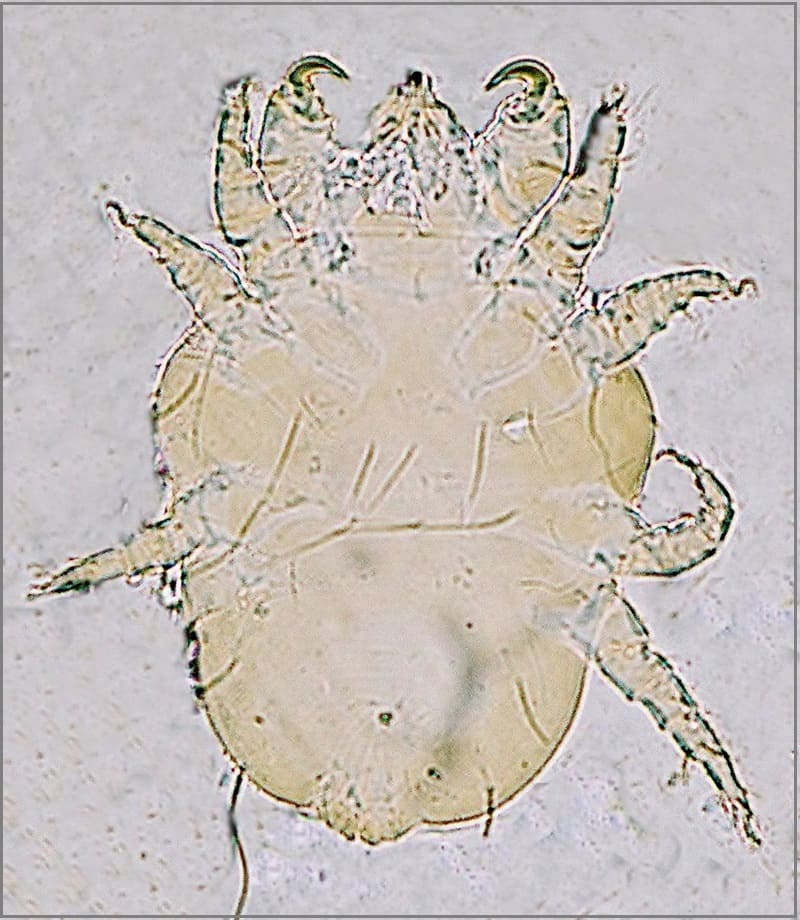
One published report claims most domestic rabbits aren’t symptomatic but do carry this mite. These mites are very contagious via direct physical contact. They don’t burrow. Instead, they directly feed on the layer of keratin on the epidermis. These mites are big and measure 466-500 microns by 300 microns wide. Some can even be seen by the naked eye. They have eight legs and heavy, curved palpal claws. These mites are yellow and would stand out easily. The mite eggs measure 190 to 260 microns in length, are sometimes in an embryonic state, and are connected to hairs via strands that are cocoon-like in nature.
Often wrongly identified as the eggs of hookworms, they’re three times bigger. Their life cycle lasts 21 days and has five separate stages: egg, pre-larva, larva, first-stage nymph, second-stage nymph, and adult. After an animal is exposed, infestation will take anywhere from three to five weeks.
The female of the species can live in the host’s environment for 10 days. Puppies are more susceptible to these mites. Due to the highly contagious nature of the Cheyletiella mites, be very careful when choosing a groomer or kennels where your pet would mingle with other dogs.
It’s also critical to check all pets in case any are asymptomatic carriers of the mites. This walking dandruff easily affects dogs of all ages, sizes, breeds and genders. It’s often referred to as a zoonotic condition. This means the mites can move from your affected pets to you and others around you.
Cheyletiellosis causes various symptoms in humans, including intensely itchy red bumps on the skin (aka papules) that mainly appear on the arms, butt, abdomen, and body. Once your dog is treated and recovers, then you’ll get better.
Does Your Pomeranian Have Walking Dandruff or Dandruff Mites?
⚠ Symptoms of Walking Dandruff in Pomeranians
Walking dandruff caused by Cheyletiella mites can range from mild flaky skin to severe irritation and itching. Some Pomeranians may show obvious symptoms, while others may carry the mites with only subtle skin changes.
Because the Pomeranian has a thick double coat, early symptoms may be hidden beneath the fur. Regular grooming and coat checks are important for detecting skin problems early.
🚨 Important
Walking dandruff is highly contagious between pets. If one dog in the household is affected, all dogs and other pets may require veterinary treatment, even if they are not showing symptoms.
🚨 When to See a Vet
If your Pomeranian develops excessive dandruff, itching, hair loss, or irritated skin, it is important to seek veterinary advice. Walking dandruff can resemble other skin conditions such as allergies, dry skin, fungal infections, or flea allergy dermatitis.
Your veterinarian may perform skin tests, coat examinations, or skin scrapings to confirm whether Cheyletiella mites are present.
🐾 Early Treatment Matters
Prompt diagnosis and treatment can help prevent the mites from spreading to other pets and reduce discomfort for your Pomeranian. Early treatment may also help avoid secondary skin infections caused by excessive scratching.
🩺 Treatment for Walking Dandruff in Pomeranians
Walking dandruff caused by Cheyletiella mites is highly contagious but is usually treatable when diagnosed early. Treatment focuses on eliminating the mites from your Pomeranian, treating other pets in the household if necessary, and thoroughly cleaning the environment to prevent reinfestation.
Because Pomeranians are a tiny toy breed with dense double coats, veterinary guidance is important when selecting safe and effective treatment products.
⚠ Important Safety Information
Never use random over-the-counter parasite products without veterinary advice, especially on tiny breeds like the Pomeranian. Some flea and mite products may cause adverse reactions if incorrectly dosed or unsuitable for your dog’s age, size, or health condition.
Puppies, elderly dogs, and dogs with sensitive skin or neurological conditions may require extra caution when selecting treatment products.
🐾 Denise Leo’s Experience
With their thick double coats, Pomeranians can sometimes hide skin problems beneath the fur until the condition becomes more advanced. Regular grooming and routine coat inspections are important for detecting dandruff, skin irritation, and parasites early.
🐾 Conclusion
Walking dandruff in Pomeranians may initially appear to be simple dry skin or mild dandruff, but the condition is actually caused by highly contagious Cheyletiella mites. Early diagnosis and treatment are important to prevent discomfort, skin irritation, and the spread of mites to other pets and even humans.
Because the Pomeranian has a thick double coat, skin problems can sometimes remain hidden beneath the fur until symptoms become more advanced. Regular grooming, coat inspections, and prompt veterinary attention are essential for maintaining healthy skin and coat condition.
With proper veterinary treatment, environmental cleaning, and ongoing coat care, most cases of walking dandruff can be successfully resolved. Caring for your Pomeranian’s skin health not only improves comfort but also helps your little companion maintain the beautiful coat the breed is famous for.
Written by Denise Leo, Pomeranian breeder, exhibitor, and ANKC Championship Show Judge with over 50 years of experience. Health content reviewed in collaboration with veterinarian Dr. Muqeet Mushtaq.
⚠ Veterinary Disclaimer
The information provided in this article is intended for educational and general informational purposes only and is not a substitute for professional veterinary advice, diagnosis, or treatment.
Always seek the advice of your veterinarian or another qualified animal health professional with any questions you may have regarding your dog’s health or medical condition.
Never ignore professional veterinary advice or delay seeking treatment because of something you have read on this or any other website.
If your Pomeranian is showing signs of illness, discomfort, skin irritation, or an adverse reaction to medication or treatment, contact your veterinarian promptly.
Copyright Pomeranian.org. All Rights reserved.
References and Further Reading:
📚 References & Further Reading
- [1] AKC Pomeranian Breed Standard (2011)
- [2] English Kennel Club Breed Standard
- [3] The Pomeranian Handbook – Denise Leo
- [4] Denlinger, The Complete Pomeranian
- [5] Kimbering, 1891–1991
- [6] Taplin, The Sportsman’s Cabinet
- [7] Parker, The Popular Pomeranian
- [8] Ives, Show Pomeranians
The Pomeranian Handbook