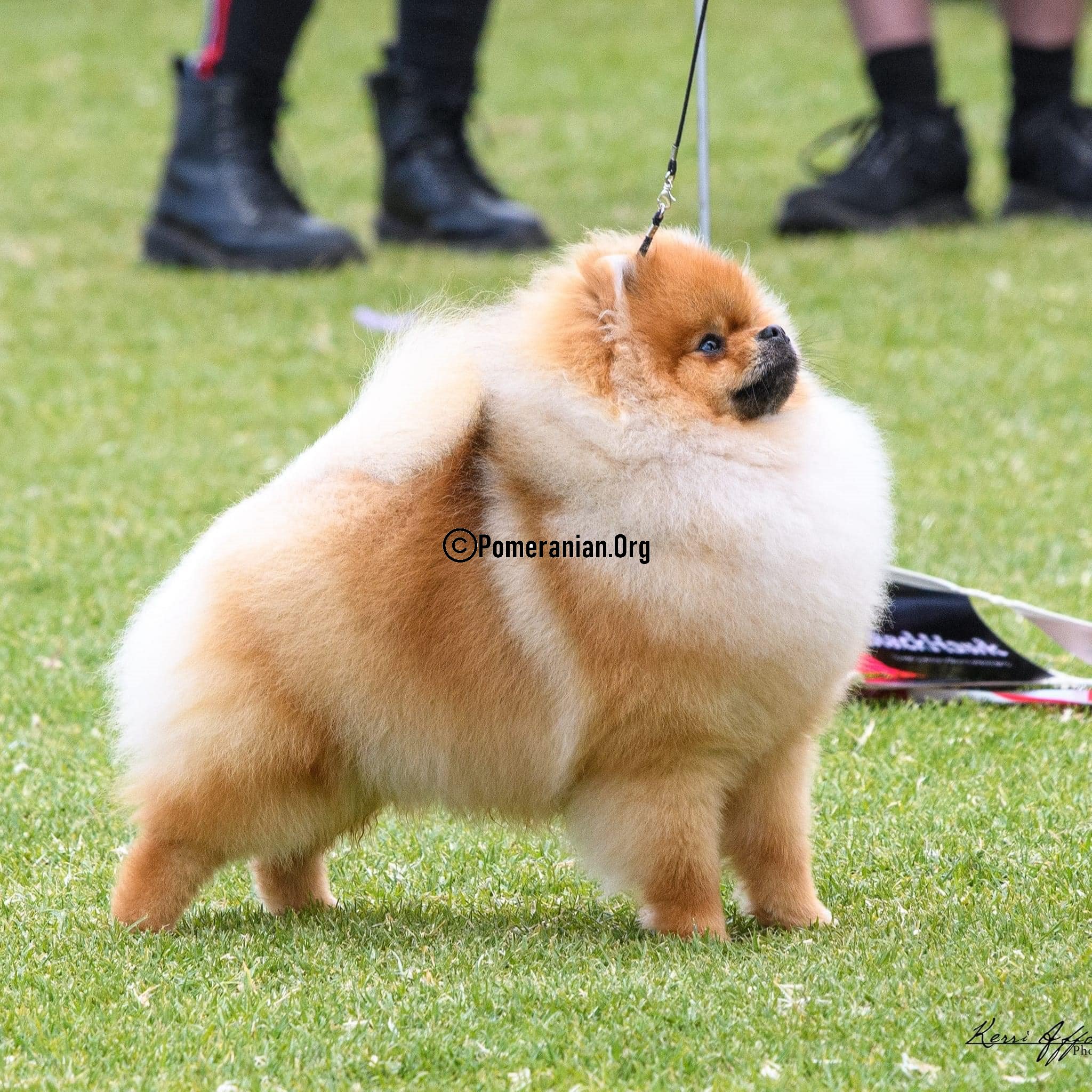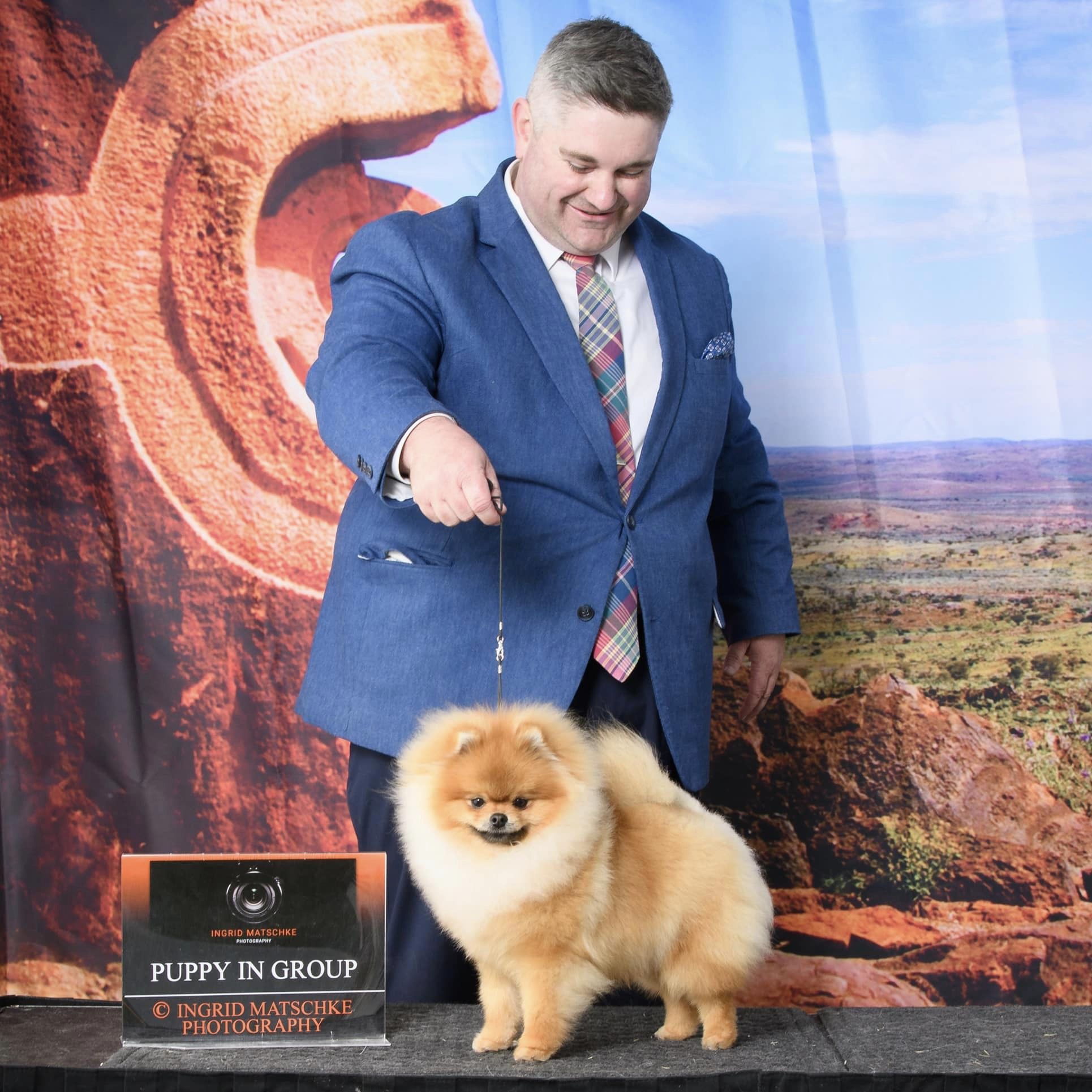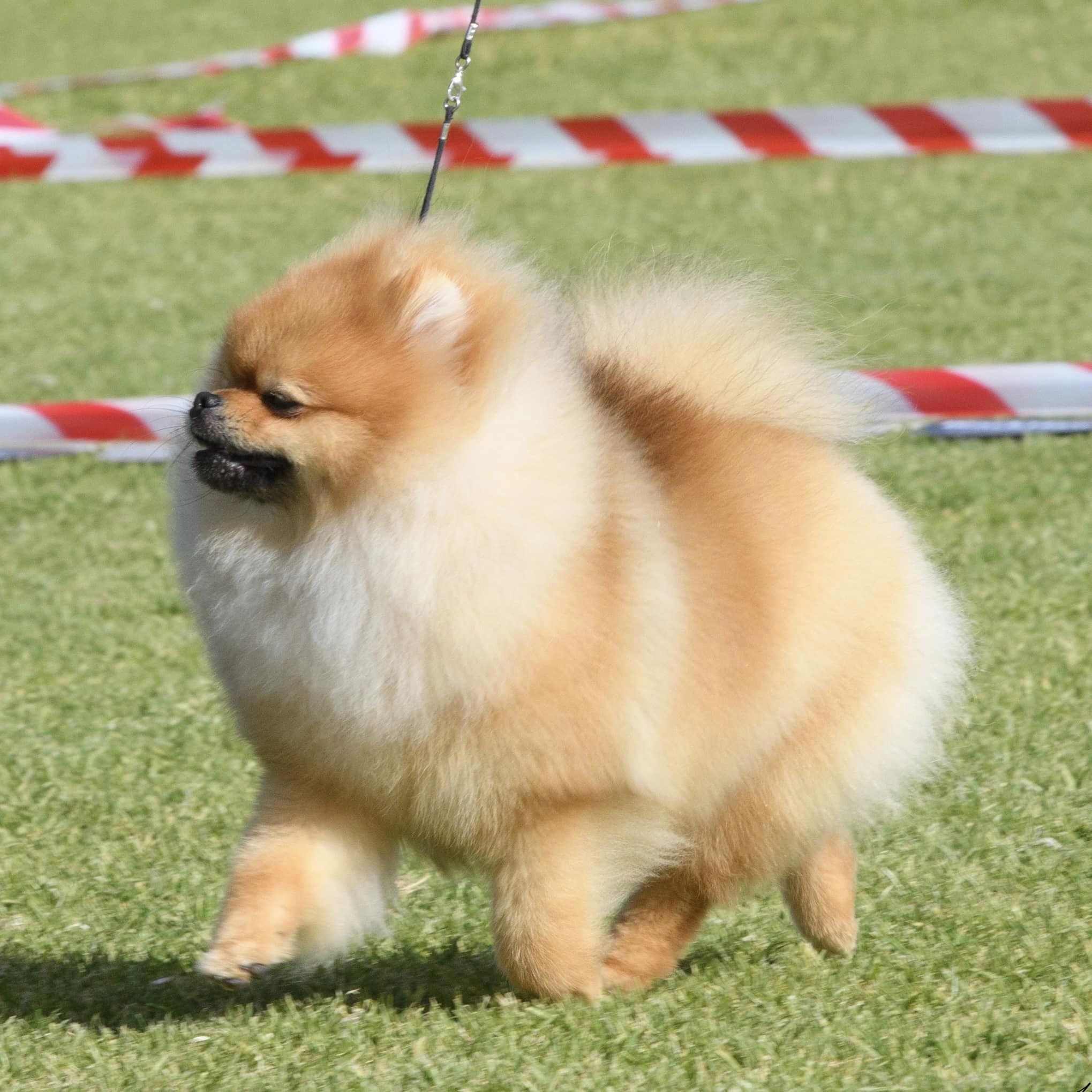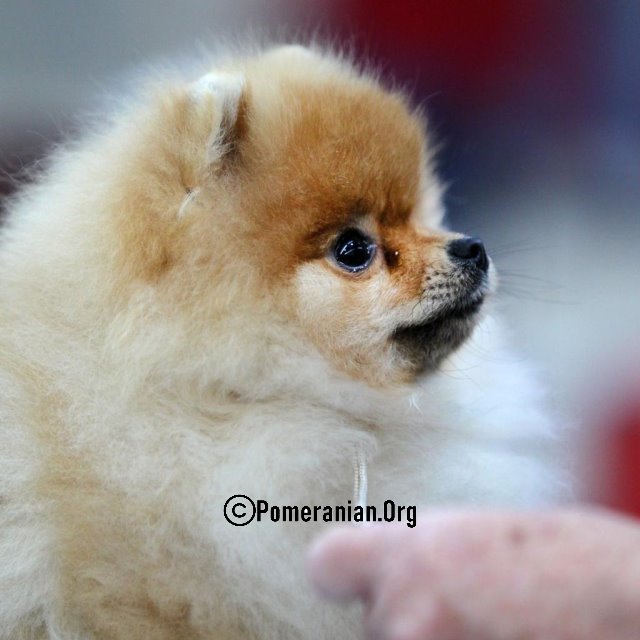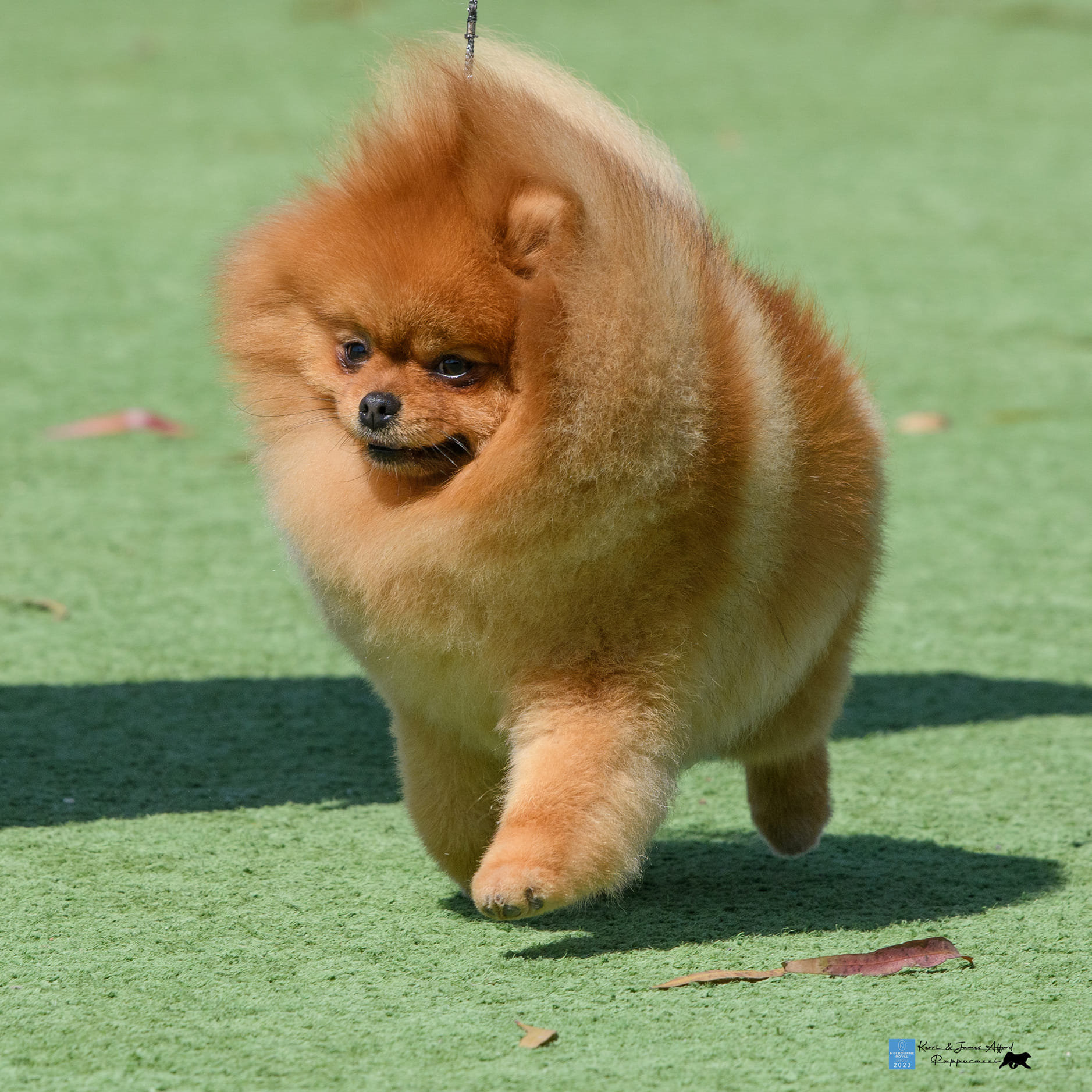

🐾 Quick Answer: What Is a Cream Pomeranian?
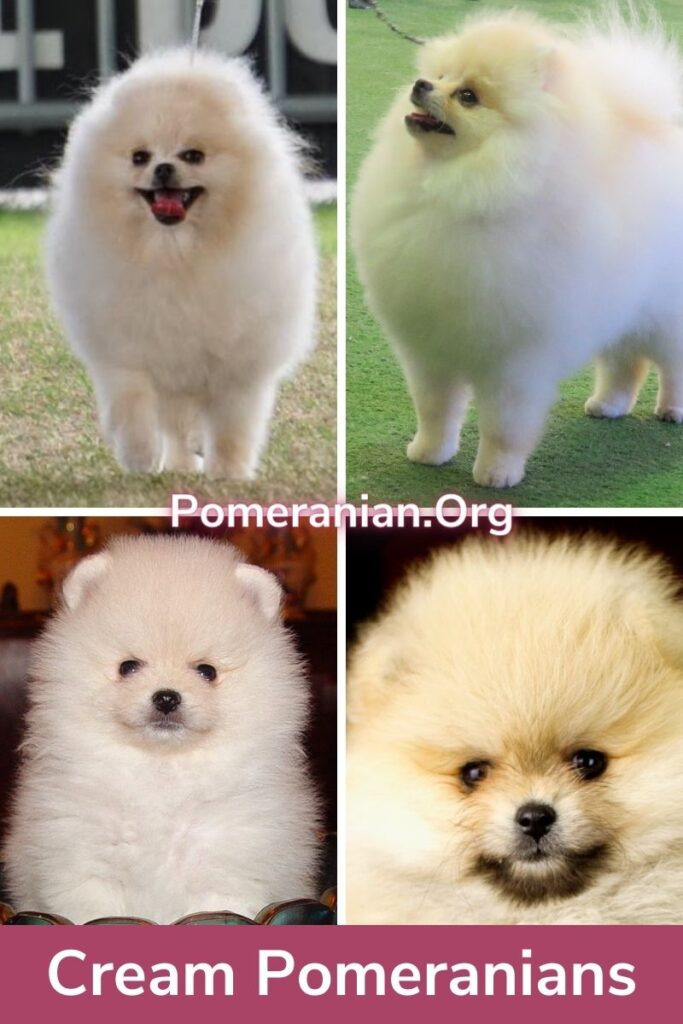
A cream Pomeranian is a Pomeranian with a pale cream or ivory-colored coat and black points, including black eye rims, nose, lips, and paw pads. Many cream Pomeranian puppies are born almost white and darken as they mature.
The Cream Pomeranian is one of the most enchanting coat varieties within the breed, admired for its delicate, pale coloring and classic teddy-bear appearance. With a coat ranging from light ivory to a light, buttery hue, the cream colors of these Poms lend them an angelic charm that truly stands out. Whether you call them a cream Pom or cream Pomeranian, these dogs embody both sophistication and sweetness in one tiny, fluffy package.
The Cream Pomeranian is a small, compact, and well-proportioned dog, characterized by a luxurious double coat. Beyond their beauty, cream Poms are known for their lively and affectionate personalities.
Intelligent, playful, and devoted to their owners, they make wonderful companions for families and individuals alike. Despite their show-stopping appearance, these little dogs are easy to manage — they don’t require excessive exercise and adapt well to life as a cherished indoor pet.
Their gentle temperament, combined with the serene appeal of their cream-colored coats, makes the cream Pomeranian one of the most sought-after and beloved variations of this iconic breed.
For a deeper understanding of Pomeranian coat colors and genetics, please visit our Color Breeding page — written by Denise Leo, a Pomeranian breeder with over 50 years of experience, and developed in consultation with our resident veterinary genetics specialist, Dr. Muqeet Mushtaq (DVM, University of Animal and Veterinary Sciences, 2019; MSc (Hons.) in Animal Breeding & Genetics, University of Agriculture Faisalabad, 2021).
There Are TWO Types of Cream Pomeranian
Most Pomeranian lovers may not be aware that this breed has two distinct shades of cream.
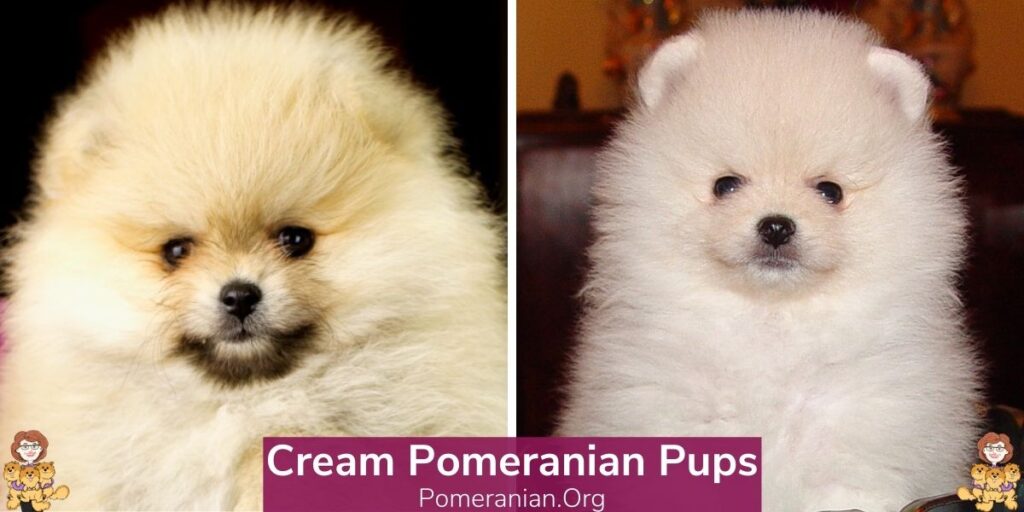
We will now look at the first type of cream, Pom. This cream Pomeranian puppy is born white or very light cream and darkens to a cream color. Version one has the (e) gene, the gene responsible for the clear orange color.
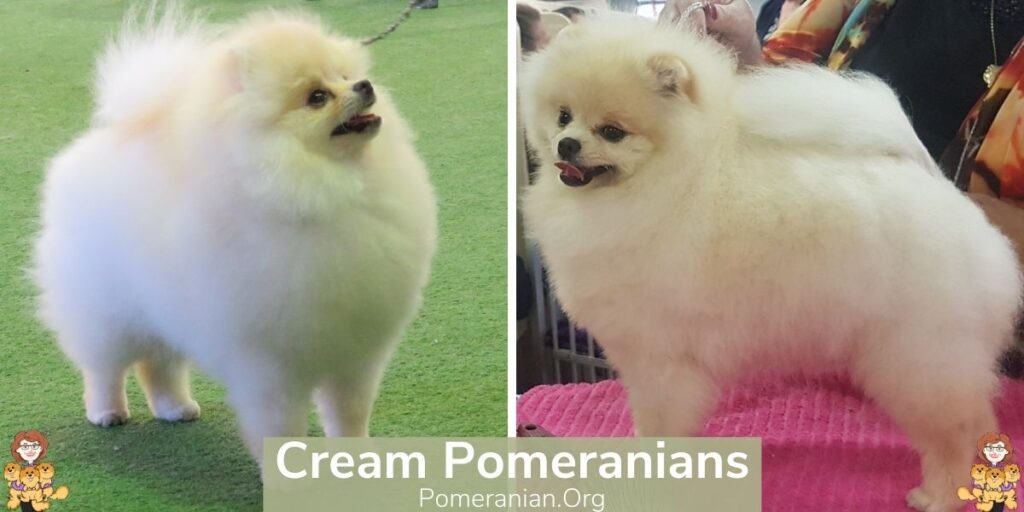
In this dog breed, the color cream is probably best described as being an extremely pale orange. A cream-colored Pomeranian should be self-colored, with no white breechings. Because of the guard hairs’ harsher texture, the topcoat may appear darker.
Breeders will observe that a cream-colored Pomeranian puppy is typically white at birth, and that their color will darken as they develops. All Cream Pomeranians must possess black eye rims, nose, lips, and pads. The whiskers are usually white or straw-colored.
🐾 Two Types of Cream Pomeranians
There are two main cream colour variations seen in Pomeranians: the standard Cream Pomeranian and the Cream Sable Pomeranian. Although they may appear similar at first glance, there are important differences in coat colour, shading, and appearance as the dog matures.
✨ Did You Know?
Many cream Pomeranian puppies are born almost white and gradually develop warmer cream tones as they mature. Cream sable puppies may also lose some of their darker sable tipping during the coat change process known as the “puppy uglies.”

The Cream Sable Pomeranian
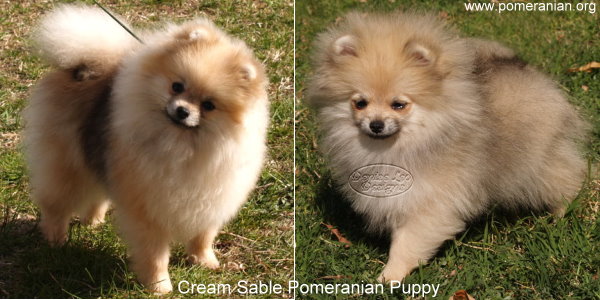
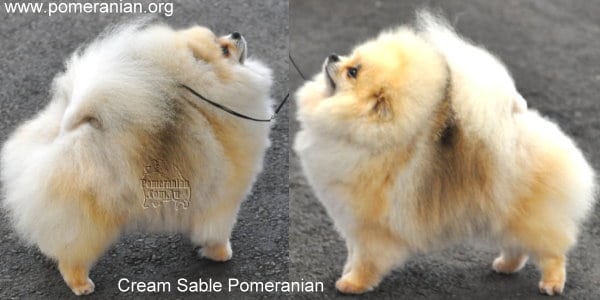
This second type of cream in this breed is the cream sable, and this is one of the most delightful colors in the Pomeranian breed. The stark contrast between the cream-colored undercoat and the harsh, standoffish guard hairs, combined with dark eyes and black points, is a joy to behold.
Instead of being clear cream, they have a silvery color, and they’re able to have black pigment on the hair as well as black whiskers.
A cream sable Pomeranian puppy is born sooty grey. The grey fades until the Pom, at around 8 months of age, appears as a cream Pomeranian with black tipping on the guard hairs and a cream, fluffy, full undercoat. The sable tipping to the cream sable Pom’s coat will often fade as the dog ages.
Cream sable Pomeranian dogs must have black points, i.e., black eye rims, a black nose, black lips, and also black pads. The whiskers on a cream sable Pomeranian will be black.
Color differences between a cream sable and a wolf sable Pomeranian can be confusing. If you find the colors reversed, this is called a reversed sable.
Breeders and owners are often confused when identifying whether a Pomeranian is a cream sable Pom or a wolf sable Pomeranian.
If in doubt whether a Pomeranian is a cream or a wolf sable, DNA testing is available and will quickly remove any uncertainty. Ask your Vet for details on DNA testing. DNA testing is quick and painless, typically involving a swab taken inside the dog’s mouth.
Light Orange Pomeranian Puppies May Look Similar to Cream Sable Pomeranian Puppies During the First Few Weeks After Birth
For the first few weeks, it isn’t easy to distinguish between a cream sable Pomeranian and an orange Pom. Even long-time experienced Pomeranian breeders may be unsure of the color of newborn Pomeranian puppies.
As a long-time Pom dog Breeder, I like to wait until the puppy is 12 weeks before applying for puppy litter registration. Around 12 weeks of age, I have a much clearer idea of the adult color this Pomeranian puppy will be.
It’s very hard to predict the finished color of a Pomeranian puppy until at least 7 months of age. A “true cream sable” may appear to be a very light grey or even orange sable as a baby puppy. Both the cream sable and wolf sable must have no orange at all in the adult coat.
❓ Cream Pomeranian FAQs
Are cream Pomeranians rare?
Cream Pomeranians are considered moderately uncommon. While not as rare as true white Pomeranians, beautiful clear cream dogs with excellent black points are highly admired by many breeders and exhibitors.
Do cream Pomeranian puppies change colour?
Yes. Many cream Pomeranian puppies are born very pale and may darken slightly as they mature. Cream sable puppies may also lose some of their darker shading during the coat change process commonly called the “puppy uglies.”
What is a cream sable Pomeranian?
A cream sable Pomeranian has a cream base coat with darker guard hairs or sable tipping throughout the coat. The darker shading often appears around the back, ears, or tail and may soften with age.
Can a cream Pomeranian be mistaken for a white Pomeranian?
Yes. Very pale cream puppies are often mistaken for white Pomeranians. However, cream dogs usually develop warmer cream tones as they mature, while true white Pomeranians remain ice white throughout life.
Do cream Pomeranians have black points?
Yes. Cream and cream sable Pomeranians should have black points, including black eye rims, nose, lips, and paw pads. These dark points help create the breed’s characteristic expression.
Are cream Pomeranians recognised by kennel clubs?
Yes. Cream and cream sable are recognised Pomeranian colours under major kennel club standards, including Dogs Australia, the AKC, and other international kennel organisations.
Final Thoughts
The Cream Pomeranian is a vision of elegance — soft, graceful, and full of charm. Their delicate cream colors range from the palest ivory to warm, buttery shades, creating a truly captivating appearance that reflects both refinement and sweetness. Beyond their beauty, these little dogs are affectionate, intelligent, and endlessly loyal, making them ideal companions for families, singles, and seniors alike.
Whether you call them a cream Pom or a cream Pomeranian, their appeal is undeniable. Each one has a unique shade and personality, but they all share that signature Pom confidence and sparkle that captures hearts everywhere.
With proper care, grooming, and love, your cream Pomeranian will bring years of joy, laughter, and companionship. Their radiant coat may catch your eye — but it’s their devoted heart that will truly win you over. 🧡🐾
🐾 About the Author
This article was written by
Denise Leo, internationally respected Pomeranian breed expert, exhibitor, and
ANKC Championship Show Pomeranian Specialist Judge with over
50 years of experience in the breed.
Denise is the founder of Dochlaggie Pomeranians and has bred, owned, and exhibited
100+ champion Pomeranians, including numerous All Breeds and Specialty Show winners in Australia and overseas.
Through Pomeranian Headquarters, Denise shares trusted breed information based on decades of hands-on experience with Pomeranian breeding, showing, grooming, puppy development, health, and care.
Copyright Pomeranian.org. All Rights Reserved.
References and Further Reading:
[1] Official Standard of the Pomeranian (AKC). American Kennel Club, 2011.
[2] Official English Kennel Club Pomeranian Breed Standard, 2017.
[3] Kimbering Pomeranians “1891-1991”.
[4] Denise Leo, The Pomeranian Handbook.
[5] E.Parker, The Popular Pomeranian.
[6] L.Ives, Show Pomeranians.