
Learn everything about luxating patella dog surgery recovery, including timeline, aftercare, and expert tips from Pomeranian specialist Denise Leo and veterinarian Dr. Muqeet Mushtaq.
Luxating patella dog surgery recovery is an important process for owners whose pets are affected by this common knee condition. For Pomeranians and other toy breeds, the recovery phase after surgery requires careful management, patience, and the right guidance to ensure the best possible outcome. Understanding what to expect during luxating patella dog surgery recovery—from rest and rehabilitation to long-term care—can make all the difference in your dog’s comfort and mobility.
This article draws on the expertise of Denise Leo, an internationally recognized Pomeranian breeder with more than 50 years of experience, and Dr. Muqeet Mushtaq, a veterinarian specializing in animal breeding and genetics. Together, they provide clear, reliable advice to help you support your Pomeranian’s healing journey and safeguard their long-term health.
Pomeranians are one of the dog breeds that commonly experience issues with their knee joints. If a kneecap gets injured or isn’t formed properly, it can slip out of position, which can be very painful.
This is known as a luxating patella. If your Pomeranian undergoes surgery to correct the luxating patella and stabilize the knee cap, it’s important to understand the luxating patella surgery recovery process for Pomeranian dogs.
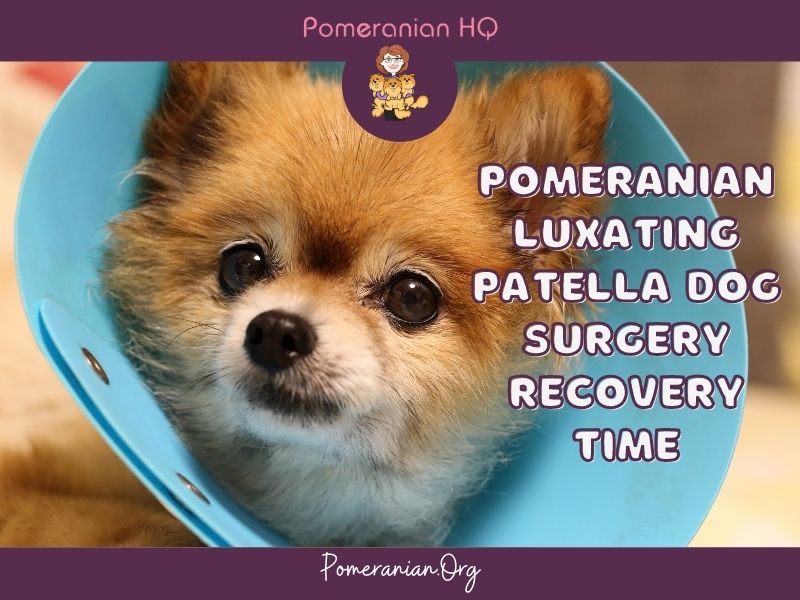
The Timeline for Luxating Patella Dog Surgery Recovery Process
Straight after surgery, the majority of Pomeranians will visibly show that they feel a degree of tenderness in the knee joint and will limit their range of movement as much as possible.
Some will feel a little improvement immediately, or won’t be able to contain their high-spirited personalities. However, you must follow all restrictions related to exercise that the surgeon suggests so your Pom recovers quickly from the surgical techniques to correct the luxating patella.
When you bring your Pomeranian home, these are the steps you need to follow:
- Confine your Pomeranian to a playpen and restrict walking as much as possible during the first few weeks.
- Feed your Pomeranian a healthy diet and ensure he does not gain weight during the convalescence period.
For the first few days after surgery, you must carry your Pom up and down all steps for a few reasons:
- If the weather is icy and/or wet outside, it’s possible he may slip and hurt himself.
- The area around his potty spot may be wet, muddy, or slippery.
- It will take a little while to heal and to feel confident walking again.
Only start exercising your Pom if your vet approves (and this may require a check-up before approval is given).
Once your vet gives the o.k., start by placing your Pom on his leash and taking him for 5-minute walks. If he exhibits any signs of pain or strain in the knee joint, stop.
If he shows signs of constant pain during short walks, ring the vet and book him in for a full check-up again. On the other hand, if your Pom is coping, slowly increase the walks as long as he appears healthy enough to manage.

Pomeranian parents should be aware that the healing process may take up to 12 weeks, and complications such as wound contamination and infection can occur, potentially hindering your dog’s progress.
Your dog will require a vet examination after the fourth day for dressing changes as well as possible carprofen injections every week until it has healed.
Luxating Patella Dog Surgery Recovery Process
After your Pomeranian has undergone surgery to correct a luxating patella, dog owners must have an idea of the dog’s patellar luxation surgery recovery rate over an average week. Obviously, your Pom’s recovery timeline might not be exactly the same as this, but the similarities will still be there.
Strict rest means no free exercise for the next 6-8 weeks to allow the leg to heal and stabilize the joint for most dogs.
After that Initial Week
This first week is your Pomeranian’s recovery after luxating patellar surgery. If everything is going smoothly, you may want to take a few steps ahead and prepare for the next recovery period.
If you notice any swelling, please get in touch with your veterinarian for advice. Cold packs may be prescribed for one to two days post-surgery. Unless you experience problems, such as obvious swelling, or are advised to continue by your veterinarian, you can stop using cold packs.
Start applying moist heat with a commercial product. Ensure the device’s temperature isn’t too hot for small dogs to handle. People are commonly told that if they make a rice bag, put it in the microwave, they will have moist heat. However, they can also say something if you have made the bag too hot.
Regardless of the product chosen, make it warm, not hot, when you touch it. If you’re unsure, use a washcloth and warm it by placing it in lukewarm water, as this will be the gentlest option.
If your vet has no objections, use the heating option right before your pet exercises, as it will help make the healing joints more flexible.
Two to Three Weeks After Luxating Patella Surgery
This is the second phase of your Pom’s recovery from luxating patella surgery. In lots of cases, your vet is happy to assess his condition and see if he is progressing at a good pace.
The stitches will have been removed at the vet’s office.
He may advise you on suitable “at-home” therapy. Follow your vet’s advice to the letter, but if your Pom shows any sign of pain, stop immediately.
Two to three weeks after surgery, begin your dog’s physiotherapy. A passive range of motion exercise is performed in each session, involving ten flexions and extensions on each joint, with no force or pain-causing movements included.
Four to Six Weeks Post-Luxating Patella Dog Surgery
This is your Pom’s third phase of recovery from the luxating patella and the typical timeline. Again, don’t exercise your Pomeranian unless given the go-ahead by your vet. Avoid slippery surfaces, stairs, and jumping up and down from furniture.
Luxating Patella in Dogs: Recovery Beyond Eight Weeks
This is the fourth and final phase of your Pomeranian’s recovery timeline. Get the vet to evaluate his overall health at the nine-week point. He may offer additional suggestions to extend the luxating patellar recovery timeline.
Sit-to-stand exercises are great for building quadriceps muscle mass. They should start at six weeks and continue until your dog reaches the 12- to 16-week post-operation period.
After recovery, exercise and hydrotherapy (swimming) are required for better joint mobility and strengthening of muscles. By 12-16 weeks, your dog should have returned to normal activity; otherwise, schedule an appointment with your veterinarian for a physical examination.
Some vets are keen to permit you to do a lot more activities, except for high-impact exercises that could still undo all the hard work already put in. Your Pomeranian should avoid running until the vet has permitted you to return your Pom to its normal routine, which usually occurs around week twelve to sixteen.
Pomeranian Luxating Patella Surgery Recovery Final Thoughts
Be guided by your vet and also by the level of activity your Pomeranian is happy with and keen to achieve. The success rate of luxating patella surgery in dogs depends on the surgeon’s skill and the level of at-home management after surgery.
Please note: while I do discuss health, care, and behavioral issues, you should never use this information as a replacement for advice from qualified veterinarians, diagnoses, or recommended treatment regimes. If you have any worries about the health of your Pomeranian, your first contact should be your regular vet or, if you don’t yet have one, a vet that works locally. Never ignore or avoid treatment and advice from your vet because of a piece of information you have read on any website.
N.B. This article regarding Pomeranian health issues was written in consultation with our resident veterinarian.
Dr. Muqeet Mushtaq
DVM, University of Animal and Veterinary Sciences, 2019
MSc. (Hons.) (Animal Breeding & Genetics), University of Agriculture Faisalabad, 2021
Copyright Pomeranian.org. All Rights Reserved.
📚 References & Further Reading
- [1] AKC Pomeranian Breed Standard (2011)
- [2] English Kennel Club Breed Standard
- [3] The Pomeranian Handbook – Denise Leo
- [4] Denlinger, The Complete Pomeranian
- [5] Kimbering, 1891–1991
- [6] Taplin, The Sportsman’s Cabinet
- [7] Parker, The Popular Pomeranian
- [8] Ives, Show Pomeranians