
DVM, University of Animal and Veterinary Sciences, 2019
MSc. (Hons.) Animal Breeding & Genetics, University of Agriculture Faisalabad, 2021
⚠️ When to Seek Urgent Veterinary Care
Your veterinarian should always be your first port of call if you are concerned about your Pomeranian’s coughing or breathing.
Seek urgent veterinary care immediately if your Pomeranian:
- Is struggling to breathe
- Is breathing rapidly or with an open mouth
- Is using their abdomen to help them breathe
- Is stretching their head and neck forward to get air
- Has pale, grey or blue gums or tongue
- Appears weak, distressed or collapses
These are recognised signs of respiratory distress and should not be treated at home.
Veterinary source: Cornell University College of Veterinary Medicine
A Pomeranian may cough for something relatively minor, such as temporary throat irritation, or because of a condition requiring veterinary treatment. A dry “goose-honk” cough is commonly associated with tracheal collapse in toy breeds, but coughing can also be caused by respiratory infection, heart disease, chronic airway inflammation, parasites or something inhaled into the airway.
The sound alone cannot confirm the cause. Notice when the coughing occurs, how long it lasts, and whether your Pomeranian has any difficulty breathing. A video of an episode can be extremely helpful to your veterinarian.
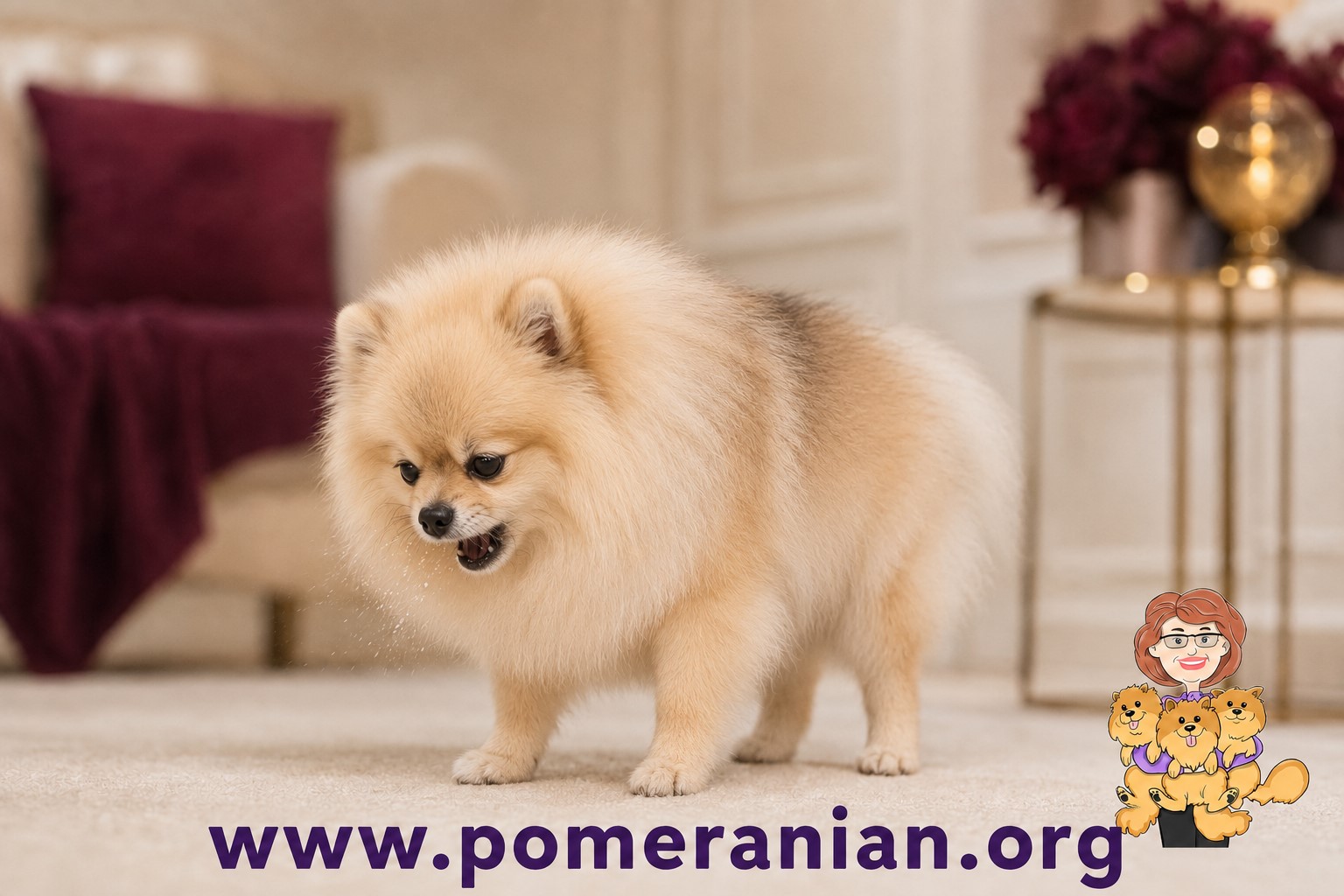
Seven Possible Causes of Pomeranian Coughing
Pomeranians may cough for several different reasons. Although a collapsed trachea is an important consideration in toy breeds, it should never be assumed to be the cause without a veterinary examination.
Seven possible causes of coughing in Pomeranians are:
- Collapsed trachea — often associated with a dry, harsh or “goose-honk” cough.
- Infectious respiratory disease — including the group of contagious infections commonly called kennel cough.
- Heart disease — particularly in older Pomeranians or dogs with reduced stamina and breathing changes.
- Chronic bronchitis or airway irritation — which may be aggravated by smoke, aerosols, dust and strong fragrances.
- Parasites — including heartworm, lungworm and, in some puppies, migrating roundworm larvae.
- Pneumonia or another lung infection — especially when coughing occurs with tiredness, fever or loss of appetite.
- A foreign object, aspiration or throat irritation — particularly when coughing begins suddenly or occurs after eating or drinking.
The timing and sound of a cough may provide useful clues, but several conditions can produce similar symptoms. Some Pomeranians may also have more than one condition at the same time. Your veterinarian may recommend an examination, chest X-rays, blood tests or other investigations to identify the cause.
Is Your Pomeranian Coughing, Gagging or Reverse Sneezing?
Coughing, gagging and reverse sneezing can sound very similar. Knowing the difference may help you describe the episode to your veterinarian, but it should not be used to diagnose your Pomeranian at home.
Coughing
A cough usually involves a forceful push of air out through the mouth. It may sound dry and harsh, like a “goose honk,” or it may sound moist or congested.
Gagging
Gagging may look as though your Pomeranian is trying to clear something from the throat or is about to vomit. A cough may sometimes finish with a gag.
Reverse Sneezing
During reverse sneezing, a dog rapidly draws air in through the nose, producing repeated snorting or gasping sounds. Most episodes are brief, but frequent or severe episodes should be discussed with your veterinarian.
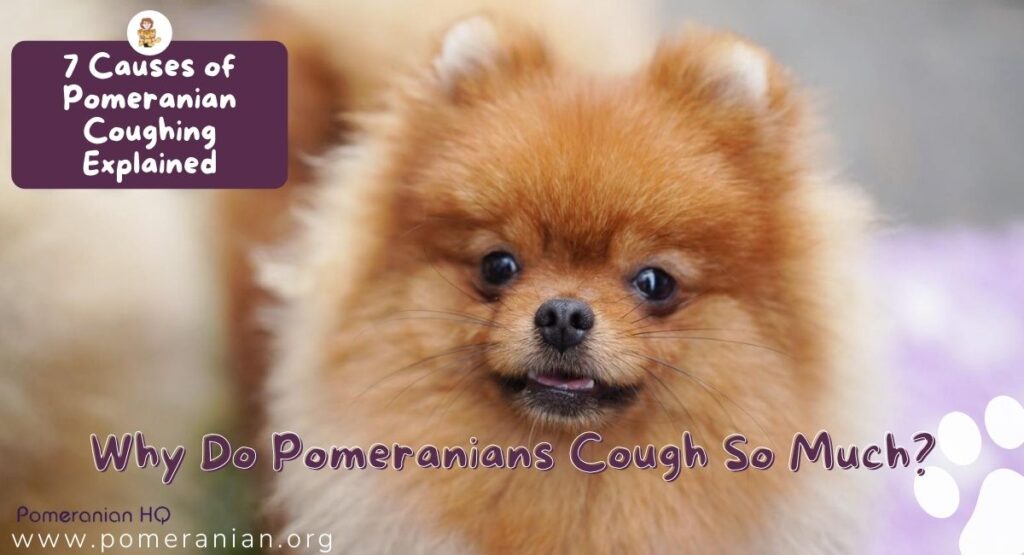
Seven Possible Causes of Pomeranian Coughing
Pomeranians may cough for many different reasons. A collapsed trachea is an important consideration in toy breeds, but it should never be assumed to be the cause without a veterinary examination.
The sound and timing of the cough may provide helpful clues, but several conditions can produce very similar symptoms. Some dogs may also have more than one condition at the same time. Your veterinarian should always be your first port of call if your Pomeranian develops a new, persistent, recurring, or worsening cough.
1. Collapsed Trachea
A collapsed trachea is one of the best-known causes of coughing in Pomeranians and other toy dog breeds.
The trachea, commonly called the windpipe, carries air from the throat to the lungs. It is supported by rings of cartilage that help keep it open. When these rings weaken and flatten, the airway becomes narrower and breathing can become more difficult.
The most recognizable sign is a persistent, dry, and harsh cough. It is often described as sounding like a goose honk.
Coughing may become worse:
- During excitement or exercise
- In hot or humid weather
- At night
- After eating or drinking
- When pressure is placed on the neck
- When the dog is overweight
- When the dog also has heart or lung disease
Not every Pomeranian with a honking cough has a collapsed trachea. Kennel cough, heart disease, bronchitis, and other conditions may produce similar sounds.
Your veterinarian may recommend chest or neck X-rays. However, an ordinary X-ray may not always show the collapse because the trachea can change shape as the dog breathes. Moving X-rays, known as fluoroscopy, or an examination of the airway with a camera, may sometimes be required.
Treatment depends on the severity of the condition. It may include weight control, reducing excitement, avoiding excessive heat, limiting strenuous exercise, and using veterinarian-prescribed medication. More advanced cases may require specialist treatment.
A properly fitted harness is preferable to attaching the lead to a collar because it avoids placing additional pressure on the throat. However, using a harness cannot guarantee prevention of tracheal collapse.
2. Infectious Respiratory Disease or Kennel Cough
“Kennel cough” is a general name for a group of contagious respiratory infections. It is also known as canine infectious respiratory disease complex.
Despite its name, a Pomeranian does not need to stay in a boarding kennel to become infected. Dogs can be exposed anywhere they come into contact with other dogs, including:
- Dog shows
- Grooming salons
- Veterinary waiting rooms
- Training classes
- Dog parks
- Boarding facilities
- Pet transport
- Social gatherings involving dogs
The usual sign is a sudden, forceful cough that may be followed by gagging or retching. Owners sometimes believe their dog has something stuck in the throat. Some dogs may also sneeze or develop a runny nose.
Dogs with a mild infection may otherwise remain bright, active, and interested in food. However, puppies, elderly dogs, and dogs with other health problems may become more seriously unwell. Lethargy, fever, poor appetite, rapid breathing, or difficulty breathing may indicate pneumonia or another complication.
Keep a coughing Pomeranian away from other dogs and telephone your veterinarian before attending the clinic. This allows the veterinary team to prevent the infection from spreading to other patients.
Treatment will depend on your dog’s symptoms and the suspected cause. Do not give human cough or cold medicine unless your veterinarian has specifically directed you to do so.
3. Heart Disease
Heart disease can sometimes cause coughing, particularly in older Pomeranians. However, coughing does not automatically mean that a dog has heart failure.
A heart problem may cause fluid to collect in or around the lungs. An enlarged heart may also place pressure on the airways. Some dogs have heart disease and airway disease at the same time, making it difficult to identify the cause without proper testing.
Possible signs associated with heart disease include:
- Coughing while resting or sleeping
- Faster breathing while asleep
- Reduced stamina
- Reluctance to exercise
- Tiring more easily than usual
- Weakness or fainting
- Poor appetite
- A swollen abdomen
- Laboured breathing
A veterinarian will listen to your Pomeranian’s heart and lungs and may recommend chest X-rays, blood tests, an electrocardiogram or an ultrasound examination of the heart.
Never give cough suppressants or heart medication without veterinary advice. Suppressing the cough may be inappropriate if fluid is present in the lungs, and the correct treatment depends on the underlying heart condition.
4. Chronic Bronchitis or Airway Irritation
Chronic bronchitis causes ongoing inflammation within the lower airways. Inflamed airways may produce excess mucus and narrowing, resulting in repeated coughing.
The cough is often dry and harsh, and may worsen with exercise or excitement. A dog with chronic bronchitis may cough most days for weeks or months.
Airborne irritants can trigger coughing or aggravate existing airway disease. These include:
- Cigarette or wood smoke
- Vaping fumes
- Dust
- Perfume
- Aerosol sprays
- Strong cleaning products
- Scented candles and diffusers
- Mould
- Pollen
Airborne allergens and irritants may affect the respiratory system, but food and skin allergies should not automatically be blamed for a persistent cough. Coughing or wheezing requires a veterinary assessment to rule out more serious conditions.
Diagnosis may involve chest X-rays and tests to exclude heart disease, infection, tracheal collapse, and other respiratory problems. In some cases, a veterinarian may examine cells or fluid collected from the airways.
Treatment may include reducing exposure to irritants, weight management, and veterinary-prescribed medication to control coughing and airway inflammation.
5. Parasites
Certain parasites can affect a dog’s lungs, heart or airways and cause coughing.
Heartworm is transmitted through mosquito bites. It can damage the blood vessels in the lungs and strain the heart. Early infection may produce few noticeable symptoms. As the disease progresses, signs may include a persistent cough, reduced exercise tolerance, fatigue, poor appetite, and weight loss.
The risk of heartworm varies according to location, travel, and preventive treatment. Dogs living in Australia can still be at risk, so discuss year-round heartworm prevention and testing with your veterinarian.
Lungworms can also cause coughing, sneezing, nasal discharge, breathing changes or reduced stamina. Different types of lungworm occur in different regions.
Roundworm larvae may migrate through the lungs of young puppies and occasionally contribute to coughing. Puppies may also have poor growth, a pot-bellied appearance, vomiting, or diarrhea.
Do not assume that an ordinary intestinal worming product protects against every parasite. Different products cover different worms. Your veterinarian can recommend the appropriate tests, treatment, and prevention plan for your Pomeranian.
6. Pneumonia or Another Lung Infection
Pneumonia is inflammation or infection within the lungs. It may be caused by bacteria, viruses, fungi, or the inhalation of food, liquid, or vomit.
A dog with pneumonia will usually show more than an occasional cough. Other warning signs may include:
- Lethargy or weakness
- Loss of appetite
- Fever
- Rapid or labored breathing
- Nasal discharge
- A wet or congested-sounding cough
- Reduced interest in normal activities
Puppies, elderly Pomeranians, and dogs with another medical condition may be more vulnerable to complications.
Aspiration pneumonia can occur when food, water, milk, vomit, or medication accidentally enters the lungs. It may be a concern in puppies being bottle-fed, dogs that regurgitate, dogs with swallowing difficulties, or dogs that have recently vomited or undergone anesthesia.
Pneumonia requires veterinary diagnosis and treatment. Your veterinarian may recommend chest X-rays, blood tests, and other investigations. Treatment may include carefully selected medication, oxygen, fluids, or hospital care, depending on the cause and severity.
7. A Foreign Object, Aspiration, or Throat Irritation
A sudden cough may be caused by something irritating or obstructing the throat or airway.
Possible causes include:
- A grass seed
- A small piece of food
- Part of a toy or chew
- Dust or plant material
- Water or liquid entering the airway
- Irritation following vomiting
- Pressure or injury involving the throat
An affected Pomeranian may cough, gag, retch, drool, paw at the mouth, or repeatedly attempt to swallow. The dog may appear distressed or refuse food and water.
Do not put your fingers deep into your dog’s mouth or throat unless an object is clearly visible and can be removed safely. You could push it deeper, injure the throat, or be bitten by a frightened dog.
Sudden coughing after eating, chewing, playing outside, or drinking should be taken seriously. Contact your veterinarian promptly, particularly if the coughing continues or your Pomeranian shows any difficulty breathing.
How Will Your Veterinarian Find the Cause?
Your veterinarian will ask when the coughing began, what it sounds like, and whether anything appears to trigger it. A video recorded at home can be extremely useful.
Depending on your Pomeranian’s symptoms, the examination may include:
- Listening to the heart and lungs
- Checking the mouth and throat
- Chest or neck X-rays
- Blood tests
- Heartworm or parasite testing
- Heart ultrasound
- Fluoroscopy or moving X-rays
- Examination of the airways with a camera
- Collection of samples from the respiratory tract
Because many coughing conditions sound alike, obtaining the correct diagnosis is important before treatment begins. Never give your Pomeranian human cough medicine or medication prescribed for another dog.
Frequently Asked Questions About Pomeranian Coughing
Click a question to view the answer.
Why does my Pomeranian make a goose-honking sound?
Why does my Pomeranian cough after drinking water?
Why does my Pomeranian cough at night?
Can a collar make a Pomeranian cough?
Is kennel cough contagious?
Is reverse sneezing the same as coughing?
What can I give my Pomeranian for a cough?
When is Pomeranian coughing an emergency?

Final Thoughts on Pomeranian Coughing
An occasional cough may be caused by temporary throat irritation, but a new, persistent, recurring or worsening cough should never be ignored. Collapsed trachea is an important cause of coughing in Pomeranians, but heart disease, respiratory infections, chronic bronchitis, parasites, pneumonia and foreign material in the airway can produce similar symptoms.
The sound of the cough alone cannot provide a reliable diagnosis. Record an episode if possible, note when it occurs, and arrange an examination with your veterinarian. Early investigation provides the best opportunity to identify the cause and begin appropriate treatment.
Your veterinarian should always be your first port of call if you are concerned about your Pomeranian’s coughing or breathing. Seek emergency veterinary care immediately if your dog is struggling to breathe, collapses, or develops pale, grey, or blue gums or tongue.
Most importantly, remain calm, keep your Pomeranian comfortable, and never give human cough medicine or medication prescribed for another dog without veterinary advice.
Copyright Pomeranian.Org. All Rights Reserved.
⚠ Veterinary Disclaimer
The information provided in this article is intended for educational and general informational purposes only and is not a substitute for professional veterinary advice, diagnosis, or treatment.
Always seek the advice of your veterinarian or another qualified animal health professional with any questions you may have regarding your dog’s health or medical condition.
Never ignore professional veterinary advice or delay seeking treatment because of something you have read on this or any other website.
If your Pomeranian is showing signs of illness, discomfort, skin irritation, or an adverse reaction to medication or treatment, contact your veterinarian promptly.
References and Further Reading:
[1] Denise Leo “The Pomeranian Handbook”.
Do You Have a Copy of Our Pomeranian Handbook?