
DVM, University of Animal and Veterinary Sciences, 2019
MSc. (Hons.) Animal Breeding & Genetics, University of Agriculture Faisalabad, 2021
Dry, flaky, itchy, or inflamed skin in a Pomeranian should never be treated as merely a cosmetic problem. The breed’s dense double coat can conceal redness, sores, parasites, infection, and hair loss until the condition has become uncomfortable or difficult to treat.
My strongest advice is to consult your veterinarian before trying home remedies, supplements, medicated shampoos, oils, or changing your Pomeranian’s diet. Dry skin is a symptom—not a diagnosis—and treatment that helps one condition may irritate another or delay the correct diagnosis.
Arrange a veterinary examination promptly if your Pomeranian has persistent itching, bald patches, scabs, an unpleasant odor, moist or bleeding skin, ear inflammation, pain, or symptoms that continue to return. Rapid facial swelling, breathing difficulty, collapse, or a severe widespread reaction requires urgent veterinary attention.
During more than 50 years of breeding, exhibiting, grooming, and caring for Pomeranians, I have learned never to assume that dandruff or coat loss is simply caused by dry weather. Possible causes include fleas and mites, allergies, bacterial or yeast infections, ringworm, unsuitable grooming products, hormonal disorders, and Pomeranian coat-loss conditions.
In this guide, I will explain the common signs and causes of Pomeranian skin problems, how veterinarians investigate them, and the safe steps owners can take to support healthy skin and coat. This information is educational and should not replace veterinary examination, diagnosis, or treatment.
When Should a Pomeranian See a Veterinarian?
Skin problems can worsen beneath a Pomeranian’s dense coat. Early veterinary attention can prevent unnecessary discomfort and complications.
Arrange a Veterinary Appointment
- Persistent or intense itching
- Repeated licking, chewing, or rubbing
- Flaking or scaling that does not improve
- Bald patches or increasing hair loss
- Redness, scabs, pimples, or crusts
- Moist, bleeding, or painful skin
- Pus or an unpleasant odor
- Recurring ear or paw irritation
- Skin problems that repeatedly return
- Lethargy, appetite changes, or weight changes
Seek Urgent Veterinary Care
- Difficulty breathing
- Rapid swelling of the face or muzzle
- Collapse, severe weakness, or disorientation
- Widespread hives or a rapidly developing reaction
- Severe pain or extensive open wounds
- Uncontrolled bleeding
- A suspected serious reaction to medication, shampoo, or parasite treatment
Do Not Try to Diagnose the Cause From Photographs Alone
Fleas, mites, allergies, bacterial or yeast infections, ringworm, hormonal disease, and coat-loss disorders can produce similar signs. Your veterinarian may need to examine the skin and perform tests before recommending treatment.
Signs of Skin Problems in Pomeranians
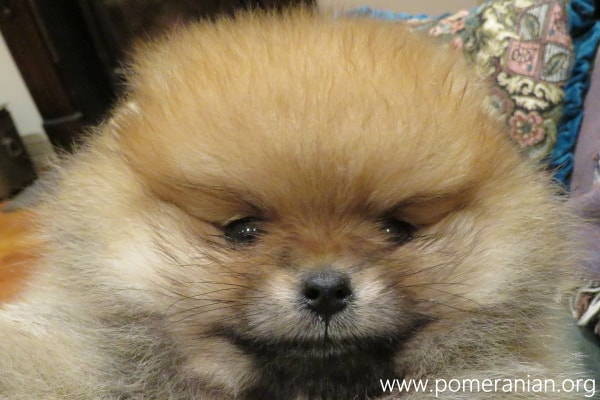
A Pomeranian’s thick double coat can hide skin problems, so examine the skin regularly rather than judging coat condition from the surface alone. Part the fur in several places, paying particular attention to the neck, belly, armpits, groin, base of the tail, behind the ears, and between the toes.
Signs that may indicate a skin problem include:
- Frequent scratching, licking, chewing, or rubbing
- Dry flakes or dandruff within the coat
- Red, inflamed, or unusually darkened skin
- Scabs, sores, pimples, or moist patches
- Greasy skin or an unpleasant odor
- Thinning fur, bald patches, or excessive shedding
- Broken hairs or a dull, brittle coat
- Fleas, flea dirt, lice, or visible mites
- Repeated ear irritation or paw licking
- Sensitivity or discomfort when touched
Dry, Itchy, Greasy, or Infected Skin?
These descriptions are not interchangeable. Recognizing the differences can help you explain the problem clearly to your veterinarian.
Dry skin commonly produces fine flakes and a dull-looking coat. Mild itching may occur, but dryness can also accompany allergies, parasites, hormonal disorders, or unsuitable grooming products.
Itchy skin causes repeated scratching, chewing, licking, or rubbing. Fleas, mites, allergies, and infections are among the common causes.
Greasy skin may feel oily, develop larger yellowish flakes, and have a noticeable odor. It can be associated with seborrhea, yeast overgrowth, or another underlying condition.
Infected skin may be red, painful, moist, crusted, swollen, or unpleasant-smelling. Pustules, discharge, and rapidly spreading lesions require veterinary attention.
A Pomeranian can have more than one type of skin change at the same time. For example, an allergy may cause itching, which damages the skin and allows a secondary bacterial or yeast infection to develop. This is why identifying and treating the underlying cause is essential.
Common Causes of Dry and Itchy Skin in Pomeranians
Pomeranian skin problems can have many different causes, and several conditions may produce almost identical symptoms. Itching, flakes, redness, odor, and hair loss are therefore not enough to make an accurate diagnosis at home.
Fleas and Other Parasites
Fleas are a common cause of intense itching, particularly around the lower back, hindquarters, and base of the tail. A dog with flea allergy dermatitis may react severely to very few flea bites, so not seeing live fleas does not rule them out.
Other possible parasites include:
- Sarcoptic mange mites
- Demodex mites
- Cheyletiella mites, sometimes called “walking dandruff”
- Lice
- Ear mites
Some parasites are difficult to see without veterinary testing. Sarcoptic mange can also spread between dogs and may temporarily irritate people.
Allergies
Pomeranians can develop allergies to flea bites, environmental substances, food, or materials that contact the skin.
Environmental triggers may include pollen, grasses, dust mites, and mold. Food allergies are less common than many owners assume and cannot be confirmed simply by changing brands or removing one ingredient.
Dogs with allergies may scratch, lick their paws, rub their faces, develop repeated ear problems, or experience recurring bacterial and yeast infections.
Bacterial, Yeast, and Fungal Infections
Bacteria and yeast normally live on a dog’s skin, but they can multiply when the skin barrier is damaged by allergies, parasites, moisture, or excessive scratching.
Warning signs include:
- Redness and inflammation
- Greasy or crusted skin
- Pimples, sores, or discharge
- A musty or unpleasant odor
- Increasing itchiness
- Patchy hair loss
Ringworm is a fungal infection that may cause scaly areas and broken hairs. It can spread to people and other animals, so veterinary diagnosis and treatment are important.
Grooming and Environmental Irritation
Overbathing, harsh shampoos, incomplete rinsing, excessive heat during drying, matting, and unsuitable grooming products may irritate a Pomeranian’s skin. Low indoor humidity can also worsen flaking, particularly during winter or in heated and air-conditioned homes.
However, dry weather should not automatically be blamed when itching, redness, odor, sores, or hair loss are present.
Hormonal and Medical Conditions
Hypothyroidism, Cushing’s disease, and other medical conditions can affect skin and coat quality. These problems may cause thinning fur, slow coat regrowth, recurrent infections, pigmentation changes, or alterations in appetite, weight, thirst, and energy.
Your veterinarian may recommend skin tests, blood tests, parasite treatment trials, or other investigations to identify the underlying cause.
How Veterinarians Diagnose Pomeranian Skin Problems
Because many skin conditions look similar, your veterinarian will consider your Pomeranian’s symptoms, medical history, parasite prevention, diet, grooming routine, and when the problem began.
Testing may include:
- Examination with the coat carefully parted
- Flea combing and skin scrapings
- Skin samples checked for bacteria or yeast
- Fungal testing for ringworm
- Blood tests when hormonal or medical disease is suspected
- A veterinary-supervised elimination diet for possible food allergy
Environmental allergy testing may help select allergens for immunotherapy, but it is not usually used alone to diagnose an allergy.
Bring details of all foods, treats, supplements, grooming products, and parasite treatments your Pomeranian receives. Photographs showing how the skin has changed can also help your veterinarian assess the condition.
Treating Dry and Itchy Skin in Pomeranians
Treatment must address the underlying cause rather than the flakes or itching alone. Depending on the diagnosis, your veterinarian may recommend:
- Veterinary-approved flea or parasite control
- Antibiotic, antifungal, or mite treatment
- Medication to relieve inflammation and itching
- A medicated shampoo suited to the diagnosed condition
- A strict elimination diet for suspected food allergy
- Long-term allergy management or immunotherapy
- Treatment for an underlying hormonal or medical disorder
Secondary bacterial or yeast infections may also need treatment before the skin can recover fully.
Avoid human creams, shampoos, essential oils, vinegar, or unprescribed medications. Products that appear soothing can irritate the skin, be toxic when licked, or interfere with veterinary testing.
Even after treatment begins, coat recovery may take time. Follow your veterinarian’s instructions, complete prescribed medication, and attend follow-up appointments if the symptoms persist or return.
Safe Home Care for a Pomeranian’s Dry Skin
Home care can support veterinary treatment, but it should not replace a diagnosis. While waiting for your appointment:
- Prevent scratching or chewing that is damaging the skin.
- Keep the coat clean, dry, and free from mats.
- Use only a gentle dog shampoo approved by your veterinarian.
- Rinse thoroughly and dry the dense undercoat completely.
- Wash bedding regularly with a fragrance-free detergent.
- Continue veterinarian-recommended parasite prevention.
- Feed a complete and balanced diet and provide fresh water.
Do not start supplements, medicated shampoos, elimination diets, oils, or home remedies without veterinary advice. If your Pomeranian’s skin becomes painful, moist, swollen, infected, or rapidly worse, contact your veterinarian promptly.
Dry Skin or Alopecia X?
Not every coat problem in a Pomeranian is caused by ordinary dryness.
- The head and lower legs often remain coated
- Hair loss is usually symmetrical
- The exposed skin may become darker
- Significant itching is not normally present
Hair loss can also result from parasites, allergies, infections, hormonal disorders, excessive clipping, or coat damage. Alopecia X should only be considered after these other possible causes have been investigated.
Preventing Pomeranian Skin and Coat Problems
Not every skin condition can be prevented, but consistent care can reduce irritation and help you notice changes early.
- Use veterinarian-recommended flea and parasite prevention.
- Brush regularly to remove loose coat and prevent painful mats.
- Bathe only when necessary with a suitable dog shampoo.
- Rinse thoroughly and dry the dense undercoat completely.
- Feed a complete, balanced diet appropriate for your dog’s age.
- Wash bedding regularly using a mild, fragrance-free detergent.
- Check the skin weekly for redness, flakes, sores, parasites, or hair loss.
- Arrange veterinary care when symptoms persist, worsen, or repeatedly return.
Avoid excessive bathing, close clipping, harsh grooming products, and unproven skin remedies. Early diagnosis offers the best chance of controlling the cause before a minor problem develops into chronic discomfort or extensive coat loss.
Can Diet Cause Dry Skin in Pomeranians?
Poor nutrition can affect skin and coat quality, but most Pomeranians eating a complete and balanced commercial diet do not require additional vitamins or oils.
A food allergy may cause itching, paw licking, recurring ear problems, or secondary skin infections. It cannot be reliably diagnosed through online tests or frequent food changes. Diagnosis normally requires a strict, veterinarian-supervised elimination diet using a hydrolyzed or carefully selected novel-protein food.
Do not add fish oil, vitamins, or other supplements without veterinary guidance. Excessive or unbalanced supplementation can cause digestive problems, add unnecessary calories, or interfere with an otherwise balanced diet.
Can Diet Cause Dry Skin in Pomeranians?
Poor nutrition can affect skin and coat quality, but most Pomeranians eating a complete and balanced commercial diet do not require additional vitamins or oils.
A food allergy may cause itching, paw licking, recurring ear problems, or secondary skin infections. It cannot be reliably diagnosed through online tests or frequent food changes. Diagnosis normally requires a strict, veterinarian-supervised elimination diet using a hydrolyzed or carefully selected novel-protein food.
Do not add fish oil, vitamins, or other supplements without veterinary guidance. Excessive or unbalanced supplementation can cause digestive problems, add unnecessary calories, or interfere with an otherwise balanced diet.
Products to Avoid on Irritated Pomeranian Skin
Do not apply products simply because they are described as natural or soothing. Irritated skin can react badly, and Pomeranians may swallow anything placed on their coat.
Unless specifically recommended by your veterinarian, avoid:
- Human shampoo, conditioner, or dandruff treatments
- Essential oils and fragranced products
- Vinegar, baking soda, or homemade skin mixtures
- Human steroid, antibiotic, or antifungal creams
- Random medicated or flea shampoos
- Oils applied directly to inflamed skin
- Leftover medication prescribed for another pet
The wrong treatment can worsen irritation, mask important symptoms, or delay an accurate diagnosis. If you have already applied something and your Pomeranian develops redness, drooling, vomiting, weakness, or breathing difficulty, contact a veterinarian immediately.
Frequently Asked Questions
Quick answers about Pomeranian dry skin, itching and hair loss
Why does my Pomeranian have dry, flaky skin?
Possible causes include dry air, unsuitable grooming products, parasites, allergies, infection, poor nutrition, or an underlying medical condition. Persistent flakes, itching, odor, redness, or hair loss should be examined by a veterinarian.
How often should I bathe a Pomeranian with dry skin?
There is no single schedule suitable for every dog. Overbathing may worsen dryness, while a diagnosed skin condition may require regular bathing with a veterinary medicated shampoo. Follow your veterinarian’s recommendation.
Can I put coconut oil on my Pomeranian’s skin?
Coconut oil does not treat the underlying cause. It may make the coat greasy, encourage licking, or worsen certain skin conditions. Ask your veterinarian before applying oils to irritated skin.
Why is my Pomeranian itching when I cannot see fleas?
A flea-allergic dog may react to very few bites. Mites, allergies, bacterial or yeast infections, and other conditions can also cause itching without visible fleas.
Can changing food cure my Pomeranian’s itchy skin?
Changing food randomly is unlikely to identify a food allergy. Diagnosis generally requires a strict, veterinarian-supervised elimination diet followed by a controlled food challenge.
When is Pomeranian hair loss an emergency?
Hair loss alone is not usually an emergency. However, rapid facial swelling, breathing difficulty, collapse, extensive painful skin, or a severe widespread reaction requires urgent veterinary care. Other unexplained coat loss should be assessed promptly.
Conclusion
Dry, itchy, flaky, or thinning skin in a Pomeranian should not be ignored. Because parasites, allergies, infections, grooming irritation, and medical conditions can produce similar symptoms, veterinary diagnosis is essential.
Maintain regular grooming, suitable parasite prevention, and a balanced diet—but avoid unproven remedies. Early treatment gives your Pomeranian the best chance of comfortable skin and a healthy coat.
Disclaimer: The Content is not intended to be a substitute for professional veterinarian advice, diagnosis, or treatment. Always seek the advice of your veterinarian with any questions you may have regarding the medical condition of your dog. Never disregard professional advice or delay in seeking it because of something you have read on ANY website.
Copyright Pomeranian.Org. All Rights Reserved.
References and Further Reading:
[1] Denise Leo “ Pomeranian Grooming”.
[2] Denise Leo “The Pomeranian Handbook”.