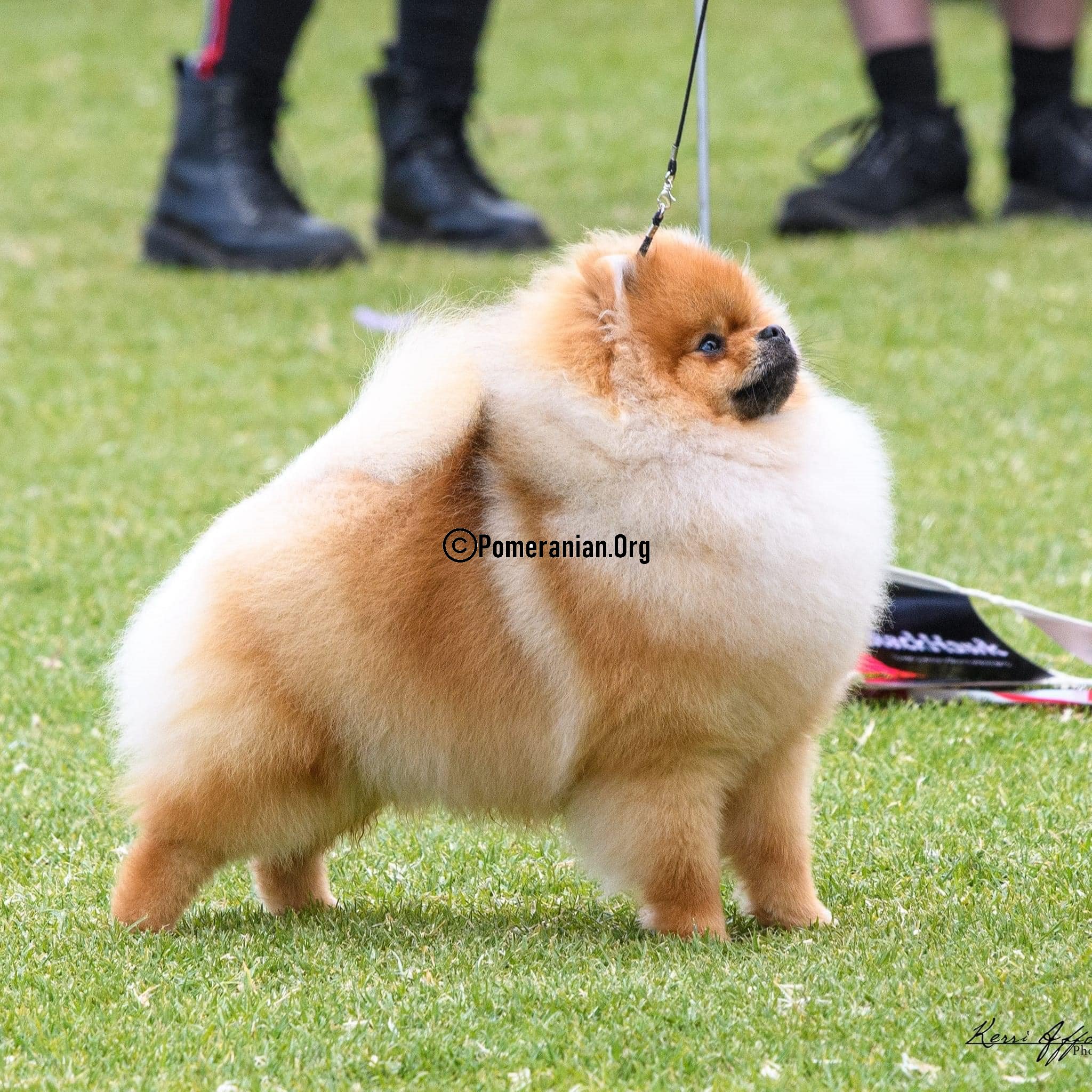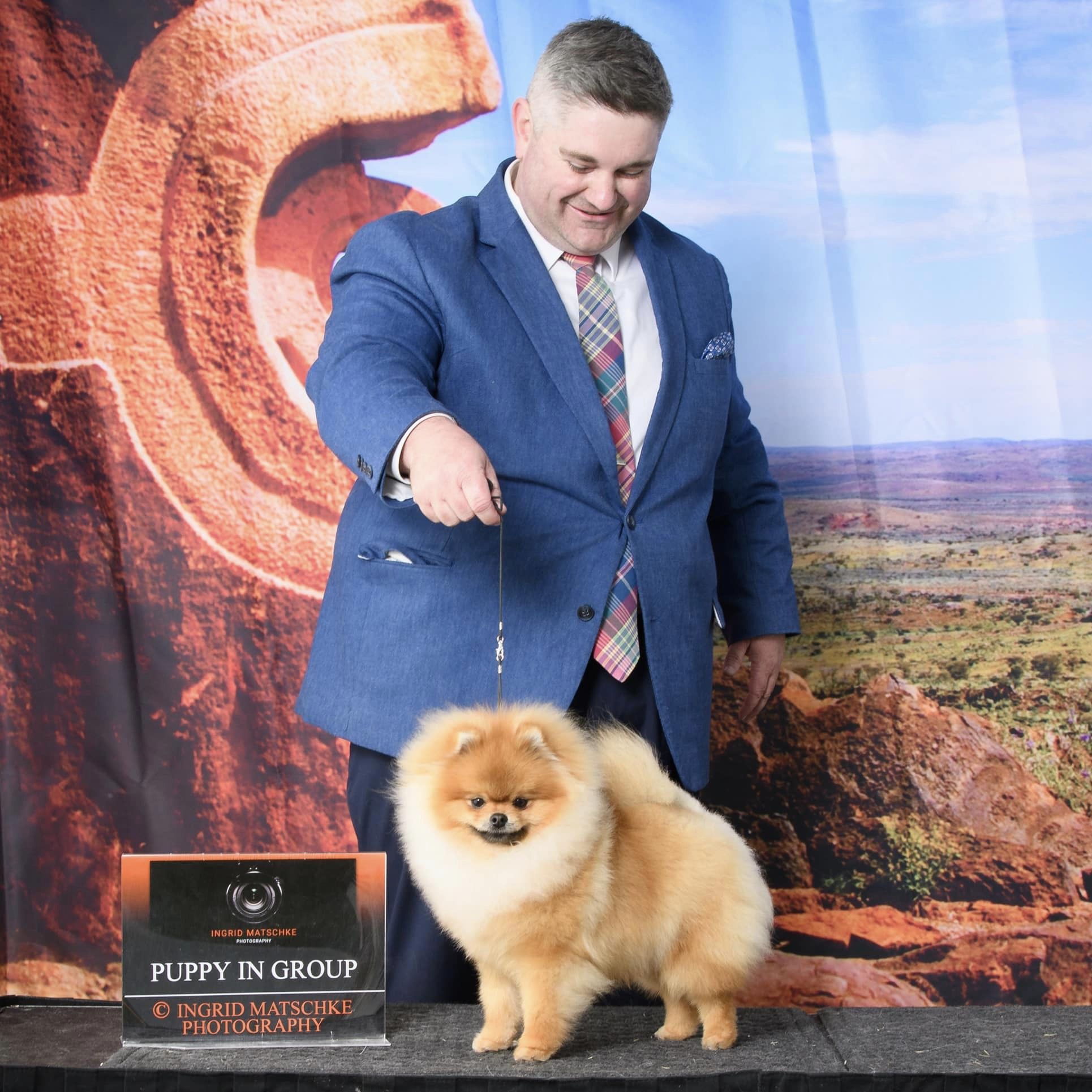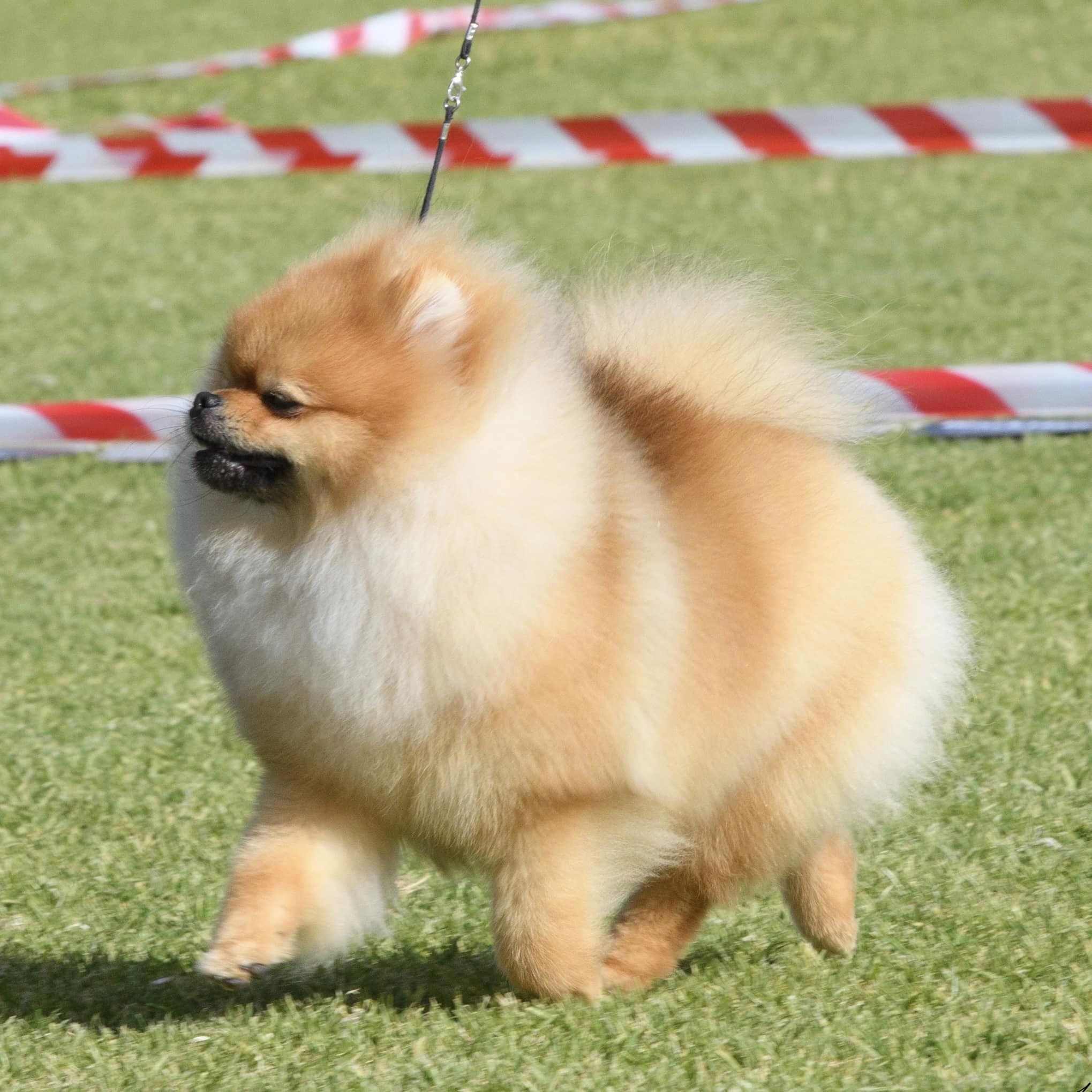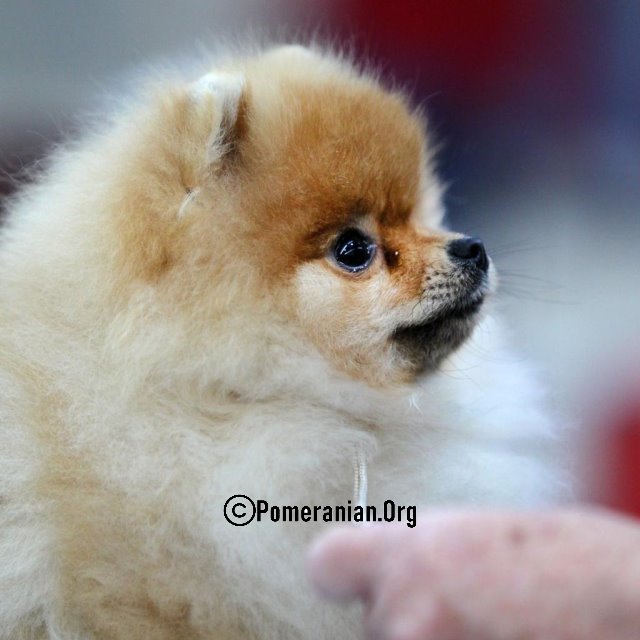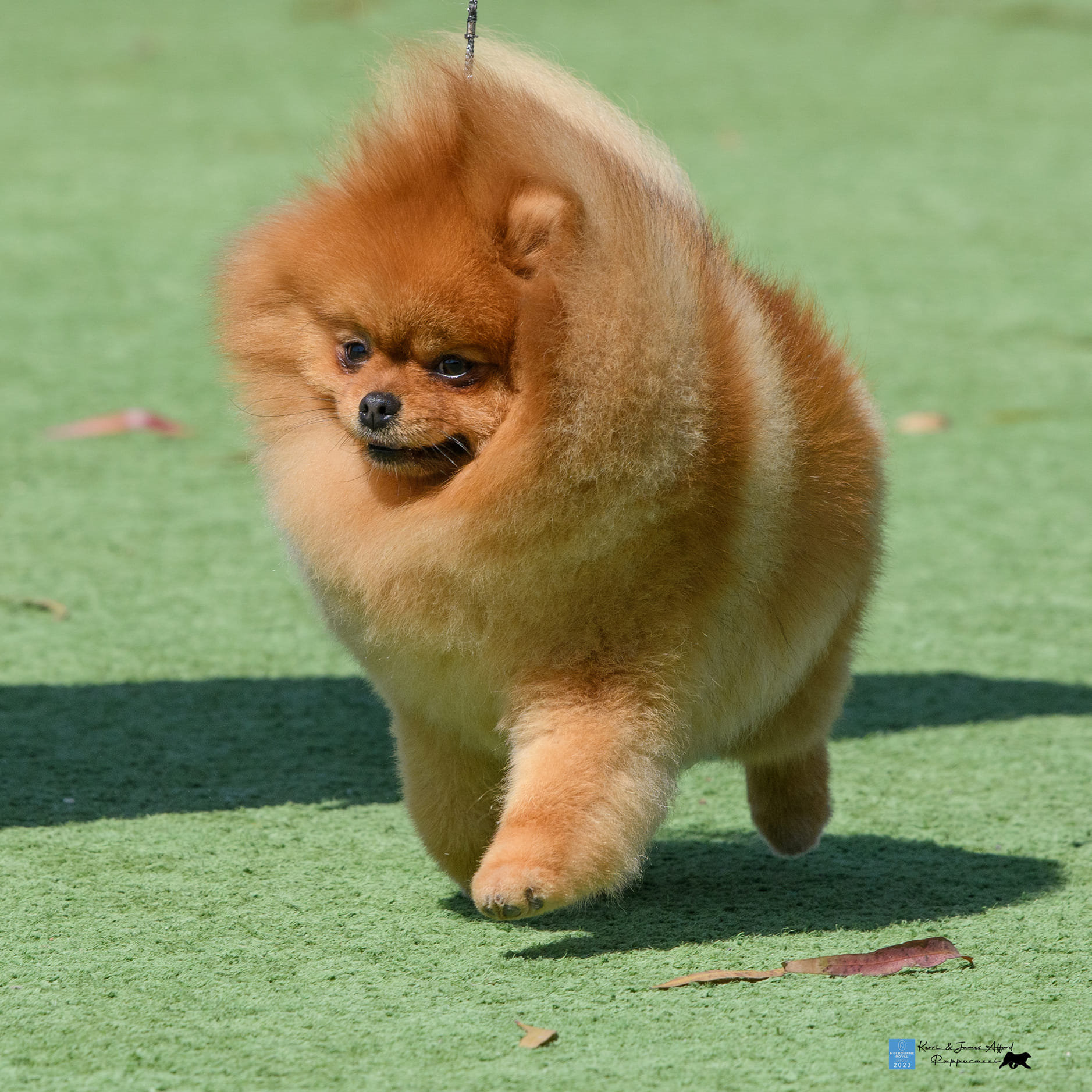

Pomeranians are adored worldwide for their luxurious coats and dazzling array of colors, from warm creams to striking sables and rare patterns. Behind every beautiful coat lies a complex interplay of genetics—determining not only the shade, but also the pattern, intensity, and even how the color may change over time. Understanding these genetics is essential for breeders who aim to preserve both the beauty and the health of the breed.
In this guide, written by Denise Leo—a Pomeranian breeder with over 50 years of experience—and developed in consultation with our resident veterinary genetics specialist, you’ll discover how pigments like eumelanin and pheomelanin work alongside key genetic loci (A, S, D, M, and more) to produce the incredible variety seen in Pomeranians today.
You’ll also learn why certain coat combinations, such as cream sable and wolf sable, are vital for maintaining genetic diversity, protecting rare lines, and ensuring the breed’s unique charm endures for generations.
Pomeranian Colors
Attention to all the Pomeranian colors will also undoubtedly benefit the Pomeranian breed in general. The original Pomeranian colors are the actual coat colors we currently refer to as exotic Pomeranian colors.
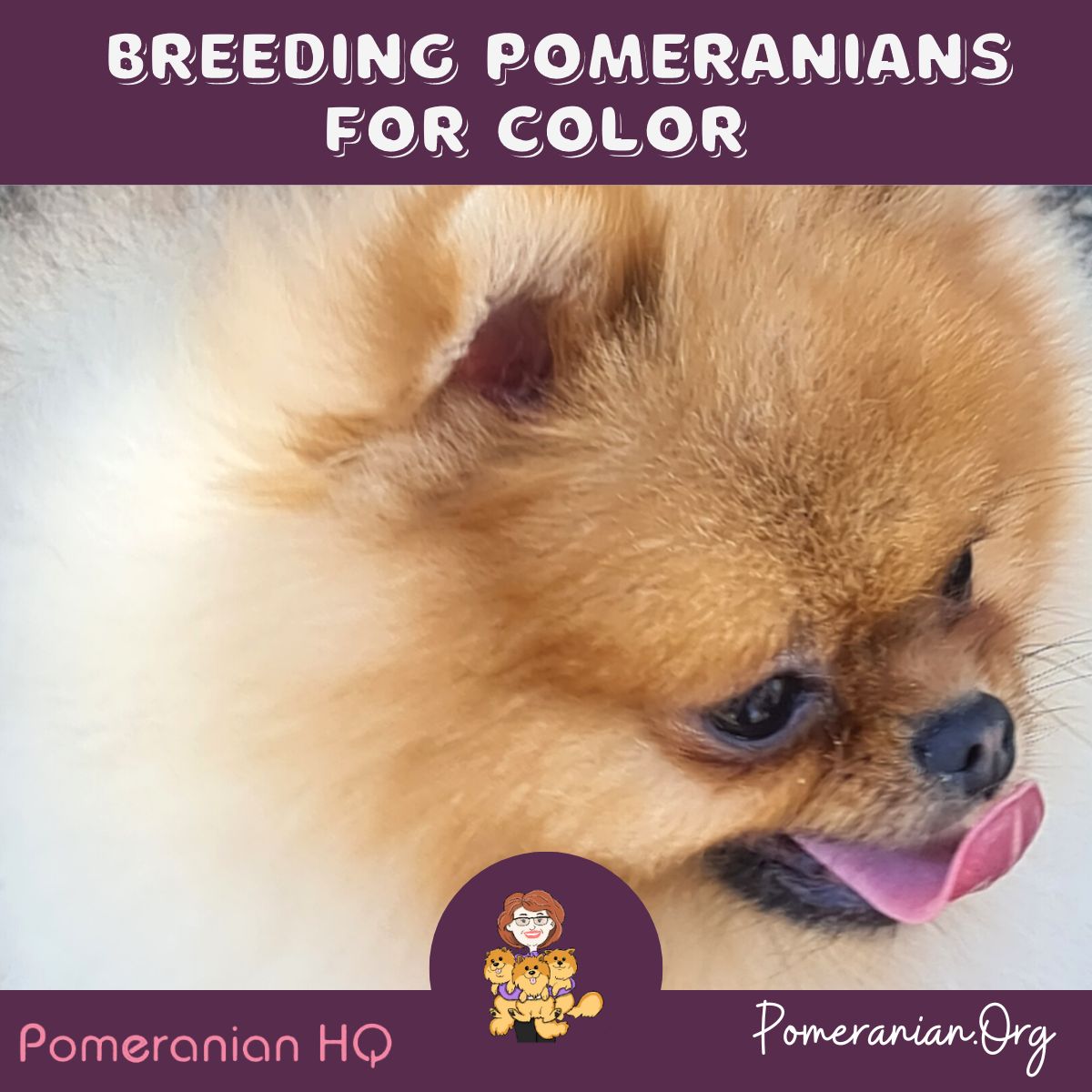
Imagine the incredible excitement the appearance of the first orange and orange sable Pomeranians caused amongst fanciers of that time.
The Orange Pomeranian and orange sable quickly and completely overshadowed the original colors to become the most popular in the show ring.
Although the orange Pomeranians seem to be the easiest to win with, I have observed many disadvantages when breeding clear orange with clear orange.
This practice may result in a softer coat texture than is required by the standard, coat color may appear faded and lack depth, and pigmentation often fades.
Even if your only interest is in producing oranges, using some of the exotic colors in your breeding program occasionally can be an advantage.
Adding a black or black and tan to the orange and orange sables will improve pigmentation and often produce wonderful deep orange coats with amazing texture, depth, and clarity.
Whites bred from parti-colors will always be a parti Pom, even if you can’t see the parti patches as they’re so small and the dog looks to be white in appearance.
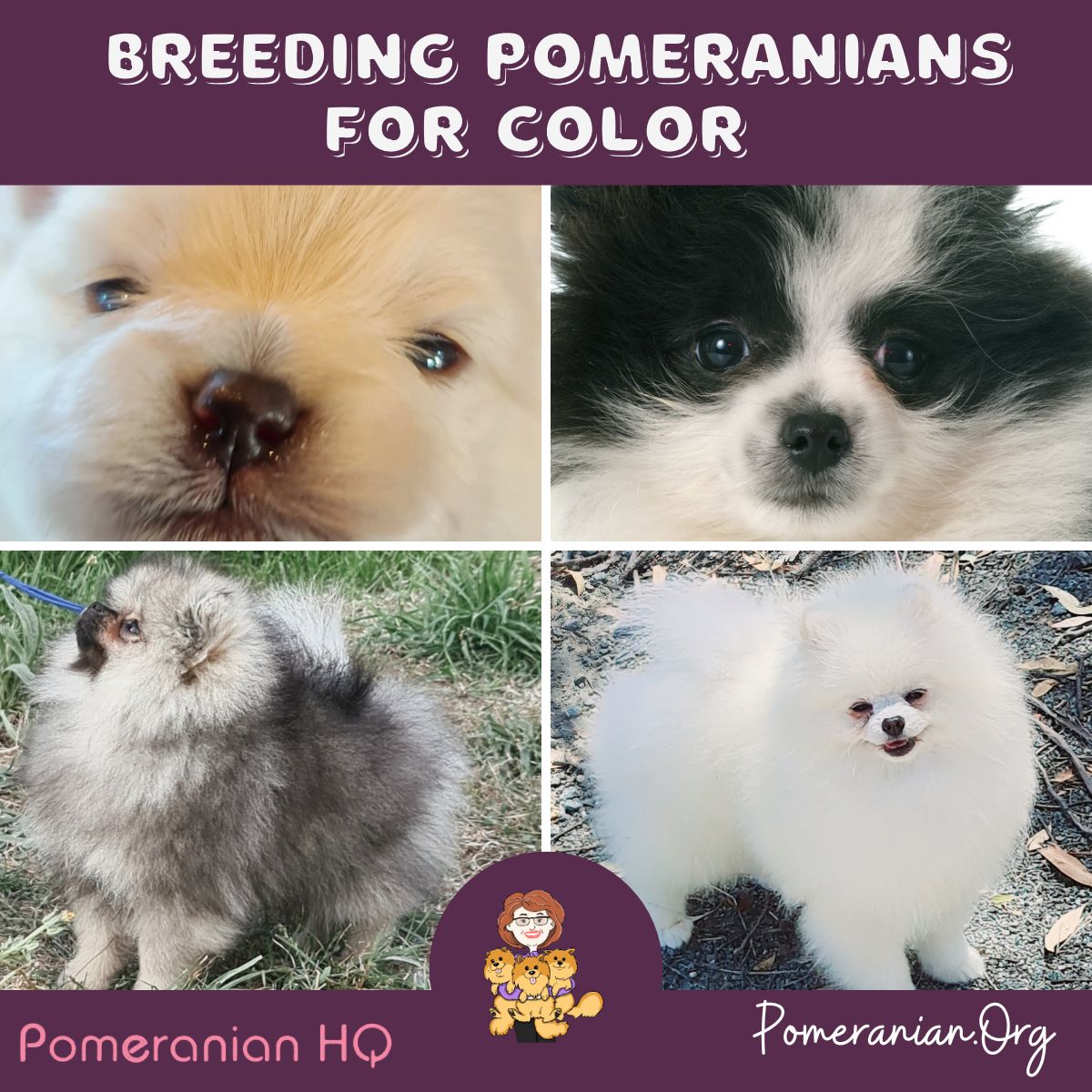
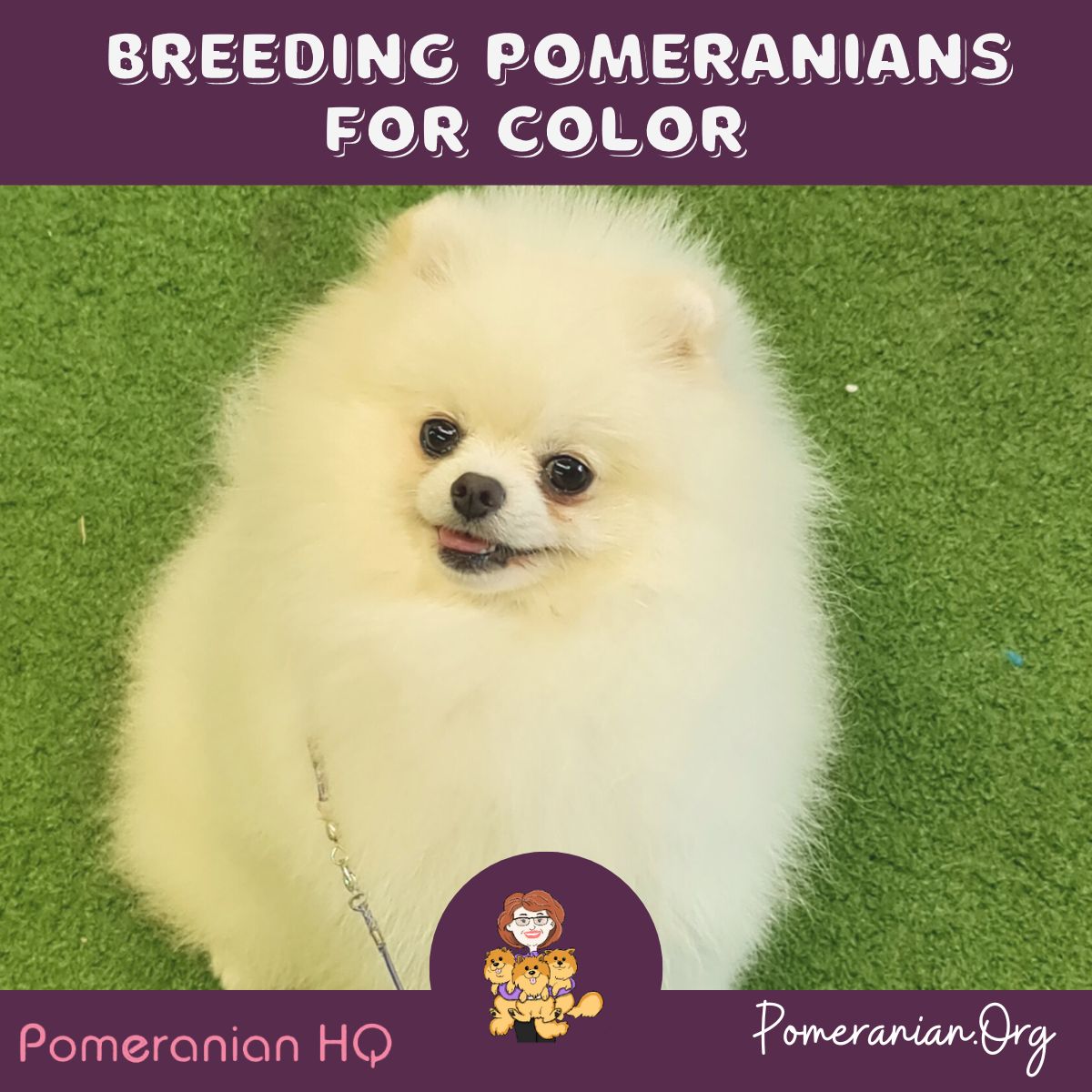
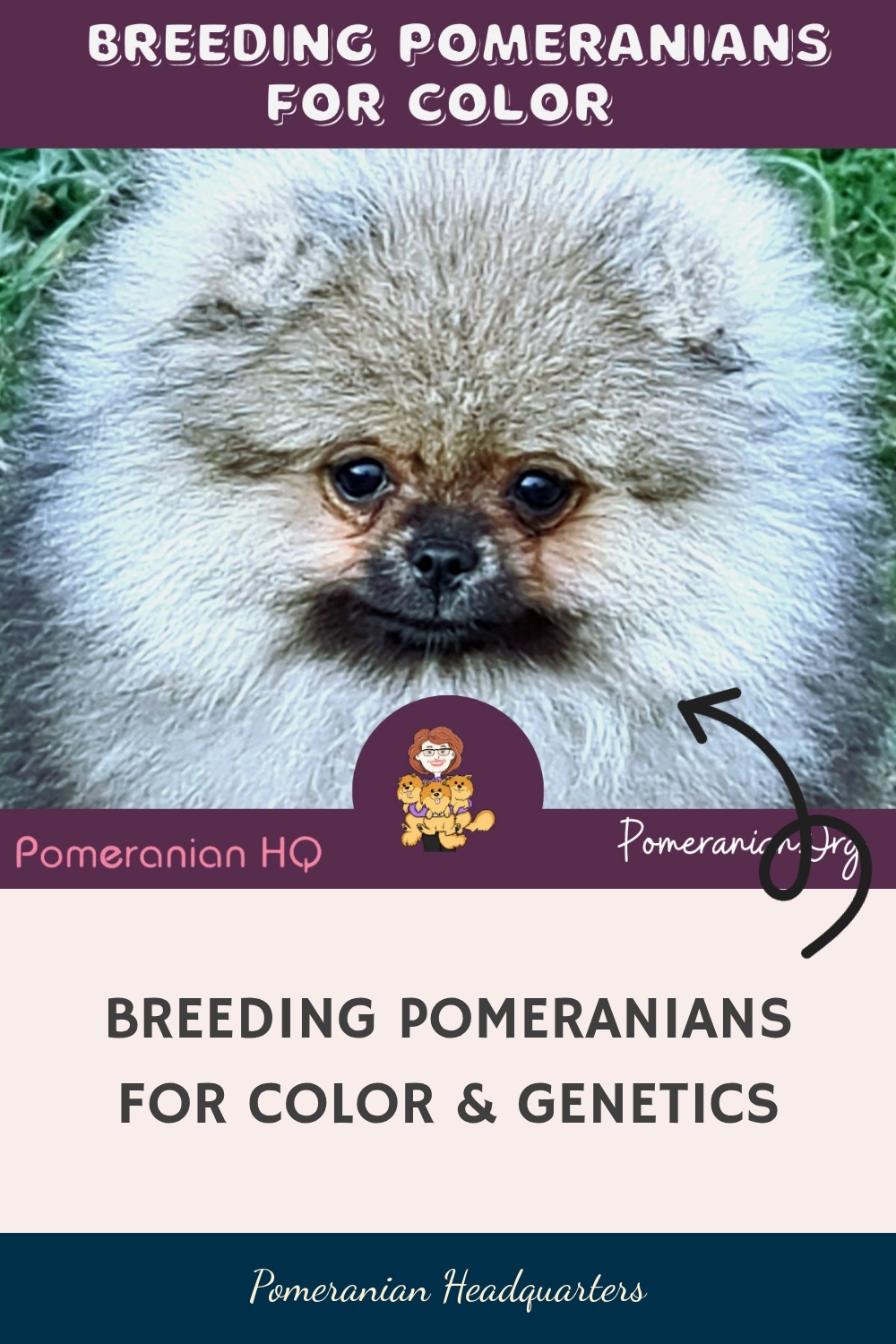
It’s very hard to predict the finished color of a Pomeranian puppy until at least 7 months of age. A “true cream sable” may appear to be a very light grey or even orange sable as a baby puppy. Both the cream sable and wolf sable Pomeranian must have no orange at all in the adult coat.
These are the two most useful Pomeranian colors to use as an out-cross color in a white Pomeranian breeding program.
Pomeranian Color Genetics Explained
Melanin is the pigment that determines the color of a Pomeranian’s fur. There are two different kinds of melanin found in Poms: one is called eumelanin and is associated with darker colors like black and brown, and the other is called pheomelanin, which is related to lighter colors like red, yellow, and orange.
Generally, there are a variety of genes that influence how these pigments are created and their locations. Alleles are the names given to the several possible forms that genes might take.
Some alleles play a dominant role (which is often denoted by capital letters) over others, and the existence of these alleles will cause their influence to mask the recessive alleles (denoted by small letters).
So, a Pomeranian’s coat color is determined by the interaction of a large number of genes with those mentioned above two primary pigments. Even though there are hundreds of genes in a Pom’s body and the Pom’s genome comprises around three billion base pairs of DNA, only eight genes are related to the Pom’s coat color.
The Loci Associated with Pomeranian Coat Colors
- A locus: This locus, also known as the Agouti locus, is responsible for the many coat patterns found in Pomeranians. Agouti protein is responsible for regulating the flow of melanin into the hair and playing a role in the transition between the two pigments (eumelanin and phaeomelanin).
- H locus: This site is linked to white Pomeranians that have black patches, and it frequently interacts with the Merle locus to produce various patterns of spots and colors in Poms.
- E locus: This particular locus is responsible for Pomeranians’ yellowish or reddish coats as well as their black face masks.
- K locus: This gene is responsible for the dominant colors of fawn, brindle, and black.
- B locus: This particular locus has been connected to the color brown, chocolate, and liver. The presence of the brown gene might result in a change in the color of the snout and the pads of the paws in Poms with red or yellow pigmentation.
- S locus: This locus is linked to the development of unique coat color patterns like piebald or parti-color Poms, both of which result in coats with less symmetrical white patches.
- D locus: This genetic locus is responsible for color dilution, which lightens coats to gray, blue, or extremely pale brown.
- M locus: This genetic locus is responsible for Merle’s color. This locus is accountable for producing irregularly shaped spots of pigment in Poms. Merle does not affect the concentration of the eumelanin (black) pigment. Poms with the pigmentation of red or yellow are not themselves merles but can have merle progeny.
Each of these loci is capable of controlling the generation and distribution of eumelanin and phaeomelanin on its own or in collaboration with another locus. The final result of all of the loci’s interactions is what determines the color of the Pom.
I already mentioned in the sub-headings about color genetics that it is a hypothesized outcome of gene combinations/expressions. It is because, due to versatility, we cannot determine the possible genotype of any Pom unless its DNA testing and genetic history are defined completely.
However, a Pomeranian of a single color may have hidden colors in its gene pool, and these colors may show up in the Pomeranian’s offspring. Because of this, it is possible to get Pomeranian puppies that do not look exactly like either of their parents.
Wolf Sable Pomeranians
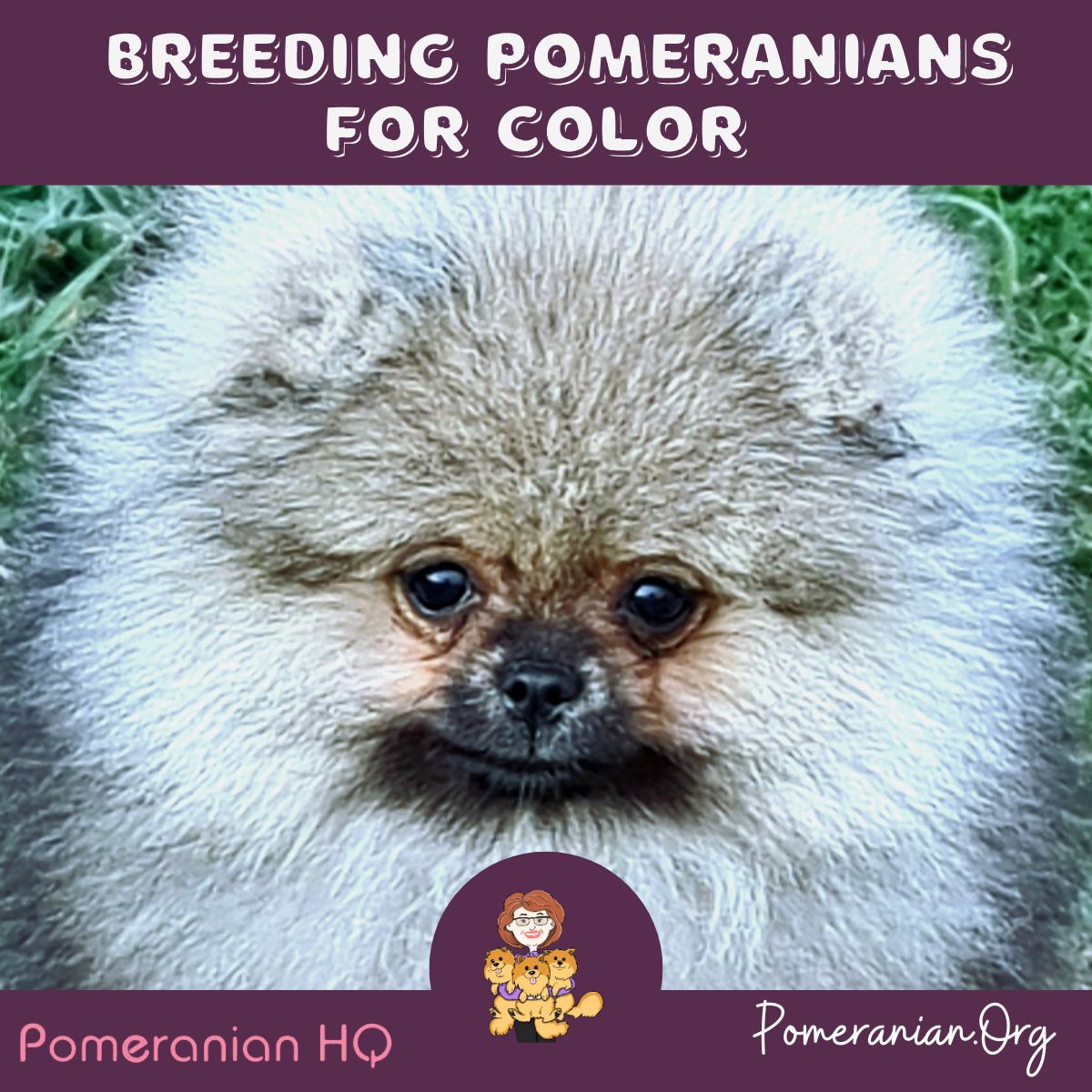
Usually, 4 Agouti alleles express themselves in Poms. These alleles are Ay, aw, at, and a. The wolf sable Pomeranian usually has an aw allele in its genotype.
These alleles may be dominant or recessive. For example, the “wolf” sable/grey coat color has three allele forms: aw/aw, aw/at, or aw/a (all these forms represent wolf sable color in Poms).
1. aw/aw: Wolf Sable/Gray
This Pom has two copies of the aw gene, which causes its coat to be sable and gray, similar to a wolf’s. On the other hand, the E, K, and B genes all have a role in determining this Pom’s coat color. The “wolf” sable coat color can only be produced if the dog also carries the E/E or E/e allele at the E locus and the ky/ky allele at the K locus, which is the combination that enables agouti gene expression. This Pom will pass on aw to 100% of its progeny.
2. aw/at: Wolf Sable/Gray (carries Black and Tan or Tricolor)
This Pom has one copy of the aw gene and one copy of the at gene, which causes its coat to have a “wolf” sable color, but it also contains black and tan, which gives this Pom the appearance of tricolor.
On the other hand, the E, K, and B genes all have a role in determining this dog’s coat color (as mentioned above). This Pom will pass on the aw gene to fifty percent of its progeny and the at gene to the other fifty percent.
3. aw/a: Wolf Sable/Gray (carries Bi-color or Solid)
This dog has one copy of the aw gene and one copy of the gene, which causes its coat to have a “wolf” sable coloration. But due to a gene, these dogs are bicolor or solid.
On the other hand, the E, K, and B genes all have the same role in determining this dog’s coat color. This Pom will pass on aw to fifty percent of its progeny, whereas the other fifty percent of its offspring will inherit a.
Color Breeding Programs For Pomeranians
As we all know, every phenotype or physical trait is expressed by genotypes or gene sequences, so color-breeding traits also have some unique combinations of genotypes.
Let’s discuss all the hypothesized genotypes present in Pomeranian coat colors :
- White: SS, spsp, Ssp
- Black: EEBB, EeBB, EEBb, EeBb. However, we can say that the black Pomeranian typically contains EEBB, EeBB, EEBb, and EeBb genotypes in which the E locus and the B locus express themselves, but in the case of solid black color along with the E and B locus, the K locus (KB, Kbr, ky) must also express and play its role.
- Brown: BAD EEbb, Eebb
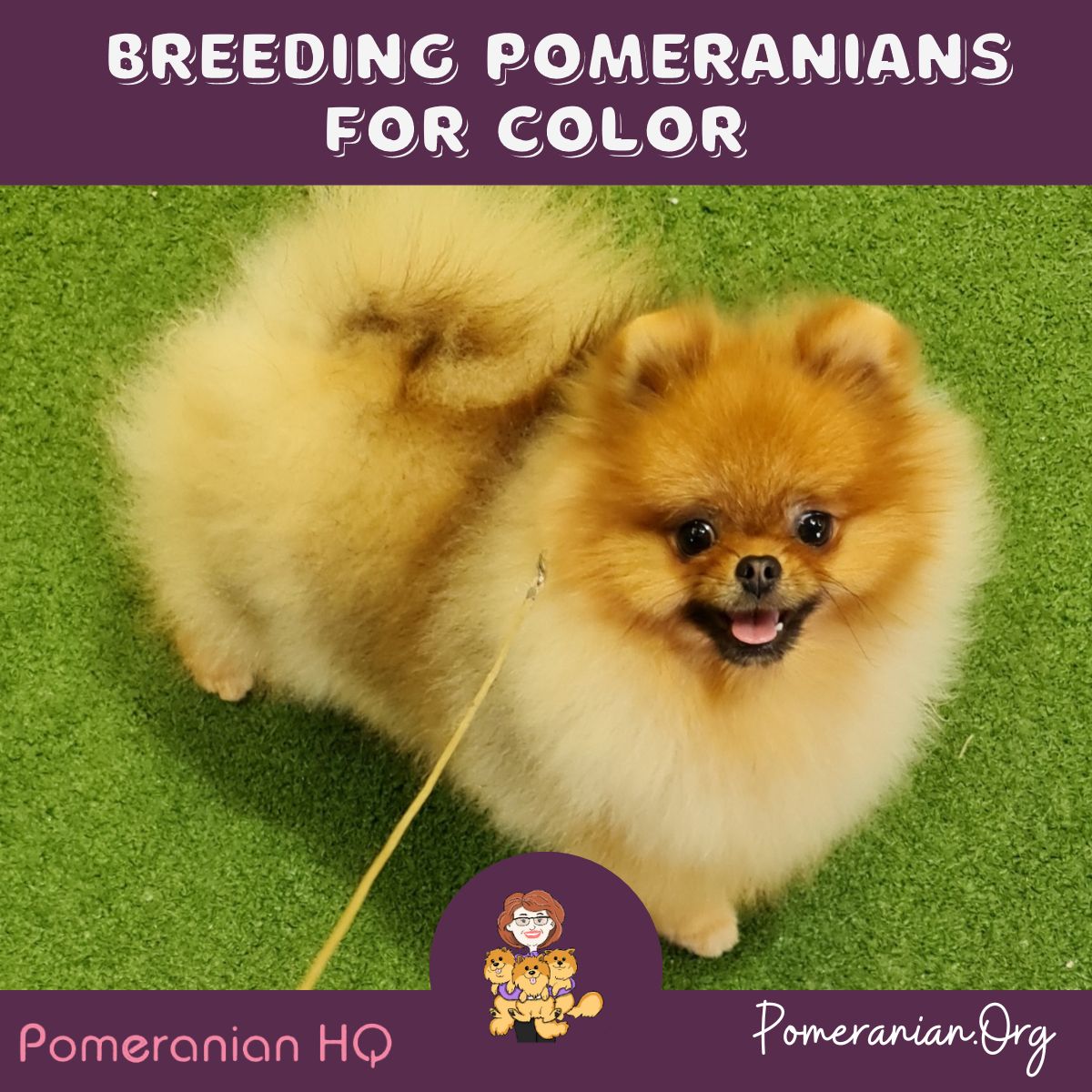
- Red/cream/orange: eeBB, eeBb, eebb
- Brindle: K(br) at K locus (Actually, brindle is not a color itself; it is a pattern or combination of colors.
- Blue: dddd
- Beaver: EEbbDdCC
- Blue Merle: ddMm, ddmm
- Blue Sable: ddAyAy
- Blue and Tan: dda(t)a(t)
- Black and tan: Black with two recessive a(t) genes on the Agouti locus
- Chocolate brown: bbbb
- Chocolate and tan: bbaa
- Chocolate merle: bbMm or bbmm
- Chocolate sable: sable with a prominent Ay gene at the Agouti locus
- Blue Brindle: K(br) on the K locus with a dilute gene on the D locus
- Parti: S gene on S locus (may or may not be dominant)
- White with parti: Preferably black with recessive ss gene
- Wolf sable: Agouti with one dominant aw allele
- Cream sable: Agouti with ay and ee allele
Now that we know the genotypes of primary Pomeranian colors, let’s discuss a few recommendations related to Pom color breeding programs:
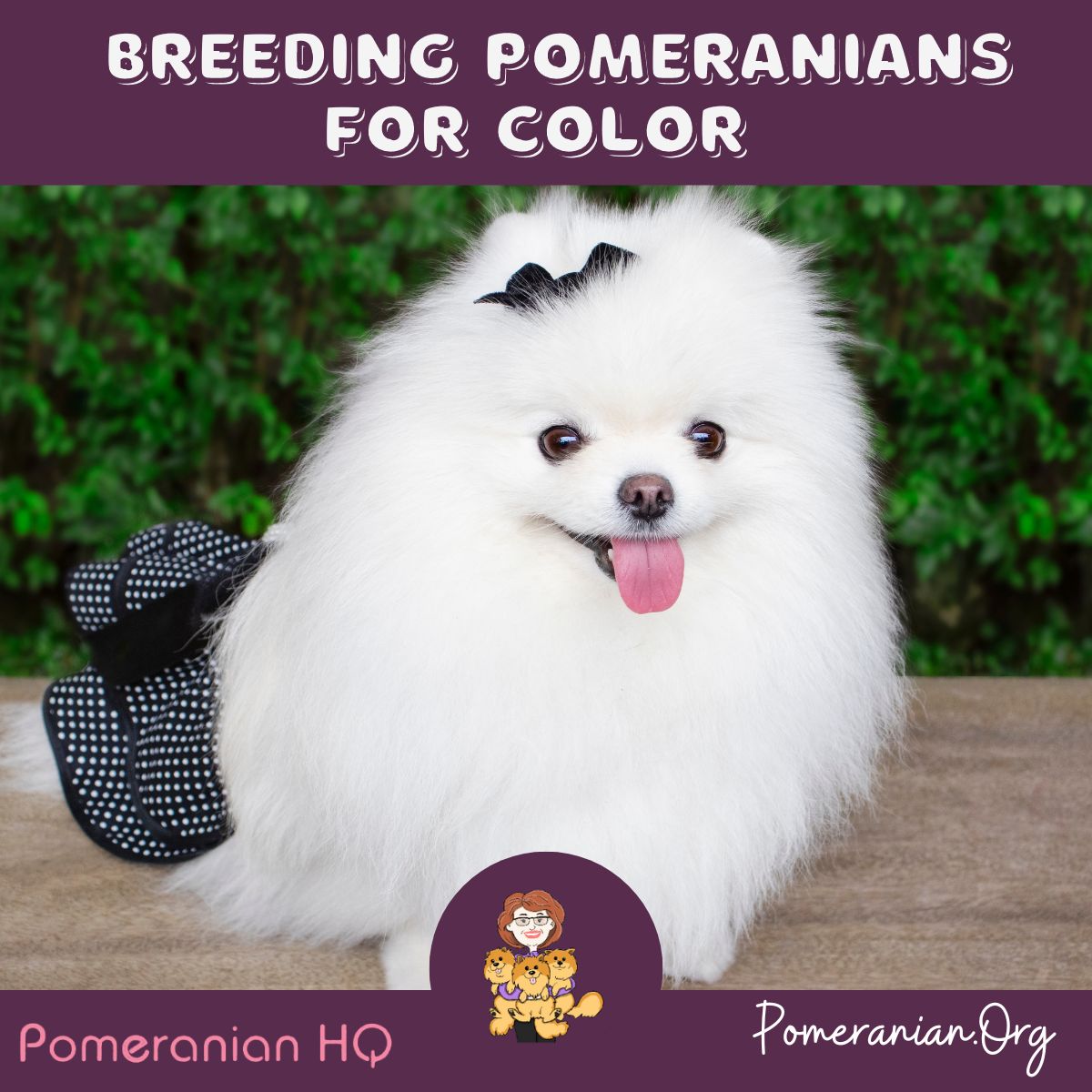
White: When mating for white, the ideal pair is white with white; a white Pomeranian with a black Pomeranian as long as the black has white close in its pedigree; white with cream; white with parti; and white with wolf sable or a cream sable.
Don’ts: I don’t suggest you breed white with chocolate, white with orange, or white with beaver
Chocolate: When you want to mate for chocolate, the best pairs are: chocolate with chocolate; chocolate with black (ideally by having chocolate close in its pedigree); chocolate with beaver; chocolate with chocolate sable, and these same colors if you want to mate for a chocolate parti-color.
Don’t: Don’t breed chocolate with cream or white.
Blue: When you want to mate for blue, the best pairs are blue with cream or white and black and tan.
Black and Tan: If you aim for black and tan, the recommended pairs are black and tan, orange sable (ideally having a black and tan close within its pedigree), and blue and tan (if you wish to have a possible blue dilution).
Don’ts: Oranges without black and tan in the pedigree will create oranges and sables, not black and tans. It’s not a bad idea because sometimes this pair can improve the quality, and sometimes, the offspring will inherit the marking pattern. However, this mating won’t create black and tans.
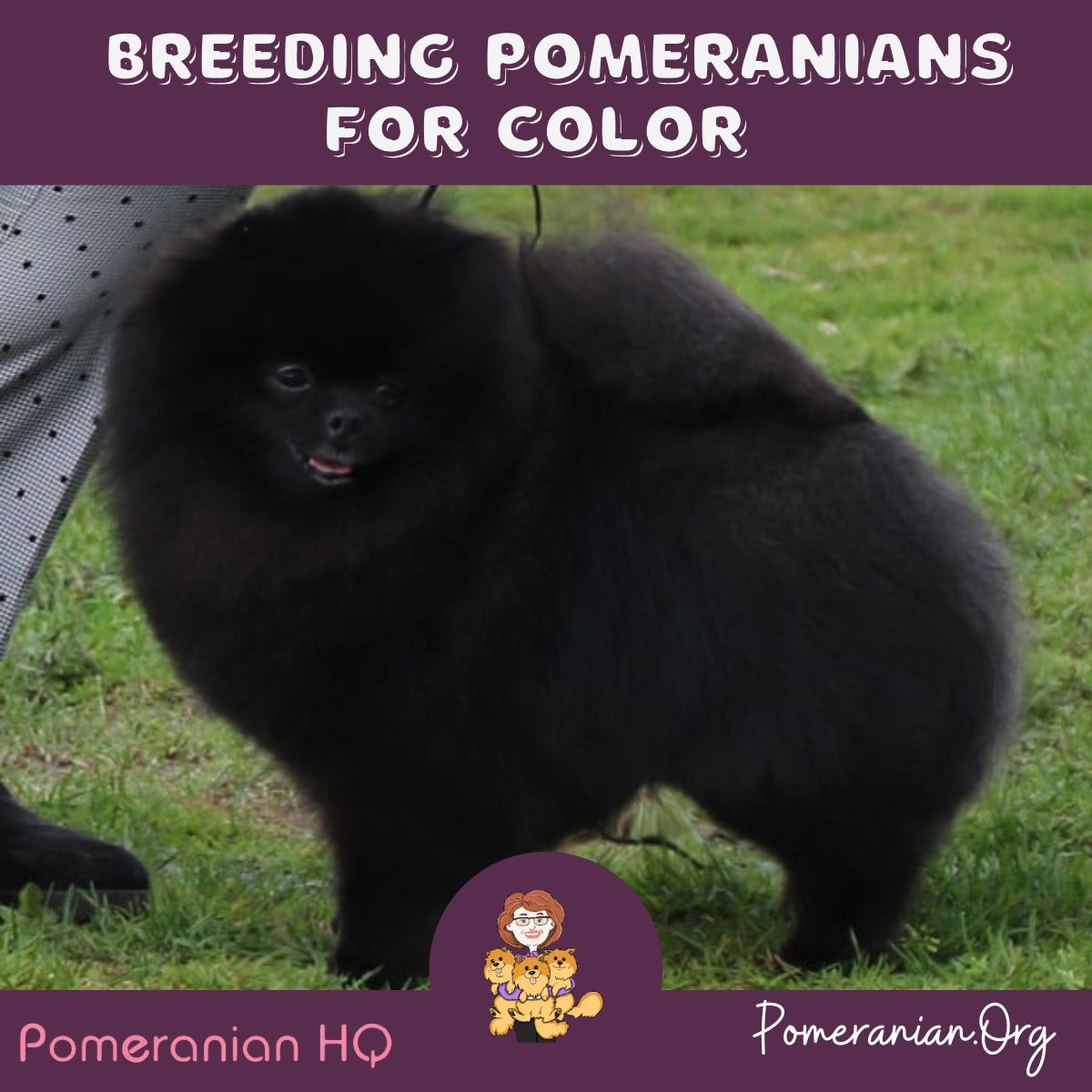
Black: When you mate for black, what you want will determine what you do. If you’re going to keep the intensely dark black pigment, avoid dilution genes. The ideal choices are other blacks, black and tans, dark orange sables, red sables, and intense reds.
Don’ts: If you plan to breed black with black for numerous generations without including sable genes, the texture of the coat will likely be lost, but the black intense pigment will remain.
Orange: When you want to mate for orange, the best outcome will be achieved if you add black or heavy sable. They’ll help keep the pigment intensity and improve the coat’s texture.
Don’ts: If you breed orange with orange for numerous generations, it’s possible that there will be a pigment loss and the coat will lose its correct texture.
Merle: To mate for a merle, it’s wise to mate with darker colors because the merle gene affects those dark colors to produce the pattern. This means the recommended pairing colors are Black, chocolate, and blue, and each of their tans: You can also breed merle solids with parti Poms in any of the chosen colors.
Don’ts: It’s unwise to breed merle with white, cream, or extreme white piebald pattern parti-color.
Brindle: If you wish to mate a brindle, there aren’t many limitations. However, if you want deeper, richer colors, use chocolates, reds, and oranges. You may decide to use the colors with a tan marking pattern, meaning you’ll sometimes end up with a chocolate and brindle or black and brindle within the tan pattern. If you choose creams or whites, the brindles could be pale and a little grizzled, but you will achieve a defined brindle stripe, sometimes on a cream background.

Breeding Pomeranians for Color
To carry out in-depth research into the colors of dog coats, you’ll require an accurate book on canine color genetics containing loci placements, genetic codes, and how they interact with dominance.
Record details of breedings and capture the results in two ways:
Pictorially, and in a document, illustrating a minimum of the last three generations of color.
Snap a photo of the newborn litter, have it printed, and include it in your notebook for each litter’s case study. Years from now, when you need to refer to this information, you won’t need to rely solely on your memory.
One critical element to remember with color breeding is the order of dominance. It’s believed that genes are either dominant or recessive, but in these different categories, there will exist an order of dominance. In recessive genes, some will still be dominant over others.
You need a rudimentary understanding of the different terms and their genetic definitions involved in determining the color and pattern of a dog’s coat.
Then you can arrange your breedings, record them correctly, and create a level of consistency in color predictions for each of your Pomeranian puppies.
Conclusion
The enchanting variety of Pomeranian coat colors is no accident—it’s the result of intricate genetic interactions that breeders must understand and respect. By learning how eumelanin, pheomelanin, and key genetic loci influence each shade and pattern, breeders can make informed decisions that protect both the beauty and the health of the breed.
Responsible breeding goes beyond producing fashionable colors; it safeguards rare and heritage combinations such as cream sable and wolf sable, ensuring they remain part of the breed’s rich tapestry. With knowledge, patience, and a commitment to genetic diversity, breeders can continue to produce Pomeranians that are not only stunning in appearance but also strong, healthy, and true to type for generations to come.
N.B. This article regarding Pomeranian color genetics has been written in consultation with our resident Veterinary Doctor.
Dr. Muqeet Mushtaq
DVM, University of Animal and Veterinary Sciences, 2019
MSc. (Hons.) (Animal Breeding & Genetics), University of Agriculture Faisalabad, 2021
Copyright Pomeranian.org. All Rights Reserved.
📚 References & Further Reading
- [1] AKC Pomeranian Breed Standard (2011)
- [2] English Kennel Club Breed Standard
- [3] The Pomeranian Handbook – Denise Leo
- [4] Denlinger, The Complete Pomeranian
- [5] Kimbering, 1891–1991
- [6] Taplin, The Sportsman’s Cabinet
- [7] Parker, The Popular Pomeranian
- [8] Ives, Show Pomeranians