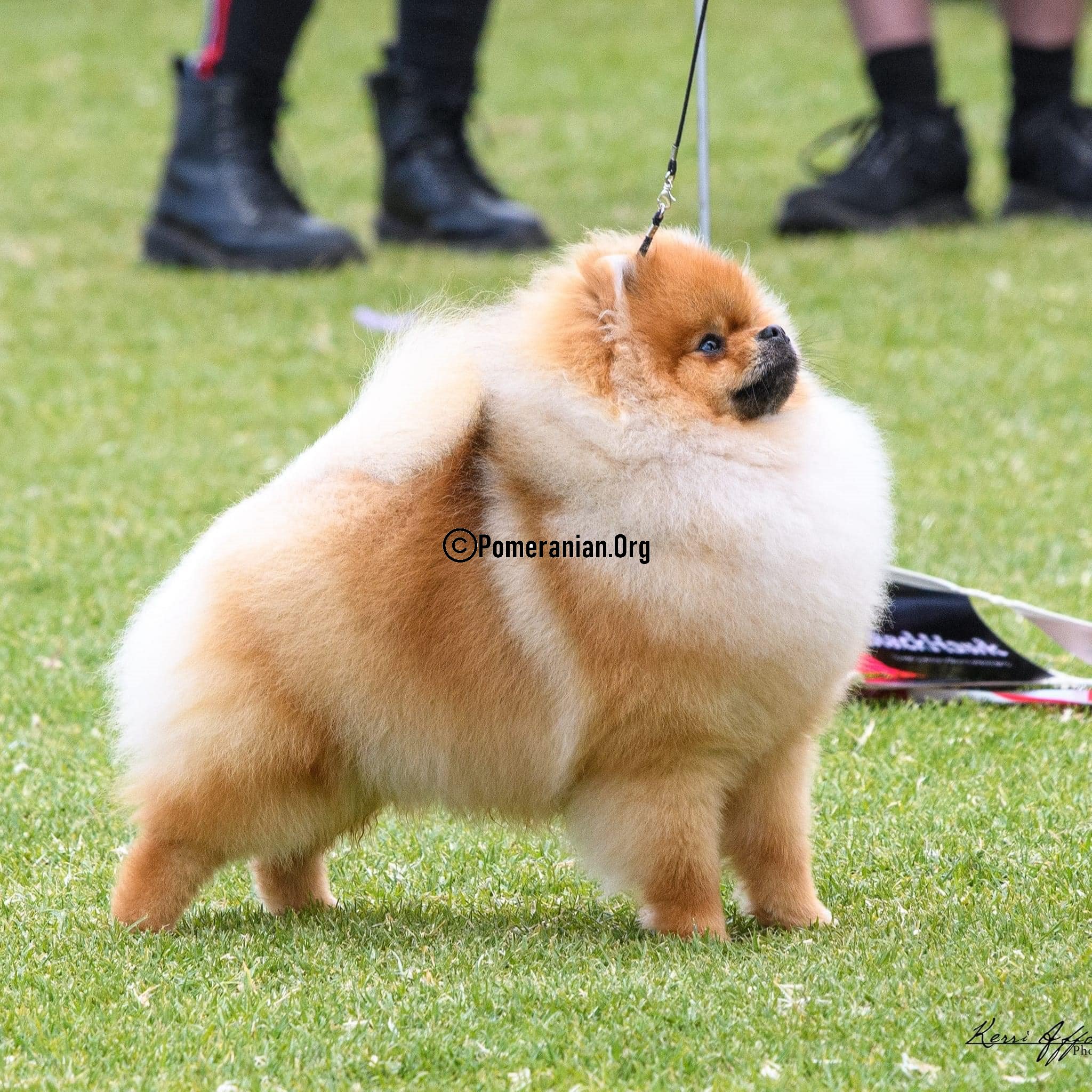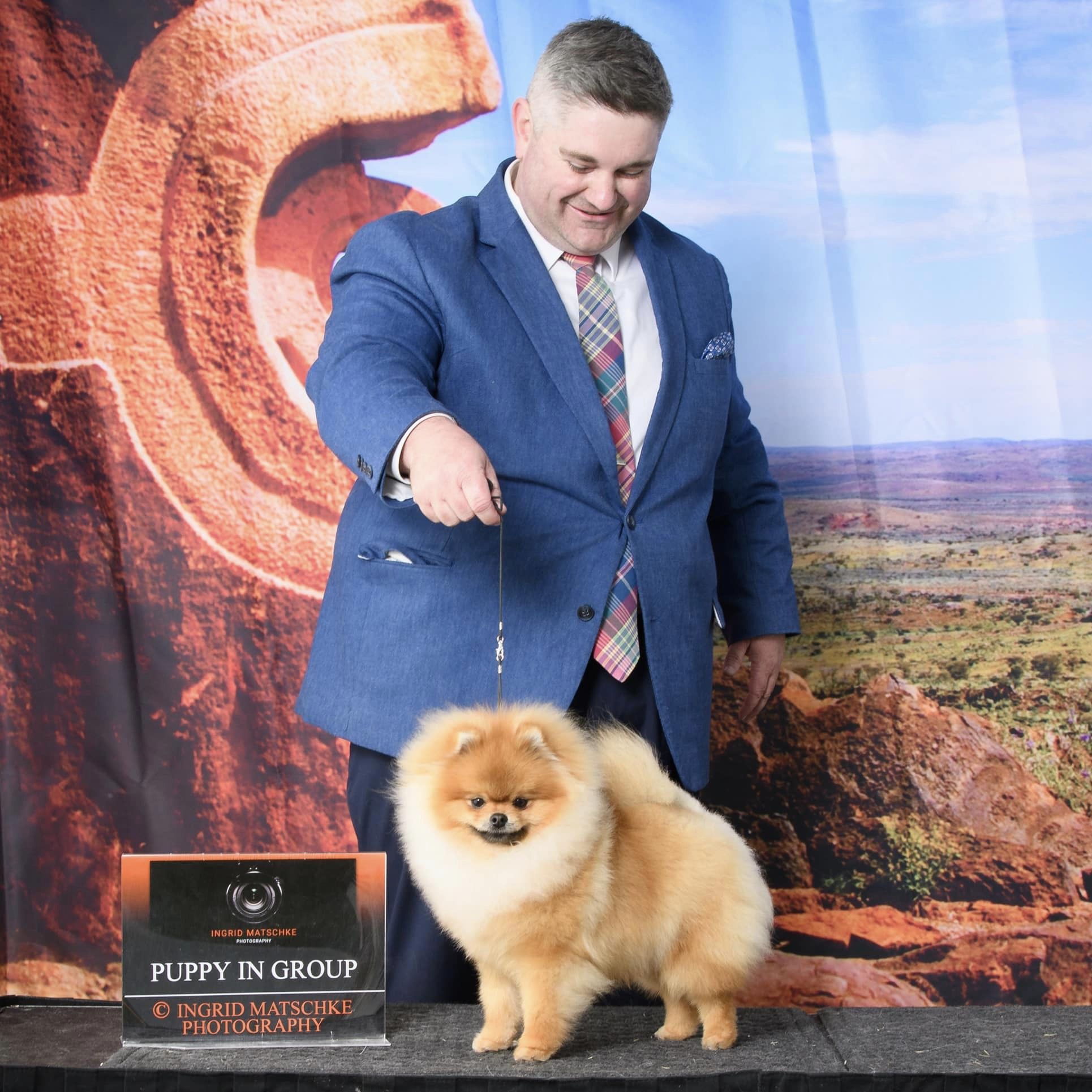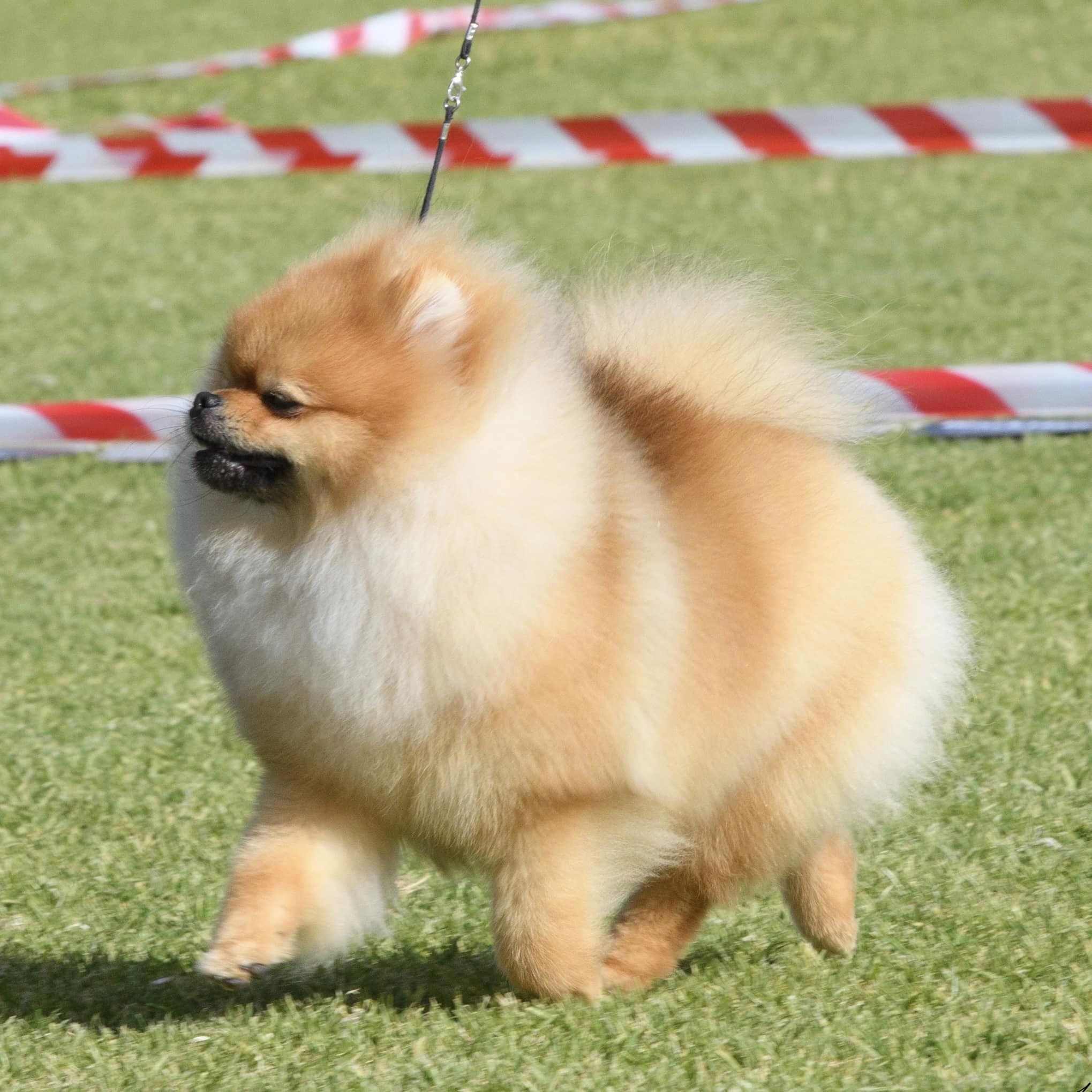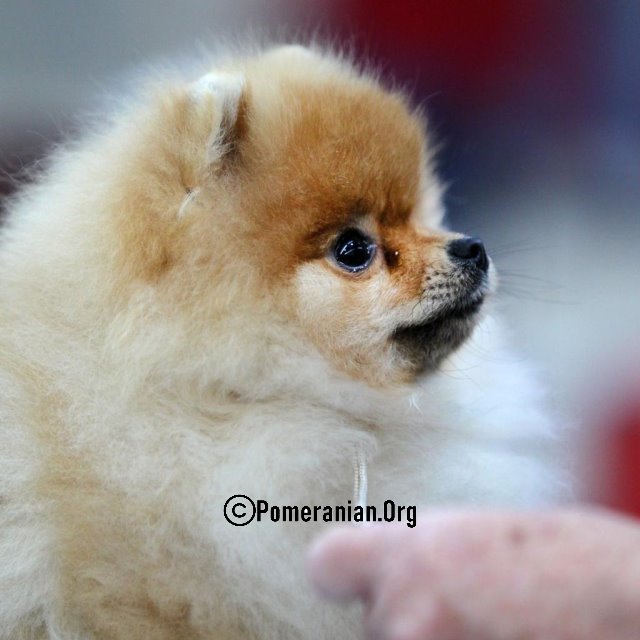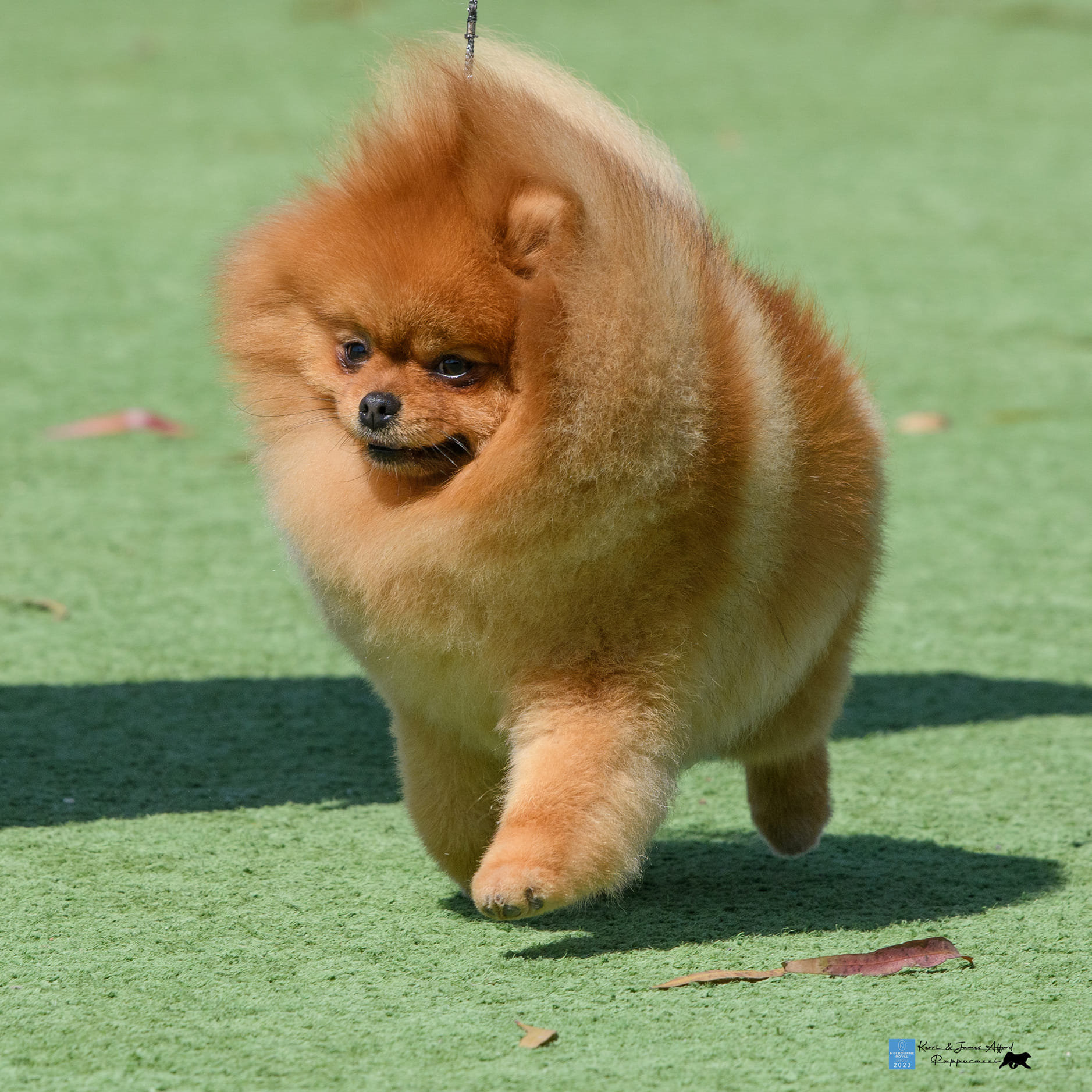

Pomeranians are famous for their beautiful coats and remarkable range of colors. In fact, the breed comes in more accepted colors, patterns, and combinations than almost any other dog breed. While orange and orange sable remain the most commonly seen shades, some Pomeranian colors are exceptionally rare and may only appear when specific genes are inherited from both parents.
Rare coat colors often attract considerable attention, but rarity does not necessarily make a Pomeranian better. Health, temperament, soundness, and breed type should always be the primary focus of responsible breeders. A well-bred Pomeranian of any color is far more valuable than a poorly bred dog produced solely for an unusual coat color.
As a Pomeranian breeder, exhibitor, and ANKC Championship Show Judge with over 50 years of experience in the breed, I have seen many colors come and go in popularity. Some rare colors have become increasingly difficult to find, while others are surrounded by myths and misconceptions.
In this guide, we explore some of the rarest Pomeranian colors, explain the genetics behind them, discuss how to identify them accurately, and reveal why these unique shades continue to fascinate Pomeranian enthusiasts worldwide.
🐾 Quick Answer: What Is the Rarest Pomeranian Color?
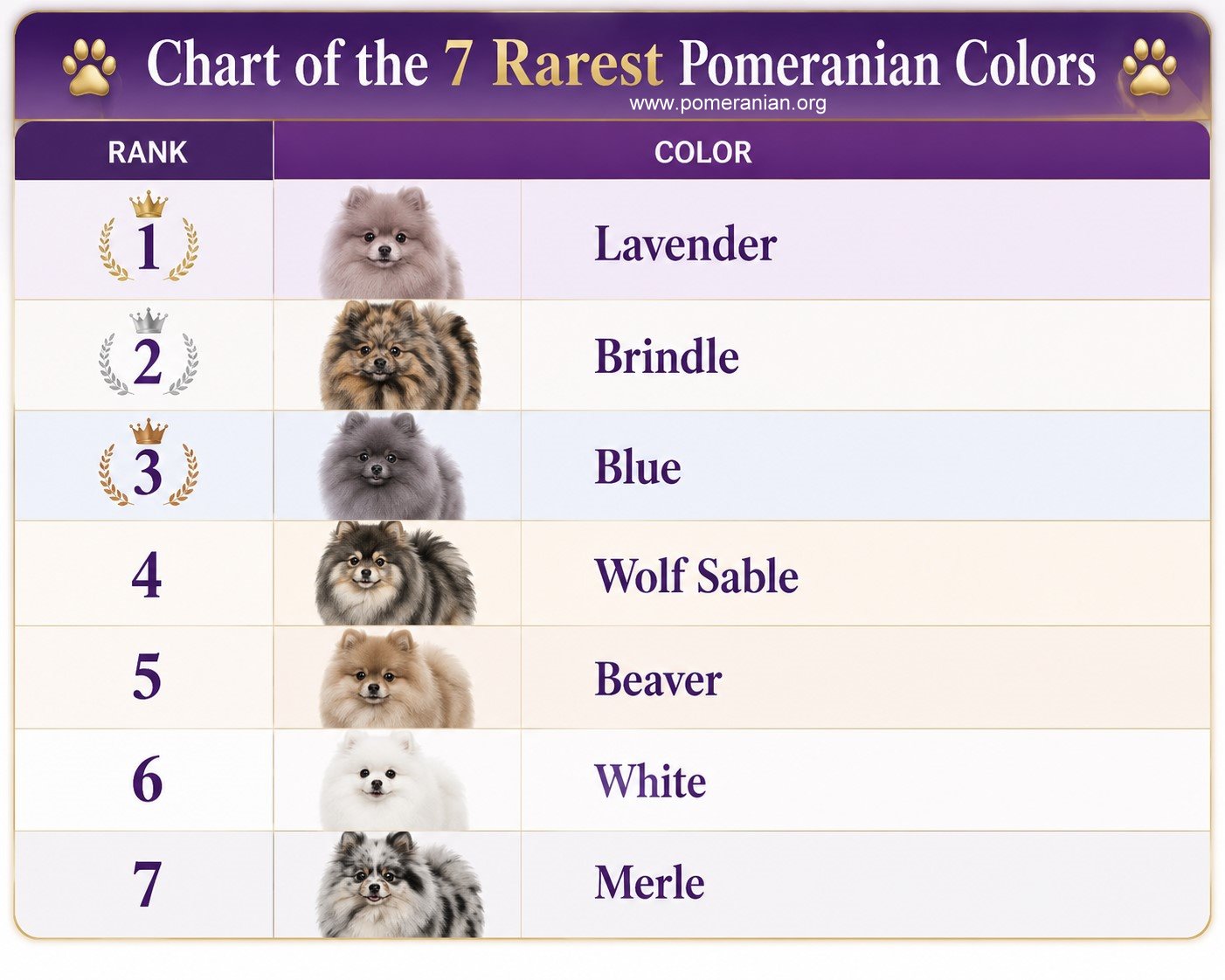
Lavender is generally considered the rarest Pomeranian color. This unusual shade requires a specific combination of recessive genes and is rarely seen, even among experienced breeders.
Other rare Pomeranian colors include:
- ✨ Lavender – Extremely rare
- ✨ Brindle – Rare striped pattern
- ✨ Blue – Diluted blue-grey coat
- ✨ Beaver – Diluted chocolate coloring
- ✨ Wolf Sable – Distinctive wolf-like shading
- ✨ True White – Pure white without cream shading
- ✨ Merle – Rare pattern with important health considerations
Important: A rare coat color does not make a Pomeranian healthier, better tempered, or higher quality. Responsible breeders prioritize health, temperament, soundness, and breed type above color.

What are Pomeranian Standard Colors?
Pomeranians can come in 18 different coat colors, along with several patterns and markings. According to the AKC Breed Standard, Pomeranian colors are
- Black Pomeranian
- Black and tan
- Blue
- Blue and tan
- Blue merle
- Chocolate or dark brown
- Chocolate and tan
- Cream
- Orange Pomeranian: often referred to as tan Pomeranians by pet owners.
- Orange sable
- Red
- Red sable
- White Pomeranian
- Wolf sable
- Cream sable
- Beaver Pomeranian
- Tri colored
- Blue sable
Pomeranians have many patterns, markings, and coat color variations. The accepted Pomeranian markings are:
- White Markings
- Merle Markings
- Tan Markings, e.g., Black and Tan Pomeranians, Blue and Tan Rust, or Tan markings
- Tri-Colored Pomeranian Markings
- Brindle
- Sable
- Irish Marked
- Parti-Color
Rare Pomeranian colors
Let’s have a look at some rare Pomeranian colors:
- Lavender
- Brindle
- Blue
- Wolf sable
- Beaver
- True White
- Merle
Pomeranians come in a variety of rare and unusual colors. The rarest Pomeranian colors are lavender, brindle, and blue. Rare colors in Pomeranians can be exceptionally expensive. The genes of both parents determine the Pomeranian puppy’s color.
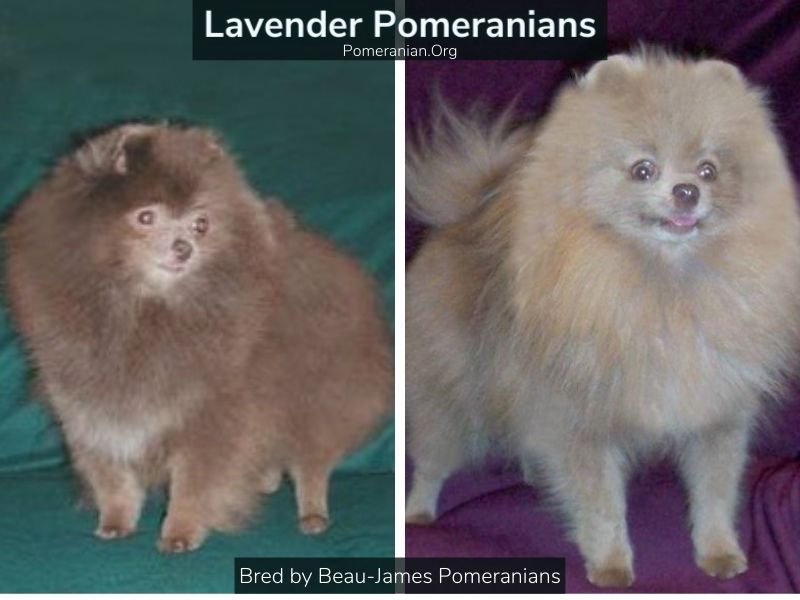
1. Lavender
Lavender Poms are considered to be the rarest variation of the Pomeranian breed. Their coats look amazing and unreal, and they are known for their pinkish-grey coats. Lavender Poms have hints of purple among their gray fur. Lavender Poms are a magical sight, with their silvery pink coats ranging from rich mauve to pale lilac.
Lavender Pomeranians are a more unusual color with a soft, pastel-like hue. This color results from a combination of the chocolate and dilute genes, leading to this unique shade. The lavender color is subtle and can change under different lighting conditions.
They’re known by other names, too, such as the Lilac Pomeranian, the Isabella Pomeranian, the Lilac Merle Pomeranian, and the Diluted Chocolate Pomeranian.
A lavender coat is made possible by two rare dilution genes. When this gene combines with the chocolate coat, it results in Lavender. Lavender poms are produced when two purebred Pomeranians carry the dilute gene.
Lavender Pomeranian pups are more expensive than standard Pom puppies. They are usually expensive because of the recessive gene. AKC doesn’t recognize Lavender as a standard base coat color for Pomeranians.
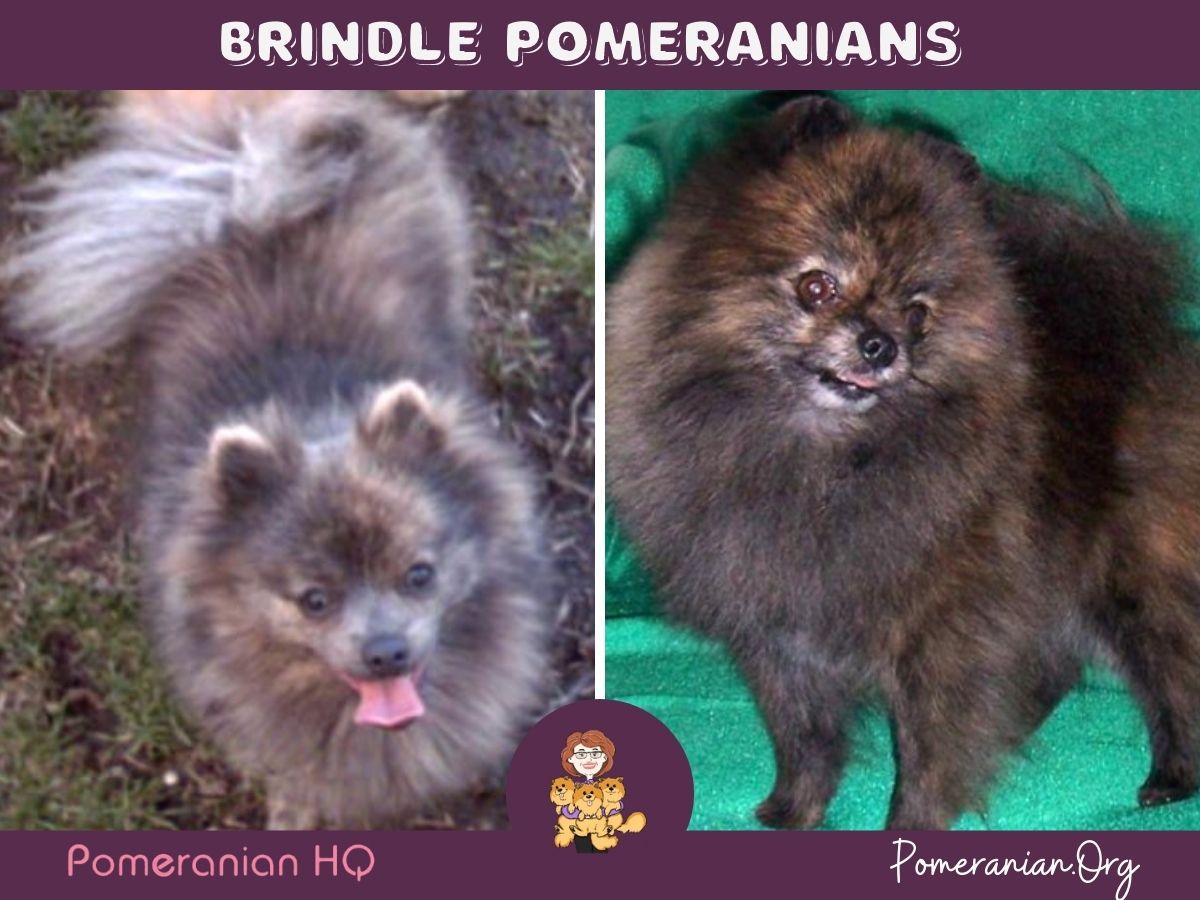
2. Brindle
Brindle Pomeranians have black stripes in their coat, giving them a subtle tiger-like aesthetic. That’s why they’re also known as Tiger Stripes.
The stripes are black and appear over tan or brown fur. Due to the Pomeranian’s longer guard hairs, their markings can be difficult to distinguish and are often broken up.
However, the markings are sometimes clearly visible, especially on the Pomeranian’s back, paws, and forehead. Brindle Poms can often demonstrate black face mask markings, but not all brindle Poms have this trait.
Brindle is a dominant trait that can only be suppressed by solid black. You can have brindle patterns over any Pom color, but the most notable are Blue Brindle Pomeranians and Black Brindle Pomeranians.
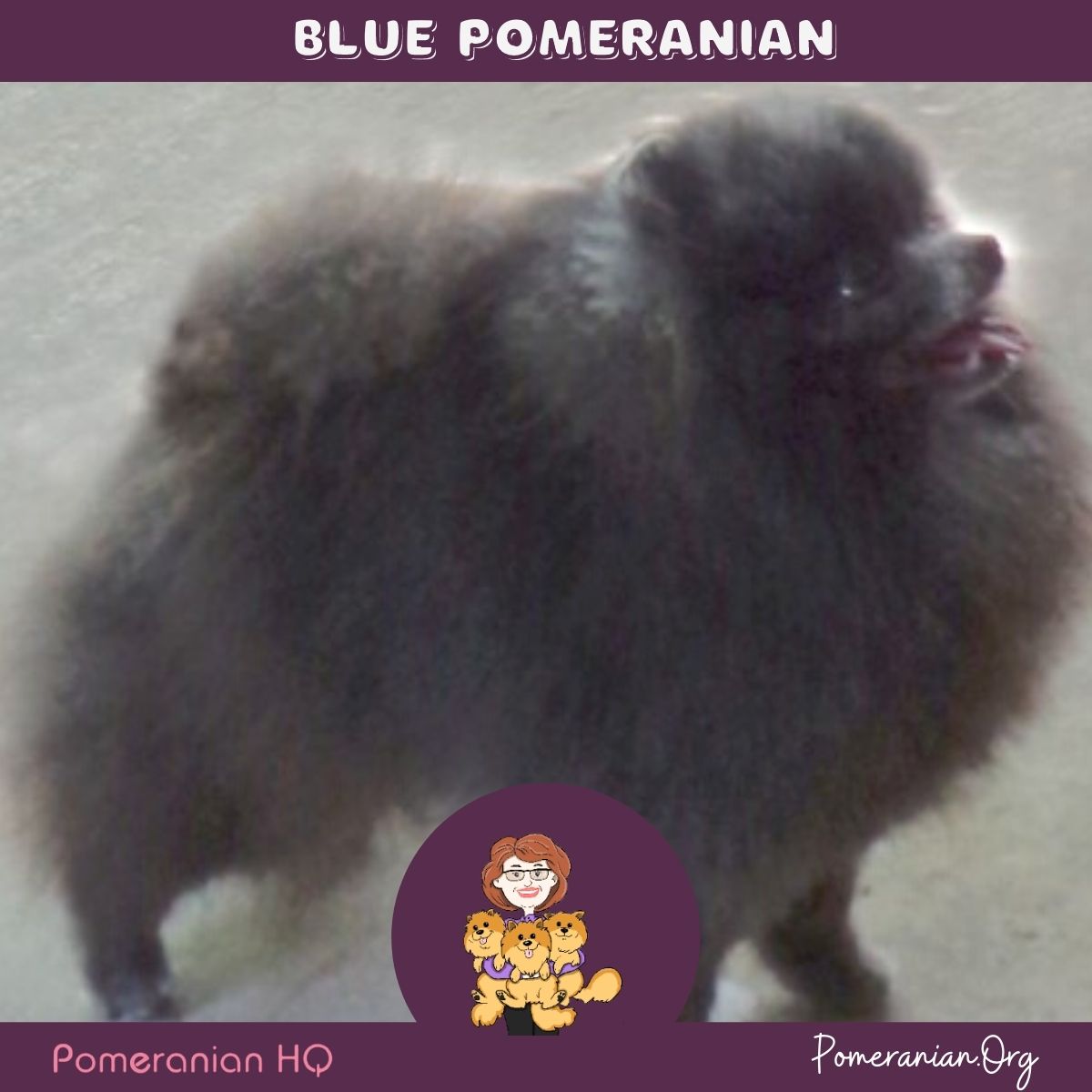
3. Blue
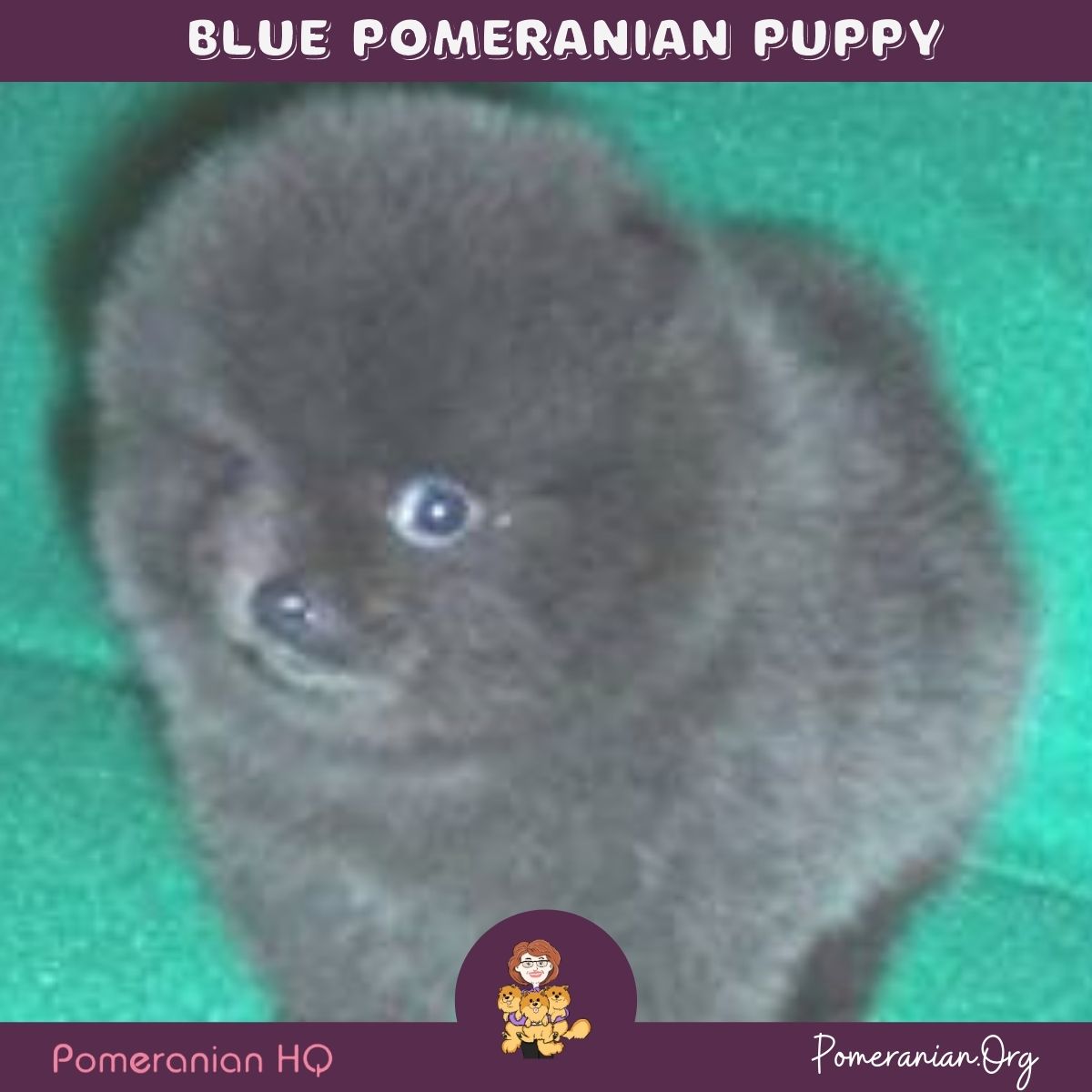
Blue Pomeranians are rare, unique, and yet incredibly beautiful. They have a solid coat color without any markings. Although they’re called the Blue Pomeranians, the color is more grey. These dogs can appear dark grey, silver, or greyish-blue. Blue Pomeranians have dark blue guard hair or dark gray guard hair and a grey undercoat.
Blue Poms have a diluted black coat but with blue points. Some Blue Poms can appear so dark that they can be mistaken for black Poms. However, a blue Pom’s nose, eye rims, and paw pads will always be blue, not black. The easiest way to spot a blue Pomeranian is by looking at the nose.
The dilute (d) recessive gene in Pomeranians will dilute black pigment to blue. Its effects are most dramatic on a solid black, which turns blue.
Blue Pomeranians usually appear silver when they’re born. Later, as they mature, they develop a silver or grey undercoat and a darker outer coat. A Blue Pom can be produced by breeding two Black Pomeranians. AKC recognizes Blue as a standard base color for the Pomeranian.
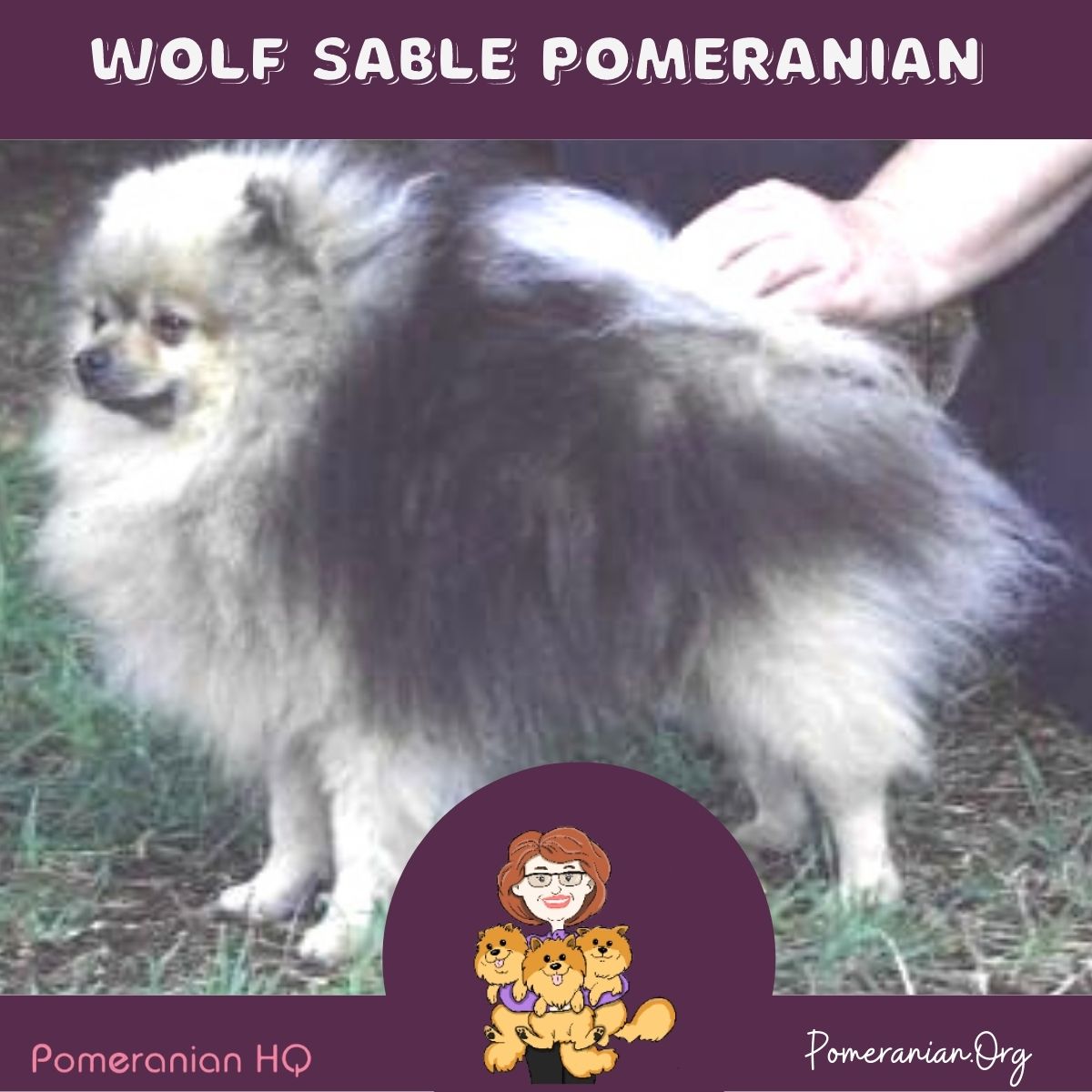
4. Wolf Sable
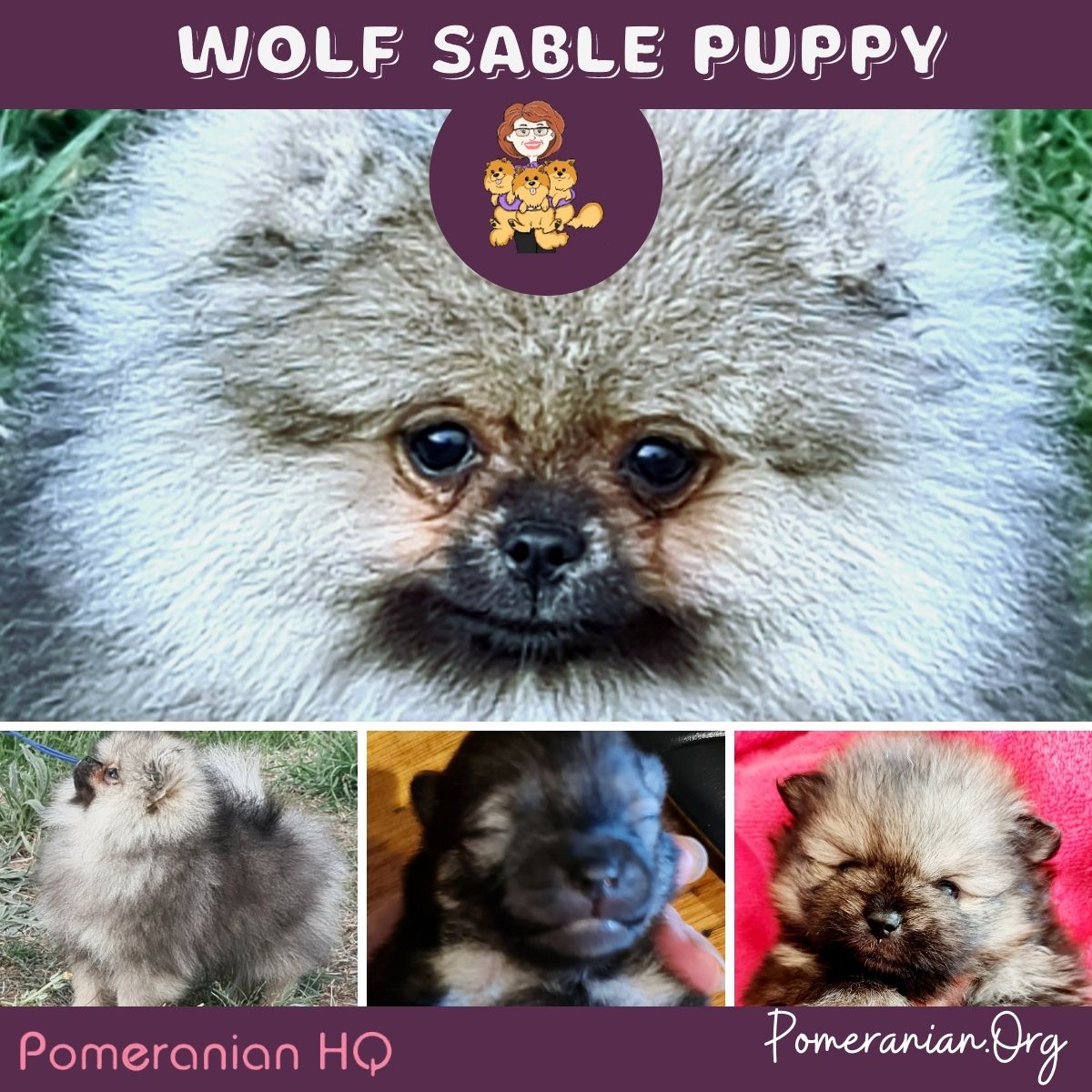
A true wolf sable Pomeranian is a rarity. Sable is a color pattern where Pomeranians have black tips on their fur. With lots of sabling, the wolf-sable Pom can appear gray. With less, a wolf-sable Pom can appear cream-sable.
In most cases, the wolf sable Pomeranians will have a cream coat. With light sabling, you’ll see that color. However, if the sabling is heavy and covers just about the entire Pom coat, a wolf sable Pomeranian can appear to be a grey Pom.
In wolf sable Poms, the term ‘wolf’ doesn’t refer to the Pom’s base coat. Wolf refers to a very rare gene in Pomeranians.
Wolf sable Poms have black eye rims, noses, lips, and paw pads.
Just by looking, it’s impossible to know that a Pomeranian is a wolf sable. Many Pomeranians are mislabeled as wolf sable pomegranates. You can’t identify a true wolf Sable by visual confirmation alone. Only DNA testing can confirm this. In many cases, sabling fades off, completely or to some degree, as a Pomeranian matures.
AKC recognizes wolf sable as a standard base color for the Pomeranian.

5. Beaver Pomeranians
Beaver Pomeranians present a unique coloration, lacking any black pigmentation in their fur or on their bodies. This means a Pomeranian with black hair, black points, black markings, or black fur is not a Beaver Pomeranian.
Their enchanting beaver coat is a special dilute shade of brown or chocolate, varying from a delightful cream-beige to a captivating pale orange-brown hue. This color was once known as “biscuit” because it resembles the warm, golden tones of baked cookies.
At a casual glance, a beaver Pomeranian might seem similar to a cream Pomeranian, but its notable characteristic differentiates it. Beaver Pomeranians are characterized by liver or beige-brown colored noses, eye rims, lips, and paw pads.
6. True White Pomeranians
White Pomeranians are another striking variety. They boast pure, snow-white coats without any markings or secondary color. This solid color is highly sought after, making it a favorite among Pomeranian breeders and enthusiasts. Their pristine white fur can sometimes pose a challenge for upkeep, but is undoubtedly a head-turner.
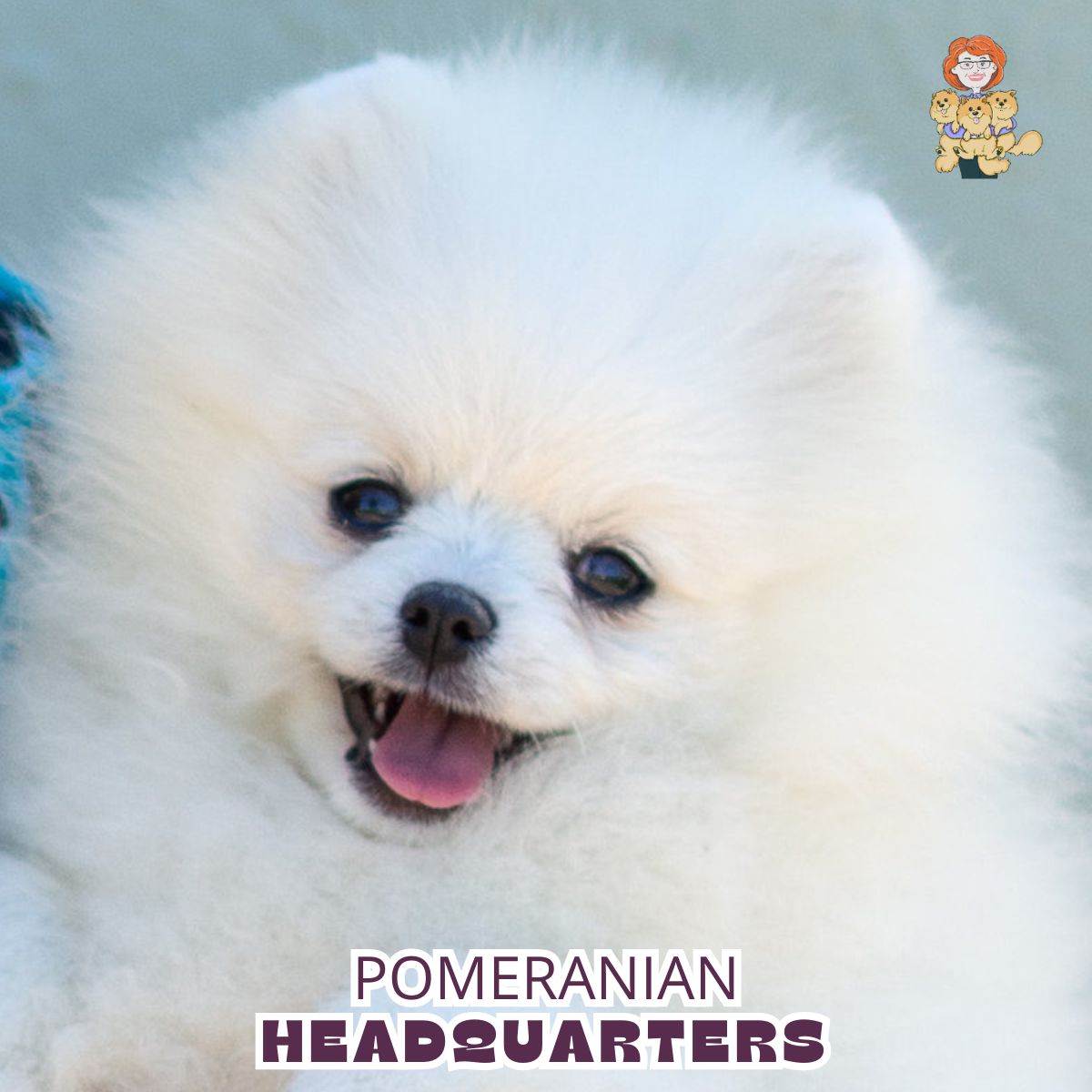
True white Pomeranians, known for their stunningly pure and icy coats, are highly sought after today but are notably challenging to acquire.
Breeding a Pomeranian with such a brilliant white coat and dark points is a complex task, primarily because the gene responsible for this striking color is recessive. To produce a true white Pomeranian, both parent dogs must carry this recessive gene, and even then, the outcome is not guaranteed.
The rarity and difficulty in breeding true white Pomeranians add to their desirability and prestige. These dogs are admired for their pristine, snow-like fur, which sets them apart from other color variations in the breed. Their unique coat requires careful grooming to maintain its luster and pure white appearance, making them a gem among Pomeranian enthusiasts.
7. Pomeranian Merle Dogs
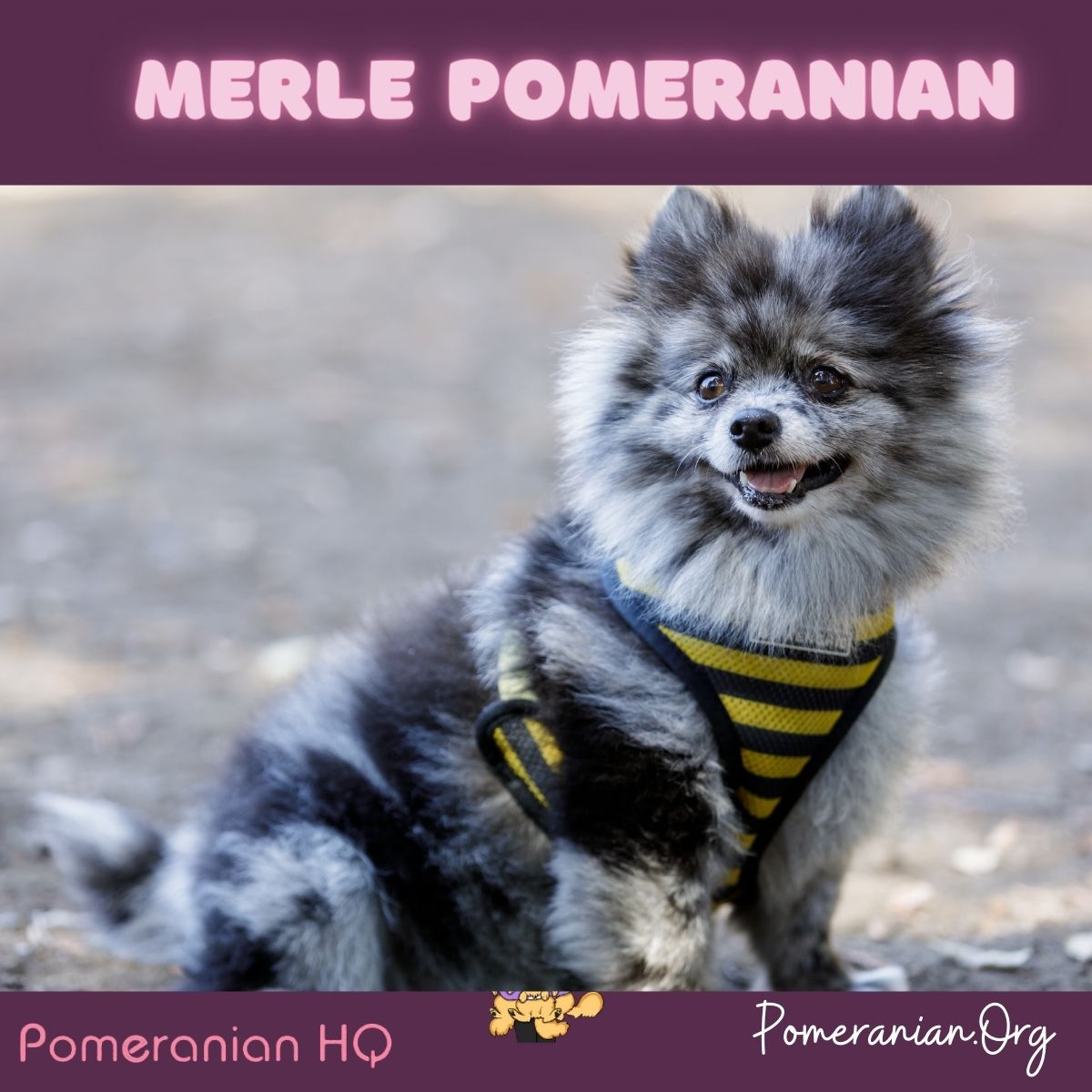
The merle gene is a relatively recent addition to the Pomeranian breed. This gene manifests itself in eye-catching color patterns. Remarkably versatile, the merle coloring can overlay any Pomeranian base color, leading to an endless array of unique and striking variations.
Understanding Pomeranian Coat Color Genetics
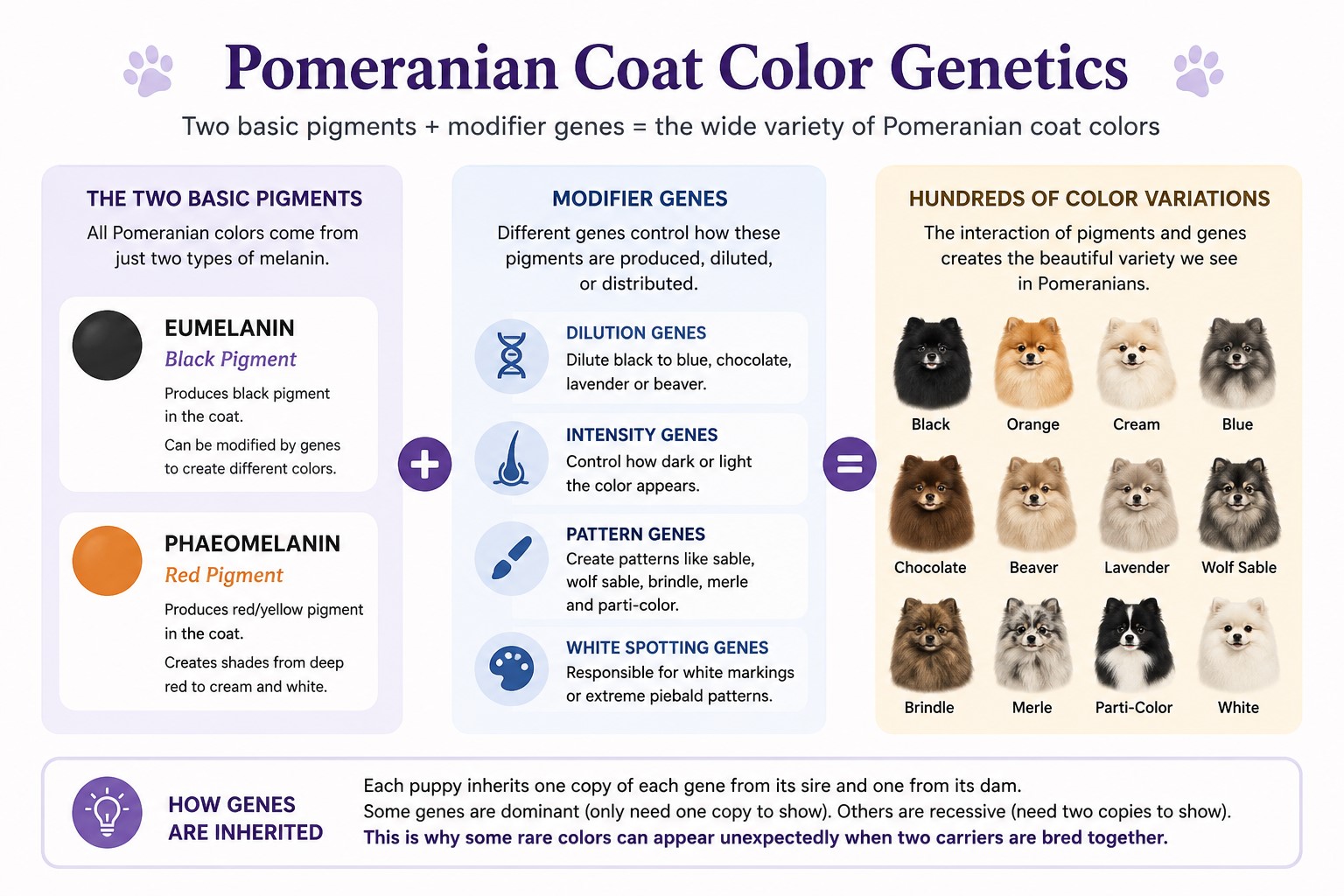
Despite the remarkable variety of Pomeranian coat colors, every color seen in the breed is ultimately produced by just two basic pigments: eumelanin and phaeomelanin.
Eumelanin is responsible for black pigment. Depending on the genes inherited by the puppy, eumelanin can remain black or be modified into other colors such as blue, chocolate, lavender, or beaver.
Phaeomelanin is responsible for the red pigment spectrum. This pigment produces colors ranging from deep orange and red through to cream and white.
The wide range of Pomeranian colors results from various genes that control how these two pigments are produced, distributed, diluted, or restricted throughout the coat. Some genes determine whether black pigment appears at all, while others influence the intensity of the color or create patterns such as sable, brindle, or merle.
Every puppy inherits one copy of each gene from its sire and one from its dam. Some genes are dominant, meaning they only need to be inherited from one parent to be expressed. Other genes are recessive and must be inherited from both parents before they become visible in the coat color.
This explains why some rare colors can seemingly appear unexpectedly. A Pomeranian may carry a hidden recessive color gene for generations without displaying it. When two carriers are bred together, puppies may inherit two copies of that recessive gene and express a rare color.
Color production begins within specialized cells called melanocytes, which are located around each hair follicle. These cells manufacture either eumelanin or phaeomelanin according to the dog’s genetic instructions. The interaction between these pigments and the genes controlling them creates the extraordinary range of colors and patterns seen in the Pomeranian breed today.
Understanding the basics of color genetics helps explain why some colors are common while others remain exceptionally rare. It also demonstrates why responsible breeders focus on much more than color alone, placing equal importance on health, temperament, structure, and breed type.
Two Pigments → Hundreds of Color Variations
🖤 Eumelanin → Black, Blue, Chocolate, Beaver, Lavender
🧡 Phaeomelanin → Orange, Red, Cream, White
🧬 Modifier Genes → Sable, Wolf Sable, Brindle, Merle, Parti-Color
DVM, University of Animal and Veterinary Sciences, 2019
MSc. (Hons.) Animal Breeding & Genetics, University of Agriculture Faisalabad, 2021
Do Pomeranians Change Color as They Get Older?
In short, yes!
The Pomeranian puppies will undergo many coat color changes from when they’re born to when they are seniors. Just like humans get grey hair, so can dogs.
It’s common among the breed to change color within the first year of life. This is when you’ll see the most significant change in their coats.
However, Pomeranians can gradually change their coat color over the years or begin to change it once they reach their senior years. If the parent has a changed coat color, their offspring will too.
The color change in Pomeranians is a notable feature. Puppies may be born with a certain coat color that can change as they mature. This is particularly true for some colors, such as blue merle and sable.
Do Pomeranian Colors Affect Their Temperament?
A dog’s color should never affect its temperament. If it does, it would mean the dog has been irresponsibly inbred by an unethical breeder who prioritizes profit over the breed’s betterment.
Reputable breeders will always ensure that all their breeding dogs exhibit the perfect Pomeranian temperament before allowing them to breed.
Do Pomeranian Colors Affect Their Health?
Pomeranians are generally healthy dogs with few fatal hereditary issues. The only concern is double Merle Poms. If a Pomeranian puppy inherits two copies of the Merle gene, they are often deaf and blind. They might also suffer from health issues that Pomeranians with only one Merle gene don’t have to deal with.
Merle-to-Merle Pomeranian breedings will produce half-defective puppies that are largely white. So, breeding Merle Poms to a full Black or Chocolate Pomeranian is recommended, as light dogs might carry a hidden Merle gene.
Many breeders steer clear of breeding merle-colored Pomeranians, as the merle gene, while harmless in its recessive state, can lead to complications when two merle Pomeranians are mated. This pairing can produce double-merle offspring, often susceptible to various health problems.
Breeding Sables to Merles is not recommended. Sable Merle Pomeranians are often mistaken for normal sable Poms and bred together, resulting in problematic Pom puppies.

Price of Rare Pomeranian Dogs
Compared to the Pomeranian’s solid coats, the rarest colors, such as blue, lavender, wolf sable, and brindle, are the most expensive. There is not much difference between a rare-colored Pomeranian and a standard Pom. The main difference is the color of their coat.
The average cost for a Pomeranian ranges from $ 2,800 to $6,000, but it can be even more expensive. Some rare-colored Pomeranians can cost as much as $8000 or $10,000.
Final Thoughts on Rare Pomeranian Colors
Conclusion
The remarkable range of Pomeranian coat colors is one of the breed’s most fascinating characteristics. While rare colors such as lavender, brindle, blue, wolf sable, beaver, white, and merle often attract attention, they represent only a small part of what makes a Pomeranian truly exceptional.
A beautiful coat color should never take priority over health, temperament, correct structure, and adherence to the Pomeranian Breed Standard. Responsible preservation breeders carefully select breeding dogs based on soundness, genetic health, and breed type, with coat color considered only after these essential qualities.
Whether you share your life with a vibrant orange Pomeranian or one of the breed’s rarest color variations, each possesses the same intelligent, lively, and affectionate personality that has made Pomeranians beloved companions around the world.
Understanding the genetics behind rare Pomeranian colors not only helps owners identify these unique shades but also encourages informed decisions when choosing a puppy. By supporting ethical breeders who prioritize the long-term welfare of the breed, you help ensure that future generations of Pomeranians remain healthy, beautiful, and true to the breed standard.
No matter what color your Pomeranian may be, a well-bred Pom is always a treasure.
Copyright Pomeranian.org. All Rights Reserved.
📚 References & Further Reading
- [1] AKC Pomeranian Breed Standard (2011)
- [2] English Kennel Club Breed Standard
- [3] The Pomeranian Handbook – Denise Leo
- [4] Denlinger, The Complete Pomeranian
- [5] Kimbering, 1891–1991
- [6] Taplin, The Sportsman’s Cabinet
- [7] Parker, The Popular Pomeranian
- [8] Ives, Show Pomeranians