
Choosing between a male and a female Pomeranian is one of the biggest decisions prospective owners face. Many people assume that one gender is friendlier, easier to train, or a better family pet—but is that really true?
After more than 50 years of breeding, exhibiting, and judging Pomeranians, I’ve found that while there are some general personality differences between male and female Pomeranians, the individual puppy’s temperament, breeding, and early socialization are far more important than gender alone.
In this guide, I’ll explain the real differences between boy and girl Pomeranians, including temperament, affection, trainability, grooming, health, compatibility with children and other pets, and which gender is usually the better choice for different lifestyles.
Whether you’re buying your very first Pomeranian or adding another Pom to your family, this expert guide will help you confidently choose the puppy that’s the best match for your home—not simply the one that’s male or female.
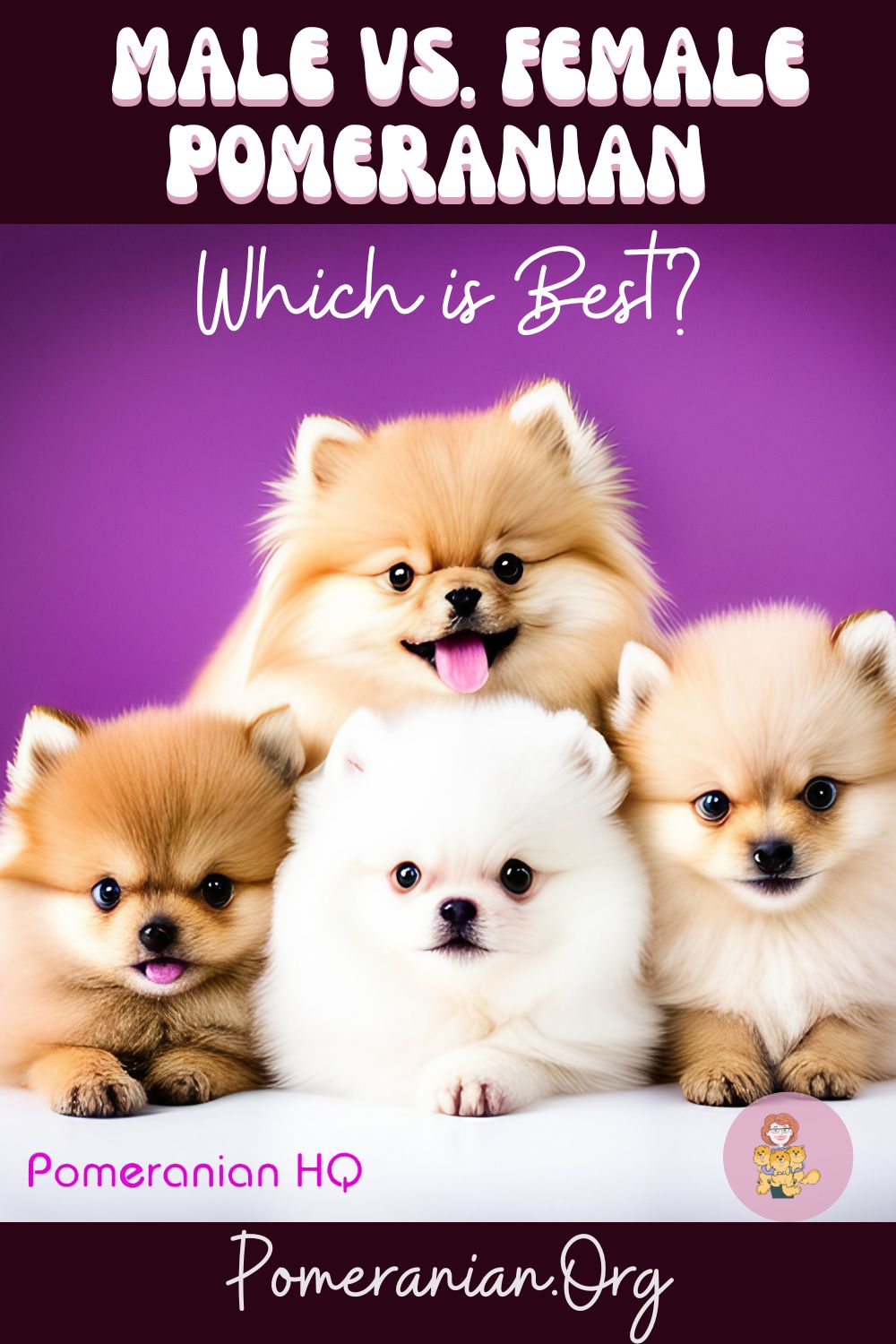
Male vs Female Pomeranian
🐾 Male vs Female Pomeranian Comparison
| Trait | 🐶 Male | 🐶 Female |
|---|---|---|
| Affection | Very affectionate, thrives on attention | Affectionate but more selective |
| Personality | Playful, clown-like, entertaining | More serious, can be bossy |
| Training | Can be distracted, slower to mature | Often easier to train, more focused |
| Independence | Needs more attention | More independent |
| Other Dogs | Usually more accepting | Can be more territorial |
| Management | Simpler, lower cost desexing | Heat cycles if not desexed |
✨ Individual temperament is more important than gender when choosing your Pomeranian
Male vs Female Pomeranian Personality Traits
While the table above gives a quick comparison, real-life personality differences are often more nuanced.
Male Pomeranian Personality
Male Pomeranians are often very affectionate and thrive on human attention. They tend to be playful, outgoing, and sometimes a little cheeky. Many owners describe them as “clown-like” and highly entertaining companions.
However, males can also take longer to mature and may be more easily distracted during training, especially when young.
Female Pomeranian Personality
Female Pomeranians are often more independent and focused. They may bond deeply with their owner but are typically less attention-seeking than males.
Females are often easier to train and can be more serious in nature, although some can also be quite bossy or territorial, particularly around other dogs.
What Matters Most
After decades of breeding Pomeranians, one thing is very clear — personality varies far more between individual puppies than between males and females.
The breeder, bloodlines, and early upbringing have a much greater influence than gender alone.
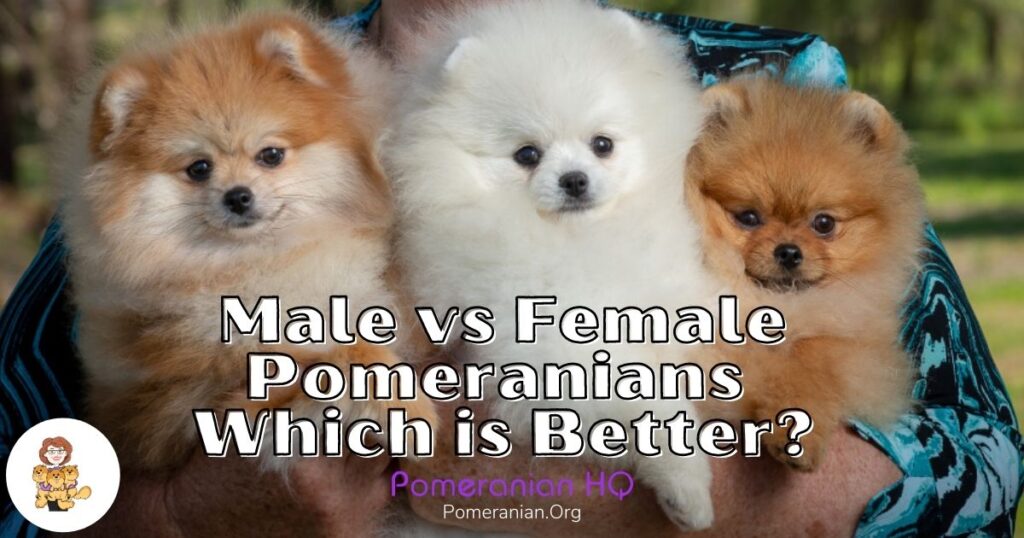
Female vs Male Pomeranian Temperament
Female Pomeranian Temperament
Many puppy buyers initially believe a female Pomeranian will be the better choice — often expecting her to be sweeter, more obedient, and easier to manage.
In reality, this is not always the case.
Female Pomeranians are often strong-minded little dogs. They tend to establish their place in the household quickly and can be quite independent in nature.
A girl Pomeranian may be:
- More independent and self-assured
- Less attention-seeking than males
- Focused during training, but sometimes stubborn
- More territorial, particularly around other dogs
In my experience, females often “rule the roost” and are quite capable of getting their own way. They usually come for attention when they choose, and move away just as quickly when they’ve had enough.
If not desexed, females will also come into season, which requires management and can be inconvenient for some owners.
Male Pomeranian Temperament
Male Pomeranians are often very affectionate and people-focused. Many owners describe them as playful, entertaining, and full of personality well into adulthood.
A boy Pomeranian is often:
- More affectionate and attention-seeking
- Playful and “clown-like” in behaviour
- Very attached to their human family
- Generally more accepting of other pets
Male Pomeranians are usually eager to please and respond well to praise and food, although they can be easily distracted and may take longer to mature.
Once desexed, most male-related behaviours such as marking or mounting are rarely an issue.
Desexing a male is also generally simpler and less costly than desexing a female.
—What Really Matters
After decades of breeding Pomeranians, one thing is very clear — personality varies far more between individual puppies than between males and females.
The quality of breeding, temperament of the parents, and early upbringing will always matter more than gender alone.
For most families, choosing the right puppy is far more important than choosing a boy or a girl.
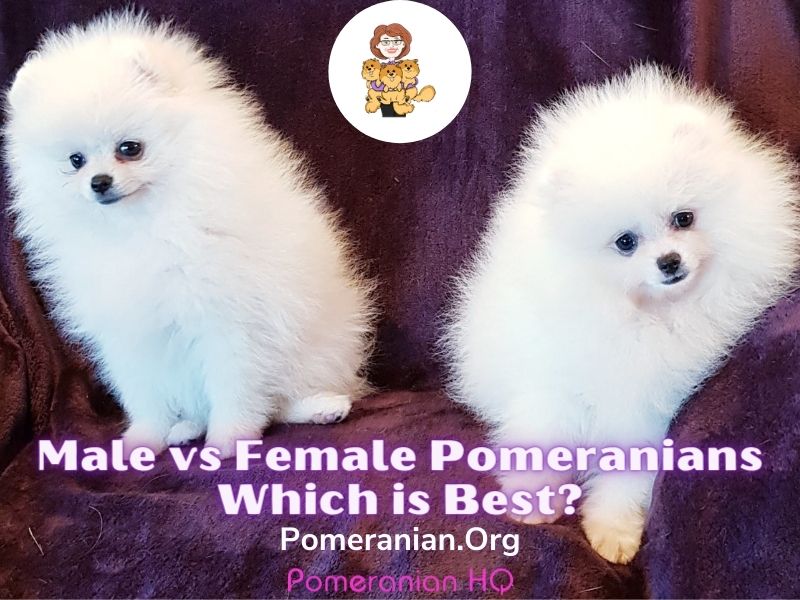
Training, Grooming and Health Considerations
Training: Boy vs Girl Pomeranian
When it comes to training, there is very little difference between male and female Pomeranians.
House training a boy or girl Pom follows exactly the same process. An untrained or poorly trained Pomeranian — regardless of gender — will quickly develop bad habits in the home.
While some people believe females are easier to train, this is not always the case. Individual temperament, consistency, and early training play a far greater role than whether the puppy is male or female.
—Grooming Differences
There is no significant difference in grooming requirements between desexed male and female Pomeranians.
However, entire (non-desexed) females will often experience a heavy coat shed a couple of months after coming into season. During this time, regular brushing is essential to remove the shedding coat and prevent matting.
Outside of this, coat care remains the same for both sexes — regular brushing, bathing, and proper coat maintenance are essential for all Pomeranians.
—Health Considerations
There are some health considerations to be aware of when comparing male and female Pomeranians, particularly if the dog is not desexed.
- Females: Entire females have a higher risk of mammary gland and uterine conditions.
- Males: Entire males have a higher risk of prostate and testicular conditions.
The risk of many of these conditions is significantly reduced once the dog is desexed.
As always, responsible breeding, proper veterinary care, and informed decisions about desexing are important factors in maintaining your Pomeranian’s long-term health.
Pomeranians and Children: Male vs Female
Male Pomeranians and Children
Male Pomeranians are often lively, playful, and very people-oriented, which can make them wonderful companions for children.
Many male Poms enjoy interactive play and will happily join in games, sometimes with great enthusiasm. However, because of their small size, it is important that children understand how to handle them gently and respectfully.
A boy Pomeranian may:
- Enjoy playing and engaging with children
- Be affectionate and eager for attention
- Become overexcited if play is too rough or constant
Children should always be supervised and taught that Pomeranians are delicate dogs, not toys. Calm, gentle interaction is essential to keep both the child and the dog safe and happy.
—Female Pomeranians and Children
Female Pomeranians can also make lovely companions for children, but they are often more independent in nature.
Many females prefer interaction on their own terms and may not always seek constant play or attention.
A girl Pomeranian may:
- Be more independent and self-contained
- Prefer shorter, calmer interactions
- Value her own space and quiet time
For this reason, it is especially important that children learn to recognise when the dog has had enough and allow her to rest without being disturbed.
When treated with respect, female Pomeranians form strong bonds with their families and can be very loyal companions.
—What Matters Most
Regardless of gender, the most important factors are supervision, education, and respect.
Pomeranians are small, delicate dogs and are best suited to homes where children understand how to interact with them gently.
With proper guidance, both male and female Pomeranians can form wonderful relationships with children.
Pomeranians and Other Dogs: Male vs Female
Male Pomeranians with Other Dogs
In many households, a mix of genders can help maintain harmony. For example, if you already have a male Pomeranian, introducing a female is often the easier option, and vice versa.
It is also wise to allow a reasonable age gap between dogs. An older, more established dog can help set boundaries and guide the younger addition to the household.
Male Pomeranians are generally more easy-going with other dogs. They are often sociable, playful, and happy to interact, particularly when well socialised from a young age.
- Usually more accepting of other dogs
- Often enjoy play and interaction
- Less likely to challenge for dominance
When another dog enters their space, many males see it as an opportunity for play rather than conflict.
—Female Pomeranians with Other Dogs
Female Pomeranians can be more independent and, at times, more territorial. They often form strong bonds with their owners and may be less tolerant of other dogs entering their space.
- Can be more selective with other dogs
- May show territorial or dominant behaviour
- Often prefer familiar companions over new introductions
Early and consistent socialisation is important to help females become more comfortable around other dogs. Even then, some females prefer to be the “top dog” and may not always welcome new canine companions.
That said, many female Pomeranians live happily with other dogs when introductions are managed carefully and the household dynamics are balanced.
—What Works Best
In my experience, the most harmonious households often include dogs of opposite genders, with appropriate age spacing and careful introductions.
However, individual temperament, early socialisation, and the way dogs are managed in the home will always have a greater impact than gender alone.
Same-Sex vs Opposite-Sex Pomeranians in a Multi-Dog Household
The question of choosing a male or female Pomeranian often arises when owners already have one dog and are considering adding another to the family.
Many people wish to bring in a second Pomeranian out of a genuine love for the breed, while others hope a companion will help prevent loneliness. While this can work well, it is important to consider compatibility, temperament, and household dynamics.
What if the dogs don’t bond?
Not all Pomeranians will immediately form a close relationship. Older dogs, in particular, often need time to adjust to a lively new puppy and may require their own space during the transition period.
Owners frequently ask whether it is better to choose the same gender or the opposite. In my experience over many decades, opposite-sex Pomeranians generally create the most harmonious households.
If choosing the same gender, two males would be my next preference. Male Pomeranians often form strong bonds relatively quickly and, in a well-managed home, usually coexist without significant dominance issues. The human should always remain the leader of the household.
It is also advisable to allow an age gap between dogs, as an older, more established Pomeranian can help guide the younger dog and set boundaries within the home.
Ultimately, successful multi-dog households depend far more on careful introductions, early socialisation, and ongoing management than on gender alone.
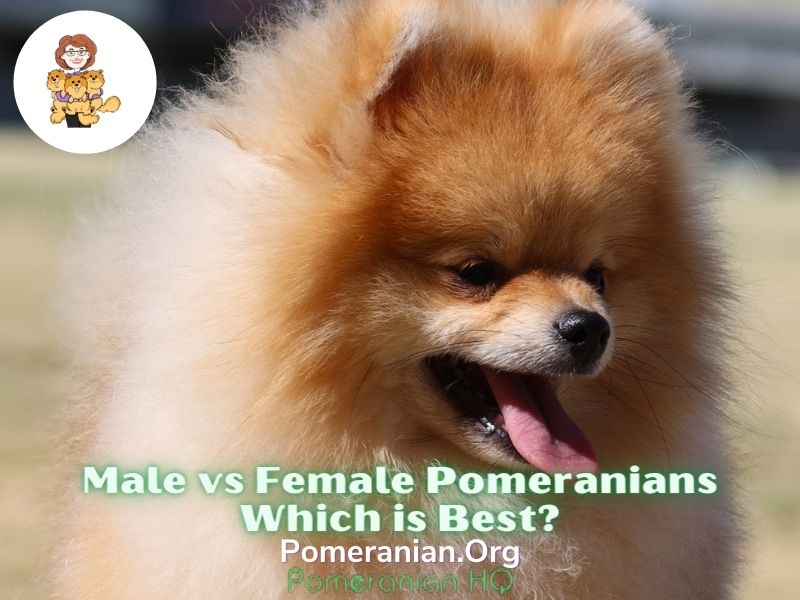
Which is Easier to Find — a Male or Female Pomeranian?
Female Pomeranian puppies are often more difficult to acquire and are typically in higher demand than males.
Well-bred Pomeranians, produced to meet the breed standard, usually have very small litters — often just one to three puppies. In many litters, there are simply more males than females available.
In addition, responsible, registered Pomeranian breeders primarily breed to improve the breed and produce quality show dogs. When a promising female puppy is born, she is often retained by the breeder for future breeding or showing.
As a result, well-bred female Pomeranian puppies are rarely available as pets, while male puppies are generally more accessible.
If you are searching for a Pomeranian puppy, it is important to understand this difference and be prepared to wait — particularly if you are set on a female.
For more guidance on finding a reputable breeder and choosing the right puppy, see my detailed guide on how and where to purchase a Pomeranian puppy.
Which Gender Best Suits a Family?
When choosing between a male and female Pomeranian for a family, the most important factors are not gender but the individual dog’s temperament and how well it fits your household.
Pomeranians are highly adaptable toy dogs and can thrive in a wide range of homes, from apartments and units to larger properties. What matters most is the level of interaction, supervision, and care they receive, particularly in family environments with children.
Final Thoughts
Choosing between a male or female Pomeranian is a common question — but in reality, gender is only a small part of the decision.
Both males and females can make exceptional companions. While there are general differences in personality and behaviour, these are often far less important than the temperament of the individual puppy.
After decades of breeding Pomeranians, one thing remains clear — the quality of the breeding, the temperament of the parents, and the early upbringing of the puppy matter far more than whether the dog is male or female.
Focus on choosing a healthy, well-bred puppy from a reputable breeder, and you will have a devoted companion for many years — regardless of gender.
Copyright. Pomeranian.Org. All Rights Reserved.
References and Further Reading:
[1] Denise Leo, “The Pomeranian Handbook”.
[2] Denise Leo “Training Your Pomeranian ”.
The Pomeranian Handbook
Unique Pomeranian Items