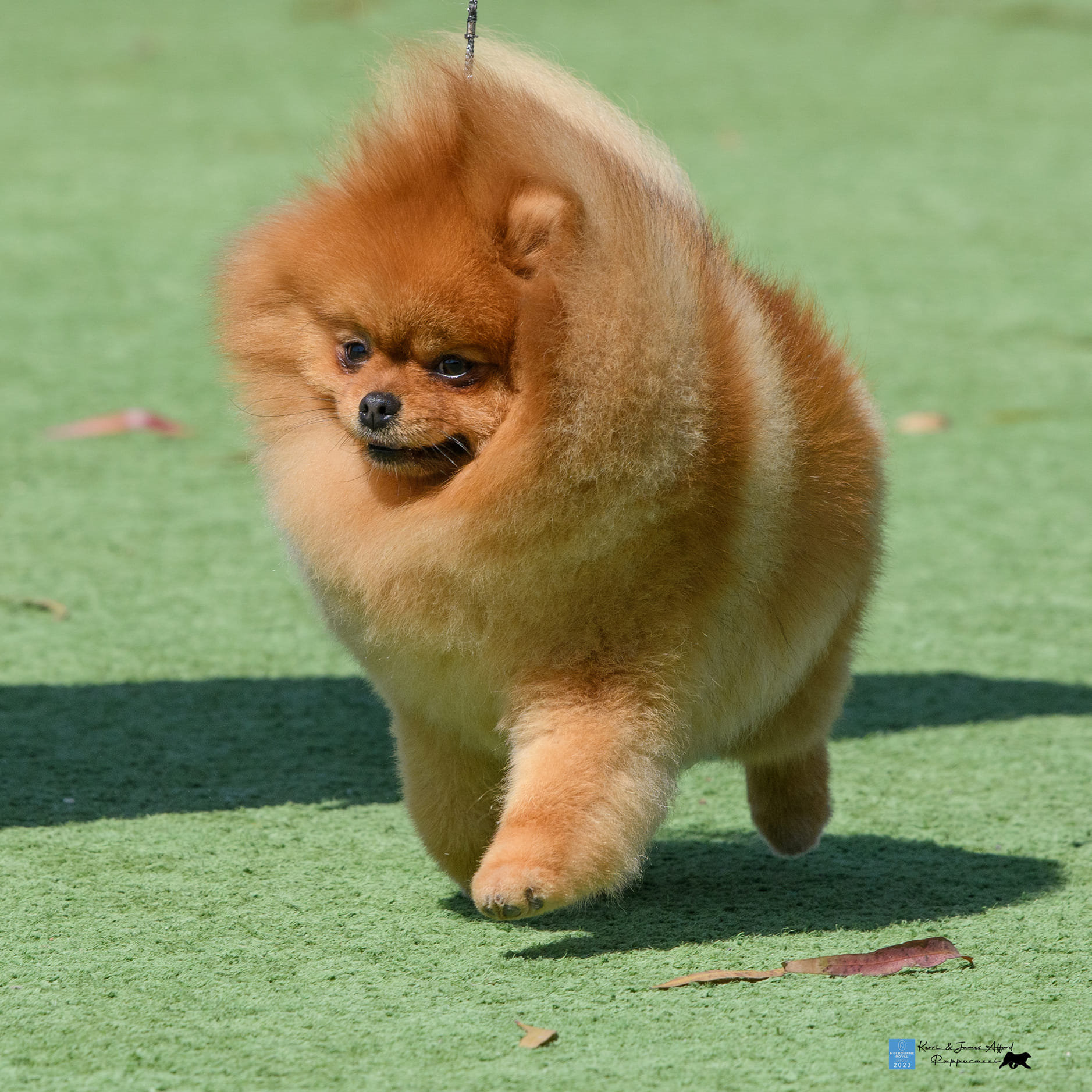

Many prospective owners ask, “Are Pomeranians hyper?” The answer is that Pomeranians are naturally energetic, intelligent, and alert dogs.
While they are not typically hyperactive in a medical sense, they are lively companions that need regular physical exercise, mental stimulation, and training to prevent boredom and unwanted behaviors. Understanding why your Pomeranian seems so energetic can help you channel that enthusiasm into positive activities.
Denise Says
In my experience breeding Pomeranians for over 50 years, hyperactivity in young Pomeranians is often caused by boredom rather than a lack of physical exercise. Many owners assume their puppy needs to run for longer periods to burn off energy, but mental stimulation is often just as important, if not more important, for this intelligent breed.
Pomeranians were bred to be alert, active companion dogs. They enjoy being involved in family life and quickly become bored when left with nothing to do. A bored Pomeranian may race around the house, bark excessively, seek attention constantly, steal household items, or invent its own games and mischief.
Behaviour, both good and bad, can be shaped by the experiences we provide. Puppies learn from what is rewarded and repeated. If a Pomeranian receives attention every time it barks, jumps, or demands interaction, those behaviours can become habits. Likewise, rewarding calm behaviour, providing appropriate outlets for energy, and teaching basic manners from an early age can help create a well-behaved adult dog.
I have found that a combination of sensible daily exercise, short training sessions, puzzle toys, interactive play, and regular social interaction is often far more effective than simply increasing physical activity. A tired mind is frequently just as important as a tired body.
Most young Pomeranians naturally become calmer as they mature, but early training and proper mental stimulation play a significant role in shaping the dog they will become. With consistency, patience, and positive reinforcement, even the most energetic Pomeranian puppy can learn when it is time to play and when it is time to relax.
— Denise Leo, Pomeranian breeder, exhibitor, and author with over 50 years of experience in the breed.
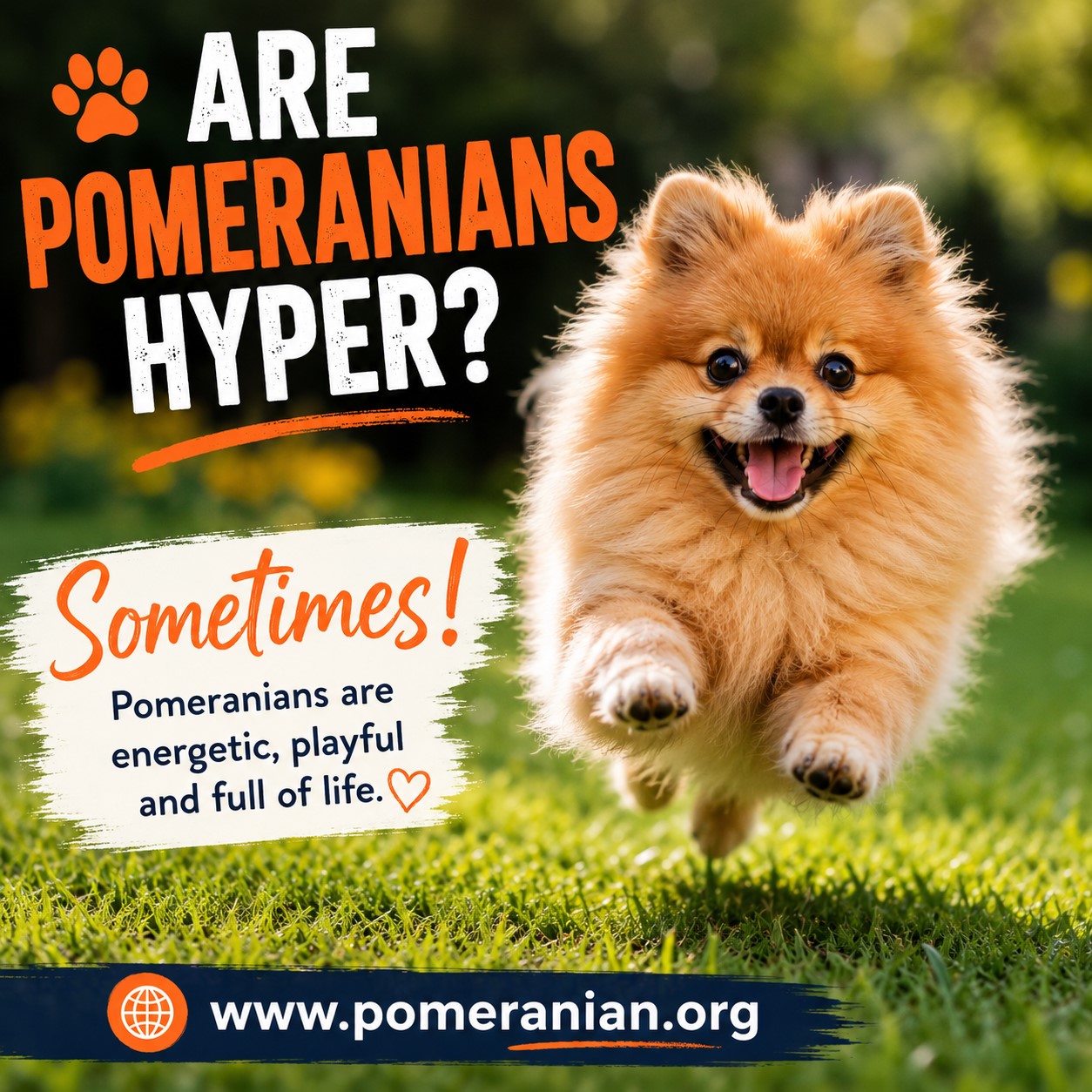
🐾 Why Are Pomeranians So Hyper?
If you’ve ever wondered, “Why are Pomeranians so hyper?”, you’re certainly not alone. Many owners are surprised by the amount of energy packed into such a small dog.
The truth is that Pomeranians were bred to be alert, intelligent, and active companions. While they may look like fluffy lap dogs, they are descended from larger Spitz breeds that were working dogs. As a result, modern Pomeranians have inherited a curious nature, quick minds, and plenty of energy.
In most cases, a Pomeranian that appears hyper is simply expressing normal breed behaviour. Pomeranians love to explore, play games, investigate new sights and sounds, and interact with their families. They are naturally enthusiastic dogs that enjoy being involved in everyday activities.
A lack of exercise or mental stimulation can make a Pomeranian seem even more hyper. When a Pom becomes bored, that excess energy often finds an outlet through:
- Excessive barking
- Zoomies around the house
- Attention-seeking behaviour
- Digging or chewing
- Mischievous antics
Age can also play a role. Pomeranian puppies and young adults are usually far more energetic than mature dogs. Puppies are constantly learning about the world and often experience bursts of energy throughout the day. Many owners notice their Pomeranians become calmer as they reach adulthood, although most retain their playful personalities throughout their lives.
Being energetic is not the same as being hyperactive. Most Pomeranians simply need regular exercise, training, and mental enrichment to help channel their natural energy in positive ways.
For many owners, a Pomeranian’s lively personality is one of the breed’s most charming qualities. With the right balance of exercise, training, and companionship, these spirited little dogs make wonderful family pets.
Are Pomeranians More Energetic Than Other Small Dogs?
Yes, Pomeranians are generally considered one of the more energetic small dog breeds. While they may be tiny, they possess a surprisingly high energy level and a strong desire to be involved in everything happening around them.
Compared to more laid-back toy breeds, Pomeranians tend to be more alert, curious, and active. They enjoy exploring, learning new tricks, playing games, and interacting with their owners. Their intelligence means they need both physical exercise and mental stimulation to stay happy and well-behaved.
However, every dog is an individual. Some Pomeranians are naturally more relaxed, while others seem to have endless energy. Factors such as age, genetics, health, and lifestyle all influence a Pomeranian’s activity level.
Do Pomeranians Calm Down With Age?
Most Pomeranians become calmer as they mature. Pomeranian puppies are often bundles of energy, racing around the house, investigating everything they encounter, and experiencing frequent bursts of excitement.
Many owners notice a gradual change between ages 1 and 3 as their Pom becomes more settled and predictable. While adult Pomeranians are typically less excitable than puppies, they usually retain their playful and outgoing personalities throughout their lives.
Senior Pomeranians often become even more relaxed, although many continue to enjoy walks, games, and spending time with their families. A well-exercised and mentally stimulated Pomeranian is more likely to become a calm, balanced adult dog.
How Much Exercise Does a Pomeranian Need?
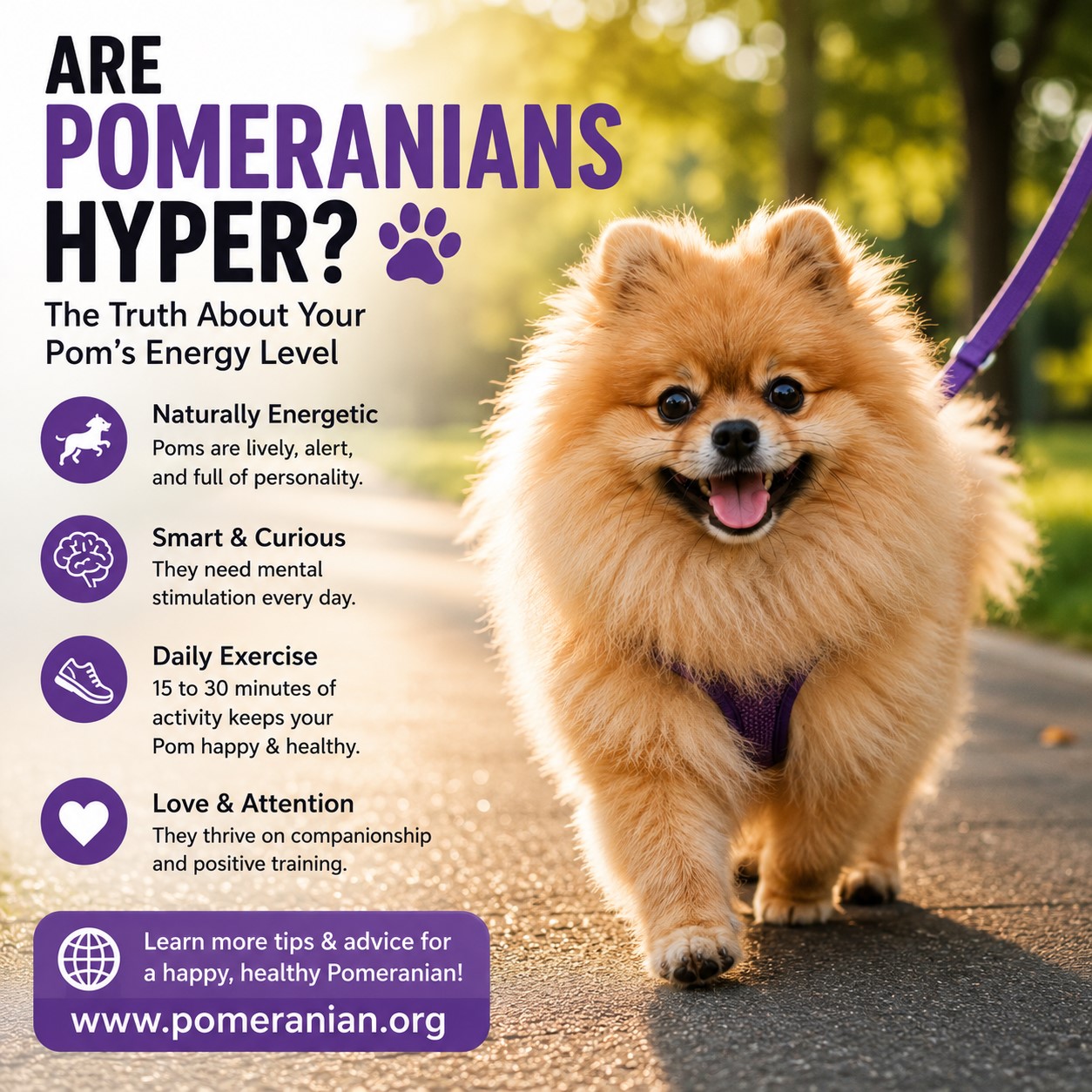
Although they are small dogs, Pomeranians still require daily exercise to maintain their physical and mental well-being. Most adult Pomeranians benefit from around 30 to 60 minutes of activity each day.
Exercise does not need to consist solely of walks. Many Pomeranians enjoy:
- Daily walks.
- Interactive play sessions.
- Puzzle toys.
- Training exercises.
- Fetch games.
- Exploring new environments.
Mental exercise is just as important as physical exercise for this intelligent breed. Teaching new tricks, providing food puzzles, and engaging in short training sessions can help prevent boredom and burn off excess energy.
Puppies should have shorter, age-appropriate exercise sessions, while senior Pomeranians may require less strenuous activities tailored to their individual needs.
Signs Your Pomeranian Is Bored
A bored Pomeranian often finds creative ways to entertain itself, and not always in ways owners appreciate. If your Pom is not receiving enough exercise or mental stimulation, you may notice unwanted behaviors developing.
Common signs of boredom include:
- Excessive barking.
- Destructive chewing.
- Digging.
- Zoomies around the house.
- Attention-seeking behavior.
- Restlessness.
- Pacing.
- Getting into mischief.
- Constantly demanding play or interaction.
Boredom can easily be mistaken for hyperactivity. In many cases, increasing your Pomeranian’s exercise, training, and enrichment activities will result in a calmer, happier companion. Providing opportunities to use both their bodies and minds helps satisfy their natural curiosity and prevent excess energy from becoming problematic.
How to Calm a Hyper Pomeranian
- Play fetch with balls inside the house or in the backyard (if it’s safe).
- Teach him plenty of challenging tricks.
- Test him out on agility obstacle courses.
- Make sure you take him for daily walks and, fitness level allowing, some runs as well.
- Once he has burnt off most of his energy, give him a reward for calming down to rest.
How to Calm a Pomeranian
- Always talk in a peaceful, soft voice unless you’re commanding him to do something or telling him off.
- Ignore him if he becomes overactive or gets pushy.
- Dogs crave attention and will try anything to get it unless trained not to. If he behaves poorly, ignore him. If you do react, he thinks it’s ok to behave like that. The next time your dog nips at your heels or jumps when you don’t want him to, try ignoring him. This means not looking at him, not talking, and not touching. See what he does as a result. He’ll generally calm down quickly when he isn’t getting his own way.
- Make him sit and stay seated if he still wants to play.
- Give him a reward if he remains calm. The reward can even be an energetic playtime if you have decided it’s okay at that point.
- While you don’t want a big fur ball lying on the rug all day, you do want your beloved pet to obey you and not cause too much disruption to your schedule.
- Demonstrate that relaxing is also rewarding in a different way. You may choose to pet and massage him as he lies in your lap, on the floor, or on the couch. He’ll quickly learn that quiet times are as much fun as running around like a wild animal.
How to Mentally Tire Out a Pomeranian
Physical exercise is important, but many owners underestimate how much mental stimulation a Pomeranian needs. Because Pomeranians are highly intelligent dogs, they can quickly become bored if their minds are not challenged. In fact, a short training session can sometimes tire a Pomeranian more effectively than a long walk.
One of the best ways to mentally tire out a Pomeranian is through positive reinforcement training. Teaching new tricks, practicing obedience exercises, or introducing fun activities such as scent games encourages your Pom to think and problem-solve.
Puzzle toys and food-dispensing toys are also excellent options. These toys require your Pomeranian to work out how to access treats or kibble, keeping them occupied and engaged. Rotating toys regularly can help prevent boredom and maintain interest.
Interactive games such as hide-and-seek, finding hidden treats, and learning the names of toys provide additional mental enrichment. Even allowing your Pomeranian to explore new walking routes and experience different sights, sounds, and smells can provide valuable mental stimulation.
A Pomeranian whose mind is regularly engaged is often calmer, happier, and less likely to develop nuisance behaviors associated with boredom.
Are Hyper Pomeranians a Training Problem?
Not necessarily. A hyper Pomeranian is often a normal Pomeranian with excess energy rather than a dog with a training problem. Many behaviors owners describe as “hyper” are simply signs that the dog needs more exercise, mental stimulation, or guidance.
However, without proper training, a highly energetic Pomeranian may develop habits that become frustrating for owners. Excessive barking, jumping on visitors, demanding attention, and difficulty settling down can all occur when energy is not channeled appropriately.
Training helps teach your Pomeranian how to behave calmly and respond to commands, even when excited. Consistency is important. Rewarding calm behavior, providing clear boundaries, and ensuring your dog receives adequate physical and mental exercise can make a significant difference.
It’s also important to remember that some excitement is perfectly normal. Pomeranians are naturally lively, enthusiastic little dogs. The goal is not to eliminate their personality but to help them learn when it is appropriate to be active and when to relax.
With patience, consistency, and positive reinforcement, most energetic Pomeranians grow into well-mannered companions that are a pleasure to live with.
Monitor Your Energy As Well
A dog will mirror you in terms of energy. You may be an assertive, calm person. Maybe your energy is similar to that of a pack leader. Perhaps you’re highly stressed due to work or other issues. Anxious or nervous moods in you will be reflected in similar moods in your pet.
This isn’t only in your speech, but also in your body language and tone of voice. You must be the leader of the pack by also being attuned to your energy levels and types.
Aromatherapy Can Be Very Useful
Dogs have an extremely powerful sense of smell, and it’s the one sense that guides them the most. Lavender can make people feel relaxed. So dogs may also become relaxed if you use scents designed to calm the mind and body. Discuss aromatherapy options with your vet or a holistic expert to learn which scents are best for your Pom and how best to disperse them.
Frequently Asked Questions About Hyper Pomeranians
Are Pomeranians hyper?
Yes, Pomeranians can be very energetic, lively, and playful. However, they are usually not truly hyperactive. Most Poms simply need regular exercise, mental stimulation, training, and companionship to help them settle.
Why is my Pomeranian so hyper?
Your Pomeranian may seem hyper because he has excess energy, is bored, wants attention, or needs more mental enrichment. Pomeranians are intelligent little dogs and need activities that engage both their body and mind.
Do Pomeranians calm down with age?
Most Pomeranians do calm down as they mature. Puppies and young adults are often more excitable, while adult and senior Pomeranians are usually more settled. However, most Poms remain playful throughout life.
How do I calm a hyper Pomeranian?
You can help calm a hyper Pomeranian by providing daily walks, playtime, puzzle toys, short training sessions, and a consistent routine. Reward calm behaviour and avoid encouraging constant attention-seeking.
How much exercise does a Pomeranian need?
Most adult Pomeranians benefit from around 30 to 60 minutes of daily activity. This can include short walks, play sessions, training, and enrichment games. Puppies and senior dogs may need shorter, gentler sessions.
Conclusion
Pomeranians are lively little dogs with big personalities. Their enthusiasm, intelligence, and alert nature are part of what makes the breed so lovable.
While some Pomeranians can seem hyper, the behavior is often due to excess energy, boredom, or insufficient mental stimulation rather than true hyperactivity. With regular exercise, consistent training, and plenty of enrichment activities, most Pomeranians become well-balanced companions who know when it’s time to play and when to relax.
Copyright Pomeranian.org. All Rights Reserved.
📚 References & Further Reading
- [1] AKC Pomeranian Breed Standard (2011)
- [2] English Kennel Club Breed Standard
- [3] The Pomeranian Handbook – Denise Leo
- [4] Denlinger, The Complete Pomeranian
- [5] Kimbering, 1891–1991
- [6] Taplin, The Sportsman’s Cabinet
- [7] Parker, The Popular Pomeranian
- [8] Ives, Show Pomeranians