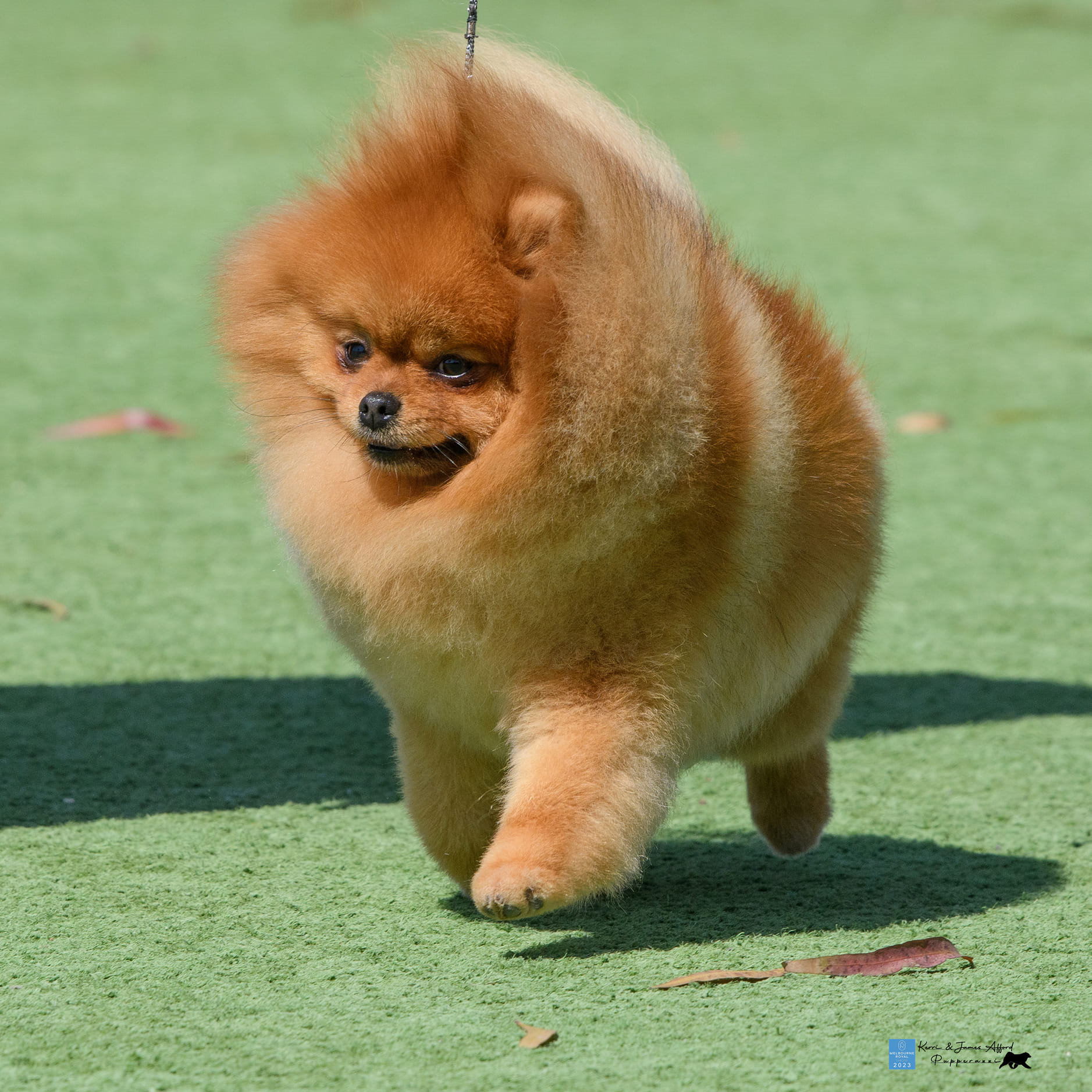

Does your Pomeranian bark, pace or become distressed when you leave home? Pomeranian separation anxiety can make everyday departures upsetting for both you and your dog. Understanding what happens while you are away is the first step towards helping your Pom feel more comfortable.
Pomeranians can form close bonds with their families, but enjoying your company does not automatically mean your dog has separation anxiety. Pomeranian barking may also be triggered by outside noises, boredom or a need to go to the toilet. Recognising the difference helps you choose the right approach.
In this guide, I explain the signs of separation anxiety in Pomeranians, possible triggers and gentle ways to build confidence during time alone. You will also learn when veterinary support is needed and how to support independence while maintaining a loving bond with your Pomeranian.
Pomeranian Separation Anxiety: Quick Answer
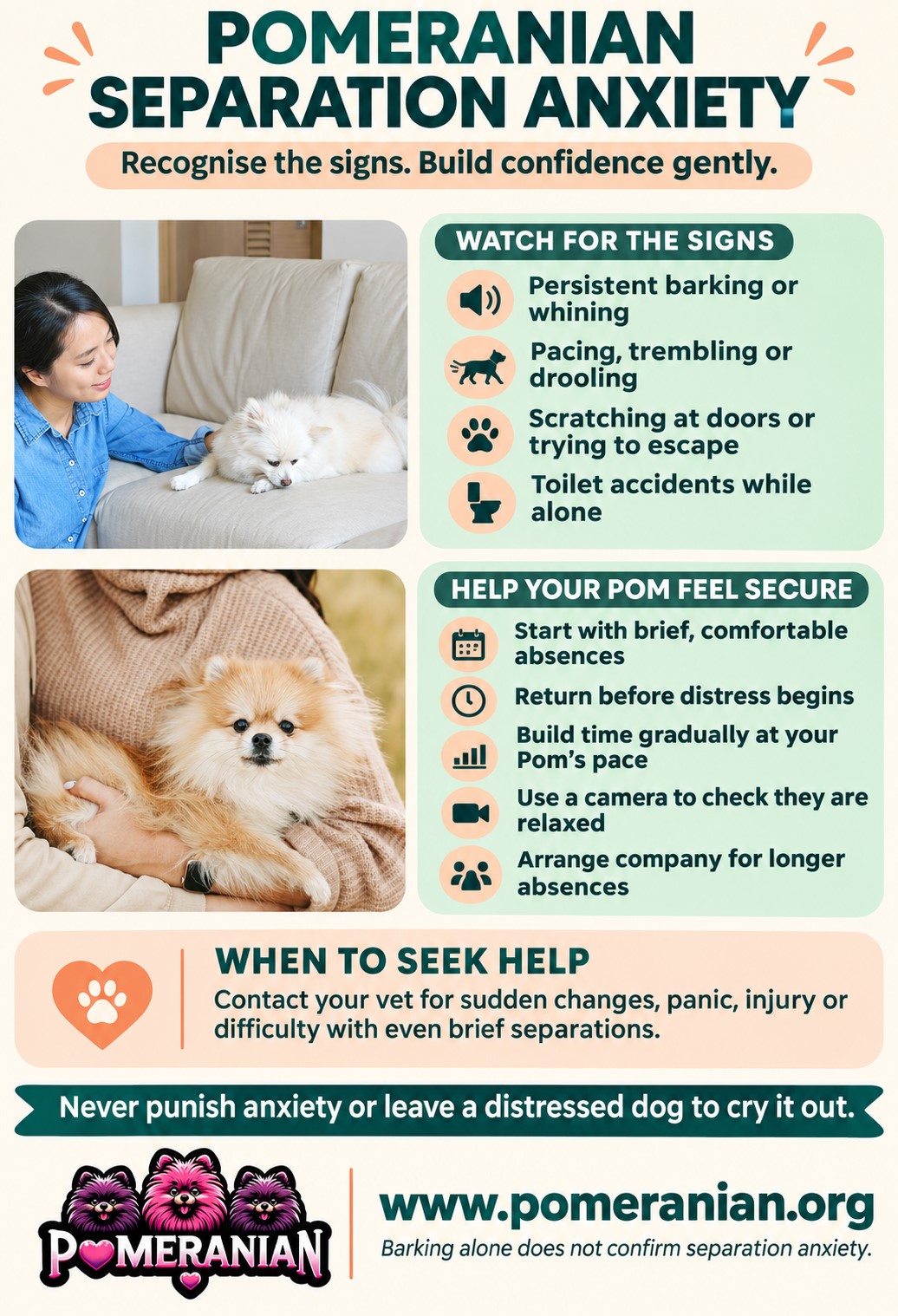
Separation anxiety in Pomeranians is distress triggered by being apart from their owner or being left alone. Signs may include persistent barking, pacing, trembling, drooling, destructive behaviour or toilet accidents during your absence. Barking alone does not confirm separation anxiety.
To help, practise very short absences that end before your Pom becomes distressed, then gradually build up as they remain comfortable. Use a camera to monitor their response, provide a comfortable resting area and avoid punishment or leaving them to “cry it out.”
Seek veterinary advice if symptoms appear suddenly, your Pom panics or risks injury, or they cannot manage even a brief separation. Read more about Pomeranian barking and its possible triggers.

Do Pomeranians Get Separation Anxiety?
Yes, Pomeranians can develop separation anxiety, although not every Pom will experience it. A dog who follows you around or enjoys sitting on your lap does not necessarily become distressed when you leave. The important question is whether your Pomeranian can settle comfortably without you.
Separation anxiety in Pomeranians involves distress, rather than simply wanting attention. Your Pom may become anxious as you prepare to leave, struggle after you have gone, or show both patterns.
A camera can help you see what happens during your absence. Does your Pom settle down to rest, or repeatedly pace, bark and watch the door? Recordings can also help your vet assess the behaviour.
Remember that Pomeranian barking can have several causes. Barking at a delivery driver or reacting to outdoor noises does not automatically mean your dog has separation anxiety.
You can continue enjoying a close bond with your Pomeranian while gently helping them feel secure during time apart.

Signs of Separation Anxiety in Pomeranians
The most useful clue is when the behaviour happens. Pomeranian separation anxiety typically involves distress as you prepare to leave or while you are away. One behaviour alone does not confirm the problem.
Before You Leave
Your Pomeranian may notice familiar departure cues, such as picking up your keys or putting on your shoes. Watch for:
- Pacing or repeatedly following you between rooms.
- Whining, trembling or panting when they are not hot.
- Becoming restless and unable to settle.
- Watching the door or trying to follow you outside.
Following you around is not enough to diagnose anxiety. Consider these behaviours alongside what happens after you leave.
While You Are Away
A camera can reveal signs you would otherwise miss, including:
- Persistent barking, whining or howling, particularly soon after your departure.
- Repeated pacing between doors, windows or your usual sitting place.
- Scratching or chewing at exits, or attempting to escape.
- Heavy panting, drooling or trembling.
- Toilet accidents despite being reliably house-trained.
- Being unable to rest or leaving a favourite food reward untouched.
Listen for the pattern as well as the noise. A Pom who briefly barks at a passer-by and then settles may be responding to an outside trigger. Our guide to why Pomeranians bark and how to help explains other common causes.
Although suitable Pomeranian toys can provide enrichment, a distressed dog may be too anxious to play. Ignoring a toy does not establish a diagnosis, but toys alone may not address the underlying problem.
When You Return
Your Pom may greet you excitedly, appear exhausted or take time to settle. An enthusiastic greeting alone does not mean separation anxiety. What your dog does before and during your absence provides more useful information.
If your Pomeranian injures themselves, attempts to escape or suddenly develops these behaviours, contact your vet. Share any recordings so they can assess the distress and check for other possible causes.
Is It Separation Anxiety, Boredom or Barking at Outside Noises?
Barking, chewing and toilet accidents can have several causes. Before assuming your Pomeranian has separation anxiety, look at what triggers the behaviour and whether your dog can settle afterwards.
| What You Observe | What It May Suggest |
|---|---|
| Barking at people, vehicles or animals outside, followed by resting. | A response to outside activity. |
| Exploring, chewing accessible objects or looking for something to do, without obvious distress. | Boredom or normal exploratory behaviour. |
| Distress behind a closed gate or in a crate, even when you are nearby. | Difficulty with confinement or barriers. |
| Pacing, vocalising, drooling or attempting to escape when you leave. | Possible separation-related distress. |
| Toilet accidents, including when you are home. | A toilet-training need or possible health problem. |
Remember: These patterns are clues, rather than a diagnosis. More than one problem can occur together.
Watch What Happens After You Leave
Record your Pomeranian during an ordinary, necessary absence. Note when any distress begins, what happens around them and whether they relax. Avoid extending an absence simply to see how upset they become.
If barking follows noises outside, reducing the view from a window or choosing a quieter resting area may help. Find more guidance in our article on Pomeranian barking and its triggers.
If your Pom remains relaxed but needs more suitable activities, our guide to toys for Pomeranians offers enrichment ideas. However, a dog who is panicking needs support beyond entertainment.
Share recordings with your vet if you are unsure, particularly when behaviours appear suddenly or include toilet accidents, persistent panting or self-injury.

What Causes Pomeranian Separation Anxiety?
There is no single cause of separation anxiety in Pomeranians. Some dogs struggle with time alone from an early age, while others develop distress after previously being comfortable. Changes in their daily life or health may contribute.
Possible triggers include:
- A change in routine: Returning to work or spending more time away after a long period at home.
- Moving home: An unfamiliar environment may make it harder for your Pom to feel secure.
- Changes in the household: The loss or departure of a familiar person or animal.
- Limited experience of comfortable time alone: Some dogs need gradual support to learn that short separations are safe.
- A frightening experience during an absence: A storm or loud noise may contribute to fear associated with being alone.
Sometimes there is no obvious trigger. Knowing exactly what started the problem is less important than recognising your dog’s distress and finding an approach that helps.
Could a Health Problem Be Involved?
Pain, illness, sensory changes and age-related cognitive changes can affect how comfortably a dog copes alone. Toilet accidents or restlessness may also have a medical explanation.
Arrange a veterinary check if your Pomeranian suddenly becomes anxious, particularly if you also notice changes in drinking, toileting, appetite, sleep or mobility. Avoid assuming that a previously settled dog simply needs more training.
Does Being Close to Your Pomeranian Cause Separation Anxiety?
Enjoying cuddles and companionship does not establish why a dog develops separation anxiety. Owners should not blame themselves for loving their Pom.
You can maintain a close, trusting bond with your Pomeranian while gently encouraging comfortable independent activities and short periods of rest apart. The aim is to help your dog feel secure, rather than withdraw affection.

How to Help a Pomeranian With Separation Anxiety
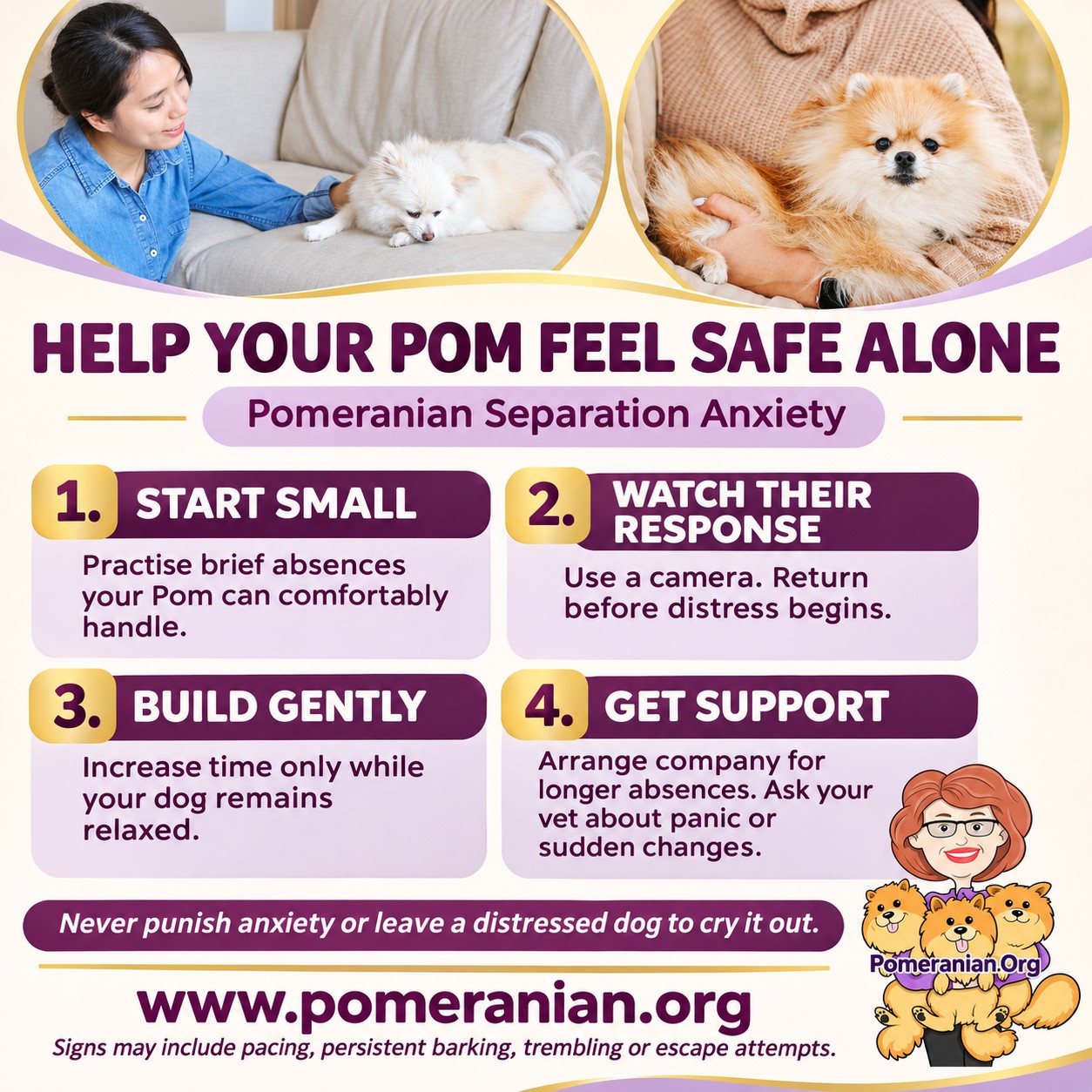
Helping a Pomeranian with separation anxiety means building confidence through manageable experiences. Start with an absence your dog can comfortably handle, even if that is only a few seconds. Progress according to their behaviour rather than a fixed timetable.
1. Create a Comfortable Resting Area
Choose a quiet, comfortably ventilated area with water and a familiar bed. Let your Pom enjoy this space while you are home, so it does not become a signal that you are leaving.
Some dogs prefer a gated room, while others become distressed behind barriers. Use the arrangement in which your dog appears most relaxed. A crate is only suitable if your Pomeranian already rests comfortably inside it; never confine a panicking dog who may injure themselves trying to escape.
2. Encourage Relaxed Activities While You Are Nearby
Give your Pom opportunities to rest on their bed or enjoy a suitable activity without constant interaction. Begin nearby and gently reward relaxed behaviour.
Our guide to toys for Pomeranians can help you choose suitable enrichment. Supervise new toys first and check that they are appropriate before leaving them with your dog.
3. Practise Very Short Separations
Begin with a small movement away, a moment out of sight or a brief step through a doorway—whichever your Pom can manage calmly.
Return before signs of distress appear. If your dog begins pacing, trembling, whining or repeatedly watching the exit, make the next attempt easier. Do not wait for a distressed dog to stop crying before returning.
If even the smallest separation causes anxiety, seek veterinary or qualified behaviour support before continuing.
4. Increase Time Gradually
Once your Pomeranian remains comfortable with a brief absence, try a slightly longer one. Include easier, shorter repetitions too, rather than making every attempt harder.
Use a camera to check their response. Settling, resting and comfortable engagement with an activity are more encouraging than silence alone: a quiet dog can still be anxious.
There is no universal schedule. If distress appears, return to a duration your dog previously managed comfortably and reassess the plan.
5. Keep Departures and Returns Calm
Allow time for a toilet break and suitable activity before leaving. Avoid rushing through your departure routine.
When you return, a gentle greeting is fine. You do not need to withhold affection or ignore your Pom to teach independence. Continue nurturing your bond with your Pomeranian while helping them feel secure during time apart.
6. Arrange Support for Longer Absences
While training progresses, try to arrange company for absences your dog cannot yet manage. A familiar family member, trusted sitter or another suitable care arrangement may help prevent repeated episodes of panic.
Never punish barking, damage or toilet accidents caused by distress. If your Pom panics, attempts to escape or makes little progress, speak with your vet. Some dogs need a tailored behaviour plan and veterinary treatment alongside gradual training.

How Long Can a Pomeranian Be Left Alone?
There is no single number of hours that suits every Pomeranian. Age, health, toilet needs and previous experience all matter. Being physically able to wait for a toilet break does not mean your dog feels comfortable alone for that length of time.
For a Pom with separation anxiety, distress may begin within seconds or minutes. Start with what your dog can comfortably manage, rather than aiming for a general time limit.
Pomeranian Puppies
Puppies need frequent toilet opportunities, meals, supervision and companionship. Introduce time alone gently, beginning with brief separations while their needs are met.
Avoid relying on a puppy’s age in months to calculate how many hours they can be left. Individual needs vary, and bladder control does not measure emotional readiness.
Adult Pomeranians
An adult Pom who has gradually learned to relax alone may manage longer absences than a puppy. However, check their actual behaviour rather than assuming that a quiet house means a comfortable dog.
Use a camera to see whether your Pomeranian rests, changes position comfortably and settles after everyday noises. If you hear repeated vocalising, our guide to Pomeranian barking can help you consider possible triggers.
Senior Pomeranians
Older dogs may need more frequent toilet breaks or extra support because of changes in health, mobility, hearing or vision. A senior Pom who previously coped well may begin struggling with the same routine.
Speak with your vet about new restlessness, confusion, accidents or distress rather than simply increasing alone-time training.
Plan Around Your Dog’s Needs
For longer outings or working days, arrange suitable company and toilet breaks. A familiar sitter or family member may be helpful, particularly while you are addressing Pomeranian separation anxiety.
A comfortable bed and appropriate Pomeranian toys can support a settled dog, but they do not replace companionship, toilet access or treatment for anxiety. Let your Pom’s comfort guide the plan.

Do Toys, Crates or Another Dog Help Pomeranian Separation Anxiety?
A comfortable environment and suitable activities can support your Pomeranian, but they do not replace a gradual training plan or veterinary help when needed. Their usefulness depends on how your individual dog responds.
Can Toys Help an Anxious Pomeranian?
Food puzzles and familiar toys can provide enjoyable activities for dogs who feel comfortable enough to use them. However, a frightened Pom may ignore even a favourite treat after you leave.
Choose toys suited to your dog’s size and chewing habits. Supervise them first, check regularly for damage and avoid leaving anything your Pom could break apart or swallow. Our guide to toys for Pomeranians explains suitable options.
If your dog stops eating or playing as soon as you prepare to leave, make the training easier rather than relying on a more tempting distraction.
Will a Crate Make My Pomeranian Feel Secure?
Some Pomeranians enjoy resting in a familiar crate. Others become more distressed when confined, particularly during an absence.
A crate should never be used to contain a panicking dog who is trying to escape. Watch for frantic scratching, biting the bars, heavy panting or repeated attempts to get out.
If your Pom already relaxes in a crate, our guide to choosing the right Pomeranian crate size can help you assess comfort and fit. Correct sizing alone, however, will not resolve anxiety about confinement or separation.
Will Getting Another Dog Solve Separation Anxiety?
Another dog may provide companionship, but it is not a dependable treatment for Pomeranian separation anxiety. A dog distressed by a particular person’s absence may remain anxious even with another pet nearby.
Only bring home another dog if you want and can care for that dog independently of the anxiety problem. Avoid making the decision on the assumption that a companion will cure it.
What About Music or Familiar Bedding?
Familiar bedding and quiet background sound may help some Poms settle. Others prefer a quieter environment, so observe your dog’s response rather than assuming one setup suits everyone.
Keep bedding safe and avoid leaving clothing your Pom might shred or swallow. The aim is a comfortable space where your dog can relax, supported by training that progresses at their pace.

When to Seek Veterinary Help for Pomeranian Separation Anxiety
You do not have to wait until separation anxiety becomes severe before asking for help. Speak with your vet if your Pomeranian struggles with brief absences, becomes increasingly distressed or makes little progress with gentle training.
Arrange a veterinary appointment if your Pom:
- Suddenly becomes anxious after previously coping comfortably alone.
- Repeatedly pants, drools, trembles or cannot settle during your absence.
- Scratches or bites at exits, attempts to escape or injures themselves.
- Develops changes in toileting, appetite, drinking, sleep or mobility.
- Becomes distressed even during very short separations.
If your dog is injured or in immediate danger, seek prompt veterinary care.
Take Recordings and Notes
Short video recordings can help your vet understand what happens when you leave. Note how soon the behaviour begins, whether your dog settles and any recent changes in routine or health.
Explain whether the behaviour also happens while you are home. For example, Pomeranian barking triggered by outdoor activity may need a different approach from distress caused by separation.
Can Medication Help?
For some dogs, vet-prescribed medication can reduce anxiety and make it easier to benefit from gradual training. Medication may be part of an appropriate treatment plan, rather than something to consider only after everything else has failed.
Your vet can assess your Pomeranian’s health, discuss potential benefits and side effects, and monitor their response. Avoid giving human medicines or calming supplements without veterinary guidance.
Getting Behaviour Support
Your vet may recommend a veterinary behaviourist or a suitably qualified behaviour professional who uses reward-based methods and has experience with separation anxiety.
A tailored plan can help you choose a comfortable starting point, manage unavoidable absences and recognise when to adjust training. The aim is steady improvement in your Pom’s wellbeing, rather than pushing them through distress.
Pomeranian Separation Anxiety FAQs
Can Pomeranian separation anxiety be prevented?
Gradually introducing comfortable time alone may help your puppy develop confidence, but it cannot guarantee prevention. Meet their needs first, begin with brief separations and adjust according to their response. Avoid leaving a distressed puppy to cry until they give up.
Does sleeping on my bed cause separation anxiety?
Sharing your bed does not establish the cause of separation anxiety. Focus on whether your Pomeranian can relax during time apart, rather than assuming sleeping arrangements are responsible. You can enjoy a close bond with your Pomeranian while encouraging comfortable, independent rest.
Should I ignore my Pomeranian when I come home?
A calm, gentle greeting is fine. You do not need to withhold affection to teach your Pom to cope alone. Pay more attention to their behaviour during your absence than to an excited greeting when you return.
Will my Pomeranian grow out of separation anxiety?
Do not assume that distress will disappear with age. Puppies need support as they learn to feel secure alone, and persistent or worsening anxiety deserves veterinary advice. Early support can help you avoid repeatedly exposing your dog to situations they cannot manage.
Can separation anxiety cause toilet accidents?
Yes, separation-related distress can be associated with toilet accidents. However, incomplete toilet training, an absence that exceeds your dog’s needs or a medical problem may also be responsible. Speak with your vet about new or unexplained accidents, and never punish your Pom for them.
Do bark collars help Pomeranian separation anxiety?
Bark collars do not address the anxiety causing the barking, and aversive methods can increase distress. First establish why your dog is vocalising. Our guide to Pomeranian barking explains common triggers and gentler ways to help.
How long does it take to improve separation anxiety in Pomeranians?
There is no fixed timetable. Progress depends on your dog’s needs, the severity of their distress and how comfortably absences can be managed during treatment. Some dogs need months of gradual work and professional support. Measure progress by relaxed behaviour, rather than increasing time alone at every session.
Helping Your Pomeranian Feel Secure
Pomeranian separation anxiety takes patience, understanding and support suited to your dog. Begin with comfortable, brief absences, watch for signs of distress and progress at your Pom’s pace. Seek veterinary guidance if they struggle. The goal is to help your Pomeranian feel safe and relaxed when you cannot be together.
⚠ Veterinary Disclaimer
The information provided in this article is intended for educational and general informational purposes only and is not a substitute for professional veterinary advice, diagnosis, or treatment.
Always seek the advice of your veterinarian or another qualified animal health professional with any questions you may have regarding your dog’s health or medical condition.
Never ignore professional veterinary advice or delay seeking treatment because of something you have read on this or any other website.
If your Pomeranian is showing signs of illness, discomfort, skin irritation, or an adverse reaction to medication or treatment, contact your veterinarian promptly.
Copyright Pomeranian.org. All Rights Reserved.
📚 References & Further Reading
- [1] AKC Pomeranian Breed Standard (2011)
- [2] English Kennel Club Breed Standard
- [3] The Pomeranian Handbook – Denise Leo
- [4] Denlinger, The Complete Pomeranian
- [5] Kimbering, 1891–1991
- [6] Taplin, The Sportsman’s Cabinet
- [7] Parker, The Popular Pomeranian
- [8] Ives, Show Pomeranians