
Choosing between a Pomeranian and a Maltese can be difficult. Both are affectionate little companion dogs, but their coats, personalities, grooming needs and everyday behavior are quite different.
I’m Denise Leo, a Pomeranian breeder, exhibitor, judge and published author with more than 50 years of hands-on experience with the breed. This comparison draws on that experience to explain what living with a Pomeranian is really like while providing a balanced look at how the breed differs from the Maltese.
In this detailed Pomeranian vs Maltese comparison, we will look at size, appearance, temperament, shedding, grooming, exercise, training, barking, health and lifespan. I will also explain what prospective owners should know about the Pomeranian Maltese puppy, commonly called a Maltipom.
By understanding the similarities and differences between the Maltese and Pomeranian, you can decide which small dog is the better match for your home and lifestyle.
Pomeranian or Maltese: Quick Answer
Choose a Pomeranian if you prefer a bold, animated and outgoing little dog with a fluffy double coat. Pomeranians are intelligent, alert and deeply devoted to their owners, but they shed and can be vocal.
Choose a Maltese if you prefer a gentle companion with a long, silky white coat that sheds very little. The Maltese coat still requires frequent brushing, bathing and trimming to prevent tangles and staining.
Neither breed is automatically better. The right choice depends on your lifestyle, grooming commitment and the type of personality you enjoy living with.
Maltese vs Pomeranian Comparison at a Glance
Although the Pomeranian and Maltese are both affectionate toy breeds, they differ considerably in coat type, shedding, appearance and personality. This quick Maltese vs Pomeranian comparison highlights the main differences prospective owners should consider.
A Maltese or Pomeranian can thrive in a small home or apartment when given sufficient companionship, training and appropriate daily activity. Individual temperament, responsible breeding and early socialization are just as important as breed when choosing a puppy.
Pomeranian vs Maltese Size and Appearance
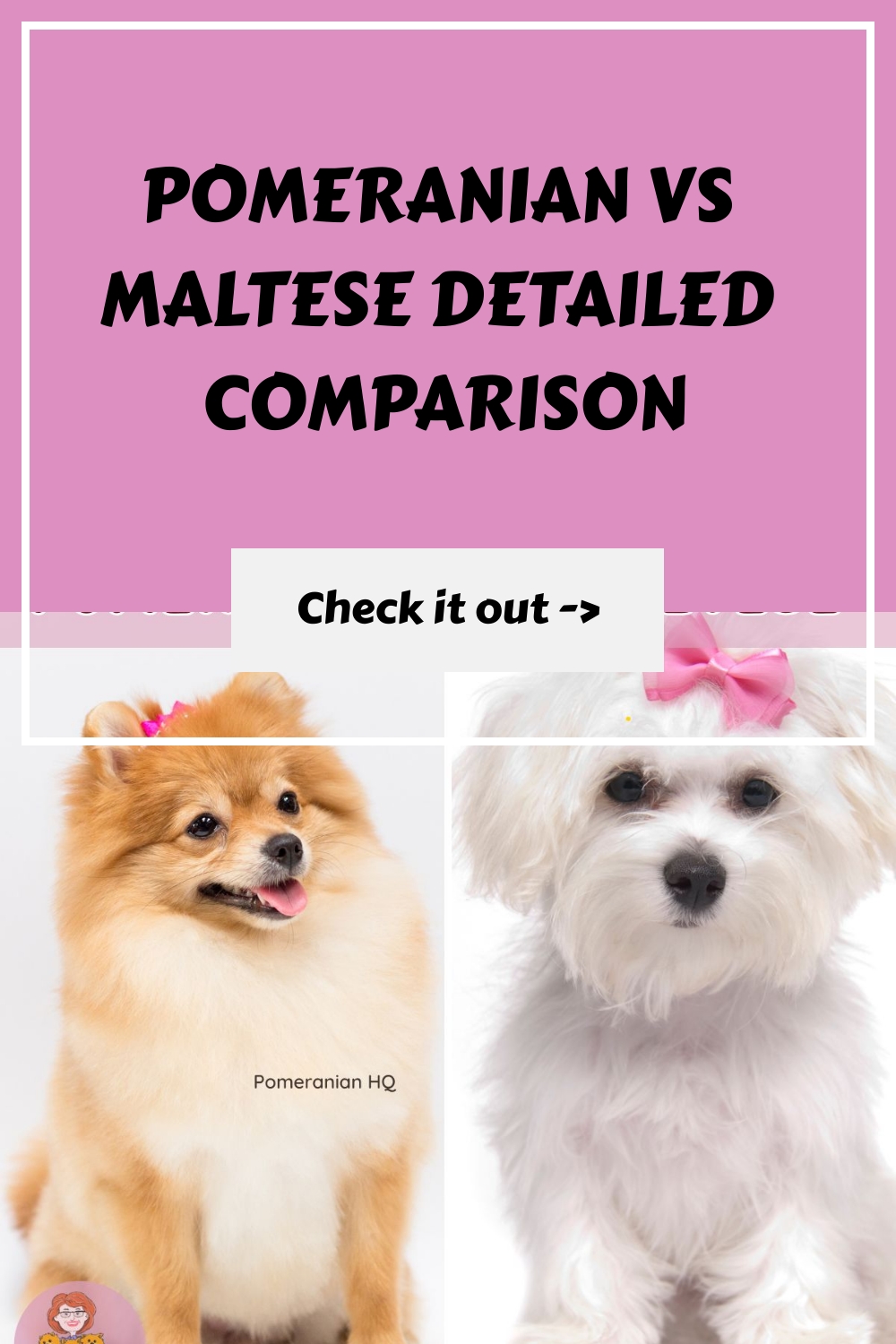
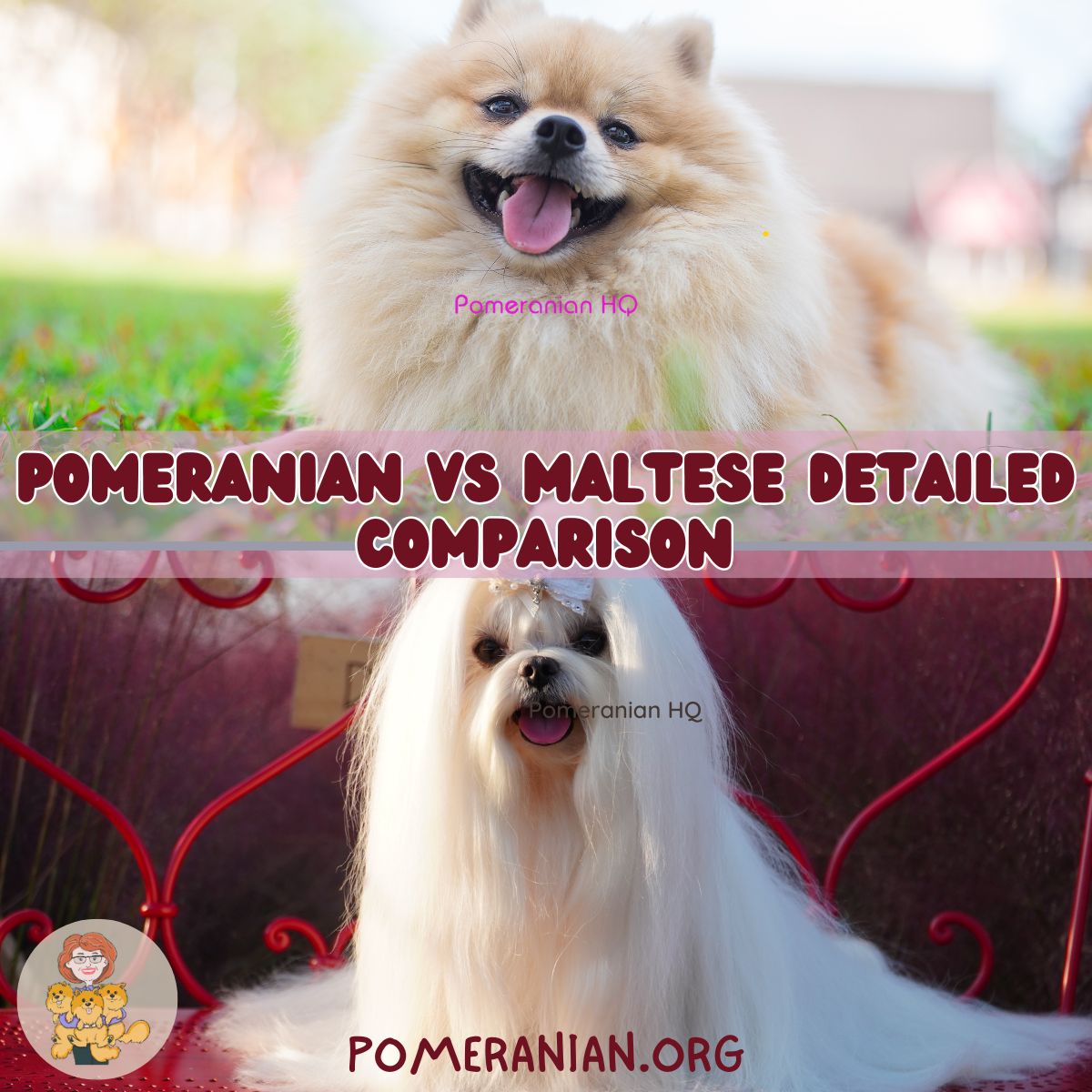
The Pomeranian and Maltese are both Toy breeds, but they have distinctly different appearances. An adult Pomeranian weighs between 3 and 7 pounds. An adult Maltese should weigh under 7 pounds, with 4 to 6 pounds preferred. Therefore, there is no simple answer to whether a Maltese or Pomeranian is smaller because both breeds can be similar in weight.
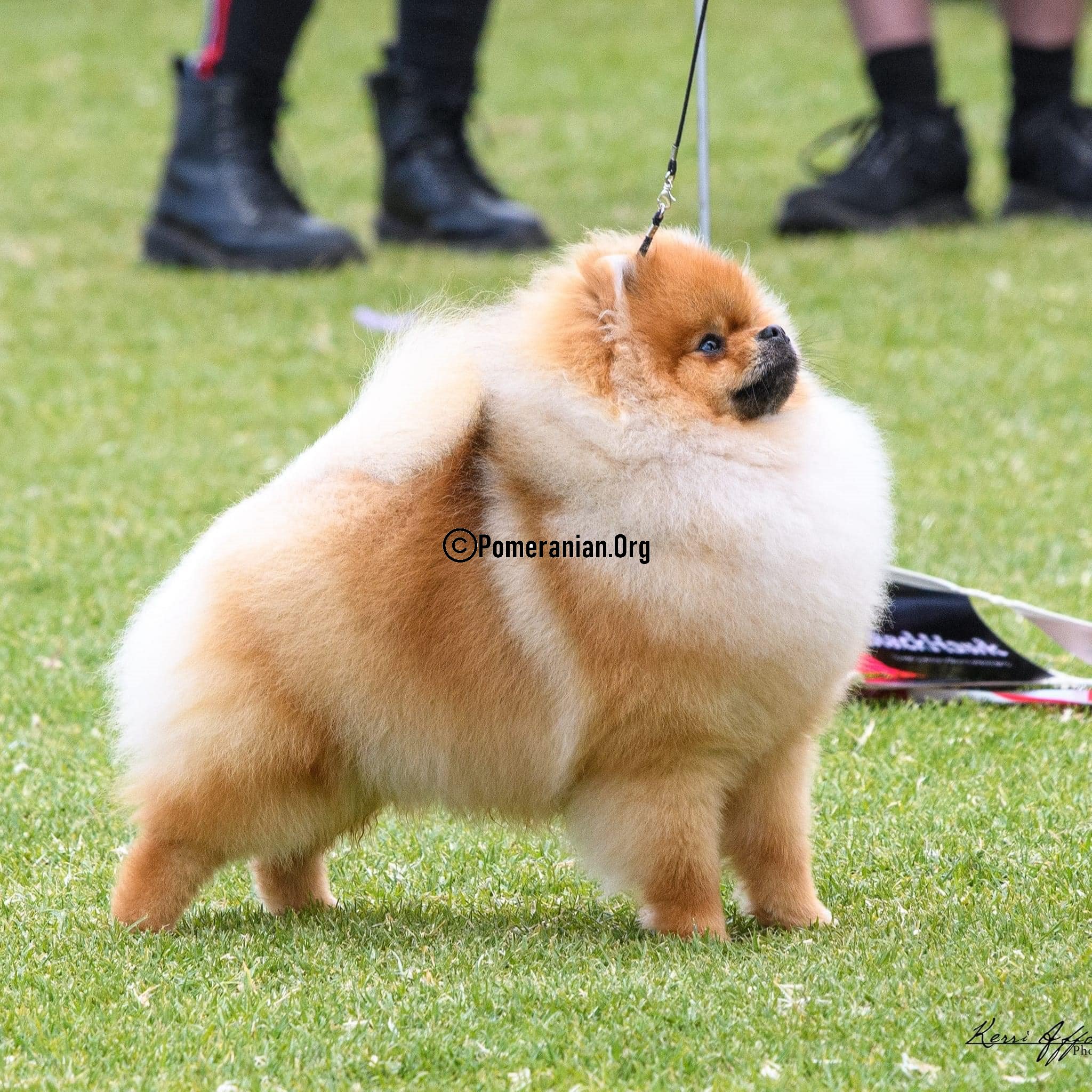
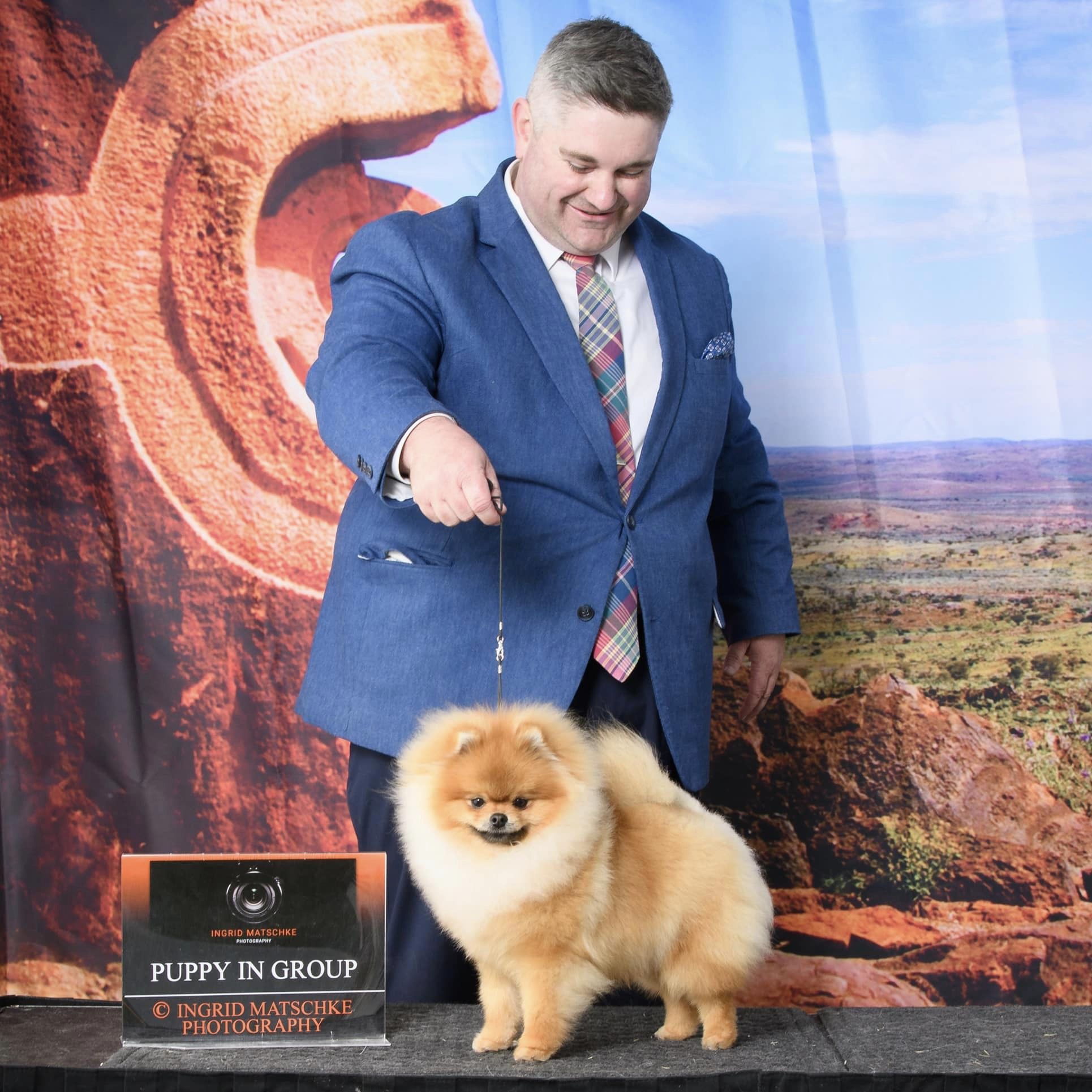
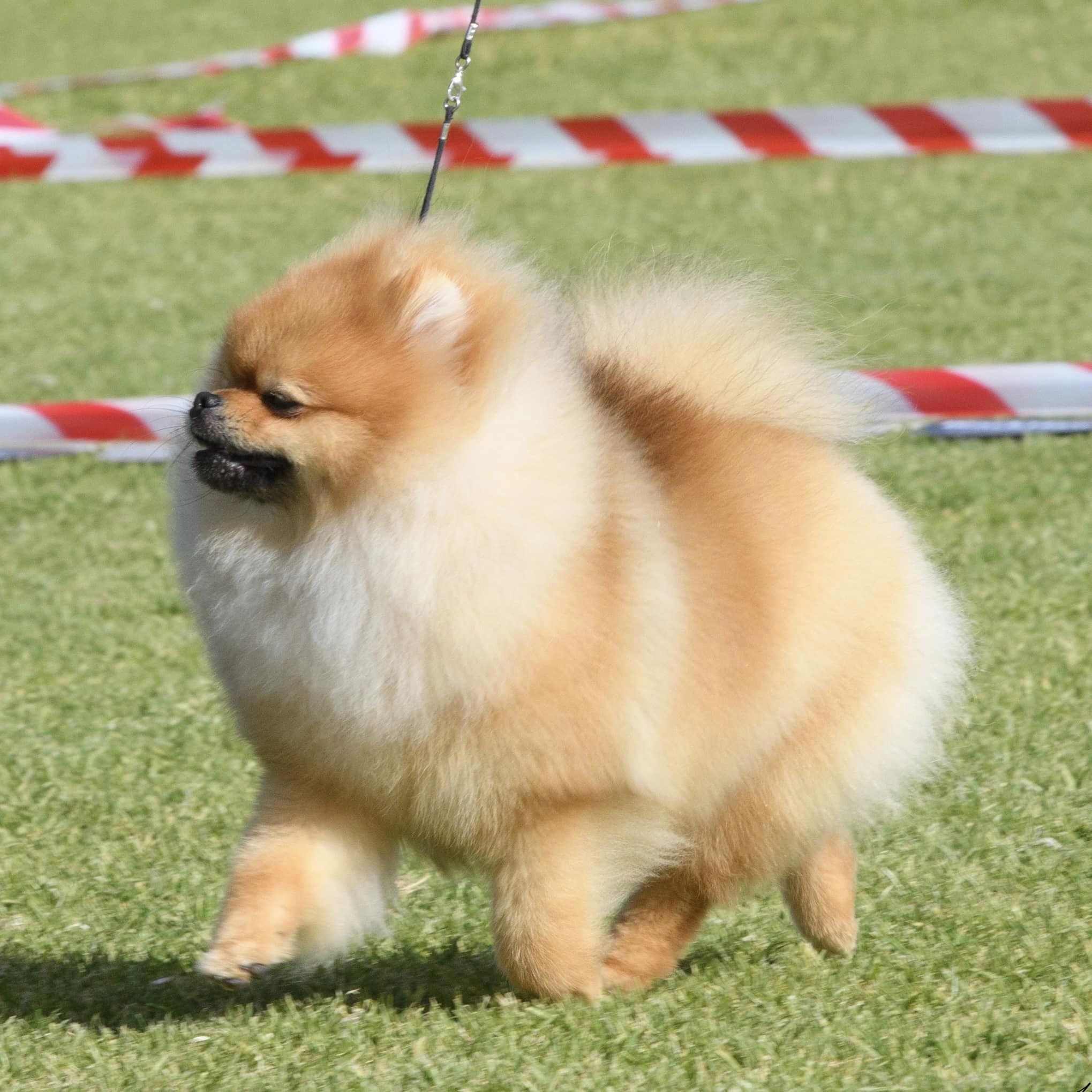
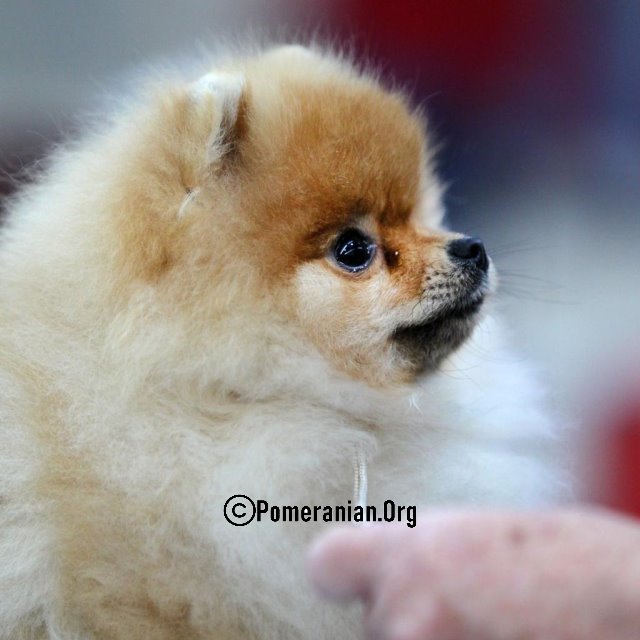
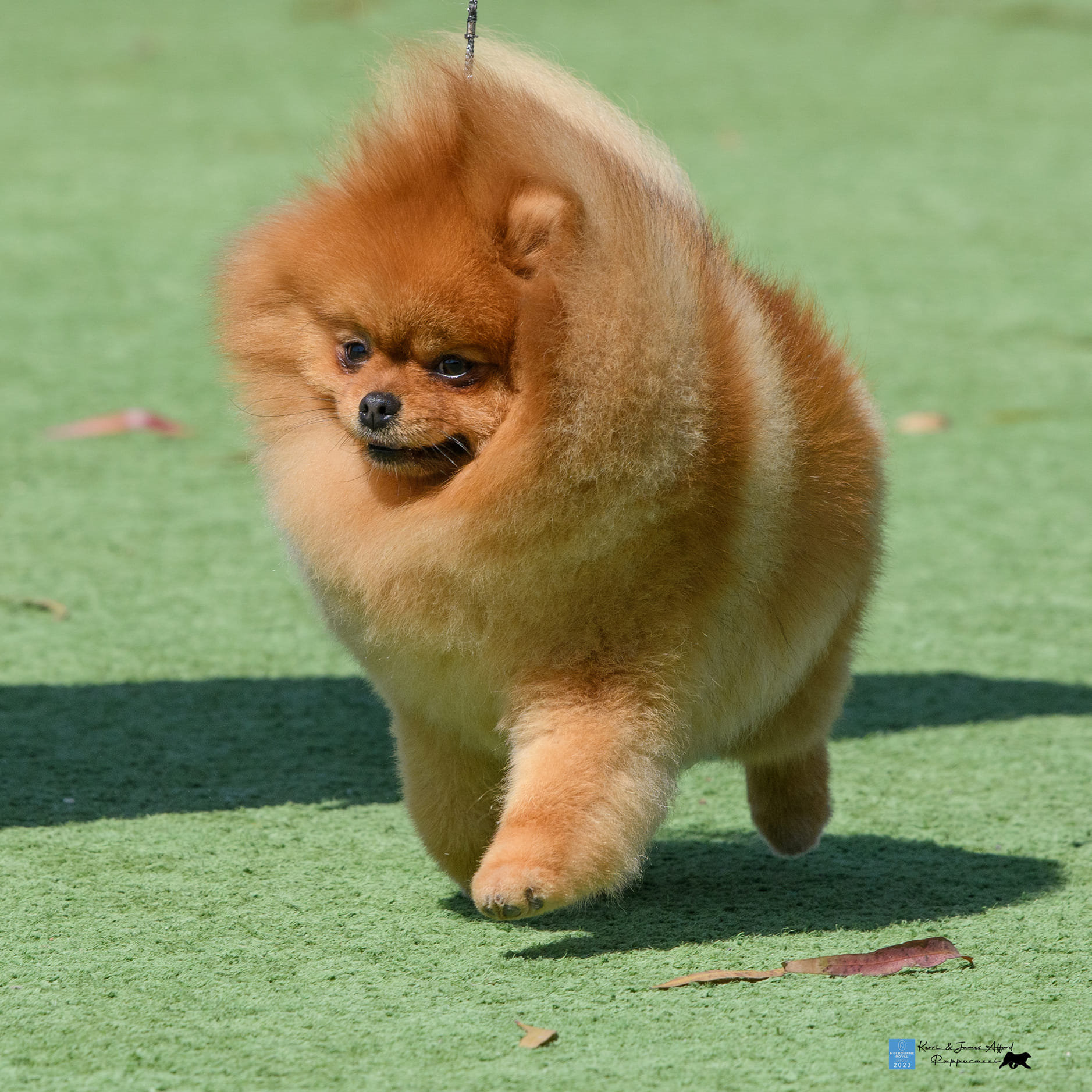
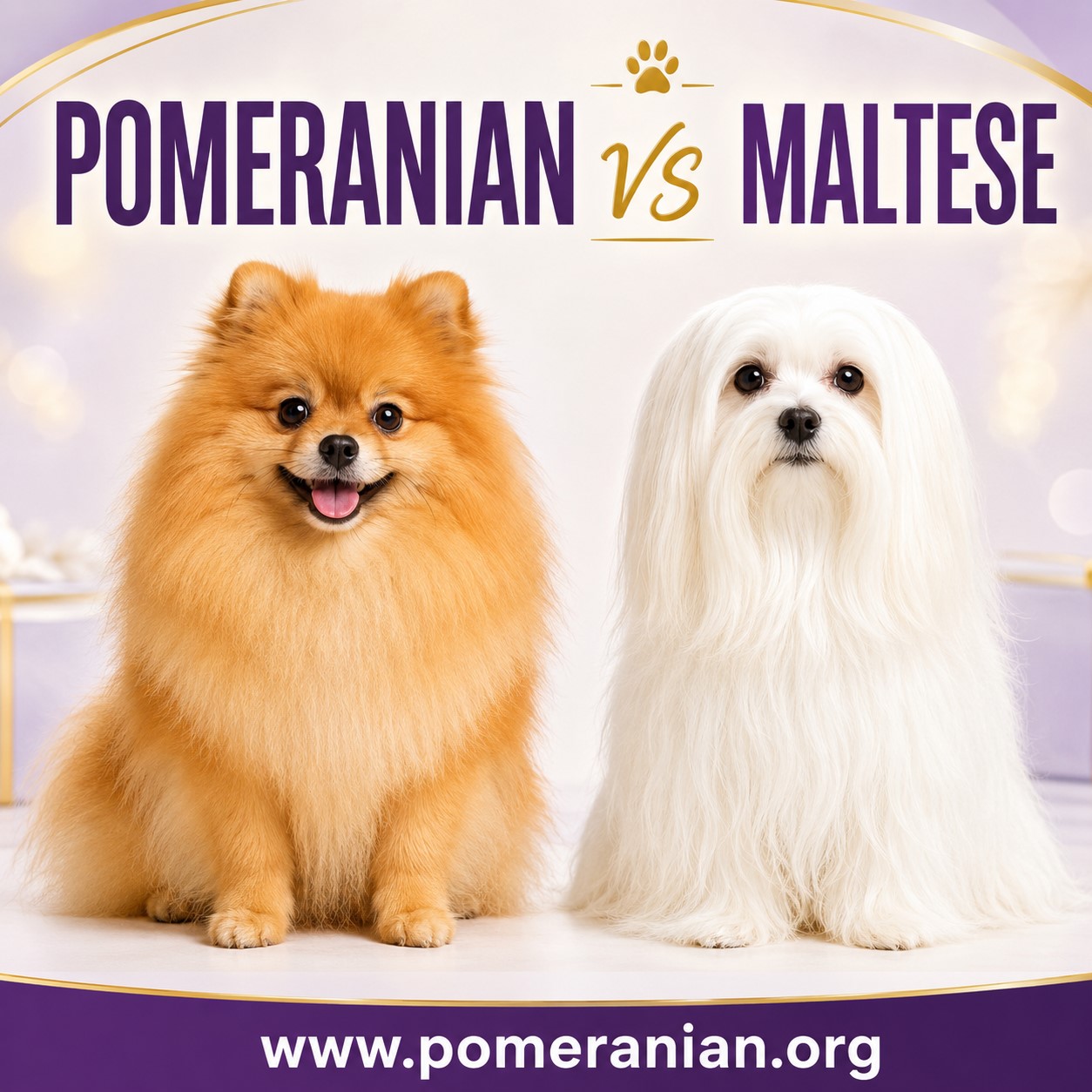
The Pomeranian is a compact, short-backed Spitz breed with small erect ears, a fox-like expression and a profuse double coat. Its thick neck ruff and heavily plumed tail create its distinctive outline. Correct tail carriage is an important Pomeranian breed characteristic, with the high-set tail carried flat over the back.
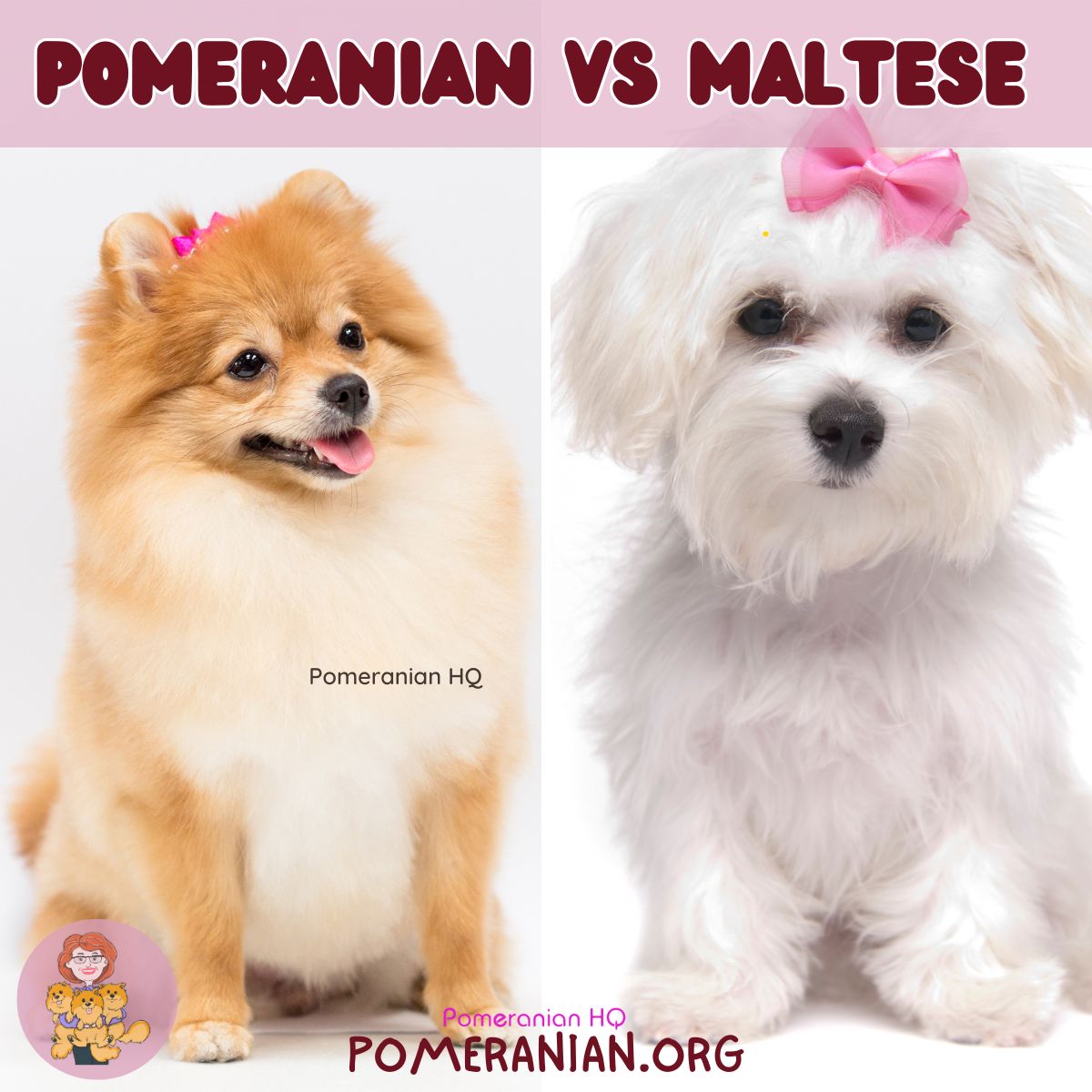
The Maltese has hanging ears, dark eyes, a black nose and a long, straight, silky white coat. Unlike the Pomeranian’s dense stand-off coat, the Maltese has a single coat that falls close to the body. Its tail is carried over the back and covered with long, flowing hair.
When comparing a Maltese and Pomeranian side by side, the clearest differences are their coats, ears and overall outlines. These features also help distinguish the two pure breeds from a Pomeranian Maltese dog or mixed-breed puppy.

Pomeranian vs Maltese Coat, Grooming and Shedding
One of the greatest differences between a Pomeranian and Maltese is the type of coat each breed possesses. The Pomeranian has a profuse double coat consisting of a soft, dense undercoat and a longer, harsher outer coat. The Maltese has a long, straight, silky single coat without the dense undercoat found on a Pomeranian.
Pomeranians shed throughout the year and may lose considerably more undercoat during seasonal coat changes. Females can also experience substantial coat loss after a season or raising a litter. Regular brushing removes loose undercoat, prevents tangles and helps maintain the correct stand-off texture of the coat.
The Maltese sheds very little, but this does not mean its coat requires less attention. Loose hairs can remain trapped within the long coat, where they contribute to knots and mats. A Maltese kept in a full coat requires frequent brushing and bathing, as well as regular care around the eyes and mouth to reduce staining.
Both Maltese and Pomeranian dogs require consistent grooming, although for different reasons. A Pomeranian needs careful brushing to maintain its thick double coat, while a Maltese needs frequent attention to keep its silky coat clean and free from tangles. Owners who prefer a shorter Maltese trim must also allow for regular professional clipping.
A Maltese may be more suitable for someone concerned about loose dog hair around the home, but no dog can be guaranteed to be completely hypoallergenic. When choosing a Maltese or Pomeranian, consider whether you would rather manage shedding or maintain a continuously growing silky coat.
Maltese vs Pomeranian Temperament and Personality
The Maltese and Pomeranian are both affectionate companion dogs that form close relationships with their owners. However, their typical personalities can feel quite different within the home.
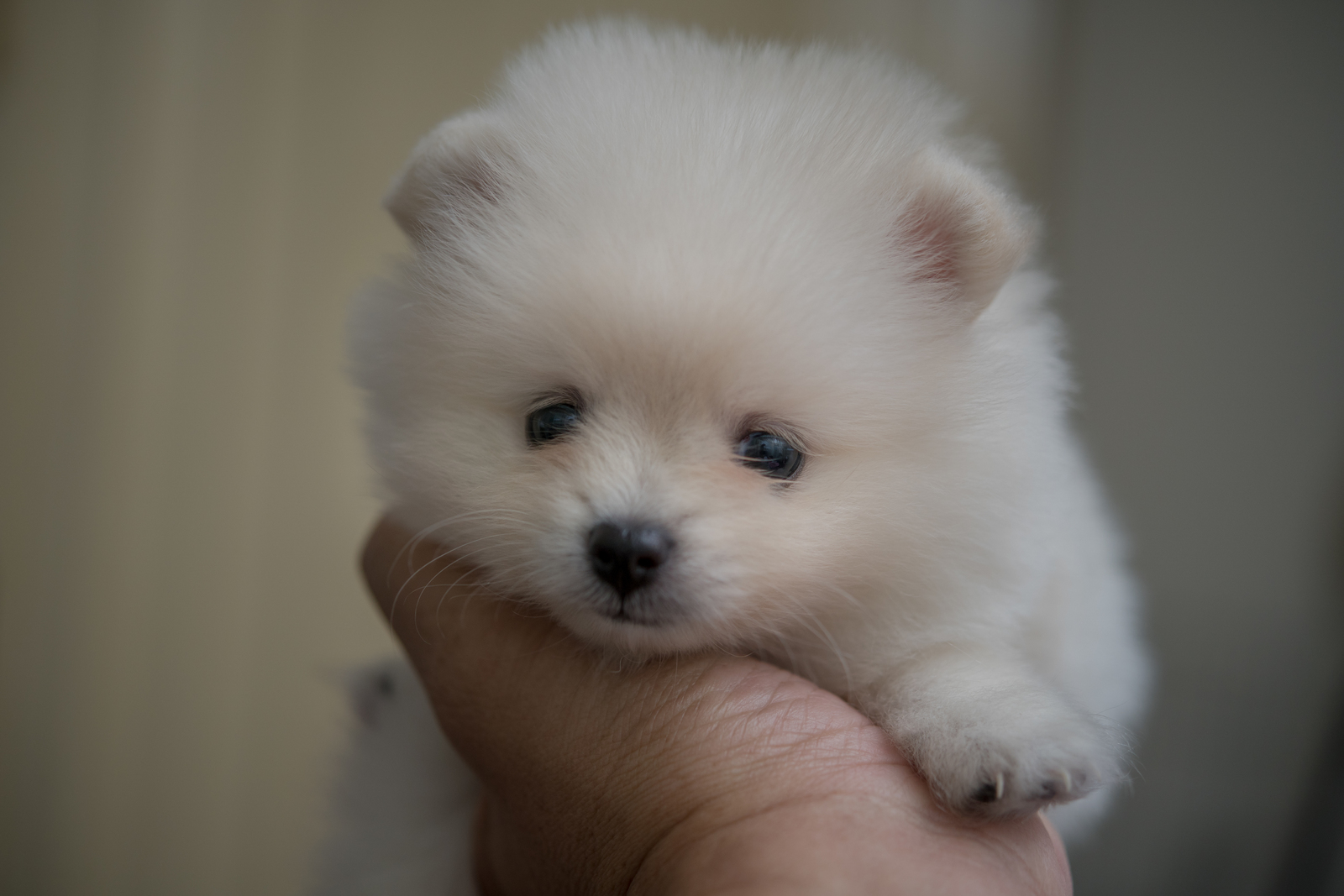
A Pomeranian is usually bold, alert, curious and highly expressive. Despite its small size, a well-bred Pomeranian should not appear timid or fragile. Pomeranians enjoy being involved in family activities and often behave as though they are much larger dogs. Their alert nature also makes them effective little watchdogs.
The Maltese is lively, affectionate and strongly people-oriented. Many enjoy sitting close to their owners, but they are not merely quiet lapdogs. A Maltese can be playful, confident and surprisingly spirited. Like a Pomeranian, the breed thrives on attention and companionship.
When deciding between a Pomeranian or Maltese, consider the type of personality you enjoy. A Pomeranian may suit someone who appreciates a confident, animated and entertaining dog. A Maltese may appeal to someone wanting an affectionate companion with a softer manner.
Breed tendencies provide useful guidance, but they do not guarantee the personality of an individual puppy. Genetics, responsible breeding, early socialization, training and life experiences all influence the temperament of both Maltese and Pomeranian dogs.
Do Pomeranians or Maltese Bark More?
Both Pomeranians and Maltese can be vocal, but Pomeranians are generally more inclined to bark in response to unfamiliar sounds, visitors or activity around the home. Their alert Spitz nature makes them quick to notice changes in their surroundings and announce them.
A Maltese may also bark at noises, visitors or when seeking attention. Some Maltese dogs develop excessive barking when bored, anxious or left alone for long periods. Therefore, choosing a Maltese instead of a Pomeranian does not guarantee a quiet dog.
Barking habits are influenced by genetics, socialization, training and the home environment. Owners should begin teaching calm behavior while their Pomeranian or Maltese puppy is young. Rewarding quiet behavior and preventing repeated uncontrolled barking is more effective than shouting, which can make an excited little dog even noisier.
When comparing Pomeranian vs Maltese barking, the Pomeranian is more naturally alert and often more vocal. However, either breed can become a persistent barker without sufficient companionship, activity and consistent training.
Pomeranian vs Maltese Training and Intelligence
Both the Pomeranian and Maltese are intelligent little dogs capable of learning household rules, basic commands and entertaining tricks. Their small size should never be used as an excuse to overlook training. A well-trained toy dog is safer, more confident and more enjoyable to live with.
Pomeranians are alert, quick learners and often eager to participate. However, their confidence and independent nature mean owners must be patient and consistent. Short, enjoyable training sessions using praise and rewards usually produce the best results.
Maltese dogs are responsive and enjoy interaction with their owners. They generally respond well to gentle, reward-based training but may lose confidence if treated harshly. Consistent expectations are essential because an intelligent Maltese can quickly learn which household rules are not enforced.
House training can require patience with both Maltese and Pomeranian puppies. Toy breeds have small bladders and need frequent opportunities to toilet, particularly after waking, eating and playing. A predictable routine, close supervision and immediate praise for toileting in the correct place will help establish good habits.
When comparing Maltese vs Pomeranian training, neither breed is automatically easier. Success depends largely on the individual puppy, the breeder’s early work and the owner’s consistency. Begin training as soon as the puppy enters your home and ensure every family member follows the same rules.
Pomeranian vs Maltese Exercise Needs
Pomeranians and Maltese are small companion dogs, but both need daily exercise to remain physically healthy and mentally content. Neither breed should be expected to spend every day being carried or sitting on someone’s lap.
A Pomeranian is typically lively, curious and ready to participate in household activities. Short walks, supervised play and mentally stimulating games usually provide suitable daily exercise. Many Pomeranians also enjoy learning tricks and participating in activities such as obedience and agility.
The Maltese is also playful and active, although its exercise needs can usually be met through short walks and regular play. Maltese dogs often enjoy following their owners around the home and being included in everyday activities.
When comparing Pomeranian vs Maltese exercise requirements, there is usually little difference in the amount of formal exercise needed. Individual age, health and personality are more important than breed alone.
Care must be taken with both Maltese and Pomeranian puppies because their small bodies can be injured by rough handling, high jumps or strenuous exercise. Several short periods of age-appropriate activity are safer than one long, exhausting walk. Mental stimulation and companionship are just as important as physical exercise for both breeds.
Are Pomeranians or Maltese Better for Families?
A Pomeranian or Maltese can be a loving family companion when matched with the right household. Both breeds enjoy human company and generally prefer being included in everyday family life rather than being left alone for long periods.
Because both breeds are very small, they are usually better suited to families with older children who understand how to handle a dog gently. Young children may unintentionally drop, step on or injure a tiny puppy. All interactions between children and a Pomeranian or Maltese should be closely supervised.
Pomeranians can be confident and outgoing, but they may object to rough handling or being continually picked up. Maltese dogs can also become nervous or defensive when overwhelmed. Children should be taught to sit on the floor when holding a puppy and to leave the dog undisturbed while it is sleeping or eating.
Both Maltese and Pomeranian dogs can live successfully with other dogs and cats when they are introduced carefully and socialized from an early age. The personality, age and sex of each animal should be considered rather than assuming that every dog of either breed will be compatible.
When choosing a Pomeranian or Maltese for a family, look for a healthy, well-socialized puppy from a knowledgeable breeder. The individual puppy’s temperament and the family’s ability to provide safe handling, training and companionship are more important than choosing one breed solely because it is believed to be better with children.
Maltese or Pomeranian for Apartment Living
Both the Maltese and Pomeranian can adapt well to apartment living because they are small and do not require a large yard. However, size alone does not make either breed effortless to manage in a smaller home.
A Pomeranian is active indoors and usually receives some exercise by following its owner and investigating everything happening around the home. The main consideration for apartment owners is barking. Pomeranians are naturally alert and may react to neighbors, elevators, doors and unfamiliar noises unless calm behavior is taught early.
A Maltese also suits apartment living but may bark at noises or become unsettled when left alone. This affectionate breed forms strong bonds with its family and requires companionship, daily interaction and regular opportunities for play and exercise.
Neither a Maltese nor Pomeranian should be left alone for excessively long periods every day. Boredom, loneliness and insufficient mental stimulation can contribute to barking, anxiety and destructive behavior in either breed.
When choosing a Maltese or Pomeranian for an apartment, consider the dog’s individual temperament and your daily routine. With suitable training, companionship and exercise, both breeds can become excellent apartment dogs.
Pomeranian vs Maltese Health and Lifespan
Both the Pomeranian and Maltese are generally long-lived toy breeds. The average Pomeranian lifespan is approximately 12 to 16 years, while the Maltese lifespan is around 12 to 15 years. Individual longevity depends on genetics, responsible breeding, nutrition, veterinary care and maintaining a healthy weight. American Kennel Club: Pomeranian and American Kennel Club: Maltese
Pomeranians can be affected by health concerns such as luxating patellas, dental disease, collapsing trachea, heart problems and some coat-loss conditions. Maltese health concerns can include luxating patellas, dental disease, eye problems, heart conditions and liver disorders.
Both Maltese and Pomeranian puppies require careful handling because their small bones can be injured by falls, rough play or jumping from furniture. Regular dental care is also particularly important because crowded teeth can contribute to plaque buildup and gum disease in small dogs.
Prospective owners should ask breeders about the health and longevity found throughout the puppy’s pedigree, not merely whether its parents appear healthy. Appropriate health screening, knowledge of inherited weaknesses and avoiding combinations that may double up on known problems are important parts of responsible breeding.
When comparing Maltese vs Pomeranian health, neither breed can be declared healthier in every situation. A well-bred puppy from healthy, long-lived bloodlines provides a better foundation than choosing between the two breeds based only on general health lists.
Pomeranian vs Maltese Puppy Prices
The price of Pomeranian and Maltese puppies varies considerably according to the breeder, location, pedigree and quality of the breeding program. There is no reliable worldwide price that applies to either breed, and the cheapest puppy is rarely the least expensive choice in the long term.
A carefully bred Pomeranian puppy may cost more when its breeder has invested in imported bloodlines, showing, health screening, DNA profiling, veterinary care and the long-term development of a sound breeding program. Coat color, sex and demand can also affect advertised prices, although these factors should never be considered more important than health, temperament and breed quality.
The price of a Maltese puppy is influenced by many of the same considerations, including pedigree, breeder reputation, health testing and the care provided before the puppy leaves for its new home.
When comparing Maltese vs Pomeranian prices, prospective owners should ask what is included. Registration, vaccination, microchipping, veterinary examination, parasite treatment, breeder support and written information all have value.
Avoid advertisements promoting unusually tiny “teacup” Maltese or Pomeranian puppies at inflated prices. Neither breed has a separate teacup variety. Extremely small puppies may be more fragile and should not be valued simply because they are smaller than the recognized breed standard.
Whether you choose a Pomeranian or Maltese, purchase from a knowledgeable breeder who places the puppy’s health, temperament and future welfare ahead of making a quick sale.
Pomeranian Maltese Mix: What Is a Maltipom?
A Pomeranian Maltese mix is produced by crossing a Pomeranian with a Maltese. This mixed-breed dog is commonly called a Maltipom, although terms such as Pom Maltese, Maltese Pomeranian and Pomeranian Maltese dog are also used.
A Pomeranian Maltese puppy may inherit characteristics from either parent in any combination. Some puppies develop a fluffy coat resembling the Pomeranian, while others have a softer, silkier coat closer to that of the Maltese. Adult size, shedding, temperament and grooming requirements can also vary—even among puppies from the same litter.
Crossing a Maltese and Pomeranian does not guarantee that the puppies will inherit only the best qualities of both breeds. A puppy could inherit the Pomeranian’s dense undercoat, the Maltese coat’s tendency to tangle, or a combination of both. The amount of shedding cannot be predicted with certainty, and a Pomeranian mix Maltese should not automatically be described as hypoallergenic.
A Pomeranian and Maltese mix may be lively, affectionate, intelligent and strongly attached to its family. However, temperament is influenced by the parents, early socialization, training and the environment in which the puppy is raised.
Both parents should receive the health screening appropriate for their respective breeds before producing Pomeranian and Maltese puppies. Mixing two breeds does not automatically eliminate inherited health problems. A Maltipom could potentially inherit conditions found in either the Pomeranian or Maltese bloodline.
The Maltipom is a mixed-breed dog rather than a separately recognized pure breed. Anyone considering a Pomeranian Maltese puppy should research both parent breeds and be prepared for a dog whose adult appearance and characteristics may be less predictable than those of a carefully bred purebred puppy.
Pomeranian and Maltese Breed History
The Pomeranian and Maltese are both historic companion dogs, but they developed from very different canine families.
The Pomeranian descends from larger Spitz-type dogs associated with northern Europe. The breed takes its name from Pomerania, a region that now forms part of Germany and Poland. Selective breeding gradually reduced the dogs in size while preserving their Spitz characteristics, including erect ears, a dense double coat and a heavily plumed tail.
Queen Victoria played an important role in increasing the Pomeranian’s popularity during the nineteenth century. Her interest in smaller Pomeranians influenced breeding trends and helped transform the breed into the compact Toy dog recognized today.
The Maltese has a much older association with the central Mediterranean region. Small white companion dogs resembling the Maltese appeared in ancient art and writings, although the precise relationship between those early dogs and the modern breed is not always clear.
For centuries, Maltese dogs were valued as companions by wealthy and aristocratic families. Breeding concentrated on producing a small, affectionate dog distinguished by its long, straight, silky white coat.
The histories of the Maltese and Pomeranian help explain their differences today. The Pomeranian retains the alertness, confidence and coat of its Spitz ancestors, while the Maltese was developed primarily as an elegant and devoted companion dog.
Maltese or Pomeranian: Which Is Better for You?
Choosing between a Maltese or Pomeranian depends on the type of companion you prefer and the coat care you are prepared to provide. Both breeds are affectionate, intelligent and suitable for smaller homes, but their personalities and grooming needs are noticeably different.
A Pomeranian may be the better choice if you enjoy a bold, animated and highly expressive little dog. Pomeranians are alert, curious and eager to be involved in whatever their owners are doing. They suit people who appreciate the impressive appearance of a profuse double coat and are prepared for regular brushing and shedding.
A Maltese may be the better choice if you prefer an affectionate, people-oriented companion with a silky, low-shedding coat. However, low shedding does not mean low maintenance. The fine Maltese coat requires frequent brushing and bathing or regular professional trimming when kept short.
Both Maltese and Pomeranian dogs need companionship, training, exercise and careful handling. Neither should be selected solely because it is small, attractive or assumed to be an undemanding lapdog.
When making the final Pomeranian vs Maltese decision, spend time with well-bred adult dogs if possible. Consider their temperament, coat care and how comfortably each breed fits your daily routine. The better breed is the one whose needs and natural characteristics most closely match the home you can provide.
Pomeranian vs Maltese FAQ
Which Is Better, a Maltese or Pomeranian?
Neither breed is better for every owner. A Pomeranian may suit someone who enjoys a bold, animated and expressive dog. A Maltese may suit someone who prefers an affectionate companion with a silky, low-shedding coat. The best choice depends on your lifestyle and grooming preferences.
Which Is Smaller, a Pomeranian or Maltese?
The breeds are similar in size. Pomeranians weigh between 3 and 7 pounds, while Maltese should weigh under 7 pounds, with 4 to 6 pounds preferred. Individual dogs from either breed may be smaller or larger than one another.
Do Pomeranians or Maltese Shed More?
Pomeranians shed more because they have a dense double coat. Maltese dogs have a single coat and shed very little, but their long, silky hair requires frequent brushing to prevent tangles and mats.
Which Is Easier to Groom, a Maltese or Pomeranian?
Neither breed has a genuinely low-maintenance coat. A Pomeranian requires regular brushing and coat care to manage its dense undercoat. A Maltese requires frequent brushing, bathing and facial care or regular professional trimming when kept in a shorter style.
Which Barks More, a Pomeranian or Maltese?
Pomeranians are generally more naturally alert and may be more inclined to bark at sounds, visitors or activity around the home. Maltese dogs can also become vocal, particularly when bored, anxious or seeking attention. Early training is important for both breeds.
Can a Pomeranian and Maltese Live Together?
A Pomeranian and Maltese can live happily together when their personalities are compatible and introductions are handled carefully. Age, sex, socialization and individual temperament are more important than breed alone.
What Is a Pomeranian Maltese Puppy Called?
A Pomeranian Maltese puppy is commonly called a Maltipom. Other names include Maltese Pomeranian, Pom Maltese and Pomeranian Maltese mix. It is a mixed-breed dog rather than a separately recognized pure breed.
Is a Pomeranian Maltese Mix Hypoallergenic?
A Pomeranian mix Maltese cannot be guaranteed to be hypoallergenic. The puppy may inherit the low-shedding Maltese coat, the shedding double coat of the Pomeranian or a combination of both. No breeder can predict the adult coat with certainty.
How Long Do Maltese and Pomeranians Live?
The average Pomeranian lifespan is approximately 12 to 16 years. The average Maltese lifespan is around 12 to 15 years. Genetics, responsible breeding, nutrition, weight and veterinary care can all affect longevity.
Are Maltese or Pomeranians Better With Children?
Either breed can live successfully with considerate older children. Both are very small and can be injured by rough handling, falls or accidental kicks. Close adult supervision is essential, particularly around young children.
Pomeranian vs Maltese Conclusion
Choosing between a Pomeranian or Maltese depends on your lifestyle and the type of companion you prefer. Both are affectionate, intelligent little dogs, but they differ in coat, shedding, appearance and personality. Whether you select a purebred Maltese or Pomeranian—or consider a Pomeranian Maltese puppy—choose a healthy, well-socialized dog from a responsible breeder.
Copyright Pomeranian.org. All Rights Reserved.
📚 References & Further Reading
- [1] AKC Pomeranian Breed Standard (2011)
- [2] English Kennel Club Breed Standard
- [3] The Pomeranian Handbook – Denise Leo
- [4] Denlinger, The Complete Pomeranian
- [5] Kimbering, 1891–1991
- [6] Taplin, The Sportsman’s Cabinet
- [7] Parker, The Popular Pomeranian
- [8] Ives, Show Pomeranians