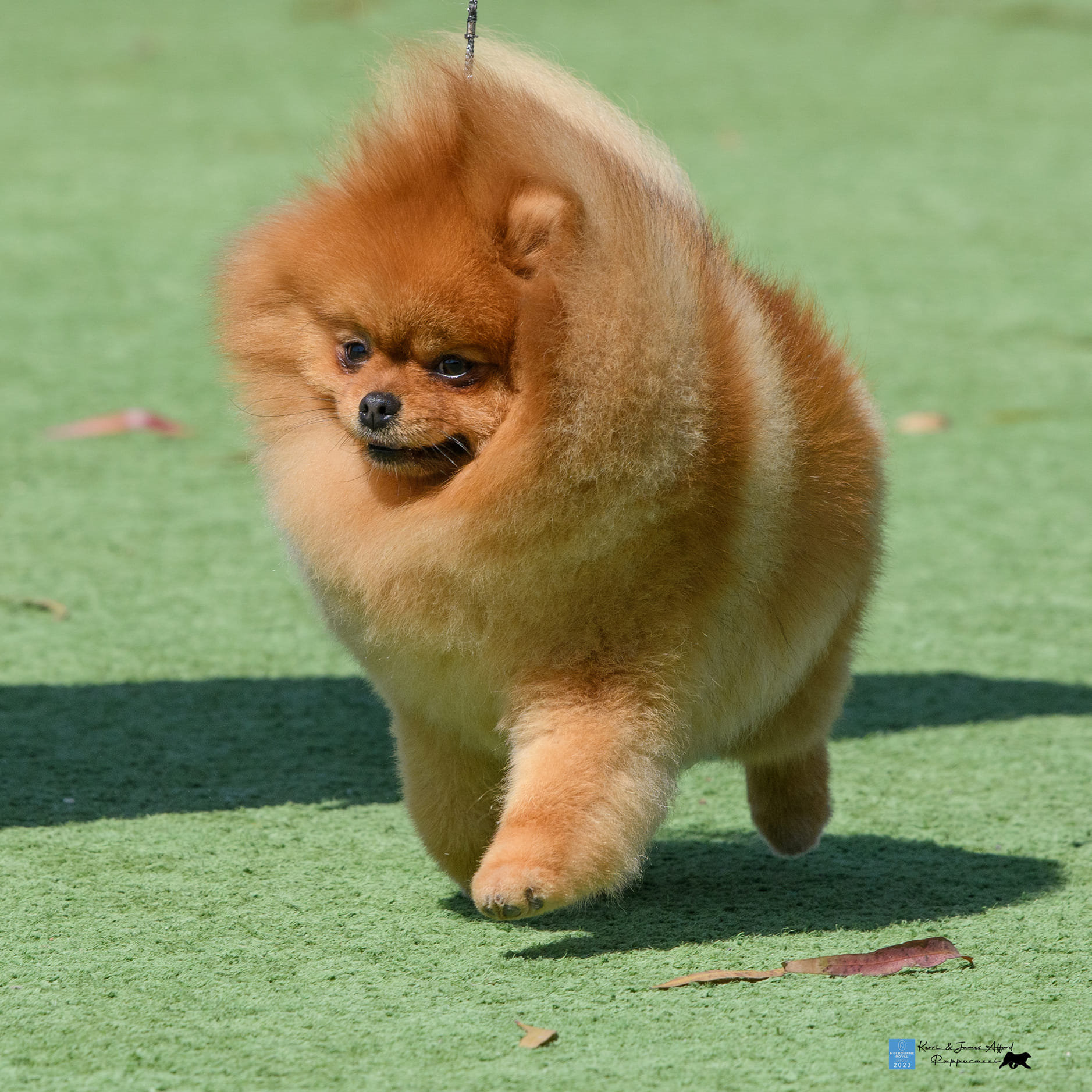

Wondering how big your Pomeranian puppy will be when fully grown? This Pomeranian weight chart can help you estimate your puppy’s adult size based on age and current weight.
I have been breeding and exhibiting Pomeranians for over 50 years and have used this Pomeranian growth chart at Dochlaggie Pomeranians for decades. While no puppy growth chart can guarantee an exact adult weight, this chart has proven remarkably accurate when used alongside knowledge of the puppy’s parents and bloodlines.
This guide explains how to use the Pomeranian weight chart, factors that affect growth, when Pomeranians stop growing, and how to estimate your puppy’s adult size.
🐾 How Much Does a Full-Grown Pomeranian Weigh?
A full-grown Pomeranian typically weighs between 3 and 7 pounds (1.4 to 3.2 kg), although some Pomeranians may be larger or smaller depending on genetics, bloodlines, and breeding.
- 6 to 8 Months: Most Pomeranians reach their adult height.
- 10 to 12 Months: Most Pomeranians reach their final adult weight.
- Up to 18 Months: Some Pomeranians continue filling out and maturing.
While weight charts can provide a useful estimate, genetics and family history remain the biggest factors in determining your Pomeranian’s final adult size.
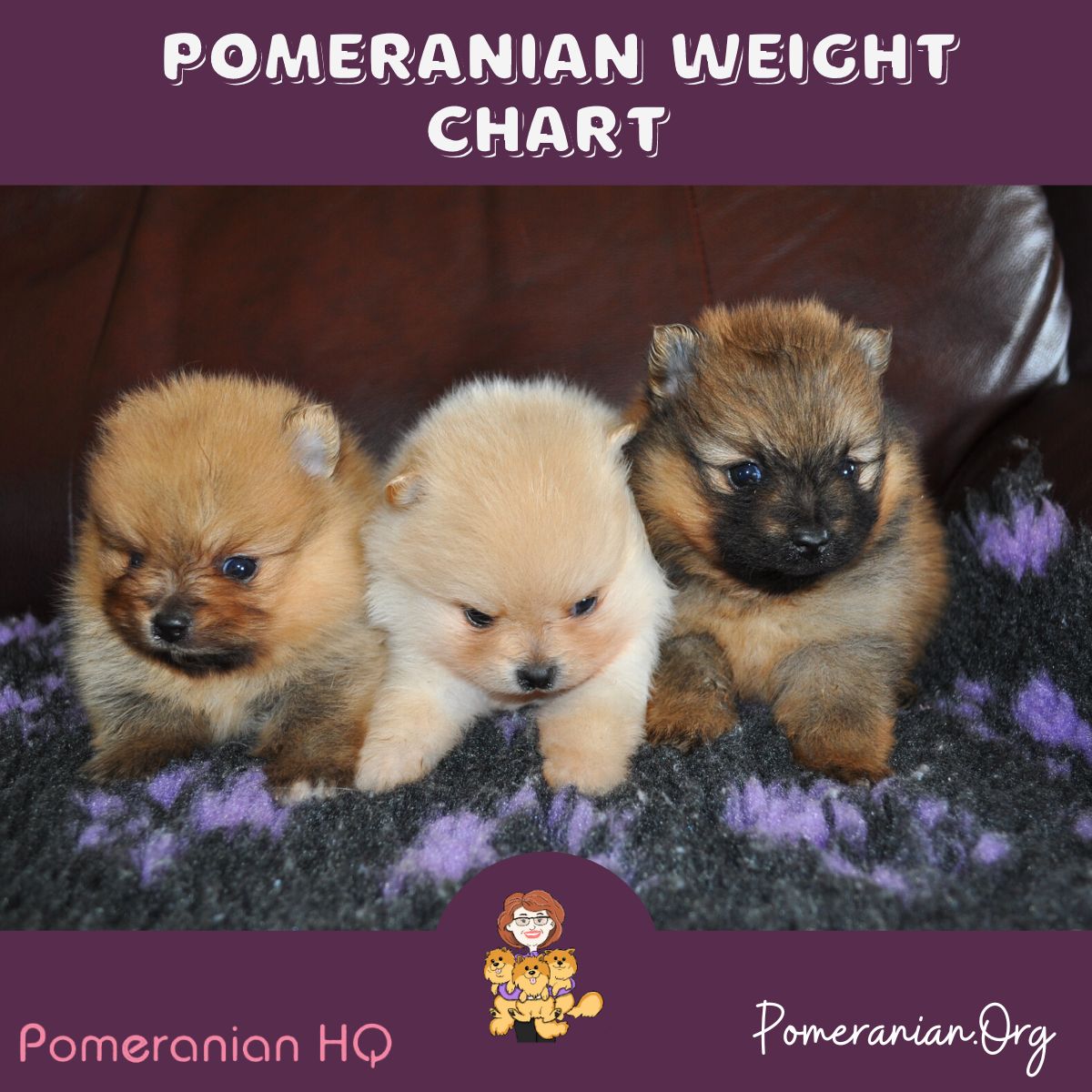
Use this chart as a guide only. Genetics, nutrition, health, and bloodlines all influence a Pomeranian puppy’s final adult size.
| Age | 1 lb Adult | 2 lb Adult | 3 lb Adult | 4 lb Adult | 5 lb Adult | 6 lb Adult | 7 lb Adult |
|---|---|---|---|---|---|---|---|
| 8 Weeks | 5 oz | 10 oz | 1 lb | 1 lb 5 oz | 1 lb 10 oz | 2 lb | 2 lb 5 oz |
| 12 Weeks | 8 oz | 1 lb | 1 lb 8 oz | 2 lb | 2 lb 8 oz | 3 lb | 3 lb 8 oz |
| 16 Weeks | 12 oz | 1 lb 8 oz | 2 lb 4 oz | 3 lb | 3 lb 12 oz | 4 lb 8 oz | 5 lb 4 oz |

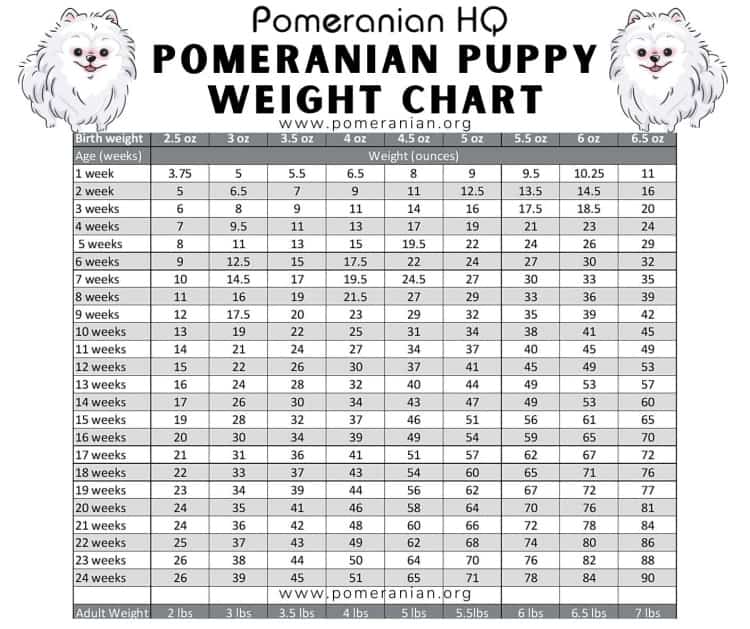
Pomeranian Puppy Weight Chart
🐾 Pomeranian Puppy Weight Chart
| Age | 3 oz 85 g |
3.5 oz 99 g |
4 oz 113 g |
4.5 oz 128 g |
5 oz 142 g |
5.5 oz 156 g |
6 oz 170 g |
6.5 oz 184 g |
|---|---|---|---|---|---|---|---|---|
| 1 week | 5 oz 0.31 lb / 142 g | 5 oz 0.31 lb / 142 g | 6 oz 0.38 lb / 170 g | 8 oz 0.50 lb / 227 g | 9 oz 0.56 lb / 255 g | 10 oz 0.62 lb / 283 g | 10 oz 0.62 lb / 283 g | 11 oz 0.69 lb / 312 g |
| 2 weeks | 6 oz 0.38 lb / 170 g | 7 oz 0.44 lb / 198 g | 9 oz 0.56 lb / 255 g | 10 oz 0.62 lb / 283 g | 12 oz 0.75 lb / 340 g | 13 oz 0.81 lb / 369 g | 14 oz 0.88 lb / 397 g | 16 oz 1.00 lb / 454 g |
| 3 weeks | 8 oz 0.50 lb / 227 g | 9 oz 0.56 lb / 255 g | 11 oz 0.69 lb / 312 g | 14 oz 0.88 lb / 397 g | 16 oz 1.00 lb / 454 g | 17 oz 1.06 lb / 482 g | 18 oz 1.12 lb / 510 g | 20 oz 1.25 lb / 567 g |
| 4 weeks | 9 oz 0.56 lb / 255 g | 11 oz 0.69 lb / 312 g | 13 oz 0.81 lb / 369 g | 17 oz 1.06 lb / 482 g | 19 oz 1.19 lb / 539 g | 21 oz 1.31 lb / 595 g | 23 oz 1.44 lb / 652 g | 24 oz 1.50 lb / 680 g |
| 5 weeks | 11 oz 0.69 lb / 312 g | 13 oz 0.81 lb / 369 g | 15 oz 0.94 lb / 425 g | 19 oz 1.19 lb / 539 g | 22 oz 1.38 lb / 624 g | 24 oz 1.50 lb / 680 g | 26 oz 1.62 lb / 737 g | 29 oz 1.81 lb / 822 g |
| 6 weeks | 12 oz 0.75 lb / 340 g | 15 oz 0.94 lb / 425 g | 17 oz 1.06 lb / 482 g | 22 oz 1.38 lb / 624 g | 24 oz 1.50 lb / 680 g | 27 oz 1.69 lb / 765 g | 30 oz 1.88 lb / 850 g | 32 oz 2.00 lb / 907 g |
| 7 weeks | 15 oz 0.94 lb / 425 g | 17 oz 1.06 lb / 482 g | 19 oz 1.19 lb / 539 g | 24 oz 1.50 lb / 680 g | 27 oz 1.69 lb / 765 g | 30 oz 1.88 lb / 850 g | 33 oz 2.06 lb / 936 g | 35 oz 2.19 lb / 992 g |
| 8 weeks | 16 oz 1.00 lb / 454 g | 19 oz 1.19 lb / 539 g | 21 oz 1.31 lb / 595 g | 27 oz 1.69 lb / 765 g | 29 oz 1.81 lb / 822 g | 33 oz 2.06 lb / 936 g | 36 oz 2.25 lb / 1021 g | 39 oz 2.44 lb / 1106 g |
| 9 weeks | 17 oz 1.06 lb / 482 g | 20 oz 1.25 lb / 567 g | 23 oz 1.44 lb / 652 g | 29 oz 1.81 lb / 822 g | 32 oz 2.00 lb / 907 g | 35 oz 2.19 lb / 992 g | 39 oz 2.44 lb / 1106 g | 42 oz 2.62 lb / 1191 g |
| 10 weeks | 19 oz 1.19 lb / 539 g | 22 oz 1.38 lb / 624 g | 25 oz 1.56 lb / 709 g | 31 oz 1.94 lb / 879 g | 34 oz 2.12 lb / 964 g | 38 oz 2.38 lb / 1077 g | 41 oz 2.56 lb / 1162 g | 44 oz 2.75 lb / 1247 g |
| 11 weeks | 21 oz 1.31 lb / 595 g | 24 oz 1.50 lb / 680 g | 27 oz 1.69 lb / 765 g | 34 oz 2.12 lb / 964 g | 37 oz 2.31 lb / 1049 g | 40 oz 2.50 lb / 1134 g | 45 oz 2.81 lb / 1276 g | 49 oz 3.06 lb / 1389 g |
| 12 weeks | 22 oz 1.38 lb / 624 g | 26 oz 1.62 lb / 737 g | 30 oz 1.88 lb / 850 g | 37 oz 2.31 lb / 1049 g | 41 oz 2.56 lb / 1162 g | 45 oz 2.81 lb / 1276 g | 48 oz 3.00 lb / 1361 g | 52 oz 3.25 lb / 1474 g |
| 13 weeks | 24 oz 1.50 lb / 680 g | 28 oz 1.75 lb / 794 g | 32 oz 2.00 lb / 907 g | 40 oz 2.50 lb / 1134 g | 44 oz 2.75 lb / 1247 g | 48 oz 3.00 lb / 1361 g | 51 oz 3.19 lb / 1446 g | 57 oz 3.56 lb / 1616 g |
| 14 weeks | 26 oz 1.62 lb / 737 g | 30 oz 1.88 lb / 850 g | 34 oz 2.12 lb / 964 g | 43 oz 2.69 lb / 1219 g | 47 oz 2.94 lb / 1332 g | 49 oz 3.06 lb / 1389 g | 55 oz 3.44 lb / 1559 g | 60 oz 3.75 lb / 1701 g |
| 15 weeks | 28 oz 1.75 lb / 794 g | 32 oz 2.00 lb / 907 g | 37 oz 2.31 lb / 1049 g | 46 oz 2.88 lb / 1304 g | 51 oz 3.19 lb / 1446 g | 56 oz 3.50 lb / 1588 g | 61 oz 3.81 lb / 1729 g | 65 oz 4.06 lb / 1843 g |
| 16 weeks | 30 oz 1.88 lb / 850 g | 34 oz 2.12 lb / 964 g | 39 oz 2.44 lb / 1106 g | 49 oz 3.06 lb / 1389 g | 54 oz 3.38 lb / 1531 g | 59 oz 3.69 lb / 1673 g | 65 oz 4.06 lb / 1843 g | 70 oz 4.38 lb / 1984 g |
| 17 weeks | 31 oz 1.94 lb / 879 g | 36 oz 2.25 lb / 1021 g | 41 oz 2.56 lb / 1162 g | 51 oz 3.19 lb / 1446 g | 57 oz 3.56 lb / 1616 g | 62 oz 3.88 lb / 1758 g | 67 oz 4.19 lb / 1899 g | 72 oz 4.50 lb / 2041 g |
| 18 weeks | 33 oz 2.06 lb / 936 g | 37 oz 2.31 lb / 1049 g | 43 oz 2.69 lb / 1219 g | 54 oz 3.38 lb / 1531 g | 60 oz 3.75 lb / 1701 g | 64 oz 4.00 lb / 1814 g | 71 oz 4.44 lb / 2013 g | 75 oz 4.69 lb / 2126 g |
| Estimated adult weight | 3 lbs 1.36 kg |
3.5 lbs 1.59 kg |
4 lbs 1.81 kg |
5 lbs 2.27 kg |
5.5 lbs 2.49 kg |
6 lbs 2.72 kg |
6.5 lbs 2.95 kg |
7 lbs 3.18 kg |
How to Use the Pomeranian Weight Chart
Using the Pomeranian puppy weight chart is simple. Find your puppy’s current age in the left-hand column and then locate your puppy’s current weight across that row. Follow that column down to the bottom of the chart to find the estimated adult weight.
For example, if your Pomeranian puppy is 10 weeks old and currently weighs 34 ounces, follow the 10-week row across until you find 34. Then trace that column to the bottom of the chart. The estimated adult weight is approximately 5 pounds (2.27 kg).
If you are unable to find an exact match, use the closest weight as a guide. Remember that this chart provides an estimate only and individual puppies may mature larger or smaller depending on genetics, bloodlines, nutrition, and overall health.
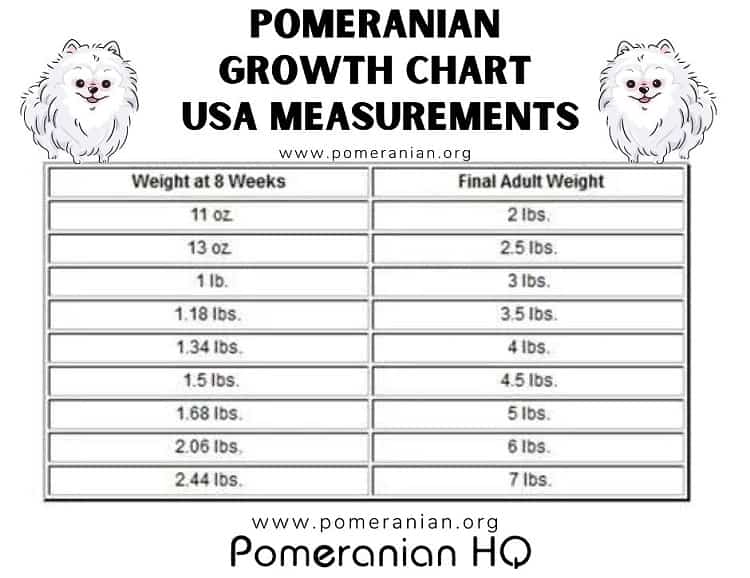
As a general rule, many breeders estimate adult size by multiplying a puppy’s 8-week weight by three. For older puppies, doubling the weight at 12 weeks often provides a reasonable estimate of adult weight.
I have used this Pomeranian growth chart at Dochlaggie Pomeranians for more than 50 years to help assess puppy development and estimate adult size. While no chart can predict an exact adult weight, I have found it to be a valuable guide when combined with knowledge of the puppy’s parents, pedigree, and family history.
Pomeranian Growth Chart
How Much Does a Full-Grown Pomeranian Weigh?
One of the most common questions prospective owners ask is, “How much does a full-grown Pomeranian weigh?” The answer depends largely on genetics, bloodlines, and whether the dog has been bred to conform to the breed standard.
Most well-bred Pomeranians from reputable preservation breeders typically weigh between 3 and 7 pounds (1.4 to 3.2 kg) as adults. However, individual dogs may fall outside this range, particularly if they come from bloodlines that consistently produce larger or smaller Pomeranians.
When trying to estimate your puppy’s adult size, genetics are far more important than any growth chart. The size of the puppy’s parents, grandparents, and close relatives can often provide valuable clues about the puppy’s likely adult weight. This is one reason it is beneficial to purchase your puppy from a knowledgeable breeder who understands their bloodlines and can set realistic expectations about adult size.
Nutrition also plays an important role during growth and development. Overfeeding can contribute to excessive weight gain and place unnecessary strain on developing joints, while underfeeding can negatively affect healthy growth and overall well-being. If you have any concerns about your puppy’s diet, growth rate, or body condition, always seek advice from your breeder and veterinarian.
The Pomeranian puppy weight chart and calculator on this page can help you estimate your puppy’s future adult size. However, it is important to remember that all growth charts provide estimates only. No chart can accurately predict the final adult weight of every puppy because each dog develops at its own rate.
For the most accurate assessment of your puppy’s likely adult size, consider the growth chart alongside the puppy’s pedigree, family history, and the mature weights of close relatives.
Pomeranian Weight Calculator
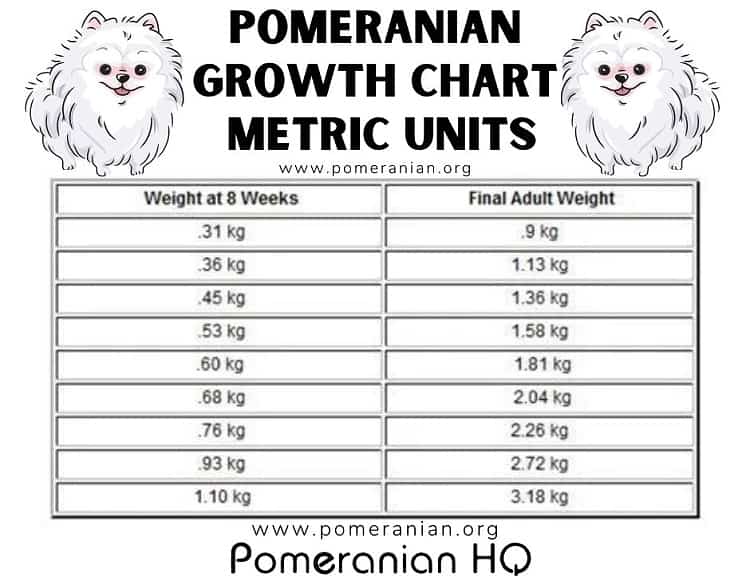
Pomeranian Weight Chart in kg
How to Estimate Your Pomeranian’s Adult Weight
While no growth chart can predict your puppy’s final adult weight with complete accuracy, a simple calculation can provide a useful estimate.
Using Your Puppy’s 8-Week Weight
A common rule of thumb is:
8-week weight × 3 = Estimated adult weight
| Puppy Weight at 8 Weeks | Estimated Adult Weight |
|---|---|
| 1 lb (454 g) | 3 lb (1.36 kg) |
| 1.5 lb (680 g) | 4.5 lb (2.04 kg) |
| 2 lb (907 g) | 6 lb (2.72 kg) |
| 2.5 lb (1.13 kg) | 7.5 lb (3.40 kg) |
| 3 lb (1.36 kg) | 9 lb (4.08 kg) |
Using Your Puppy’s 12-Week Weight
Another commonly used method is:
12-week weight × 2 = Estimated adult weight
| Puppy Weight at 12 Weeks | Estimated Adult Weight |
|---|---|
| 1.5 lb (680 g) | 3 lb (1.36 kg) |
| 2 lb (907 g) | 4 lb (1.81 kg) |
| 2.5 lb (1.13 kg) | 5 lb (2.27 kg) |
| 3 lb (1.36 kg) | 6 lb (2.72 kg) |
| 3.5 lb (1.59 kg) | 7 lb (3.18 kg) |
What Is the Average Adult Weight of a Pomeranian?
Most adult Pomeranians weigh between 3 and 7 pounds (1.4 to 3.2 kilograms). However, some bloodlines consistently produce larger or smaller dogs.
In my experience breeding Pomeranians for over 50 years, the most accurate predictor of adult size is not a chart but the size of the puppy’s parents, grandparents, and close relatives. Genetics will always play the biggest role in determining your Pomeranian’s final adult weight.
Why Growth Charts Are Not Always Accurate
Growth charts provide estimates only. Factors that can influence a puppy’s final adult size include:
- Genetics and bloodlines.
- Size of the parents.
- Nutrition.
- General health.
- Parasite burden.
- Individual growth rates.
For this reason, two puppies weighing exactly the same at 12 weeks may mature into adults of different sizes.
Denise Leo’s Tip
After breeding and raising Pomeranians since 1975, I have found that puppy weight charts are most accurate when used as a guide rather than a guarantee. When estimating adult size, always consider the puppy’s pedigree and the mature weights of close relatives in addition to any growth chart calculation.
Why Do Newborn Pomeranian Puppies Grow So Quickly?
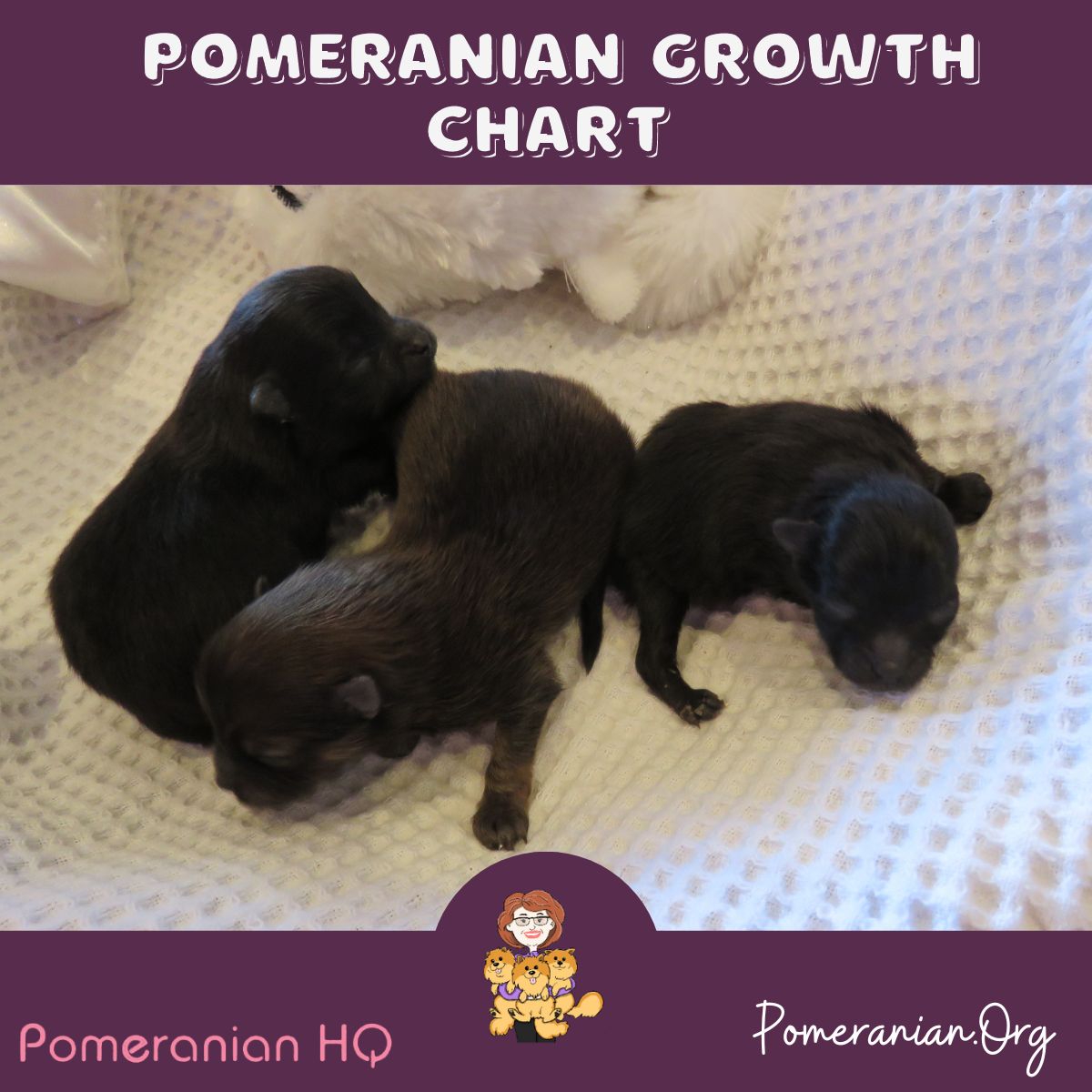
One thing many new Pomeranian owners notice is how rapidly puppies grow during their first few weeks of life. Newborn puppies gain weight at a much faster rate than older puppies because this is the period of their most rapid development.
During the first few weeks after birth, a healthy Pomeranian puppy may double or even triple its birth weight. At this stage, puppies spend most of their time nursing and sleeping, allowing their bodies to direct almost all available energy into growth and development.
As puppies get older, their growth rate naturally slows. While they continue to gain weight and develop muscle, bone, and coat, the dramatic weight increases seen during the newborn period become less noticeable. This is why the differences between weekly weights are often larger in the early part of a Pomeranian growth chart and gradually become smaller as the puppy matures.
Many owners become concerned when their puppy’s growth appears to slow after a few months. In most cases, this is completely normal. Young puppies experience explosive growth, whereas older puppies grow at a steadier and more gradual pace as they approach their adult size.
Understanding this pattern helps explain why a puppy’s birth weight alone cannot accurately predict adult size. The rate of growth changes significantly throughout puppyhood, making genetics, bloodlines, and the size of close relatives equally important factors when estimating a Pomeranian’s final adult weight.
Conclusion
Watching a Pomeranian puppy grow is one of the most rewarding parts of puppy ownership. While growth charts and weight calculators can provide useful estimates, they should always be viewed as guides rather than guarantees. Every Pomeranian is an individual, and factors such as genetics, bloodlines, nutrition, health, and overall development all influence a puppy’s final adult size.
In my experience breeding and exhibiting Pomeranians for more than 50 years, the most reliable indicator of a puppy’s future size is the size and consistency of the family line. Growth charts are helpful tools, but they work best when combined with knowledge of the puppy’s parents, grandparents, and pedigree.
Remember that healthy growth is far more important than achieving a particular weight. A well-nourished, active, and properly cared-for Pomeranian puppy has the best chance of developing into a healthy adult, regardless of whether they mature at the smaller or larger end of the breed’s weight range.
Use this Pomeranian weight chart as a helpful reference throughout your puppy’s development, but enjoy the journey as well. Before long, that tiny bundle of fluff will be a beautiful adult Pomeranian with a unique personality all of their own.
Copyright Pomeranian.org. All Rights Reserved.
References and Further Reading:
Official Standard of the Pomeranian (AKC). American Kennel Club, 2011.
English Kennel Club Pomeranian Breed Standard, 2017.
Denise Leo, The Pomeranian Handbook.