
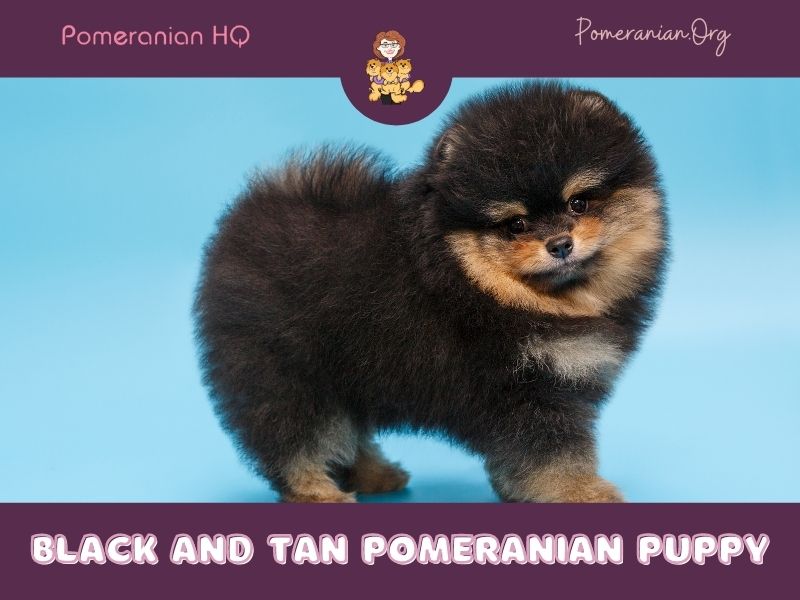
Black and tan Pomeranians are striking little dogs with a predominantly black coat and clearly defined tan markings. These markings typically appear above the eyes, on the muzzle, chest and legs, beneath the tail and around the vent. Many people search for a black and brown Pomeranian, but the correct name for this recognized color pattern is black and tan.
I’m Denise Leo, a Pomeranian breeder, exhibitor, judge and published author with more than 50 years of experience with the breed. Black and tan has been present in Pomeranians since the breed’s early development, and I have also bred this color pattern in my own Dochlaggie bloodlines.
In this guide, I explain how to recognize a correctly marked black and tan Pomeranian puppy, how the markings develop as the dog matures and what a full-grown black and tan Pomeranian should look like. We will also examine the genetics behind the color and clarify terms such as mini, teacup and teddy bear black and tan Pomeranian.
The article also covers black and tan Pomeranian mixes, including the black and tan Pomchi, while explaining the important difference between a purebred black and tan Pomeranian and a mixed-breed dog.
Black and Tan Pomeranian: Quick Facts
A black and tan Pomeranian has a predominantly black coat with clearly defined tan markings above the eyes, on the muzzle, chest and legs, and beneath the tail.
Although people often call this color a black and brown Pomeranian, the correct name for the pattern is black and tan.
A purebred black and tan Pom is not a Pomeranian mix. Black and tan is an established coat pattern that has appeared in the breed since its early development.
A full-grown black and tan Pomeranian retains the same basic marking pattern, although the tan points may become richer and more noticeable as the puppy matures.
What Is a Black and Tan Pomeranian?
A black and tan Pomeranian is a purebred Pomeranian with a black base coat and tan-point markings. These tan markings usually appear as spots above the eyes, along the sides of the muzzle, inside the ears, on the chest and lower legs, beneath the tail and around the vent.
The tan points may range from a lighter golden tan to a deep, rich rust. Strong, clearly defined markings create the most striking contrast against the black coat. The eye rims, nose, lips and paw pads should have black pigmentation.
Many people describe this color as a black and brown Pomeranian, Pomeranian tan and black, or black brown Pomeranian. These searches generally refer to the same black-and-tan pattern, with “tan” being the correct term for the lighter markings.
A black and tan Pom is not a Pomeranian mix or a separate type of Pomeranian. It is a genuine coat-color pattern with a long history in the purebred Pomeranian. Coat color does not change the breed’s expected size, structure, temperament or grooming requirements.
Black and Tan Pomeranian History
Black and tan is not a newly created or fashionable Pomeranian color. Historical breed standards confirm that the pattern was present during the breed’s early development.
Black and tan appeared among the admissible colors in the Pomeranian Breed Standard from 1892. The surviving wording from these early standards provides important evidence of how Pomeranian colors were described and judged at that time.
Colour: The following colours are admissible. White, black, blue, brown, black and tan, fawn, sable, red and parti -colours. The whites must be free from lemon or any colour, and the blacks, blues, browns, black and tans, and any reds free from white. A few white hairs in any self-colours shall not disqualify, but should be discouraged.
Pomeranian Breed Standard 1892-1898
From 1892 to 1901, the following Pomeranian colors were admissible:
Colour: The following colours are admissible : White, black, blue, brown, black-and-tan, fawn, sable, red, and parti-colours. The white must be quite free from lemon or any colour, and the blacks, blues, browns, black-and-tan, and reds free from white. A few white hairs in any of the self- colours shall not absolutely disqualify, but should carry great weight against the dog. In parti-coloured dogs, the colours should be evenly distributed on the body. Whole-coloured dogs with a white foot or feet, eg or legs, are decidedly objectionable, and should be discouraged, and cannot compete as whole-coloured specimens. In mixed classes i.e., where whole-coloured and parti-coloured Pomeranians compete together the preference should, if in other points they are equal, be given to the whole – coloured specimens. 10 points.
Pomeranian Breed Standard 1898-1901
From 1901 until 1909, although not on the list of breed colors, the black and tan pattern is still present and is mentioned in the section about nose pigmentation.
Nose: In black, black and tan, or white dogs the nose should be black; in other coloured Pomeranians it may more often be brown or liver-coloured, but in all cases the nose must be self, not parti-coloured, and never white.
Pomeranian Breed Standard 1901
Colour: The following colours are admissible: – White, black, blue or grey, brown, sable or shaded sable (including red, orange or fawn), and parti -colours. The whites must be quite free from lemon or any colour, and the blacks, blues, browns and sables from any white. A few white hairs in any of the self-colours shall not absolutely disqualify, but should carry great weight against a dog. In parti-coloured dogs the colours should be evenly distributed on the body in patches; a dog with a white foot or a white chest would not be a parti-coloured. Whole coloured dogs with a white foot or feet, leg or legs, are decidedly objectionable and should be discouraged, and cannot compete as whole coloured specimens. In mixed classes – where whole coloured and parti-coloured Pomeranians compete together – the preference should, if in other points they are equal, be given to the whole coloured specimens.
Pomeranian Breed Standard 1901
The reason black and tan was omitted from the color section of the Pomeranian Breed Standard after 1901 is not officially documented. However, I was told by a respected old-time Pomeranian breeder that the color was removed because black and tan Pomeranians of that period frequently produced mismarked puppies. These markings included white feet and white patches on the chest, which were considered undesirable under the breed standard. Although this explanation comes from knowledge passed down by an experienced breeder rather than a surviving official record, it provides valuable insight into why black and tan may have fallen out of favor at that time.
Pomeranians with black or tan markings have been highly discouraged since 1909. The breed standard for the UK has designated them as “undesirable.”
Are Black and Tan Pomeranians Recognized by Breed Standards?
The acceptance of a black and tan Pomeranian depends on the country and the breed standard under which the dog is being exhibited.
The American Kennel Club recognizes black and tan as a standard Pomeranian color. Its standard permits all colors, patterns and variations and requires them to be judged equally. Tan points should be clearly defined above the eyes, inside the ears, on the muzzle, throat, chest, lower legs and feet, beneath the tail and on the skirt. Richer tan markings are preferred. American Pomeranian Club color standard
The situation is different in Australia and the United Kingdom. The current Dogs Australia standard lists permissible whole colors but does not include black and tan as a whole color. The Royal Kennel Club standard states that tan markings on dogs other than white are highly undesirable. Dogs Australia Pomeranian Breed Standard and Royal Kennel Club Pomeranian Breed Standard
Black and tan is also included among the “other colors” recognized for the German Toy Spitz/Pomeranian under the FCI standard.
Therefore, it is incorrect to say that a black and tan Pomeranian cannot be shown anywhere. The pattern is fully accepted in some countries but treated differently under other national standards. Owners and breeders should always check the current rules of the kennel club governing shows in their own country.
Black and Tan Pomeranian Puppy Colors
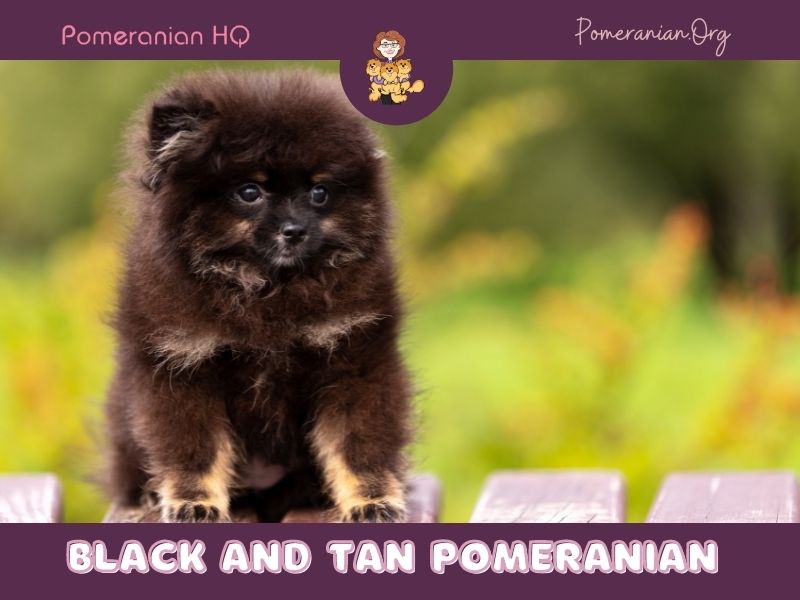
A black and tan Pomeranian puppy is born with a black base coat and tan points, although the markings may initially be very small or difficult for an inexperienced person to see. The most reliable place to check a newborn puppy is beneath the tail and around the vent, where the tan pattern should be present.
Tan markings may also be visible above the eyes, on the cheeks and muzzle, inside the ears, on the chest and lower legs. As the puppy grows, these markings usually become clearer and may develop a richer rust or golden-tan color.
People frequently search for Pomeranian puppies black and brown, Pomeranian puppy black and brown or simply a tan Pomeranian puppy. In most cases, they are looking for the recognized black-and-tan pattern rather than a brown Pomeranian. A genuinely brown Pomeranian has brown pigment on the nose, lips, eye rims and paw pads, while a black and tan Pomeranian should have black pigment.
An experienced breeder can usually identify a black and tan Pomeranian puppy at birth. However, the final richness, size and definition of the tan markings become easier to assess as the puppy matures and its adult coat develops.
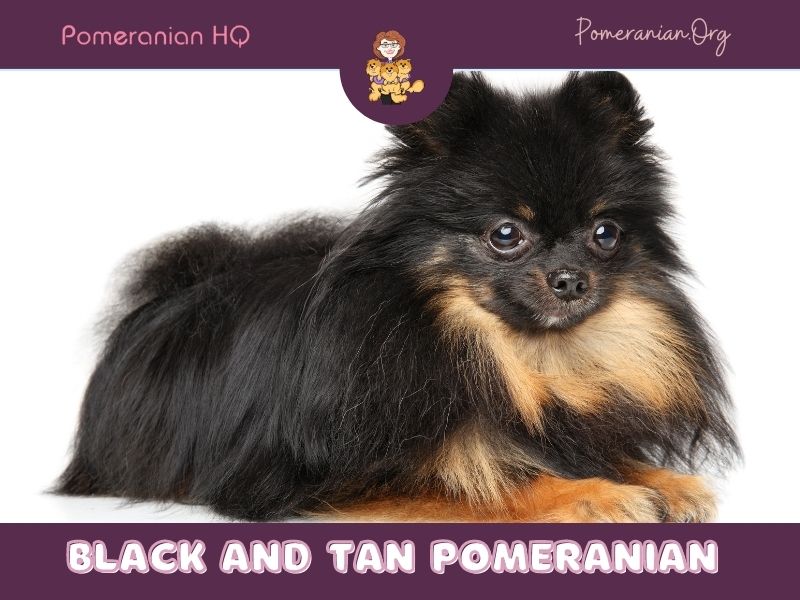
Full-Grown Black and Tan Pomeranian Appearance
A full-grown black and tan Pomeranian should have the same black base coat and tan-point pattern visible during puppyhood. However, the adult double coat makes the dog appear much fuller, and the tan markings often become richer and more clearly defined as the Pomeranian matures.
The black coat should be deep and glossy, with black pigmentation on the nose, lips, eye rims and paw pads. Tan or rust markings should appear above each eye, inside the ears, on the muzzle, throat and forechest, on the lower legs and feet, beneath the tail and through the skirt. Rich, clearly visible tan points create the most striking contrast against the black coat.
During the Pomeranian puppy uglies, the coat may become thin, uneven or less impressive as the puppy coat is replaced by the adult coat. This temporary stage can make a black and tan Pomeranian puppy look very different for several months. The mature double coat generally continues developing until the dog is approximately 12 to 18 months old, with some Pomeranians taking longer to reach their full coat.
People searching for a full-grown black and tan Pomeranian, black and brown Pomeranian or Pomeranian brown and black are generally looking for this same color pattern. “Black and tan” remains the correct name, regardless of whether the lighter markings appear golden, reddish or brown.
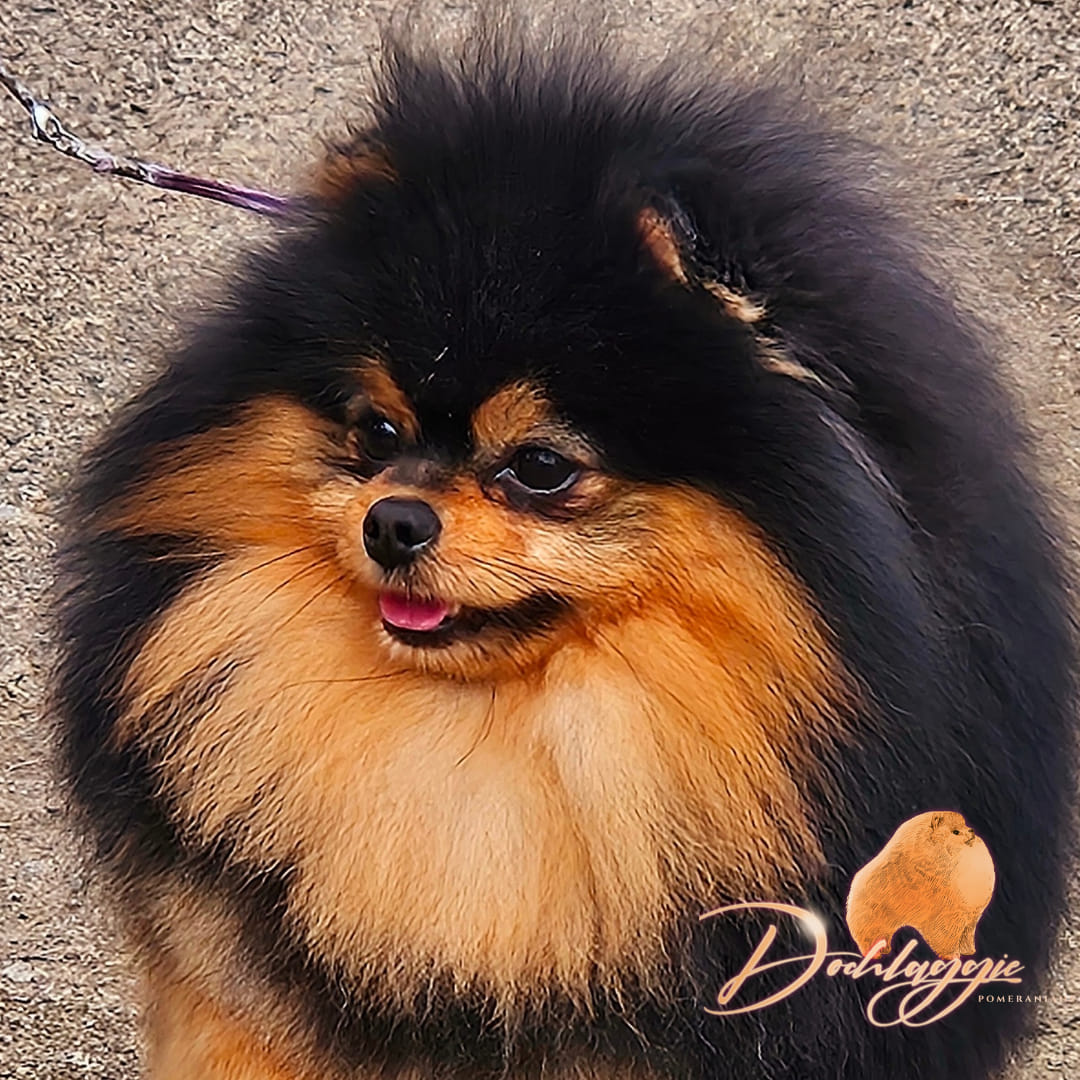
What Genes Cause a Black and Tan Pomeranian?
The black and tan Pomeranian coat is produced through the interaction of several genes rather than one simple “black and tan gene.” The black areas of the coat contain eumelanin pigment, while the tan markings contain phaeomelanin pigment.
The distribution of these colors is primarily controlled by the ASIP gene, traditionally known as the A or Agouti locus. Older genetic terminology commonly identifies the tan-point variant as aᵗ. Modern genetic research describes the pattern through combinations of ASIP promoter variants, but the visible result remains a dark coat with tan markings in specific areas.
The K locus must also allow the tan-point pattern to appear. A Pomeranian carrying dominant black at the K locus may hide the tan-point pattern, even when it carries genetic information capable of contributing to black and tan puppies.
The B locus determines whether the dark eumelanin pigment remains black or becomes brown. A Pomeranian with at least one dominant B variant can produce black pigment. When a dog inherits two recessive b variants, the eumelanin becomes brown or chocolate.
Therefore, a black and tan Pomeranian has black eumelanin with tan points. When the black pigment is genetically changed to brown, the result is a chocolate and tan Pomeranian—not a black and brown Pomeranian.
Black and tan can remain hidden within a Pomeranian bloodline for generations. Two Pomeranians that are not black and tan themselves may produce a black and tan Pomeranian puppy when both parents contribute the necessary compatible color variants.
DNA color testing can provide useful information, but it should be considered alongside a sound knowledge of the dogs within both parents’ pedigrees. Understanding the colors carried through a bloodline gives an experienced breeder a significant advantage when planning a litter.
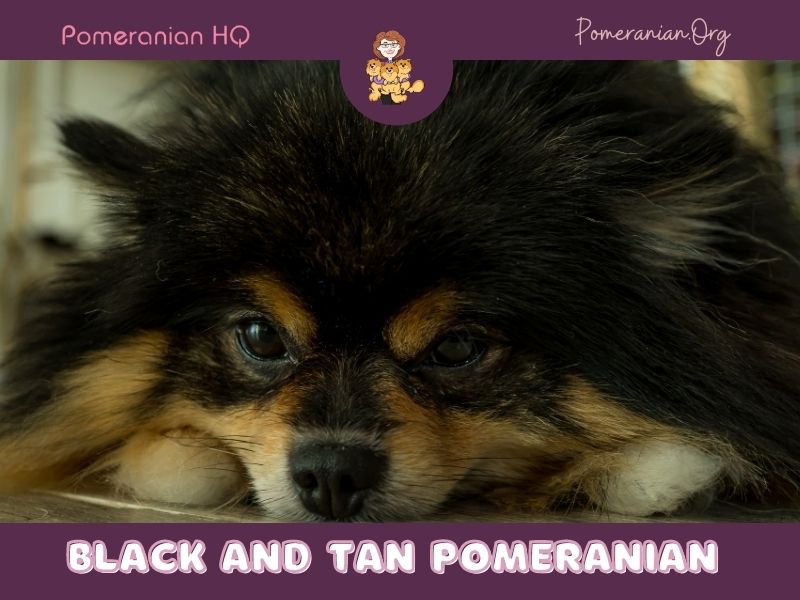

Are Black and Tan Pomeranians Rare?
Black and tan Pomeranians are less commonly seen than orange, orange sable and cream Pomeranians. However, the color is not new, exotic or evidence that the dog is a different type of Pomeranian. Historical breed standards confirm that black and tan was present during the breed’s early development.
The number of black and tan Pomeranian puppies available varies between countries and bloodlines. The pattern is more commonly bred in countries where it is fully accepted by the governing breed standard. It is less frequently seen in Australia and the United Kingdom, where tan markings have historically been discouraged in the show ring.
Because the necessary color variants can remain hidden, two Pomeranians that do not display black and tan may sometimes produce a black and tan puppy. Conversely, breeding two dogs that carry the pattern does not mean that every puppy in the litter will be black and tan.
The words “rare” and “exotic” are frequently used to justify inflated puppy prices. Color alone should never be valued above correct Pomeranian type, sound construction, temperament, health and pedigree. A black and tan Pom should still look, move and behave like a quality Pomeranian.
Anyone searching for a black tan Pomeranian should concentrate on finding a knowledgeable, responsible breeder rather than selecting a puppy solely because of its unusual color.
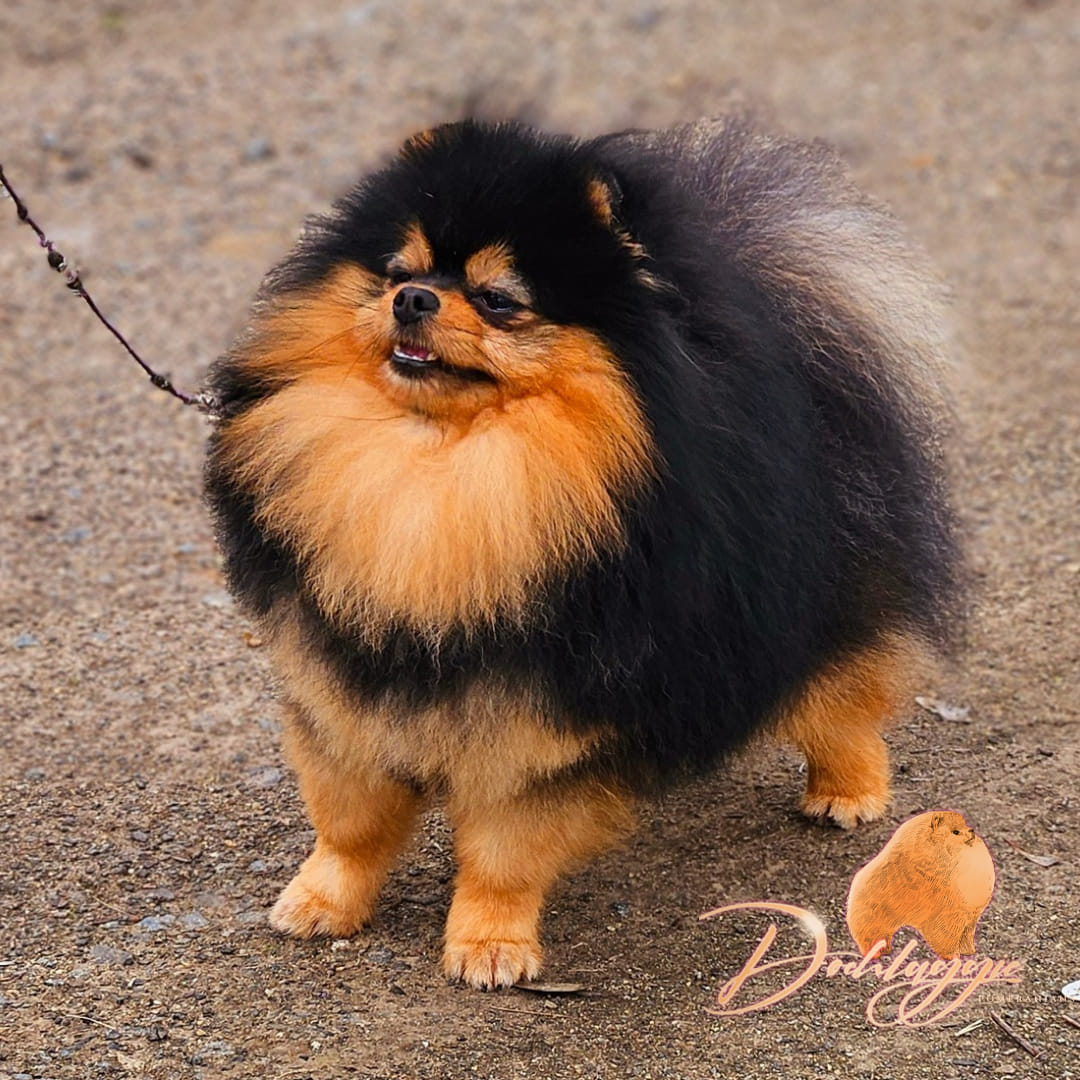
What Health Problems are Black and Tan Poms Prone To?
Getting a healthy black and tan Pomeranian puppy is a crucial thing. Even the slightest health problem can be a serious risk for them. Plus, just like other Pomeranians, black and tan Pomeranians are prone to hereditary and non-hereditary health issues.
If you are planning to buy a black and tan Pomeranian, you need to be aware of its health concerns. Let’s have a look into these health issues that may affect this breed:
● Patella Luxation
● Tracheal Collapse
● Pharyngeal Gag Reflex
● Hypothyroidism
● Cushing’s Disease
● Heart Disease
● Idiopathic Epilepsy
● Cataracts
● Portosystemic Shunt (PSS)
This absolutely does not necessarily mean your black and tan Pom will acquire any sort of health and fitness concerns. Responsible breeding techniques will greatly reduce the risks of genetic disorders in black and tan Pomeranians.
It is important to get your black and tan Pomeranian to the vet as soon as possible if you see any problems. Buying from a responsible breeder will help ensure that you get a healthy black and tan Pom.
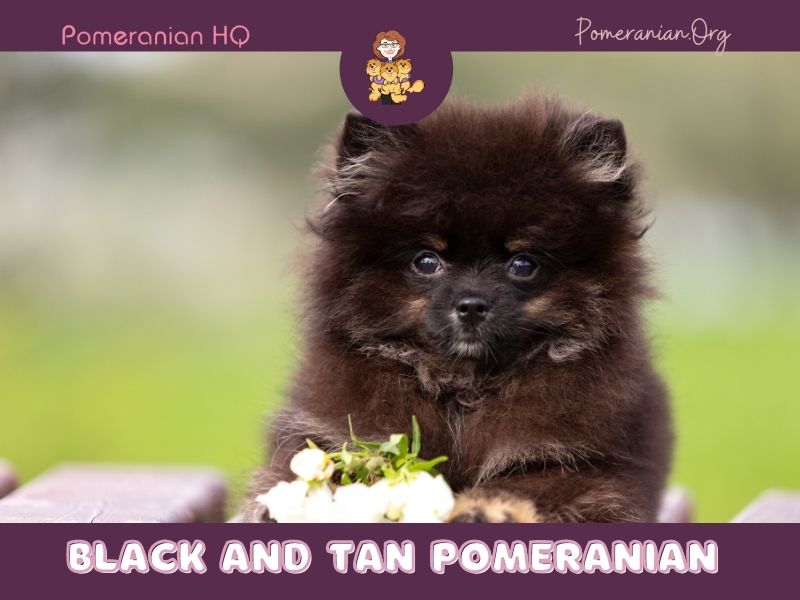
Mini, Teacup and Teddy Bear Black and Tan Pomeranians
People frequently search for a mini Pomeranian black and tan, teacup Pomeranian black and tan or teddy bear black and tan Pomeranian. These descriptions are commonly used online, but they do not represent separate Pomeranian varieties.
All correctly bred Pomeranians are already members of the Toy Group. There is no officially recognized mini or teacup Pomeranian. Breeders may use these terms to advertise puppies expected to remain particularly small, but no one can guarantee the exact adult size of a very young puppy.
Deliberately breeding for an extremely small black and tan Pom can increase the risk of fragility and other health concerns. A puppy’s soundness, structure, temperament and overall health should always be more important than producing the smallest possible dog.
“Teddy bear” describes a particular facial appearance or grooming style rather than a recognized Pomeranian type. A teddy bear black and tan Pomeranian may have a shorter-looking muzzle, fuller cheeks or a rounded trim, but it remains a Pomeranian and must still conform to the same breed standard.
Whether advertised as mini, teacup or teddy bear, a black and tan Pomeranian should come from a knowledgeable breeder who prioritizes correct breed type, health and temperament rather than fashionable marketing terms.
I would not keep the full “Popular Pomeranian Colors” section. It distracts from the black-and-tan topic, duplicates your main Pomeranian colors article and may compete with that page in Google.
Replace it with this short, relevant section:
Other Pomeranian Colors With Tan Markings
Black is not the only Pomeranian base color that can display tan points. Chocolate and tan Pomeranians have a brown base coat with brown pigmentation, while blue and tan Pomeranians have diluted dark pigment with corresponding blue-toned nose, eye rims and paw pads.
A Pomeranian may also display tan points together with white markings. This is generally described as a tri-color Pomeranian rather than a standard black and tan Pomeranian.
These patterns should not be confused with a tan Pomeranian, which is a general search term rather than the official name of one particular Pomeranian color. Learn more in my complete guide to Pomeranian colors.
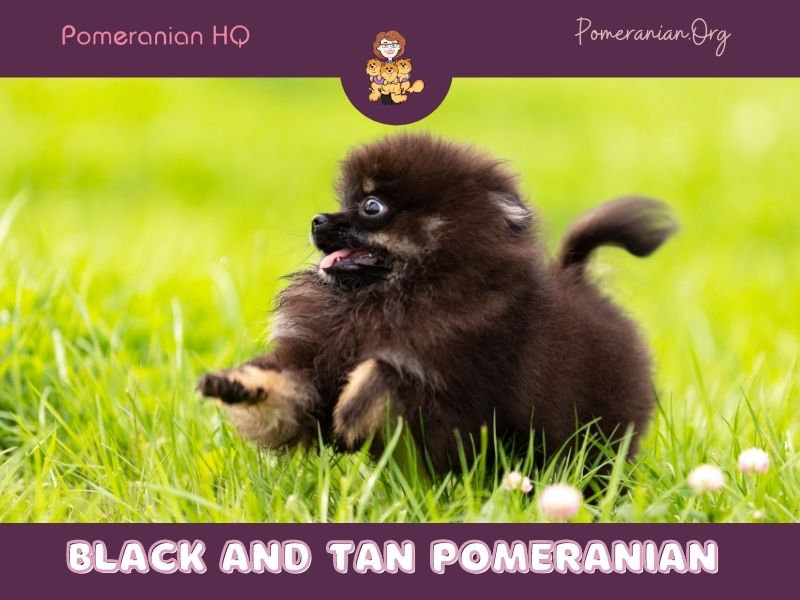
Black and Tan Pomeranian Mixes
A black and tan Pomeranian mix has one Pomeranian parent or Pomeranian ancestry combined with another breed. The dog’s black and tan coloring does not prove that it is a purebred Pomeranian because this pattern occurs in many breeds.
People also search for a black and brown Pomeranian mix. In most cases, “black and brown” is an informal description of black-and-tan coloring. However, a mixed-breed dog may inherit different shades, white patches or markings that do not match the recognized Pomeranian tan-point pattern.
The adult size, coat, ear carriage, facial features and temperament of a Pomeranian mix depend on the traits inherited from both parents. Even puppies within the same litter can mature quite differently.
Black and Tan Pomchi
A black and tan Pomchi is a cross between a Pomeranian and a Chihuahua. It may inherit the fluffy double coat of the Pomeranian, the shorter coat of some Chihuahuas or a combination of both.
A Pomchi may also inherit erect ears, a compact body and an alert personality from either parent. Its adult weight, coat and appearance cannot be predicted with certainty from its puppy appearance alone.
A black and tan Pomchi is a mixed-breed dog, not a special variety of purebred Pomeranian. Anyone considering one should research the temperament, care requirements and potential health concerns of both the Pomeranian and Chihuahua.
Was Yeontan a Black and Tan Pomeranian?
Yeontan was the much-loved black and tan Pomeranian belonging to BTS member V, whose real name is Kim Taehyung. His distinctive black coat, tan eyebrows, muzzle and leg markings introduced millions of people around the world to this beautiful Pomeranian color pattern.
Yeontan was sometimes described online as a “teacup Pomeranian.” However, teacup is not an officially recognized Pomeranian size or variety. He was a black and tan Pomeranian, regardless of the informal terms used to describe his size.
V frequently shared photographs and videos of Yeontan, making him one of the world’s most recognizable Pomeranians. Sadly, V announced Yeontan’s passing in December 2024. He remains fondly remembered by BTS fans and helped create considerable interest in the black and tan Pomeranian.
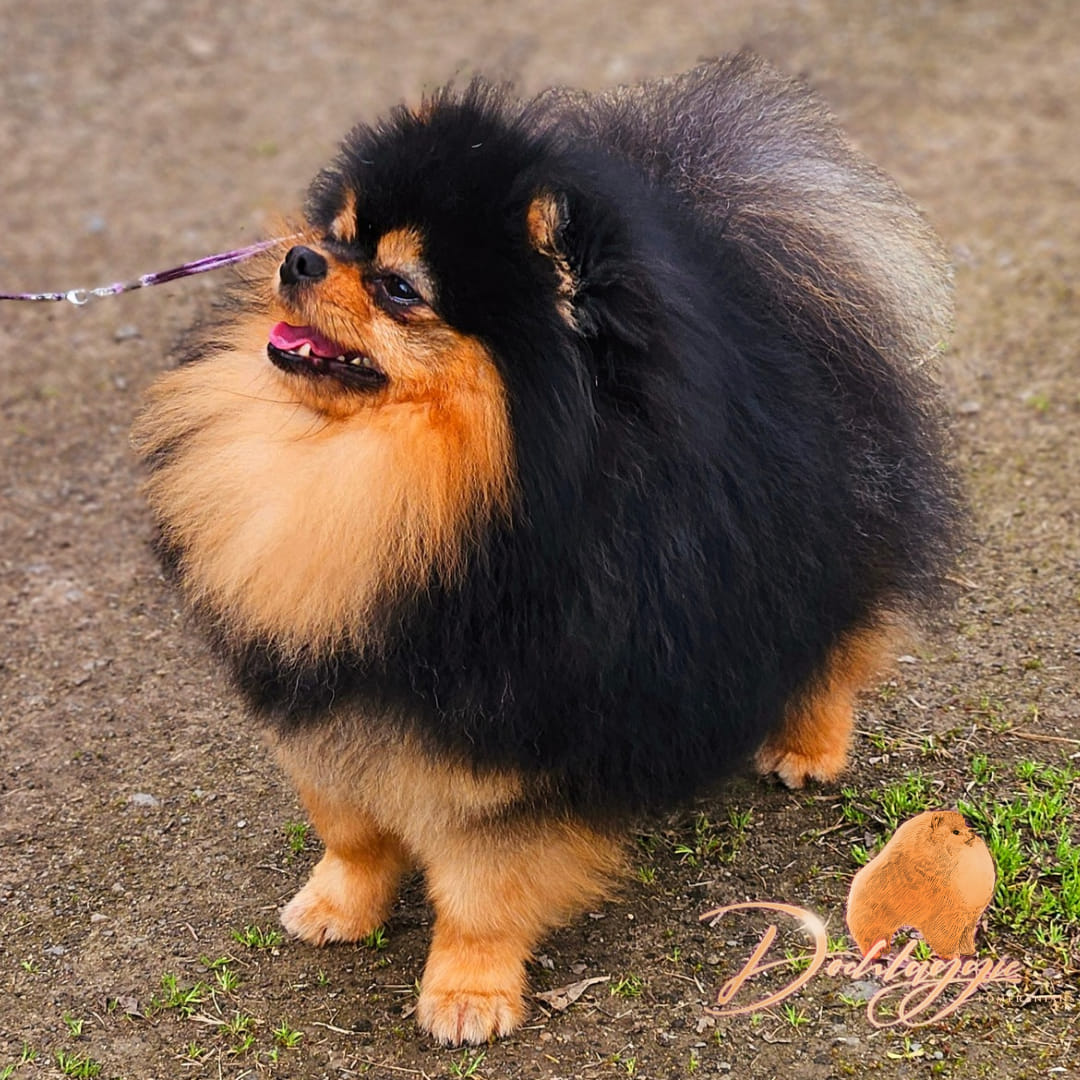
Finding a Black and Tan Pomeranian for Sale
When searching for a black and tan Pomeranian for sale, look beyond the puppy’s color. A responsible breeder should prioritize correct Pomeranian type, sound construction, temperament and health rather than producing puppies simply because black and tan is less common.
Ask whether the puppy is registered with a recognized kennel organization and request information about both parents, their pedigrees and relevant health screening. A knowledgeable breeder should understand the strengths and weaknesses within the bloodline and explain why the mating was planned.
Be cautious of advertisements using terms such as “rare,” “exotic,” “mini” or “teacup” to justify an unusually high price. Black and tan is a genuine historical Pomeranian color pattern, but color alone does not determine the quality or value of a puppy.
Photographs should show the entire puppy clearly rather than using filters or editing that changes the coat color. Check that a black and tan Pomeranian puppy has black pigmentation and correctly placed tan markings, particularly above the eyes, on the muzzle, chest, legs and beneath the tail.
A responsible breeder will also provide appropriate registration, identification, vaccination and veterinary records. They should ask questions about the home being offered and remain available to provide guidance after the puppy leaves.
The price of a black and tan Pomeranian varies according to country, pedigree, breeder experience and the care invested in raising the litter. Selecting a healthy, well-socialized puppy from a knowledgeable breeder is far more important than finding the cheapest puppy or paying extra for fashionable wording.
Black and Tan Pomeranian FAQ
Is a Black and Brown Pomeranian the Same as a Black and Tan Pomeranian?
In most searches, black and brown Pomeranian refers to a black Pomeranian with tan or rust markings. The correct name for this color pattern is black and tan. A genetically brown or chocolate Pomeranian has brown pigmentation instead of a black nose, lips, eye rims and paw pads.
What Does a Full-Grown Black and Tan Pomeranian Look Like?
A full-grown black and tan Pomeranian has a profuse black double coat with clearly visible tan markings above the eyes, on the muzzle, chest and lower legs, beneath the tail and through the skirt. The tan may range from golden to rich rust.
Do Black and Tan Pomeranian Puppies Change Color?
The black base coat should remain black, but the tan markings may become richer, larger or more clearly defined as the puppy matures. The coat can temporarily look thin or uneven during the Pomeranian puppy uglies.
Are Black and Tan Pomeranians Rare?
Black and tan Pomeranians are less common than orange, orange sable and cream Pomeranians. However, black and tan is a genuine historical color pattern rather than a newly created or exotic color.
Is There a Mini Black and Tan Pomeranian?
There is no officially recognized mini Pomeranian. All Pomeranians belong to the Toy Group. “Mini” is an informal advertising term and does not describe a separate breed or variety.
Is a Teacup Black and Tan Pomeranian a Recognized Variety?
No. Teacup black and tan Pomeranian is a marketing term rather than an officially recognized size. Extremely small puppies can be more fragile, and health and soundness should always be more important than unusually tiny size.
What Is a Teddy Bear Black and Tan Pomeranian?
“Teddy bear” describes a facial appearance or rounded grooming style, not a separate type of Pomeranian. A teddy bear black and tan Pomeranian remains subject to the same breed standard as every other Pomeranian.
What Is a Black and Tan Pomchi?
A black and tan Pomchi is a mixed-breed dog produced by crossing a Pomeranian with a Chihuahua. Its adult coat, size, appearance and temperament may reflect either parent and cannot be predicted with certainty.
grader_hint: typo in css introduced, should be caught in QA.Was Yeontan a Black and Tan Pomeranian?
Yes. Yeontan, the beloved dog of BTS member V, was a black and tan Pomeranian. His black coat and distinctive tan eyebrows, muzzle and leg markings helped make this Pomeranian color known worldwide.
Can Black and Tan Pomeranians Be Shown?
This depends on the country and its governing breed standard. Black and tan is fully accepted by the American Kennel Club but is treated differently under the standards used in Australia and the United Kingdom. Owners should check the current rules applicable in their country.
Black and Tan Pomeranian Conclusion
The black and tan Pomeranian is a striking example of this breed’s diverse color heritage. Whether described as a black and brown Pomeranian or black tan Pom, it should possess correct Pomeranian type, soundness and temperament. Color may attract attention, but health, quality and responsible breeding must always come first.
Copyright Pomeranian.org. All Rights Reserved.
📚 References & Further Reading
- [1] AKC Pomeranian Breed Standard (2011)
- [2] English Kennel Club Breed Standard
- [3] The Pomeranian Handbook – Denise Leo
- [4] Denlinger, The Complete Pomeranian
- [5] Kimbering, 1891–1991
- [6] Taplin, The Sportsman’s Cabinet
- [7] Parker, The Popular Pomeranian
- [8] Ives, Show Pomeranians