
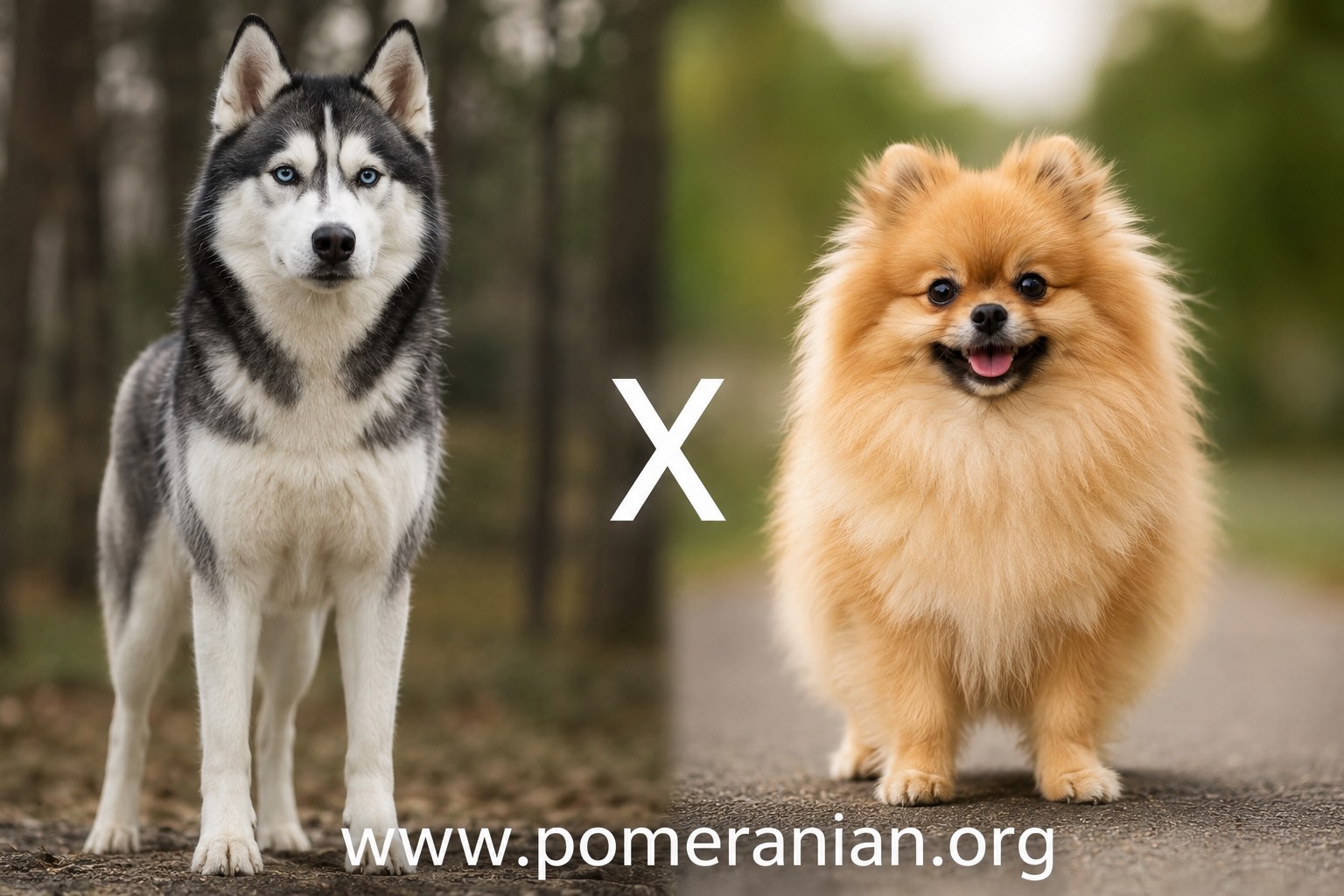
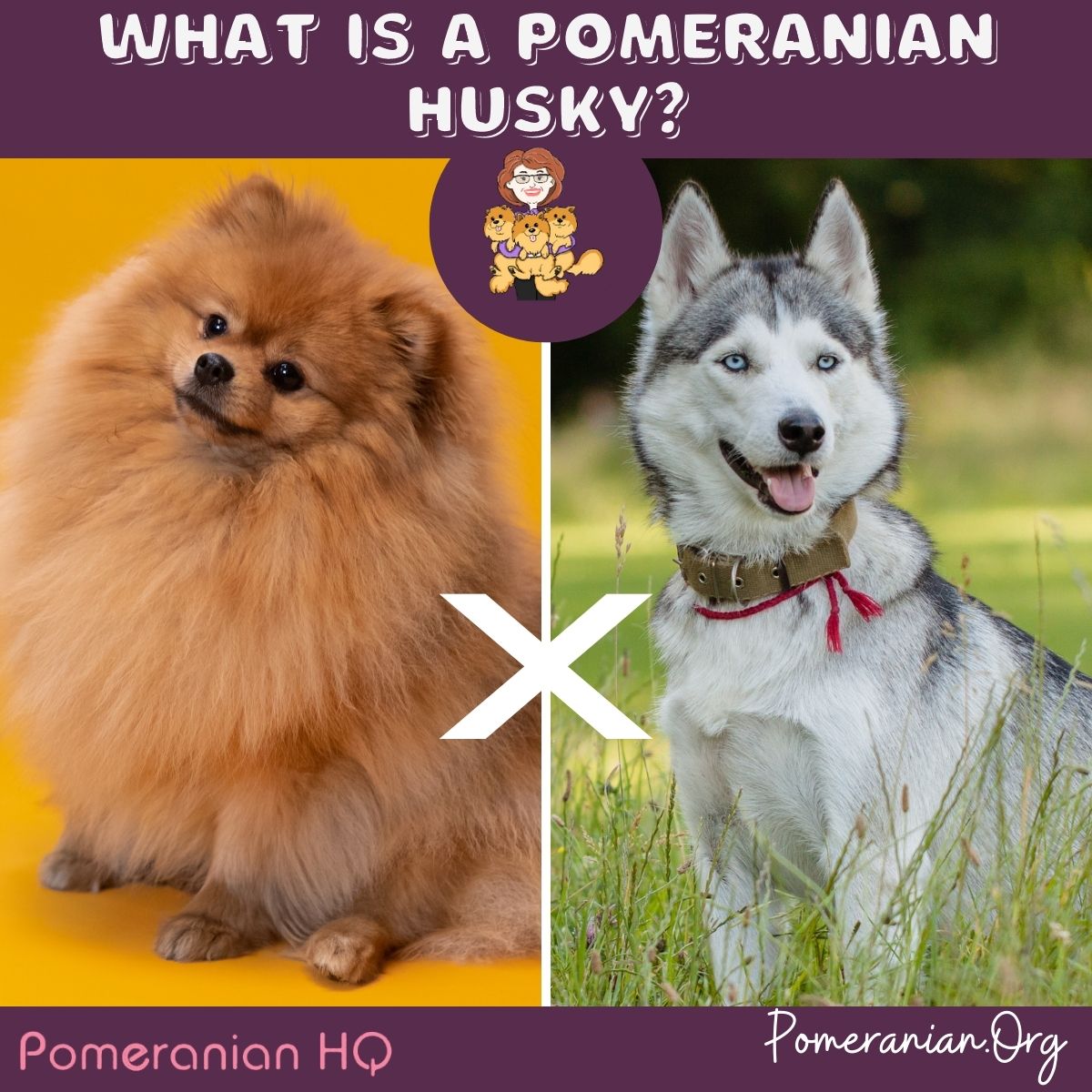
The Pomeranian Husky, more commonly known as a Pomsky, is a cross between a Pomeranian and a Siberian Husky. The goal is to create a dog with the striking appearance of a Husky in a much smaller package.
While Pomskies can be adorable, they are not a recognized purebred dog breed. Because they are a cross between two very different breeds, their size, appearance, coat, and temperament can vary considerably from one dog to another.
⚠️ The Reality of the Pomsky
Pomskies are not a true breed — they are a crossbreed.
This means:
- ❌ No consistent breed standard
- ❌ No predictable size or coat
- ❌ No guaranteed temperament
Because they are a mix of two very different breeds, outcomes can vary widely.
👉 Some may behave like a Pomeranian
👉 Others may behave more like a Husky
This unpredictability is one of the biggest risks for buyers.
Husky and Pomeranian Mix Facts
- The Pomeranian Husky mix, also known as the Pomsky and Husky Pomeranian Mix, is a designer dog breed that combines the energetic Siberian Husky and lively Pomeranian traits.
- It has recently gained popularity among dog lovers due to its loving, playful, friendly, and energetic nature.
- Its appearance can vary depending on which genes it inherits from its parent breeds; they have a soft double coat with colors ranging from grey/white to brown or reddish-brown. Eyes are rounded with colors varying between blue, brown, hazel, or amber – one may even have two different colored eyes! The average Pomeranian husky full-size height is 10-20 inches, while weight varies between 7-38 pounds; life expectancy ranges from up to 15 years old.
- A litter of puppies will usually be produced using a Siberian Husky mother crossed with a male Pommerian father; their physical characteristics (coat color & eye color) along with personality traits can vary significantly within each litter as there are no formal rules for what genes & traits will be inherited by each puppy – these features often become more apparent once they reach eight weeks old. However, some variation remains until adulthood at 12 months+.
- The teacup Pomeranian Husky Mix is created by crossing a Pomeranian with a Siberian Husky dog. It is usually bred through artificial insemination due to the size difference between its parent breeds.
- It has become increasingly popular over the last few years, but remains relatively rare and expensive.
- The American Kennel Club does not recognize this breed as a true dog breed. However, both of its parents are recognized by AKC.
- Common health issues affecting these dogs include hip dysplasia, eye problems, collapsing trachea, luxating patellas, epilepsy, and heart disease, amongst others.
- Taking care of your Pomeranian x Husky includes feeding them food suitable for small- to medium-sized, high-energy dogs, training them with reward-based methods, grooming their coats regularly, and providing regular exercise, such as walking or agility training.
- A Husky Pomeranian Mix puppy from an ethical and reputable breeder can range anywhere from $2,500 upwards.
- Factors such as the breeder’s reputation, location, litter size, dog age, coloration/coat markings, and bright blue eyes will influence the price.
🐾 Is a Pomsky Right for You?
✔ A Pomsky may suit you if you:
- ✔ Have time for training and exercise
- ✔ Understand coat care requirements
- ✔ Are prepared for unpredictability
❌ A Pomsky may NOT suit you if you:
- ❌ Want a predictable size or temperament
- ❌ Prefer a quiet, low-maintenance dog
- ❌ Are a first-time owner
⚠️ Common Problems With Pomskies
Before buying a Pomsky, you need to understand the downsides:
- ❌ Highly variable size (can be much larger than expected)
- ❌ Heavy shedding (double coat)
- ❌ Can be vocal and noisy
- ❌ Require consistent training
- ❌ May develop behavioural issues if bored
👉 They are NOT always easy dogs for first-time owners.
Pomeranian Husky Appearance
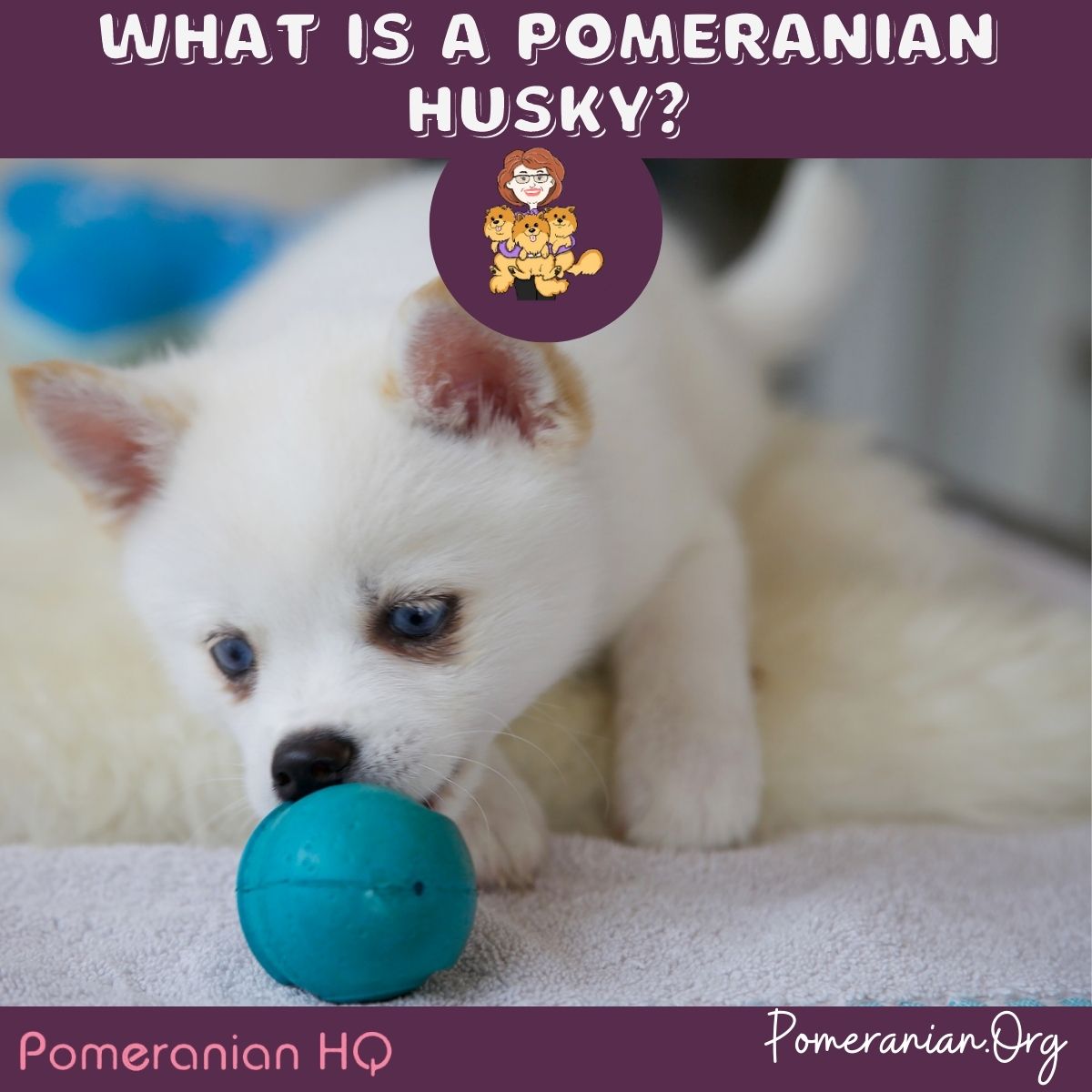
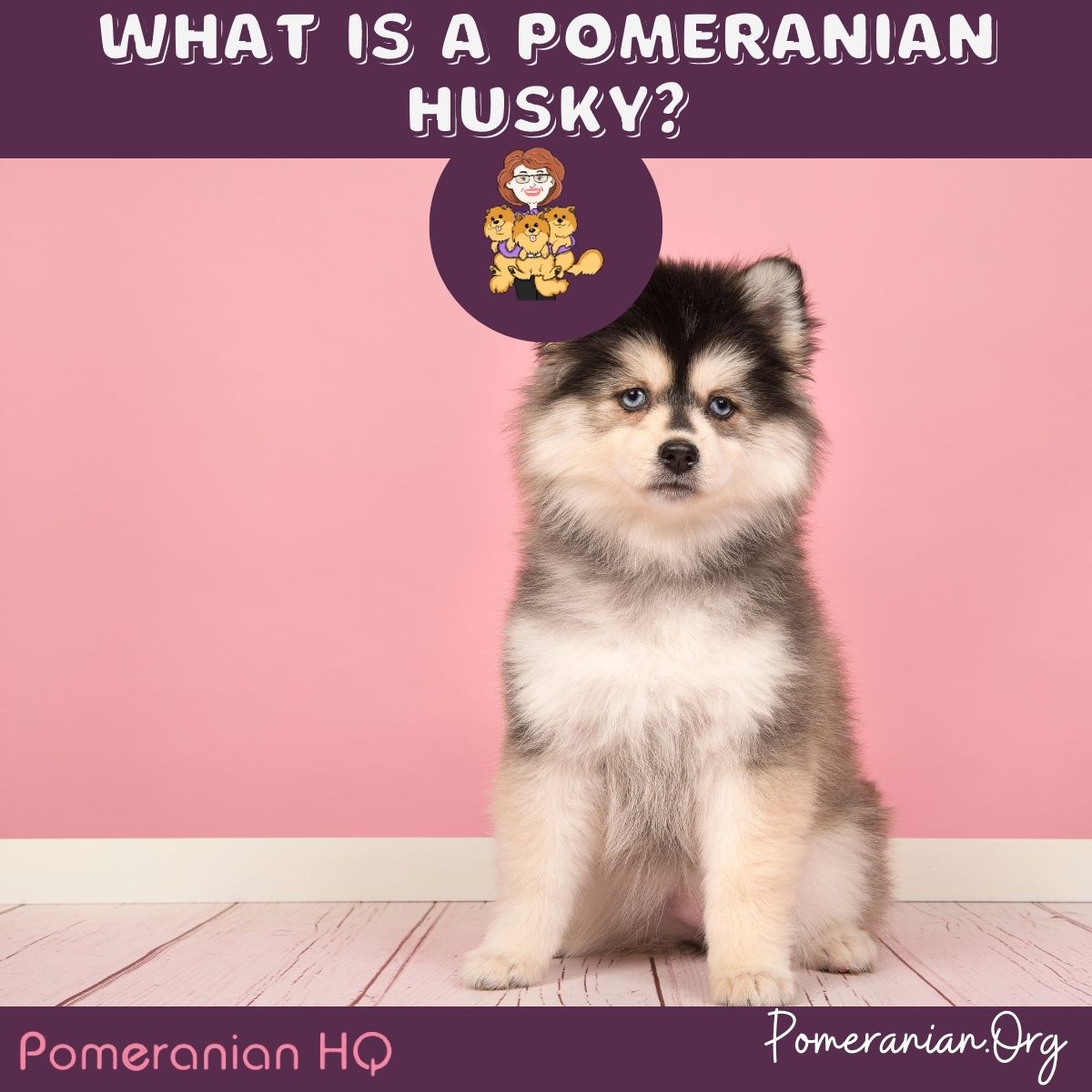
The Pomeranian Husky is a small- to medium-sized crossbreed that falls somewhere between its parents in size. Your Husky Pomeranian Mix will have the physical characteristics of both the Pomeranian and the Siberian Husky.
Well, this sounds pretty interesting that their appearance can vary and is unpredictable. How a Husky Pomeranian Mix ends up looking depends on the genes they inherit from their parent breeds.
Since the designer breed is so new, most standards for how a Husky Pomeranian should look have not yet been established. They have a soft, fluffy double coat.
Coat colors vary, much like the breed’s Pom and Husky parents. Their coat can be grey and white, brown or reddish brown, blue, pure white, and more. Eyes are rounded and can be blue, brown, hazel, or amber.
A Pomeranian Husky may have different colored eyes, just like its Siberian Husky parent.
- Average height: 10 – 20 inches
- Average weight: 7 – 38 pounds
- Lifespan: 12 to 15 years
Husky Pomeranian Mix Puppies
A Pomsky litter is usually produced using a Siberian Husky mother and a Pomeranian father. In a Husky Pomeranian mix litter, you can expect the little fur babies to turn out with different physical and personality traits. With any designer hybrid dog, there are no formal rules as to what genes and traits it is going to inherit.
One puppy could have the body of a Pomeranian and the face of a Husky. Another puppy could have the body of a Pomeranian but the energy of a Husky. The opposite of these two scenarios is also true.
Coat color and appearance can vary within a litter, too. Some Pomeranian-Husky puppies have a coat like the Pomeranian’s. Some puppies may inherit the coveted blue eyes from the Husky. So on and so forth.
Pomeranian Husky puppies begin to develop their unique looks and personalities at about 8 to 9 weeks of age.
But there is no telling what a Husky and Pomeranian mix will look like until they are a bit older. Healthy Pomeranian-Husky puppies are curious and playful, willing to approach people and be held.
Temperament of a Pomsky
Pomskies are typically:
- Intelligent
- Playful
- Affectionate
- Energetic
- Sometimes stubborn
However, they may also be:
- Very vocal (Husky + Pomeranian traits combined)
- Independent or difficult to train
- Prone to boredom-related behavior
👉 Without proper training and stimulation, behavior issues can develop.
Pomeranian Husky Personality
A husky Pomeranian Mix’s personality can be varied depending on each parent’s genetic contribution. These hybrid dogs are intelligent, loving, playful, stubborn, cheerful, and devoted to their family. Husky and Pomeranian Mixes share the following personalities:
- Affectionate
Pomeranian Husky is a loving and cuddly dog. They desire your attention and affection but offer unconditional love to their owners. Pomeranian Huskies enjoy cuddling up next to their owner.
- Great watchdogs
Pomeranian Huskies are alert and aware of their surroundings. They are highly protective of their family and make great watchdogs. They often inherit the watchdog trait from their Pom parent.
- Intelligent
Husky Pomeranians are considered highly intelligent dogs. These little guys have a good memory, but do not make good lap dogs as they are very active dogs. Husky Pomeranians need mental stimulation to avoid mischievous and destructive behavior.
- Barkers
Husky and Pomeranian mixes are vocal dogs with high barking potential. They will bark every time someone approaches. You can train them to stop excessive barking and avoid unpleasant situations.
- Independent
Even though they are eager to please, Husky Pomeranian Mixes have the stubborn and independent nature of their Siberian Husky parent. This makes them an unsuitable breed for novice owners.
- Playful
Pomeranian Husky Mixes are playful pups who love spending time with their owners. Their playful antics often help them get the adoration they crave.
- Unfriendly with kids and pets
Pomeranian Huskies are often suspicious of small kids. They can get along with other dogs if socialized properly. However, they might like to chase smaller animals, such as cats, due to the strong prey drive they inherit from the Husky.
Many behavioral issues stem from a dog’s early upbringing. If socialized properly in puppyhood, Pomeranian Husky Mixes make an excellent family dog.
History of the Pomeranian Husky
The Pomeranian Husky Mix is a new mixed breed designed by crossing a Pomeranian with a Siberian Husky. Due to the size difference between the parent breeds, Pomeranian Huskies are almost always bred by artificial insemination (AI).
The Dam is always the Husky parent, and the Sire is always the Pomeranian parent. This helps avoid complications during pregnancy and delivery. This is an expensive process, and for this reason, Pomeranian Husky Mixes remain fairly rare and costly in the dog world.
Over the last few years, Pomeranian Husky Mixes have become increasingly popular. These dogs are recognized by the Dog Registry of America (DRA). The Pomsky Club of America (PCA) and the International Pomsky Association (IPA) are two groups that are working to get the breed officially recognized.
At this time, Pomeranian Husky Mixes can vary greatly in looks and temperament, even within the same litter. So, breed standards aren’t likely to come any time soon.
The American Kennel Club doesn’t recognize the Husky-Pomeranian Mix as a recognized breed. However, Pomeranian Huskies’ parents, the Siberian Husky and Pomeranian, are both recognized by the AKC.
Major Health Concerns of the Pomeranian Husky
Pomeranian Huskies are moderately healthy but are prone to a few health issues. There are some conditions that the Husky Pomeranian Mix inherits from either parent breed. The health issues that may affect these dogs are:
- Hip Dysplasia: This is a degenerative condition caused by deformity of the hip that occurs during the Pomeranian Husky’s growth. Pomeranian Husky Mixes with hip dysplasia may exhibit pain, lameness, and limping in one or both rear legs.
- Eye Problems: Eye defects in the Pomeranian Husky Mixes are serious and should not be understated or overlooked. Eye problems include cataracts, Corneal dystrophy, and Progressive Retinal Atrophy.
- Collapsing Trachea: Collapsing trachea is a genetic problem that happens when the trachea of the Pomeranian Husky becomes narrow due to the softening of the cartilage that holds the windpipe.
- Luxating Patellas: A degenerative condition in Pomeranian Huskies caused by kneecap looseness. This happens when the muscles and the tendons that hold the kneecap of the Pomeranian Husky in place become very weak. When the kneecap slips, it causes acute pain, lameness, or an abnormal gait in the Pomeranian Husky.
- Epilepsy: This disease refers to abnormal, uncontrolled bursts of electrical activity in your Pomeranian Husky’s brain, causing seizures. An epilepsy treatment plan for Husky Pomeranians reduces seizure frequency and improves their quality of life.
- Heart disease: an abnormality of the heart in the Pomeranian Husky. It includes congenital abnormalities and disorders of physical structure, function, or electrical activity.
- Dental problems: Pomeranian Huskies are prone to dental issues, including gum disease and early tooth loss. So, it’s important to keep up with regular teeth cleanings.
- Allergies: Pomeranian Huskies are prone to various allergies. These designer dogs may be allergic to pollens, molds, certain foods, and flea saliva.
How to Take Care of A Pomeranian Husky
Taking care of your Pomeranian Husky Mix involves many things, including feeding, grooming, training, and exercise.
Feeding your Pomeranian Husky:
The Pomeranian Husky is an active and energetic breed. Typically, they’ll need a diet suitable for a small- to medium-sized dog with high energy and exercise needs. It’s best to ask your vet about your dog’s specific nutritional requirements.
The amount of food that a Pomeranian Husky should eat varies with age, gender, metabolism, and physical activity. Consider adding protein-rich foods, as they will help maintain muscle mass. Be mindful of the caloric content in their diet.
The dietary needs of a Pomeranian Husky puppy change as they grow. Clean and fresh water should be available to Pomeranian Huskies at all times.
Training your Pomeranian Husky:
Husky-Pomeranian mixes are highly intelligent dogs. However, training can be tough, as some Pomeranian Huskies inherit the Siberian Husky’s stubbornness and independent streak.
Patience, consistency, and reward-based training methods work best for Husky-Pomeranian mixes. Provide them with food motivators and plenty of praise. Being a sensitive breed, they will become stubborn in response to harsh treatment, punishment, and yelling.
Here are some of the training that you need to do with your Husky Pomeranian Mix puppy:
- Leash training
- Crate training
- Housebreaking and potty training
- Obedience training
Grooming needs of Pomeranian Husky:
The grooming needs of a Husky Pomeranian Mix depend on the coat and appearance it inherits from its parents. Generally, Pomeranian Huskies are high shedders and have a medium-length, soft, and fluffy double coat. You can still expect to find a lot of hair around the home.
Let’s have a look at their grooming needs:
- Pomeranian Huskies require daily brushing. This will help to remove dead fur and avoid mats or tangles. The coats of Husky Pomeranian mixes will look shinier and cleaner just from brushing.
- They just need a few baths in a year, only when needed. Frequent bathing strips the coat of oils that keep it healthy. So, over-bathing is not recommended for these dogs. When bathing them, use a good-quality canine shampoo and conditioner.
- Pomeranian Huskies are prone to dental problems. Brush their teeth at least two to three times a week to maintain good oral health. This will help to prevent dental problems and remove bacteria and tartar buildup. Use toothpaste that is designed for canines, as human toothpaste can be harmful to dogs.
- Pomeranian Huskies’ nails should be trimmed every few weeks to avoid splitting and discomfort. If you let your Husky Pomeranian Mix run over rocks or concrete, its nails will naturally wear down.
- Pomeranian Husky’s ears should smell good with no unusual amount of wax. They should be cleaned every week to prevent bacterial buildup.
- When you groom your Pomeranian Husky, look inside its mouth and ears for signs of allergies or infection.
Regular grooming of your dog will help you detect potential health problems early.
Exercise requirements of the Pomeranian Husky:
How much exercise your Husky Pomeranian Mix needs varies depending on which parent it takes after most. You should expect to participate in daily exercise sessions with your Husky-Pomeranian mixes. They need regular physical and mental stimulation to stay healthy and comfortable.
By exercising your Husky Pomeranian Mix, you will prevent health risks and reduce behavioral problems through fun activities. Exercising your Pomeranian Husky should not be a burden for you or your dog. You can meet your Pomeranian Husky’s exercise requirements by:
- Teaching new tricks
- Walking
- Fetching
- Chasing
- Playing with puzzle toys
- Play tug of war
- Hide-and-seek
- Agility training
- Obedience training
- Give your Pomeranian Husky a safe area to play and run.
How Much Does a Pomsky Cost?
Pomsky puppies are often sold for $2,500–$5,000+, depending on breeder and demand.
However, buyers should be cautious:
⚠️ High price does NOT mean quality
⚠️ This is a heavily marketed designer cross
⚠️ Some breeders prioritize appearance over health
Other Pomeranian Mixes
Mixing different breeds with the Pomeranian results in some pretty awesome and interesting combinations. Take a look at some of the most famous designer breeds you’ll likely find:
- Pomapoo (Parents: Pomeranian and Poodle)
- Pom-a-Pug (Parents: Pomeranian and Pug)
- Jackaranian, also known as Jack Pom and Pom-A-Jack (Parents: Pomeranian and Jack Russell Terrier)
- Yoranian (Parents: Pomeranian and Yorkshire Terrier)
- Bichonaranian, also known as Pomachon or Pom Frise (Parents: Pomeranian and Bichon Frise
- Pomeagle (Parents: Pomeranian and Beagle)
- Peek-A-Poms (Parents: Pomeranian and Pekingese)
- Peek-A-Poms (Parents: Pomeranian and Pekingese)
- Chinaranian (Parents: Pomeranian and Chihuahua)
- Corkeranians are also known as Cocker-Poms (Parents: Pomeranian and Cocker Spaniel)
- Papipoms, also known as Pomillon (Parents: Pomeranian and Papillon
- Pom-A-Nauze (Parents: Pomeranian and Miniature Schnauzer)
- Shiranian, also known as Pomshi, Shih-Pom (Parents: Pomeranian and Shih Tzu)
- Cavapom (Parents: Pomeranian and Cavalier King Charles Spaniel)
- French Pomerdog (Parents: Pomeranian and French Bulldog)
Preservation Breeder Perspective
As a preservation breeder, I believe:
- Established breeds exist for a reason
- The breed standard is the blueprint
- Responsible breeding focuses on health, structure, and temperament
Designer crosses, such as the Pomsky, lack predictability, a key concern for experienced breeders.
Conclusion
The Pomsky may look appealing, but it’s important to look beyond appearance. This crossbreed combines two very different dogs, resulting in a companion that can be loving and entertaining — but also unpredictable.
Understanding the reality of the Pomsky will help you make a more informed decision and avoid common pitfalls.
Copyright Pomeranian.org. All Rights Reserved.
📚 References & Further Reading
- [1] AKC Pomeranian Breed Standard (2011)
- [2] English Kennel Club Breed Standard
- [3] The Pomeranian Handbook – Denise Leo
- [4] Denlinger, The Complete Pomeranian
- [5] Kimbering, 1891–1991
- [6] Taplin, The Sportsman’s Cabinet
- [7] Parker, The Popular Pomeranian
- [8] Ives, Show Pomeranians