
DVM, University of Animal and Veterinary Sciences, 2019
MSc. (Hons.) Animal Breeding & Genetics, University of Agriculture Faisalabad, 2021
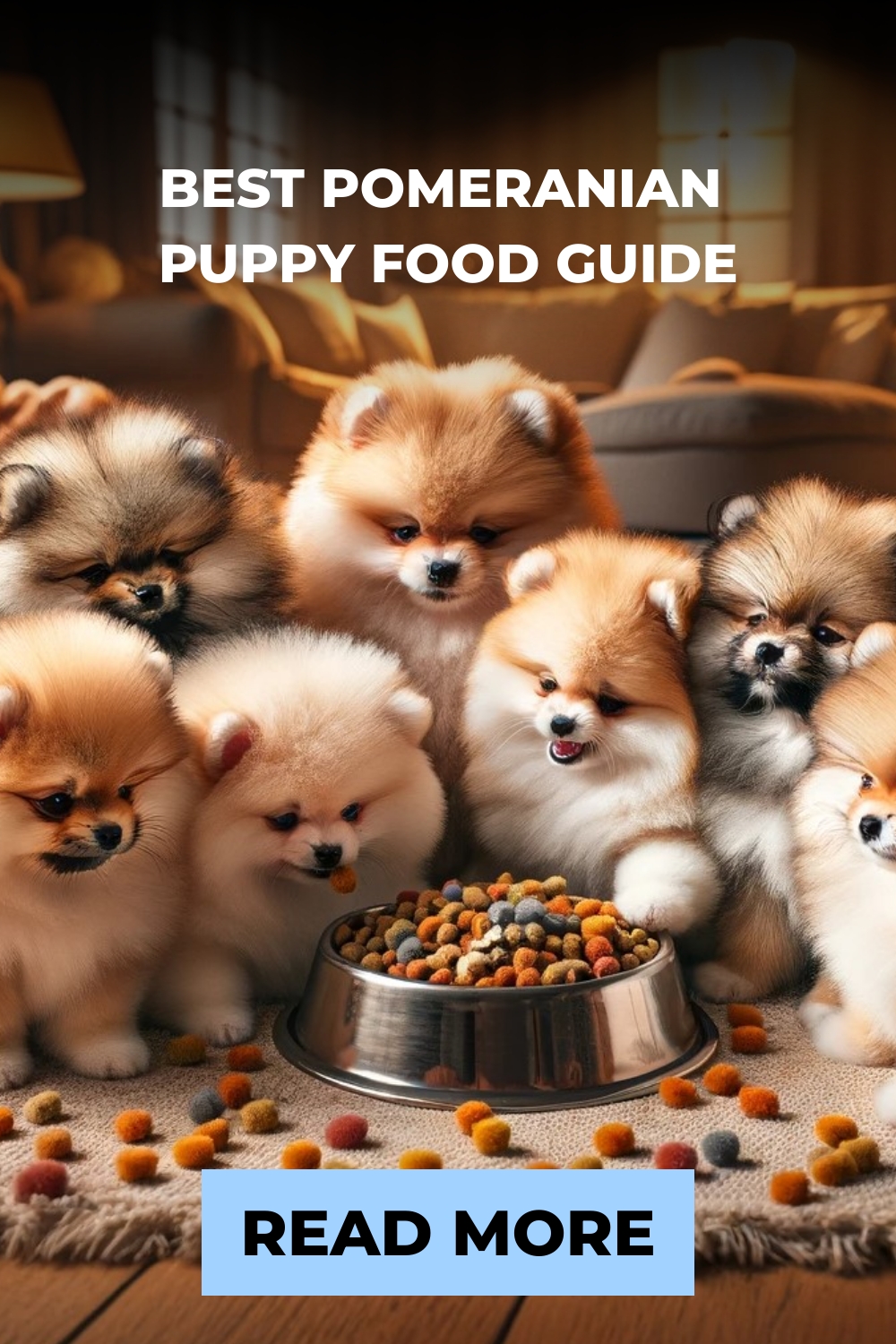
Feeding your Pomeranian puppy the right food in the correct amounts is essential for healthy growth and development. Young Pomeranians need a complete and balanced puppy food, regular meals and a feeding routine suited to their age and tiny size.
During more than 50 years of breeding and raising Pomeranians, I have learned how important good nutrition is throughout the first year of a puppy’s life. In this guide, I explain what to feed a Pomeranian puppy, how much food to offer and how often your puppy should eat. I also discuss the essential nutrients growing puppies need to remain healthy, active and strong.
Quick Pomeranian Puppy Feeding Guide
Pomeranian puppies have tiny stomachs but require plenty of energy to support their rapid growth and active nature. They should be fed a complete and balanced puppy food formulated for toy or small breeds.
A simple feeding schedule is:
- 8–12 weeks: Four small meals each day
- 3–6 months: Three small meals each day
- 6–12 months: Two or three meals each day
- Around 12 months: Gradually change to a suitable adult dog food
Always provide fresh, clean water. Use the feeding instructions on the food packaging as a starting point, then adjust the amount according to your puppy’s size, activity level, weight and body condition.
Very young or exceptionally small Pomeranian puppies may require more frequent meals because toy breeds are prone to low blood sugar. Contact your veterinarian promptly if your puppy becomes unusually sleepy, weak, unsteady, confused, shaky, or unwilling to eat.
Every puppy is different. Your veterinarian or experienced breeder can help you develop an appropriate feeding routine for your individual Pomeranian puppy.
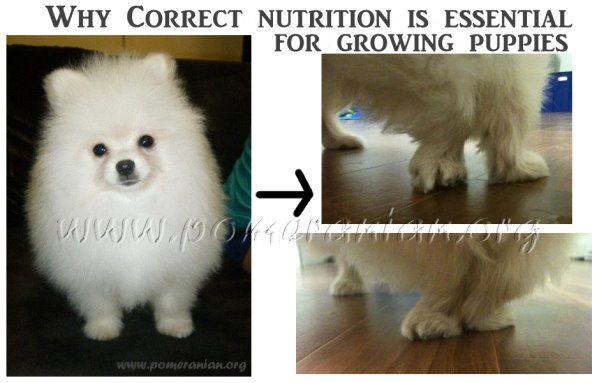
Best Pomeranian Puppy Food and Feeding Guide
Feeding your Pomeranian puppy the right food in the correct amounts is essential for healthy growth and development. Young Pomeranians need a complete and balanced puppy food, regular meals and a feeding routine suited to their age and tiny size.
During more than 50 years of breeding and raising Pomeranians, I have learned how important good nutrition is throughout the first year of a puppy’s life. In this guide, I explain what to feed a Pomeranian puppy, how much food to offer and how often your puppy should eat.
What Is the Best Food for a Pomeranian Puppy?
The best food for a Pomeranian puppy is a high-quality, complete and balanced puppy food formulated for toy or small breeds. Puppy food contains the energy, protein, fats, vitamins and minerals required for healthy growth.
Toy-breed puppy food usually has smaller pieces of kibble that are easier for a Pomeranian’s little mouth to pick up and chew. It is also generally more energy-dense than adult food, allowing a puppy to receive sufficient nutrition from a relatively small serving.
I feed and recommend Royal Canin puppy food for my Pomeranian puppies. However, the most important consideration is that the chosen food is complete and balanced for growing puppies.
Look for a puppy food that:
- Is labeled as complete and balanced for growth
- Is intended for puppies or toy and small breeds
- Comes from a reputable pet food manufacturer
- Provides clear feeding instructions
- Has small, easily managed pieces of kibble
- Agrees with your puppy’s digestive system
Do not change a new puppy’s food immediately after bringing it home. Moving to a new home is already stressful, and a sudden dietary change can cause diarrhea or an upset stomach. Continue feeding the food supplied or recommended by the breeder before making any gradual changes.
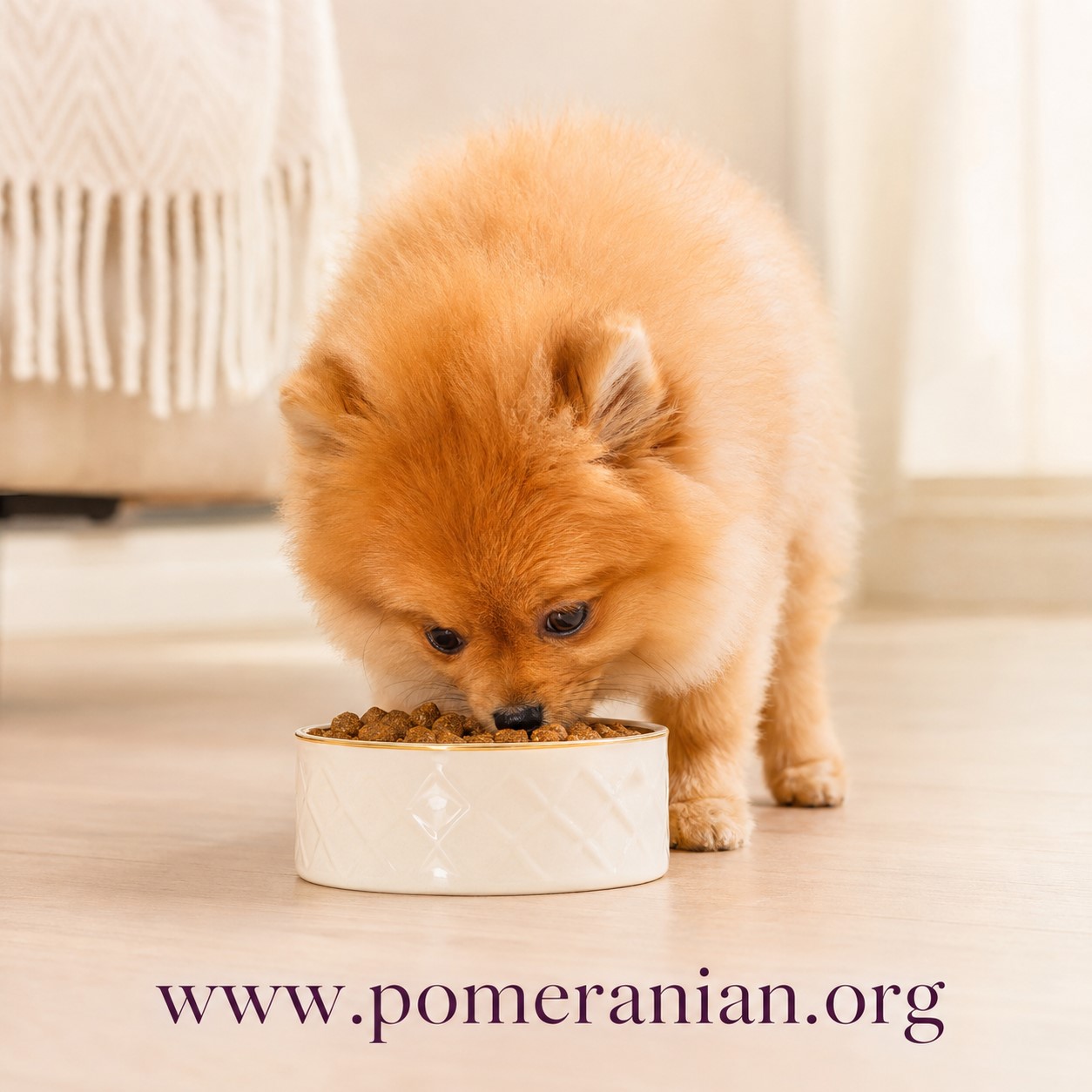
Pomeranian Puppy Feeding Schedule by Age
Pomeranian puppies have tiny stomachs and cannot comfortably eat even one large meal. Younger puppies need several small meals distributed throughout the day.
| Puppy’s age | Suggested number of meals |
|---|---|
| 8–12 weeks | Four small meals daily |
| 3–6 months | Three meals daily |
| 6–12 months | Two or three meals daily |
| Around 12 months | Two adult meals daily |
These feeding times do not need to be exact, but a consistent routine helps your puppy know when to expect food.
A very young, unusually small or underweight puppy may require a feeding schedule designed specifically for its needs. Follow the instructions provided by your breeder and veterinarian.
Fresh, clean water should always be available.
How Much Should a Pomeranian Puppy Eat?
There is no single quantity suitable for every Pomeranian puppy. The correct amount depends on:
- The puppy’s age and weight
- Expected adult size
- Activity level
- Body condition
- Health
- The number of daily meals
- The calorie content of the chosen food
Different puppy foods contain different numbers of calories. A tablespoon of one food may not provide the same nutrition or energy as a tablespoon of another. For this reason, use the manufacturer’s feeding guide as your starting point.
The amount shown on the packaging is generally the total daily allowance, not the amount to provide at every meal. Divide the daily quantity by the number of meals your puppy receives.
For example, if the recommended daily allowance is 60 grams:
- Four meals daily would be approximately 15 grams per meal.
- Three meals daily would be approximately 20 grams per meal.
- Two meals daily would be approximately 30 grams per meal.
These amounts are examples only. Always check the directions for your chosen food.
A growing puppy’s needs will change. Check its weight and body condition regularly and adjust the quantity gradually. If your puppy always appears hungry but remains lean, it may need a little more food. If it is becoming too round or regularly leaves food, the serving may be too large.
Your veterinarian can help determine the correct daily calorie intake if your puppy is very small, underweight, overweight or has a health concern.
How to Monitor Your Puppy’s Weight and Condition
The number on the scales is only one way to monitor your Pomeranian puppy. Its overall body condition is equally important.
Weigh your puppy regularly using accurate digital scales. Weekly weighing can be helpful during the first few months, particularly for very small puppies. Record the results so you can see whether your puppy is growing consistently.
When gently running your hands along your puppy’s sides, you should be able to feel the ribs under a light covering of tissue. The ribs should not be prominently visible, but they should not be buried beneath a thick layer of fat.
Viewed from above, your puppy should have a slight waist behind the ribs. From the side, the abdomen should rise gently towards the hind legs.
Remember that a Pomeranian’s thick coat can hide its true shape. Use your hands rather than relying only on appearance.
Speak to your veterinarian if your puppy:
- Stops gaining weight
- Suddenly loses weight
- Develops a swollen or pot-bellied appearance
- Becomes unusually thin
- Gains excessive weight
- Has ongoing vomiting or diarrhea
- Refuses several meals
- Appears weak or unusually tired
Treats and Optional Food Toppers
A complete and balanced puppy food should form the foundation of your Pomeranian puppy’s diet. Treats and toppers are optional and should be offered only in small amounts.
Suitable occasional additions may include:
- A small amount of plain natural yogurt
- A tiny sprinkle of grated cheese
- A little cooked egg
- A small quantity of sardine or tinned salmon in spring water
- Small pieces of plain, cooked lean meat
- A spoonful of suitable canned puppy food
Any fish should be checked carefully for large or sharp bones. Choose products without added salt, sauces or seasoning.
Cheese and yogurt can be useful for making a meal more appealing, but they are not essential sources of calcium when a puppy is already eating a complete and balanced food. Some puppies also do not tolerate dairy products well. Stop offering dairy if it causes wind, loose stools or digestive discomfort.
Treats should remain a small part of the daily diet. Too many extras can cause weight gain, create a fussy eater and reduce the amount of balanced puppy food consumed.
When using treats for training, choose tiny, soft pieces. A Pomeranian puppy does not need a treat the size intended for a much larger dog.
Foods Pomeranian Puppies Should Never Eat
Some human foods are toxic or dangerous to dogs. Never give your Pomeranian puppy:
- Chocolate
- Grapes, raisins or sultanas
- Onions, garlic, leeks or chives
- Foods or drinks containing caffeine
- Alcohol
- Macadamia nuts
- Foods containing xylitol or birch sugar
- Cooked bones
- Moldy or spoiled food
- Yeast dough
- Excessively salty, spicy or fatty food
Xylitol is an artificial sweetener that may be found in sugar-free chewing gum, sweets, baked goods, toothpaste, peanut butter, and some medications. Even a small amount can be extremely dangerous to a dog.
Avoid chicken wings and other bones that could cause choking, damage the mouth or create an intestinal obstruction. Always supervise your puppy when it is eating a chew or treat.
Contact your veterinarian or an animal poison service immediately if you believe your puppy has eaten something toxic. Do not wait for symptoms to appear, and do not induce vomiting unless directed by a veterinary professional.
Preventing Low Blood Sugar in Very Young Puppies
Very young and exceptionally small Pomeranian puppies may be vulnerable to hypoglycemia, which means their blood sugar has fallen dangerously low. This can occur when a puppy does not eat enough, goes too long without food, becomes unwell or uses more energy than it can replace.
Regular small meals are particularly important during the first few months. Make sure your puppy is eating rather than simply assuming food has disappeared from the bowl.
Possible warning signs of low blood sugar include:
- Unusual tiredness or weakness
- Trembling or shaking
- Unsteady movement
- Confusion or lack of responsiveness
- Refusing food
- Pale gums
- Collapse or seizures
Hypoglycemia can become an emergency very quickly. Contact a veterinarian immediately if a puppy becomes weak, unsteady, unresponsive or collapses.
A tiny amount of glucose syrup or honey rubbed onto the gums may sometimes be recommended as temporary first aid while urgent veterinary assistance is arranged. Do not pour liquid into the mouth of an unconscious or poorly responsive puppy because it could enter the lungs. First aid is not a substitute for veterinary treatment.
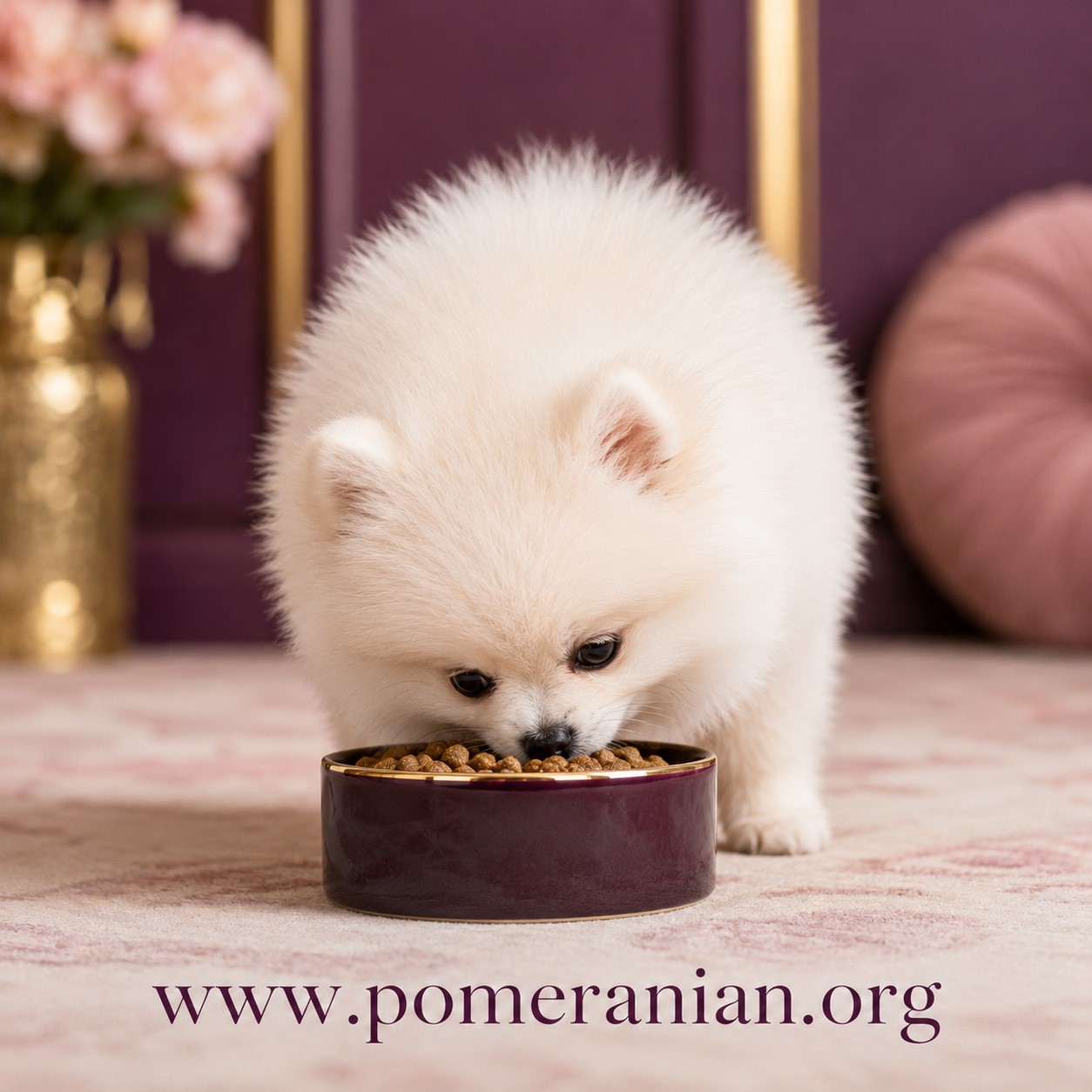
How to Change Puppy Food Safely
Sudden changes in food can cause diarrhea, vomiting, wind, or refusal to eat. Unless your veterinarian advises otherwise, make the transition over approximately seven days.
A gradual change may look like this:
| Days | Current food | New food |
|---|---|---|
| 1–2 | 75% | 25% |
| 3–4 | 50% | 50% |
| 5–6 | 25% | 75% |
| Day 7 | 0% | 100% |
Sensitive puppies may require a 10- to 14-day transition.
Change only one part of the diet at a time. Introducing a new food, several treats, and supplements together makes it difficult to identify the cause if the puppy develops digestive problems.
Slightly soft stools may indicate that the transition is progressing too quickly. Return to the previous ratio for a few days before continuing more slowly.
Contact your veterinarian if your puppy has repeated vomiting, persistent diarrhea, blood in its stool, marked tiredness, or refusal to eat. Young toy-breed puppies can become dehydrated quickly.
When to Change to Adult Food
Pomeranian puppies should remain on a complete and balanced puppy food during their main growth period. I generally recommend feeding puppy food until approximately 12 months of age.
The change does not need to happen on the puppy’s first birthday. Some puppies may be ready a little earlier, while others may benefit from remaining on puppy food slightly longer. Your puppy’s growth, body condition, activity level and health should guide the decision.
When the time comes, gradually transition from puppy food to a suitable adult food over approximately 7 days.
Adult dogs usually need fewer calories than growing puppies. Continuing to feed the same quantity of energy-dense puppy food may contribute to unwanted weight gain.
Most adult Pomeranians do well when fed two measured meals each day. Regular meals make it easier to monitor appetite, control portions, and notice changes that could indicate illness.
Frequently Asked Questions
What should an eight-week-old Pomeranian puppy eat?
An eight-week-old Pomeranian should eat a complete and balanced puppy food formulated for growth. A toy or small-breed formula with appropriately sized pieces is generally the easiest to manage.
Continue feeding the diet used by the breeder when the puppy first arrives home. Any change should be made gradually once the puppy has settled.
How often should an eight-week-old Pomeranian eat?
Most eight-week-old Pomeranian puppies should receive four small meals distributed throughout the day. Particularly small puppies may require an individual feeding routine recommended by their breeder or veterinarian.
Should dry food be left out all day?
Measured meals are preferable for most puppies because they make it easier to monitor appetite and control the daily quantity.
Some breeders may recommend temporary access to additional food for an exceptionally small puppy at risk of low blood sugar. This should be based on the individual puppy rather than used as a permanent routine for every Pomeranian.
Can I mix wet and dry puppy food?
Yes. Wet and dry puppy food can be combined, provided both are suitable for growing puppies and the total quantity does not exceed your puppy’s daily requirements.
Mixing food does not automatically make the diet healthier, but it may improve taste and provide variety in texture.
Can Pomeranian puppies drink cow’s milk?
Puppies do not require cow’s milk after weaning. Many dogs cannot digest lactose properly, and cow’s milk may cause diarrhoea or stomach discomfort.
Fresh water should always be your puppy’s main drink.
Can a Pomeranian puppy eat cheese?
A tiny amount of cheese may be offered occasionally if the puppy tolerates dairy. Cheese is high in fat and calories, so it should not become a large part of the diet.
Does a puppy need calcium supplements while teething?
A puppy eating a complete and balanced growth diet should not ordinarily require additional calcium. Too much calcium can disrupt the balance of nutrients required for healthy skeletal development.
Do not give calcium, vitamins or mineral supplements unless recommended by your veterinarian.
Can I feed my Pomeranian puppy a homemade diet?
A homemade diet must provide all essential nutrients in the correct quantities and proportions. This is particularly important during growth.
If you want to prepare your puppy’s food at home, ask a qualified veterinary nutritionist to formulate a complete recipe. Meat, vegetables and rice combined without professional formulation may not provide a balanced puppy diet.
Why is my Pomeranian puppy refusing food?
A puppy may temporarily eat less because of stress, a sudden dietary change, too many treats or an upset stomach. However, loss of appetite can also indicate illness, dental discomfort, pain, or low blood sugar.
Because young Pomeranians are so small, refusing food should not be ignored. Contact your veterinarian promptly if a young puppy misses more than one meal or also appears weak, sleepy, shaky, painful or unwell.
How do I know if my puppy is eating enough?
Monitor your puppy’s weight, body condition, appetite, energy and growth. A healthy puppy should gain weight steadily without becoming excessively round.
Your veterinarian can assess your puppy’s body condition and help adjust its daily food allowance.
What should I do if my puppy has diarrhea?
Remove newly introduced treats and avoid making further food changes. Ensure fresh water is available and contact your veterinarian for advice.
Veterinary attention is especially important if the diarrhea is frequent, contains blood or is accompanied by vomiting, weakness, pain or loss of appetite.
Denise’s Breeder Experience and Conclusion
During more than 50 years of breeding and exhibiting Pomeranians, I have raised many generations of puppies. I have learned that consistency is one of the most important parts of feeding a young Pomeranian.
New owners are often tempted to change their food immediately or to add numerous treats and supplements. In most cases, a puppy does best when kept on the breeder’s established diet while settling into its new home. Changes can then be introduced gradually if they are genuinely needed.
My preference is to feed a high-quality, complete and balanced puppy food until approximately 12 months of age. Small amounts of suitable fresh foods may be offered as extras, but they should never replace the balanced puppy diet.
Every puppy is an individual. Size, activity, metabolism and health can all affect how much food a Pomeranian requires. Watch your puppy rather than relying solely on a measuring cup or feeding chart. Regular weighing and hands-on body checks will help you recognize when the feeding quantity needs adjustment.
Good nutrition does not need to be complicated. Feed an appropriate puppy food, provide small regular meals, keep treats modest and make dietary changes slowly. If your puppy stops eating, fails to grow normally or appears unwell, seek veterinary advice promptly.
⚠ Veterinary Disclaimer
The information provided in this article is intended for educational and general informational purposes only and is not a substitute for professional veterinary advice, diagnosis, or treatment.
Always seek the advice of your veterinarian or another qualified animal health professional with any questions you may have regarding your dog’s health or medical condition.
Never ignore professional veterinary advice or delay seeking treatment because of something you have read on this or any other website.
If your Pomeranian is showing signs of illness, discomfort, skin irritation, or an adverse reaction to medication or treatment, contact your veterinarian promptly.
Copyright Pomeranian.org. All Rights Reserved.
References and Further Reading:
[1] Denise Leo “The Pomeranian Handbook”.
Pomeranian Grooming eBook