
Many people searching for a “teacup Pomeranian” believe they are looking for a very small, delicate version of the breed. In reality, the term “teacup Pomeranian” is not recognised in the dog world and is not used by ethical, preservation-focused Pomeranian breeders.
Written by Denise Leo, Pomeranian expert, ANKC breed specialist judge, and preservation breeder with over 50 years of experience.
As someone who has dedicated a lifetime to breeding, showing, and judging Pomeranians, I can confidently say this:
👉 The correct, well-bred Pomeranian is already a small dog.
👉 What many people call a “teacup” is often simply a properly bred, true-to-standard Pomeranian.
What Is a “Teacup Pomeranian”?
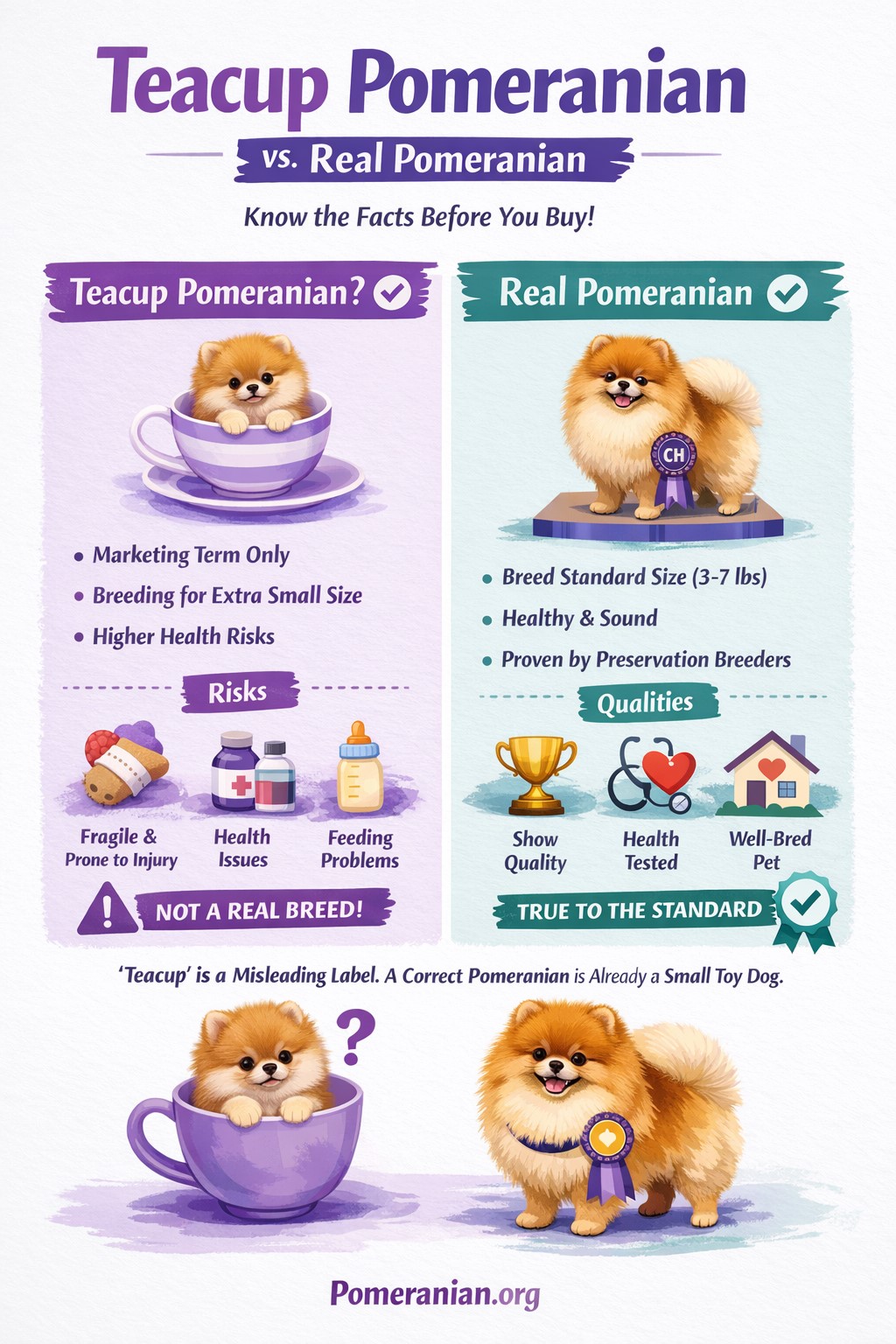
The term “teacup Pomeranian” is a marketing label — not a recognised breed or size classification.
It is commonly used online and in advertisements to:
- attract attention
- imply rarity
- suggest a smaller-than-normal dog
However, there is no official “teacup” size in the Pomeranian breed standard.
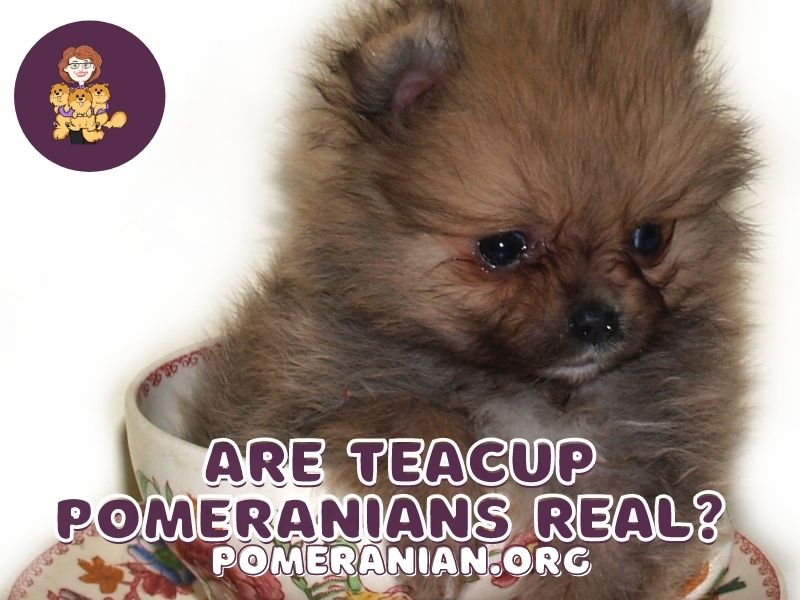
Are Teacup Pomeranians Real?
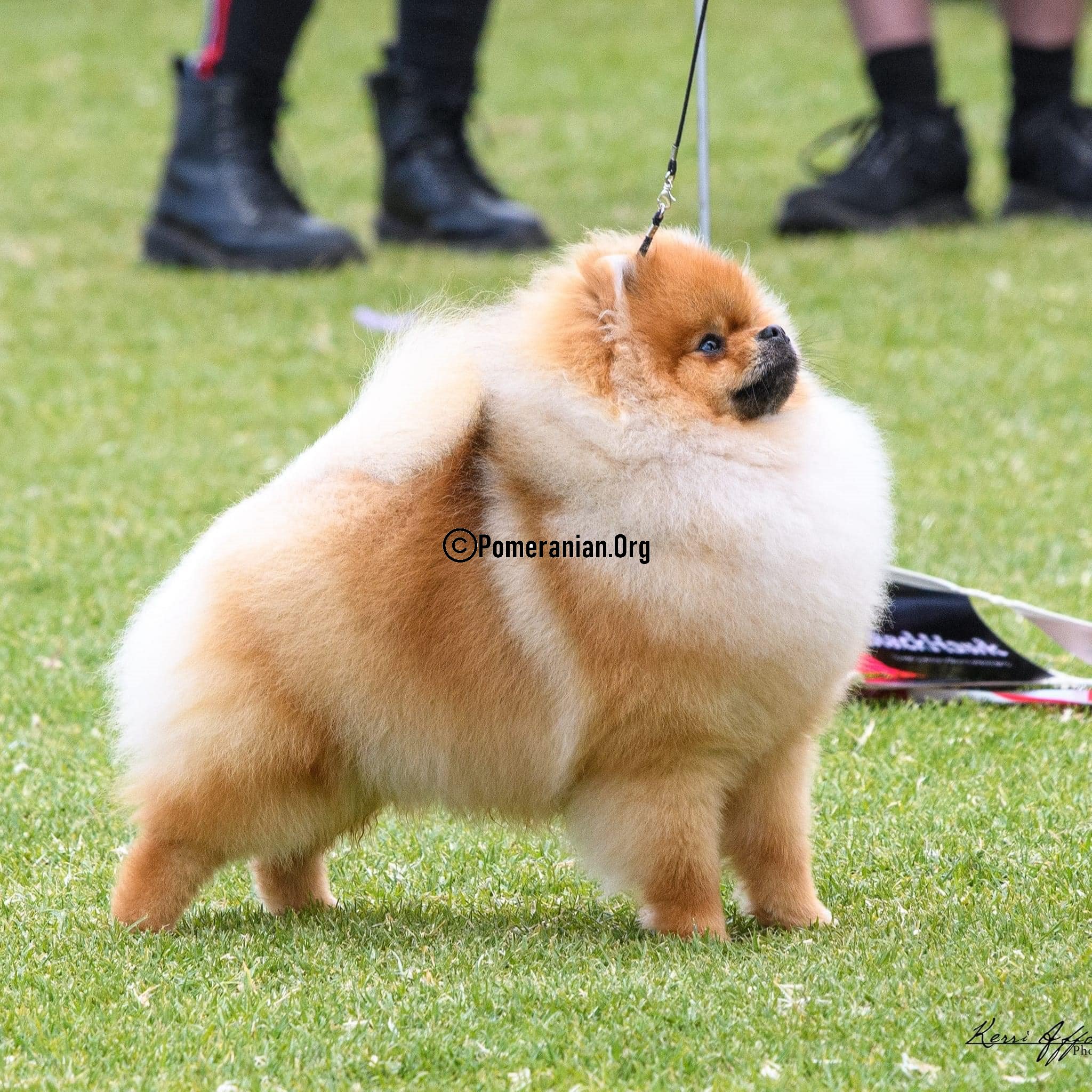
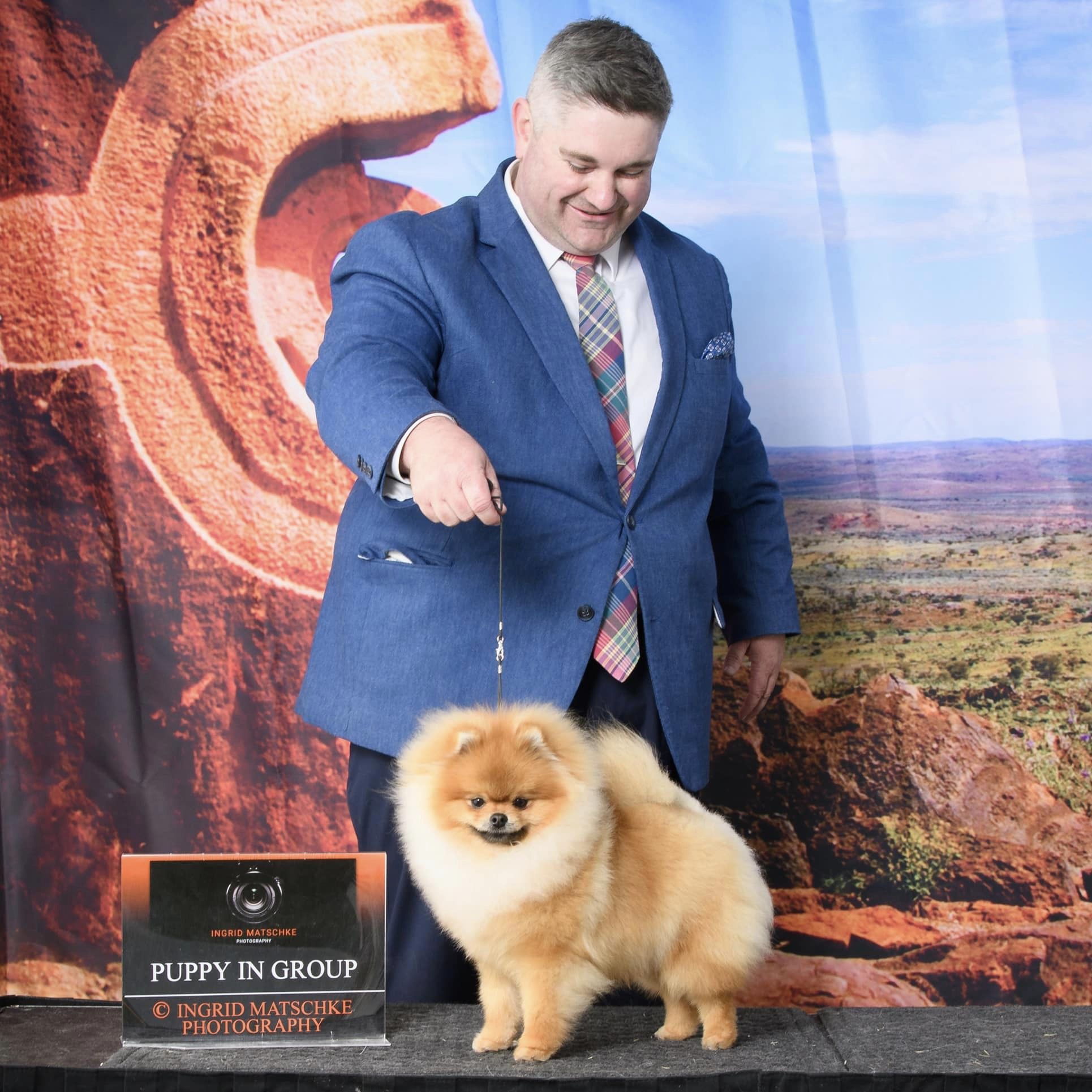
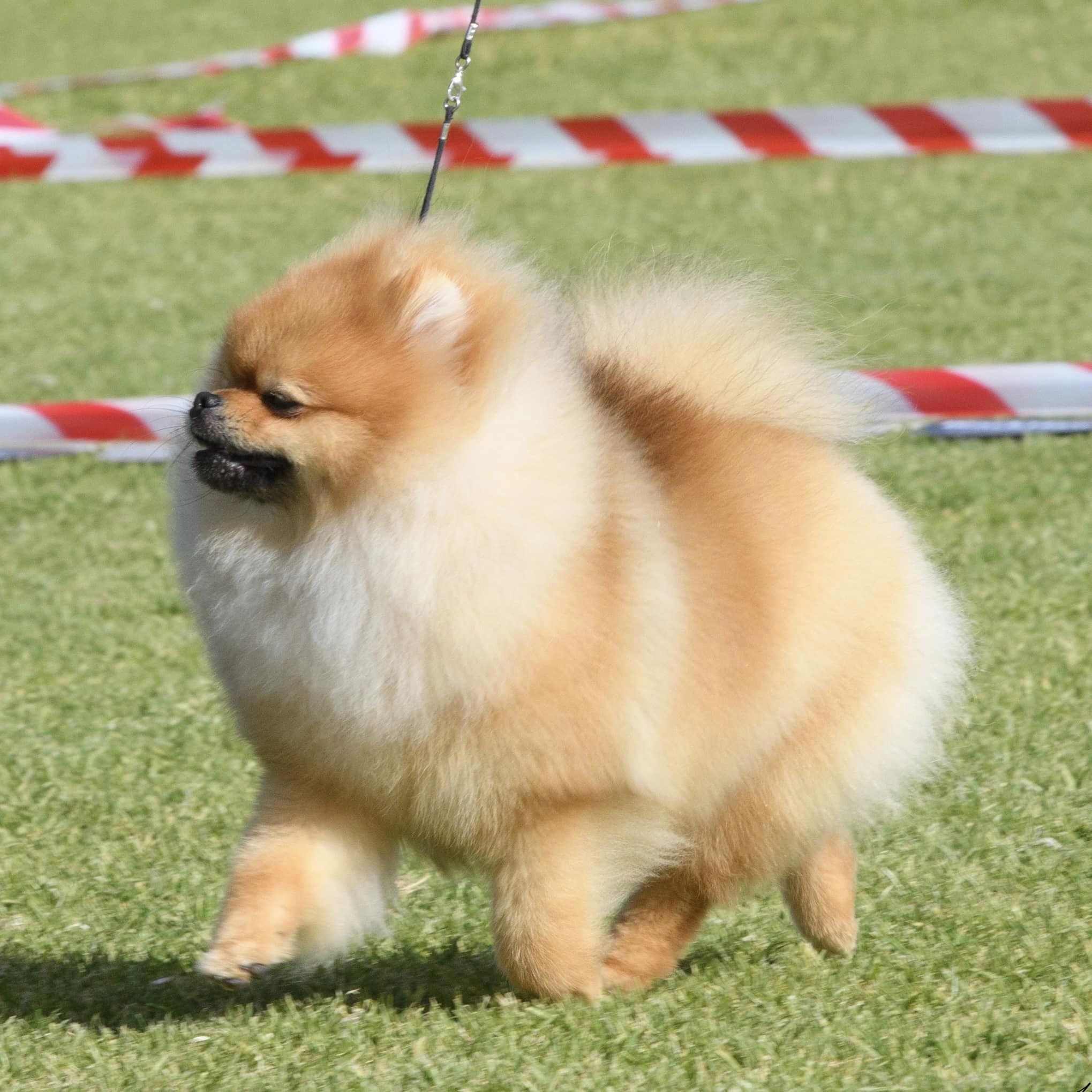
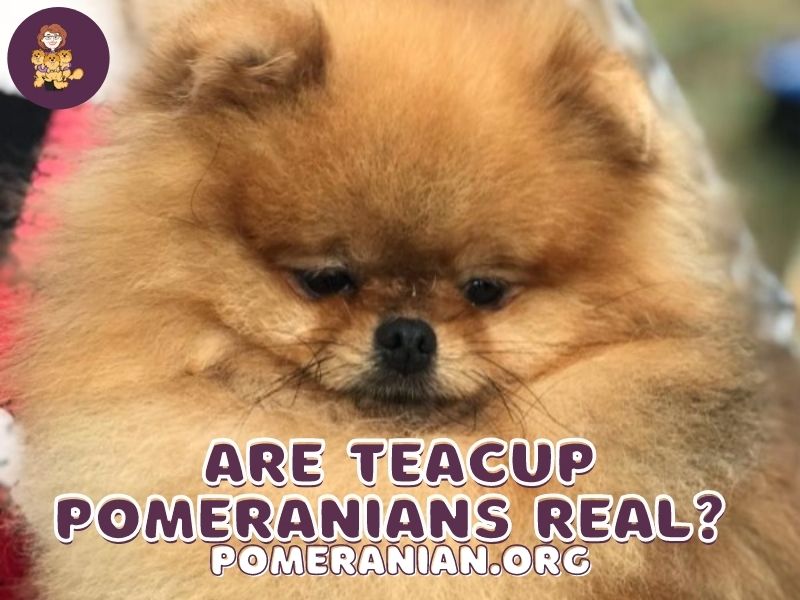
No, teacup Pomeranians are not a separate recognised breed or official size. The term “teacup Pomeranian” is a marketing label often used by the general public and puppy sellers. In many cases, what people call a teacup Pomeranian is simply a small, correctly bred, true-to-standard Pomeranian produced by a preservation breeder.
What many puppy buyers are actually looking for is:
- a small, compact toy dog
- a beautiful fluffy coat
- correct breed type
- a healthy, well-bred companion
Those qualities are found in a properly bred Pomeranian — not in a separate “teacup” variety.
The Truth: What a Real Pomeranian Should Be
A correctly bred Pomeranian is a toy breed — small, compact, and balanced.
Preservation breeders focus on:
- health
- correct size and proportion
- sound structure
- coat quality
- temperament
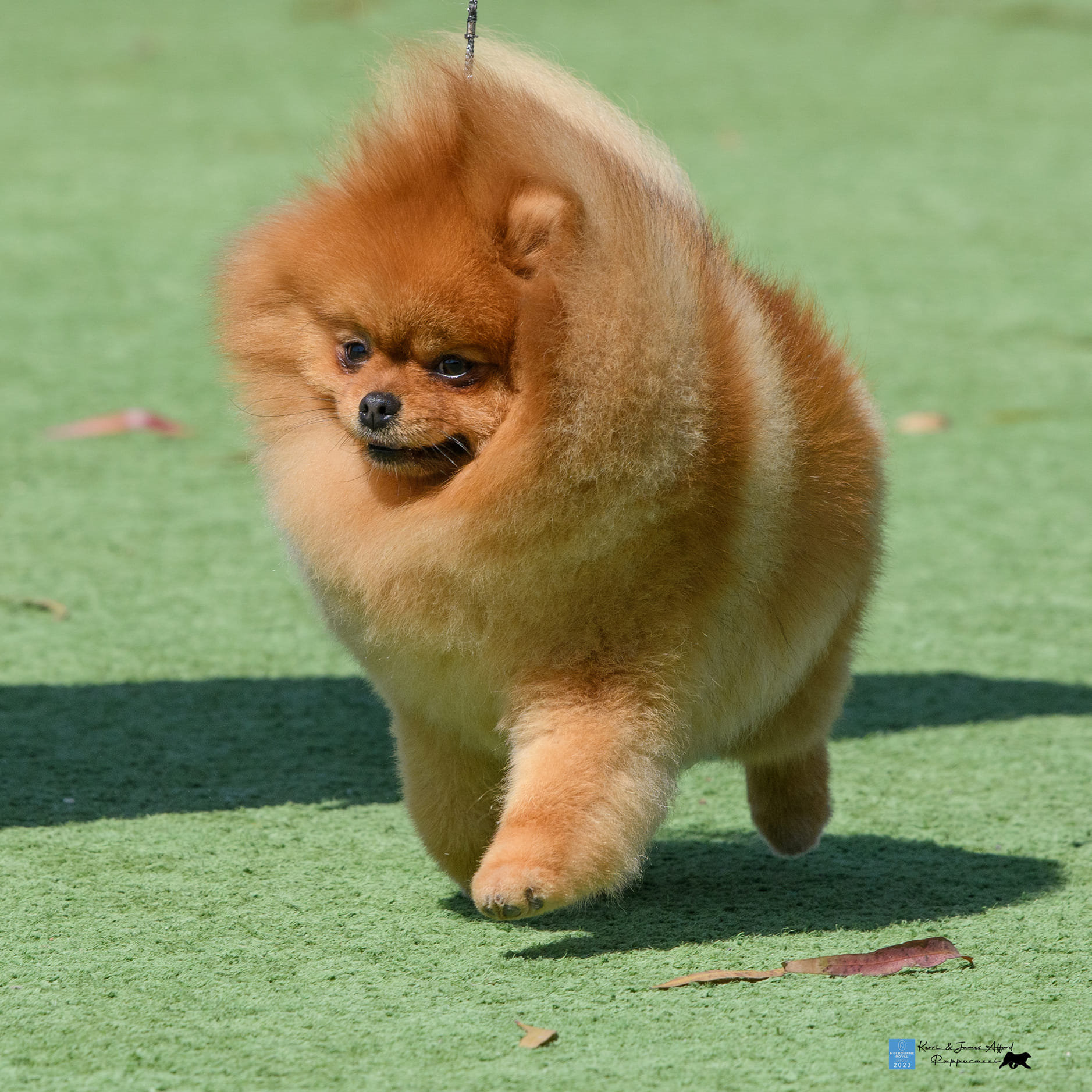
Dogs bred to the breed standard — and proven in the show ring — are the true representation of the Pomeranian.
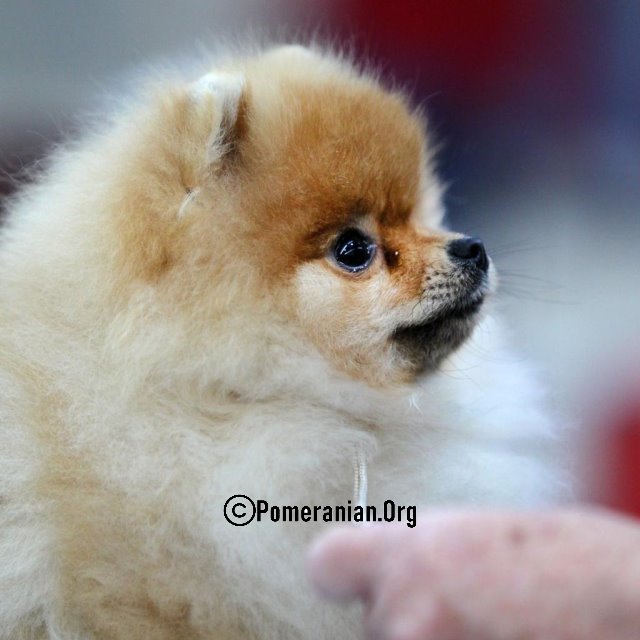
In fact, many of the Pomeranians people admire online and refer to as “teacups” are simply beautiful, well-bred standard Pomeranians.
Why the Term “Teacup” Is Misleading
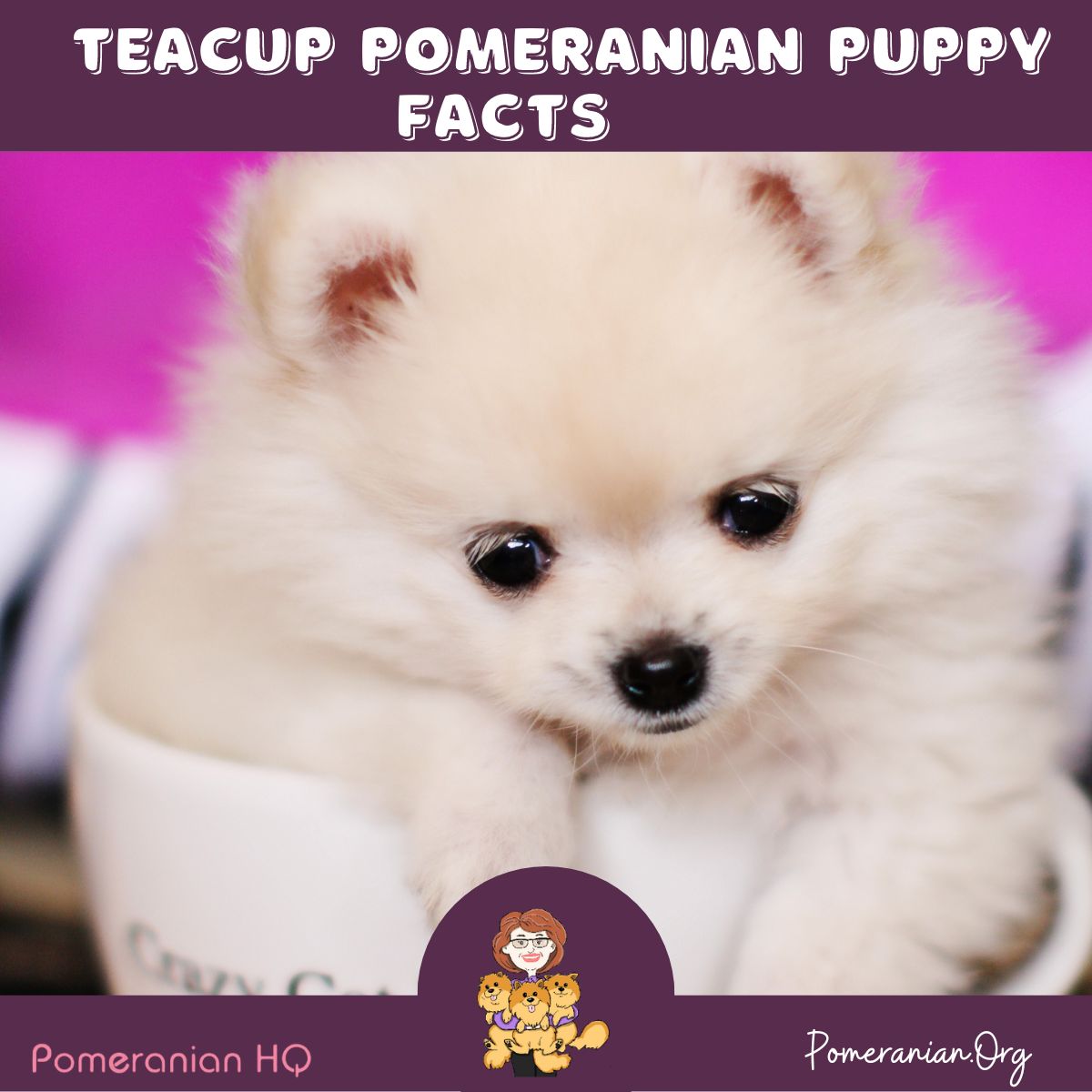
The use of the word “teacup” creates confusion for puppy buyers.
It suggests:
- a separate type of Pomeranian
- a smaller, more desirable version
- something rare or exclusive
In reality, it is often used as a marketing tool, particularly outside the preservation breeding community.
Ethical breeders do not aim to produce dogs smaller than the standard. Instead, they work to preserve the breed as it was intended.
What Puppy Buyers Often Mean by “Teacup”
Interestingly, many puppy buyers use the term “teacup” when what they actually want is a correct, well-bred Pomeranian.
I recently discussed this with another preservation breeder. She mentioned that she often doesn’t correct buyers when they use the term “teacup,” because in many cases, they are simply referring to the true-to-standard Pomeranians bred by preservation breeders — the type of dog that is small, balanced, and correctly structured.
This highlights just how widespread the misunderstanding has become.
Why Preservation Breeders Do Not Use the Term
As preservation breeders, our goal is to:
- protect the integrity of the breed
- breed to the official standard
- produce healthy, sound dogs
We do not breed for extremes, including exaggerated small size.
As a Pomeranian specialist judge and breeder, I do not use or support the term “teacup Pomeranian.” The correct Pomeranian is already a small, beautiful toy dog when bred properly.
Risks of Buying From “Teacup” Sellers
Buyers should be cautious when they see puppies advertised as “teacup.”
This can sometimes indicate:
- breeding for size rather than quality
- lack of adherence to the breed standard
- misleading marketing
It is always important to choose a breeder who:
- health tests their dogs
- proves them in the show ring
- provides registration with AKC, FCI, Dogs Australia
Denise Leo’s Advice to Puppy Buyers
If you are searching for a “teacup Pomeranian,” what you are likely looking for is:
✔ a small, compact dog
✔ a beautiful coat
✔ correct breed type
✔ a well-bred companion
These qualities are found in standard, preservation-bred Pomeranians — not in something separate called a “teacup.”
Focus on finding a knowledgeable, ethical breeder rather than a label.
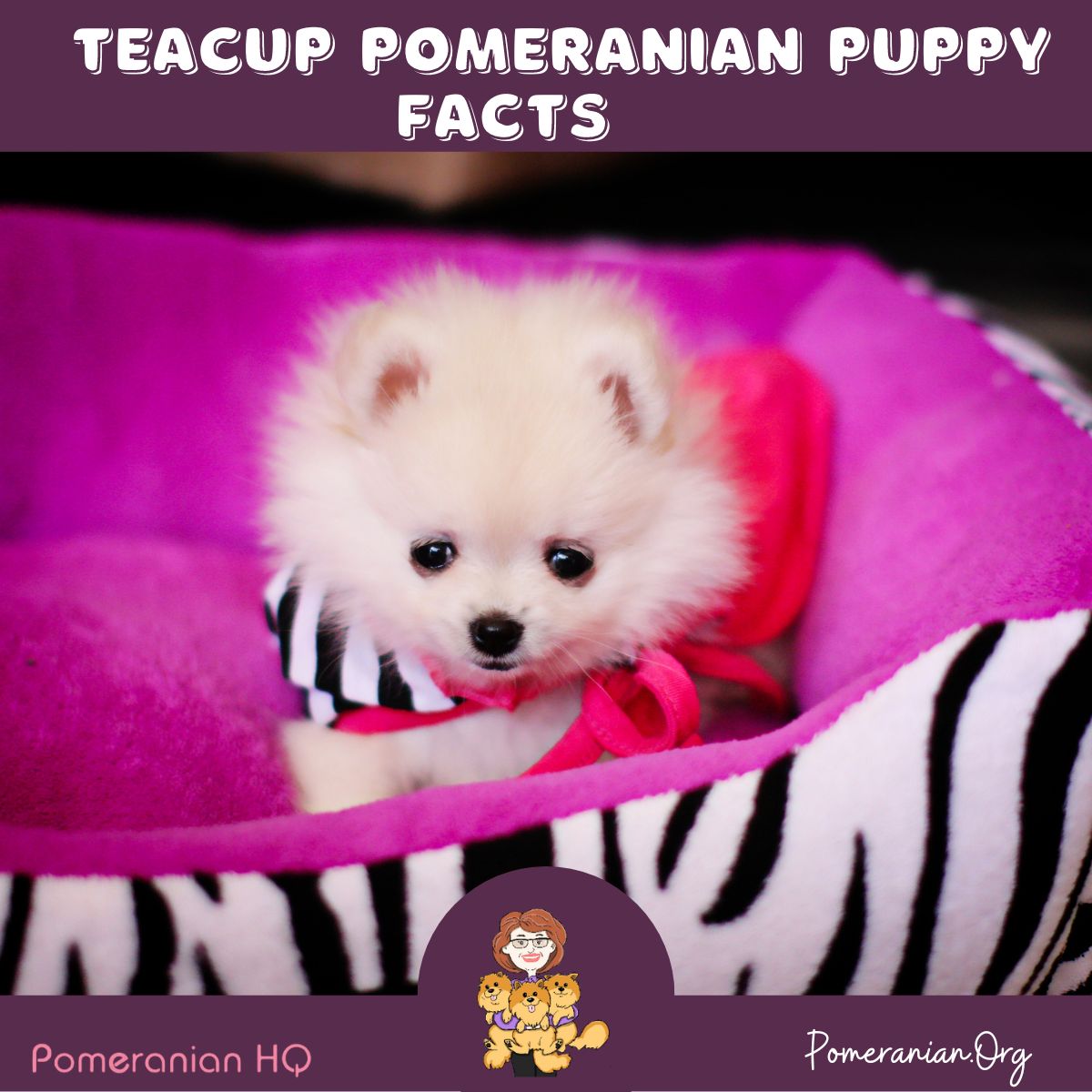
Pomeranian Teacup Facts
Teacup Pomeranian Facts and Frequently Asked Questions
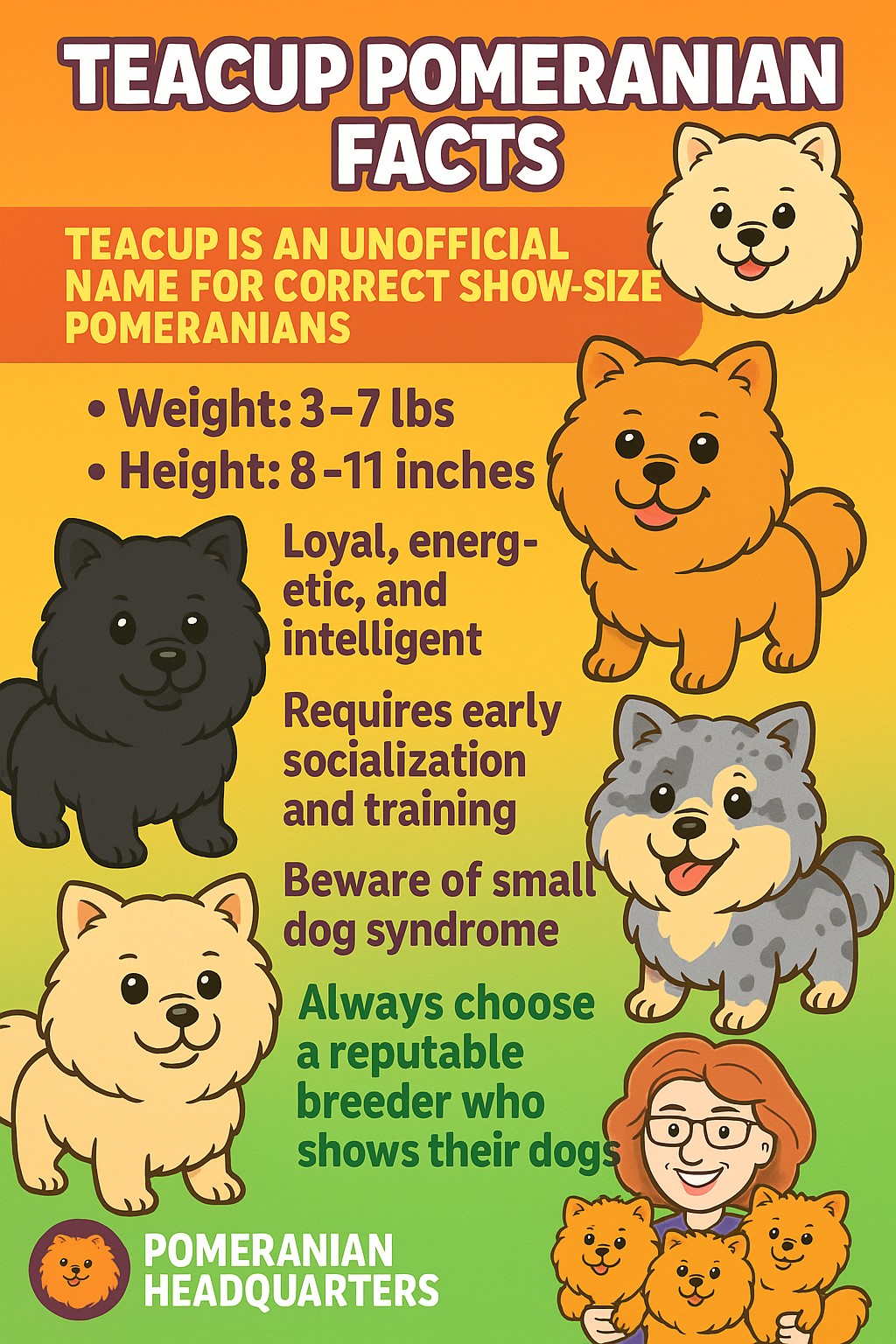
The term teacup Pomeranian has been used for many years, but it is important to understand that it is not an official breed or recognised size. In most cases, when people refer to a teacup Pomeranian, they are actually describing a small, correct, show-standard Pomeranian bred by knowledgeable preservation breeders.
Denise Leo’s note: “Teacup” is not a separate breed. It is simply a marketing term often used by the general public for the small, beautiful Pomeranians they admire. Ethical preservation breeders do not breed a separate “teacup” variety.
Key Facts About the So-Called “Teacup” Pomeranian
- The so-called teacup Pomeranian is not a separate breed.
- “Teacup” is an unofficial label, not a correct dog-world term or recognised classification.
- In many cases, people use the word “teacup” when referring to a true-to-standard, show-type Pomeranian.
- A correct Pomeranian is already a small toy dog, bred for balance, soundness, and type.
- Pomeranians are known for being intelligent, lively, affectionate, and full of personality.
- They come in a wide variety of colours including orange, cream, white, black, sable, parti-colour, and blue merle.
- Like all puppies, early socialisation and training are essential for developing a confident, well-mannered adult dog.
- Pomeranians can develop undesirable behaviour if spoiled or not given boundaries, so good upbringing matters.
- Price varies greatly depending on quality, pedigree, health testing, breeder reputation, and whether the parents are proven in the show ring.
- Rather than searching for “teacup” puppies, buyers are far better to seek out reputable preservation breeders producing healthy, true-to-standard Pomeranians.
Size and Breed Standard
One reason for the confusion is that many non-dog people assume “teacup” is the correct name for the proper small Pomeranian they see winning in the show ring or bred by preservation breeders. In reality, the correct Pomeranian is already a small toy breed. There is no official separate “teacup” size.
Many websites quote weights such as 3 to 7 pounds and heights of 8 to 11 inches when describing a “teacup” Pomeranian. These figures generally fall within the broad range people associate with a normal small Pomeranian, which is exactly why the term creates so much confusion.
Buying Advice
It is best not to focus on advertisements using the word “teacup”. Instead, look for breeders who:
- breed true to the Pomeranian standard
- health test their breeding dogs
- prove their dogs in the show ring prior to breeding
- provide proper registration paperwork
- breed for soundness, temperament, and correct type rather than marketing terms
Frequently Asked Questions
Are teacup Pomeranians real?
No. “Teacup Pomeranian” is not an official breed or size. It is a marketing term.
What size should a Pomeranian be?
A Pomeranian should be a small, balanced toy dog as defined by the breed standard.
Why do breeders not use the term “teacup”?
Because it is not recognised and can be misleading. Ethical breeders focus on correct type, not marketing labels.
Is a “teacup” Pomeranian smaller than a normal one?
In many cases, what people call a “teacup” is simply a correctly bred Pomeranian.
Why do puppy buyers keep using the word “teacup”?
Many puppy buyers genuinely believe “teacup” is the correct term for a proper, small Pomeranian. I recently discussed this with another preservation breeder, and she said she often does not bother correcting buyers because they are usually describing the true-to-standard Pomeranians bred by preservation breeders who prove their dogs in the show ring before breeding.
What should buyers look for instead of the word “teacup”?
Buyers should look for a reputable preservation breeder producing healthy, sound, true-to-standard Pomeranians, rather than focusing on labels such as “teacup.”
Final thought: The best Pomeranians are not bred to fit a trendy label. They are bred to the standard by preservation breeders who value health, soundness, temperament, and true breed type.
What’s the Difference Between a Pomeranian and a “Teacup” Pomeranian?
There is no actual difference between a Pomeranian and a so-called “teacup Pomeranian.”
The confusion stems from the general public’s widespread use of the word “teacup”. Many people believe it refers to a smaller or special type of Pomeranian, when in reality it is simply a mislabel for a correctly bred, small Pomeranian.
A well-bred Pomeranian, produced by a preservation breeder and conforming to the breed standard, is already a small, compact toy dog.
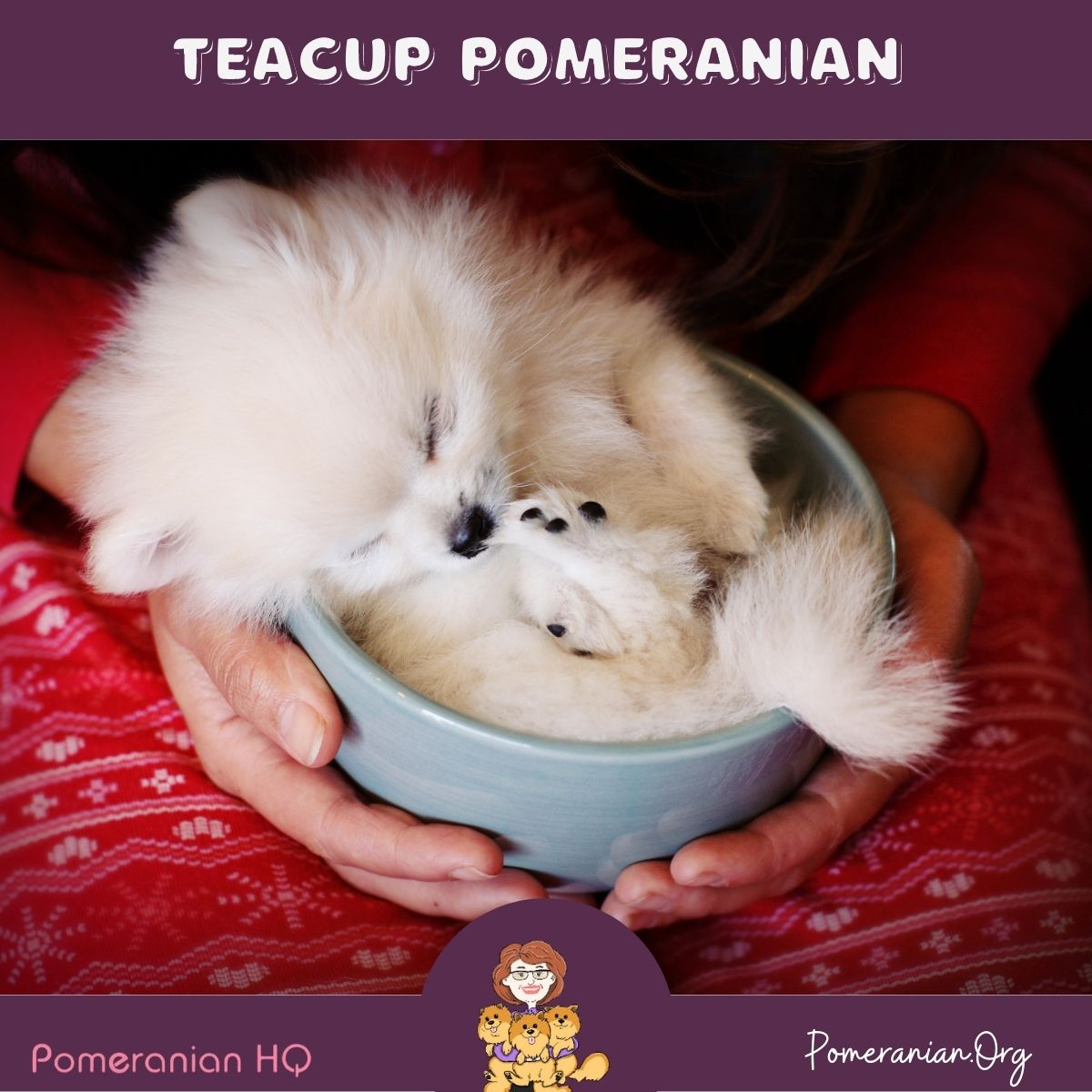
What People Think Is a Teacup… Is Actually Correct
Over the years, I have spoken with many puppy buyers who specifically ask for a “teacup Pomeranian.”
In almost every case, what they are describing is:
- a small, compact dog
- a beautiful, full coat
- a short, correct muzzle
- a balanced, show-type appearance
👉 In other words, they are describing a correct, well-bred Pomeranian.
This misunderstanding is extremely common.
I recently discussed this with another preservation breeder. She mentioned that she often does not correct buyers when they use the term “teacup,” because they are usually referring to true-to-standard Pomeranians bred by preservation breeders who show their dogs prior to breeding.
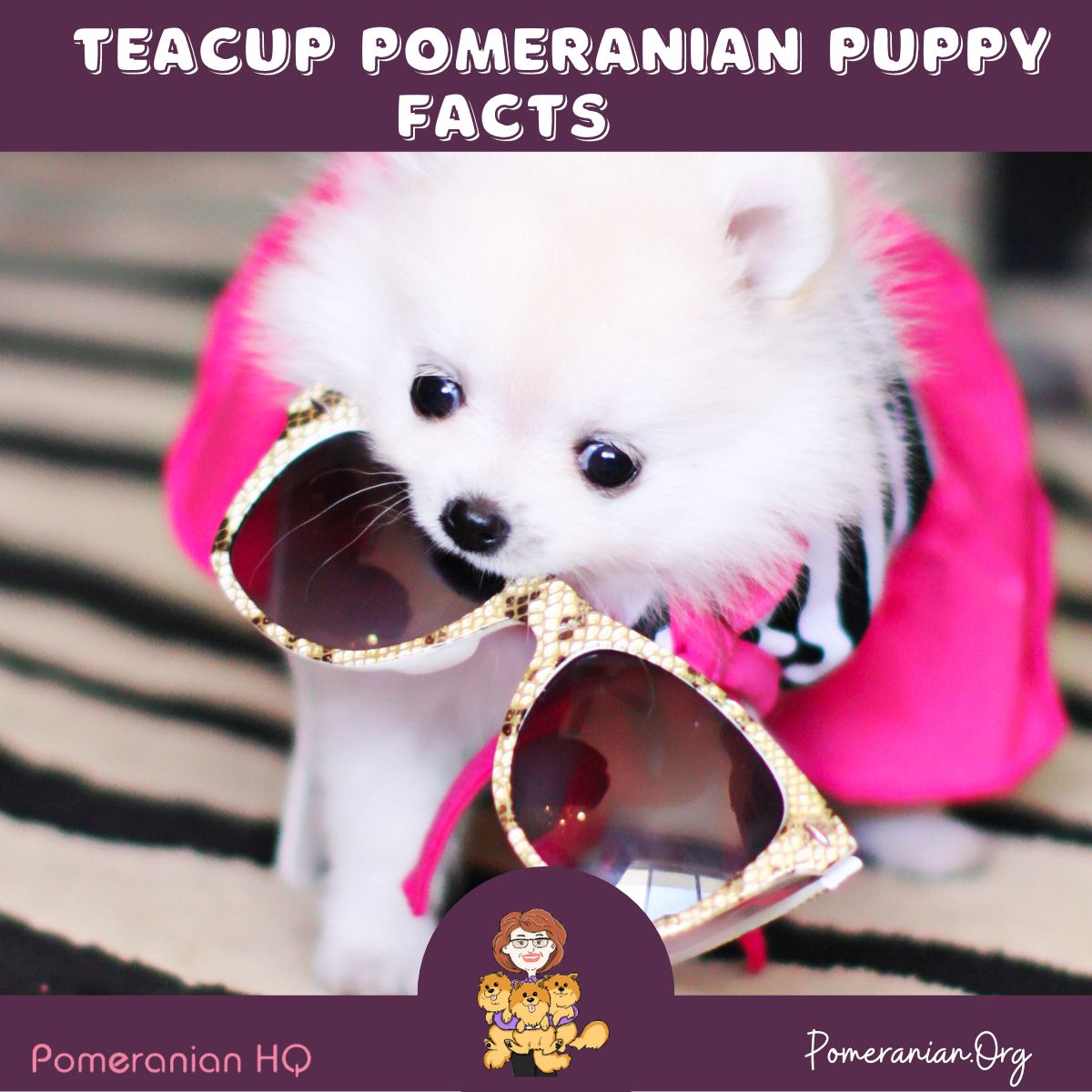
Why Breeding for “Extreme Teacup” Size Is a Problem
Breeding specifically for extremely small size can create serious issues.
Very tiny puppies are often:
- weaker at birth
- unable to compete for milk
- requiring intervention such as bottle or tube feeding
In many breeds, these smallest puppies are referred to as “runts.” They are not bred from in responsible breeding programs.
As a preservation breeder, the goal is never to produce the smallest possible dog, but rather to produce a healthy, sound, correctly structured Pomeranian.
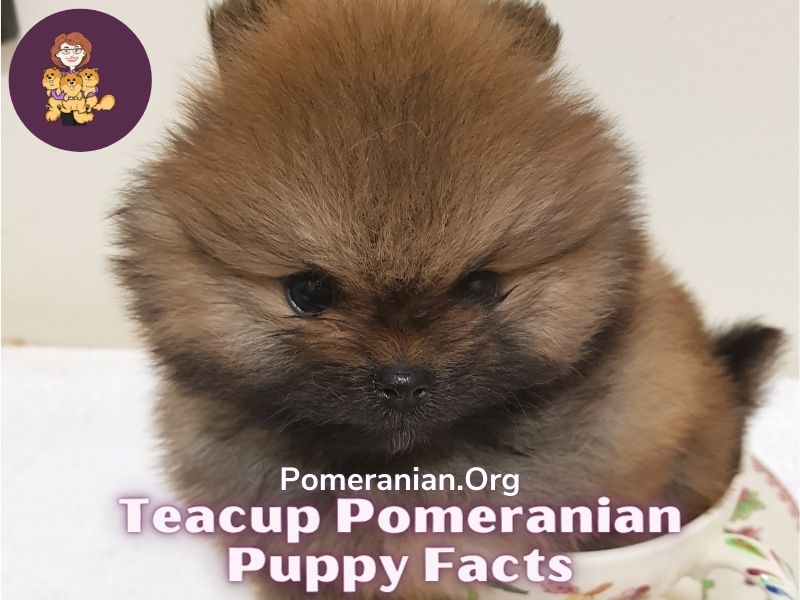
The Reality of Very Small Pomeranians
Extremely small Pomeranians can be:
- more fragile
- more prone to injury
- more likely to experience health complications
These dogs may require additional care and can be more vulnerable in everyday situations.
This is why ethical breeders do not deliberately aim to produce dogs below the normal size range.
How to Find the Right Pomeranian Puppy
If you are searching for a “teacup Pomeranian,” the best approach is to shift your focus away from the label and towards the breeder.
Look for a breeder who:
- breeds to the official Pomeranian standard
- health tests their dogs
- proves their dogs in the show ring
- provides proper registration (AKC, FCI, Dogs Australia / ANKC)
- prioritises health, temperament, and correct type
Avoid:
- advertisements using terms like “teacup,” “micro,” or “mini”
- breeders focusing on size rather than quality
Health Considerations in Very Small Pomeranians
Health concerns are often associated not with a “teacup type,” but with breeding practices that prioritise extremely small size over soundness and structure.
Very small Pomeranians can be more vulnerable to:
- injury due to their delicate size
- low blood sugar (hypoglycaemia)
- dental issues due to crowded teeth
- joint and structural weaknesses
In many cases, these issues arise when puppies are bred to be smaller than the breed’s natural, healthy size range.
A well-bred Pomeranian, produced by a responsible preservation breeder, should be:
- healthy
- structurally sound
- robust for its size
As a breeder and judge, my focus has always been on producing Pomeranians that are not only beautiful but also strong, healthy, and able to live long, happy lives. Choosing a healthy, well-bred Pomeranian will always be far more important than chasing size labels such as “teacup.”
Denise Leo’s Final Advice
After more than 50 years of breeding and judging Pomeranians, I can say with confidence:
👉 There is no such thing as a separate “teacup” Pomeranian
👉 The correct Pomeranian is already a small, beautiful toy dog
If you focus on finding a well-bred puppy from a knowledgeable preservation breeder, you will get exactly what most people are searching for when they use the word “teacup” — just without the confusion.
At this point, you can continue your journey to Pomeranian puppy ownership with accurate Pomeranian info and facts to assist you.
Good luck with your Pomeranian puppy.
Copyright Pomeranian.org. All Rights Reserved.
References and Further Reading:
[1] Official Standard of the Pomeranian (AKC). American Kennel Club, 2011.
[2] Official English Kennel Club Pomeranian Breed Standard, 2017.
[3] Denise Leo, The Pomeranian Handbook.
[2] Kimbering Pomeranians “1891-1991”.