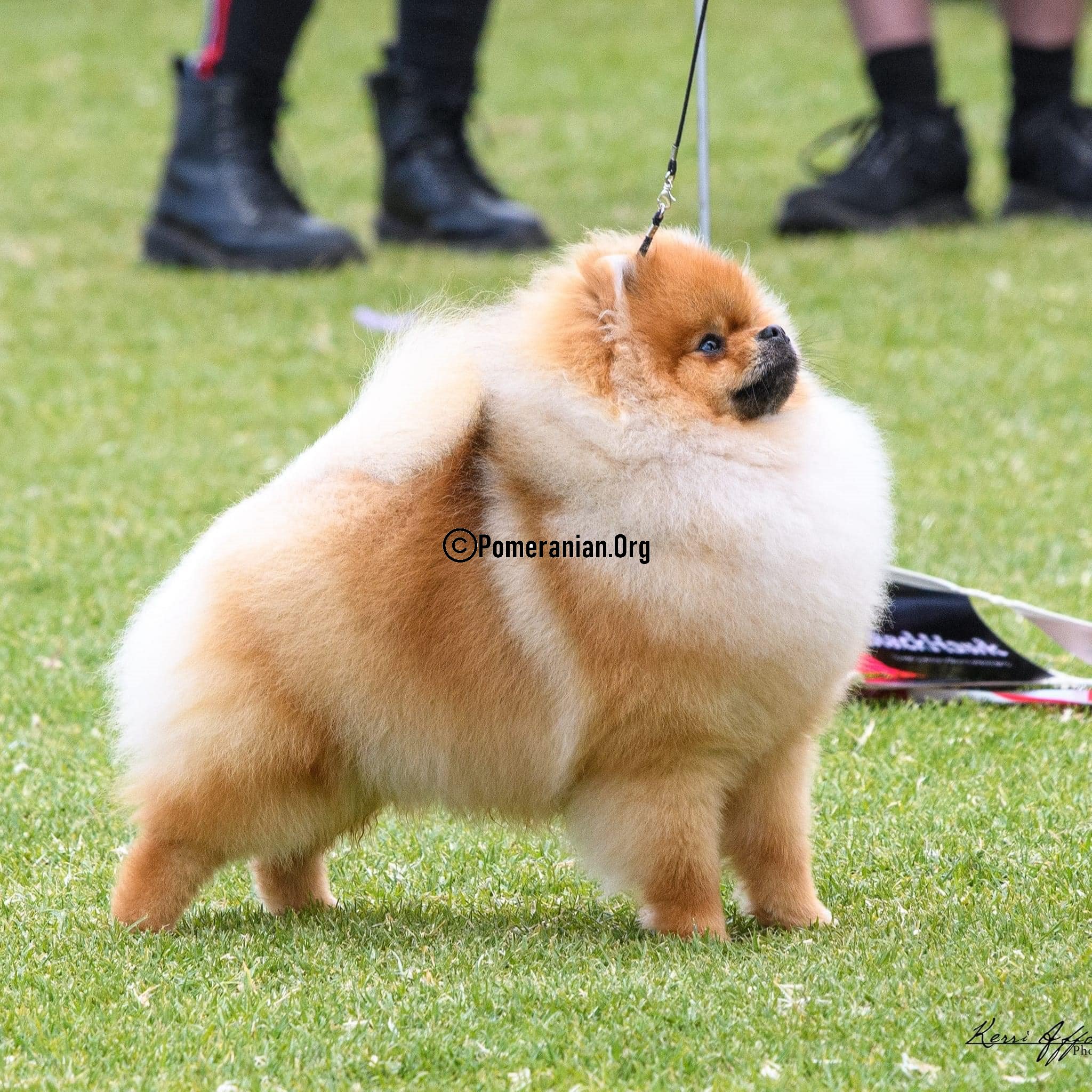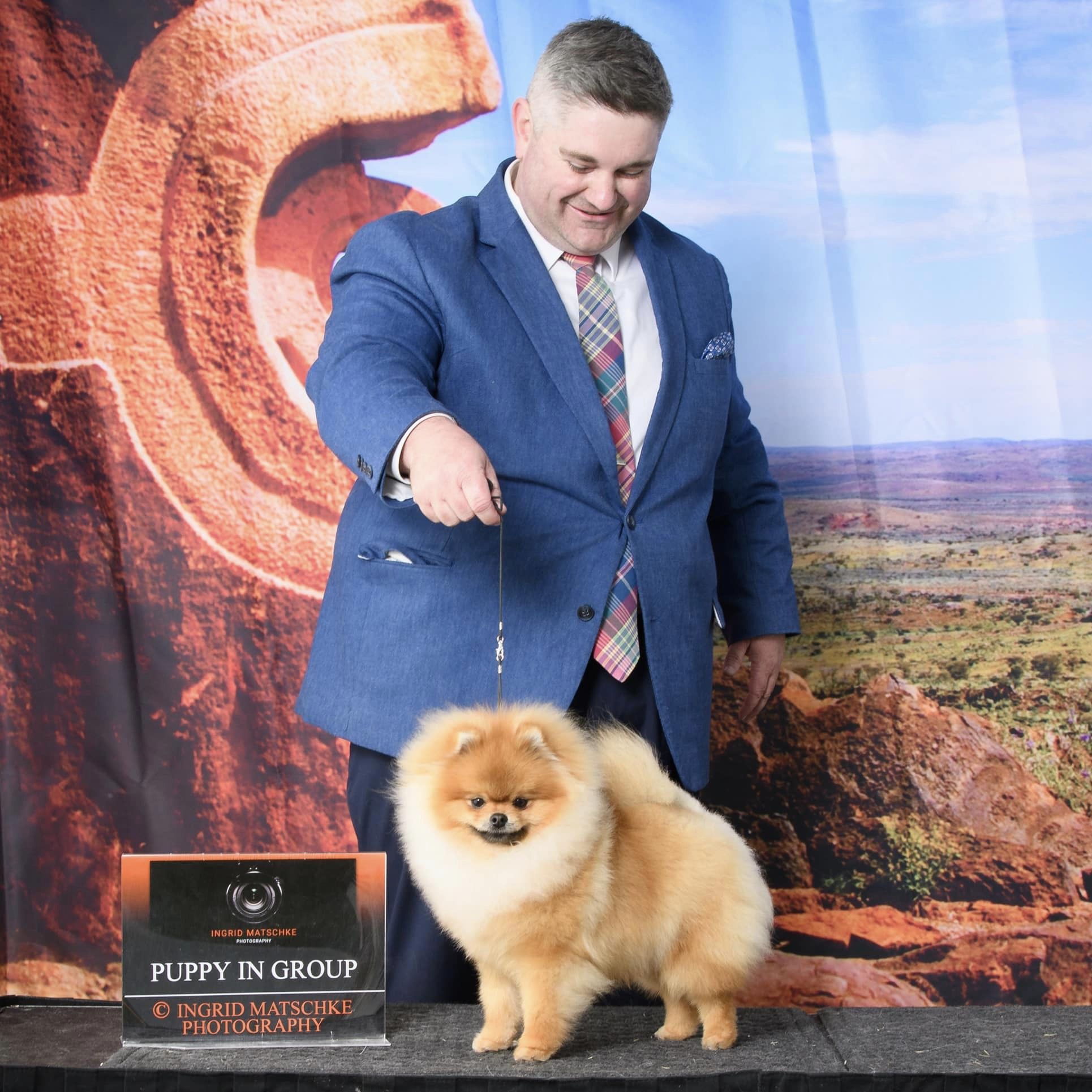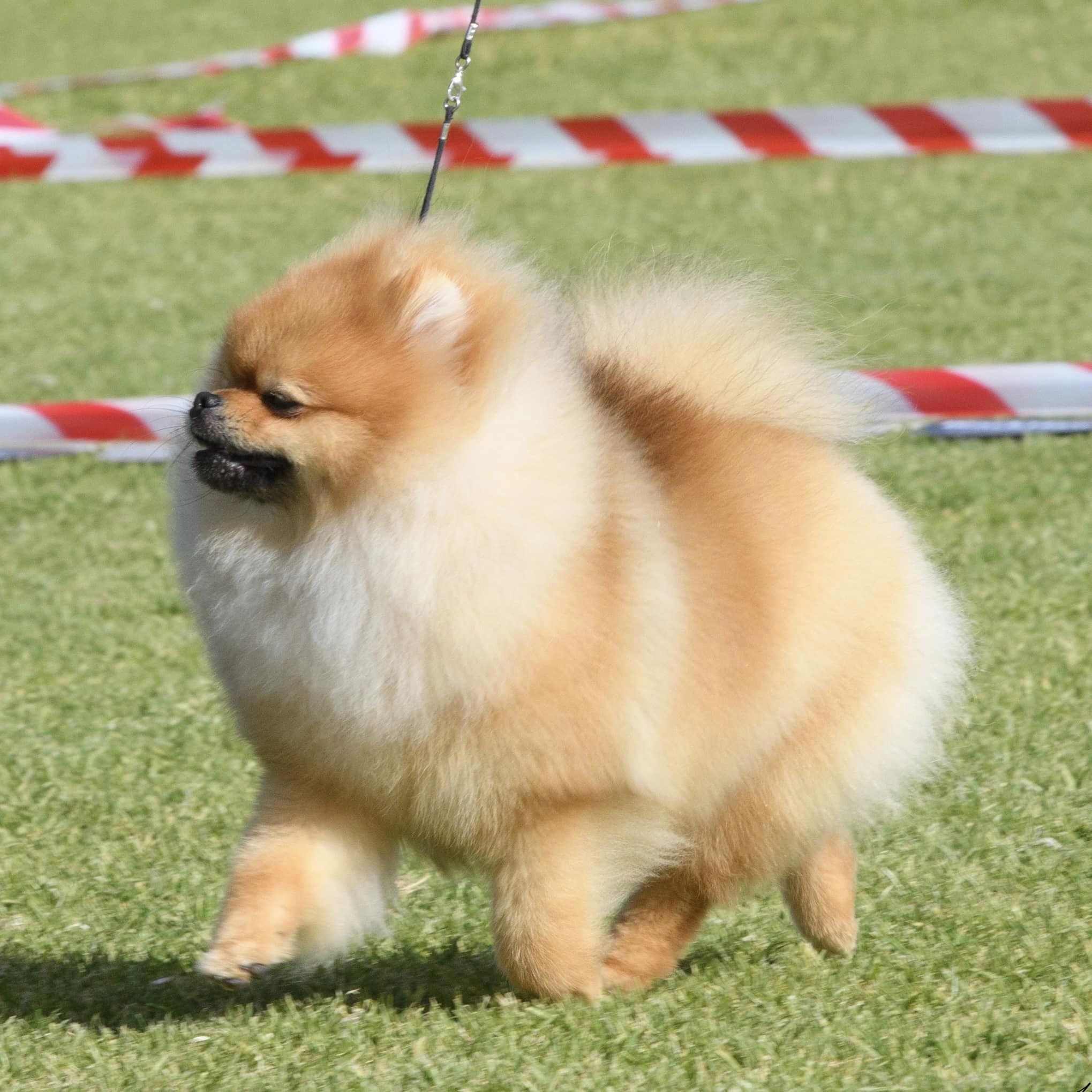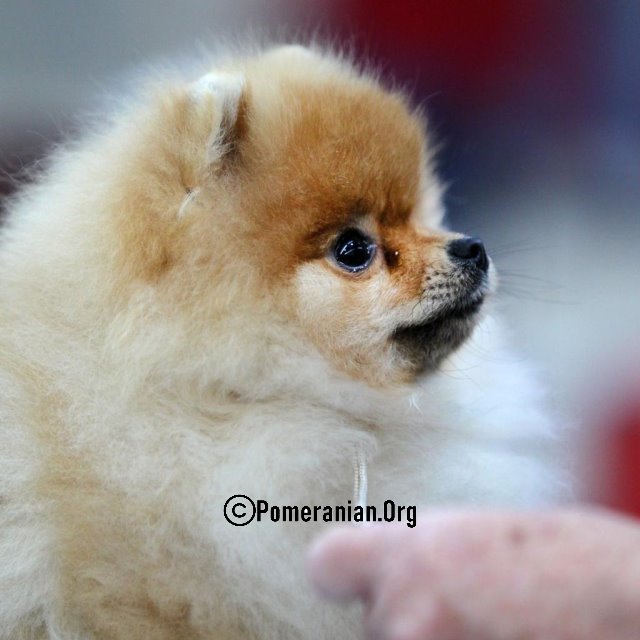

A tri-color Pomeranian is a stunning combination of three distinct coat colours—most commonly black, white, and tan. In this guide, Pomeranian expert Denise Leo explains exactly what makes a true tri-coloured Pomeranian.
The Pomeranian has a wide variety of colors, patterns and variations that help create each unique dog. The tri-colored Pomeranian is just another combination.
This article will clear up any confusion about what tri colored Pomeranians actually look like. Pomeranians may have up to three colors and, if they do have this many, it’s called tri-colored (as “tri” means “triple or three).
What is a Tri Color Pomeranian?
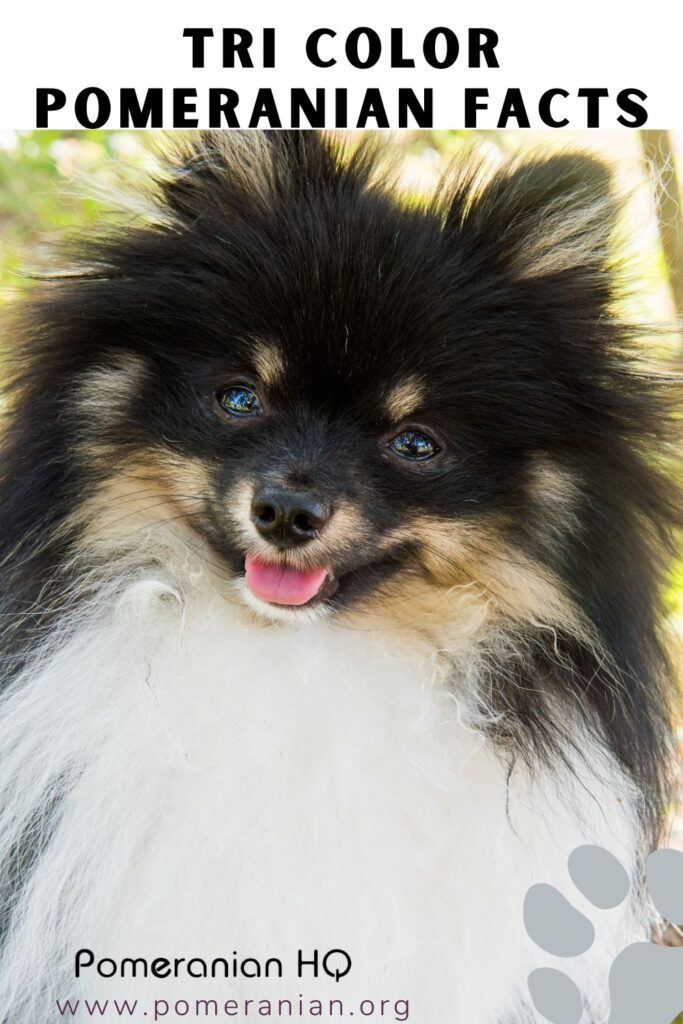
A tri color Pomeranian is a Pomeranian with three clearly visible coat colours. In most cases, this means a white parti base combined with tan points and a third colour such as black, chocolate, or another allowable shade.
- White-based parti pattern
- Tan points on areas such as the eyebrows, cheeks, chest, and legs
- A third colour such as black, chocolate, or blue
In simple terms, a tri colour Pomeranian is usually a parti-coloured dog with tan pattern markings, creating a striking three-colour appearance.
Pomeranians come in various patterns and Color Combinations
A tri-colored Pomeranian is a tan-patterned and white-parti Pomeranian. Instead of only 2 colors, these parti Pomeranians have 3 coat colors. Tri-colored Pomeranians sometimes resemble black & tan Pomeranians, except for their white base coat.
Officially, the American Kennel Club Pomeranian Breed Standard lists this particular Pomeranian color combination as “Any Other Allowable Color.”
The black & tan pattern might be mixed with patterns including: parti, brindle, or merle to increase the possibilities even further.
In the Pom breed, the tri-colored Pomeranian will be a tan pattern and white parti color, e.g., Tan Pattern & White (black & tan, blue & tan, or chocolate & tan).
Another tri-color Pomeranian possibility is a white-based parti dog with merle & tan markings.
What Are The Different Tri-Colors in Pomeranians?
The following are examples of the variety available in the tri colored parti Pomeranians:
The base color will usually be white.
- Base color white, black & tan tri color parti Pomeranian.
- Base color white, blue & tan tri color parti Pomeranian.
- Base color white, chocolate & tan tri color parti Pomeranian.
When this pattern appears, it’s common for the dog to have two tan dot eyebrows, and this creates a feisty expression.
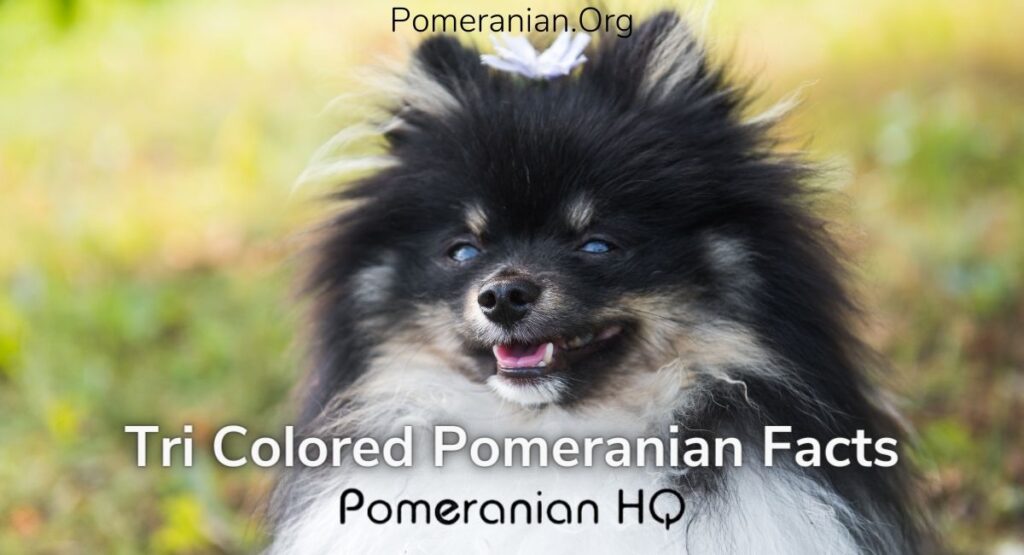
Because almost all tri-colored coats have different ratios of color, whether it’s chocolate, blue or black, along with the white color and tan points, owners of this specific variety will always possess a Pomeranian with unique looks. This is ideal for people who hate the thought of settling for a single color.
The Merle Pattern Combined with the “& tan”
Here are examples of a tri-color merle Pomeranian: a blue merle & tan. tri-colored parti Pomeranian
generally has both white and tan markings, along with the merle pattern, all on one dog.
Collies and Shetland Sheepdogs often have these combinations:
- Base color, White, Blue Merle & Tan Parti or
- Base color: White, Red Merle & Tan Parti.
Tri-colored Pomeranian Markings are Usually:
& Tan Parti-Color, or & Tan Merle Parti Pomeranian.
As mentioned earlier, numerous patterns and colors combine to form a tri-colored dog.
Whenever you see “& tan” written, it just means the dog has an “& tan” pattern, along with a parti-color pattern (for example – a tan-pointed parti).
Therefore, a Tri-colored Black & Tan parti color Pomeranian may be the final result. It’s necessary to remember the point colors must match the actual color of the dog’s parti-colored patches.
What Dogs Can Have Tri-colors?
Many canine breeds can have these tri-colored markings. The breeds include: The Basenji, Beagle, Bull Terrier, Basset Hound, and Cocker Spaniel are some of the dogs that may have a shaded mix of white, brown, and black. Other breeds may have the light fawn, blue and liver colors as a tri-color combination.
Dogs with tri-color patterns are unique and stunning. However, it’s vital that “tri-color” doesn’t get mixed up with “brindle” because brindle also has three colors.
The major difference is that brindle colors are either all striped or very well blended. Tri-colors are all distinct and confined to specific areas. For example, white is generally the base whenever tri-colors exist on the same coat.
Is It Possible To Breed For Tri-Color Pomeranian Puppies?
Sure it is! Most breeders have a preference for specific colors and/or patterns, meaning they choose partis or solids, some breed whites or creams, and others choose partis and tri-colors. If you breed one tri to another, it’s highly probable that at least one tri-color Pomeranian puppy will be born in the litter.
When breeding litters, some breeders prefer a particular color.
Some breeders want to produce tri colored Pomeranian puppies, meaning each puppy has three colors. There are some colors you could create, provided you have the proper matches for breeding.
The tri-parti color marking gene can be inherited from the sire and dam. To fully comprehend the variables of coat coloring with tri-color Pomeranians, it’s essential to analyze and appreciate the full extent of the genes involved.
You wouldn’t dream of including tri-colors or parti Pomeranians in your breeding program if your only goal is to breed solid colors.
Tri Color Pomeranian Genetics Explained
A tri color Pomeranian is not a single colour, but a pattern made up of three elements: a white base coat, coloured patches, and tan point markings.
The Genetics Behind the Pattern
- Parti Gene (White Spotting): Produces the white base coat and allows patches of colour to appear.
- Base Coat Colour: The colour of the patches, most commonly black or chocolate.
- Tan Point Gene: Adds the tan markings seen above the eyes, on the cheeks, chest, and legs.
Putting It Simply
A tri colour Pomeranian is essentially a parti-coloured dog (white with patches of colour) that also carries the tan point pattern, creating the distinctive three-colour appearance.
Breeder Insight
While colour genetics can be understood and predicted, experienced preservation breeders always prioritise correct type, soundness, and temperament over colour. Colour should enhance quality—never replace it.
Tri-Color Pomeranian Conclusion
Pomeranians are highly intelligent, captivating little dogs, admired not only for their luxurious coats but also for their wide range of beautiful colours. Whether a Pomeranian is tri coloured or any other shade, colour does not influence temperament—each one shares the same lively, affectionate, and confident personality the breed is loved for.
Copyright Pomeranian.org. All Rights Reserved.
📚 References & Further Reading
- [1] AKC Pomeranian Breed Standard (2011)
- [2] English Kennel Club Breed Standard
- [3] The Pomeranian Handbook – Denise Leo
- [4] Denlinger, The Complete Pomeranian
- [5] Kimbering, 1891–1991
- [6] Taplin, The Sportsman’s Cabinet
- [7] Parker, The Popular Pomeranian
- [8] Ives, Show Pomeranians