
Discover the fascinating distinctions and shared history between the German Spitz and Pomeranian. Though these two Spitz breeds have the same roots, their evolution has led them down distinct paths.
Originally, Pomeranians were much larger than the petite companions we know today and were versatile working dogs utilized for tasks like hunting and herding. Over time, selective breeding refined the Pomeranian into a smaller breed.
Our post is a deep dive into the unique characteristics that set the German Spitz and the Pomeranian apart. We explore how their common ancestry has diverged into the distinct traits that define each breed today. Join us as we unravel the story of these captivating canine cousins, each with unique charm.
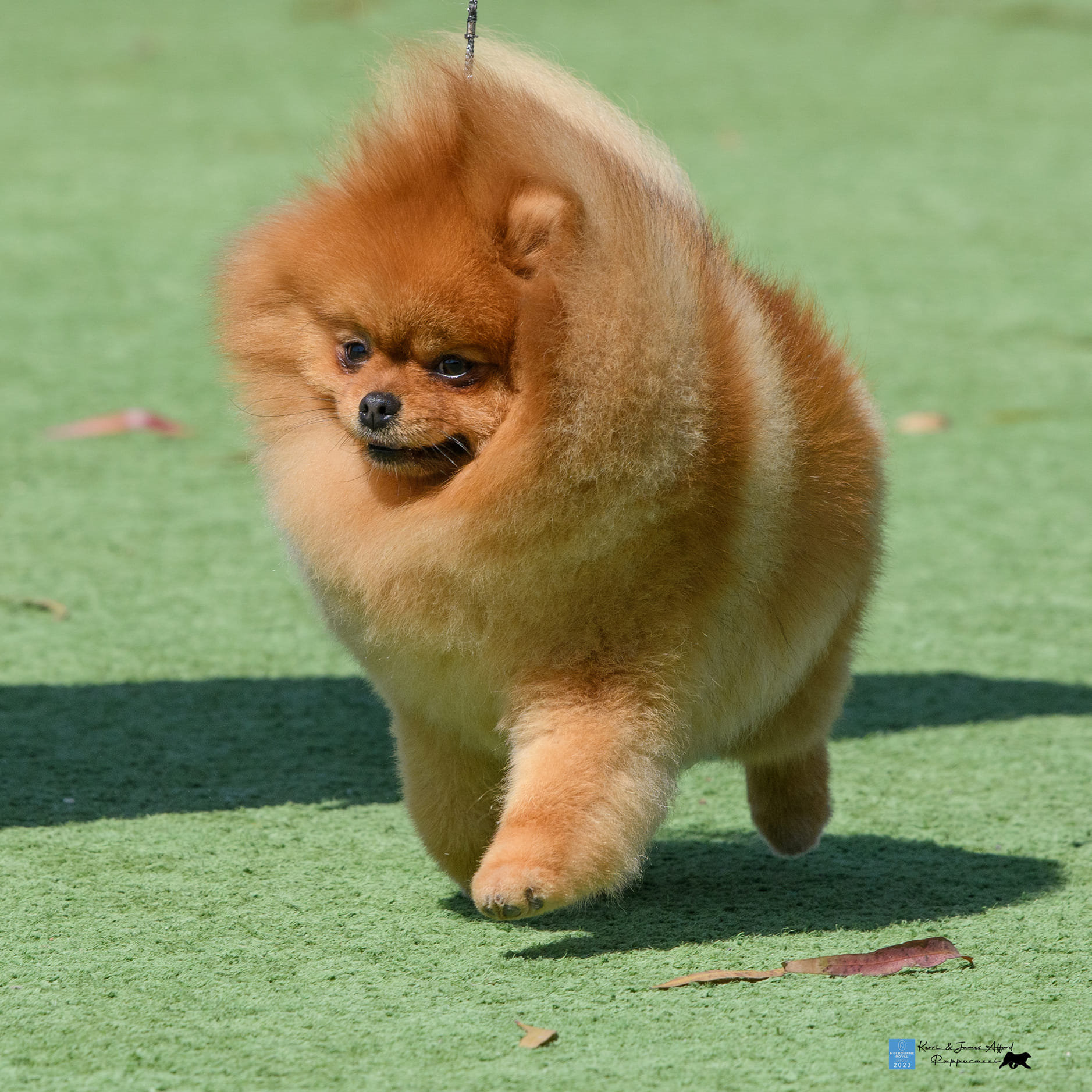
In countries without FCI Kennel Club regulations, the Pomeranian and German Spitz are two distinct breeds that are often confused. However, they differ in many ways, including size and coloring patterns. The Pom is a smaller-sized, round, ball-shaped dog.
In most countries, the German Spitz is classified as a separate breed. Because the two breeds are very closely related, they’re similar in many ways, and comparing their sizes, colors, and physical characteristics helps you better appreciate how they differ.
Pomeranian vs German Spitz — what’s the difference?
A Pomeranian is the smallest variety of the German Spitz and has been bred down specifically as a companion dog. German Spitz dogs are larger, more robust, and were originally bred for working roles such as guarding and herding.
The biggest difference is size, purpose, and refinement of type.
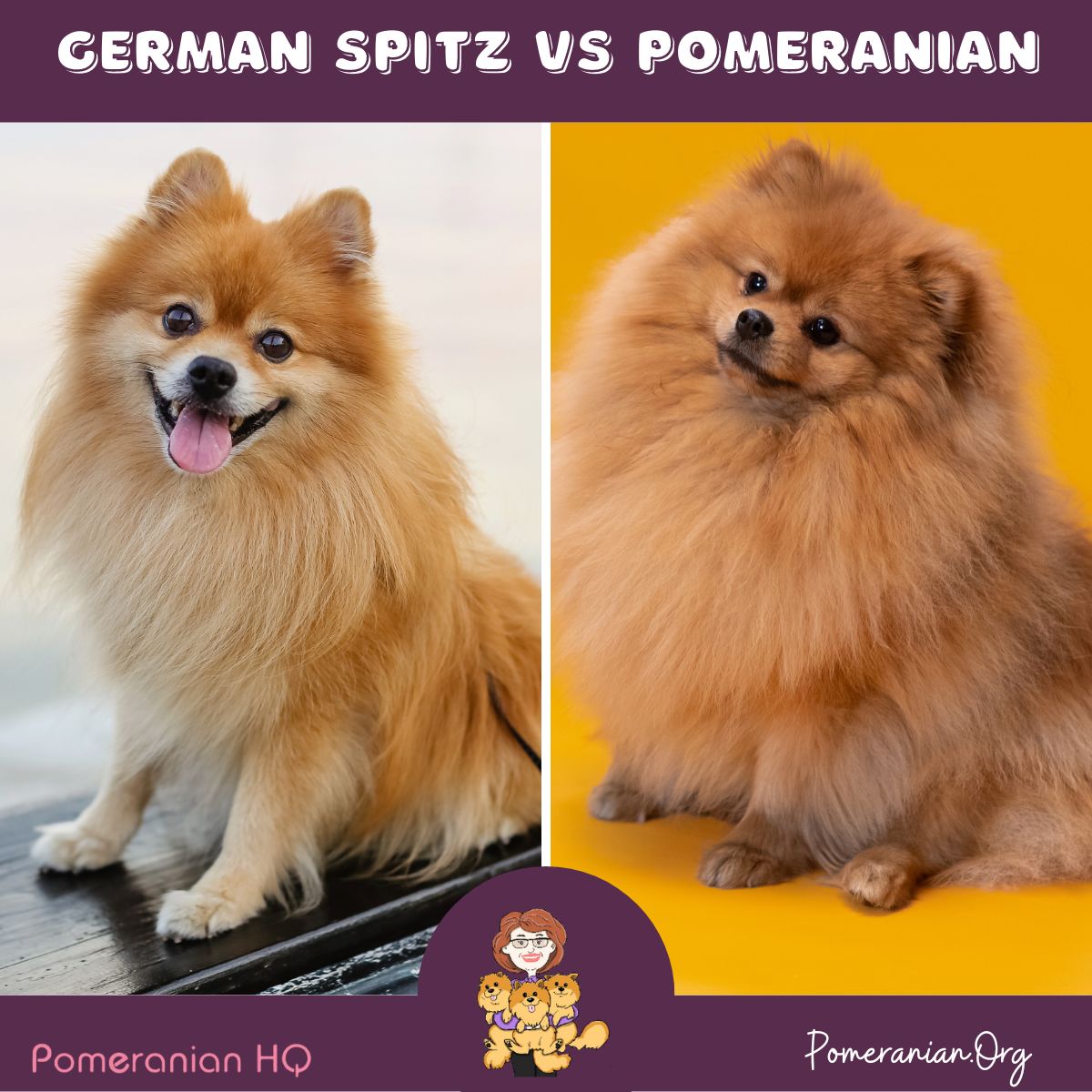
🐾 Pomeranian vs German Spitz Comparison
| Feature | Pomeranian | German Spitz |
|---|---|---|
| Origin | Descended from larger German Spitz dogs, refined into a toy companion breed | Ancient Spitz-type dogs originating in Germany |
| Size & Weight | Toy breed (typically 1.5–3 kg, 18–24 cm tall) | Varies by type (German Spitz Klein/Mittel), typically 23–40 cm tall and 9–20 kg |
| Varieties | Single toy variety | Multiple varieties (Klein, Mittel, etc.) |
| Purpose | Companion dog | Companion dog (historically also used for alerting and guarding) |
| Type & Structure | Compact, refined, short-backed with abundant coat | More natural, less compact, longer in body |
| Coat | Profuse double coat with heavy ruff and plume tail | Double coat, generally less profuse |
| Temperament | Lively, affectionate, people-focused | Alert, intelligent, more independent |
| Trainability | Smart but can be easily distracted | Intelligent but more independent |
| Energy Levels | Active but suited to indoor living | Active with slightly higher endurance |
| Living Environment | Ideal for apartments and smaller homes | Better suited to homes with more space |
| Grooming Needs | Moderate | Moderate |
| Health | Average (breed-specific considerations apply) | Average (breed-specific considerations apply) |
| Life Expectancy | 12–16 years | 13–15 years |
| Popularity (AKC) | Ranked 23 of 197 breeds | Not ranked / less common |
✨ While they share the same ancestry, the modern Pomeranian has been selectively bred into a refined toy companion breed.
Pomeranians
Both dog breeds originated in Germany, but the Pomeranian was developed in the United Kingdom. Pomeranians are smaller today than they were 100 years ago and are classified as a toy dog breed because of their small size.
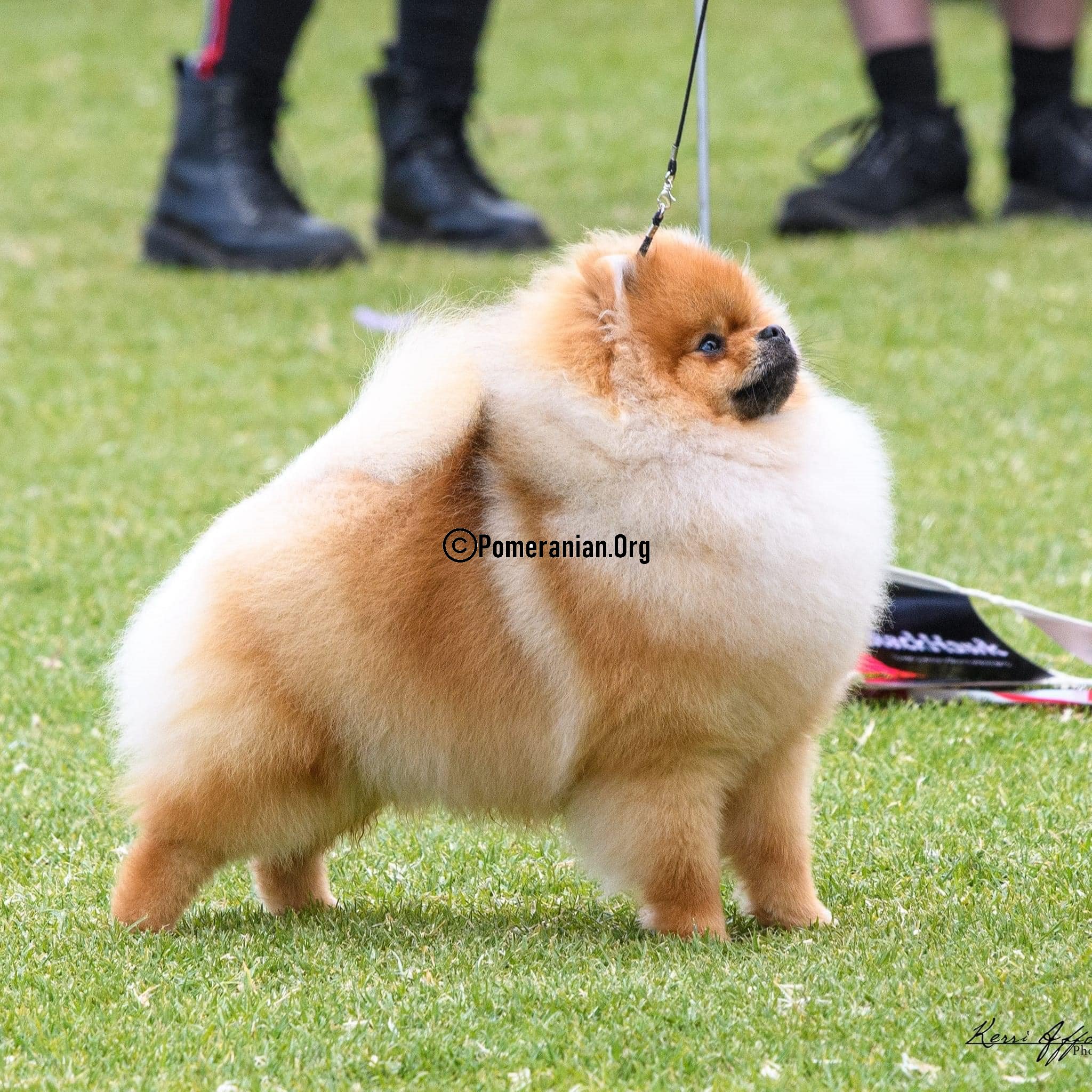
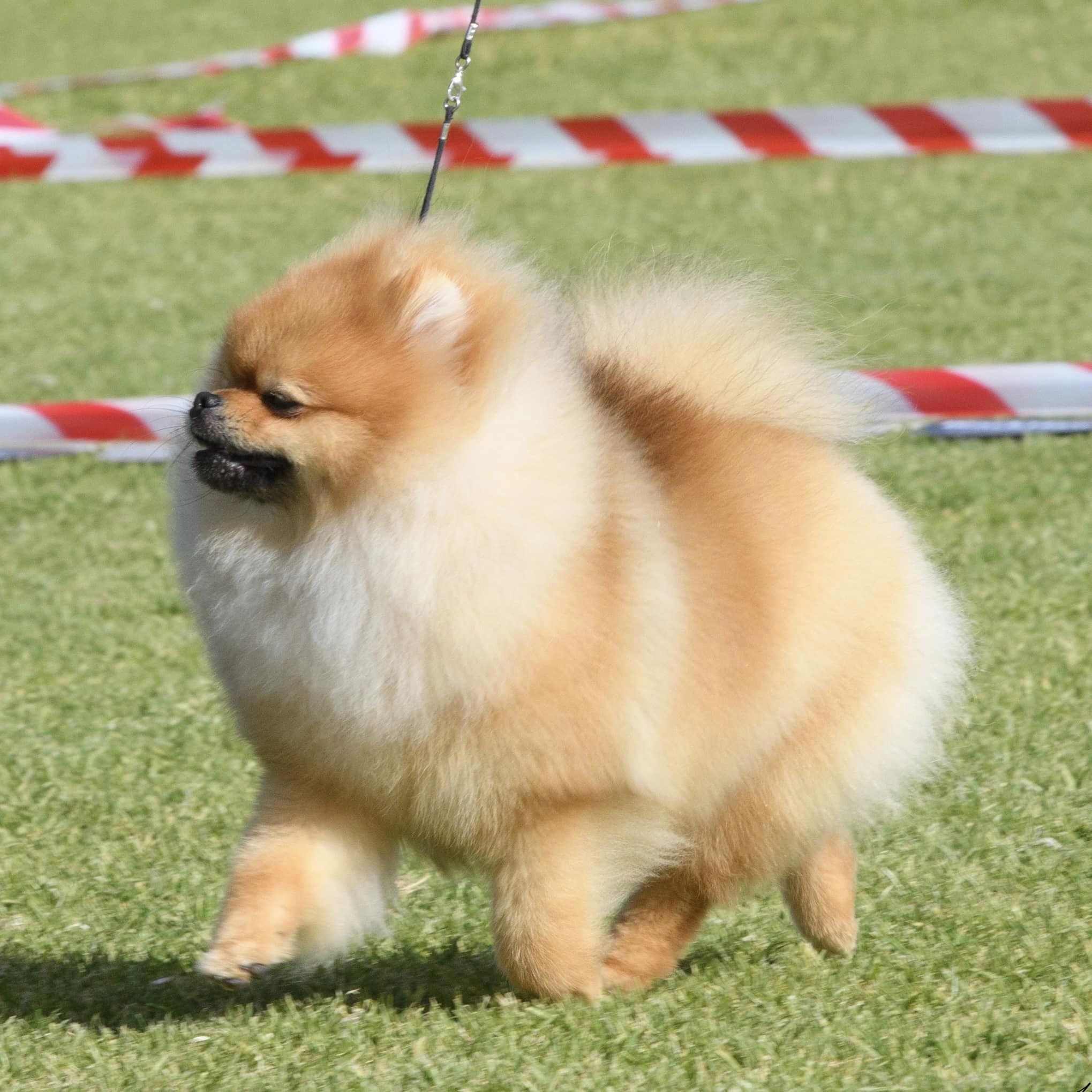
The Pom is a short-backed, compact toy dog that thrives on activity. His thick double coat comprises a harsh-textured, profuse, long outer coat and a dense, short undercoat.
A breed characteristic of the Pomeranian is the heavily plumed, high-set tail. The Pomeranian is the only spitz-type dog whose tail should lie flat and straight up its back.
The Pom is curious, alert, intelligent, and expressive. He’s sound in action and composition and buoyant in carrying himself.
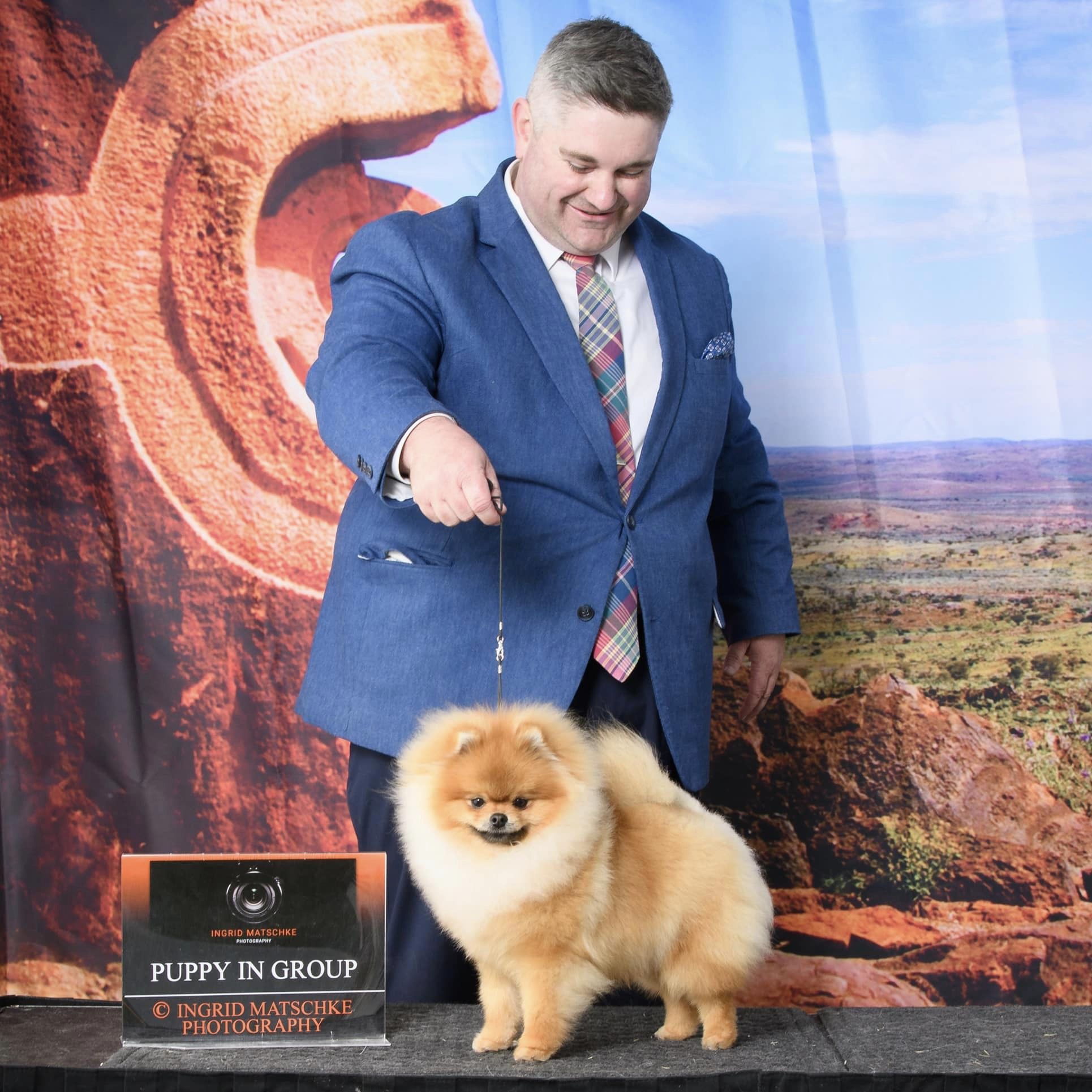
The Pomeranian is animated, commanding, and cocky. An average Pomeranian weighs 2 – 3 kgs, but if you wish to show your Pom, its weight should be 1.8 – 2.2 kgs.
The FCI Toy Spitz ( Pomeranian) standard stipulates a height requirement of 20 cm at the withers.
Pomeranians come in many different colors. Common colors are red and orange, but other colors include blue, black, white, cream, brown, and sable. Color combinations include blue-and-tan, black-and-tan, and brindle-and-spotted.
You’ll find that Poms are intelligent and very friendly dogs. They form a strong bond with their family and can live up to 16 years if they’re healthy, well cared for, and, most importantly, loved.
The German Spitz Breed
In FCI countries, the Spitz is a group of Spitz breeds classified by size and/or height.
The German Spitz is happy to do as little or as much as you want. However, they can become noisy and misbehave if left alone for long periods. They enjoy barking and warn you if something is happening or an intruder is at the door.
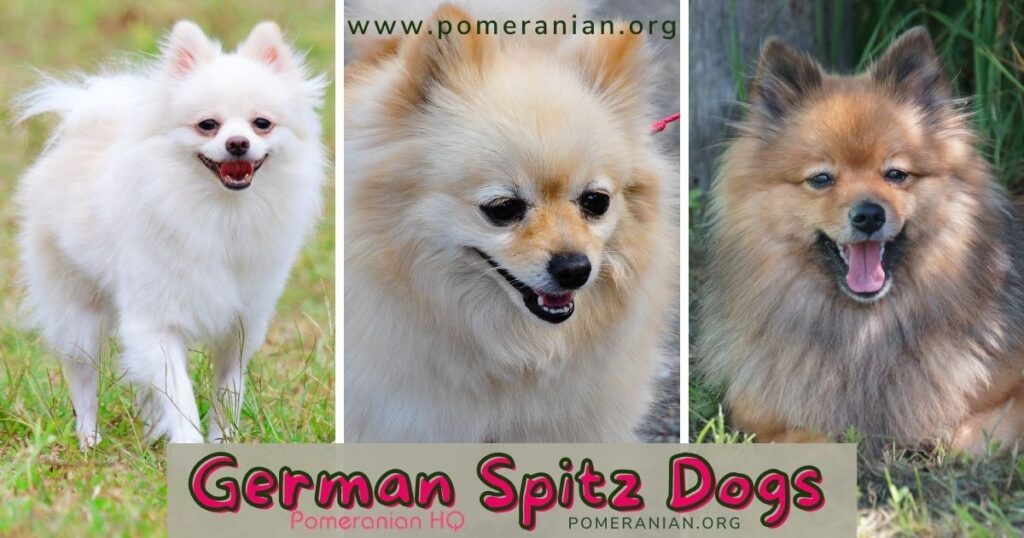
The German Spitz competes in the utility group in the USA (American Kennel Club) and the UK (Kennel Club). In Australia and New Zealand, it is in the non-sporting group.
• Wolfspitz/Keeshond. 49cm +/- 6cm.
• Giant Spitz. 46cm +/- 4cm.
• Medium-sized Spitz. 34cm +/- 4cm.
• Miniature Spitz. 26cm +/- 3cm.
• Toy Spitz/Pomeranian. 20cm +/- 2cm.
• Dogs under 18 cm are undesirable.
Each separate variety of the Spitz will have a specific weight that matches its size.
They can be any color or combination of colors and generally live long lives. As with the Pomeranian, these dogs are usually happy, agile, highly intelligent, and buoyant.
The German Spitz is divided by height:
Klein: 23–29 cm (9–11 5/8″). Mittel: 30–38 cm (12–15″).

What is the Difference between a Pomeranian and a German Spitz Dog?
We must look into their history to fully understand the difference between the two breeds. In the late 1970s, the German Spitz was imported into the U.K. to revive colors lost from the breed there.
Mrs. Averil Cawthera imported Spitz, wanting to reintroduce the white Pom (as opposed to the German Spitz). Many imports came from Holland, including Tum-Tum van het Vlinderhof of Lireva.
Introducing these dogs into the English Pomeranian world caused considerable angst amongst Pomeranian breeders and exhibitors until 1984, when the Kennel Club intervened and set up a separate register for the German Spitz.
At the Annual Meeting of the Pomeranian Club in 1978, a motion was made:
“to note persons placing the Victorian Pomeranians.”
In 1982, a special general meeting of the Pomeranian Club was held to resolve the issue of the German Spitz. Before the separate register, several of the imports had been bred with Pomeranians, and some of the top winning Pomeranians today have German Spitz imports way back in their pedigree.
Many years ago, dog fanciers brought varieties of the German Spitz from Germany to the U.S.A. and named them American Eskimos.
The FCI countries include Pomeranians in the Spitz group as Toy Spitz/Pomeranian, and the standard states that the height at the withers for Toy Spitz/Pomeranian needs to be 20 cm ± 2cm.
Australia, the U.K., the U.S.A., Canada, and numerous other countries classify Pom as a toy dog, and he competes in the Toy group.
The Pomeranian breed standards for the U.K., the U.S.A., and Canada specify weight requirements rather than height. The U.S.A. and Canada have the Pomeranian between 3 and 7 lbs. The other countries have 4-5 lb. (1.8-2.5 kg).
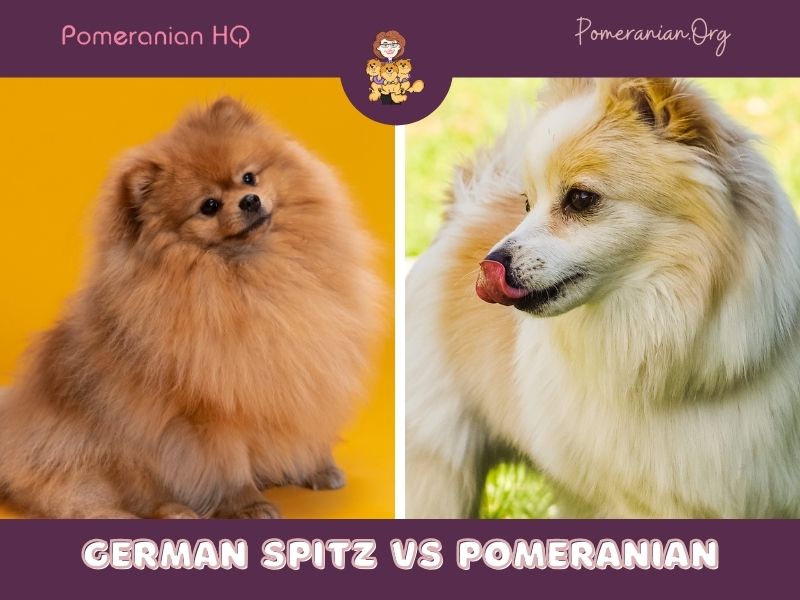
German Spitz vs Pomeranian Key Differences
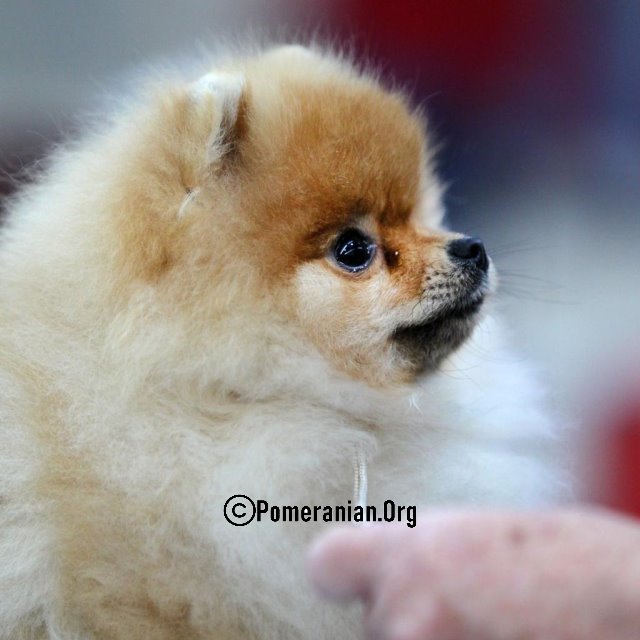
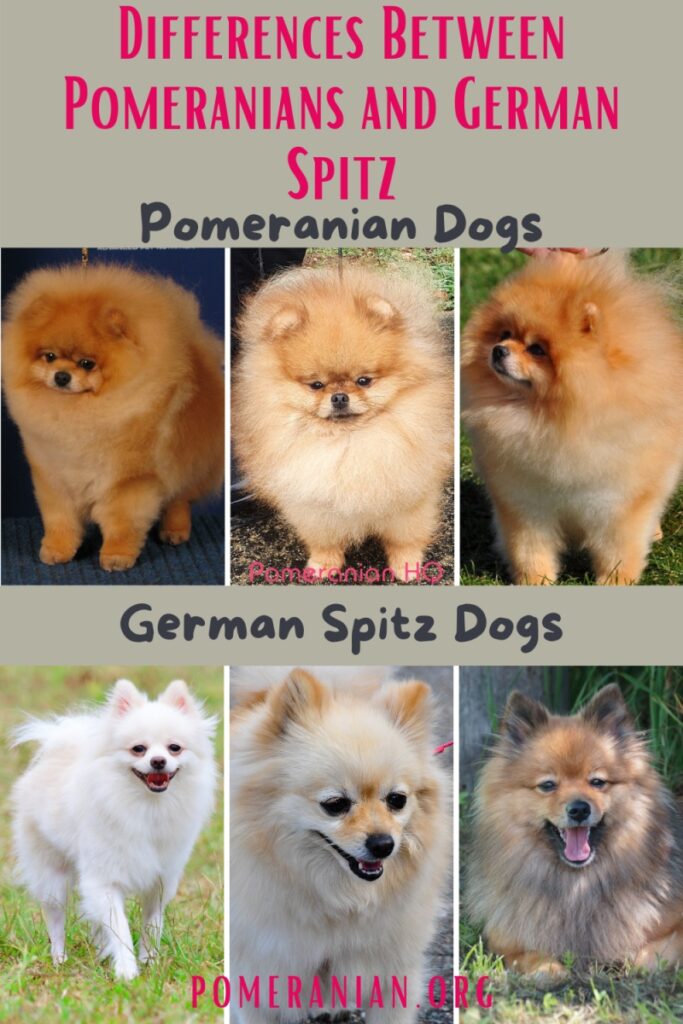
The heads of the two breeds vary greatly, with the Pomeranian having a shorter muzzle:
The Pomeranian ratio of the muzzle length to the skull is 1/3 to 2/3. The erect ears mounted high. The proper set of ears is preferred over size, and ears will often be hidden in the ruff.
In contrast, the head of a German Spitz is flat on top, with a broad wedge shape. The muzzle should be roughly half the length of his head, so compared to a Pom, the muzzle is longer when factoring in the animal’s size.
Their ears should be triangular and set high on their heads. They will always be visible, unlike Poms, whose ears may be too small to notice if hidden in the Pomeranian’s abundant coat.
The Tail-Sets of the Pomeranian and the German Spitz Differ
The Pom’s heavily plumed tail lies flat and straight on his back. His buttocks are behind the tail’s set. The German Spitz’s tail curls over the back and is carried to one side or curls into a ring shape.
German Spitz vs Pomeranian Coat
Pomeranian’s Coat:
Abundant outer coat with a short and dense undercoat. This profuse double coat helps to give the impression of a ball-shaped dog.
Forelegs are well-feathered. His hind legs and thighs have a heavy coat that runs to the hock, creating a skirt. You can trim your Pom to ensure he’s neat for the show ring.
German Spitz’s Coat:
The German Spitz doesn’t have enough coat to resemble the Pom when seen in silhouette.
The German Spitz breed standard is:
“Abundant around neck and forequarters with a frill of profuse, but not excessive.”
Because the Spitz dogs are usually in bigger proportions, the compact look of the Pomeranian isn’t there. The German Spitz isn’t a breed that needs trimming except for the legs beneath the hocks, the anal area, and the feet. Anything else isn’t acceptable.
Temperament Comparison between the Pomeranian and German Spitz
Even though the two breeds look different, their temperaments are similar. Both breeds are incredibly energetic, always bouncing around in a lively, long-lasting manner. You must keep up with them, whether playing, cuddling, or entertaining them.
If you need to take time away from them, you must give them things to keep them occupied. While tiny legs may not demand the exercise, it’s almost impossible to calm their brain down enough to rest until they’re completely exhausted.
Pomeranian dogs and the German Spitz are naturally curious and social creatures, keen to make friends with everybody. They also demonstrate great affection towards their family, loving nothing more than spending a lazy afternoon napping in your lap.
They love being around children, but are both small, delicate breeds. You must teach them the correct way to manage such a small dog.
Both breeds have a watchdog history, and they’re still naturally yappy dogs. While this might be ideal if you’re after an adorable dog that will always warn you when anything is happening, if you don’t like a lot of barking, or if the neighborhood has noise restrictions, you’ll have to choose a different dog breed.
While both breeds are happy around other dogs, they bark if excited or challenged. Because they’re fearless and will bark at much bigger dogs, they often sustain injuries caused by other dogs unfamiliar with their behavior.
Exercise Comparison
The two breeds, Pomeranians and German Spitz dogs, are little firecrackers that run around all day. Being much smaller dogs, Pomeranians require much less exercise than the German Spitz.
German Spitz dogs require medium exercise, while the smaller Pomeranian dogs require low exercise.
Don’t expect either dog to be a lazy lapdog. They need plenty of exercise and can become destructive animals if the urge takes over. Each breed needs toys that match its small size.
Training Comparison
Socializing these intelligent and friendly breeds from a young age is crucial. It helps them adjust to various situations and mature into well-behaved adults. While neither breed is timid, early socialization shapes their demeanor and fosters confidence.
Despite their small size, they may view the world as daunting, making socialization vital. Positive reinforcement during training can help them become vibrant, fearless dogs. Teaching them to bark on command can also prevent potential frustrations.
Both breeds are popular and have similar temperaments, making them suitable for prospective dog owners. Short walks and interactions with new people can further enhance their friendly demeanor and energy levels.
Health Issues Comparison
The two breeds, Pomeranians and German Spitz, are usually healthy. Both small breeds have a long lifespan.
The German Spitz is a fairly new breed in the U.S.A., so there’s only minimal information regarding the health tests that should be carried out.
However, as he tends to have many similar health problems as Pomeranians, it’s logical for the parents to have the same tests, such as:
• Eye Exam.
• Cardiac Exam.
• Patella Exam.
Nutrition Comparison
Because Pomeranians are smaller dogs, they generally eat less than larger German Spitz.
Grooming Comparison between the Pomeranian and German Spitz
Both breeds require regular coat brushing to prevent their hair from tangling. It also helps manage fuzzy hair and shedding. If you brush them several times each week, that will suffice.
Another priority is dental care, as their very small jaws increase their risk of dental problems.
The Pomeranian will require more dental attention than his larger cousin, owing to the size of his teeth and jaws.
The Pomeranian requires more grooming due to its more profuse coat, which also needs more extensive trimming for show purposes, whereas the German Spitz requires minimal trimming.
Price Comparison
The German Spitz is rare in America (American Kennel Club), so there’s little demand for them compared to the Pomeranian. While there’s not much information on how much a German Spitz costs, it seems to be around $800+, much less than that of a Pomeranian, which is between $2,000 and $7,000+.
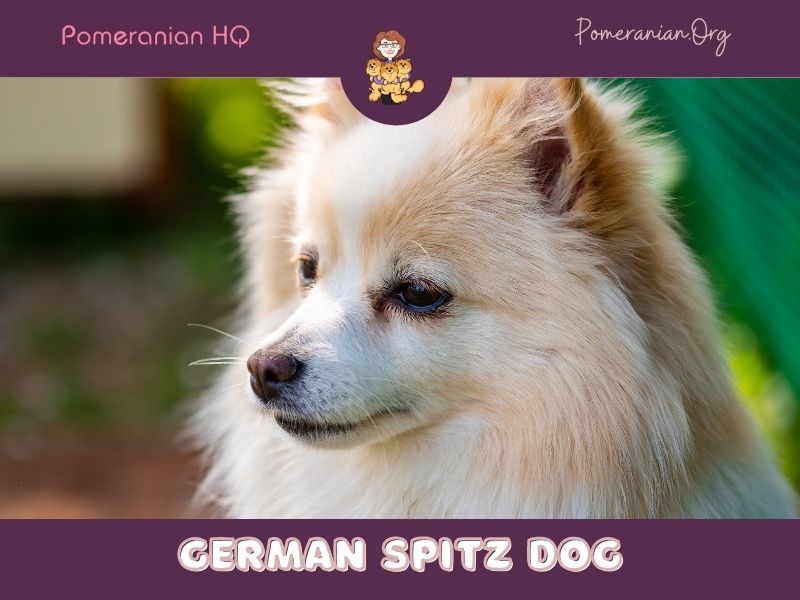
Why Do Some “Pomeranians” Look More Like The German Spitz Dogs?
“Pomeranians” bred by breeders who don’t compete at dog shows will frequently resemble the German Spitz more than the Pomeranian.
This is more often a result of poor breeding practices than having a German Spitz in the dog’s pedigree. If you wish, you can have your dog’s parentage verified with DNA testing.
A similar situation can occur in color breeding programs. The Pomeranian breed type often quickly deteriorates and reverts to the German Spitz type.
Coat, size, shortness of back, and pigmentation are usually the first breed qualities to deteriorate with white-to-white Pomeranian breedings.
This syndrome, which can be called “return to from whence it came” or “drag of the breed,” is evidence of the breed’s origins.
Conclusion
Final Thoughts
The Pomeranian and the German Spitz share a common ancestry, but today they are distinct in type, size, and refinement.
The modern Pomeranian has been selectively bred into a compact, highly refined companion dog and remains one of the most popular toy breeds worldwide. In contrast, the German Spitz retains more of its original form, with greater size and a more natural, less specialised type.
Both breeds can make wonderful companions. With proper care, attention, and a loving home, either will reward their owner with loyalty, companionship, and affection.
For those seeking a true Pomeranian in type, quality, and temperament, it is essential to purchase from a reputable breeder who breeds to the Pomeranian breed standard and proves their dogs in the show ring.
Quality, correct type, and sound breeding will always matter more than appearance alone.
Copyright Pomeranian.org. All Rights Reserved.
References and Further Reading:
[1] Official Standard of the Pomeranian (AKC). American Kennel Club, 2011.
[2] Official English Kennel Club Pomeranian Breed Standard, 2017.
[3] Kimbering Pomeranians “1891-1991”.
[4] Denise Leo, The Pomeranian Handbook.
[5] E.Parker, The Popular Pomeranian.
[6] L.Ives, Show Pomeranians.
[7] L.Ziegler Spirer & H.F. Spirer, This is the Pomeranian.
[8] FÉDÉRATION CYNOLOGIQUE INTERNATIONALE (FCI) German Spitz, including Keeshond and Pomeranian Breed Standards. PDF file.