
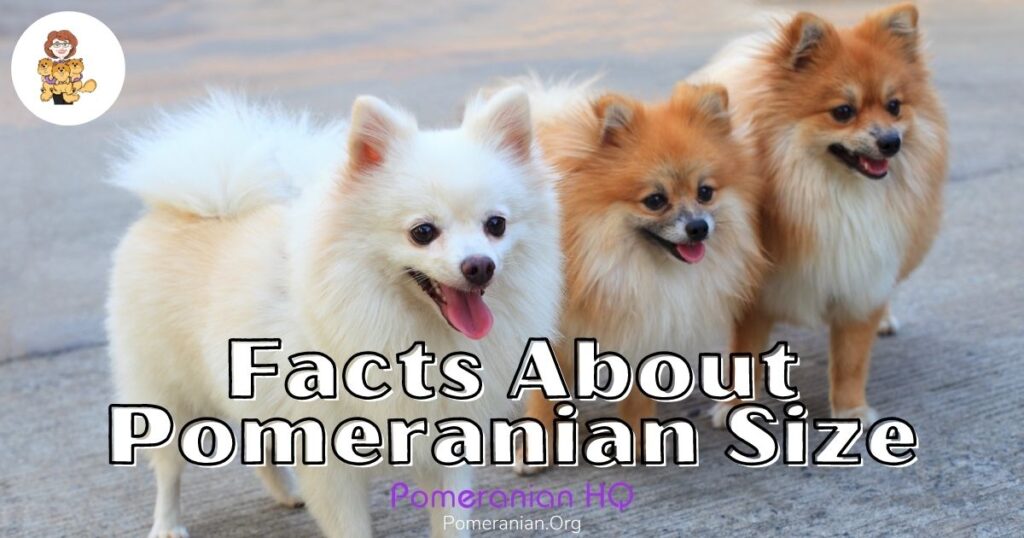
Pomeranians are one of the smallest toy breeds, but there is no single worldwide measurement that defines the ideal adult size. The American Kennel Club uses a weight range; Dogs Australia and the Royal Kennel Club provide different ideal weights for males and females, while the FCI standard is based primarily on height.
Under the American Kennel Club standard, an adult Pomeranian should weigh between 3 and 7 pounds, with 4 to 6 pounds considered ideal for exhibition. Dogs Australia lists an ideal weight of 4 to 4.5 pounds for males and 4.5 to 5.5 pounds for females. The current FCI standard specifies a height of 21 cm, with an allowance of 3 cm above or below.
During more than 50 years of breeding, exhibiting, and judging Pomeranians, I have seen healthy purebred Poms mature both below and above the measurements preferred in the show ring. Size is influenced by many genes, the parents and wider pedigree, and the individual puppy’s development. Even an experienced breeder cannot guarantee a puppy’s exact adult weight.
It is also important to distinguish between a naturally larger Pomeranian and a standard-sized dog carrying excess body fat. Scale weight alone cannot tell you whether a Pom is correctly proportioned, heavily boned, oversized, or overweight.
In this guide, I will explain the different Pomeranian size standards, how to measure your dog correctly, when Pomeranians stop growing, and why some mature much smaller or larger than expected. I will also explain the truth about teacup and throwback Pomeranians and what responsible owners should know about extremely small dogs.
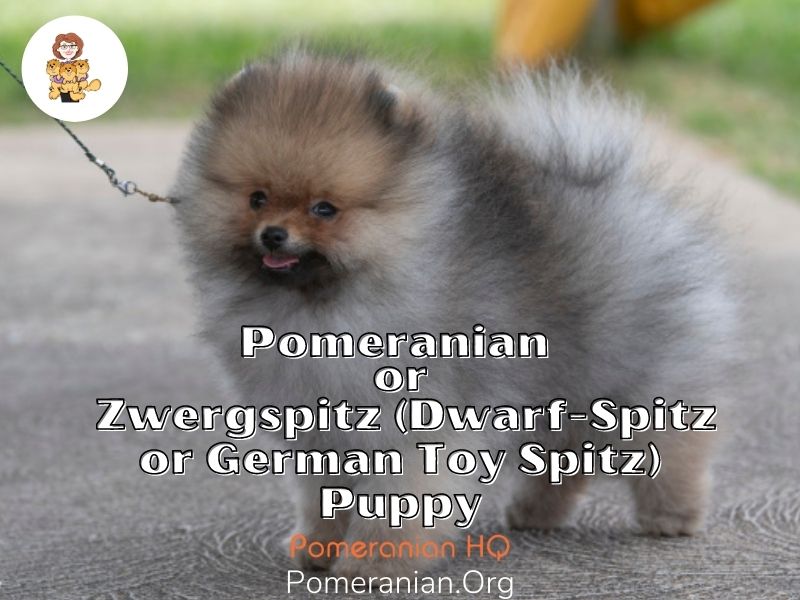
Pomeranian Size Standards by Country
National kennel clubs use different measurements to describe the ideal Pomeranian size. Some use adult weight, while the FCI uses height at the withers.
These measurements describe the ideal Pomeranian for exhibition. A purebred pet Pomeranian may mature outside the preferred range without becoming a different breed or variety.
American Kennel Club
3–7 lb
4–6 lb ideal for exhibition
The AKC standard uses adult weight and does not specify an official height range. A Pom outside this range may still be purebred but falls outside the preferred exhibition size.
Canadian Kennel Club
3–7 lb
4–5 lb ideal for exhibition
Like the AKC, the Canadian standard judges Pomeranian size primarily by weight rather than setting a required height.
Dogs Australia
Males: 4–4.5 lb
Females: 4.5–5.5 lb
Males 1.8–2 kg · Females 2–2.5 kg
The standard provides separate ideal weights for males and females. Teacup, micro, miniature, and oversized Pomeranians are not recognized as separate varieties.
Royal Kennel Club
Males: 4–4.5 lb
Females: 4.5–5.5 lb
Males 1.8–2 kg · Females 2–2.5 kg
These are ideal exhibition weights rather than a guarantee that every registered Pomeranian will mature within this narrow range.
Fédération Cynologique Internationale
21 cm ± 3 cm
Approximately 18–24 cm at the withers
The current FCI standard uses height rather than a fixed adult weight. Weight should correspond to the dog’s size.
The FCI does not prescribe a required weight of 3 kg.
Why Do Pomeranian Size Standards Differ?
Pomeranian breed standards developed under different national kennel-club systems. The American and Canadian standards emphasize weight, the FCI places greater emphasis on height, and Dogs Australia and the Royal Kennel Club provide different ideal weights for males and females.
These differences do not create separate breeds. They reflect how each organization describes its ideal Pomeranian for exhibition.
When discussing whether a Pomeranian is “standard size,” always identify which national breed standard is being used.

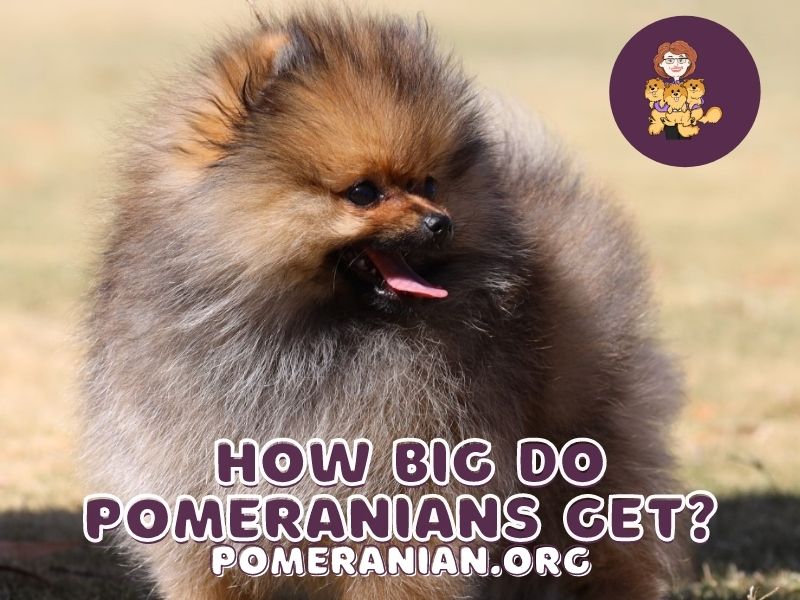
How to Measure a Pomeranian’s Height and Weight Correctly
Accurate measurements help you monitor your Pomeranian’s development and compare its size with the relevant breed standard. However, weight and height should always be considered alongside body condition, frame, and overall proportions.
How to Weigh a Pomeranian
Use a reliable digital pet, baby, or kitchen scale that can safely accommodate your dog. Place the scale on a firm, level surface and check that it reads zero before beginning.
To obtain an accurate weight:
- Weigh your Pomeranian at approximately the same time of day.
- Remove heavy clothing, the harness, and other accessories.
- Encourage the dog to stand or sit still in the center of the scale.
- Record the weight only when the reading remains steady.
- Repeat the measurement if the dog moves excessively.
For puppies, weigh them frequently enough to monitor growth. Newborn puppies should be weighed daily by the breeder, while older puppies can be weighed less often once they are developing normally.
Adult pet Pomeranians can usually be weighed monthly. Your veterinarian may recommend more frequent monitoring when managing illness, medication, pregnancy, or excess weight.
How to Measure a Pomeranian’s Height
A dog’s height is measured from the floor to the highest point of the withers. The withers are located at the top of the shoulder blades—not at the top of the head or ears.
To measure height correctly:
- Stand your Pomeranian squarely on a flat, non-slip surface.
- Position the front legs straight beneath the body.
- Keep the head in a natural position.
- Locate the highest point of the shoulder blades.
- Place a level object across the withers.
- Measure vertically from the floor to the underside of that object.
A canine measuring wicket provides the most accurate result, particularly for exhibition. At home, a ruler, carpenter’s level, and tape measure can provide a useful estimate.
Do not measure through the top of the coat. A Pomeranian’s thick ruff and standing outer coat can add considerable visual height.
Weight Does Not Tell the Whole Story
Two Pomeranians can weigh the same but have very different builds. One may be taller with finer bone, while another may be shorter, more compact, and more heavily boned.
A Pomeranian may weigh more because of:
- A naturally larger skeletal frame
- Heavier bone
- Greater muscle development
- Excess body fat
- Pregnancy
- A very full stomach or bladder
- Heavy clothing or equipment
- Normal variation between scales
This is why a single number should never be used to judge a dog’s health or overall quality.
Keep a Growth Record
Record your puppy’s weight regularly during development. Include the date, age, and weight so you can follow the overall pattern rather than focusing on one measurement.
Growth is not always steady. Puppies may experience rapid growth spurts followed by periods of little apparent change. A sudden weight loss, failure to gain, or unexplained rapid increase should be discussed with your veterinarian.
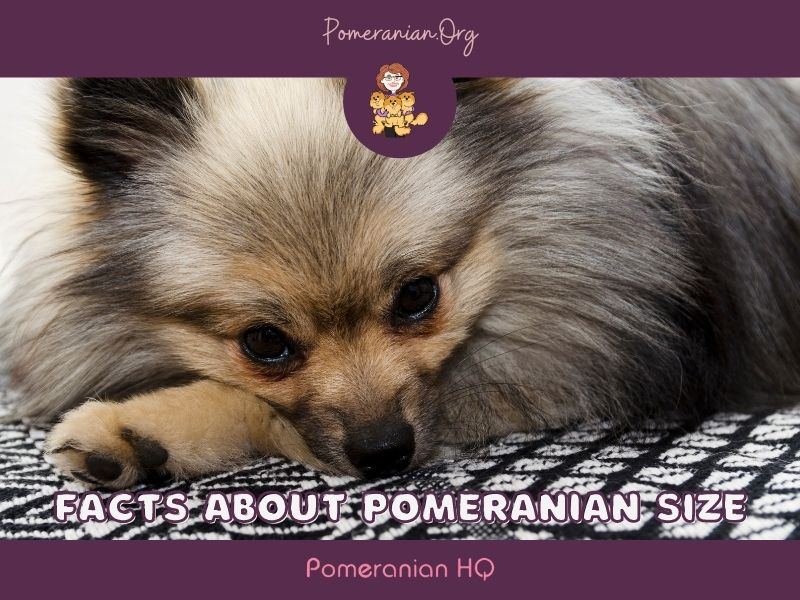
Male vs. Female Pomeranian Size
Male and female Pomeranians are both small toy dogs, and there is considerable overlap in their adult height and weight. A puppy’s sex alone cannot reliably predict how large it will become.
The size and structure of the parents, grandparents, and other close relatives usually provide more useful information than whether the puppy is male or female.
Breed-Standard Differences
The American Kennel Club and Canadian Kennel Club use the same general weight range for both sexes.
Dogs Australia and the Royal Kennel Club provide different ideal exhibition weights:
- Males: 4–4.5 pounds (1.8–2 kg)
- Females: 4.5–5.5 pounds (2–2.5 kg)
Under these standards, the ideal female is slightly heavier than the ideal male. This differs from many other breeds, in which males are expected to be noticeably larger.
The current FCI standard specifies a height of 21 cm ± 3 cm without providing separate measurements for males and females.
Are Female Pomeranians Usually Larger?
Not necessarily. Some females mature larger than their male littermates, while many males grow larger than females from the same breeding.
Adult size is influenced by:
- The size and build of both parents
- Size patterns within the wider pedigree
- Bone and body structure
- Individual growth and development
- Health and nutrition during puppyhood
A puppy’s sex is only one part of the overall picture.
Why Do Breeders Often Prefer Larger Females?
Experienced Pomeranian breeders have traditionally preferred breeding females with sufficient size, substance, and physical maturity rather than selecting exceptionally tiny females.
A larger, well-constructed female may be physically better suited to pregnancy and raising puppies than a very fragile, undersized dog. However, size alone cannot prevent reproductive complications. Pomeranians can experience difficult births, and every breeding female requires careful selection and appropriate veterinary care.
Health, structure, temperament, pedigree, reproductive history, and breed type must all be considered—not weight alone.
Does Sex Matter When Choosing a Pet?
For most pet owners, the size difference between males and females is minor. Either sex may mature at the lower, middle, or upper end of the expected range.
Choose a puppy according to health, temperament, responsible breeding, and suitability for your household rather than assuming that a male will always be larger or a female will always be smaller.

When Do Pomeranians Stop Growing?
Most Pomeranians approach their adult height between 9 and 12 months of age. However, reaching adult height does not mean that every part of the dog has finished developing.
The chest may broaden, the body may gain substance, and the adult double coat may continue maturing after the first birthday. Some larger or slower-developing Pomeranians may continue filling out until approximately 15 to 18 months.
Pomeranian Growth Stages
Birth to Eight Weeks
Newborn Pomeranian puppies are extremely small and should gain weight steadily. Breeders should weigh newborn puppies daily so that a failure to gain can be recognized quickly.
Puppies generally grow rapidly during these early weeks, although litter size, birth weight, health, and access to their mother’s milk can influence individual progress.
Two to Six Months
This is usually the period of fastest visible growth. The legs lengthen, the body develops, and the puppy begins losing its rounded baby appearance.
Growth does not always occur evenly. A puppy may look tall, narrow, or out of proportion temporarily before the body catches up.
Six to Nine Months
Growth usually begins to slow during this period. Many Pomeranians are approaching their adult height, although they may still lack mature body substance and coat.
This stage often overlaps with the puppy uglies, so the puppy may appear thinner or leggier than expected.
Nine to Twelve Months
Many Pomeranians are close to their final height by their first birthday. Some may still gain a small amount of healthy weight as the chest, muscles, and overall frame mature.
A puppy should not be deliberately overfed in an attempt to reach a predicted adult weight.
Twelve to Eighteen Months
Larger, more heavily built, or slower-maturing Pomeranians may continue filling out during this period. Most additional development involves body substance, muscle, and adult coat rather than a dramatic increase in height.
Growth Does Not Happen at a Steady Rate
Pomeranian puppies may experience rapid growth spurts followed by periods when their weight changes very little. One measurement should not be used to judge the puppy’s eventual size.
Follow the overall growth pattern and consider:
- Current age and weight
- Body condition
- Size of the parents and close relatives
- Bone and frame
- Previous growth measurements
- General health and development
When to Contact Your Veterinarian
Seek veterinary advice if a puppy:
- Fails to gain weight
- Suddenly loses weight
- Has persistent diarrhea or vomiting
- Is unusually weak or lethargic
- Eats poorly
- Develops a swollen abdomen
- Shows a sudden, unexplained increase in weight
Growth rates vary, but significant changes accompanied by illness or poor condition should never be dismissed as normal development.
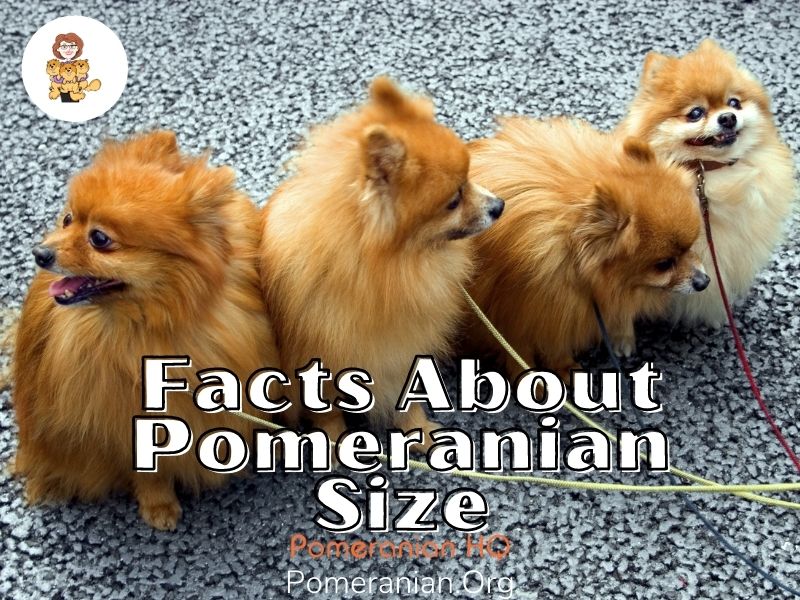
How Accurately Can You Predict a Pomeranian’s Adult Size?
An experienced breeder can provide an informed estimate of a puppy’s likely adult size, but no method can guarantee an exact mature weight or height.
Pomeranian puppies do not all grow at the same rate. Some are tiny at birth and later catch up, while others grow quickly during their first months and then slow considerably.
What Influences Adult Size?
A Pomeranian’s eventual size is influenced by several factors:
- The size and build of both parents
- The sizes of grandparents and other close relatives
- Size patterns in previous litters
- The puppy’s bone and frame
- Birth weight and early growth
- Litter size
- General health
- Adequate nutrition during development
- Whether the puppy was born prematurely or experienced early illness
Size is a complex inherited characteristic influenced by many genes. It is not controlled by one simple “small” or “large” gene.
How Breeders Estimate Mature Size
Experienced breeders consider much more than the puppy’s current weight. They assess:
- The puppy’s overall proportions
- Bone strength
- Foot size
- Leg length
- Head and body development
- Rate of growth over several weeks
- The size of the parents and close relatives
- How puppies from similar bloodlines matured
A breeder who has produced several generations of the same family may have a better basis for estimating adult size than someone assessing the puppy from one photograph or measurement.
Are Pomeranian Growth Charts Accurate?
Pomeranian growth charts can provide a general estimate, but they should never be treated as a guarantee. Most charts calculate adult weight from the puppy’s weight at a particular age.
These estimates may be less reliable for:
- Very small puppies
- Large puppies
- Premature puppies
- Puppies that experienced illness
- Puppies from unusually small or large parents
- Puppies undergoing a sudden growth spurt
Use a growth chart as a guide alongside the puppy’s pedigree, development, and breeder’s experience.
Can You Double a Puppy’s Weight to Predict Adult Size?
Simple formulas such as doubling a puppy’s weight at a particular age are often unreliable for Pomeranians. Small toy-breed puppies may grow in irregular spurts, and the timing of those spurts differs between individuals.
A series of recorded weights provides more useful information than one measurement.
Can a Breeder Guarantee Adult Weight?
No ethical breeder should promise an exact adult weight. Even when both parents are within the breed standard, an individual puppy may mature smaller or larger than expected.
Be cautious of sellers who guarantee that a puppy will remain under a particular weight or advertise an exact “teacup” adult size. These promises are often used to justify inflated prices.
A responsible breeder will provide an honest estimate, explain the possibility of variation, and place greater importance on health, soundness, temperament, and correct breed type.
Why Is My Pomeranian Smaller Than Expected?
Some purebred Pomeranians naturally mature below the size preferred in the breed standard. This does not make them “teacup,” micro, or a separate Pomeranian variety.
Size is influenced by many genes, so puppies from the same litter may mature at different weights. The smallest newborn puppy will not necessarily be the smallest adult, making growth over several months more informative than birth weight alone.
Very small puppies may be more vulnerable to low blood sugar, dehydration, difficulty maintaining body temperature, dental crowding, fragile bones, and accidental injury. They may require more frequent meals and careful supervision around children, larger dogs, furniture, and stairs.
Poor growth can also be associated with inadequate nutrition, parasites, digestive problems, congenital conditions, or other illness. Contact your veterinarian if a puppy fails to gain weight, loses weight, refuses food, develops persistent vomiting or diarrhea, or appears weak or unusually sleepy.
A naturally small but healthy Pomeranian should remain active, alert, eating normally, and in appropriate body condition. Small size should never be used to dismiss signs of illness.
Why Is My Pomeranian Larger Than Expected?
A purebred Pomeranian can mature above the size preferred in the show standard. Size is influenced by many genes, and a puppy may inherit a larger frame from dogs appearing several generations back in the pedigree.
A heavier Pomeranian may have:
- A naturally larger skeletal frame
- Heavier bone or greater muscle
- Excess body fat
- Larger relatives in its pedigree
- Incorrect or unknown parentage
Do not assume that every large Pom is a “throwback” or crossbred. There is no single proven throwback gene that suddenly produces an oversized Pomeranian.
It is also important to distinguish size from excess weight. A veterinarian can assess your dog’s ribs, waist, abdominal outline, muscle, and overall body condition.
An experienced breeder can estimate likely adult size from the parents, pedigree, and growth pattern, but cannot guarantee an exact weight. A larger pet Pomeranian can still be healthy, purebred, and an excellent companion even when it falls outside exhibition measurements.
Teacup, Micro and Miniature Pomeranians
There is only one recognized Pomeranian breed. “Teacup,” “micro,” “miniature,” and “pocket” are unofficial marketing terms—not separate sizes or varieties recognized by major kennel clubs.
A Pomeranian that matures below the breed standard is simply a very small Pomeranian. Buyers should be cautious when sellers guarantee an exceptionally low adult weight or charge more for these labels.
Deliberately breeding for extreme smallness can increase concerns about physical fragility, low blood sugar in young puppies, open fontanels, dental crowding, difficulty regulating body temperature, and accidental injury.
Choose a puppy for health, soundness, temperament, responsible breeding, and suitability for your home—not because it has been given a fashionable size label.
Pomeranian Size FAQs
Clear answers about adult weight, height, growth, and breed-standard size.
What is the average weight of a full-grown Pomeranian?
How tall is an adult Pomeranian?
When does a Pomeranian reach its full size?
Can a purebred Pomeranian weigh more than seven pounds?
Is a very small Pomeranian a teacup?
Can a breeder guarantee a Pomeranian’s adult weight?
Is my Pomeranian oversized or overweight?
Are female Pomeranians larger than males?
How can I improve my chances of buying a correctly sized Pomeranian?
If you want a Pomeranian likely to mature close to the breed-standard size, purchase from an experienced preservation breeder who regularly exhibits Pomeranians under licensed judges.
Ask to see the puppy’s parents, photographs of close adult relatives, pedigree information, and examples of dogs the breeder has produced previously. A breeder who has maintained the same families for generations will usually understand how puppies from those bloodlines mature.
Avoid sellers who breed primarily for unusually tiny size or advertise teacup, micro, pocket, or miniature Pomeranians. Look for adult dogs demonstrating correct size, structure, movement, coat, and temperament.
No breeder can guarantee an exact adult weight, but choosing a preservation breeder who breeds to the recognized standard gives you a much better chance of obtaining a correctly sized Pomeranian.
Choose health, soundness, correct breed type, and responsible breeding—not the smallest number on the scale.
Final Thoughts on Pomeranian Size
Pomeranian size standards vary between countries. Some kennel clubs use weight, while the FCI uses height. These measurements describe the ideal Pomeranian for exhibition, but healthy purebred Poms may mature above or below them.
During more than 50 years of breeding, exhibiting, and judging Pomeranians, I have seen puppies develop differently even within the same litter. An experienced breeder can estimate adult size from the parents, pedigree, growth pattern, and previous generations, but no one can guarantee an exact mature weight.
If you want a Pomeranian likely to mature close to the recognized breed-standard size, purchase from a preservation breeder who regularly exhibits their dogs. Ask to see the parents, close adult relatives, pedigrees, and examples of Pomeranians the breeder has produced previously. Be cautious of sellers advertising teacup, micro, pocket, or miniature Pomeranians, as these are marketing terms rather than recognized varieties.
Ultimately, health, soundness, temperament, correct structure, and breed type matter far more than obtaining the smallest possible dog. Whether your Pomeranian matures slightly smaller or larger than expected, a healthy and well-bred Pom can still be a wonderful companion.
Copyright Pomeranian.Org. All Rights Reserved.
References and Further Reading:
[1] Official Standard of the Pomeranian (AKC). American Kennel Club, 2011.
[2] Official English Kennel Club Pomeranian Breed Standard, 2017.
[3] Kimbering Pomeranians “1891-1991”.
[4] Denise Leo, The Pomeranian Handbook.
[5] E.Parker, The Popular Pomeranian.
[6] L.Ives, Show Pomeranians.
[7] L.Ziegler Spirer & H.F. Spirer, This is the Pomeranian.
[8] FEDERATION CYNOLOGIQUE INTERNATIONALE (FCI) German Spitz, including Keeshond and Pomeranian Breed Standards. PDF file.
The Pomeranian Handbook by Denise Leo