
Chocolate Pomeranians are one of the most striking and distinctive colours in the breed, known for their rich brown coats and matching pigmentation. Unlike standard colours, chocolate Pomeranians are created through specific genetic combinations that affect both coat colour and skin pigment.
Understanding these genetics, as well as how to correctly identify a true chocolate Pomeranian, is essential for anyone interested in this unique colour.
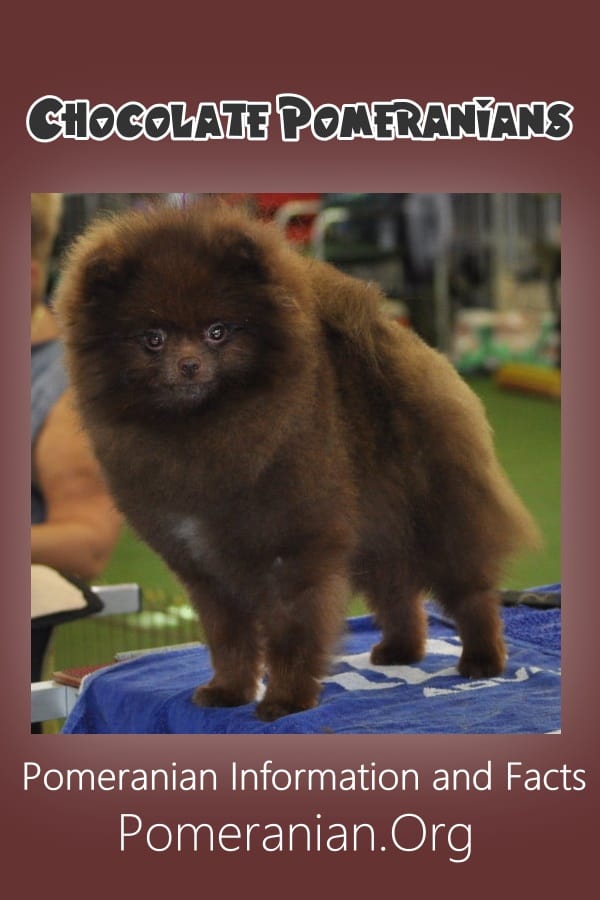
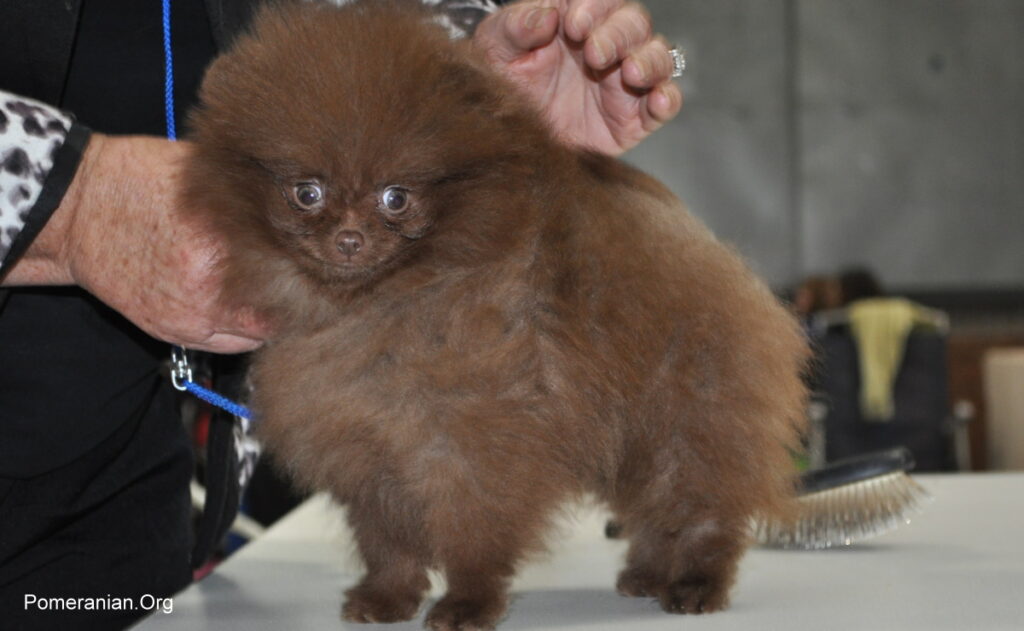
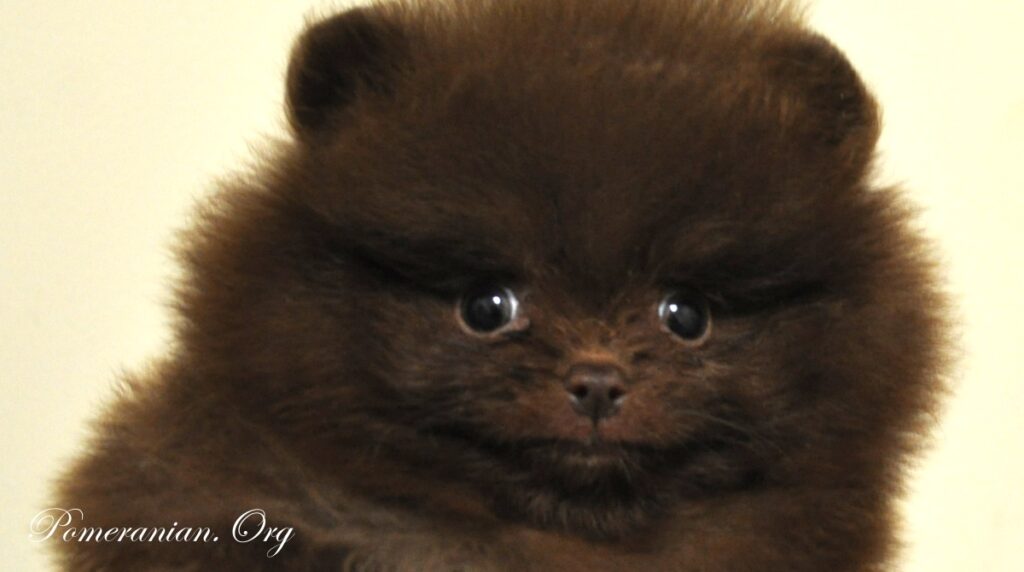
A perfect Chocolate Pomeranian is rich brown. The chocolate Pomeranian is also often referred to as Brown. Both “chocolate” and “brown” are the official and correct terms for this colored Pom.
Both phrases are accurate and can be utilized. In many versions of the Pomeranian breed standard, the color chocolate is referred to as brown.
This Pom dog color is one of the original Pomeranian Dog breed colors. Many important early champions in the history of the Pomeranian were chocolates.
Chocolate Pomeranians are becoming popular in the show ring. Thus boosting its global acceptance and interest in this color. It is now a regular occurrence to see correct, quality chocolates being shown.
Not all dog show judges appreciate colored Poms. Many of these beautiful little dogs are quickly gaining Championship titles over standard colored dogs.
What to Look for in a True Chocolate Pomeranian Dog:
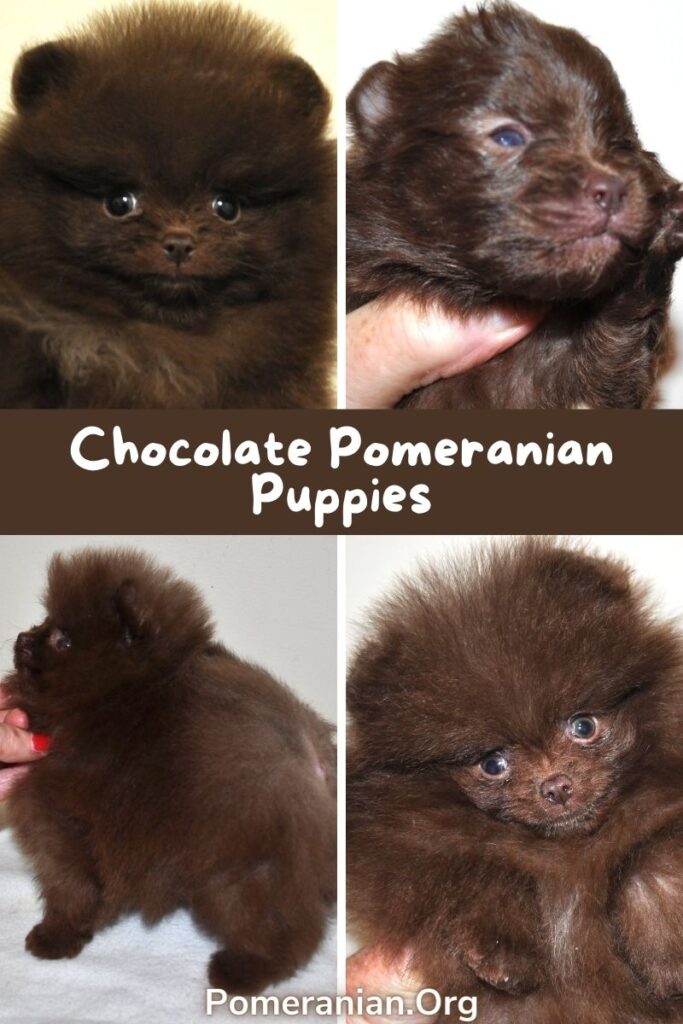
The color brown includes many shades of chocolate. They appear in many diverse shades of brown. From the light chocolates to the medium chocolates. Then onto the deep, dark chocolates. The light beaver, through to the darkest chocolate brown colors.
Some dogs might appear more reddish chocolate. Others are so dark-colored as to appear nearly black. Dark chocolates will never be so dark that it is problematic to determine their actual color.
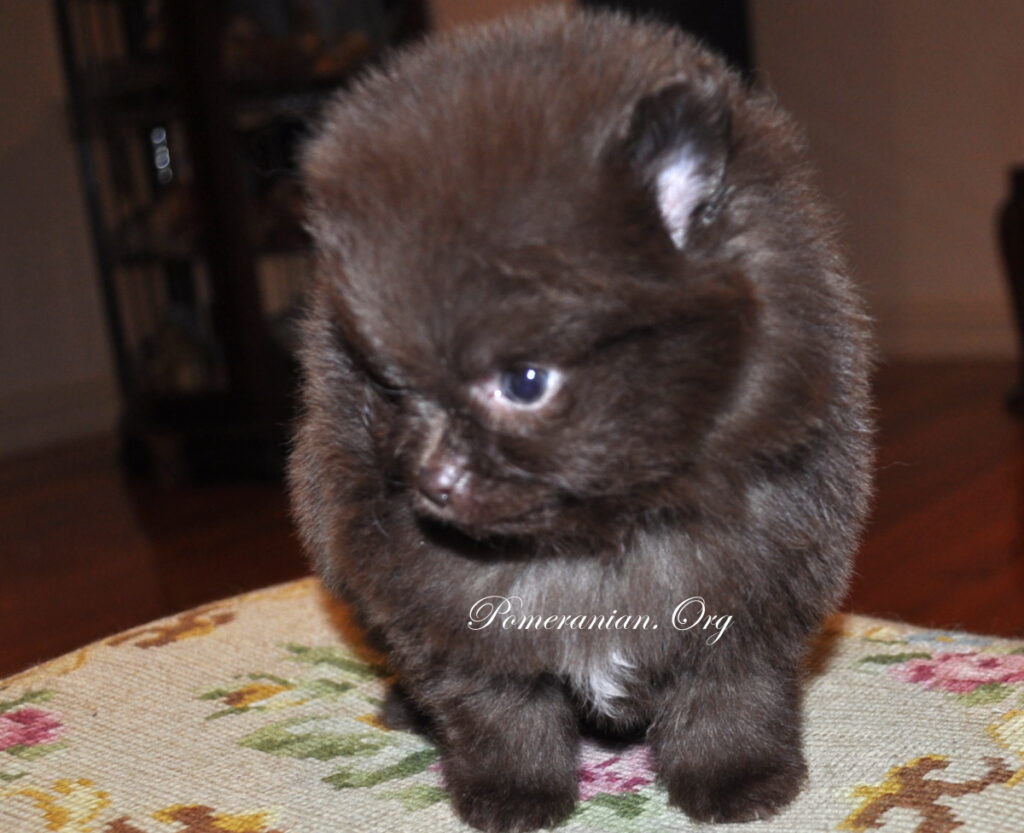
The chocolate colour in the Pomeranian is rich, dark, and candy-like. This appears as a self-color throughout his body.
Brown Pomeranians are Born Chocolate
A chocolate newborn Pomeranian puppy is solid brown. The chocolate Pomeranian puppy stays nearly the same color throughout his life. The only changes are slight fading of the coat color due to sun damage. Coat color fading is additionally typical in older Pomeranians.
If your dog spends time outside, his coat may have some red, or “sunburn,” on it. Chocolate owners wishing to do well in the show ring should keep their dog out of direct sunlight. There are many color-enhancing dog shampoos available. These will improve the appearance of a dog’s sunburnt brown coat.
This Dog’s Points Must Also Be Brown
A genuine chocolate Pom dog will have a solid brown coat. The dog’s points refer to the nose, pads, rims, and lips. A brown dog’s points must be a dark brown colour. In canine terminology, this is referred to as being self-colored.

A Pom dog with any black colouring on its points or coat? Well, he’s not a chocolate or Pomeranian brown dog. Black simply cannot occur in a brown dog, because brown and black can’t be present concurrently.
Pomeranians come in a wide variety of colors. People often feel very confused about the details of chocolate Pomeranians and brown Pomeranians.
Brown Is Sometimes Confused With Other Pomeranian Colors
Cream and beaver colors are sometimes mistaken by very inexperienced owners for chocolate. Beaver is the dilution of the chocolate brown color in the Pomeranian dog breed. A further brown dilute is the incredibly beautiful and elusive lavender Pomeranian.
Lavender Pomeranians are generally the outcome of breeding a dilute beaver to another dilute, such as a blue. Visit our color page for detailed information on all Pomeranian Colors.
Alternative Variations of the Dark Brown Pomeranian Dog:
This includes the dilutions of chocolate:
The Beaver Pomeranian, Lavender Pomeranians, and the Chocolate Sable Pomeranian. Chocolate Sables are a different type of sable from the ordinary Pomeranian sable.
Tipping on their guard hairs is certainly not black. As discussed previously, black just cannot exist in a brown dog. The guard hairs of the chocolate sable pom finish with dark chocolate tips. The base coat color of this dog is light brown.
Apart from solid colors, chocolate and brown also appear in Pomeranian patterns. Examples are: chocolate and tan, chocolate and white parti-color, and chocolate merle.
How to Breed Chocolate Pomeranians:
Becoming a chocolate Pomeranian breeder can be difficult. Pomeranian mothers typically whelp small litters. Placing breeders of all the colors at a massive disadvantage. A task further complicated by the fact that browns are dilute. Additionally, this color results from a recessive gene.
To breed chocolate dogs, both the sire and dam must be either brown carriers or chocolate dogs. A chocolate carrier may have one brown parent. Or, as we know, this gene is recessive, the brown gene may have been carried hidden for many generations.
Breeding this color is tricky. The reality that chocolate is recessive, along with a limited gene pool, tends to make breeding these dogs difficult.
Many past chocolate Pomeranian breeders have experimented with combining the standard colors. Such as using black or orange to quickly enhance the quality of the brown dogs.
Top-quality blacks are the recommended outcross color. The result will be a chocolate factored litter. The term chocolate carrier signifies that one of the canine’s parents is a chocolate. Alternatively, the actual brown gene may possibly have been handed on.
The gene can easily be hidden for many generations when breeding to other colors. In order to continue a brown breeding program, the very best of the litter should be retained. At maturity, this particular canine could then be bred to a chocolate or a chocolate factored dog.
My Personal Experience As a Chocolate Pomeranian Breeder:
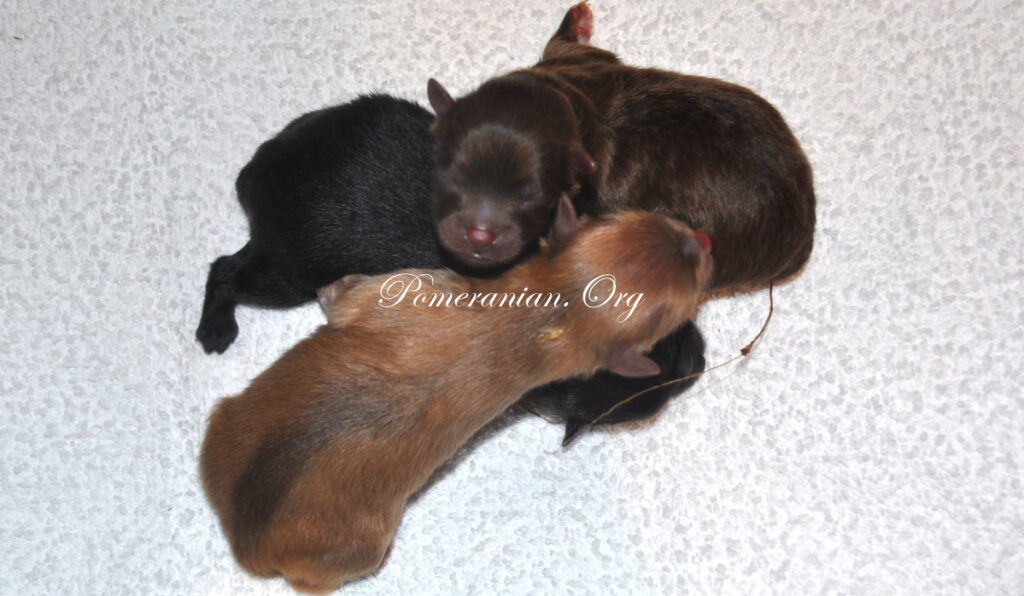
The very first litter of chocolate Pomeranian puppies bred here at Dochlaggie was a complete shock. I was planning to produce whites with this litter. Using a white dog as the sire.
The dam was a black Pomeranian girl who had one white parent. My proven formula for creating high-quality white Poms with jet-black pigmentation.
Delivered in the early morning hours. I felt an urgent need to examine the litter under much better lighting and with cleaner spectacles. Resulting in a litter, which consisted of a chocolate Pomeranian puppy, a chocolate sable puppy, and a black puppy.
Being a long-time admirer of the amazing exotic dogs, I was overjoyed with this litter. I then spent many hours on my computer doing extensive pedigree research.
All these years, my Poms carried the necessary genes to produce this most wonderful color. Hidden for many generations, until I mated this pair together, was the recessive brown gene.
I repeated this mating in expectation of breeding more chocolates. The repeat breeding of this breeding pair was a huge disappointment. The second litter contained the originally planned white and a chocolate sable.
Since the very first brown Pom bred here at Dochlaggie, my focus has not been on producing browns. Despite not breeding for browns, other chocolate Pomeranian puppies and beavers have appeared in litters.
I sold a Dochlaggie breeding girl to another Australian Pomeranian breeder. This girl has produced many chocolate Pomeranian dogs and chocolate parti-color Poms for her new owner.
Breeding Brown Pomeranians Can Be Challenging
Test breeding’s were utilized years ago, in an attempt to identify the genes of a breeding canine. Because litters are commonly small, the resulting test litter may not produce a chocolate. Owing to actual small litter sizes, repeat test matings would be indicated. Color breeding could possibly be a lengthy process.
Modern-day scientific advances have made this a much easier task for dog breeders. Talk to your Vet about DNA testing for colors. DNA testing is easy and inexpensive today.
Providing a DNA sample is a painless procedure. A swab is obtained from inside the dog’s mouth. Color DNA screening definitely makes the breeding of all Pomeranian Dog colors less of a challenge.
Brown Pomeranian Color Genetics
The presence of the recessive brown (b) gene is the reason dogs that would otherwise be completely black are instead brown.
This recessive brown (b) gene turns all that would be otherwise black to chocolate. A dog that would have been a black & tan because of the presence of the recessive brown (b) gene in his genetic makeup will be a chocolate & tan, etc.
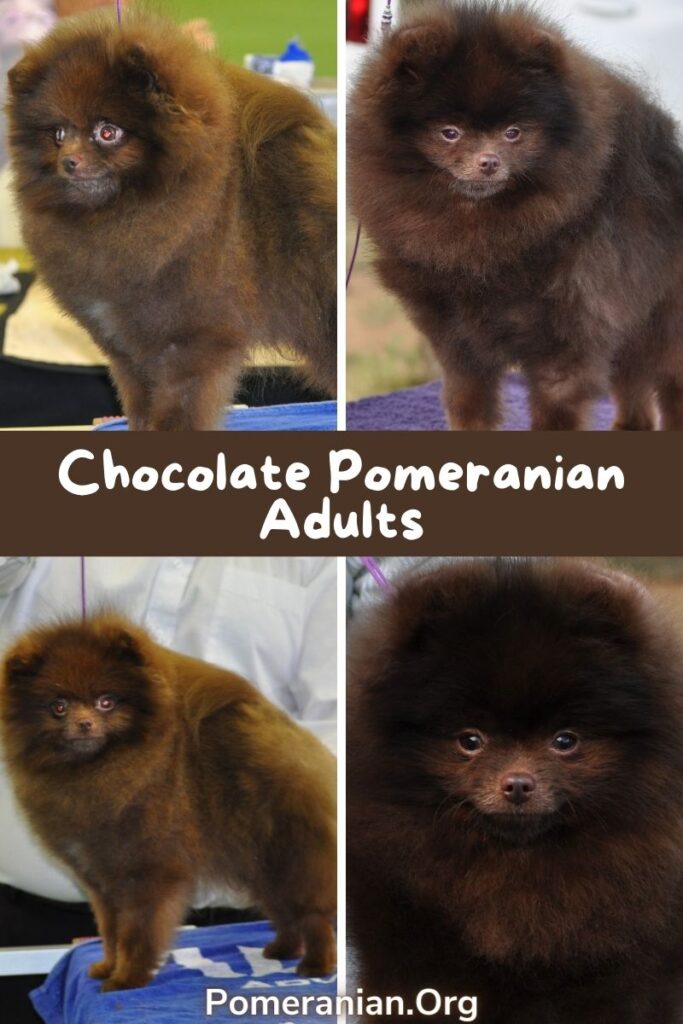
Such dogs will never have black hair or pigment on ANY body part, because brown will also be the color of their nose, pads on the paws, and the rims of their eyes.
Chocolate
If a dog is solid brown, it’s similar to black except that the brown is the only color present on this dog. A chocolate brown puppy is born totally brown, and it’s just shades of brown that can vary from the darkest of browns to a light brown.
Beaver (Pale Orange with a Liver Pigment)
A very pale orange Pomeranian with a “liver” pigment is known as a “beaver” because of the brown (liver) pigment. While similar to orange, the eye rims, paw pads, and nose have the liver pigment.
There are no black pigments or hair anywhere on the dog’s body, and as with orange dogs, the shades can be dark orange through to a pale cream. These dogs often have hazel eyes.
Chocolate & Tan
A chocolate & tan dog is merely the brown “cousin” to a black & tan. It’s solid chocolate in color, but also has a tan pattern.
Brown Pomeranian Grooming Requirements:
Proper grooming needs are similar to those of the other colored Poms. Coat textures on these dogs should mirror that of the black dog. Similar grooming practises to those required by a Black Pom are advised. Click here to refer to our Pomeranian Grooming Section for complete information.
Grooming Suggestions Include:
- Keeping the dog out of direct sunshine at all times.
- Using color-enhancing shampoos recommended for brown Pomeranian dogs.
Refer to the Pomeranian Colors page for complete information on all the Pom dog colors.
Chocolate Pomeranian FAQs
Are chocolate Pomeranians rare?
Chocolate Pomeranians are less common than colours such as orange, but they are not truly rare. They only occur when both parents carry the recessive brown gene.
How can I tell if my Pomeranian is chocolate?
A true chocolate Pomeranian will have brown pigmentation throughout, including a brown nose, eye rims, and paw pads. If the nose is black, the dog is not genetically chocolate.
Do chocolate Pomeranians have brown noses?
Yes, a defining feature of a chocolate Pomeranian is a brown nose. This is caused by the gene that changes black pigment to brown.
Are chocolate Pomeranians more expensive?
Not necessarily. While they may be marketed as rare, price should be based on breeder quality, pedigree, and overall type rather than colour alone.
What is a chocolate sable Pomeranian?
A chocolate sable Pomeranian has a lighter brown base coat with darker brown tipping on the hairs, creating a shaded effect.
Can two non-chocolate Pomeranians produce a chocolate puppy?
Yes, if both parents carry the recessive brown gene, they can produce chocolate puppies even if neither parent is visibly chocolate.
Final Thoughts
Chocolate Pomeranians are a unique and eye-catching colour, distinguished by their rich brown coats and matching pigmentation. While they may appear less common than traditional colours, their true value lies in understanding the genetics behind them and recognising correct breed characteristics.
Colour should never be the deciding factor when choosing a Pomeranian. A well-bred dog with correct type, soundness, and temperament will always be far more important than any coat colour.
Copyright Pomeranian.org. All Rights Reserved.
References and Further Reading:
Official Standard of the Pomeranian (AKC). American Kennel Club, 2011.
Official English Kennel Club Pomeranian Breed Standard, 2025.
Denise Leo, The Pomeranian Handbook.
Purchase The Pomeranian Handbook by Denise Leo
Recommended Color-Enhancing Shampoo For Brown Pomeranian Dogs: