
Owning a Pomeranian brings endless delight—from their spunky personalities to their fluffy, expressive faces. Yet, one often overlooked aspect of caring for these tiny companions is their dental health. Over time, issues like bad breath, plaque build-up, gum disease, and even tooth loss can sneak up on this breed if proper care isn’t established early on.
The good news? You can take meaningful steps at home to protect your Pomeranian’s smile and overall well-being. In this guide, you’ll learn when to start brushing, how to introduce brushing in a stress-free way, safe product choices, and how to make dental care a positive—and manageable—part of your routine. A little effort now can save your pup from the risks of anesthesia and frequent vet visits down the line.
In this article, I will explain in detail how to clean Pomeranian teeth and the potential Pomeranian teeth issues your little dog may face unless correct Pomeranian teeth care is practised.
How to Deal With Pomeranian Teeth Problems
Probably the most neglected area of our tiny Pomeranians is their teeth. Often, this major health concern is not noticed until a dog’s bad breath alerts an owner to a problem, and at this stage, your dog will have suffered Pomeranian tooth loss and possibly gum infections.
When to Start Brushing Your Pomeranian’s Teeth
To avoid Pomeranian tooth loss, a Pomeranian’s teeth need care and attention from an early age. Paying attention to your puppy Pomeranian’s teeth should start at 3 months of age.
Brushing a Pomeranian’s teeth frequently should protect your Pom dog against tartar accumulation, tooth decay, tooth loss, and a reduction in jawbone mass. If tartar is allowed to accumulate, cleaning at your vet’s will be required.
Since your Pom will be anesthetized at your vet’s before cleaning their teeth, it is important to make those occasions as infrequent as possible. Pomeranians often do not do well with anaesthesia and have been known to perish from a simple teeth cleaning.
Pomeranian teeth cleaning is a task that should not be overlooked, as your Puppy’s dental health is just as important as caring for your puppy’s coat, nails, or any other necessary maintenance tasks.

- ENZYMATIC PLAQUE AND TARTAR ACTION: Enzymatic gel formula targets plaque and tartar during brushing using enzyme activity and baking soda, supporting cleaner teeth and fresher breath for dogs and puppies with each use.
- FLUORIDE-FREE AND SAFE FOR ALL DOGS: Formulated without fluoride, dyes, or toxic ingredients, making this toothpaste appropriate for daily use on adult dogs and puppies, including breeds with known ingredient sensitivities.
- DOUBLE-SIDED TOOTHBRUSH FOR FULL COVERAGE: The included dual-ended toothbrush features a large head for molars and a small head for front teeth, helping reach all tooth surfaces without switching tools mid-session.
- BAKING SODA ODOR NEUTRALIZER: Baking soda in the formula dissolves into microscopic grooves on tooth surfaces during brushing to help neutralize odor compounds at their source rather than masking breath with flavoring.
- FINGER BRUSH FOR FIRST-TIME OR RELUCTANT DOGS: The included finger brush slides onto one finger for gentler introduction to brushing, helping dogs new to dental care or resistant to a full toothbrush accept the routine.

Keeping a Pomeranian Healthy Requires Commitment
Exercising, bathing, and brushing take care of external requirements; of equal importance is internal health, of which dental care is a very important part.
Diet does play a huge part in the general health and dental health of your Pomeranian. Try to analyse the food your Pomeranian eats by reading the breakdown on commercial packets. I try to avoid feeding too much commercial dog food and try to feed a diet as natural as possible.
A good product is Newman’s Own Organics Adult Dog Food Formula. Another option is Natural Balance Dry Dog Food, Ultra Premium Formula. Alternatively, you can visit the site Doggie Dinners.
I do not like to give my Pomeranians doggie treats, chews, pig ears, etc, as most are processed in China and I worry about the health of my small doggies. It is safer and more beneficial for the health of your Pomeranian to go to your butcher and buy a bone or a chicken frame. It is safe to feed your Pomeranian raw bones and raw chicken frames.
If you are concerned about bacteria on raw chicken frames and bones, simply freeze the raw meat to kill any bacteria, thaw it in your refrigerator, and then feed the chicken frame or raw bones. I do spend a few minutes removing any loose fatty pieces from the chicken frame that my Pomeranian could choke on.
Suppose small pieces of food remain in your Pomeranian’s mouth. In that case, this will offer bacteria a rich place to develop and cause gum disease and other health problems, including kidney and heart disease in older Pomeranians.
Starting young with brushing your puppy’s teeth two or three times a week is sufficient. Never use human toothpaste. There are many products available that will help to keep your Pomeranian’s teeth gleaming white.
Best Toothpaste for Pomeranians
There many doggie toothpastes suitable for Pomeranians available including CET Poultry flavoured Dog Toothpaste.

Use a doggie toothbrush or a very soft child’s toothbrush. A very good brush for a Pom is a Petrodex Toothbrush Dog Dual-Ended Soft Bristle
How to Brush a Pomeranian’s Teeth
A major reason why Pomeranian puppies struggle when having their teeth brushed is that it’s an intrusive, terrifying new activity. Before you even think of trying it, you should use your fingers to make him comfortable.
Canine specialists recommend that you choose something your Pom puppy finds tasty and dip your fingers into it. Then you can let him lick your fingers as you gently touch his teeth. That will help him become more at ease when you eventually do use a toothbrush and toothpaste.
Do this activity for a short period (usually only a few days) and you’ll watch your Pomeranian puppy get so excited whenever you touch his mouth.
Learn the Best Way to Open Your Pom’s Mouth
Brushing is an activity that your puppy needs to enjoy, or the daily ritual will quickly become a nightmare. You must NEVER attempt to pry his mouth open with a degree of force.

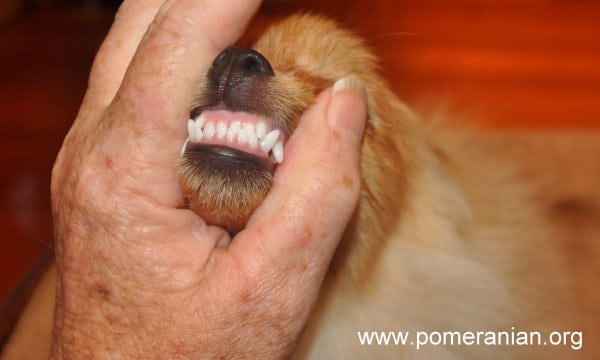
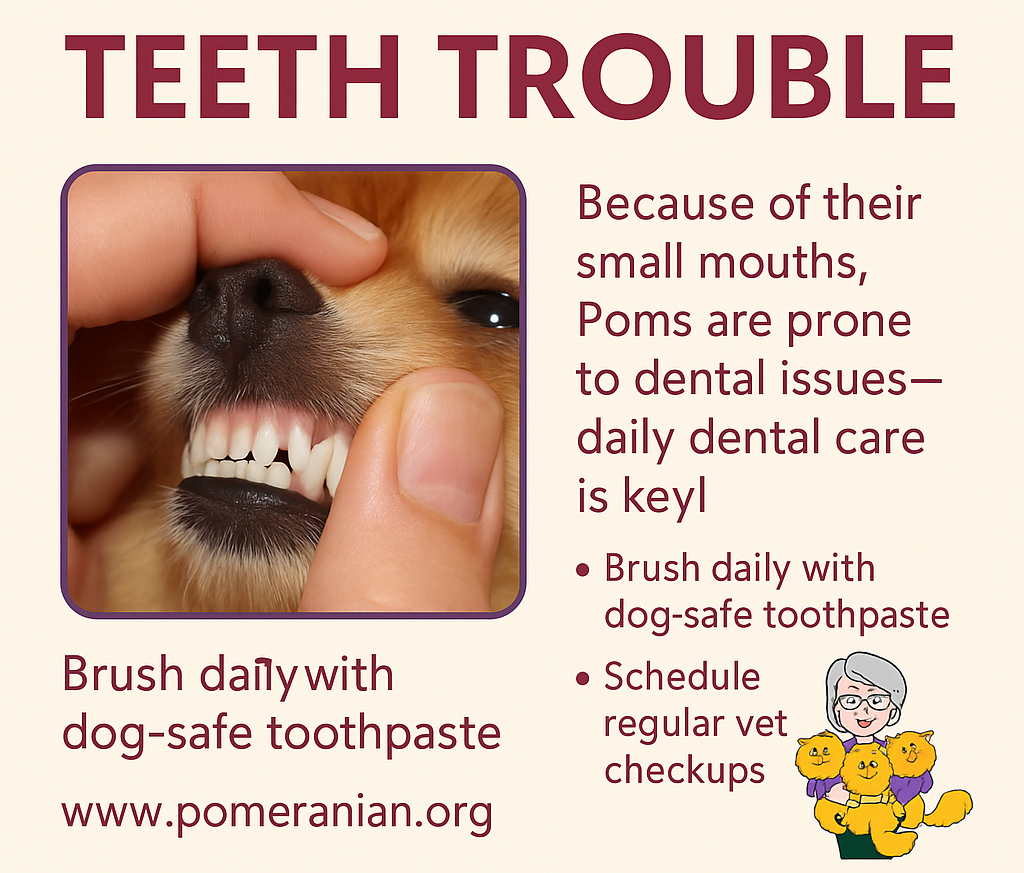
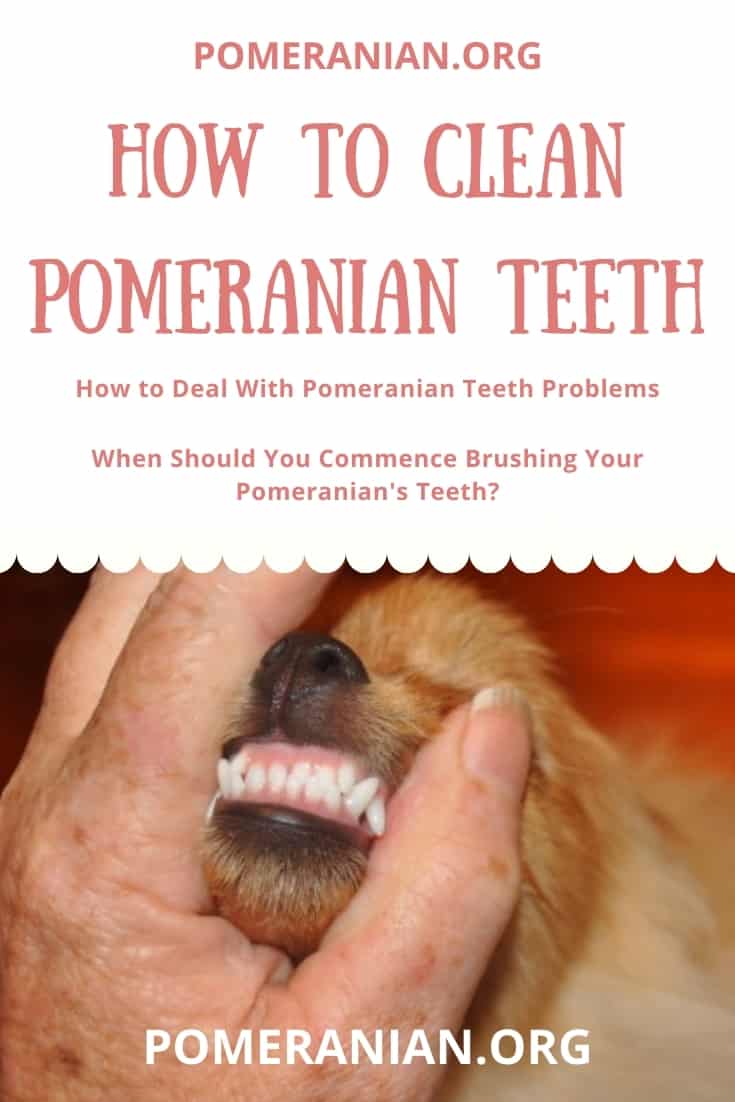
The trick is that you put your thumb beneath his jaw. This action keeps his mouth shut and enables you to lift his lips until you see his teeth and gums.
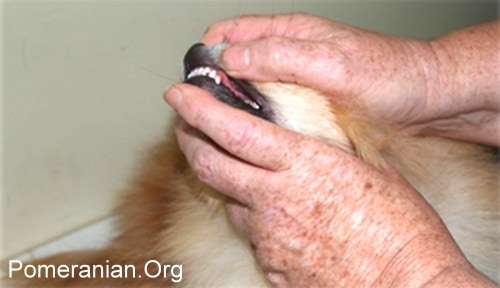
Using your fingers on the other hand, lightly rub his gums and teeth for just a few seconds before letting him go. Always have a yummy treat for him to reward his good behavior, and repeat this activity as often as you can, to help your Pomeranian gradually build a tolerance to this activity.
You will need to examine the Pomeranian puppy’s teeth by gently parting its jaws. You could start opening the puppy’s mouth and just rubbing the teeth with your finger. Make this a fun thing and reward the puppy with heaps of praise and treats. When your Pomeranian puppy is comfortable with you opening his mouth to see his teeth, you can then follow this simple procedure to brush your puppy’s mouth.
Choose the Ideal Time for Brushing His Teeth
The next decision to make is when to brush your Pomeranian’s teeth. Poms love predictability in their lives. Establish a time that’s also suitable for you and stick with it. If you brush his teeth at a specific time every day, he won’t put up a fuss.
Brushing your Pomeranian’s teeth shouldn’t feel like a chore, something you want to cross off your daily list as fast as you can. You need to make it an enjoyable experience for you and your canine companion. Because of this, it’s necessary to choose a consistent time when you won’t be busy, rushed, or exhausted.
Remember, there are two schedules to consider. The second one is your Pomeranian’s schedule. For example, brushing his teeth would be much harder if he’s excited about going for his daily walk, or if he’s hungry. Consider the available option times and stick with it.
Select the Ideal Toothpaste and Toothbrush
Some owners choose a toothbrush that’s the right size for human children to clean their Pomeranian’s teeth. I recommend using a dog toothbrush for small breeds. Suggestions include: VTurboWay 360-Degree Pet Toothbrush for Puppy, Small Dog and Cat, Colors May Vary
When it comes to toothpastes, NEVER use human products because they all have fluorides as ingredients, and if your Pom had even a tiny amount, it can prove fatal. Natural toothpaste is another dangerous product because some have an ingredient called xylitol, and this can cause low blood sugar within minutes, thereby proving fatal to Pomeranians.
Gradually Get Your Pomeranian Used to The Paste and Brush
If you have already achieved everything set out in this guide, your puppy will be ok when your fingers touch his mouth. The next stage is to help him become comfortable with the feel of the toothbrush around his face and in his mouth. Then comes the toothbrush, and the finishing line grows much closer.
Put a tasty something on the brush to start with (maybe cheese or a sardine). Then call your Pom to you and allow him to smell and explore the brush. It’s not time to brush yet. The goal is to get him to associate the brush with tasty treats.
After he’s used to the brush, it’s time to start with the paste. Put a little on one of your fingers and let your Pomeranian puppy sniff and lick it as he gets used to it. At this stage, do not attempt to brush your puppy’s teeth.
It’s Time to Brush His Teeth
After your Pomeranian is used to the feel of toothpaste and a toothbrush, you can begin brushing. Get everything you need as well as your Pomeranian, and find a position that’s comfortable for you both.
One example would be to put him on your bed while you kneel on the floor. On the other hand, you might cuddle him if you think that would be an easier way for you to brush his teeth.
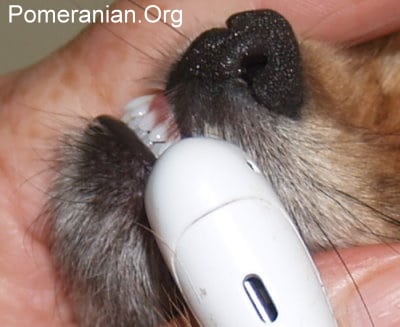
Next, you’ll need to put your thumb beneath his jaw and gently lift his top lip. First, you should brush his canine teeth in circular movements. Then move further back. After completing both sides, you move to his front teeth (also known as incisors).
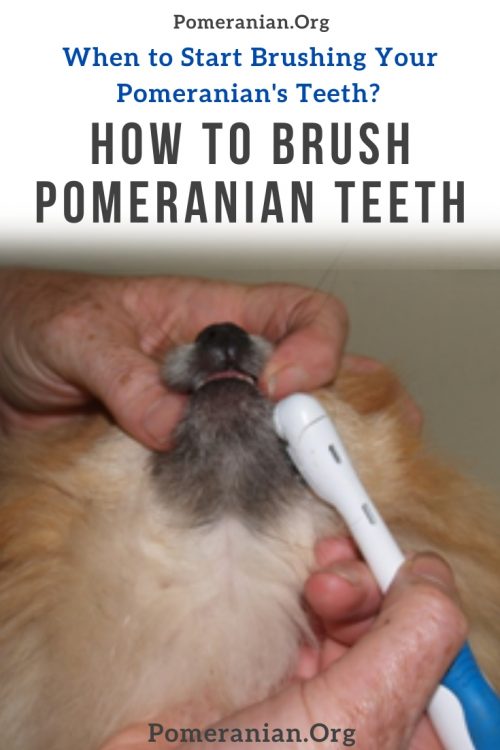
When you first start doing this, it will only take 10-20 seconds to brush his teeth completely. Slowly, you’ll increase the time until you reach two minutes. Your phone is best for accurate time tracking.
It’s common for your pet Pomeranian to be a bit fidgety during the teeth cleaning sessions. If, however, he’s too anxious or uncomfortable, stop brushing and work on improving his tolerance level.
If he struggles a lot while you’re using a brush, you can buy a finger toothbrush or wrap a little gauze around one of your fingers and use that like a toothbrush.
How to Clean Pomeranian Teeth Summary
- Develop a habit of checking your puppy’s teeth often; this can be done a few times daily while patting your puppy. Always reward the puppy afterwards with praise and a treat.
- The next step is to introduce your Pomeranian to a toothbrush in its mouth. Put a tasty treat on the brush, such as a small piece of cheese or a sardine. At this stage, do not attempt to brush your puppy’s teeth.
- Once your puppy is comfortable, introduce a dog dental toothpaste. Reward the puppy with a treat and much praise at the end of this teeth cleaning session.
- While you are taking care of your Pomeranian’s teeth, keep an eye on the progress of your puppy’s changing teeth. Some Pomeranian puppies can start changing teeth as young as 4 months of age, while others may be slower and not change teeth until 7 or 8 months of age.
- Another good product is Proden PlaqueOff Dental Care for Dogs and Cats. PlaqueOff effectively fights bad breath, tartar, and plaque, and is added to your Pomeranian’s food.

- Reduces plaque and tartar
- Freshens Bad Breath
- For healthy teeth and gums
Reward Your Pomeranian
After you have finished all your Pomeranian’s teeth and he has behaved, let him go, praise him for such good behavior, and give him a treat. End every brushing session on a positive note so he learns that it’s an activity to enjoy.
Pomeranian Teeth Cleaning Cost
At home, teeth cleaning will postpone Pomeranian tooth loss and reduce the need for professional teeth cleaning; however, your Pomeranian will certainly still require regular professional teeth cleaning and polishing sessions.
Exactly how much will Pomeranian teeth cleaning cost? My veterinarian charges an additional fee for each tooth removed. Specialist teeth cleaning by your vet can vary between $300 and $3000, depending on the extent of the work and time required.
The Pomeranian dental cleaning price is usually related to geographic location, the veterinarian’s skill level, and the dental procedures required.
Why Do Poms Have Bad Teeth?
Smaller Pomeranians are slower to change teeth than their bigger brother and sisters. Often, the canine teeth (the long teeth on either side of the upper and lower jaw) do not fall out as expected. Retained puppy canine teeth can cause problems, and your veterinarian should be contacted for advice.
I always advise new Dochlaggie Pomeranian owners to have their Pomeranian puppy’s teeth checked and any retained baby teeth removed at the same time as the puppy is desexed.
Signs of Major Pomeranian Teeth Problems
When to worry, if your Pomeranian suffers from any of the following;
- Bad breath.
- Sores on the tongue or gums.
- Weak teeth or broken teeth.
- Bloody saliva.
You should, at this point, contact your veterinarian for a professional diagnosis and treatment.
Final Thoughts on Pomeranian Teeth Issues
Caring for your Pomeranian’s teeth is more than just keeping their smile looking bright—it’s an essential part of protecting their overall health and happiness. Dental problems left untreated can lead to pain, infection, and even impact vital organs. By starting dental care early, using the right tools and techniques, and making tooth-brushing a positive daily routine, you’ll be safeguarding your Pom’s long-term well-being.
Remember, consistency is key. Pair regular at-home care with professional veterinary check-ups to catch issues before they become serious. With just a few minutes each day, you’ll not only prevent costly dental treatments but also give your Pomeranian the comfort and quality of life they deserve.
A healthy mouth means a healthier, happier Pom—so start today, and let that dazzling little smile shine for years to come!
The Pomeranian Grooming Book has details on how to care for your Pomeranian’s teeth.
Written by Denise Leo, a distinguished figure in Pomeranian breeding, in partnership with our resident veterinarian, Dr. Muqeet Mushtaq. Dr. Mushtaq, a graduate of the University of Animal and Veterinary Sciences (2019) and a recipient of an MSc (Hons.) in Animal Breeding & Genetics from the University of Agriculture Faisalabad (2021), brings valuable expertise to this collaboration.
Copyright Pomeranian.Org. All Rights Reserved.
Disclaimer: The Content is not intended to be a substitute for professional veterinarian advice, diagnosis, or treatment. Always seek the advice of your veterinarian with any questions you may have regarding the medical condition of your dog. Never disregard professional advice or delay in seeking it because of something you have read on ANY website.
References and Further Reading:
[1] Denise Leo, “The Pomeranian Handbook”.