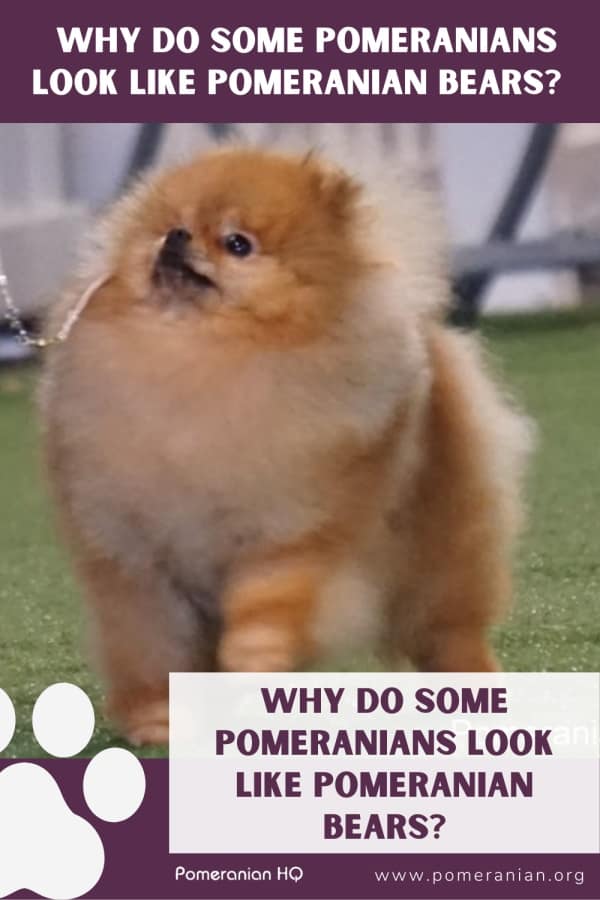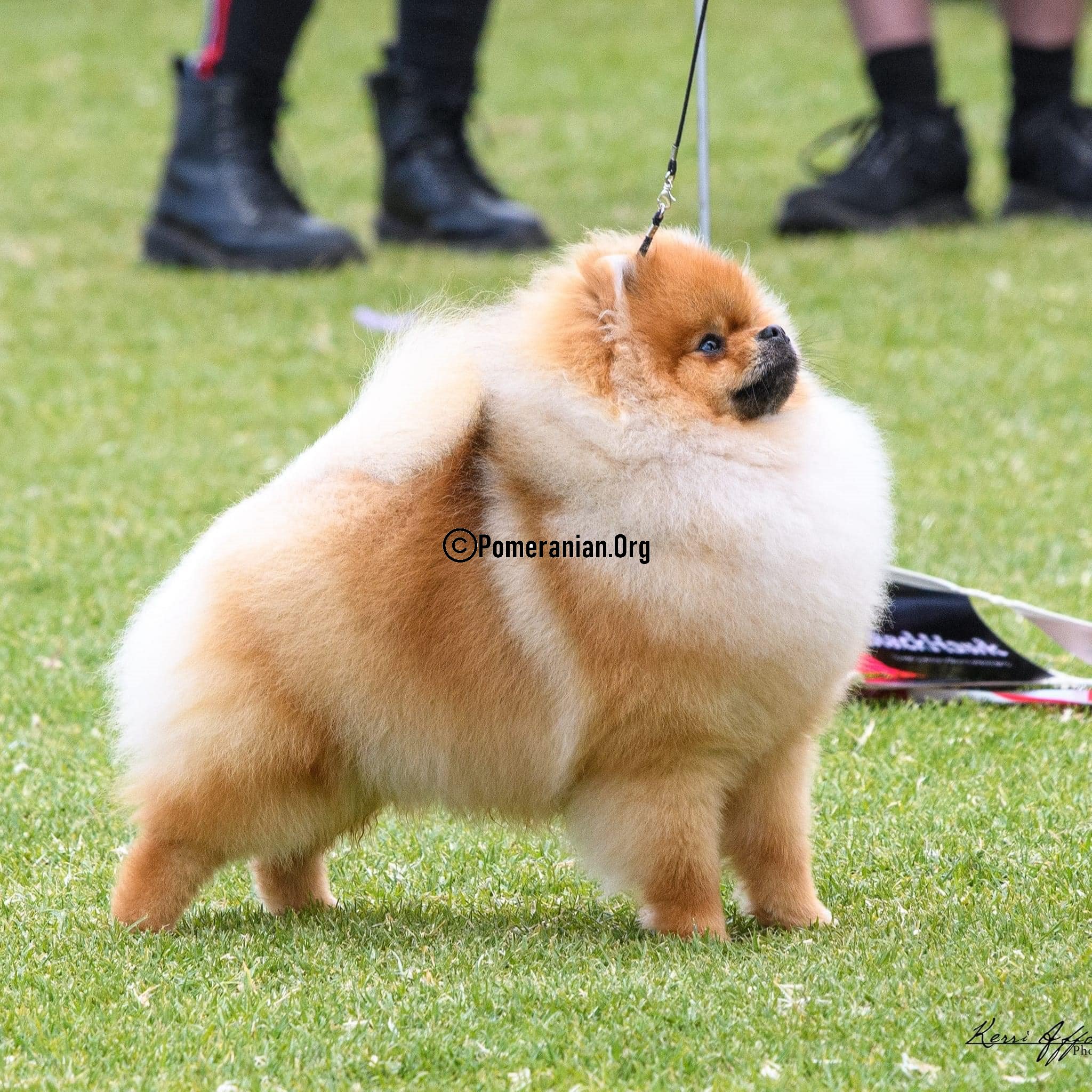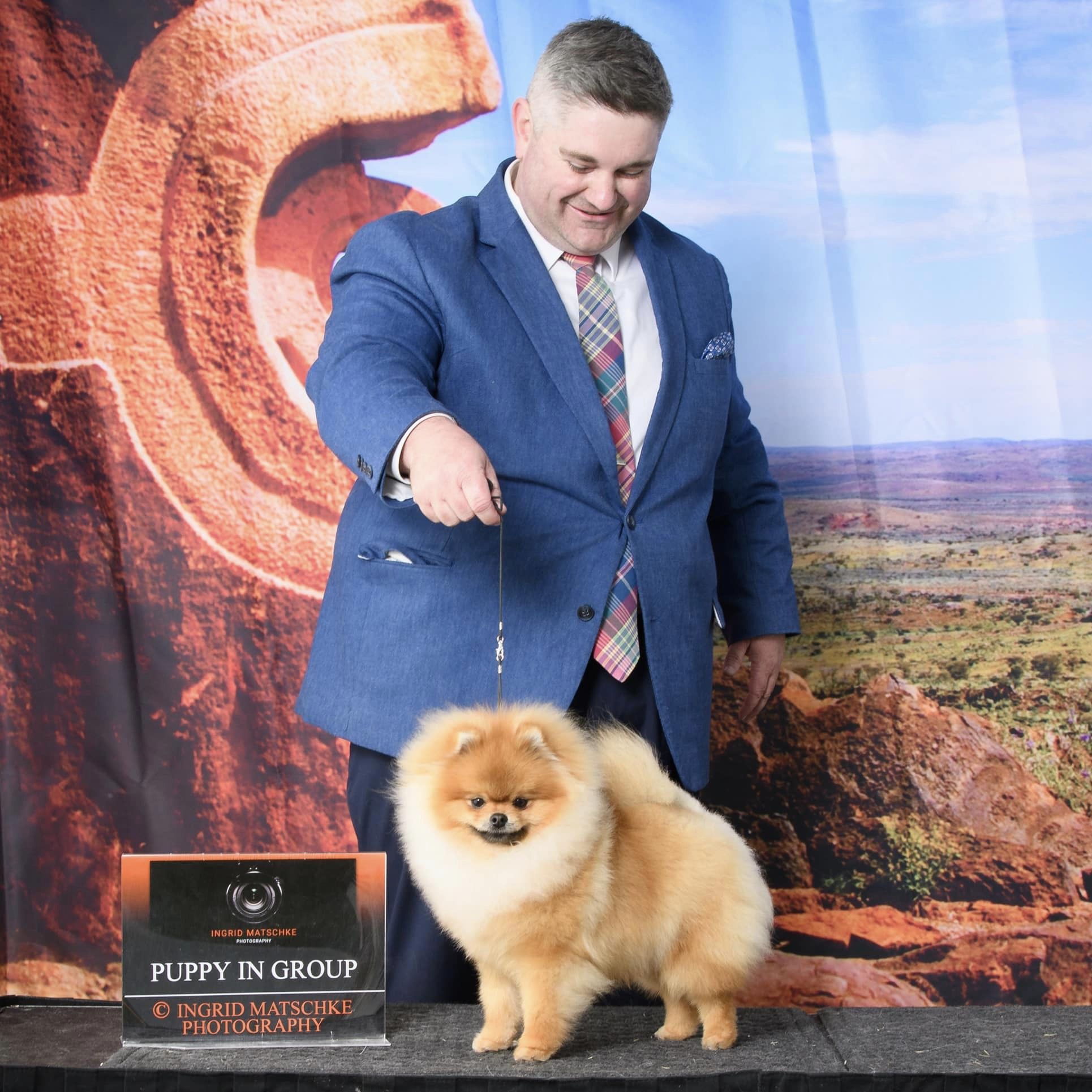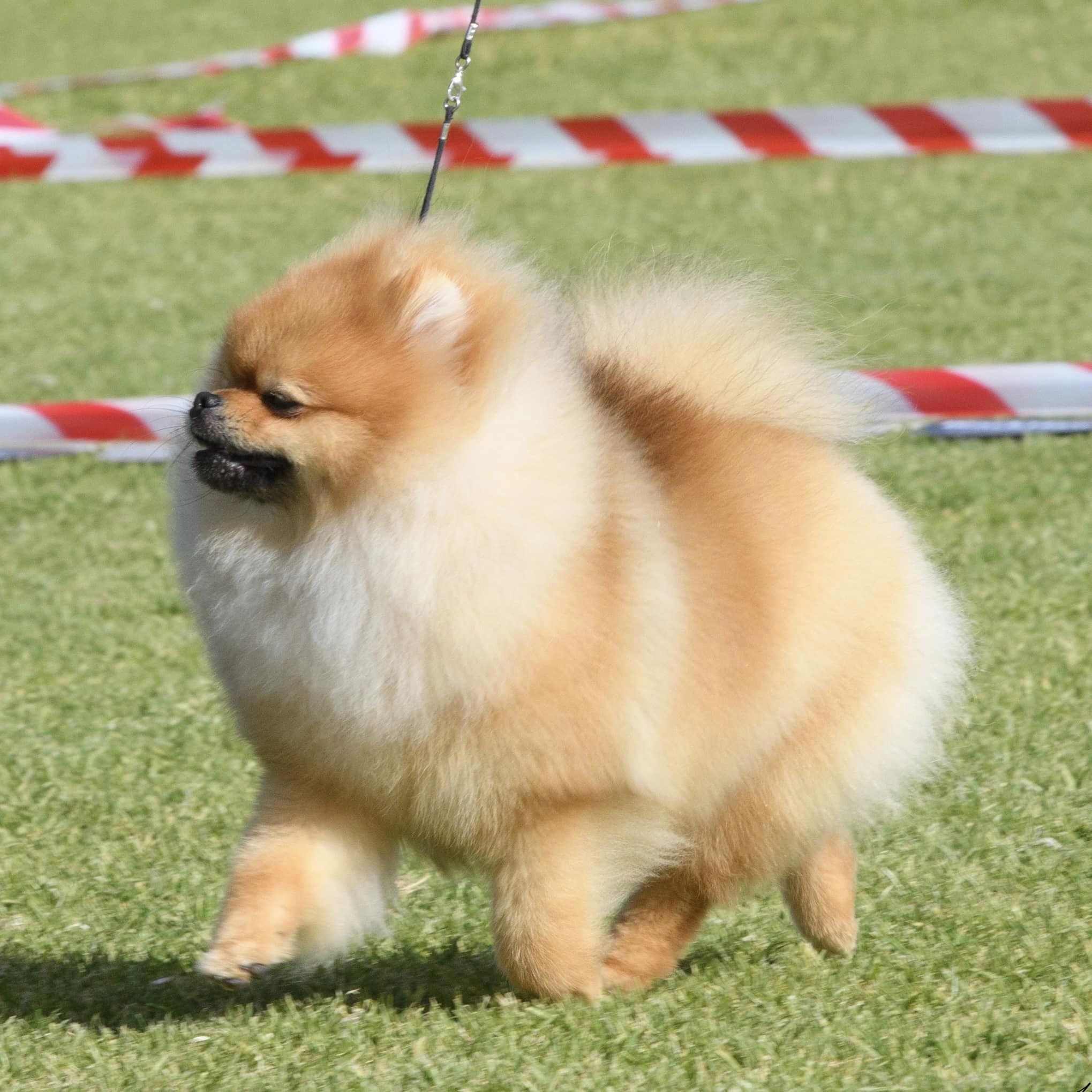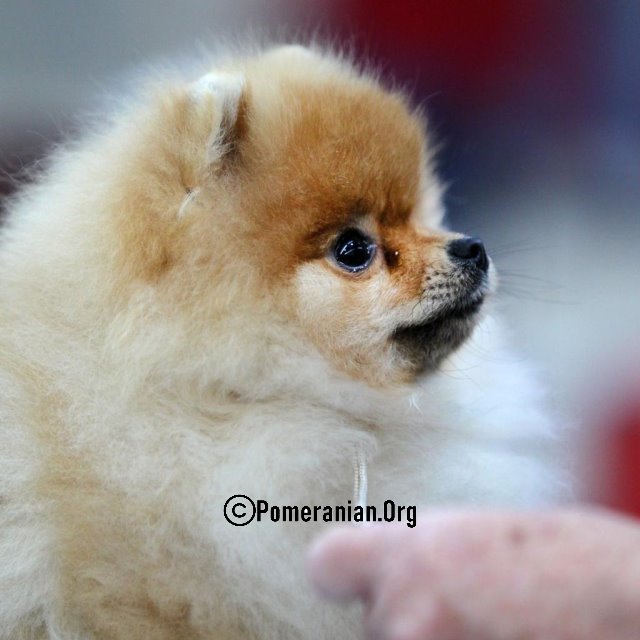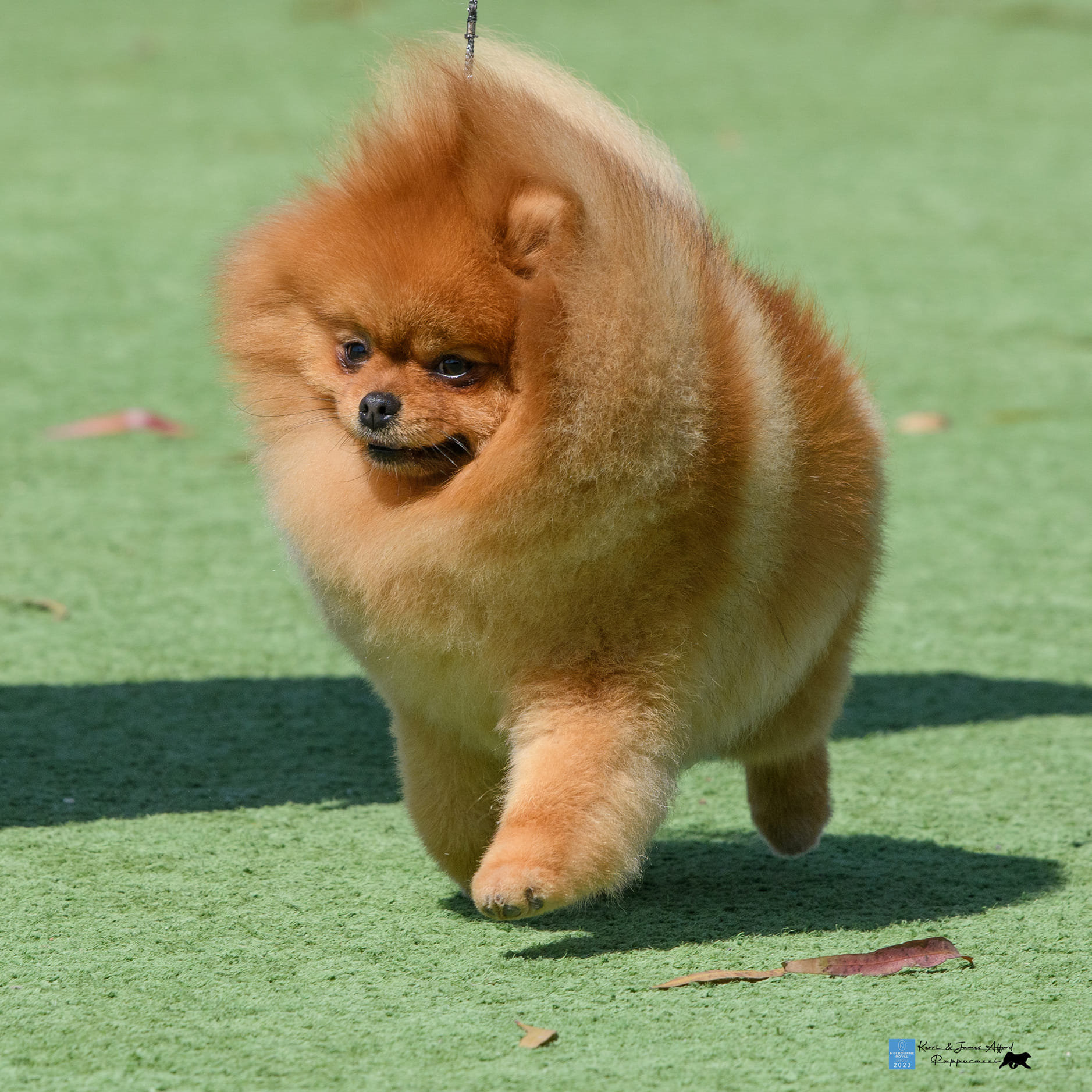

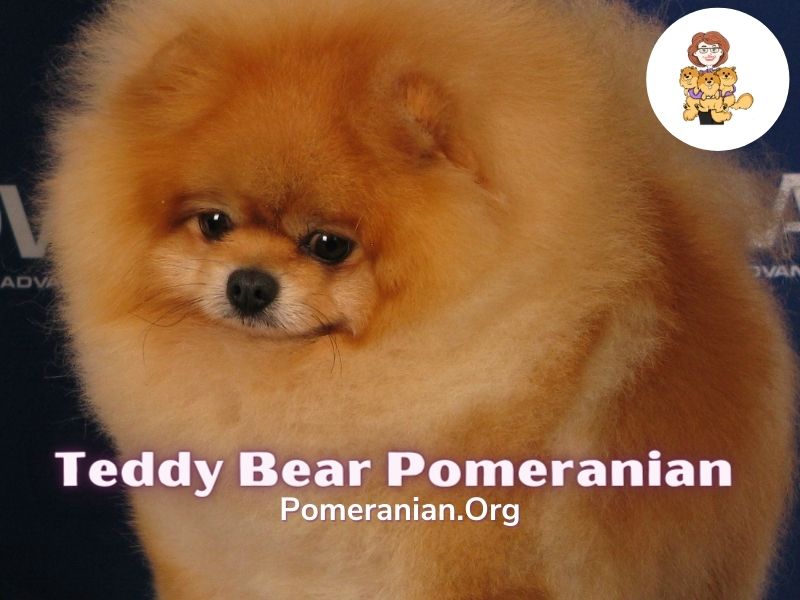
A teddy bear Pomeranian is not a separate breed, officially recognized variety, or special type of Pomeranian. The term simply describes a Pomeranian whose naturally rounded appearance reminds people of a small teddy bear. A dense double coat, abundant facial hair, small ears, a moderate muzzle, and careful grooming can all contribute to this appealing look.
During more than 50 years of breeding, exhibiting, and judging Pomeranians, I have seen considerable variation in the appearance of individual dogs. Some have naturally fuller cheeks and shorter-looking faces, while others have a more refined, fox-like expression. These differences do not create separate Pomeranian breeds—all are simply Pomeranians.
In this article, I will explain what produces the teddy bear appearance, how it differs from the unofficial baby-doll and fox-face descriptions, and whether grooming can make a Pomeranian look more rounded. I will also explain what prospective owners should know before buying a puppy advertised as a “teddy bear Pomeranian.”
What Makes a Pomeranian Look Like a Teddy Bear?
The teddy bear appearance results from a combination of genetics, coat quality, head proportions, and grooming. It is not determined by one feature alone, and two Pomeranians from the same litter may have noticeably different expressions.
A Dense Double Coat
A Pomeranian with a thick undercoat and abundant guard hairs naturally has a fuller, rounder outline. Dense hair around the cheeks and forehead can make the face appear broader and the muzzle look shorter than it really is.
The thick coat covering the body and legs also contributes to the impression of a compact, cuddly little dog. However, this fullness comes from coat—not unusually heavy bones or a different body type.
Small, Well-Placed Ears
Small ears set high on the head contribute to the rounded teddy bear expression. When surrounded by abundant head coat, the ears may appear even smaller and almost disappear into the outline of the head.
Large or widely placed ears usually create a different overall expression, regardless of how the coat is groomed.
A Moderate Muzzle
Pomeranians described as teddy bear-faced generally have a moderate muzzle that appears relatively short when viewed against a full head coat. This should not be confused with an extremely shortened or flattened muzzle.
A Pomeranian should retain the alert, intelligent expression and balanced head proportions described in the breed standard. An exaggeratedly short muzzle is neither necessary nor desirable to produce an appealing expression.
Full Cheeks and a Rounded Expression
Abundant cheek hair can make the face appear broad and rounded. Dark, expressive eyes and a black nose may further enhance the resemblance to a traditional teddy bear, particularly in orange, cream, and sable Pomeranians.
The underlying skull is not necessarily rounder or larger. In many cases, the impression is created primarily by coat density and the way the facial hair frames the eyes and muzzle.
Correct Grooming and Coat Preparation
Thorough brushing, bathing, and drying can lift and separate the coat, creating a fuller outline. Light trimming around the ears, feet, and outer silhouette may enhance the natural rounded appearance.
Grooming can emphasize qualities a Pomeranian already possesses, but it cannot change the dog’s bone structure, ear placement, muzzle length, or natural coat density. A groomer cannot safely transform every Pomeranian into a teddy bear-faced dog.
Age and Puppy Development
Many young Pomeranian puppies have especially round faces, short-looking muzzles, and soft, fluffy coats. Their appearance can change considerably as they mature and pass through the puppy uglies.
The muzzle may appear longer, the ears more prominent, and the coat less full during development. Once the adult coat grows, the face may look rounder again, but buyers should not assume that every teddy bear-looking puppy will retain exactly the same appearance as an adult.
Teddy Bear vs. Baby-Doll and Fox-Face Pomeranians
“Teddy bear,” “baby-doll,” and “fox-face” are informal expressions used to describe differences in a Pomeranian’s appearance. They are not separate breeds, officially recognized varieties, or distinct types listed in Pomeranian breed standards.
Individual Pomeranians naturally vary in muzzle length, ear size, head shape, coat density, and expression. Grooming, age, camera angle, and the amount of facial hair can also influence how a dog’s face appears.
Teddy Bear Pomeranian
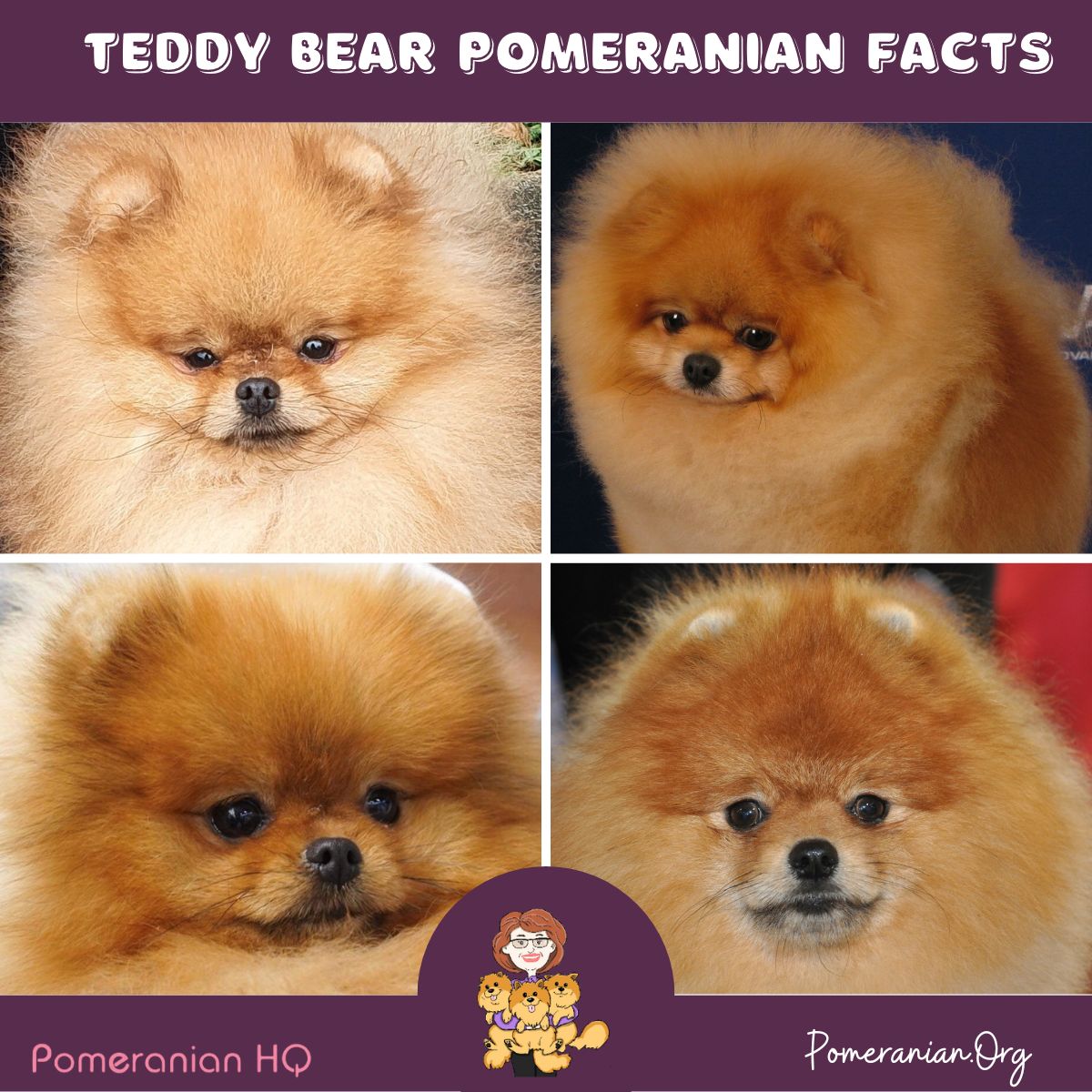
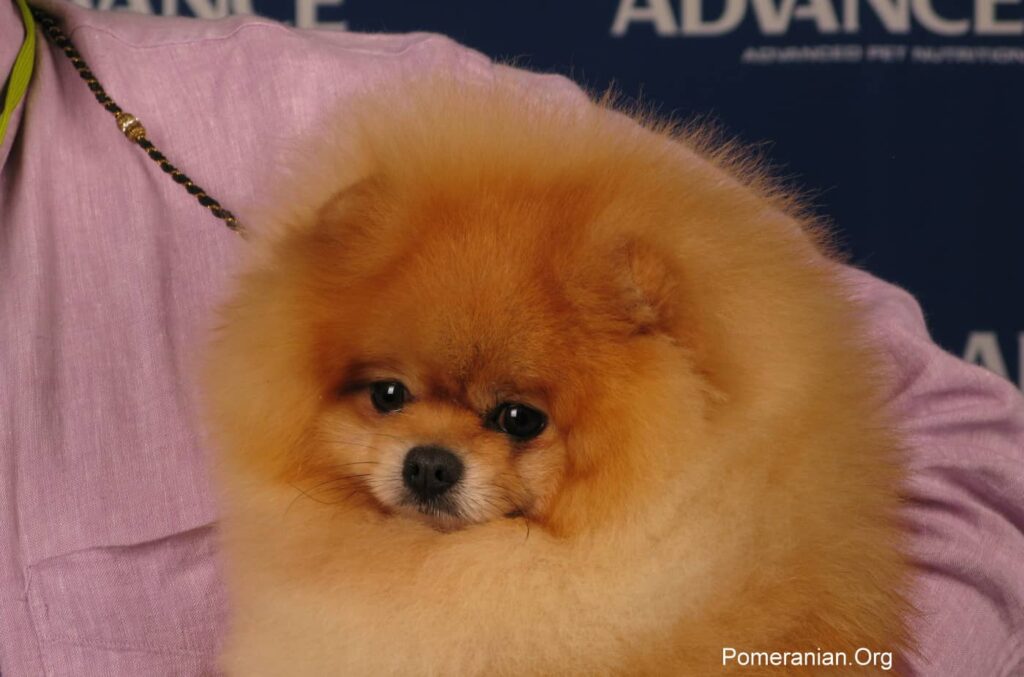
A Pomeranian described as teddy bear-faced usually has a rounded-looking head, small ears, full cheeks, and a moderate muzzle that appears relatively short beneath the facial coat.
A dense double coat is especially important to this appearance. Abundant hair around the cheeks and forehead softens the outline of the face and creates the impression of a cuddly teddy bear.
Baby-Doll Pomeranian
The term “baby-doll Pomeranian” generally describes a dog with a sweet, youthful expression. The muzzle may appear slightly longer and more refined than that of a teddy bear-faced Pom, while still looking shorter than the muzzle commonly associated with the fox-face description.
Large, expressive eyes and a neat facial outline often contribute to the baby-doll appearance. However, there is no official measurement that separates a baby-doll face from a teddy bear face.
Fox-Face Pomeranian
“Fox-face Pomeranian” is commonly used for a Pom with a longer, narrower-looking muzzle and a more pointed facial outline. More prominent ears and less facial coat can further enhance this appearance.
The expression should not be used to suggest that the dog is crossed with a fox or belongs to a different Pomeranian variety. A fox-faced Pom may still be a purebred Pomeranian.
Which Face Type Is Correct?
The recognized Pomeranian breed standards describe one breed rather than three separate face types. A correct Pomeranian should have a balanced, wedge-shaped head, small ears, dark expressive eyes, and a muzzle proportionate to the skull.
The head should never be exaggerated merely to fit a fashionable label. An excessively long, narrow muzzle may lack correct breed type, while an extremely short or flattened muzzle is also undesirable.
When assessing a Pomeranian, overall soundness, balance, temperament, and conformity to the breed standard are far more important than whether someone describes the dog as teddy bear, baby-doll, or fox-faced.
Can Grooming Make a Pomeranian Look Like a Teddy Bear?
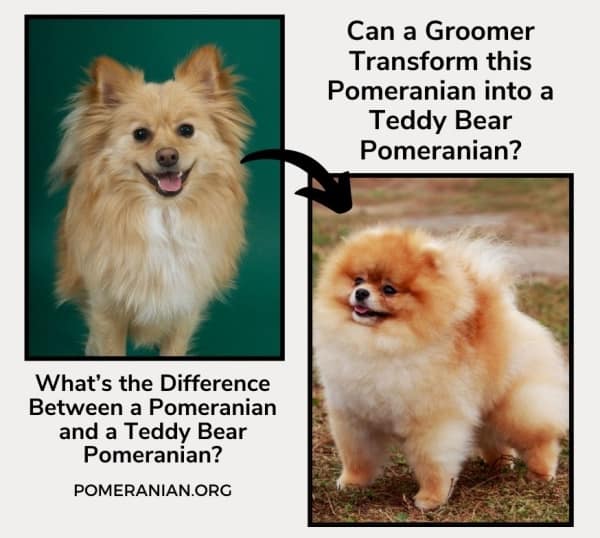
Professional grooming can enhance a Pomeranian’s naturally rounded appearance, but it cannot change the dog’s underlying structure. The final result depends upon the Pomeranian’s coat density, head proportions, ear size, muzzle length, and the skill of the groomer.
A Pomeranian with a thick double coat and abundant hair around the head and cheeks can often be shaped to create a softer, more rounded outline. Correct bathing and drying lift the coat away from the body, while careful trimming can neaten the ears, feet, and outer silhouette.
However, grooming cannot safely shorten a long muzzle, alter ear placement, broaden the skull, or create a coat that the dog does not naturally possess. A sparsely coated Pomeranian will not develop a dense teddy bear appearance simply through trimming.
What to Ask Your Groomer
Before leaving your Pomeranian with a groomer, explain that you want a light, rounded tidy rather than a short haircut. Taking a photograph of your preferred result can help prevent misunderstandings.
Ask the groomer to:
- Preserve the natural double coat.
- Avoid shaving or clipping into the undercoat.
- Neaten the ears without making them appear unnaturally round.
- Tidy the feet and excess hair around the outline.
- Remove only small amounts of coat at a time.
- Maintain the Pomeranian’s natural shape and breed characteristics.
Ideally, choose a groomer who has experience preparing Pomeranians or other double-coated Spitz breeds.
Grooming Has Limits
Many photographs of teddy bear Pomeranians are taken immediately after professional bathing, blow-drying, and trimming. Lighting, camera angle, and photo editing can make the head appear rounder and the muzzle shorter.
Owners should therefore have realistic expectations. A careful groom can improve neatness and highlight a Pomeranian’s natural qualities, but every Pom has an individual appearance. Grooming should enhance the dog you have—not attempt to turn it into a different-looking dog.
Is a Teddy Bear Cut Safe for a Pomeranian?
A light, carefully shaped trim can be safe for a Pomeranian, but a short teddy bear haircut or shaved “Boo cut” is not recommended. Pomeranians have a double coat consisting of a soft, dense undercoat covered by longer protective guard hairs. Cutting deeply into these layers can interfere with the coat’s natural texture and growth cycle.
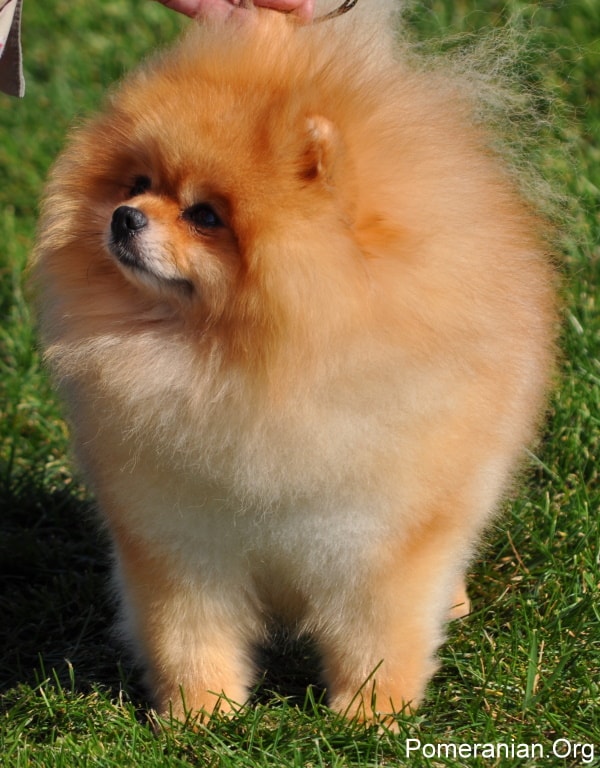
The safest teddy bear-style groom preserves the length and structure of the double coat. The groomer should only neaten untidy ends, shape the outer silhouette, trim around the feet and hygiene areas, and lightly tidy the ears.
Why Pomeranians Should Not Be Shaved
Close clipping can damage the appearance and condition of a Pomeranian’s coat. After shaving, the softer undercoat may grow faster than the guard hairs, leaving the coat looking uneven, woolly, dull, or difficult to maintain.
Some coats gradually recover, but complete regrowth can take many months and occasionally up to two years. In some Pomeranians, the coat may never return to its previous length, texture, or fullness.
Shaving also removes much of the protection provided by the outer coat. A Pomeranian’s double coat helps protect the skin from sun exposure, dirt, and minor environmental irritation.
Safe Teddy Bear Grooming
A safe teddy bear-style groom may include:
- Bathing with suitable products
- Thorough but gentle brushing
- Correct drying to lift and separate the coat
- Trimming excess hair around the feet
- Lightly neatening the ears
- Tidying the hygiene area
- Removing only small amounts from the outer outline
- Preserving the natural guard hairs and undercoat
Always tell the groomer that you do not want your Pomeranian shaved or clipped short. It is also helpful to ask how much coat will be removed before the groom begins.
If your Pomeranian has already been shaved, do not panic. Allow the coat time to recover, maintain gentle grooming, provide a complete and balanced diet, and consult your veterinarian if the skin becomes inflamed or the coat shows little improvement.
How to Find a Healthy, Well-Bred Pomeranian
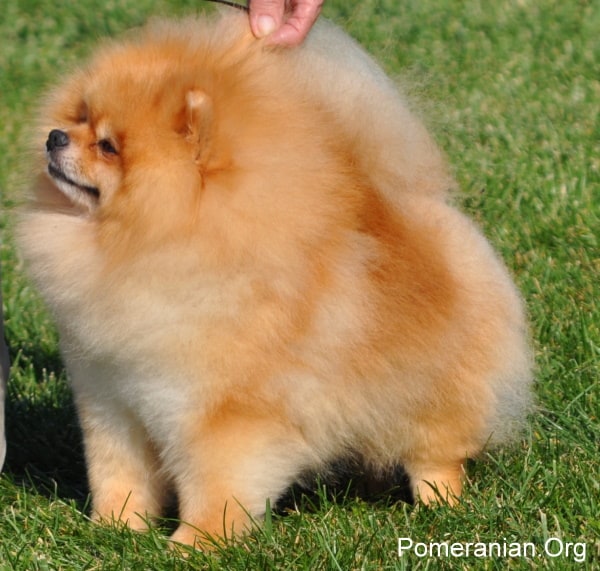
The words “teddy bear” are often used to attract puppy buyers, but they do not guarantee quality, health, temperament, or purebred status. Some sellers also combine the term with labels such as “teacup,” “micro,” or “miniature” and charge a higher price for puppies claimed to be unusually rare.
There is only one recognized Pomeranian breed. A responsible breeder should focus on producing healthy, sound Pomeranians with correct breed type and stable temperaments—not puppies bred solely to satisfy a fashionable description.
Look Beyond the Teddy Bear Label
Choose a breeder according to their knowledge, experience, breeding practices, and commitment to their dogs. Photographs of an appealing puppy are not enough to determine how the dog was bred or how it may develop.
Ask the breeder about:
- The health and temperament of both parents
- Breed-appropriate health screening
- The puppy’s pedigree and registration
- The adult size and appearance of close relatives
- How the puppies are raised and socialized
- Vaccination, worming, and veterinary care
- The breeder’s support after the puppy goes home
- The conditions of sale and written contract
A responsible breeder should answer questions openly and should also ask questions to ensure that you can provide a suitable lifelong home.
Be Careful of Exaggerated Claims
Be cautious if a seller:
- Advertises teddy bear Pomeranians as a separate or rare breed
- Guarantees an extremely tiny adult weight
- Uses “micro,” “pocket,” or “teacup” as official size categories
- Charges considerably more for a fashionable label
- Refuses to provide information about the parents
- Cannot explain their health-testing program
- Always has numerous puppies immediately available
- Offers to sell without asking about your home or experience
Exceptionally small puppies can require additional care and may be more vulnerable to low blood sugar, injury, fragile bones, and other health problems. The smallest puppy should not automatically be regarded as the most desirable.
Remember That Puppies Change
A young puppy’s face, ears, muzzle, and coat will change as it matures. Many Pomeranian puppies look especially round and fluffy at eight or ten weeks of age but develop a different expression during adolescence.
Puppies also pass through normal coat changes commonly called the puppy uglies. During this stage, the facial hair and body coat may thin, the ears can look larger, and the muzzle may appear longer. The adult coat gradually changes the dog’s appearance again.
No ethical breeder can guarantee that a puppy will retain exactly the same teddy bear appearance throughout its life. The best choice is a healthy, well-socialized Pomeranian from a knowledgeable breeder whose adult dogs display the quality and general appearance you admire.
Teddy Bear Pomeranian Health and Exaggerated Features
The informal name “teddy bear Pomeranian” does not make a dog more or less likely to develop health problems. Health is influenced by genetics, physical structure, breeding practices, nutrition, and lifelong veterinary care—not by the descriptive label used in an advertisement.
However, buyers should distinguish between a naturally rounded Pomeranian expression and features that have been deliberately exaggerated to create an extremely short-faced or unusually tiny dog.
A Rounded Face Should Not Mean a Flat Face
A Pomeranian may look like a teddy bear because abundant facial hair makes the cheeks appear full and the muzzle look shorter. Beneath the coat, the dog should still have a moderate, proportionate muzzle and a functional nose and jaw.
An extremely shortened or flattened muzzle is not required for correct Pomeranian breed type. Any dog showing noisy or difficult breathing, very narrow nostrils, difficulty exercising, or intolerance to warm weather should be examined by a veterinarian.
Extremely Tiny Is Not the Same as Teddy Bear
“Teddy bear” is sometimes combined with marketing terms such as “micro,” “miniature,” “pocket,” or “teacup.” These are not officially recognized Pomeranian sizes.
Deliberately selecting for extremely tiny size can increase concerns about physical fragility, low blood sugar in young puppies, dental crowding, open fontanels, and vulnerability to accidental injury. A healthy, correctly developed Pomeranian should never be rejected simply because it is not exceptionally small.
Health Testing Is More Important Than Appearance
A puppy’s charming face cannot reveal whether responsible health screening has been completed. Prospective owners should ask what health examinations have been performed on the parents and request evidence rather than relying solely on verbal assurances.
The American Kennel Club lists patella evaluation, cardiac examination, and ophthalmologist evaluation as the health tests recommended by the Pomeranian’s US national breed club. Requirements and screening programs may differ between countries, so buyers should also consult the relevant kennel club and Pomeranian breed club in their location.
Choose Balance Rather Than Exaggeration
No physical feature should be exaggerated at the expense of a Pomeranian’s health, comfort, movement, or quality of life. A responsible breeder aims to produce a balanced dog with sound construction, a moderate muzzle, a correct double coat, and a confident temperament.
The healthiest approach is to appreciate the teddy bear appearance as a charming natural variation—not as a reason to breed for increasingly extreme features.
Teddy Bear Pomeranian FAQs
Clear answers to the questions people ask most often about teddy bear Pomeranians.
Is a teddy bear Pomeranian a separate breed?
Are teddy bear Pomeranians purebred?
A teddy bear-looking Pomeranian can be purebred, but the descriptive label alone does not prove this. Purebred status should be supported by registration and a documented pedigree from a recognized kennel club.
Some crossbred dogs may also be advertised as teddy bear Pomeranians. Always ask for clear information about the puppy’s parents and registration.
What is the difference between teddy bear, baby-doll, and fox-face Pomeranians?
These are all unofficial descriptions of appearance.
A teddy bear Pomeranian usually has a rounded-looking face, full cheeks, small ears, and a muzzle that appears relatively short. A baby-doll Pom often has a sweet, youthful expression with a slightly more refined muzzle. A fox-faced Pomeranian generally has a longer, narrower-looking muzzle and a more pointed facial outline.
There are no official measurements separating these descriptions, and all three dogs may simply be purebred Pomeranians.
Can any Pomeranian be groomed to look like a teddy bear?
No. Grooming can enhance a naturally rounded appearance, but it cannot change the dog’s skull, muzzle length, ear size, ear placement, or natural coat density.
A Pomeranian with a thick double coat and abundant facial hair is more likely to achieve a rounded outline. The groomer should enhance the dog’s natural qualities without shaving or cutting deeply into the undercoat.
Is a teddy bear cut safe for a Pomeranian?
A light trim that tidies the feet, ears, hygiene area, and outer outline can be safe. A short haircut or shaved Boo-style cut is not recommended because it removes much of the protective double coat and may affect its texture and regrowth.
Always tell the groomer that you want the natural double coat preserved.
Do teddy bear Pomeranians cost more?
They should not cost more merely because they are described as teddy bear Pomeranians. The phrase is a marketing term rather than an official variety or rare genetic trait.
Prices may vary according to location, pedigree, breeder experience, health testing, and the care invested in raising the puppy. Be cautious when a seller charges an unusually high price based solely on labels such as teddy bear, teacup, micro, or rare.
How big does a teddy bear Pomeranian grow?
A teddy bear Pomeranian follows the same expected size range as any other Pomeranian. The face description does not determine adult weight or height.
An ethical breeder may provide a reasonable estimate based on the puppy’s parents, pedigree, development, and previous litters, but no one can guarantee an exact adult weight.
Will a teddy bear puppy keep the same face as an adult?
Not necessarily. A Pomeranian puppy’s head, muzzle, ears, and coat change as it matures. During the puppy uglies, the facial hair may thin, the ears can appear larger, and the muzzle may look longer.
The adult coat can later make the face appear fuller again, but no breeder can guarantee that a puppy will retain exactly the same expression throughout its life.
Are teddy bear Pomeranians healthier than fox-faced Pomeranians?
Neither description determines whether an individual dog will be healthy. Health depends on genetics, responsible breeding, physical structure, appropriate care, and regular veterinary attention.
Health screening, soundness, temperament, and breeder quality are far more important than an unofficial face description.
Where can I find a teddy bear Pomeranian?
Begin with responsible Pomeranian breeders who health test their breeding dogs, understand the breed standard, and provide continuing support to puppy owners.
Explain that you prefer a naturally rounded expression and dense coat, but remain open to the breeder’s advice. A healthy, well-socialized puppy with sound construction and a suitable temperament should always take priority over a fashionable appearance.
Remember: “Teddy bear” describes an appearance—not a different breed, size, or type of Pomeranian.
Denise’s Breeder Experience and Final Thoughts
During more than 50 years of breeding, exhibiting, and judging Pomeranians, I have seen many beautiful dogs with different expressions. Some naturally have fuller cheeks, smaller-looking ears, and dense facial hair that creates the popular teddy bear appearance. Others have a more refined expression or a slightly longer-looking muzzle.
These differences do not create separate Pomeranian breeds. A teddy bear Pomeranian is simply a Pomeranian whose natural features and coat produce a rounded, cuddly appearance. The term does not describe an officially recognized face type, special size, or rare variety.
A puppy’s appearance can also change considerably as it grows. The face, muzzle, ears, and coat continue developing throughout puppyhood, and the puppy uglies may temporarily make a young Pom look completely different. Although good grooming can enhance a rounded outline, it cannot safely change the dog’s underlying structure.
When choosing a puppy, look beyond fashionable descriptions such as teddy bear, baby-doll, teacup, or micro. Soundness, health, temperament, correct breed type, and responsible breeding are far more important than any marketing label.
The ideal Pomeranian should be healthy, active, confident, and unmistakably representative of the breed. Whether your Pom has a rounded teddy bear expression or a more refined face, every well-bred Pomeranian possesses the lively personality, intelligence, and devoted companionship that make this little dog so special.
Copyright Pomeranian.org. All Rights Reserved.
📚 References & Further Reading
- [1] AKC Pomeranian Breed Standard (2011)
- [2] English Kennel Club Breed Standard
- [3] The Pomeranian Handbook – Denise Leo
- [4] Denlinger, The Complete Pomeranian
- [5] Kimbering, 1891–1991
- [6] Taplin, The Sportsman’s Cabinet
- [7] Parker, The Popular Pomeranian
- [8] Ives, Show Pomeranians
The Pomeranian Handbook