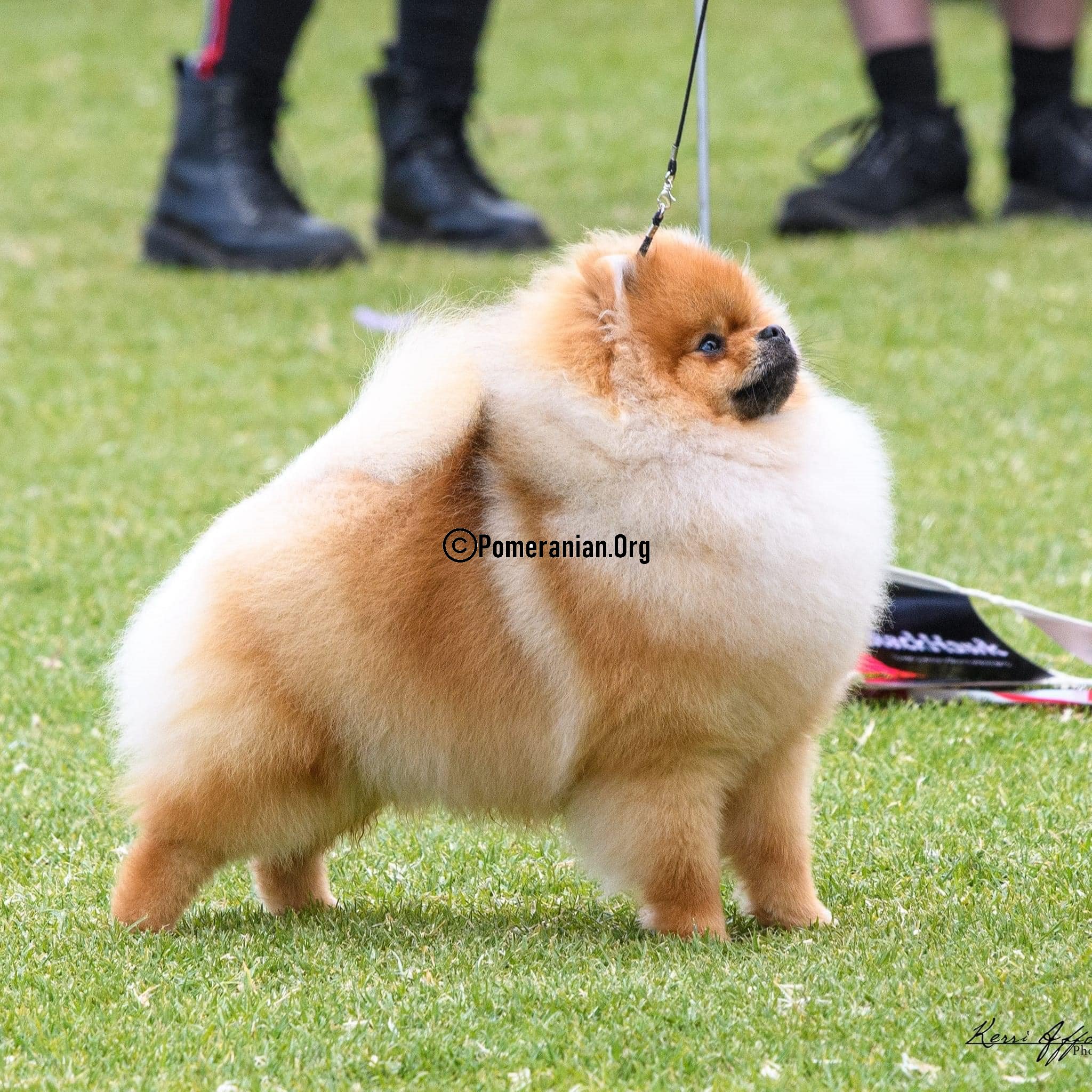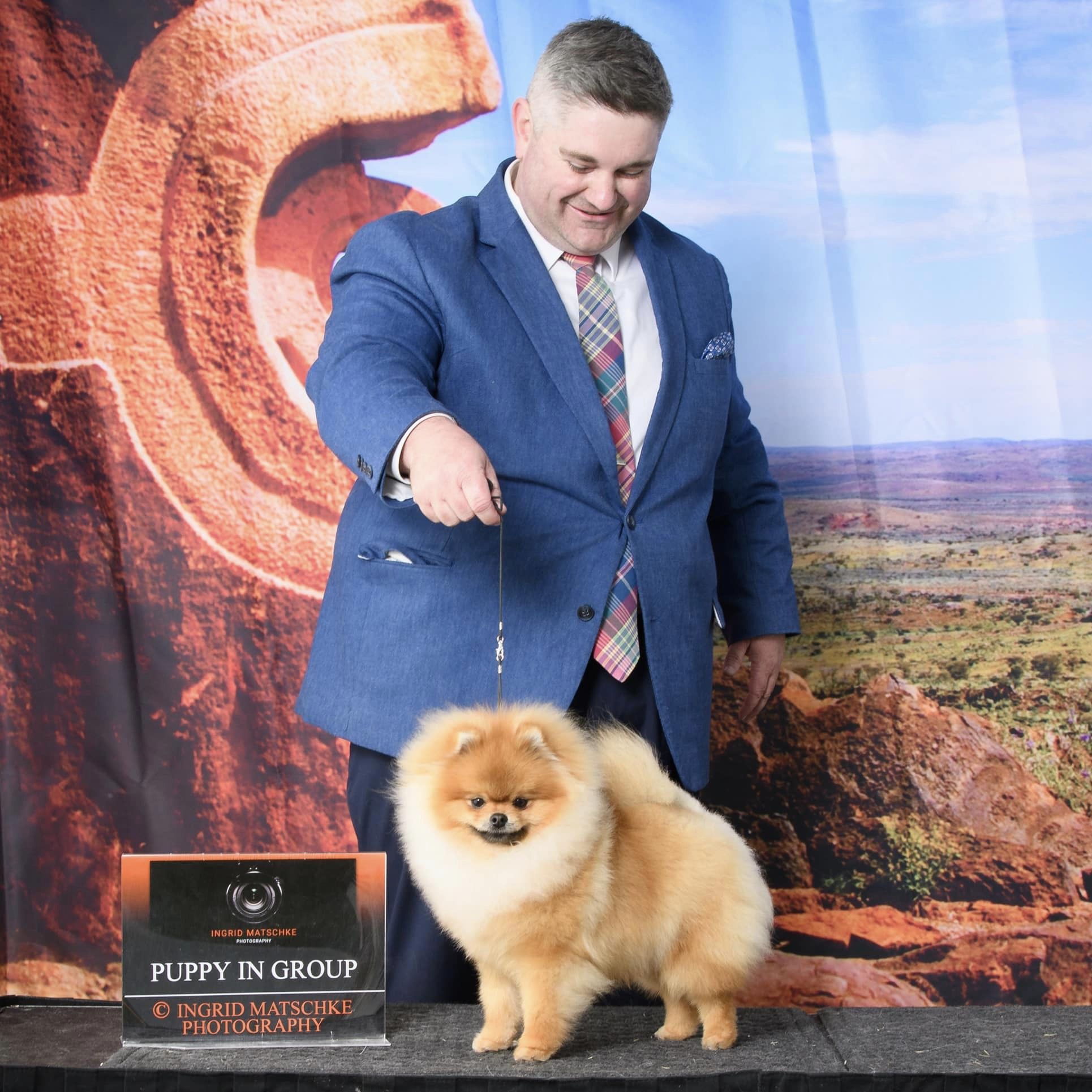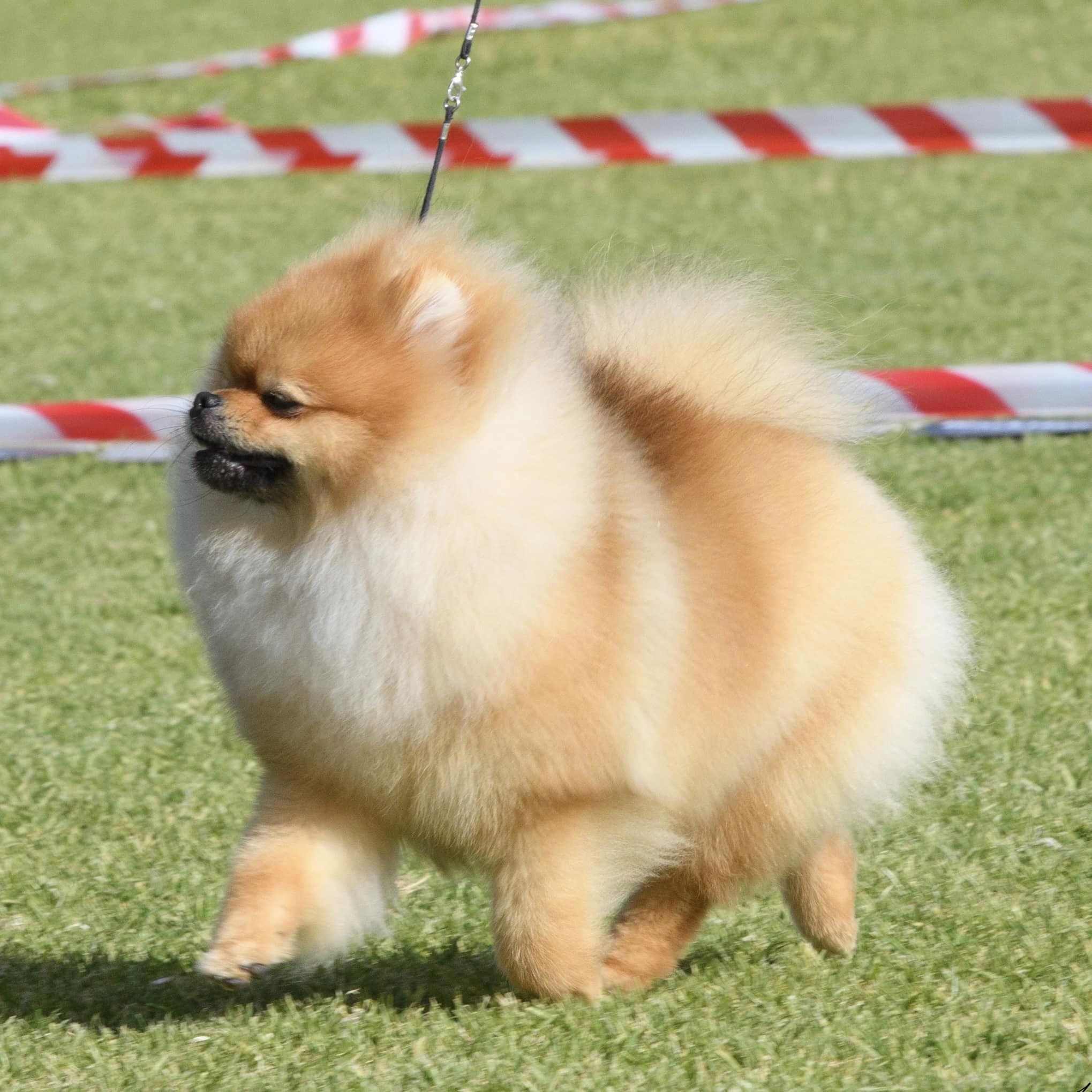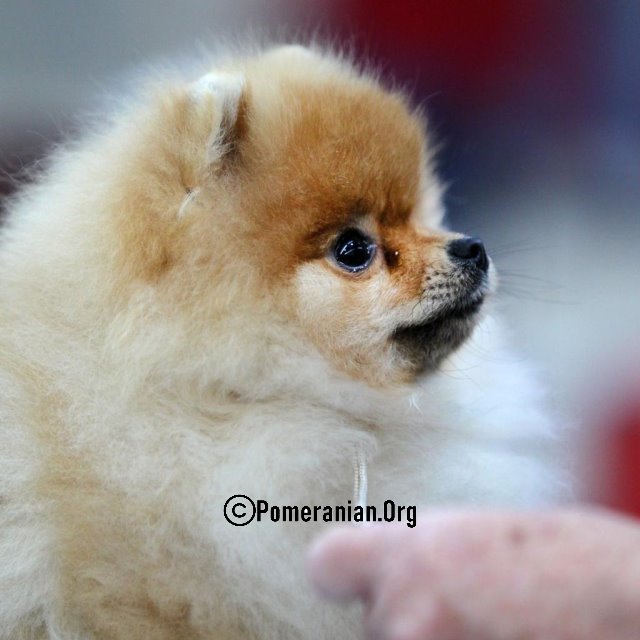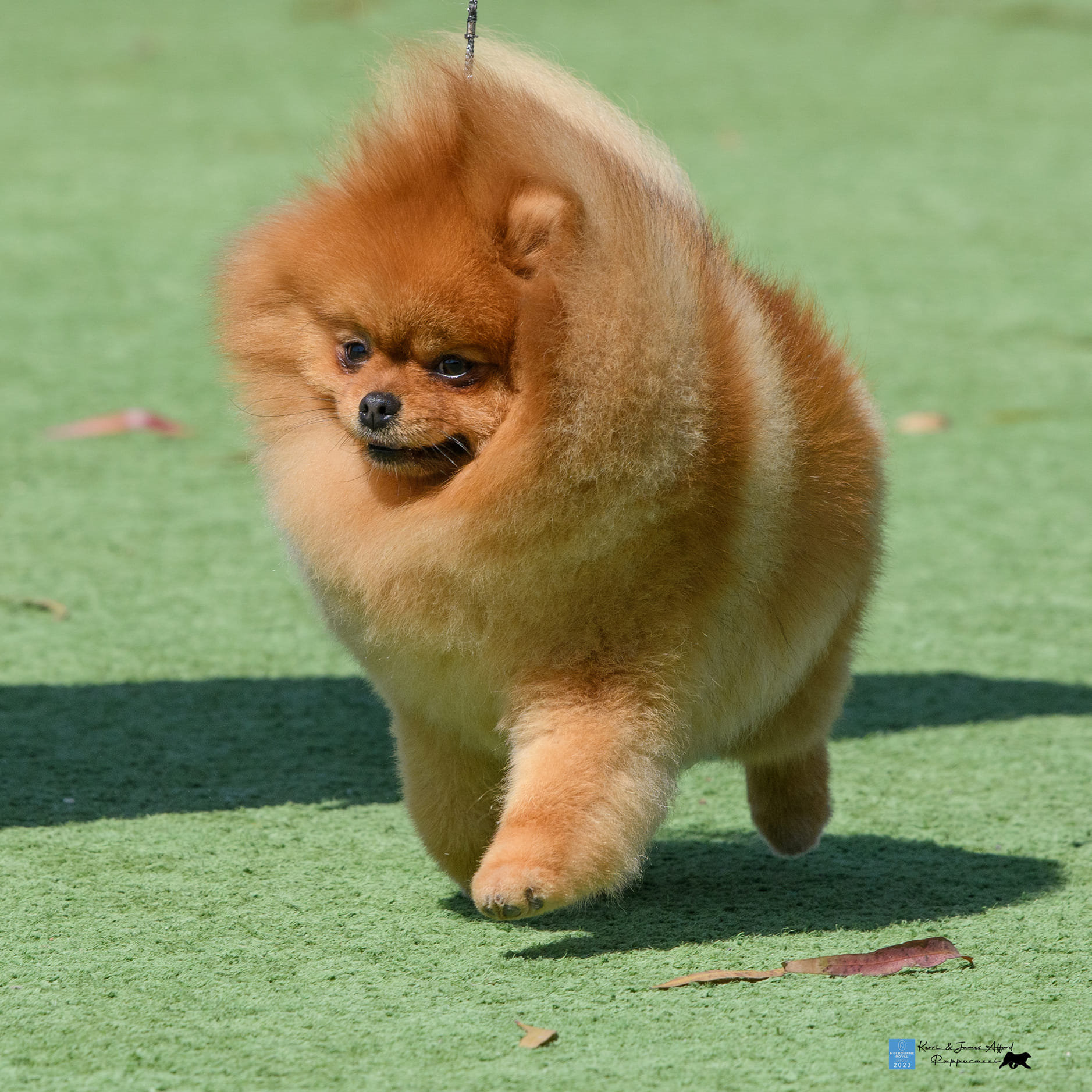

Orange Pomeranians are the most recognised and iconic colour of the breed, loved for their rich, warm coat that ranges from pale apricot to deep red tones. However, not all orange Pomeranians are the same. Coat colour can change dramatically as puppies grow, and understanding genetics, shading, and coat development is essential when choosing a puppy.
In this guide, Denise Leo shares over 50 years of experience to help you understand what makes a true orange Pomeranian.
Discover the beauty of orange Pomeranians, from light orange to rich orange sable. Discover their history, genetics, and the reasons why this classic Pomeranian color remains a favorite among dog lovers worldwide.
Few things capture the hearts of Pomeranian lovers quite like the vibrant glow of an orange Pomeranian. Whether they’re strutting their stuff in the show ring or curling up on a cozy lap, these charming dogs exude warmth, elegance, and classic breed appeal.
Though Pomeranians come in a spectrum of stunning colors, the orange and orange sable varieties have long been regarded as the breed’s quintessential shades—often the first that come to mind when people picture these fluffy companions.
In this post, we’ll explore everything that makes orange Pomeranians so distinctive. We’ll dive into the different shades—from pale, cream‑colored pups to rich, deep orange adults—and demystify how genetics create these beautiful coats.
We’ll also trace the history of the orange and orange sable coloration in the Pomeranian breed, uncovering how certain show‑ring champions helped shape its popularity.
Whether you’re a seasoned Pom enthusiast or discovering the breed for the first time, join me as we shine a spotlight on these glowing little dogs and uncover why they continue to enchant Pomeranian lovers around the world.
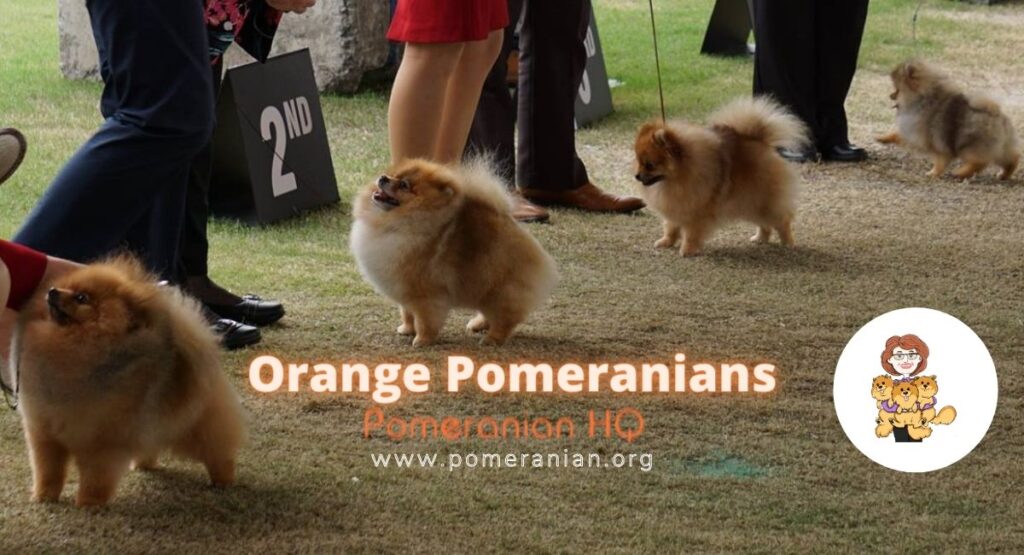
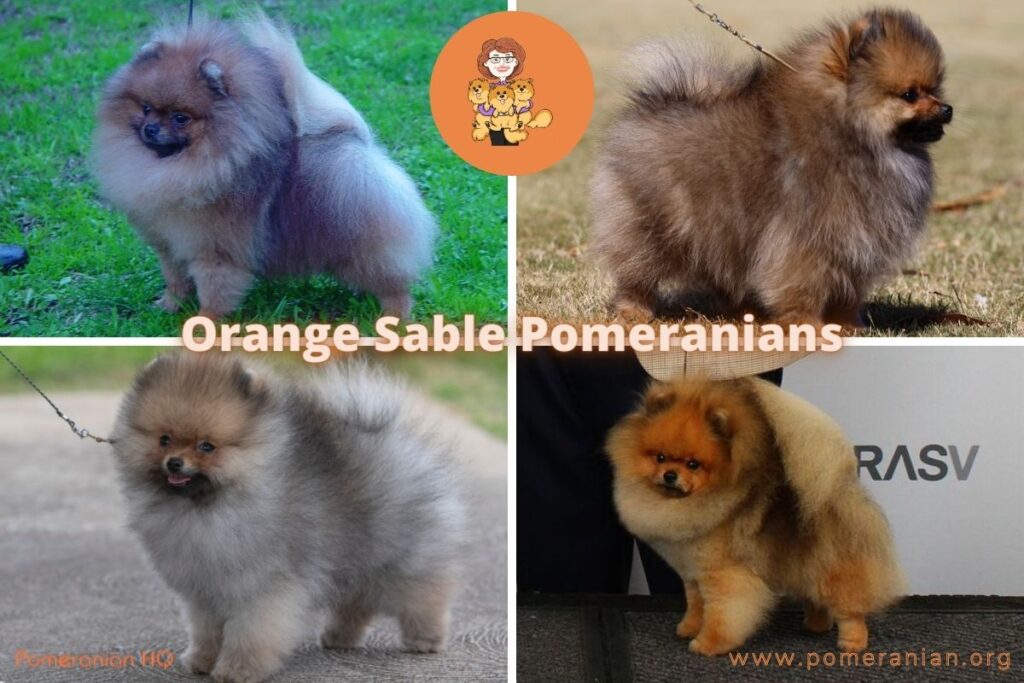
The orange sable Pomeranian and orange Pomeranian have been acknowledged as the typical colors for the Pomeranian dog for decades. Most Pomeranians that appear in any show ring and win frequently are usually orange or orange sable.
Pomeranian dogs can come in a variety of colors. However, most people who don’t own Pomeranians consider orange to be the main color, and it is, after all, regarded as the classic color for Pomeranians.
What’s an Orange Pomeranian?
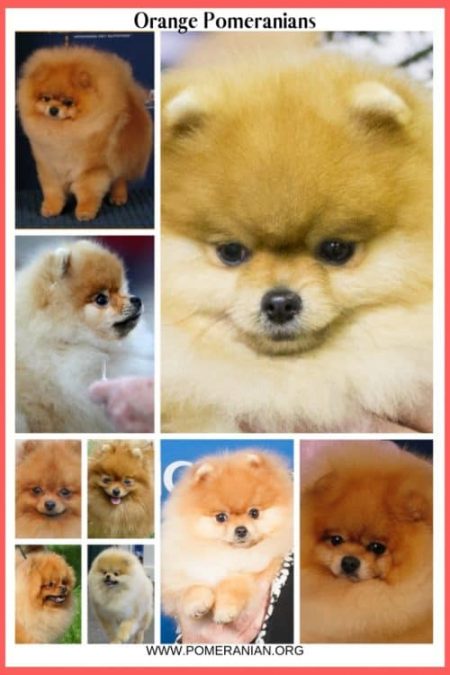
The orange Pomeranian color ranges from a light orange shade to a deep, rich orange. The Pomeranian Standard rules that orange Poms need black points like those in the red Poms.
Most Pomeranian lovers are aware that these magnificent dogs come in a variety of colors. What they find astonishing is that there are multiple shades of each color, including orange Poms.
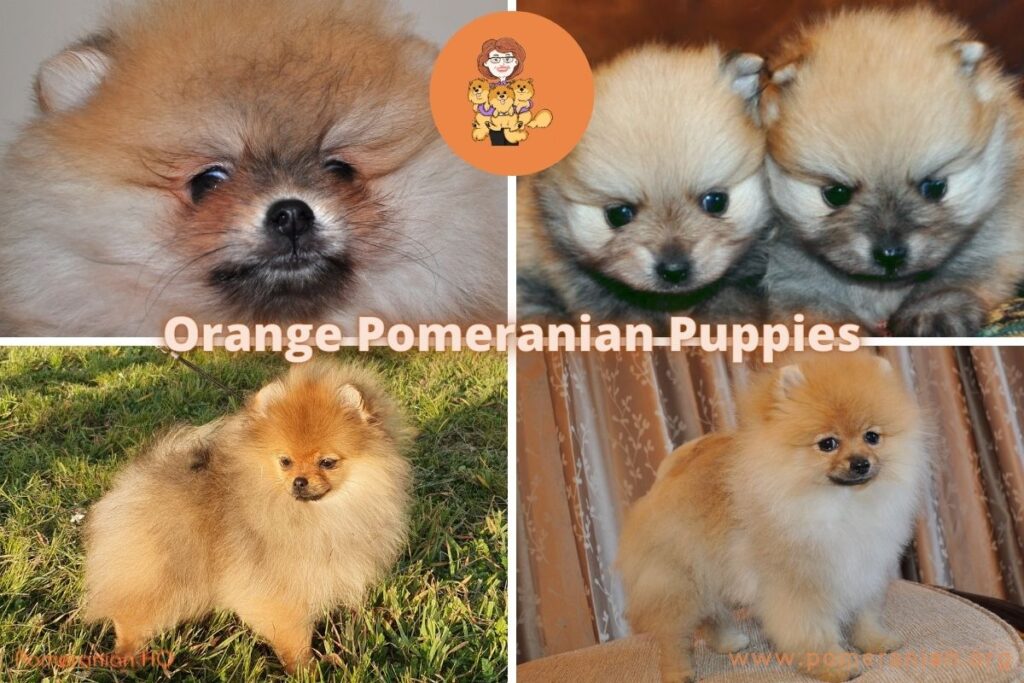
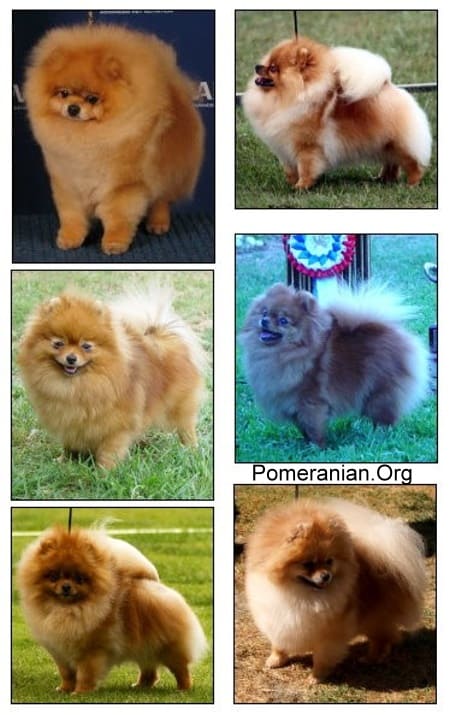
There’s more than one kind of orange Pomeranian dog. The shades range from an extremely pale, almost creamy hue to a deep, orangey-red color.
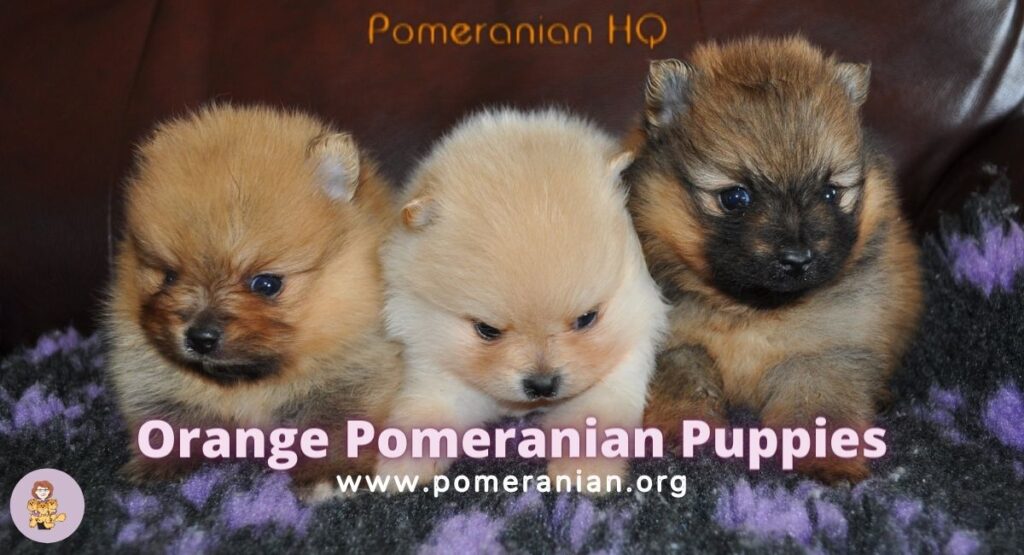
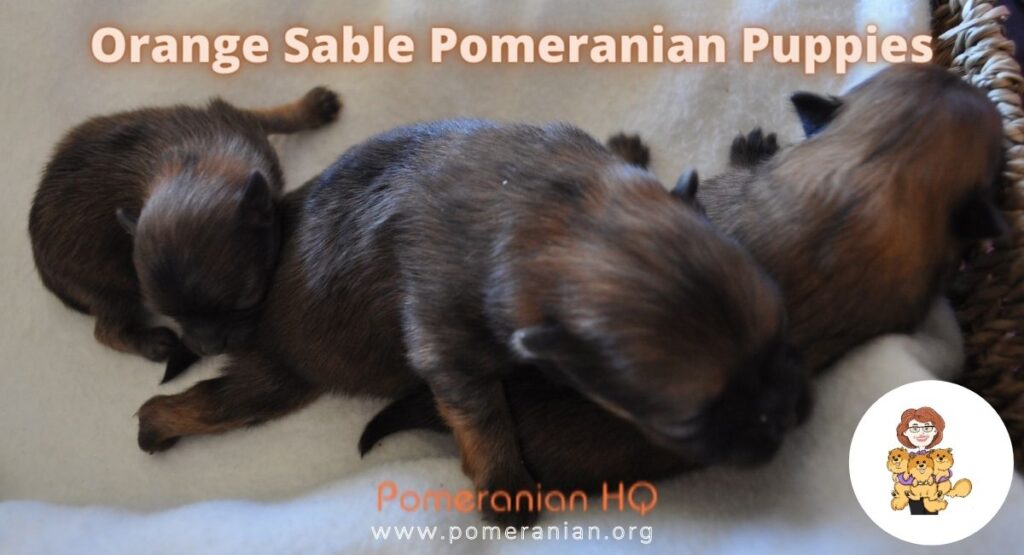
They can be a very dark sable color when first born, a light orange or even white when they’re first born. An orange pup can be a dark-colored sable when newborn and will often flourish into that lovely orange color once he hits maturity.
What’s a Red Pomeranian?
A red Pomeranian is a deeper color than an orange; it is more like a red, rusty color with points that must be black.

Orange and Red Pomeranian Facts
- There are two types of Orange Pomeranians.
- Orange Pomeranians result from two different genes.
- If there’s no black hair in a dog’s coat, he can be deemed a clear “orange.”
- These orange Pomeranians may have extremely light cream shading and a light orange color.
- Their coat may be a darker, deeper rusty orange, classifying them as true “red” Poms.
- Within the orange color, there are many different shades. However, all Pomeranians with orange coloring of any sort are beautiful, and that’s exactly what people envision when thinking about Poms.
Orange Pomeranian Colour Genetics
The orange coat in Pomeranians is produced by genes controlling red and yellow pigmentation. These colours are influenced by the extension gene (E locus), which determines whether black pigment appears in the coat.
Many orange Pomeranians may genetically carry other colours that are not visible, as coat colour is controlled by multiple interacting genes rather than a single gene.
This is why two orange Pomeranians can produce puppies of different shades, or even different colours.
Orange Pomeranian Gene 1
This is a recessive a(y) gene on the Agouti (A) Locus. When paired, two a(y)a(y) genes are responsible for creating the orange spectrum color for a Pomeranian. When a puppy is first born, its coat may appear brownish-gray rather than the coloring it may develop as an adult.
Because this occurs, many first-time puppy owners assume they have a sable until the puppy matures into an orange adult. However, unlike clear oranges, they usually have black whiskers and, on the tip of their tail, you’ll also notice black hairs.
Clear Orange Pomeranian Gene 2
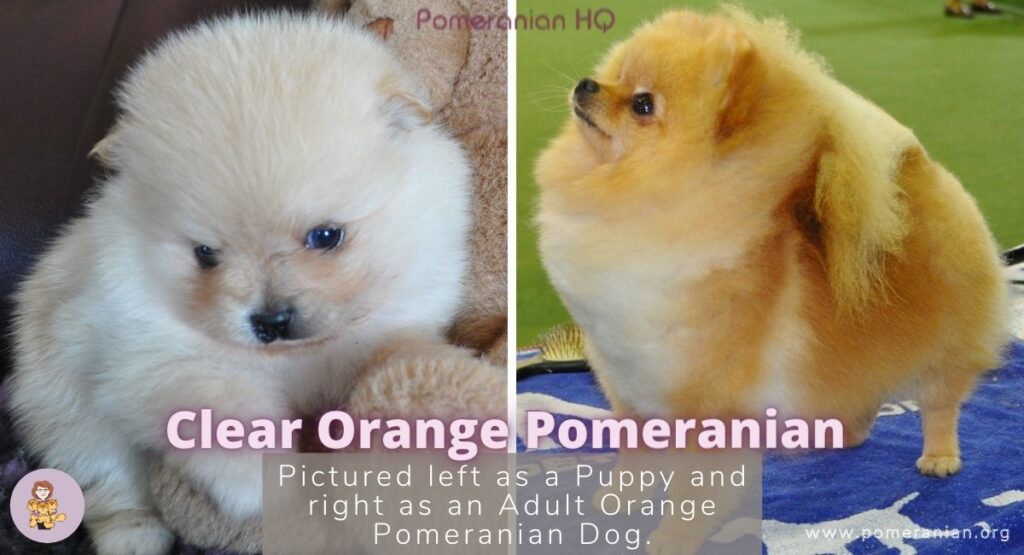
A different version of the orange Pomeranian puppy is quite pale, sometimes even almost white, when he’s first born. The color of this Pomeranian puppy’s coat generally will deepen until he reaches maturity, when his coat turns into a beautiful orange color.
This is the recessive (e) gene and, along with the E (extension) Locus, is responsible for the orange coloring of a different group of Poms. The gene increases the amount of the yellow pigment within every hair, so no black pigment can form in the dog’s hair.
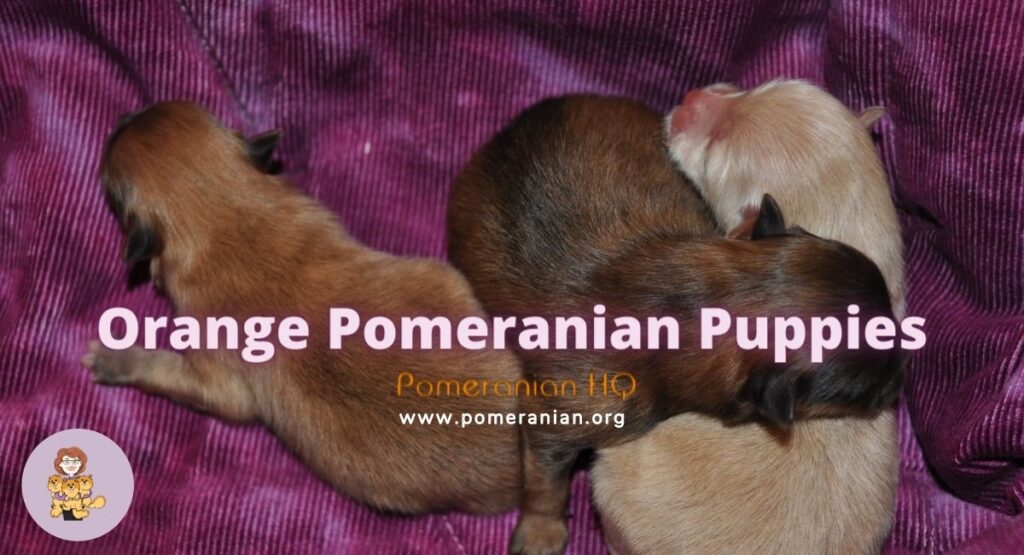
This means that when these puppies are born, they’re either cream or orange, with clear or straw-colored whiskers (never black), unlike the Agouti orange color.
If a Pom breeder has one puppy that’s cream in color, but the rest of the litter are the usual orange, he would be totally surprised unless he had experienced it before. The puppy would definitely stick out.
When these Pomeranians become adults, their shades range from a virtually cream color (many creams are similar) to a deeper, brighter orange. It’s almost impossible to distinguish between many clear orange agouti adults and other adults; the only indicators are the absence of black hairs and whisker color.
Some will keep the paler shade and, as they grow older, the nose pigment will fade. This happens more often than agouti oranges.
What’s an Orange Sable Pomeranian?
Sable isn’t a color as such; instead, it’s a pattern. “Sable” is the word used when people talk about black banding that appears on a dog’s guard hairs, because that’s how the shade (sable pattern) appears. If no other recessives are involved, it will resemble the orange sable.
There are wide variations in terms of how sable affects a dog’s overall color, beginning with only a few stray black hairs on a dog’s tail or back, right through to an all-over heavy sabling (nearly making him into a black & tan).
The genes can be quite complicated at times. Some sables have the saddle-sable a(s) gene as well as a(y). Others have a(y)a(y) on top of unknown elements that ensure there’s a lot more black on the dog’s coat. Certain sables can carry the black & tan color and also test a(y)a(t).
When some sables are new puppies, they can look extremely dark, and owners can easily assume they’re black & tans. It’s normal for their coats to become lighter as they grow, and the coat turns into what will eventually be the adult coat.
It’s common for the coats of adolescents (4-6 months) to have little to no sabling at all. However, as they become adults and their guard hairs appear, they may revert to a darker color.
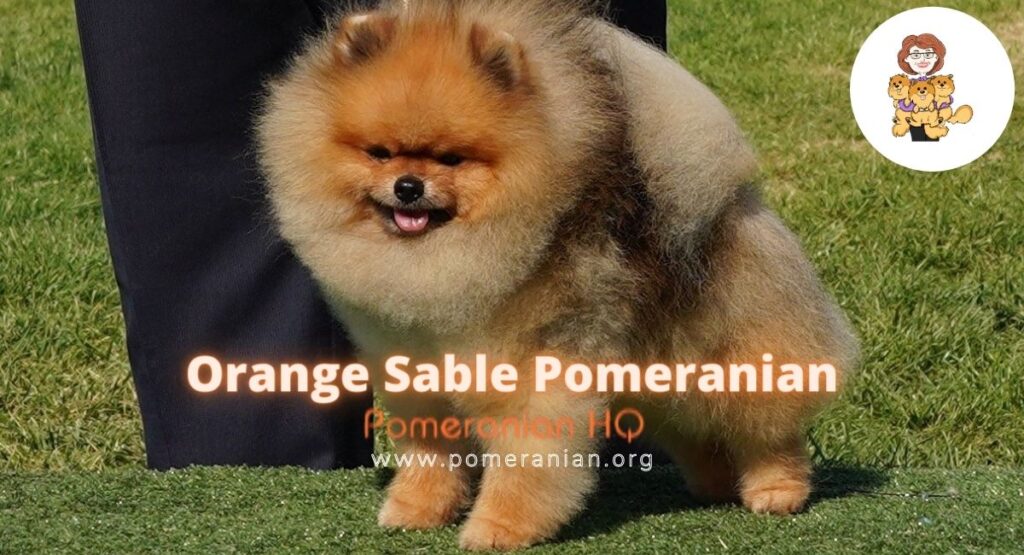
If your Pom’s orange coat has black tips, it’s known as “sabling” and is officially labelled as “orange sable.”
At birth, an orange sable Pomeranian puppy is usually dark, nearly black. More than half of them lose all the black tipping before they become adult Poms and may retain only orange shades. However, some retain the black tipping, and others may have a black mask; these dogs are often referred to as a dark orange sable Pomeranian.
Sables must have at least three shades in their coat. The shades need to be very consistent and have no self-colored areas. The coats of sables possess the
greatest textures:
- Red sables have red hues and black tips.
- Orange sables have guard hairs that are deep orange with black tips.
- Their undercoat is light orange through to cream in color.
Do Orange Pomeranian Puppies Change Colour?
Yes — many orange Pomeranian puppies change colour as they grow. Some puppies are often born darker,others might be born appearing nearly white or cream, or even greyish, and their true colour develops as the adult coat comes in.
This stage is often referred to as the “puppy uglies,” where the coat sheds and regrows, sometimes dramatically altering the appearance of the dog.
In many cases, an orange sable puppy will “clear” to a brighter orange as the darker tipping disappears.
Different Shades of Orange Pomeranians
Orange Pomeranians can vary significantly in depth and tone. From lighter warm shades to deep, rich colour, each variation has its own appeal. Coat texture, lighting, and grooming can all influence how the colour appears.
- Light Orange: A soft, warm orange tone that may appear slightly muted
- Clear Orange: The most recognised shade, bright and even throughout the coat
- Deep Orange: A richer, more intense colour with strong visual impact
- Orange Sable: An orange base coat with black-tipped guard hairs creating shading
Development of the Pomeranian Dog Orange and Red Sables
A brief look at the history of the Pomeranian dog will help explain how the orange and orange sable colors developed. Research indicates that the first Pomeranians were available in various colors, including white, black, and beige.
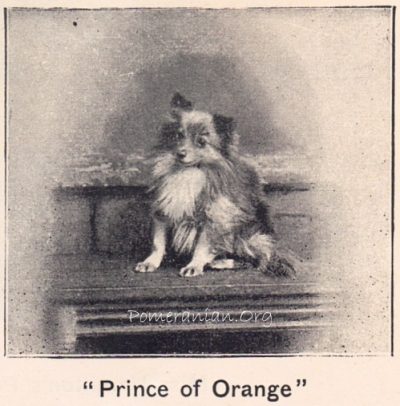
In 1890, shaded sables and sables began to appear, starting with the birth of the Prince of Orange. He was a bright sable with even, ice-white collie markings.
Queen Victoria purchased a Pomeranian called Marco, who was a stunning red sable.
It was inevitable that this one purchase would spark a brand-new color craze. In the early 1900s, shaded sables became extremely popular, quickly followed by the Pomeranian colors orange and red.
Theo Marples held the title of the first Honourable Secretary of the Pomeranian Club. He believed that trying to breed colored Poms was too random to be reliable.
It was the incidents of beautifully colored Pomeranians unexpectedly appearing in litters that persuaded breeders to focus their attention on breeding colored Poms.
Mr. Marples noticed that, in the early stages of breeding, two black dogs often produced a litter containing a few brown puppies. If a brown or chocolate bitch mated with a black dog, the litter was generally shaded sables.
Pomeranian Breed Standards
In 1878, mention is made of red Pomeranians:
“A red strain, that looks a lot like a fox in his coat’s texture and in every aspect but his tail, is occasionally seen in Europe.”
1878 Pomeranian Breed Standard.
The original Pomeranian standards specified nothing about color, only the overall appearance.
In 1892, the Club made many major changes to the standards, including the colors.
Permitted colors were: sable, red, brown, blue, black, white, fawn, black and tan, and parti colors.
The big question about colors was this: was it a list of colors that Club members had actually seen, or a wish list?
In Germany, the acknowledged colors were: brown, black, pure white, and wolf sable.
In 1898, the breed standard listed sable and red as approved colors and mentioned:
“any reds that are free of white.”1898 Pomeranian Breed Standard.
In 1909, the color section of the breed standard now mentions:
“sable or shaded sable (including red, orange or fawn)” and “shaded sables” must be shaded throughout, with three or more colors, as uniformly as possible, with no patches of self-color. Oranges must be self-colored throughout, and light shading, though not disqualifying, should be discouraged.”
The Breed Standard has been changed plenty of times since those early days and today the Breed Standard’s section for sables and oranges states that:
“Oranges must be as self-colored and bright as possible.”
Early Famous Orange and Orange Sable Pomeranians
Born in 1894, Mr. T was registered as being “red,” but an eyewitness described the dog as an orange sable.
Ch Dragonfly was born in 1903. He was an orange-shaded sable, but was actually registered as a shaded sable. Despite not being the very first orange sable, he’s regarded as the founder of that color.
An orange Pom, CH Mars, was born on 25 August 1906. He was a “stand-out” amongst orange Pomeranians, despite (like Dragonfly) not being the first orange Pom.
Mrs. E. Parker and Mrs. Tinsley jointly bred him. The first appearance by Mars was in KC Stud Books following a limit win in 1907 in Edinburgh. He quickly notched up plenty more wins for his owners.
Sirius, his litter brother, was a light orange Pomeranian and was registered accordingly. However, he was sometimes referred to as cream-colored. Sirius was bought by American Pomeranian breeders for a large sum of money.
These dogs did not breed true to color, with most of the puppies produced being wolf sables. Oranges and sables were still described as “apt to be flat-coated” until 1919.
During 1910-1911, there was considerable discussion about how to define colors and determine the sable precisely. If the Pomeranian Standard doesn’t accept a white shade on an orange color, why do they accept a black shade on an orange sable? If an orange color possesses a black muzzle, is it right or wrong?
Breeders took up the color challenge of creating a perfect color every time and achieved considerable success. After the War, the orange and the orange sables totally dominated the show rings wherever they went.
Common Mistakes When Buying an Orange Pomeranian
- Confusing orange with cream or red
- Expecting puppy colour to stay the same
- Buying based on colour instead of quality and structure
- Falling for “rare orange” marketing claims
Colour should never be chosen over correct type, soundness, and health.
Orange Pomeranian FAQs
Are orange Pomeranians rare?
No, orange Pomeranians are not rare. They are one of the most common and traditional colours in the breed and are widely recognised as the classic Pomeranian colour.
Do orange Pomeranian puppies change colour?
Yes, many orange Pomeranian puppies change colour as they grow. Puppies are often born darker or duller, and their adult coat develops as they mature, sometimes becoming brighter or lighter in tone.
What is an orange sable Pomeranian?
An orange sable Pomeranian has an orange base coat with black-tipped hairs. As the dog matures, the darker tipping may reduce, and some dogs clear to a brighter orange coat.
Are orange Pomeranians more expensive?
No, colour alone should not determine price. The cost of a Pomeranian depends on breeder quality, pedigree, health, and overall type rather than coat colour.
How can I tell what colour my Pomeranian puppy will be?
It can be difficult to predict final colour in young puppies. Looking at the parents, coat behind the ears, and understanding colour genetics can help, but changes during development are normal.
Is orange the best colour for a Pomeranian?
There is no “best” colour. While orange is the most recognised and popular, a quality Pomeranian should always be chosen based on health, structure, and temperament rather than colour.
Final Thoughts:
Orange Pomeranians remain the most iconic colour of the breed, admired for their warm tones and classic appearance. However, understanding how colour develops, changes, and varies is essential when choosing a puppy.
While beautiful, colour should never be the deciding factor. A well-bred Pomeranian with correct type, soundness, and temperament will always be far more important than any coat shade.
Copyright Pomeranian.org. All Rights Reserved.
📚 References & Further Reading
- [1] AKC Pomeranian Breed Standard (2011)
- [2] English Kennel Club Breed Standard
- [3] The Pomeranian Handbook – Denise Leo
- [4] Denlinger, The Complete Pomeranian
- [5] Kimbering, 1891–1991
- [6] Taplin, The Sportsman’s Cabinet
- [7] Parker, The Popular Pomeranian
- [8] Ives, Show Pomeranians