
DVM, University of Animal and Veterinary Sciences, 2019
MSc. (Hons.) Animal Breeding & Genetics, University of Agriculture Faisalabad, 2021
As a Pomeranian breeder, exhibitor and author with more than 50 years of experience, I have cared for many Pomeranians throughout every stage of their lives. Although it can be difficult to watch a much-loved Pom grow older, becoming a senior does not mean that a Pomeranian can no longer enjoy a happy and fulfilling life.
Senior Pomeranian care involves more than simply changing your dog’s food or reducing exercise. Older Pomeranians may need more frequent veterinary checks, careful weight and dental monitoring, gentler grooming, shorter walks and a safer, more comfortable home environment.
This senior Pomeranian care guide explains when a Pomeranian is considered a senior, the signs of aging to watch for and how to support your Pom’s health, mobility, nutrition and quality of life during the later years.
A Pomeranian is generally considered a senior at around eight years of age, although every dog ages differently. An older Pomeranian benefits from veterinary checks once or twice yearly, regular dental care, appropriate food, gentle daily exercise and close monitoring for changes in weight, appetite, mobility, behavior, eyesight or hearing.
With attentive senior Pomeranian care and early treatment of health problems, many Poms continue enjoying comfortable, happy and active lives well into their later years.

When Is a Pomeranian Considered a Senior?
A Pomeranian is generally considered a senior at around eight years of age. However, there is no exact age at which every Pom suddenly becomes an older dog. Genetics, previous health problems, dental health, weight, diet, exercise and lifelong care can all influence how quickly an individual Pomeranian ages.
Pomeranians have an average lifespan of approximately 12 to 16 years, and some remain active and alert beyond this age. An eight-year-old Pom may show very few signs of aging, while another dog of the same age may already need changes to their food, exercise routine or home environment.
The early signs of an aging Pomeranian are often gradual and easy to overlook. Your Pom may sleep longer, walk more slowly, hesitate before jumping, become less tolerant of noise or need more time to recover after activity. These changes should not automatically be dismissed as normal old age, as pain, dental disease and other health problems can cause similar behavior.
Once your Pomeranian reaches approximately seven to eight years of age, begin paying closer attention to subtle physical and behavioral changes. Regular veterinary examinations and early investigation of anything unusual can help identify developing health problems before they become more difficult to manage.
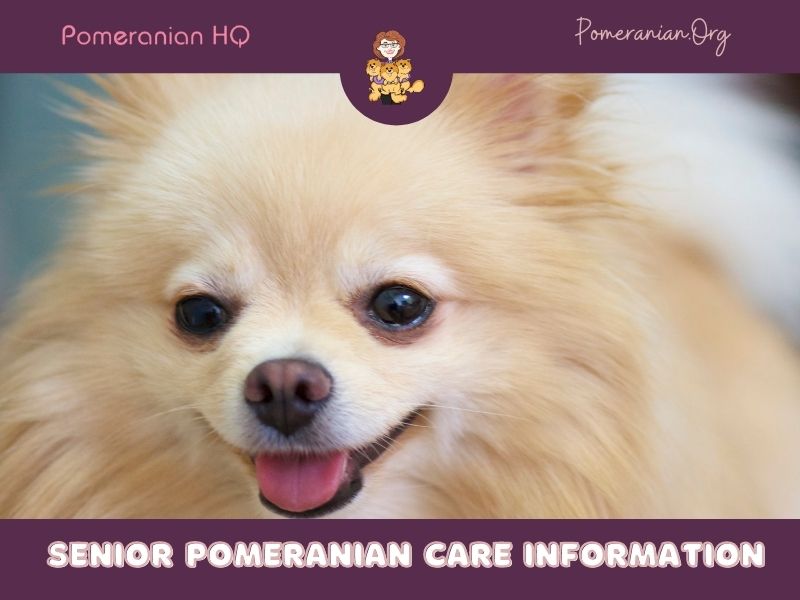
What Are the Signs of an Aging Pomeranian?
The signs of aging in a Pomeranian usually develop gradually. Because you see your dog every day, small changes can be easy to miss. Regularly observing your Pom’s movement, appetite, weight, sleeping habits and behavior will help you recognize when something has changed.
Common signs of an aging Pomeranian may include:
- Sleeping more during the day.
- Having less energy or tiring more quickly.
- Walking more slowly or becoming stiff after resting.
- Hesitating before using stairs or jumping onto furniture.
- Developing a thinner, drier or less lustrous coat.
- Experiencing changes in eyesight or hearing.
- Becoming more sensitive to hot or cold weather.
- Gaining weight as activity levels decrease.
- Losing weight or muscle despite eating normally.
- Developing stronger breath or other dental problems.
- Becoming less tolerant of noise, children or energetic dogs.
- Appearing confused, restless or unsettled, particularly at night.
- Having changes in toileting habits.
Some changes are part of the natural aging process, but others can indicate pain or illness. Arthritis, dental disease, heart problems, kidney disease, diabetes and canine cognitive dysfunction can easily be mistaken for ordinary old age.
Never assume that a senior Pomeranian is slowing down simply because of age. Arrange a veterinary examination if you notice a new or persistent change in your Pom’s appetite, weight, thirst, breathing, movement, behavior or toileting habits.
How Often Should a Senior Pomeranian Visit the Vet?
A senior Pomeranian should generally have a veterinary examination every six months. Older dogs can develop health problems more quickly than younger dogs, and twice-yearly visits give your veterinarian a better opportunity to detect changes before obvious symptoms appear.
A senior Pomeranian health check may include:
- A complete physical examination.
- An assessment of your Pom’s weight, muscle condition and mobility.
- Examination of the teeth, gums, eyes, ears, skin and coat.
- Listening to the heart and lungs.
- Blood pressure measurement.
- Complete blood count and blood chemistry tests.
- Urinalysis.
- Thyroid testing when appropriate.
- Additional heart, kidney or imaging tests when indicated.
Your veterinarian may also ask about changes in your Pomeranian’s appetite, thirst, toileting, sleep, activity and behavior. Keeping brief notes at home can help you identify gradual changes that may otherwise be overlooked.
Do not wait for the next scheduled check-up if your older Pomeranian develops a new lump, unexplained weight change, persistent cough, increased thirst, loss of appetite, difficulty walking or any unusual behavior. Early investigation often provides more treatment and management options.

What Health Problems Affect Older Pomeranians?
Older Pomeranians can develop many of the same age-related conditions seen in other senior dogs. However, their tiny size and breed characteristics make some health problems particularly important to recognize and manage early.
Common senior Pomeranian health problems include:
- Dental and periodontal disease: Painful or infected teeth can cause bad breath, difficulty eating, pawing at the mouth and loss of appetite.
- Arthritis and joint pain: An older Pom may become stiff, walk more slowly or hesitate before climbing steps and jumping onto furniture.
- Luxating patellas: Kneecap problems may cause skipping, limping, stiffness or reluctance to use a leg.
- Collapsing trachea: A dry, harsh or honking cough may become more noticeable with excitement, exercise, heat or pressure around the neck.
- Heart disease: Warning signs can include coughing, rapid breathing, reduced stamina, weakness or difficulty settling at night.
- Kidney disease: Increased thirst and urination, reduced appetite, weight loss, vomiting or bad breath may occur.
- Diabetes: Common signs include excessive thirst, frequent urination, weight loss and changes in appetite.
- Eye problems: Cataracts and other conditions may gradually reduce an older Pomeranian’s vision.
- Hearing loss: A senior Pom may stop responding to familiar sounds or become startled when approached.
- Canine cognitive dysfunction: Confusion, pacing, nighttime restlessness, changed social behavior and toileting accidents may indicate cognitive decline.
- Cancer: New lumps, unexplained weight loss, reduced appetite, bleeding or persistent changes in behavior should be investigated.
- Skin and coat changes: Dry skin, thinning hair, sores, itching or new growths should not automatically be dismissed as signs of old age.
Many senior Pomeranian health problems produce similar symptoms. A cough, for example, may be related to the trachea, heart or lungs, while loss of appetite may result from dental pain, digestive illness or disease affecting an internal organ.
Avoid diagnosing an older Pomeranian at home. Any persistent or unexplained change should be assessed by a veterinarian so the underlying cause can be identified and treated appropriately.

What Are the Warning Signs of Illness in a Senior Pomeranian?
Senior Pomeranians can become seriously unwell more quickly than younger adult dogs. Contact your veterinarian if you notice a sudden change or a symptom that persists, worsens or repeatedly returns.
Arrange veterinary attention if your older Pomeranian develops:
- Sudden loss of appetite or difficulty eating.
- Unexplained weight loss or weight gain.
- Increased thirst or more frequent urination.
- Repeated vomiting or diarrhea.
- A persistent cough or unusual panting.
- Rapid, noisy or difficult breathing.
- Weakness, collapse or extreme lethargy.
- Difficulty standing, walking or using steps.
- Signs of pain, trembling or reluctance to be touched.
- New lumps, swellings or sores that do not heal.
- Bad breath, bleeding gums or mouth pain.
- Sudden changes in vision or hearing.
- Confusion, pacing or nighttime restlessness.
- Toileting accidents or difficulty passing urine or stools.
- A noticeable change in temperament or behavior.
Seek urgent veterinary care: Difficulty breathing, collapse, seizures, uncontrolled bleeding, a swollen abdomen, repeated vomiting, inability to urinate or suspected poisoning should always be treated as emergencies.
Never assume a change is simply caused by old age. Keeping a weekly record of your Pomeranian’s weight, appetite, water intake, mobility and behavior can help you recognize gradual changes and provide useful information to your veterinarian.
Best Dog Food for Senior Pomeranian Dogs
I recommend Size Health Nutrition Small Adult Dry Dog Food.
What Is the Best Food for a Senior Pomeranian?
The best food for a senior Pomeranian is a complete and balanced diet suited to the individual dog’s health, weight, activity level and ability to chew. There is no single senior dog food that is ideal for every older Pomeranian.
A healthy and active senior Pom may be able to continue eating a suitable adult small-breed food. Another older Pomeranian may benefit from a diet formulated for weight management, sensitive digestion, dental problems or a diagnosed medical condition.
A suitable senior Pomeranian diet should provide:
- High-quality, easily digested protein to help maintain muscle.
- An appropriate number of calories for your dog’s activity level.
- Essential fatty acids to support the skin and coat.
- Adequate fiber to support healthy digestion.
- The correct balance of vitamins and minerals.
- Food pieces that are easy for a small dog to pick up and chew.
Do not automatically reduce protein simply because your Pomeranian is getting older. Healthy senior dogs still require adequate protein to help preserve muscle. Protein, phosphorus or other nutrients should only be restricted when recommended by your veterinarian for a diagnosed condition such as kidney disease.
Monitor your Pomeranian’s weight and body condition rather than relying only on the feeding quantities printed on the packet. Senior dogs may require fewer calories as they become less active, but reducing food too much can cause weight and muscle loss.
If your older Pomeranian has painful teeth or difficulty chewing, softened dry food or an appropriate wet food may be easier to eat. Any sudden loss of appetite, difficulty swallowing or unexplained weight change requires veterinary attention rather than simply changing foods.
How Much Should a Senior Pomeranian Eat?
How much a senior Pomeranian should eat depends on the dog’s weight, body condition, activity level, health and the calorie content of the food. Age alone does not determine the correct portion.
Some older Pomeranians need fewer calories because they exercise less and have a slower metabolism. Others need a highly nutritious diet because they are losing weight or muscle. This is why automatically reducing an older Pom’s food can be a mistake.
Divide your senior Pomeranian’s daily allowance into two or three small meals. Smaller, regular meals are often easier for an older dog to digest and prevent long periods without food.
Check your Pom’s body condition regularly. You should be able to feel the ribs beneath a light covering of fat, but they should not be prominently visible. Viewed from above, your Pomeranian should have a slight waist behind the ribs. Remember that the thick double coat can conceal both weight gain and weight loss.
Weigh your senior Pomeranian at least once a month and record the result. For such a small dog, even a modest change can be significant. If your Pom is steadily gaining or losing weight, ask your veterinarian to calculate an appropriate daily calorie allowance.
Treats and food extras must also be included in the daily total. Too many treats can quickly contribute to obesity and may unbalance an otherwise complete diet.
Never dismiss unexplained weight loss as a normal part of aging. Dental pain, kidney disease, diabetes, digestive problems and other illnesses can all affect an older Pomeranian’s appetite or weight and require veterinary investigation.
Why Is My Old Pomeranian Losing Weight?
An old Pomeranian may lose weight because he is eating less, absorbing fewer nutrients or living with an undiagnosed health problem. Weight loss should never be regarded as an unavoidable part of aging, particularly when it occurs suddenly or continues over several weeks.
Check beneath the coat: A Pomeranian’s thick coat can conceal changes in body condition. Weigh your senior Pom regularly and gently feel along the ribs, spine and hips for any noticeable loss of fat or muscle.
Possible causes of weight loss in an older Pomeranian include:
- Painful, loose or infected teeth.
- Difficulty chewing or swallowing.
- Kidney or liver disease.
- Diabetes.
- Heart disease.
- Digestive or intestinal disorders.
- Parasites.
- Cancer.
- Reduced sense of smell or taste.
- Canine cognitive dysfunction.
- Medication side effects.
- A diet that no longer provides enough calories for the individual dog.
Arrange a veterinary examination if your senior Pomeranian is losing weight without an intentional change to his diet. Your veterinarian may recommend blood tests, urinalysis, a dental examination or other diagnostic tests to determine the cause.
How Can I Encourage My Senior Pomeranian to Eat?
If illness has been ruled out, offering smaller meals more frequently may help. Food can be served at room temperature or gently warmed to increase its aroma. An older Pom with dental problems may find softened dry food or an appropriate wet food easier to eat.
Important: Do not rely on cheese, fatty meat, broth or large quantities of treats to encourage eating. These additions can upset the diet and may be unsuitable for a Pomeranian with certain health conditions. Ask your veterinarian about a safe, nutritionally balanced way to increase your dog’s calorie intake.
How Much Exercise Does a Senior Pomeranian Need?
A senior Pomeranian still needs regular exercise, but the amount should be adjusted to suit the individual dog’s age, health and mobility. Gentle daily activity helps maintain muscle strength, joint movement, circulation, digestion and mental wellbeing.
For many older Pomeranians, two short walks of approximately 10 to 15 minutes may be more comfortable than one long walk. However, there is no fixed amount of exercise suitable for every senior Pom. Some remain active well into their later years, while others may need much shorter and slower outings.
Watch your Pomeranian throughout every walk. Signs that the exercise may be too demanding include:
- Lagging behind or repeatedly stopping.
- Heavy or unusual panting.
- Coughing or noisy breathing.
- Limping or walking stiffly.
- Trembling or appearing weak.
- Refusing to continue.
- Taking an unusually long time to recover afterwards.
Allow your senior Pomeranian to set the pace and provide plenty of time for sniffing. Avoid strenuous running, repeated jumping and sudden changes of direction, particularly if your dog has arthritis, luxating patellas or another mobility problem.
Exercise your older Pom during the cooler part of a warm day and avoid hot footpaths. In cold or wet weather, a lightweight coat may help a senior Pomeranian who struggles to maintain body temperature.
Always use a correctly fitted harness rather than attaching a leash to a collar. This is especially important for a Pomeranian with a sensitive or collapsing trachea.
If your senior Pom can no longer manage a full walk, provide several gentle outings, supervised time in the garden and simple indoor activities. A dog stroller can also allow an older Pomeranian to continue enjoying fresh air, different surroundings and time with the family without becoming exhausted.
Speak to your veterinarian before substantially changing the exercise routine of a Pomeranian with heart disease, breathing difficulties, arthritis or another diagnosed health condition.
How Do You Care for a Pomeranian With Arthritis?
A Pomeranian with arthritis may experience pain, stiffness and reduced movement as the protective cartilage within the joints deteriorates. Arthritis cannot always be cured, but early veterinary treatment and sensible changes at home can help an older Pomeranian remain comfortable and active.
What Are the Signs of Arthritis in a Senior Pomeranian?
- Stiffness after sleeping or resting.
- Walking more slowly than usual.
- Limping or favoring one leg.
- Reluctance to climb stairs.
- Hesitating before jumping onto furniture.
- Difficulty standing or lying down.
- Reduced interest in walking or playing.
- Irritability when touched or picked up.
- Slipping more frequently on smooth floors.
- Loss of muscle caused by reduced activity.
Veterinary diagnosis is important: Luxating patellas, spinal problems, injuries and other conditions can cause symptoms similar to arthritis. Your veterinarian may recommend pain relief, anti-inflammatory medication, weight management, physiotherapy or other treatment based on your Pomeranian’s individual needs.
How Can I Help My Pomeranian With Arthritis at Home?
- Provide gentle, regular exercise rather than occasional long walks.
- Keep your Pom at a healthy weight to reduce pressure on the joints.
- Place non-slip runners or rugs over slippery floors.
- Use ramps or pet steps beside beds and sofas.
- Prevent repeated jumping on and off furniture.
- Provide a supportive, comfortable bed in a warm location.
- Keep the nails short and trim excess hair beneath the paw pads.
- Position food and water bowls where they are easy to reach.
- Lift your Pomeranian carefully while supporting the chest and hindquarters.
Important: Never give human pain medication to a Pomeranian unless a veterinarian specifically instructs you to do so. Some common human medicines can be extremely dangerous to dogs.
Joint supplements may help some senior Pomeranians, but they are not automatically suitable or effective for every dog. Discuss any supplement with your veterinarian, particularly if your Pom takes medication or has kidney, liver or digestive problems.
How Do You Groom a Senior Pomeranian?
Grooming a senior Pomeranian requires a gentle approach, particularly if the dog has arthritis, sensitive skin or difficulty standing for extended periods. Regular grooming remains essential because it prevents matting, keeps the skin and coat clean and provides an opportunity to check your older Pom’s body for changes.
Brush your senior Pomeranian regularly using gentle, careful strokes. Work through the coat in sections and avoid pulling at tangles. An older Pomeranian may be more comfortable lying on one side or having several short grooming sessions rather than standing through one lengthy session.
During grooming, check your senior Pomeranian for:
- New lumps, bumps or swellings.
- Areas of tenderness or pain.
- Dry, flaky, red or irritated skin.
- Coat thinning or unusual hair loss.
- Sores, scabs or wounds that are not healing.
- Fleas, ticks or other parasites.
- Discharge or unpleasant odors from the ears.
- Changes around the eyes or mouth.
- Overgrown nails.
- Hair growing between the paw pads.
Senior Pomeranian skin can become drier and more delicate. Use a gentle, moisturizing dog shampoo and conditioner, and avoid bathing more frequently than necessary. Keep the room warm, use comfortably warm water and dry the coat thoroughly so your older Pom does not become chilled.
Trim the nails regularly because long nails can alter the way a senior dog stands and walks, adding further strain to painful joints. Excess hair beneath the paw pads should also be carefully trimmed to improve traction on smooth floors.
If your older Pomeranian becomes anxious, tired or uncomfortable during grooming, stop and allow him to rest. Grooming should remain a calm and reassuring experience that provides your senior Pom with gentle attention and physical contact.
Report any new lump, painful area, skin lesion or unexplained coat change to your veterinarian rather than assuming it is simply part of aging.
How Do You Care for an Older Pomeranian’s Teeth?
Dental care is particularly important for an older Pomeranian because small dogs are prone to plaque buildup, gum disease, loose teeth and tooth loss. Dental disease can be painful and may prevent a senior Pom from eating comfortably.
Signs of dental problems in an older Pomeranian include:
- Persistent bad breath.
- Red, swollen or bleeding gums.
- Yellow or brown tartar on the teeth.
- Loose, broken or missing teeth.
- Dropping food while eating.
- Chewing on only one side of the mouth.
- Refusing dry food or hard treats.
- Pawing at the face or mouth.
- Excessive drooling.
- Pulling away when the face is touched.
- Reduced appetite or weight loss.
Your senior Pomeranian’s teeth and gums should be examined during regular veterinary visits. A veterinarian may recommend a professional dental examination and cleaning if there is significant tartar, infection, pain or loose teeth.
Continue brushing your Pomeranian’s teeth at home if this can be done safely and comfortably. Use a small, soft toothbrush and toothpaste made specifically for dogs. Human toothpaste should never be used because some ingredients can be harmful to dogs.
Do not attempt to loosen or remove heavy tartar yourself. Scraping visible tartar from an awake dog does not clean beneath the gumline, where periodontal disease causes much of the pain and damage.
If your older Pomeranian has missing or painful teeth, your veterinarian may recommend softened dry food or a suitable wet diet. A healthy Pomeranian can usually eat well after damaged teeth have been professionally treated or removed.
Bad breath should not be dismissed as a normal part of aging or covered with additives in the drinking water. Persistent mouth odor can indicate dental infection, kidney disease or another health problem that requires veterinary attention.
Why Does My Senior Pomeranian Sleep So Much?
It is normal for a senior Pomeranian to sleep more than a younger adult dog. Older Poms often have less energy, tire more quickly and need additional rest after walks, grooming or family activities.
Although increased sleep can be part of normal aging, a sudden or substantial change should not be ignored. Excessive sleeping may also be associated with pain, arthritis, heart disease, hormonal problems, infection, medication side effects or canine cognitive dysfunction.
Contact your veterinarian if your senior Pomeranian:
- Suddenly begins sleeping much more than usual.
- Is difficult to wake or seems unusually unresponsive.
- No longer shows interest in food, walks or family interaction.
- Appears weak, confused or unsteady after waking.
- Pants, coughs or struggles to become comfortable while resting.
- Sleeps during the day but paces, cries or barks at night.
- Frequently changes position as though unable to get comfortable.
- Has difficulty standing after sleeping.
Provide your older Pomeranian with a supportive bed that cushions aging joints. Place it in a warm, draft-free area where your dog can rest while remaining close to the family. Many senior Poms prefer having several comfortable beds positioned in the rooms where their owners spend the most time.
Keep bedtime and daily routines consistent. A familiar schedule can be particularly reassuring for an older Pomeranian experiencing reduced vision, hearing loss or cognitive changes.
A senior Pom should be allowed plenty of uninterrupted rest but should not become completely inactive. Gentle exercise, mental stimulation and regular interaction remain important for maintaining mobility and quality of life.
How Can You Help a Blind or Deaf Pomeranian?
An older Pomeranian may gradually lose some vision or hearing. Because these changes often develop slowly, owners may not recognize them immediately. Senior Poms usually adapt well when their home remains predictable and their family uses consistent ways to communicate.
How Can You Help a Blind Pomeranian?
Signs of reduced vision may include bumping into objects, hesitating near stairs, becoming anxious in unfamiliar places or having difficulty finding food, water and doorways.
To help a blind or visually impaired Pomeranian:
- Keep furniture, beds and food and water bowls in familiar places.
- Use baby gates to block access to stairs, pools and other hazards.
- Place textured mats near important locations such as doors and bowls.
- Speak before touching or lifting your Pom to avoid startling him.
- Keep floors clear of bags, shoes and other obstacles.
- Use a leash and harness outside, even in familiar surroundings.
- Introduce new rooms and environments slowly.
- Avoid allowing your Pom to jump from furniture.
- Ensure identification and microchip details remain current.
Remember: Cloudiness in an older Pomeranian’s eyes does not always mean cataracts. Age-related lens changes, cataracts and other eye conditions can look similar, so any change in eye appearance or vision should be examined by a veterinarian.
How Can You Help a Deaf Pomeranian?
Signs of hearing loss can include failing to respond when called, sleeping through familiar noises, barking more loudly or becoming startled when approached from behind.
To help a deaf or hearing-impaired Pomeranian:
- Approach from the front whenever possible.
- Use consistent hand signals for familiar commands.
- Gently touch the floor or nearby furniture to create a vibration.
- Flash a light briefly as a signal without shining it directly into the eyes.
- Keep your Pom on a leash in unsecured areas.
- Wake a sleeping dog gently by touching the bed before touching his body.
- Continue speaking and interacting even if your dog cannot hear you.
- Teach every family member to use the same visual signals.
Seek veterinary advice: Sudden hearing or vision loss requires prompt veterinary attention. Ear infections, impacted wax, eye injuries, glaucoma and other conditions can sometimes cause treatable changes that should not be dismissed as normal aging.
What Are the Signs of Dementia in a Pomeranian?
Canine cognitive dysfunction, sometimes described as dog dementia, is an age-related decline in brain function. It can affect a senior Pomeranian’s memory, awareness, sleep patterns, behavior and ability to follow familiar routines.
Signs of dementia in a Pomeranian may include:
- Appearing lost in familiar rooms.
- Staring at walls or standing in corners.
- Pacing or wandering without an obvious purpose.
- Becoming trapped behind furniture.
- Sleeping more during the day but remaining restless at night.
- Barking, whining or crying during the night.
- Forgetting familiar commands or routines.
- Toileting indoors despite being previously house-trained.
- Showing less interest in family members.
- Becoming unusually clingy, anxious or irritable.
- Failing to recognize familiar people or other pets.
- Repeatedly walking in circles.
- Having difficulty locating doors, beds or food bowls.
These changes do not automatically mean that a Pomeranian has dementia. Pain, loss of vision or hearing, urinary disease, kidney problems, diabetes, medication side effects and other illnesses can produce similar symptoms. A veterinary examination is needed to rule out other causes.
If canine cognitive dysfunction is suspected, your veterinarian may recommend medication, dietary changes or other forms of support. Early assessment is valuable because treatment and careful management may reduce symptoms and help maintain your Pomeranian’s quality of life.
You can also support an older Pomeranian’s brain health by:
- Maintaining a predictable daily routine.
- Providing gentle daily exercise.
- Continuing calm social interaction.
- Offering simple food puzzles and scent games.
- Practicing familiar commands for short periods.
- Keeping beds, bowls and furniture in consistent locations.
- Using night-lights to help a confused dog move around safely.
- Providing additional toilet breaks, particularly before bedtime.
Keep activities short and achievable. Mental stimulation should be enjoyable and should never leave a senior Pomeranian tired, anxious or frustrated.
How Do You Make Your Home Safe for an Older Pomeranian?
An older Pomeranian may struggle with slippery floors, stairs, jumping and changes to familiar surroundings. A few simple adjustments can help your senior Pom move around the home safely while preserving his confidence and independence.
Ways to make your home safer for a senior Pomeranian include:
- Place non-slip rugs or rubber-backed runners over smooth floors.
- Keep the nails short and trim excess hair beneath the paw pads.
- Use stable pet ramps or steps beside beds and sofas.
- Prevent your Pom from repeatedly jumping on and off furniture.
- Install baby gates near stairs, balconies and other hazardous areas.
- Keep walkways clear of shoes, bags and electrical cords.
- Position food and water bowls where they are easy to reach.
- Provide several comfortable beds in the rooms your family uses most.
- Keep sleeping areas warm, quiet and free from drafts.
- Use night-lights in hallways and near toileting areas.
- Block access to swimming pools and ponds.
- Supervise your senior Pom around young children and energetic dogs.
Older Pomeranians generally feel more secure when their surroundings and routines remain familiar. Avoid moving furniture, beds and bowls unnecessarily, particularly if your dog has reduced vision or canine cognitive dysfunction.
Choose ramps and pet steps carefully. They should be stable, wide enough for a Pomeranian to use confidently and covered with a non-slip surface. Introduce them gradually and reward your Pom for using them rather than forcing him.
If your senior Pomeranian has difficulty reaching the usual outdoor toileting area, provide more frequent trips outside or create an easily accessible indoor toileting area. Never punish an older dog for accidents, as they may be caused by reduced mobility, illness or cognitive decline.
Regularly reassess your home as your Pomeranian’s needs change. A solution that works at eight years of age may need to be modified as your Pom becomes older or develops mobility, vision or hearing difficulties.
What Supplements Are Suitable for Senior Pomeranians?
Senior Pomeranians do not automatically need supplements simply because they are getting older. A complete and balanced dog food should already provide the essential vitamins and minerals a healthy older Pom requires.
Some supplements may be helpful when used for a specific reason and under veterinary guidance. Depending on your Pomeranian’s health, your veterinarian may discuss:
- Omega-3 fatty acids to support the joints, skin and coat.
- Joint supplements containing ingredients such as glucosamine and chondroitin.
- Probiotics for particular digestive problems.
- Veterinary-formulated products recommended for a diagnosed deficiency or health condition.
The quality, concentration and ingredients of supplements can vary considerably. Products intended for people may contain inappropriate amounts of certain nutrients or ingredients that are unsafe for dogs.
Always tell your veterinarian about every supplement, medication and natural remedy your Pomeranian receives. This is particularly important if your senior Pom has kidney disease, liver disease, diabetes, digestive problems or takes prescription medication.
Avoid giving multiple products with similar ingredients because this can result in excessive amounts of some nutrients. Supplements should not be used as a replacement for veterinary diagnosis, pain relief, a balanced diet or appropriate medical treatment.
Before purchasing a senior Pomeranian supplement, ask:
- What specific problem is this product intended to address?
- Is there reliable evidence that it may help?
- What is the correct dose for my Pomeranian’s weight?
- Could it interact with current medication?
- How long should it be given before its effectiveness is assessed?
- What side effects should I watch for?
If a supplement does not produce a noticeable benefit within the period recommended by your veterinarian, reconsider whether it is necessary. The best senior Pomeranian care plan is based on the individual dog’s needs rather than a long list of products.
How Can You Assess a Senior Pomeranian’s Quality of Life?
A senior Pomeranian’s quality of life is determined by more than age or a medical diagnosis. The most important considerations are whether your Pom is comfortable, can perform essential daily activities and continues to experience enjoyment.
Because health can change gradually, it may be difficult to judge your own dog’s condition objectively. Keeping a simple daily record can help you and your veterinarian recognize whether your Pomeranian is improving, remaining stable or experiencing more difficult days.
Consider the following questions:
- Is my Pomeranian’s pain being adequately controlled?
- Can my Pom breathe comfortably while resting?
- Is he eating enough to maintain his strength?
- Is he drinking and remaining hydrated?
- Can he stand, walk and toilet without severe distress?
- Can he rest and sleep comfortably?
- Is he keeping himself reasonably clean and dry?
- Does he still enjoy affection, food, gentle walks or family activities?
- Does he appear calm and aware of his surroundings?
- Are there still more good days than difficult days?
One bad day does not necessarily mean that your Pomeranian has lost his quality of life. However, a continuing pattern of pain, distress, confusion, breathing difficulty, loss of appetite or inability to move comfortably should be discussed with your veterinarian.
Your veterinarian may be able to adjust medication, improve pain management, treat nausea, recommend mobility support or provide palliative care. Asking for a second veterinary opinion is also reasonable if you are uncertain about a diagnosis or the available treatment options.
There may eventually come a time when treatment can no longer keep your Pomeranian comfortable. Choosing a peaceful goodbye to prevent further suffering is an extremely painful decision, but it can also be a final act of love.
Your Pom depends on you to place his comfort ahead of your wish to keep him with you. Speak openly with your veterinarian, involve trusted family members and allow your Pomeranian’s daily quality of life to guide the decision.
Senior Pomeranian Care FAQs
At What Age Is a Pomeranian Considered a Senior?
A Pomeranian is generally considered a senior at approximately eight years of age. However, individual dogs age at different rates depending on their health, genetics, weight and lifestyle.
How Long Do Pomeranians Usually Live?
The average Pomeranian lifespan is approximately 12 to 16 years. Some Poms live longer with good genetics, appropriate care, a healthy weight and prompt veterinary treatment when health problems develop.
How Often Should a Senior Pomeranian Visit the Vet?
A senior Pomeranian should generally receive a veterinary examination every six months. Your veterinarian may recommend more frequent visits if your Pom has a diagnosed illness or takes regular medication.
What Is the Best Food for a Senior Pomeranian?
The best food is a complete and balanced diet suited to the individual Pomeranian’s health, weight, activity level and ability to chew. Not every older Pom needs food labelled specifically for senior dogs.
How Much Exercise Does a Senior Pomeranian Need?
Many senior Pomeranians benefit from two gentle walks of approximately 10 to 15 minutes each day. The pace and duration should be adjusted to the dog’s mobility, breathing, health and energy level.
Why Is My Senior Pomeranian Sleeping So Much?
Older Pomeranians often need more sleep and recover more slowly after activity. A sudden increase in sleeping accompanied by weakness, appetite loss, coughing, confusion or reduced interest in family life requires veterinary attention.
Why Is My Old Pomeranian Losing Weight?
Weight loss can be caused by dental pain, reduced appetite, diabetes, kidney or liver disease, digestive problems, cancer or other conditions. Unexplained weight loss in an older Pomeranian should always be investigated by a veterinarian.
What Are the Signs of Dementia in a Pomeranian?
Possible signs include confusion, pacing, staring at walls, nighttime restlessness, toileting accidents and changes in social behavior. Other health problems can cause similar symptoms, so a veterinary examination is essential.
Do All Senior Pomeranians Need Joint Supplements?
No. Joint supplements may help some older Pomeranians, but they are not necessary or suitable for every dog. Ask your veterinarian whether a supplement is appropriate and safe with your Pom’s health conditions and medication.
How Can I Keep My Old Pomeranian Comfortable?
Provide a warm supportive bed, non-slip flooring, gentle exercise, easy access to food and water, regular grooming and plenty of companionship. Ramps or pet steps can help a Pom with reduced mobility reach favorite places safely.
Final Thoughts on Senior Pomeranian Care
Growing older does not mean your Pomeranian cannot continue enjoying a happy and comfortable life. Regular veterinary checks, suitable nutrition, gentle exercise and a safe home environment can make an enormous difference during the senior years.
Pay attention to even small changes and never dismiss new symptoms as simply old age. With thoughtful care, patience and plenty of love, you can help your senior Pomeranian enjoy the best possible quality of life.
⚠ Veterinary Disclaimer
The information provided in this article is intended for educational and general informational purposes only and is not a substitute for professional veterinary advice, diagnosis, or treatment.
Always seek the advice of your veterinarian or another qualified animal health professional with any questions you may have regarding your dog’s health or medical condition.
Never ignore professional veterinary advice or delay seeking treatment because of something you have read on this or any other website.
If your Pomeranian is showing signs of illness, discomfort, skin irritation, or an adverse reaction to medication or treatment, contact your veterinarian promptly.
Copyright Pomeranian.org. All Rights Reserved.
📚 References & Further Reading
- [1] AKC Pomeranian Breed Standard (2011)
- [2] English Kennel Club Breed Standard
- [3] The Pomeranian Handbook – Denise Leo
- [4] Denlinger, The Complete Pomeranian
- [5] Kimbering, 1891–1991
- [6] Taplin, The Sportsman’s Cabinet
- [7] Parker, The Popular Pomeranian
- [8] Ives, Show Pomeranians